Page 274 of 773
1 272 273 274 275 276 773

Asia: Shanghai ofrece productos educativos de clase mundial

Asia/China/05 Julio 2018/Fuente: spanish.peopledaily

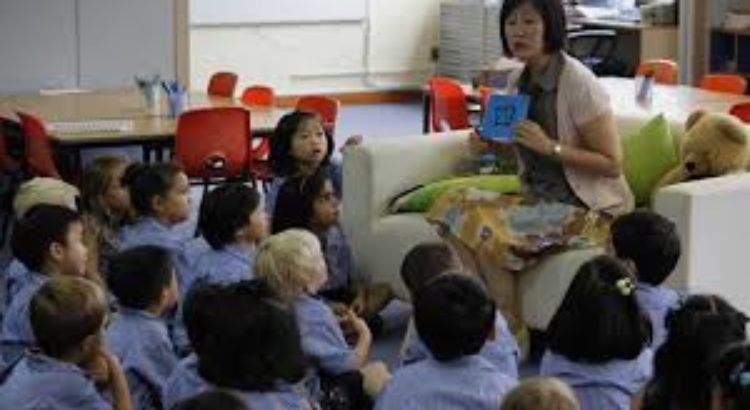
RoyalABC, una empresa internacional dedicada a la educación, presentó el 29 de junio en Shanghai su primer ecosistema de aprendizaje integrado de idiomas y habilidades del siglo XXI, que reúne la educación tradicional británica del idioma inglés, la enseñanza en el aula y la tecnología interactiva.

Este es un nuevo sistema pensado y diseñado para el aprendizaje de los niños chinos.

Establecida a finales del 2014 por los británicos Dominic Richards y Martin Beeche, el nuevo producto de RoyalABC es un ecosistema para el aprendizaje de la lengua enfocado en niños chinos de tres a seis años. Su contenido incorpora una mentalidad orientada al crecimiento y cuatro cualidades fundamentales del siglo XXI: aprender a pensar críticamente, la creatividad, la comunicación y la colaboración. Todas son herramientas esenciales para el desarrollo de un niño.

De acuerdo a Beeche, el ecosistema comprende más de mil módulos de cursos, se mapea a las principales áreas de aprendizaje de la educación china y se reparte con tecnología de vanguardia, inteligencia artificial y métodos de enseñanza que mejoran la calidad del programa.

A partir de septiembre, el sistema se introducirá en el plan de estudios de más de 50 jardines privados de la infancia y centros de formación para la educación de los niños chinos.

«Queremos proporcionar una plataforma disruptiva de aprendizaje que aborde las brechas en la educación a nivel global, impulsada por la creencia de que con un ambiente adecuado de enseñanza y aprendizaje, en el aula y en el hogar, los niños pueden prosperar», afirma Beeche.

«Lo que aprendimos en nuestra larga colaboración con educadores chinos, funcionarios, jardines de la infancia y padres es que teníamos que lograr un enfoque ecosistémico en el aprendizaje. Los jardines de la infancia y los maestros necesitaban productos concretos para apoyar la enseñanza en el aula. Los niños necesitaban recibir una educación integral y los padres necesitaban estar informados del proceso y tener la opción de participar en el aprendizaje”.

Richards afirmó que RoyalABC ofrecerá un ecosistema de aprendizaje divertido, interesante y encantador que complementa con el método de aprendizaje tradicional.

«El lanzamiento de este nuevo producto ayudará a compartir el idioma chino y su cultura con Gran Bretaña y con el mundo, y mejorará la asociación en el sector educativo entre China y Reino Unido para generar oportunidades de ambas partes, ya que el mundo posee muchas voces que claman por tener una relación internacional más estrecha», aseguró Richards.

Xin Ruihua, profesor principal de un preescolar en Qingdao, provincia de Shandong, donde se introducirá el nuevo ecosistema educativo, considera que la educación para niños debe ser una experiencia integral que despierte el interés por estudiar cada vez más.

«Me han llamado la atención los módulos del curso y los temas proporcionados por el programa de computación. Su sistema de diseño es flexible y permite a los maestros impartir clases interesantes y diversas», afirmó Xin.

«Los padres también pueden involucrarse en el aprendizaje de los niños cuando el programa se utilice en casa. Estoy ansiosa por ver los logros de los niños después de usarlo», concluyó.

Fuente: http://spanish.peopledaily.com.cn/n3/2018/0703/c92122-9477250.html
Comparte este contenido:

El ingenioso invento de Maanasa Mendu, la adolescente que podría dar luz a millones de personas en todo el mundo

Por: bbc.com/04-07-2018

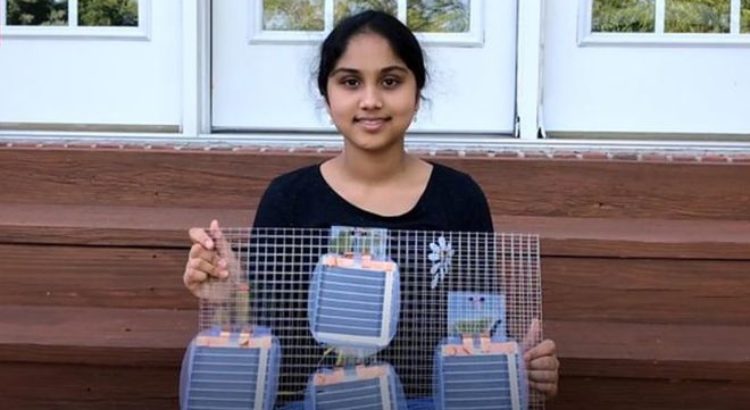
Maanasa Mendu tiene solo 15 años, pero ha logrado algo que podrían agradecerle millones de personas de todas las generaciones en muchas partes del mundo.

La adolescente de Ohio, Estados Unidos, creó una herramienta capaz de transportar energía eléctrica de manera muy asequible a países en vías de desarrollo.

Y recibió por ello hace un par de años el primer premio America’s Top Young Scientist, un concurso nacional de ciencia organizado por la empresa 3M y la organización educativa Discovery Education para jóvenes talentos científicos en la nación norteamericana.

Pero, ¿cómo surgió la idea de inventar algo para llevar la electricidad a lugares remotos?

La respuesta está en unas vacaciones familiares a India en donde vio por primera vez cómo miles de personas viven día tras día sin electricidad, asegura la joven.

Comparte este contenido:

Kuwait: Interior, Education ministries coordinate to fight drugs

Asia/Kuwait/03.07.18/Source: news.kuwaittimes.net.

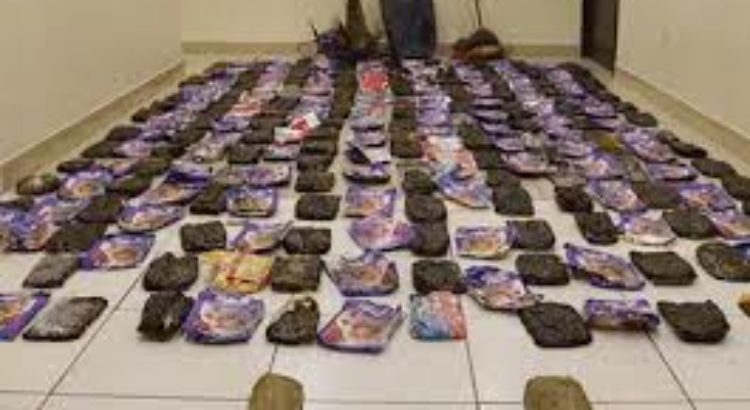
Officials from the Drug Control General Department (DCGD) of the Interior Ministry and the Education Ministry’s Educational Development and Activities Department held a meeting yesterday to discuss creating new mechanisms of cooperation in the field of drugs fighting and prevention. The two sides agreed to launch a plan to activate the role of schools’ principals in this regard, as well as the roles of the social and psychiatric services department at the education ministry.

The meeting was attended by the Education Ministry’s Assistant Undersecretary for Educational Development Faisal Maqseed, DCGD Director General Brig Bader Al-Ghadouri, Acting Director of the Interior Ministry’s Relations and Security Information Brig Tawheed Al-Kandary and other officials.

Source of the notice: http://news.kuwaittimes.net/website/interior-education-ministries-coordinate-to-fight-drugs/

Comparte este contenido:

What Asian schools can teach the rest of us

By Andreas Schleicher

The latest Program for International Student Assessment (PISA) focused on science, a discipline that plays an increasing role in our economic and social lives.

From taking a painkiller to determining what is a «balanced» meal, from drinking pasteurized milk to deciding whether or not to buy a hybrid car, science is pervasive.

And science is not just test tubes and the periodic table; it is the basis of nearly every tool we use — from a simple can opener to the most advanced space explorer.
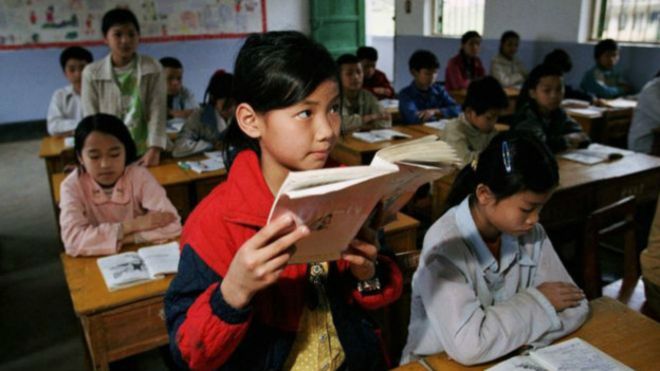
In 2012, Shanghai came out as the top performer among all 65 education systems that were compared in mathematics, reading and science.
Some wondered to what extent Shanghai’s success was exceptional in China. In 2015, PISA provides data from Beijing, Jiangsu, Guangdong and Shanghai.
These regions combined again show strong science performance, outperformed only by Singapore, Japan, Estonia, Taiwan (which appears in the report as Chinese Taipei), Finland and Macau.
In fact, 13% of the top-performing students in the 68 countries and economies with comparable data in PISA 2015 come from these four provinces in mainland China alone.
So the world will continue to look to China as a global player in education.
education.

Social mobility key

Similarly, while the American dream of social mobility seems nothing more than that — a dream — for this generation of American students, it is emerging as a new reality in much of East Asia.
Between 40% and 80% of the quarter of the most disadvantaged students in the four provinces of mainland China, Hong Kong, Japan, Korea, Macau, Singapore, Taiwan and Vietnam perform as well as the 25% top-performing students around the world.
In the Western world, only Estonia and Finland match that level of student resilience against social disadvantage.
But there are also areas where China can look to other countries for inspiration.
Content knowledge in science, where China excels, is important. But it is equally important to be able to «think like a scientist,» and here Chinese students perform less well on the PISA test than when tested on content.
Source of the article: https://edition.cnn.com/2016/12/06/opinions/education-pisa-rankings-china/index.html
Comparte este contenido:

Las curiosas innovaciones de jóvenes en Irak para ganarse la vida

Autor: Redacción Panorama

Uno transformó un coche en un café ambulante, otro un pasillo en una librería y un tercero crea esculturas con desechos metálicos. En el sur de Irak, una región rica en petróleo, los jóvenes innovan para ganarse la vida.

Nada que ver con la época de sus padres durante el régimen de Sadam Husein, en donde los egresados de las universidades eran contratados casi automáticamente en el sector público, frente a un sector privado casi inexistente.

Durante los diez años posteriores a la invasión estadounidense de Irak y la caída de Husein, en 2003, las nuevas autoridades siguieron multiplicando los puestos de funcionarios de manera clientelista.

Pero ahora todo eso terminó. El sector público ya casi no contrata y el privado no logra absorber la fuerza laboral.

Karrar Alaa, de 26 años, estaba convencido hace tres años que con su diploma de Comercio podría obtener un empleo de funcionario en Basora (sur).

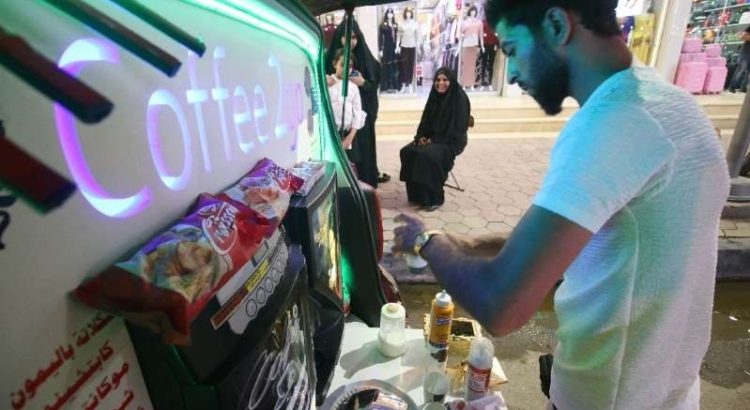
Pero cansado de esperar, utilizó todos sus ahorros, pidió dinero prestado a sus allegados y juntó 20.000 dólares para comprar un coche y transformarlo en un café ambulante.

«Es algo inédito en Basora, descubrí la idea en un video grabado en Europa y difundido por Facebook», cuenta a la AFP delante de su coche que lleva en el techo una taza de plástico gigante.

– Desempleo entre los jóvenes –
Alaa instaló una máquina de café en el baúl del coche, y todos los días asegura que vende por unos 150.000 dinares, unos 120 dólares.

Es un poco menos de lo que gana Mashreq Jabbar con su pequeña librería instalada en un pasillo del centro comercial de moda en Basora.

«Alquilar un comercio cuesta 6.000 dólares por mes, por mi pasillo pago 2.500 dólares», afirma el joven de 26 años a la AFP.

Egresado de Geología, esperó durante años obtener un empleo de funcionario. Estaba convencido que su especialidad sería útil para las numerosas compañías petroleras.

Pero en Irak el sector de los hidrocarburos, que garantiza el 89% de los ingresos y suma el 99% de las exportaciones, sólo representa el 1% de los empleos. Las empresas recurren generalmente a mano de obra extranjera.

Oficialmente el 10,8% de los iraquíes está sin empleo. En un país en que el 60% de la población tiene menos de 24 años, el desempleo es dos veces más elevado entre los jóvenes.

Con la explosión de las universidades privadas –Bagdad cuenta con unas treinta– la tasa es aún mayor entre los diplomados.

De la capital hasta el oeste desértico, pasando por Mosul en el norte o por el este agrícola, es común cruzarse con ingenieros que manejan taxis o con universitarios que preparan comidas en comercios ambulantes.

La mayoría de los jóvenes del país esperan durante años, en casa de sus padres, un hipotético empleo en el sector público. Son muy pocos los que apuestan por el sector privado, casi inexistente antes de la invasión de 2003.

«Prevalece la idea de que no hay otra opción que la de trabajar en el sector público», analiza Ahmed Abdel Hasan, profesor de Economía de la Universidad de Basora.

«Incluso los jóvenes que trabajan en el sector privado dicen que es temporal a la espera de obtener un cargo en el sector público», afirma el especialista a la AFP.

Irak ofrecía antes del embargo internacional de los años 1990 un sistema de salud y de educación de calidad y gratuito, pero hoy se caen en pedazos.

Omar Abdalá, que estudió Bellas Artes, quería ser profesor de artes pláticas.
Pero con 28 años, sin noticias de la administración pública, decidió ganarse la vida de otra forma.

«Sólo podía contar conmigo y mi talento», dice a AFP instalado en una habitación de la vivienda familiar que utiliza como taller de escultura, sala para soldar y espacio de exposición.

Los buenos meses logra vender una media docena de esculturas: motos hechas con tuercas, libélulas realizadas con cubiertos, escorpiones fabricados con cadenas de bicicleta, que propone por 200 a 250 dólares.

«A la gente le gustan mis esculturas. Me dicen: ‘¿cómo pudiste hacer algo tan lindo con desechos?'», dice con orgullo.

Fuente:  https://www.panorama.com.ve/curiosidades/Las-curiosas-innovaciones-de-jovenes-en-Irak-para-ganarse-la-vida-20180619-0061.html

Comparte este contenido:

Israel’s Education Ministry Is Funding Two Illegal West Bank Farm Schools

Asia/Israel/02.07.18/By Yotam Berger and Yarden Zur/Source: www.haaretz.com.

Projects built in Efrat, Geva Binyamin settlements on land that does not belong to the state are left standing as Civil Administration does not enforce the law against them.

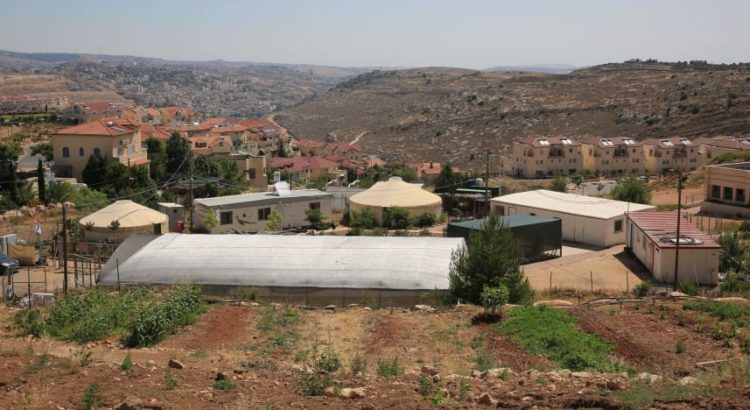
The government is financially supporting, two farm schools in the West Bank via the Education Ministry and two local councils that were built illegally on land that does not belong to the state. One is in the Efrat settlement in Gush Etzion and the other is in the Geva Binyamin settlement in the central West Bank. The farms were built by the local councils and the Education Ministry allocates classroom hours to them. The councils and the ministry confirmed their connections to the farms.

The Israeli Civil Administration in the West Bank is aware of the illegal construction but does not enforce the law against it, either because enforcement authority lies with the regional council or the buildings are low on the administration’s order of priorities for demolition.

Students from area schools are brought to both farms for “ecological agricultural education.” Both are officially supported by the Education Ministry, which funds classroom hours, and by the local councils. The Efrat budget shows that last year the settlement received 992,000 shekels ($274,000) from the government to build the farm, but the budget does not specify which government ministry is responsible for transferring the funds.

The farms were built in enclaves along the settlements’ blue line that marks the boundary of state lands. The blue line represents land that Israel holds in the territories where it can build legally and retroactively legalize buildings that were erected illegally. The state does not have this authority on land that is not state land. Usually, lands are excluded from being part of state land in such “enclaves” when it is suspected that they were private Palestinian land.

«For the umpteenth time, Efrat has been caught exploiting the land of its Palestinian neighbors,» said Dror Etkes of the Kerem Navot, a group the stated purpose of which is to halt what it says is the dispossession of land owned by Palestinians in the West Bank. «This time too they will surely tell us that it involves state land,» he said.

The Efrat local council responds: “Although the lands are not within the blue line, they are state lands. No one has claimed ownership of them for decades. (…) Agricultural work at the site does not conflict with the building plans at the location, and any structure erected there is also transportable. Efrat has always upheld the law as well as placing an emphasis on good relations with the neighbors.”

However, the area in question is not within the bounds of state lands and the assertion that the land is part of state lands is false.

Avi Roeh, head of the Mateh Binyamin regional council, says: “These are trailers in a place where there was a school. I can’t tell you if they are inside or outside a blue line. This is a site that has been around for many years, that originally was a state-religious school. Now ‘Siah Hasadeh’ is there and it’s a kind of farm school, not exactly a school – students come there and get lessons about agriculture. As far as I know, the permanent structure is supposed to be built in Kochav Yaakov [a settlement north of Jerusalem]. For now they’re there and they have no option to expand. I think the structures have been there for more than 10 years.”

The Education Ministry responded: “The educational farms in question were built by the local authorities. The ministry only allocates classroom hours to the two farms.”

Source of the notice: https://www.haaretz.com/israel-news/.premium-israel-s-education-ministry-funds-two-illegal-west-bank-farm-schools-1.6197277

 
Comparte este contenido:

Pakistan: 1,000 Pakistani students to be trained in China under CPEC CCC

Asia/Pakistan/02.06.18/Source: gulfnews.com.

CPEC centre is jointly working with the Chinese education ministry which is affiliated with a number of vocational universities and institutes

The China-Pakistan Economic Corridor Cultural Communication Centre (CPEC CCC) under its ‘Talent Corridor’ scheme will offer scholarships to 1,000 Pakistani students for a one-year vocational training starting from November this year in China.

“The students to be selected from across the country will be provided free tuition and dormitory during the training at different universities and institutes in China,” Echo Lee, director-general of CPEC CCC and CEO of St Xianglin Management and Consulting Company while talking to APP here on Sunday.

CPEC CCC is located in China’s Suzhou Vocational University, which has world-class facilities and able faculty, she said.

Its functions include China-Pakistan student exchanges, academic research and seminars, vocational education, organising Chinese culture experience camp and teachers exchange, she added.

Giving further details about the scholarship scheme, Lee said it is a three level programme and the students will be taught outer space and high-speed train technology during the first level while in the middle level, they will be imparted education of hydro-power and solar energy engineering.

The students selected for the lowest level will get training for the driving of different machines and types of equipment including excavation machines and caterpillar etc.

Lee said this year, 1,000 students will be offered 20 majors from a high level to the lower level classes as compared to 100 scholarships in six majors last year.

While hoping for a positive response and cooperation from the Pakistani side, she said at present, the details are being discussed with the concerned officials in the Pakistan ministry of planning, development and reforms as well as the embassy of Pakistan in Beijing.

She informed the CPEC CCC is jointly working along with the Chinese education ministry which is affiliated with a number of vocational universities and institutes.

To a question, she claimed that vocational education in China is the highest level in the world even in some areas it is better than Germany and Japan.

The CEO said this cross-border education exchange programme is step one of the overall project and added in the next phases, equipment and teachers will be sent for vocational training of Pakistani students in Pakistan.

The Chinese vocational education centres, as well as educational parks, would be set up in Pakistan in future, she added.

She said her organisation intends to donate some training equipment and looking forward to a positive response from Pakistani institutions which are interested to receive it.

About the cooperation in the past, she said her organisation has signed a MoU with Khyber Pakhtunkhwa (KP) and Gilgit-Baltistan (GB) governments to set up cultural communication centres under the CPEC framework. These centres will serve as the main forum in the field of Sino-Pak education and cultural communication, she added.

Source of the notice: https://gulfnews.com/news/asia/pakistan/1-000-pakistani-students-to-be-trained-in-china-under-cpec-ccc-1.2245028

Comparte este contenido:
Page 274 of 773
1 272 273 274 275 276 773