Page 280 of 773
1 278 279 280 281 282 773

Ministro de Educación de Vietnam habla de calidad de la educación superior

Asia/Vietnam/07 junio 2018/Fuente: Vietnam plus

El ministro de Educación y Formación de Vietnam, Phung Xuan Nha, respondió hoy a preguntas de diputados en relación con la situación y las soluciones para mejorar la calidad de la enseñanza superior y general en ese país.

Durante su comparecencia ante el Parlamento, el titular reconoció que la educación a nivel universitario todavía no se corresponde con la demanda del mercado laboral, sobre todo en medio de la cuarta revolución tecnológica.

Al respecto se refirió al programa pedagógico desactualizado y la ausencia de la infraestructura para la investigación de alta calidad.

En esta circunstancia, adelantó, se clasificará las instituciones universitarias y se estimulará su autonomía. Los centros de altos estudios con insuficiencia deberán mejorar su eficacia o se cerrarán.

Añadió que en el futuro próximo la cartera consultará al Gobierno para aumentar la inversión en los centros cualificados.

Para las carreras universitarias con mayor demanda laboral como tecnología informática y turismo, informó, el Ministerio promulgó regulaciones específicas que estimulan a la participación de empresas en el proceso de formación.

El Ministro también ratificó la necesidad de aumentar la preparación de los profesores y conectar programas de educación con el mercado laboral.

Las sesiones de interpelaciones se realizan en el marco del quinto período de sesiones de la Asamblea Nacional de Vietnam de la XIV legislatura. Con anterioridad, los ministros de Transporte, Medio Ambiente y Recursos Naturales, y Trabajo, Inválidos de Guerra y Asuntos Sociales comparecieron ante el Parlamento.

Fuente: https://es.vietnamplus.vn/ministro-de-educacion-de-vietnam-habla-de-calidad-de-la-educacion-superior/88907.vnp

Comparte este contenido:

Confiscan en china equipos para fraudes en ingreso a universidades

Asia/China/07 Junio 2018/Fuente: Prensa Latina

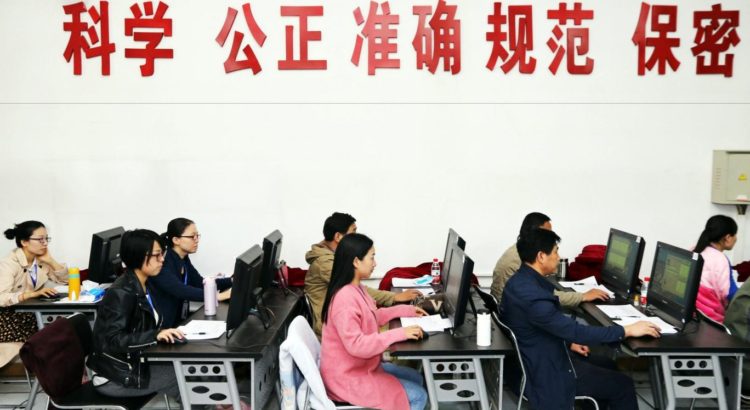
El ministerio de Seguridad Pública de China confiscó más de 100 equipos de alta tecnología fabricados para cometer fraude durante el gaokao, la rigurosa prueba de ingreso universitario que se aplicará esta semana, confirmó hoy un comunicado.
Según el texto, la operación abarcó las provincias de Liaoning, Shandong, Hubei, Guangdong y Sichuan, así como la región autónoma de Mongolia Interior, y como resultado las autoridades desarticularon 12 bandas criminales que pretendían vender los aparatos inalámbricos.

Entre esa y otras maniobras abiertas desde febrero pasado, arrestaron a al menos 500 individuos vinculados a la producción y distribución ilegal de artículos similares.

El gaokao comenzará a aplicarse desde mañana y este año se espera que 9,75 millones de estudiantes se presenten al examen, el cual puede durar hasta nueve horas y de acuerdo con estadísticas, sólo tres de cada cinco alumnos lo aprueban.

Funcionarios del ministerio de Educación de China inspeccionan toda la logística y los centros docentes para evitar filtraciones, garantizar la máxima seguridad y confidencialidad.

El proceso incluye la supervisión de los sistemas y archivos computarizados, así como de la impresión, traslado, almacenamiento y distribución de los exámenes.

Los días previos, durante y después del gaokao lo convierten en la noticia más importante en todos los medios de comunicación en China, pero a la vez genera estrés entre los jóvenes por su exigencia e intensidad.

Sin embargo, el Ministerio está inmerso en una reforma del sistema educativo que incluye medidas como la prohibición a dar publicidad a quienes logren las mejores notas y adelantó sanciones severas para las empresas que infrinjan esa disposición.

Además decidió suspender los puntos de bonificación a los alumnos que muestren algún talento, debido a que muchos padres adiestran a sus hijos desde pequeños en algún deporte o el arte para aprovechar esa brecha, en vez de enfocarse en su desarrollo integral.

Diversas encuestas revelan que casi la mitad de la población infantil en China no tiene espacio para jugar ni hacer relaciones sociales por la sobrecarga de las tareas -especialmente de matemáticas-, y las clases extras que reciben mientras se preparan para pasar el gaokao.

Las investigaciones también coinciden en las afectaciones al horario de sueño y la frustración en gran parte de los niños.

Fuente: http://www.prensa-latina.cu/index.php?o=rn&id=184901&SEO=confiscan-en-china-equipos-para-fraudes-en-ingreso-a-universidades
Comparte este contenido:

India: Indian govt may soon turn to private sector to boost higher education system

Asia/India/5.06.2018/By: Elton Gomes/ Fuente: qrius.com.

Higher education in India might receive a significant monetary boost as the government is planning to rope in private companies and high-net individuals (HNIs) to finance and promote higher education across the country. The ministry of human resource development has prepared a draft of the plan and will present it before the Union cabinet for consideration.

Two government officials have stated the plan will be implemented through the higher education funding agency (HEFA), a non-banking financial company, under the human resource ministry, as reported by Live Mint. According to Swarajya Mag, the plan is to raise Rs 1 lakh crore from the market, and spend it on funds for ‘infrastructure requirements of educational institutions.’

Roping in HNIs and private companies might lead to improvements in higher education in India, and government officials seemed optimistic. “Bringing in industries or industrialists or high net-worth individuals for HEFA equity will have three benefits. One, structured and clean private funding. Two, outside experience of managing higher education funding. And three, curb chances of manipulation at the institutional level,” a government official told Live Mint.

In February 2018, Union Finance Minister Arun Jaitley said that the education sector was a priority for the Indian government.

Why does this matter

In 2014, the Times of India reported that a mere 10% of students have access to higher education in the country. The article cited a report by a development economist Abusaleh Shariff, and mentioned that residents of Bihar, Uttar Pradesh, and West Bengal have the worst access to higher education.

A report in Live Mint details that lax quality and a lack of accountability and widespread innovation is what ails higher education in India. Indian higher education seems to be suffering from a two-fold problem of quality and quantity. The Indian government seems to think that privatising education is the only solution. However, along with private investment, the government also should look to invest more in education.

In 2016, China spent roughly $565 billion on education – more than 60% of which came from the government. In the same year, India spent approximately $4.5 billion on higher education, as per the Quint. India’s spending on education is much lower than that of other countries.

Mumbai’s apex varsity – the University of Mumbai – has been in shambles despite having a highly conducive environment for studies. Further weakening the reputation of the university is the incessant delays in results.

Perhaps some degree of privatisation is the only way out for better higher education in India. However, along with adequate funds, the government must ensure the funds are being allocated to improve the quality of teaching offered to Indian students, thereby, improving accountability of the system.

Fuente de la noticia: https://qrius.com/higher-education-in-india-to-get-boost-as-government-mulls-huge-investment-private-funding/

Comparte este contenido:

Israel: Ultra-Orthodox Families’ Increasing Demand for Secular Education Not Being Met

Asia/Israel/05.06.2018/By: Or Kashti/ Source: www.haaretz.com.

Education Ministry ‘foiling attempts at integration into society,’ say parents who want state-run Haredi school system to incorporate subjects like English, math

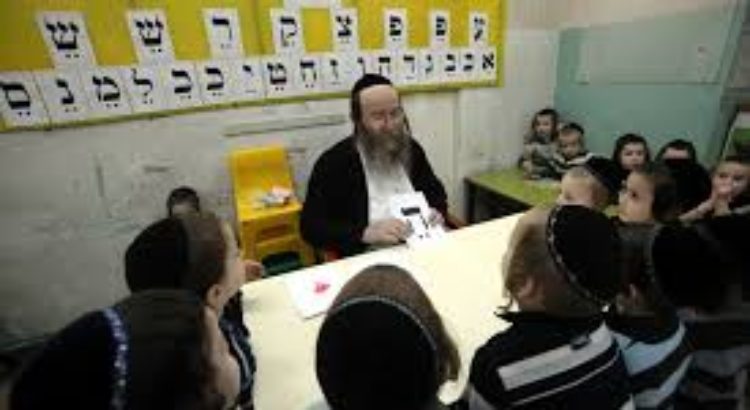
Hundreds of ultra-Orthodox children whose families want them to receive education in secular subjects are likely to be left in the lurch in the coming school year.

Despite growing demand among the ultra-Orthodox, or Haredim, to have children learn «core» subjects as English and math as part of the curriculum in the state Haredi school system – no solution has been forthcoming. The reasons for this, parents claim, include lack of room, hurdles by the local authorities and indifference on the part of the Education Ministry.

In light of this situation, an attempt by parents of some 250 children to be accepted to state Haredi schools next year is doomed to fail. A group of parents has gotten together recently, demanding an increase in the number of classrooms in these schools, but it seems that most will end up registering their children in the regular Haredi school system, where secular subjects are taught at a low level, if at all.

The parents accuse the Education Ministry of shirking its responsibilities. One has even charged that “the state is foiling attempts by Haredi families to integrate into the general society.”

The state Haredi school system was launched at the initiative of former Education Minister Shai Piron, who sought to bypass the contentious issue of core subjects being taught in the non-state schools that cater to the community. In addition to religious subjects, the relatively new state-run system offers a full curriculum of secular subjects from the first grade, and it is supervised by the ministry, in contrast to the Haredi system that is independently managed and has its own curriculum.

According to Education Ministry figures, the number of children enrolled this academic year in 43 state-run Haredi schools is 5,562, as compared to 4,675 pupils in 36 institutions last year. The ministry would not divulge data regarding the coming school year.

In conversations with parents and Haredi education activists it emerges that some 150 children who will be entering first grade in Jerusalem in the fall have been told that the schools are completely full. In Petah Tikva and Bnei Brak, 70 children are looking for a place in Haredi state schools, while others seek to enroll in them in Bat Yam, Holon and other cities – including locales with a Haredi majority such as Modi’in and Betar Ilit.

According to senior Education Ministry officials, these are numbers that warrant urgent attention.

A preliminary survey by Itamar Kea Levi, an activist in Jerusalem, reveals that there are 120 families across the country that have shown interest in setting up a school as part of the state-Haredi system in their own locales. He says that dozens of other families did not wish to give details about their efforts, as yet.

“The world is changing, people realize that you can stay in the world of Torah and work at the same time,” says Kea Levi. “In such a world, you want your child to have all the options.”

There are currently three such schools in Jerusalem – an elementary school for girls, and an elementary and high school for boys. Next year, a high school for girls is scheduled to be opened.

‘A different approach’

Former Bnei Brak resident Neta Katz says that he moved to Jerusalem so that his two sons, aged 7 and 9, will be able to study at a state Haredi school. “We’re at the end of the first year and I thank God for the move,” he says, adding that his daughter will be entering first grade in the fall of 2019.

“I asked the principal of the girls’ school to keep a place for her,» he says, «but she told me not to count on it. If it’s hard to deal with the demand at this point, I have no doubt that things will only get worse.”

Katz himself studied in schools run by the strict Gur Hasidic sect, and he recalls that, “95 percent of the time was devoted to religious studies, with an hour or an hour and a half left over for secular subjects. English was taught on an irregular basis. When I reached the academic world I had great difficulties since I had to start from very basic concepts like simple arithmetic problems.”

In the state Haredi schools, Katz explains, “the approach is completely different, both in terms of the level and the scope. I never knew there was a subject called science. I don’t believe core subjects should be imposed on people who don’t want them, but the state must enable this for those who do. In many high-density Haredi communities there are no such schools. If one considers the interest of the state, this is an unacceptable situation.”

Israel’s compulsory education law gives the responsibility for education to the state and to local authorities. Often, this joint responsibility leads one of the sides to pass the buck. According to sources in some local governments, the procedure is usually that the municipal education department turns to the ministry to ask for a new school to be built. The ministry has various methods of supporting the school system in local authority, through enhanced general budgets or by covering some specific expenses.

The Haredi department at the Education Ministry is responsible for state Haredi schools as well as for the independent Haredi system. Katz says that when he met in the past with people in this department, he was advised to organize a group of parents and then approach the local authority.

“The problem is that you can’t wait for the free market to kick in,” says Katz. “There are many hurdles and objections and you can’t tell parents to deal with local governments on their own.”

Says Yehuda Grovais, from Bnei Brak, “The Haredi department promised to deal with establishing a school if we produced a list of interested parents. By word of mouth we managed to get a list of 40 girls who want to attend such a school next year. So we were sent to the municipality. The sense is that the Education Ministry prefers that someone else do the fighting for them.”

Grovais notes that city hall had suggested that the girls go to a regular Haredi school. When he insisted he wanted something different, he was told that, “it won’t work here.” The same thing happened to another group in Petah Tikva.

“[Education Minister] Bennett is abandoning ultra-Orthodox people who want to integrate” says one parent. “The ministry is strengthening the grip of the extremist elements of the Haredi community and we’re paying the price.”

In response, the Bnei Brak municipality says that efforts will be made to resolve the issue. The Petah Tikva municipality said there was not enough demand for such schools.

The Education Ministry said it viewed the demand for more state-run Haredi schools positively and would examine ways to meet it, together with the relevant local authorities.

Source of the news: https://www.haaretz.com/israel-news/.premium–1.6141203

Comparte este contenido:

India: Extramarks Education Foundation ties up with Power Grid to offer digital solutions at Army-run schools in J&K

Asia/India/June 04, 2018/By: PTI/Source: indianexpress.com.

EEF and PGCIL will equip all the army classrooms with digital hardware, provide state-of-the-art digital solutions, and train faculty.

Terrorism deprives thousands of children of education in Jammu and Kashmir and the Indian Army has set up special schools to address this problem. Now, the quality of education at these institutions in J&K is all set for a digital leap with the introduction of a digital solutions learning programme.

The programme was inaugurated by Chief of Army Staff General Bipin Rawat at Army Goodwill Schools, Pahalgam, at a function held late Friday evening, and attended by GOC Northern Command Lt. General Anil Bhatt with senior officials from the State Education Department, civil administration and other senior police functionaries. At least 1,600 students and hundreds of staff at Army Goodwill Schools (AGS) will benefit from Phase I of the programme, facilitated by a non-profit NGO ‘Extramarks Education Foundation (EEF)’ headed by founder Atul Kulshreshtha and Power Grid Corporation of India Ltd (PGCIL), according to a release issued by organisers. EEF and PGCIL will equip all the army classrooms with digital hardware, provide state-of-the-art digital solutions, and train faculty.

In subsequent phases, a balance of 46 Army Goodwill Schools will also be brought in to the programme. The programme will run in AGS Pahalgam, Ziran, Uri, Margund and at AGS Pinewood School, Hamirpur in Poonch. Army Goodwill Schools were established by the Indian Army in all the three regions, Ladakh, Kashmir and Jammu where children did not have access to education or the schools were dysfunctional.

“The credit for augmenting education in areas affected by turbulence goes to the Indian Army for their inclusive approach,” said Atul Kulshreshtha, Founder and Chairman of Extramarks.

Source:

http://indianexpress.com/article/education/extramarks-education-foundation-ties-up-with-power-grid-to-offer-digital-solutions-at-army-run-schools-in-jk-5193356/

Comparte este contenido:

Japón apuntala ayuda a la educación superior a familias con bajos ingresos

Japón / 3 de junio de 2018 / Autor: Redacción / Fuente: Internationalpress

El Gobierno japonés realiza los últimos ajustes a un paquete para reducir la carga de la educación superior en los hogares que ganan en total menos de 3 millones 800 mil yenes.

Según el plan, los hogares exentos de impuesto a la renta por sus bajos ingresos se beneficiarán con matrículas gratuitas en las universidades nacionales y recibirán becas de estudio no reembolsables.

En el caso de una familia conformada por 2 padres y 2 hijos y uno de ellos sea universitario, la ayuda para la educación superior se hará efectiva en la siguientes condiciones:

a) Si el hogar tiene un ingreso menor a 3 millones de yenes anuales, la ayuda será de dos tercios del gasto universitario.

b) Si el hogar tiene un ingreso de entre 3 millones y 3 millones 800 mil yenes anuales, la ayuda será de un tercio del gasto universitario.

Se conoció que todos los años se verificará el ingreso anual total de la familia beneficiada, incluidos sus bienes, para decidir la renovación de la ayuda estatal para la educación superior.

El paquete de ayuda entraría en vigencia en el año fiscal de 2020

Fuente de la Noticia:

Japón apuntala ayuda a la educación superior a familias con bajos ingresos

Fuente de la Imagen:

http://www.latin-a.com/universidad-en-jap-n-buena-inversi-n-o-derroche/

Comparte este contenido:

Un tercio de las niñas del sur de Asia faltan a clase por la menstruación

Asia/02 de Junio de 2018/El Periódico

Un estudio revela que la falta de acceso a baños higiénicos y productos sanitarios obliga a las jóvenes a austentarse durante los días de regla

Más de un tercio de niñas y adolescentes del sur de Asia faltan a la escuela durante la menstruación, a menudo debido a la falta de acceso a aseos y compresas. Asimismo, muchas no reciben ningún tipo de información sobre la regla antes de alcanzar la pubertad, según revela un estudio realizado por la oenegé WaterAid en colaboración con UNICEF.

El informe señala que la mayoría de centros educativos de la región no alcanzan los estándar mínimo de la Organización Mundial de la Salud (OMS) que establece un baño por cada 25 niñas, lo que complica la asistencia a clase de las jóvenes durante los días de menstruación.

En un distrito de Nepal, el informe destaca que había un solo aseo por cada 170 chicas estudiantes. «Las niñas tienen un derecho irrevocable a la educación, que se pierde si se sienten incapaces de atender a las clases porque les faltan productos sanitarios o aseos limpios, privados y con buena higiene», ha declarado el director ejecutivo de WaterAid, Tim Wainwright.

Tema tabú

Por otro lado, la educación sobre menstruación es escasa en la región. En Sri Lanka, dos tercios de las chicas entrevistadas afirmaron que no recibieron ningún tipo de información antes de tener su primera regla. Thérèse Mahon, coautora del informe, ha alertado de que la falta de información puede ser un problema serio en el sur de Asia, donde existen fuertes tabús sobre la menstruación.

«Las jóvenes suelen pedir ayuda a sus madres y profesoras, pero si no tienen esa confianza y les falta información, pueden perpeturar los tabús», ha afirmado Mahon. «Una percepción común es que la regla es un secreto sucio».

Problema sanitarios

Algunas culturas del sur de Asia consideran que las mujeres son impuras durante el periodo, por lo que durante los días de regla se les prohíbe visitar santurarios religiosos, se les somete a controles dietéticos o se las obliga a vivir en aislamiento. A menudo padecen discriminación social, problemas de salud reproductiva y baja autoestima debido a la falta de conocimiento.

La falta de una conversación abierta y de acceso a la información fuerza a las jóvenes a vivir la menstruación en silencio, y muchas acaban exponiéndose a infecciones y enfermedades al desconocer cómo funciona el proceso fisiológico y qué medidas de higiene deben adoptar.

Muchas naciones sudasiáticas han incluido información sobre la menstruación en el currículum escolar pero el informe señala que aún queda mucho por hacer. «Eliminar el estrés asociado a la regla puede ayudar tanto a niñas como a niños a ajustarse mejor a la realidad que les rodea», ha dicho Jean Gough, directora regional de Unicef.

Fuente: https://www.elperiodico.com/es/internacional/20180522/un-tercio-ninas-sur-asia-faltan-clase-por-regla-6832638

Comparte este contenido:
Page 280 of 773
1 278 279 280 281 282 773