Page 346 of 774
1 344 345 346 347 348 774

How Australia can help reform higher education in India

06 de diciembre de 2017 / Fuente: http://theconversation.com

The Indian higher education system faces stiff challenges. Australians may not imagine they’re well placed to help. But there are opportunities for exciting collaboration between Australia and India in reforming higher education.

In 2004 and 2005 I spent a year living in the north Indian city of Meerut, where I was working as a geographer and anthropologist. Every day I’d get up, walk past a crowded tea stall, and enter the local college to chat to students.

On one side of the college gate was a statue of Gandhi. He passed through the campus in the early 1920s, when the college attracted students from as far away as Nepal.

Near the statue a small group of students congregated to protest about corruption in the city. They called themselves the Chingari group – “chingari” means “spark” in Hindi.

On the left of the gate was a decrepit science block. A student had scrawled on the building in huge white letters “In need of an acadmic atmosphere” – with “academic” misspelled. Although a few students saw themselves as sparks and tried to effect change, the general feel of the college was depressing. The graffiti was like a projection of the mood of most students I met. One told me:

The equipment here is like the equipment in your country fifty years ago. They should throw it down a well.

One in ten people in the world is Indian youth under the age of 30.

Roughly 94% of Indian students study at state-run universities and colleges. These State run institutions face many challenges.

First, curricula are poor. India has a rich tradition of critical education. The British systematically eroded this system, and post-colonial governments have not been able to sufficiently revise colonial courses. By some estimates, only a tenth of those graduating from private colleges in India have skills relevant to employment markets.

Second, there is a lack of research occurring in universities. This partly reflects Prime Minister Nehru’s decision in the 1950s to channel research funds into non-university research institutes. And this situation is getting worse. In 1990 India produced more scientific research papers per year than China. In 2011 India produced barely 30% of China’s.

Other major problems include inadequate governance arrangements and mismanagement within universities, poor university links to industry, and lack of funding. Educated unemployment and underemployment is also a critical issue. Some students say they’re engaged only in “timepass”: everyday efforts to stave off boredom and manage a sense of dead time.

A statue of Mahatma Gandhi, a leader in the Indian independence movement against British rule. Shutterstock

Why should Australia be involved?

There’s a moral argument for Australian universities to engage with this situation, since they profit from Indian student enrolments.

There’s also a financial incentive. People in regional India are spending enormous amounts of money on poor quality education. Australian providers could fill the gap in this market by offering better quality courses.

There’s also untapped talent among the mass of Indian students in state-run universities and colleges. Australian universities should be helping to identify and provide opportunities to these many great minds.

And there’s a mandate from many sections of the Indian government. Niti Aayog, India’s Policy Commission, has called for international assistance in reforming higher education.

Challenges to collaboration

Australia is poorly placed to respond to this challenge in some respects.

Despite the tripling of the Indian population in Australia since 2005, India knowledge in Australia is low. Six universities in Australia taught an Indian language in 1996. Now only two do.

Australian universities tend to concentrate only on engaging with elite higher education institutions in India, which puts the significant amount of students in regional Indian institutions at a disadvantage.

Strategies for collaboration

There are reasons for hope. Prime Minister Narendra Modi is trying to reform higher education in India.

Within India, philanthropists have established some excellent private universities in recent years that could generate educational and economic growth in the regions they’re located. Australian universities have recruited faculty with Indian expertise, and are already engaging in some exciting experiments in this space.

How efforts could be extended:

  1. Australian universities could link with top universities in India to create regional educational ecosystems. Many of the best new private universities in India are already engaged with their regions. Ashoka University, for example, runs workshops for college principals and outreach programs in schools. Australia could learn from and supplement such initiatives, using the best private and public universities as hubs.
  2. Australian universities could sponsor basic research. We know almost nothing about Indian higher education in regional and rural India. Even within India there’s very little understanding of higher education in those areas.
  3. Australian universities could develop access scholarships for talented Indian students who are not part of the elite. This might entail trusting Australian faculty with India expertise to make qualitative assessments of students outside the normal metrics.

For these approaches to work, we need to use Australian universities’ experience in thinking about access and diversity onshore, and apply it in India.

Some of my friends in Meerut have responded to educated unemployment by getting involved in counterfeit private education. They are reproducing the system that produced them as unemployed youth. But others are energetically improving their local school and college systems. These “sparks” could be partners in reform.

Fuente noticia: http://theconversation.com/how-australia-can-help-reform-higher-education-in-india-88479
Comparte este contenido:

Debaten en Vietnam tendencia de desarrollo de educación superior

06 Diciembre 2017/Fuente y Autor:vietnamplus

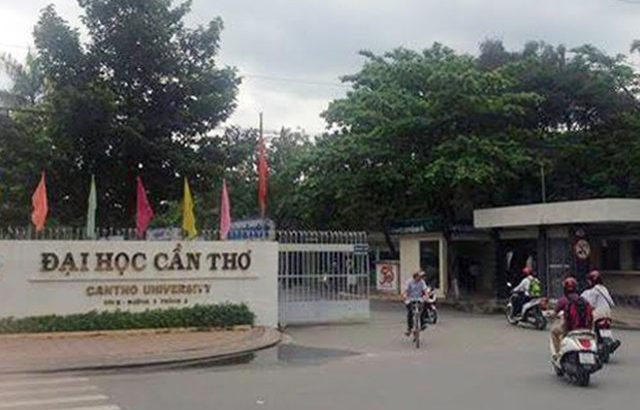
El Foro internacional sobre la tendencia de desarrollo de educación superior fue efectuado por la Universidad de Can Tho, en coordinación con las Universidades de Potsdam y Gutenberg.

Durante la cita desarrollada en la ciudad vietnamita de Can Tho, los participantes coincidieron en que la tendencia de la educación superior es la enseñanza con orientación a la investigación.

Según el profesor Gregor Daschmann de la Universidad de Gutenberg, en esta técnica de enseñanza, los profesores solo orientan a los estudiantes sobre el tema y métodos de búsqueda de documentos.

Así una universidad no solo es un centro de educación, sino más bien un centro de investigación, destacó Daschmann.

En la ocasión, los expertos también intercambiaron experiencias en el desarrollo del modelo de enseñanza orientada a la investigación.

Por su parte, el profesor Le Viet Dung, vicerrector de la Universidad de Can Tho, reveló el objetivo de convertir a la escuela en un centro de investigación del Delta de Mekong, y destacó las ventajas por realizar esa meta. –VNA

Fuente de la noticia:https://es.vietnamplus.vn/debaten-en-vietnam-tendencia-de-desarrollo-de-educacion-superior/81450.vnp

Fuente de la imagen:https://imges.vietnamplus.vn/t660/Uploaded/wbxx/2017_12_06/tuyensinh148677584206

Comparte este contenido:

China: Shanghái, el modelo educativo en el que «nunca se castiga»

Buenos resultados en base a alumnos estimulados.

Asia/China/05.12.2017/Autor y Fuente: https://www.elpais.com.uy

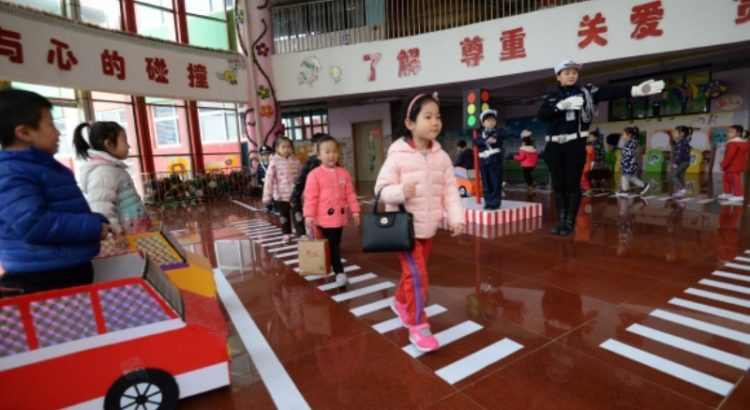
Con los brazos en aire, los alumnos entonan el himno nacional antes de retomar las clases en los colegios de la ciudad china de Shanghái, muy bien situados en las pruebas educativas internacionales.

En la escuela de educación primaria de la calle Wuning, mientras los niños de entre 8 y 12 años cantan, la bandera roja con cinco estrellas amarillas ondea en el cielo.

Estudian de todo, o casi: matemáticas, preparación del té, pasando por fútbol, moral e incluso hip hop.

El interés de Occidente por el sistema educativo local se ha intensificado desde que los estudiantes de esta ciudad consiguen resultados excelentes en las clasificaciones internacionales. Llegaron profesores de Inglaterra para estudiar el secreto y el Banco Mundial publicó en 2016 un informe elogioso bajo el título «¿Cómo hace Shanghái?»

Los alumnos de la escuela Wuning, una de las mejores de la ciudad, visten el uniforme típico en China: zapatillas deportivas blancas, pantalón deportivo azul, camiseta blanca y fular rojo.

Bajo la atenta mirada del profesor hacen ejercicios de matemáticas en silencio. «Si charlan, les miro fijamente», explica la profesora Zhang Jing. Con eso basta para que se callen.

Nada de castigos.

Durante mucho tiempo, la educación en China se basaba en el respeto al profesor. Pero esta escuela de Shanghái, al igual que otros establecimientos locales, sigue otro método.

Los profesores quieren que los alumnos «les amen» y no les tengan miedo. Les animan a expresarse y a ser creativos.

«Me ocupo de niños pequeños. Lo que más necesitan es ternura», explica Shen Yi, profesor de matemáticas desde hace 26 años.

Después de entregar un ejercicio de estadística a los alumnos, les anima, a veces dándoles toquecitos en la cabeza con cariño. «Tu gráfico está muy bien hecho», halaga a uno de ellos.

En clase los alumnos se sientan con la espalda recta y sólo hablan cuando se les hace una pregunta.

«Casi nunca se castiga, sólo los animamos», explica Shen. «De esta manera los alumnos tienen la sensación de mantener una relación privilegiada con sus profesores. Como con su madre o un amigo. Y como se sienten queridos por sus profesores, tienen ganas de ir a clase».

Gimnasia.

En cuanto suena el timbre, los niños se levantan al mismo tiempo y entonan un respetuoso «¡Adiós profesor!»

Para los 1.300 alumnos es la hora del recreo, donde asisten al izado de bandera y entonan el himno nacional. Una rutina en todas las escuelas de educación primaria del país.

Una música marcial marca el comienzo de la gimnasia diaria. «Quédense en fila, izquierda, derecha, izquierda, derecha», dirige una mujer con micrófono en mano, mientras los niños balancean los brazos en un baile sincronizado casi perfecto.

Según el informe del Banco Mundial, el éxito escolar en Shanghái se debe a la calidad de la enseñanza. «Uno de los aspectos más impresionantes del sistema educativo de Shanghái es la manera en la que forma, apoya y dirige a los profesores, que son el corazón de los esfuerzos por mejorar la calidad de la educación en los colegios», afirma.

Otros puntos positivos: los establecimientos deben rendir cuentas de los resultados y los centros más competitivos, ayudar a los otros.

Como en las otras escuelas chinas, Wuning enseña «ética» y «moral». Los profesores pasan de puntillas sobre el contenido dedicado a la ideología del Partido Comunista o el pensamiento del presidente Xi Jinping, añadido al programa escolar nacional.

Fuente: https://www.elpais.com.uy/mundo/shanghai-modelo-educativo-nunca-castiga.html

Imagen: https://sc2.elpais.com.uy/files/article_default_content/uploads/2017/12/02/5a231fd620826.jpeg

Comparte este contenido:

OTI: Esclavitud moderna y trabajo infantil

Estados Unidos/05 de Diciembre de 2017/La Arena

Según un informe de la Organización Internacional del Trabajo, un organismo de la Organización de Naciones Unidas, casi 200 millones de personas son víctimas de la esclavitud moderna o del trabajo infantil en todo el mundo. En 2016, 40,3 millones de hombres y mujeres fueron víctimas de la esclavitud moderna y 151,6 millones de niños -uno de cada diez- de trabajo infantil.
El informe define la “esclavitud moderna” como “las diversas formas de coerción prohibidas en los instrumentos internacionales sobre derechos humanos y normas laborales”. Una de cada cuatro víctimas de trabajo forzoso son niños, y el 71 por ciento del total de víctimas son mujeres.
El estudio también informa que 4,8 millones de personas son víctimas de explotación sexual forzada. En promedio, las víctimas permanecen detenidas durante 23,4 meses antes de escapar o ser liberadas. La gran mayoría son mujeres y niñas.
Por región, Africa tiene la tasa más alta de esclavitud moderna, con 7,6 por cada mil personas. La tasa es de 6,1 por cada mil personas en Asia y el Pacífico; 3,9 por mil en Europa y Asia Central; 3,3 por mil en los Estados árabes; y 1,9 por mil en las Américas. Los países que están siendo o han sido recientemente devastados por la guerra experimentan niveles más altos de explotación.

Definición limitada.
La OIT no incluye en su definición de trabajo infantil a quienes trabajan en formas legales de empleo. La definición utilizada en el estudio incluye trabajos peligrosos, la demanda de horas de trabajo excesivas, que a menudo privan a los niños de tiempo para juego y educación, y labores que ponen en riesgo su bienestar. A pesar del alcance limitado de la definición, el estudio aún da una idea del asombroso nivel de trabajo infantil en todo el mundo.
Según el trabajo, poco menos de la mitad de los niños que realizan trabajo infantil (72,5 millones) están realizando trabajos peligrosos que ponen en riesgo su salud y seguridad. Más de 19 millones de niños de entre 5 y 11 años; más de 16,3 millones entre 12 y 14; y 37 millones entre 15 y 17 están involucrados en trabajos peligrosos. Las horas que los niños son obligados a trabajar también son terribles. Aproximadamente el 63,3 por ciento de los niños entre 15 y 17 años que están involucrados en trabajo infantil se ven obligados a trabajar 43 horas o más por semana.
Casi un tercio de los niños involucrados en el trabajo infantil están fuera del sistema educativo. Quienes asisten a la escuela tienden a desempeñarse peor que sus compañeros que no trabajan.
Al igual que con la esclavitud moderna, una proporción significativa del trabajo infantil se encuentra en países afectados por conflictos y desastres. Aproximadamente el 17 por ciento de los niños en países devastados por la guerra están involucrados en el trabajo infantil, casi el doble del promedio mundial. Los países incluidos en el informe como afectados por conflictos armados incluyen Afganistán, la República Centroafricana, Colombia, Iraq, Mali, Nigeria, Filipinas, Sudán del Sur, Ucrania, Yemen y la República Democrática del Congo. Otros países, como Siria y Libia, no fueron incluidos ya que no hay estimaciones disponibles.

Ganancias obcenas.
Si bien el porcentaje de niños involucrados en el trabajo infantil ha disminuido ligeramente con respecto a 2012 en todo el mundo, en realidad ha aumentado en la Africa subsahariana. La epidemia de la esclavitud y el trabajo infantil es uno de los aspectos de la explotación. La OIT estima que cada año se generan 150 mil millones de dólares en ganancias en el sector privado por trabajo forzoso. El problema se agrava en los países que son víctimas de la explotación neocolonial. Un video publicado por CNN mostró que jóvenes fueron subastados como trabajadores agrícolas en Libia, un país devastado por una guerra lanzada por el ex presidente de EE.UU. Barak Obama.
Una investigación del 2016 de Amnistía Internacional reveló que niños de tan solo siete años trabajan en condiciones peligrosas en la República Democrática del Congo para extraer cobalto que termina en teléfonos inteligentes, automóviles y computadoras vendidos a millones en todo el mundo. Dichas minas les suministran materiales a corporaciones como Apple, Microsoft y Vodafone. (Trevor Austin. World Socialist Web Site. Rebelión).

Fuente: http://www.laarena.com.ar/opinion-esclavitud-moderna-y-trabajo-infantil-1181714-111.html

Comparte este contenido:

India: Strengthen agri education to keep pace with changes: Singh

India/Diciembre de 2017/Fuente: Times of India

Resumen: Las tendencias de la agricultura están cambiando a diario en vista de los nuevos desarrollos tecnológicos, dijo hoy el ministro de la Unión, Radha Mohan Singh, haciendo hincapié en la necesidad de fortalecer la educación en el sector. El Consejo Indio de Investigación Agrícola (ICAR) ha iniciado muchos programas nuevos para elevar la calidad de la educación superior en este campo, dijo. El ministro de Agricultura dijo que el Centro ha aumentado el presupuesto de educación agrícola en un 47,4 por ciento este año, en comparación con el año fiscal 2013-14. Singh estaba hablando en la Universidad Agrícola Central Dr. Rajendra Prasad en Bihar con motivo del Día Nacional de Educación Agrícola.

Agriculture trends are changing daily in view of new technological developments, Union minister Radha Mohan Singh said today, stressing upon the need for strengthening education in the sector.

The Indian Council of Agricultural Research (ICAR) has initiated many new programmes to raise the quality of higher education in this field, he said.

The agriculture minister said the Centre has increased the budget of agricultural education by 47.4 per cent this year, as compared to the 2013-14 fiscal.

Singh was speaking at Dr Rajendra Prasad Central Agricultural University in Biharon the occasion of National Agricultural Education Day.

He said the main objective of the government is to attract youth, including school children, towards agricultural education.

In order to adopt quality and holistic approach to higher agricultural education, he said, the Fifth Dean Committee Report has been implemented in all the Agricultural Universities.

«This is first-of-its-kind that all graduate Level courses of agriculture and its related subject have been declared as professional courses, in which agricultural graduates will be able to get a better opportunity from professional work in the future,» Singh said.

The agricultural graduates will benefit as this degree has now become similar to the engineering degree, he said, adding that they will also get more opportunities to go abroad for higher education.

«Fifth Dean Committee Report, guidelines have been prepared for necessary administrative educational standards for the construction and implementation of contemporary courses for the subjects covered in agricultural education,» Singh said. SID SA

Fuente: https://timesofindia.indiatimes.com/business/india-business/strengthen-agri-education-to-keep-pace-with-changes-singh/articleshow/61905227.cms

Comparte este contenido:

Classroom robots – China’s educational gambit poses questions for the West

China/Diciembre de 2017/Fuente: Diginomica

Resumen:

La inteligencia artificial (IA) cambiará fundamentalmente la naturaleza de la enseñanza en el futuro y requerirá un replanteamiento radical del papel de los docentes en el proceso.

Este fue uno de los hallazgos clave de un panel de discusión titulado «AI y VR: ¿El próximo salto gigante para la educación?» En la Cumbre Mundial de Innovación para la Educación en Doha a principios de este mes.

Jingfang Hao, novelista de ciencia ficción y fundador de WePlan, una aplicación que ayuda a los ciudadanos chinos a sacar el máximo provecho de sus planes telefónicos, dijo que creía que AI tendría un impacto positivo en la educación, ya que ayudaría a adoptar un enfoque más personalizado para aprender.

Artificial intelligence (AI) will fundamentally change the nature of teaching in future and will require a radical rethink of the role of teachers in the process.

This was one of the key findings of a panel discussion entitled “AI and VR: Next giant leap for education?” at the World Innovation Summit for Education in Doha earlier this month.

Jingfang Hao, a science fiction novelist and founder of WePlan, an app that helps Chinese citizens to get the most out of their ‘phone plans, said she believed AI would have a positive impact on education as it would help usher in a more personalised approach to learning. She explained:

AI can analyse learners’ cognitive and knowledge levels and provide personalised lessons going at the right speed for each individual. Teachers can then set up creative workshops to support this learning and organise studies so they’re based on cooperative teamwork.

Another problem the technology could help solve is how to deal cost-effectively with rising numbers of learners entering the education system. Joerg Draeger, an executive board member of the Bertelsmann Foundation in Germany, pointed out:

Education is becoming a mass issue as more people want it around the world. But with that growing mass, there’s also growing heterogeneity. It’s hard for teachers to deal with diversity and mass at the same time and heterogeneity is very expensive so education is becoming more costly. For example, even though students are studying the same things, US studies show that costs are 2.3 times higher now than in the 1970s because class sizes are smaller and more diverse. So the old analogue systems are coming to their limits and AI helps them scale.

In countries such as China, where access to good schools and teachers tends to be limited to urban areas, AI is also seen as a possible means of helping to boost educational attainment in rural districts. Yao Zheng, founder and chief executive of RoboTerra, which provides kits for 10 to 18 year old Chinese learners to build their own robots and learn how to code, explained:

The most exciting thing is if AI teachers can be used to help humans know what they don’t know. Most professions focus on their own areas like math or languages, but it’s difficult for teachers, especially in rural areas, as they’re supposed to be expert in everything. So AI has a role to play in providing fact- and knowledge-based learning and the human teacher can moderate those activities in the classroom.

China’s AI strategy

A key problem when such technology has been implemented in rural districts to date, however, is that few teachers or students understand how to use it. This “cognition gap” means there is “still quite a long way to go”, Zheng warned.

Nonetheless, China is taking the adoption of AI in the education sphere very seriously. The sector already boasts numerous start-ups such as Master Learner, an online system that marks homework and tests. According to research firm IT Juzi, the market is also ranked third behind only medicine and automobiles as having experienced the most change as a result of the technology.

And such rankings are not just idle vanity – a government plan released by China’s State Council in July revealed that AI-enabled education is now part of the national strategy. It is, in fact, a key element of a wider development roadmap that aims to make the country a global centre of AI innovation worth $150 billion by 2030.

But such ambitions and enthusiasm are potentially worrying for the West due to the competitive advantage that AI could afford the workforce of the future – even if China does still has a long way to go to achieve its goals. As Bertlesmann’s Draeger puts it:

To compete in the twenty-first century, we need twenty-first century tools.

By way of contrast with the Chinese attitude though, more developed countries see AI largely as a threat that could lead to potentially devastating job losses, including those belonging to educators. But RoboTerra’s Zheng believes that, although the technology will undoubtedly change the role of teachers, it will far from eliminate them. Instead she is certain that they will remain as important as ever. She explained:

The teacher has to be at the centre – they’re not replaceable. In fact, they’ll have more time for personal interaction with students…Teachers will help learners in the social and emotional dimension of their development and AI will help teachers to evaluate their students more effectively. So it’ll be important to rethink the teacher role, and teaching training will need to change too.

Re-thinking the teacher’s role

Bertlesmann’s Draeger agreed. While about 80% of a teacher’s day is currently spent on transferring knowledge and 20% on catering to their emotional requirements, the balance could end up shifting the other way. As he pointed out:

If you ask a teacher why they chose their job, they say it’s because they wanted to teach children and build a relationship with them. So if technology is used to help teachers deal with the emotional side of things, AI could open up the time they need to spend on relationships and the things that matter.

But the things that matter into the future will not necessarily be traditional academic skills, which “are no longer enough”, according to Saku Tuominen, founder of HundrEd, a Finnish organisation that is researching global innovation in education and disseminating best practice.

Instead today’s academic focus must be supplemented by developing soft skills such as problem-solving, empathy, curiosity and collaboration to help create a ‘growth mindset’ and complement the work of machines that are likely to take over more mundane, repetitive tasks. Tuominen explained:

We should be teaching academic, life, thinking and doing skills…We need to focus on teaching students to be smart in life not just in their grades, which means teaching them to ask questions and solve problems. Many of the jobs available now didn’t exist when I was in school and people have ended up in them because they were hobbies that became jobs. So we need to change education to make learners better prepared – and if they’re curious and can think critically, they’ll be in much better shape for the future.

Dr Amal Al-Malki, founding dean of the College of Humanities and Social Sciences at Hamad bin Khalifa University in Qatar, agreed. But she also believes that the time is now right to start looking at how to foster “digital intelligence” too. She concludes:

We need to teach children to love learning and to carry that on throughout their lives. But we also need to start teaching children how to behave ethically both as individuals and in the digital world around them. It’s about grounding ethics into a technological context.

My take

Although the West may be shying away from adopting AI in an educational context, China is betting its future on the technology as a way to solve key challenges. These include how to provide quality education to 188 million school children in a cost-effective fashion, particularly in rural areas that have traditionally been under-resourced and under-served.

This situation, combined with the country’s enthusiasm for technology of all types, has the potential to put the western workforce of the future at a competitive disadvantage if ways are not found to grasp the nettle and use AI, not to destroy teaching jobs, but to supplement and enhance them.

Fuente: https://diginomica.com/2017/12/04/classroom-robots-chinas-educational-gambit-poses-questions-west/

Comparte este contenido:

La trsite correlación entre el calentamiento global y el matrimonio infantil

Por: Pousta

Improbable pero cierto.

Cada sociedad tiene una idea fija del impacto que puede generar el cambio climático en su cultura y estilo de vida. La preocupación en Chile radica principalmente en la pérdida de los glaciares milenarios del extremo sur del país y cómo el aumento de las temperaturas puede afectar la agricultura en un futuro cercano.

Sin embargo para muchas naciones del mundo, la imagen del calentamiento global se traduce en miles de niñas obligadas a la maternidad cuando no han cumplido siquiera 14 años al ser puestas en venta por sus propias familias como un fin para salir de la hambruna causada por monzones y sequías.

El cambio climático está creando una nueva generación de niñas que deben contraer matrimonio como única forma de supervivencia, y te equivocas si crees que se trata de un problema de países de África Subsahariana o del Medio Oriente.

En Estados Unidos se han casado más de 200 mil menores de edad en un periodo de 15 años, incluyendo tres niñas de 10 y un niño de 11 años. Países como Arabia Saudita permiten que la edad para contraer matrimonio sea como cada familia lo estipule, y en México se legisla recién esta semana para que en algunos lugares de su territorio los menores de edad no puedan casarse.

“Esposas del Sol”, organización que comienza a visibilizar la relación del matrimonio infantil con el cambio climático –específicamente en Malawi- afirma  que cada día más de 37 mil niñas son obligadas a contraer matrimonio en el mundo y la situación va en aumento según advierte la entidad.

Agnes Mposwa de de 15 años, conversó con los miembros de la organización mientras sostenía a su hija de dos años en los brazos. Su vida en una sencilla aldea de Malawi se vio completamente truncada cuando sus padres –granjeros de tabaco- vieron sus ingresos limitados luego de una fuerte sequía que azotó el interior del país.

Si el clima no hubiese cambiado, en este momento estaría estudiando. Mis padres hicieron todo lo posible para evitar la situación, pero finalmente, no hubo otra alternativa” aseguró al sitio.

La correlación entre el aumento de las temperaturas y el matrimonio infantil se refleja también en Afganistán, país cuya economía se basa principalmente en el cultivo de amapolas para posteriormente extraer  heroína.  En el país un 57% de las mujeres contrae matrimonio antes de los 19 años por factores que van desde la estructura familiar hasta la religión, agregando la alicaída situación de la agricultura insostenible en un clima de contrastes que se acentúa al extremo debido al calentamiento global. En consecuencia, las familias venden a sus hijas  intentando alejarlas del hambre.

La situación es incluso peor en Bangladesh, donde el 30% de las mujeres en el país se casa antes de cumplir 15 años. Mientras el nivel del mar sube y el agua destruye los recursos, las familias sienten una presión aún mayor por casar a sus hijas y poder apalear los costos de las pérdidas causadas por los monzones.

Unicef también ha dicho que de los 15 millones de matrimonios infantiles que ocurren al año, un 18% corresponden a varones. Esto equivale a 2 millones y medio de “niños esposos”.

Fuente: https://pousta.com/calentamiento-global-matrimonio-infantil/

Comparte este contenido:
Page 346 of 774
1 344 345 346 347 348 774