Page 626 of 772
1 624 625 626 627 628 772

Libro: Las Mentiras de la Segunda Guerra Mundial, del autor Philippe Faverjon

Asia/Rusia/Julio del 2016/Resumen/http://www.elresumen.com

A nadie le asombra que la historia esté íntimamente relacionada con la mentira. Así, en el tumulto de la Segunda Guerra Mundial, hubo acontecimientos emblemáticos que se manipularon hábilmente.

Desde la enmascarada eutanasia de niños alemanes discapacitados, en 1933, a la mascarada de Gleiwitz que desencadenó la invasión a Polonia y el estallido de la guerra; desde el levantamiento de Varsovia hasta el sacrificio inútil de los kamikazes, sin olvidar el «reparto» del mundo en Yalta, Philippe Faverjon revela la cara oculta de la última guerra mundial.

Nada es anecdótico en este apasionante relato. Basándose en los descubrimientos más recientes, el autor explica lo bien que funcionan estos engaños.

Por ejemplo, el campo de concentración de Theresiendstadt, antecámara de la muerte, en una visita de la Cruz Roja fue transformado por sus propios habitantes en una ciudad balnearia para judíos privilegiados: la célebre organización humanitaria no se enteró de nada.

Lo mismo pasó en Katyn: el descubrimiento en abril de 1943 de un osario de oficiales polacos asesinados por el NKVD, organismo de seguridad soviético antecesor de la KGB, causó enseguida una gran polémica orquestada por los rusos, cuya verdad recién salió a la luz en los años noventa.

Un libro que pone al descubierto una increíble suma de errores humanos y de decisiones arbitrarias protegidas por el sello de la mentira.

Autor: Philippe Faverjon

Género: Historia / Guerra / Ciencias Sociales / Humanidades

Idioma: Español

Fuente:http://www.elresumen.com/libros/las_mentiras_de_la_segunda_guerra_mundial.htm

Fuente Imagen: http://www.elresumen.com/libros/las_mentiras_de_la_segunda_guerra_mundial.jpg

Comparte este contenido:

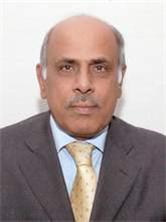
Pakistan: Reforms in health, education sectors need of hour: governor

Asia/Pakistan/Julio 2016/Autor: Editor / Fuente: pakistantoday.com.pk

Resumen:  El Gobernador de Punjab, Malik Rafique Rajwana, dijo que ha sido sugerido el sistema de colaboración público-privada, como reformas en los sectores de salud y educación.

Punjab Governor Malik Rafiq Rajwana said that public-private partnership system has been suggested, as reforms in the health and education sectors was the need of the hour.

Speaking at the residence of former MNA Sheikh Rasheed, the governor said that doctors should perform their duties at government hospitals efficiently and diligently so good health services can be provided to the patients.

He said that Punjab government was going to run big hospitals and educational institutions with the help of public-private partnership to improve standard of medical treatment and education.

He said that the government would provide more budget to health institutions, and free medical treatment facilities would be offered to the needy.

He said that corporate culture needs to be adopted and strengthening of human resource sector should be ensured for providing quality education and health facilities to the masses.

The governor said that Multan Metro Bus project was being completed on a fast pace, and after its completion, the people would be able to enjoy safe journey in air-conditioned buses.

He disclosed that the Multan Institute of Kidney Diseases and Children Complex Hospital would be inaugurated soon.

Fuente de la noticia: http://www.pakistantoday.com.pk/2016/07/08/city/lahore/reforms-in-health-education-sectors-need-of-hour-governor/

Fuente de la imagen: http://cache.pakistantoday.com.pk/Governor-Punjab.jpg

Comparte este contenido:

China and Russia Establish Association of Universities to Expand Educational Cooperation

Asia/China/Julio 2016/Autor: Arthur Dominic Villasanta / Fuente: chinatopix.com

Resumen: Las cabezas de las principales universidades de China y Rusia se reunieron recientemente para discutir la cooperación chino-rusa en los campos científicos y educativos.

The heads of some of China’s and Russia’s leading universities met recently to discuss Chinese-Russian cooperation in the scientific and educational fields.
The Rectors Forum took place at the Lomonosov Moscow State University as a part of the XVII session of the Russian-Chinese Commission for Humanitarian Cooperation. The discussion involved a wide range of issues, including Chinese universities participating in academic exchanges and the development of the youth intellectual competition system.
«This forum will go down in the history of relations between our countries,» said Victor Sadovnichiy, Rector of the Moscow State University (MSU).
He said the implementation of the state strategy depends on the efficiency of Russia’s and China’s scientific and educational cooperation. He noted that the first contacts in the field of education and science between Russia and China began during the early 17th century.
The forum resulted in the Declaration to establish the «Association of Universities of the Russian Federation and the People’s Republic of China» signed by Sadovnichy and Zhu Shanglu, Chairman of the Beijing University Council.
In addition, agreements about the cooperation in various spheres of activity were signed between the specialized educational institutions of China and Russia. Among these are medical and technical sciences, linguistics, public administration, education, agriculture and transport.
Representatives of student sports organizations signed a memorandum of intent to the Russian-Chinese student festival of winter sports. Fifteen agreements were signed between universities and research and educational organizations of China and Russia.
Currently, 200 Russian and 600 Chinese universities have established partnerships in areas that are strategically important to both countries. They have concluded over 900 direct contracts with each other and have created eight professional associations of Russian and Chinese universities.
There are about 25,000 Chinese students studying in Russian universities while 17,000 Russian students are studying in China. There are 1,500 Chinese students enrolled at Moscow University, a number that might increase to 100,000 in the future.
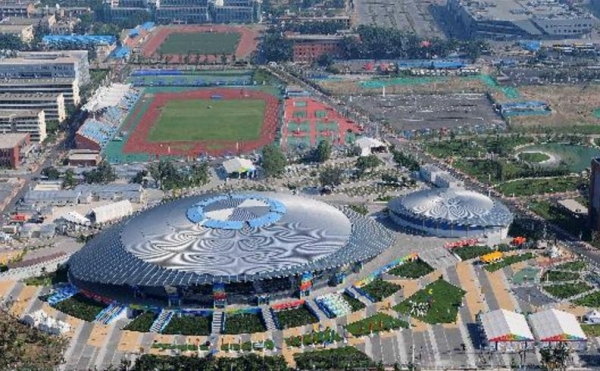
Shenzhen is working on building a joint Chinese-Russian university. This university is a cooperative project of MSU and the Beijing University of Technology.
The architectural foundation for the new university’s future building will be similar to the main building at MSU. Construction of this building should be completed by late 2018. China has taken the initiative of creating the university while MSU will provide educational programs and research and development.

Fuente de la noticia: http://www.chinatopix.com/articles/94686/20160707/china-russia-establish-association-universities-expand-educational-cooperation.htm

Fuente de la imagen: http://images.chinatopix.com/data/thumbs/full/88897/600/0/0/0/higher-learning.jpg

Comparte este contenido:

Japón: Teachers say Japan’s young voters need to have political awareness nurtured in schools

Asia/japón/Julio 2016/Autor: MIZUHO AOKI / Fuente: japantimes.co.jp

Resumen:  Tres estudiantes de secundaria, de 18 años de edad, en Shinagawa Joshi Gakuin en Tokio dijeron que estaban contentos de emitir su voto en las elecciones de la Cámara Alta del domingo, estando entre los primeros adolescentes de la nación a unirse al electorado.

Three 18-year-old high school students at Shinagawa Joshi Gakuin in Tokyo said they were excited to cast their ballots in Sunday’s Upper House election, being among the nation’s first teenagers to join the electorate.

“Just the thought of having a chance to possibly change the future (of this country), and the prospects of seeing more policies addressed to younger generations makes me excited,” said Rena Yamaguchi, a third-year student at the school, while her two fellow students nodded.

“It’s a historic event, and I’m proud to be among the first 18-year-olds to vote,” agreed Mizuki Inoue.

The students also admitted, however, to being slightly bewildered, and were not exactly confident about selecting a party or a candidate.

They have studied campaign pledges and followed media coverage. But rather than making things clear, the long lists of policy pledges have left the girls uncertain about how to make the best decision.

“We want to know what we are supposed to look for before casting our votes,” Inoue said.

Now that the voting age has been lowered from 20 to 18, the nurturing of political literacy among young people is becoming increasingly important to overcome the strong sense of apathy and inertia that has characterized them in recent decades.

Observers naturally see this as an opportunity to get younger generations more involved in politics.

Educators, however, are caught in a dilemma, trapped between cultivating students’ political literacy and maintaining political neutrality as required by law.

Education ministry guidelines require teachers to maintain this “neutrality” by refraining from expressing their personal political views.

“It’s easily said. But in reality, it’s hard to maintain that neutrality,” said Shigeyuki Yamane, a social studies teacher at Kokugakuin Kugayama High School in Tokyo.

In light of the new minimum voting age, the school held a special class about the importance of voting and the basic rules of an election. It also conducted a mock election last year, hoping to raise student awareness.

But when it comes to teaching students about contentious political issues, it can get difficult, he said.

“Even just nodding when a student expresses an opinion about a certain political party may give the impression that I support that party,” Yamane said.

When discussing contentious issues such as the constitutionality of the Self-Defense Forces, he made sure to introduce the different stances of political parties to ensure neutrality.

“It makes us nervous,” Yamane said. “Political neutrality, after all, is to introduce both sides of an argument.”

In Japan, political education had long been almost a taboo topic, observers say.

Shigeo Kodama, a professor of education at the University of Tokyo, said the taboo originally functioned to keep certain ideologies from manifesting themselves in school education.

From the late 1950s to 1970s, the Japan Teachers’ Union (Nikkyoso), which was a strong supporter of opposition parties and mainly leftist-leaning, staged strikes to fight the conservative government’s education policies, particularly the textbook screenings and rating system for teachers.

To prevent ideological confrontations, schools gave short shrift to political issues, Kodama said.

Also, university student movements in the 1960s against issues such as Japan’s security alliance with the United States were rife, later spreading to high school students, with some setting up barricades to close schools in protest.

In response to those events, in 1969, the education ministry issued guidelines banning high school students from engaging in political activities.

“With the guidelines, politics were put on a par with alcohol and tobacco,” Kodama said.

Rather than cultivating students’ social awareness, schools put weight on nurturing their ability to pass high school and university entrance exams, though that focus has been changing slowly in the past two decades, he said.

One recent change was the education ministry’s scrapping of the 1969 guidelines last year, lifting the longtime ban on political activities by high school students.

“Schools avoided exposing young people to politics for a long time,” Kodama said. “Considering that, it’s not something that can be changed overnight.

“Japan is still struggling to transform the educational system it adopted during the period of rapid economic growth (between the 1950s and 1970s),” Kodama said.

One lingering concern is that educators are still refraining from raising political issues in class due to fears of violating neutrality. But teachers need to understand, Kodama said, that ensuring political neutrality means teaching students about both sides of contentious issues, and explaining why political parties are fighting over them.

“Otherwise students may never understand,” Kodama said. “The teacher’s role is to fully explain a current situation without taking sides, and to think together with students.”

Shigeo Kawaguchi, a social studies teacher at Denen Chofu Gakuen High School, agreed, saying teachers must provide students with many different points of view on current political issues.

He attempted to stimulate students think about such issues by introducing several newspaper articles in his classes.

He has also shown a placard used in a rally to oppose the security legislation to expand the scope of overseas operations of the Self-Defense Forces. Kawaguchi was among the participants in the rally .

“I don’t think I’m violating political neutrality,” Kawaguchi said. “I’m showing them that adults should have opinions on (political issues).

“I believe children won’t form political opinions unless teachers say what they think,” he said. “I always tell students it is OK to have different opinions from mine.”

Shiori Ito, 16, one of Kawaguchi’s students, said his introduction to current political issues helped deepen her understanding of what was going on in society.

“I think it has given me the chance to gain more knowledge about society,” said Ito, a second-year student who will be speaking in the United States this summer about the voting age change on a travel-abroad program.

Although Ito is not eligible to vote in Sunday’s election, she welcomed the change. “It is a great opportunity for society to hear the voices of teenagers. We could change society.”

Kawaguchi also said it is important for adults to discuss social issues to cultivate political awareness among young students.

“Their parents and their grandparents need to discuss politics in front of them,” Kawaguchi said. “But sadly, many don’t.”

Fuente de la noticia: http://www.japantimes.co.jp/news/2016/07/08/national/politics-diplomacy/teachers-say-japans-young-voters-need-political-awareness-nurtured-schools/#.V4CoINLhC01

Fuente de la imagen: https://www.google.co.ve/search?q=Teachers+say+Japan%E2%80%99s+young+voter&source=lnms&tbm=isch&sa=X&ved=0ahUKEwjVpv6CuuXNAhWEJB4KHaxvAQEQ_AUICCgB&biw=1366&bih=637

Comparte este contenido:

Disciplina castrense para combatir la violencia en las escuelas de Tailandia

Tailandia/09 julio 2016/Autor: Noel Caballero/Fuente: El Día 

Sentados en la jungla, un centenar de jóvenes escuchan la charla sobre disciplina impartida por militares durante una de las actividades encaminadas a aplacar la arraigada violencia escolar que sufre Tailandia.

«Les inculcamos el valor de la unidad. Amor por la nación, religión y familia (…) La mayoría de estos niños nunca recibieron lecciones de disciplina. Su comportamiento (violento) no es innato, sino aprendido de estudiantes mayores», apunta a Efe el teniente Panya Panthong, unos de los instructores.

Los expertos aseguran desconocer las razones por las que se desencadenó la violencia estudiantil entre centros de formación profesional encaminada a defender «el honor de las escuelas» y que desde hace décadas los alumnos mayores inculcan a los recién llegados.

Apichart Kawchawee, un joven de 20 años estudiante de un centro del barrio de Min Buri, en el noreste de Bangkok, asegura que otros compañeros «le felicitaron» después de participar en una refriega contra estudiantes de otro centro.

«La causa (de la pelea) es simple: somos diferentes instituciones. Los estudiantes veteranos nos incitan a participar en peleas en las que a veces no sabemos ni a quien nos enfrentamos», asegura el joven a Efe al apuntillar que fue hasta «entretenido».

El Ministerio de Educación, en colaboración con el Ejército, estableció un campamento en el recinto militar de Sattahip, a unos 200 kilómetros al sureste de la capital tailandesa, donde unos 850 niños problemáticos fueron internados por dos semanas con el objetivo de detener las peleas entre centros educativos.

Lecciones de supervivencia, paseos por la playa, actividades deportivas y lecciones sobre el amor a la patria son otras de las actividades promovidas durante la estancia en el acantonamiento que finaliza este fin de semana.

«Les enseñamos las normas de la Marina (tailandesa). Según mi experiencia, entre el 70 y el 80 % de los niños abandonan su comportamiento violento al concluir el campamento», indica el teniente, quien ha participado en las tres ediciones realizadas.

El militar incluso afirma que, tras el periodo con los jóvenes, mantiene el contacto con algunos de ellos a quienes ofrece consejos de tutor y que junto a las escuelas realizan un seguimiento posterior sobre los cambios en el comportamiento de los chavales.

Según el diario «Bangkok Post», al menos cuatro peleas masivas entre estudiantes se han sucedido durante el presente año, mientras las riñas menores se contarían por centenas.

Entre ellas destaca la sucedida el pasado 8 de junio cuando dos estudiantes del norte de Bangkok resultaron heridos de gravedad al recibir puñaladas y el impacto de una bala durante un enfrentamiento con alumnos de otro centro educativo.

«Los jóvenes compran las armas en el mercado o las fabrican ellos mismos. Algunos de estos chavales son capaces de forjar pistolas de fabricación casera que se venden entre los alumnos», apunta Panya.

Aunque se carezca de datos oficiales sobre el número de contiendas, el volumen es tal que el primer ministro, el general golpista Prayut Chan-ocha, decidió utilizar a mediados de junio una ley que le otorga poderes especiales a fin de aprobar una baterías de medidas que endurezcan las penas contra los jóvenes camorristas.

Condenas de prisión para los infractores y medidas para obligar a que los padres controlen más de cerca a sus vástagos, forman parte de la nueva norma.

«De momento soy estudiante de primer año, no sé cómo puedo ayudar (a solucionar el problema), pero en el futuro cuando vengan nuevas generaciones de estudiantes intentaré ayudarles» a que no se metan en problemas, comenta Sattawat Matthakij, otro de los participantes del campamento militar.

Fuente: http://eldia.es/agencias/8771507-TAILANDIA-EDUCACI-N-Cronica-Disciplina-castrense-combatir-violencia-escuelas-Tailandia

Comparte este contenido:

India: Over 3,000 state students await admission in Class XI

Asia/India/Julio de 2016/The Shillong Times

RESUMEN: Más de 3.000 estudiantes, que limpiaron Clase X examen de diferentes instituciones, se quedan fuera de este curso si hubieran solicitado la admisión para la Clase XI en diversos órganos de las instituciones superiores de secundaria en el estado de Arte, Ciencia y Empresa arroyos. Sin embargo, el departamento de Educación del Estado ya ha intervenido para asegurar que los estudiantes están en las salas de clase pronto.
Nada menos que 2.832 estudiantes obtuvieron admisiones en Artes flujo en el funcionamiento del gobierno instituciones educativas secundarias superiores.
El número de estudiantes que no recibieron la admisión en la Ciencia, el comercio es 353 y 143, respectivamente. El número total de estudiantes que aún están por llegar admisiones en Arte, ciencia y el comercio corrientes son 3328.
Ministro Principal Adjunto en la educación de carga RC Laloo dijo que la construcción de aulas y nombramiento de docentes contractuales adicionales será iniciado por el gobierno para dar cabida a los estudiantes que quedan fuera.
«Queremos asegurarnos de que los estudiantes obtienen la admisión a la mayor brevedad», dijo. Para el nombramiento de 82 maestros (73 ayudantes y auxiliares de laboratorio 9) y contractuales para construir salas de clase y laboratorios adicionales, la implicación financiera sería Rs. 2,5 millones de rupias (Rs 2,05,20,000).
SHILLONG: Over 3,000 students, who cleared Class X exam from different institutions, are left out this academic year though they had applied for admissions for Class XI in various government higher secondary institutions in the state for Arts, Science and Commerce streams. However, the State Education department has already stepped in to ensure that the students are in the class rooms soon.
As many as 2832 students did not get admissions in Arts stream in the Government run higher secondary educational institutions. The number of students who did not get admission in Science, commerce is 353 and 143 respectively.
The total number of students who are yet to get admissions in Arts, Science and Commerce streams are 3328. Deputy Chief Minister in charge education RC Laloo said that construction of additional classrooms and appointment of contractual teachers will be initiated by the government to accommodate the left out students.
“We want to ensure that the students get admission at the earliest”, he said.
For the appointment of 82 teachers (73 assistant lecturers and 9 contractual laboratory assistants) and to construct additional class rooms and labs, the financial implication would be Rs. 2.5 crore (Rs 2,05,20,000) . In Tura Government Boys Higher Secondary School and Government Girls Higher Secondary School, the students who applied for admissions were 1533 (Arts),319(Science) and 144 (Commerce ). Out of this, 933 are left out without getting admission in Arts, 41 in Science and 74 in Commerce.
In Mendipathar Government Higher Secondary School, as many as 237 students did not get admission in Arts and in Williamnagar Higher Secondary School, the number is 413.
In United Kharkutta Government Higher Secondary School, there are 69 students who are left out though they had applied in Arts subject, while the government is yet to get the records from Resubelpara Government Higher Secondary School. In Jowai Kiang Nangbah Government Higher Secondary section which delinked from the College, there were 1675 applicants in Arts, 420 in Science and 168 in commerce, out of this, 1048 students did not get admission in Arts, 253 in Science and 69 in Commerce.
In Government Girls Higher Secondary School Jowai, the number of applicants were 212 (Arts), and 94 in Science. However the left out students are 132 (Arts) and 59 (Science) Last month, a high level meeting to discuss the shortage of admissions was chaired by Chief Minister Mukul Sangma along with Deputy Chief Minister, in charge Education. During the meeting, the State government decided to earmark additional allocation of Rs. 3.5 crore besides appointing 102 assistant lecturers and 11 laboratory assistants soon on contractual basis to bridge the gap at the +2 level.
Another decision was to carry out repair works in all educational institutions which have been impacted by calamity through disaster relief fund to ensure continuity in teaching and learning.
The overall pass percentage of SSLC this year is 54.10 and there is a marginal increase in the pass percentage compared to 2015 (53.11).
An official with the education department said that it was due to the increase, though slight, in the pass percentage of SSLC that there is rush for admissions to Class XI.
Moreover, with the ban on coal mining, youths who were earlier engaged in mining activities are now taking steps to concentrate on higher education, the official added.
The official also said that within three months, the government will ensure that the left out students get admissions and sit for classes.

Read more at http://www.theshillongtimes.com/2016/07/07/over-3000-state-students-await-admission-in-class-xi/#SdzmzrL0pUf17TgX.99

Comparte este contenido:

India: All HRD ministers will now work as a team, says Javadekar

Asia/India/07 de Julio de 2016/ /Fuente: The Indian Express

RESUMEN: Con la promesa de convertir los retos en oportunidades, recién nombrado ministro de Desarrollo de Recursos Humanos, Prakash Javadekar el jueves dijo que los tres ministros del Ministerio de Desarrollo de Recursos Humanos trabajarán ahora como un «equipo» para proporcionar una educación de calidad. «Tenemos los tres ministros de la HRD trabajarán juntos como un equipo», dijo Javadekar «Hay una serie de desafíos y oportunidades en este ministerio, por lo que lo hará convertir los retos en oportunidades «.Kushwaha ha sido MOS HRD desde mayo de 2014, mientras que Javadekar y Pandey se les dio el ministerio de remodelación. Haciendo hincapié en las aspiraciones del primer ministro Narendra Modi para proporcionar una educación de calidad para todos los estudiantes de todo el país, dijo Javadekar, «Dar una educación de calidad a aproximadamente 12 a 13 millones de rupias a estudiantes del país es nuestra principal prioridad. “La educación es el único medio de cambiar la vida de los pobres y oprimidos por lo que esta será nuestra prioridad», añadió.
Autor: IANS
NEW DELHI: Vowing to convert challenges into opportunities, newly-appointed Union Human Resource Development Minister Prakash Javadekar on Thursday said that all the three ministers of the HRD ministry will now work as a «team» for providing quality education.

«We all three ministers of the HRD will work together as a team,» Javadekar said after taking charge here. «(Upendra) Kushwaha ji was earlier here and me and Mahendra Nath Pandey ji are new here, so we will work as a team,» he said, adding, «There are a number of challenges and opportunities in this ministry, so we will convert the challenges into opportunities.»

Kushwaha has been MoS HRD since May 2014, while Javadekar and Pandey were given the ministry in Tuesday’s reshuffle. Emphasising on the aspirations of Prime Minister Narendra Modi to provide quality education to all the students across the country, Javadekar said, «Giving quality education to about 12 to 13 crore students of the country is our main priority. And I will try to deliver on all the responsibilities handed over to me by Modiji of the HRD.»»Education is the only means of changing lives of poor and downtrodden so this will be our priority,» he added.

Javadekar, who earlier held independent charge as the Minister of State of Environment was the only minister promoted to cabinet rank in the major cabinet reshuffle by Modi on Tuesday.

He replaced Union Minister Smriti Irani, who was shunted out to the Textiles Ministry.

Asked about the demands raised by several states for not sharing the New Education Policy, Javadekar said, «We are in dialogue with all the states on all the issues. The government has emphasised most on quality education and all the states have to work for that and we are ready to help all the states on this, and all the states are the stakeholders in it.»

The minister declined to comment on the Central government withdrawing its affidavit from the court in the Aligarh Muslim University issue and said, «The matter is sub judice right now so I won’t comment on that.»

Asked about Smriti Irani’s absence from his charge-taking function, the minister said: «She was supposed to come today, but she was stuck in some personal work.»

Speaking of the controversy that jolted the ministry during Irani’s tenure, Javadekar said: «Keep on reporting our good work and there would be no controversy.»

Speaking on the no detention policy which was opposed by several states, Javadekar said: «I am aware of the feelings of all the states and we will look into the matter and will let everyone know about it.»

Javadekar refused to comment on the demand of the Delhi government for five per cent reservation in admissions for Delhi students in Delhi colleges and also on the demand for an enquiry into the high percentage of students from Kerala and Tamil Nadu getting admission in Sri Ram College of Commerce in Delhi University.

He said he has called a meeting of all the senior officials of his ministry to prioritise the work.

The Bharatiya Janata Party (BJP) leader also said that on July 10 he will felicitate his teachers in Pune.

He also disapproved of Janata Dal-United leader Ali Anwar’s crass comment on Smriti Irani, saying: «This is the worst comment I had ever heard.»

Anwar, who represents Bihar in the Rajya Sabha, reportedly said that the Textile Ministry was given to Smriti Irani «to cover her body».
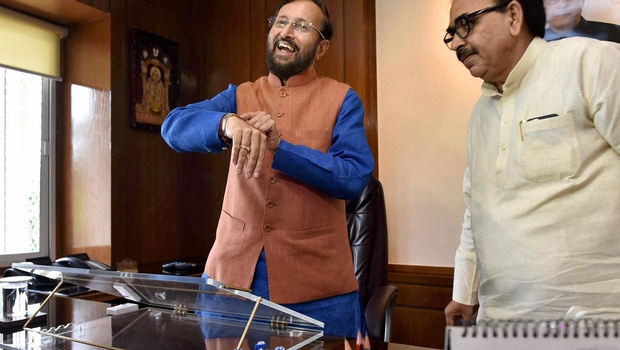
Foto: New HRD Minister Prakash Javadekar takes charge at his office in New Delhi on Thursday. | PTI

Fuente: http://www.newindianexpress.com/nation/All-HRD-ministers-will-now-work-as-a-team-says-Javadekar/2016/07/07/article3518046.ece

Comparte este contenido:
Page 626 of 772
1 624 625 626 627 628 772