Page 627 of 773
1 625 626 627 628 629 773

Israel: La herencia judía mizrají se incorpora en los programas escolares

Asia/Israel/10 Julio 2016/Fuente y Autor: Aurora-israel

En una decisión sin precedentes, el ministerio de Educación ha incorporado el legado cultural judío mizrají (oriental proveniente de los países musulmanes, sefardí y del Norte de Africa) a la currícula escolar.

El ministro de Educación Naftali Bennett expresó: «Después de 68 años, estamos corrigiendo un error histórico y voy a procurar que cada estudiante aprenda acerca de su herencia familiar y se enorgullezca de ella.» Los estudiantes de todas las edades aprenderán acerca del patrimonio sefardí y mizrají.

Bennett recibió las sugerencias de un comité encargado de la introducción de la cultura e historia mizrají y sefardí en el programa escolar israelí, coordinado por el poeta Erez Bitón. Entre ellas, se cuentan viajes de patrimonio histórico para los jóvenes a los Balcanes, la región del Magreb y España, visitas en las ciudades periféricas de Israel, y preguntas acerca de la historia judía mizrají en los exámenes de matriculación de la escuela secundaria.

Los judíos mizrajíes (orientales) provienen de Oriente Medio y los judíos sefardíes de la Península Ibérica, mientras que judíos ashkenazíes provienen típicamente de Europa Central y Oriental.

Bitón agradeció a Bennett, diciendo: «Este es un momento emocionante. Este trabajo es resultado de la dedicación de 100 personas que se sentaron juntas durante cinco meses.»

El comité recomienda que la promoción de la herencia judía sefardí y mizrají debe convertirse en una misión nacional y debe comenzar en el jardín de infantes y continuar a través de los institutos de educación superior.

Sobre el tema de la enseñanza del Holocausto, el comité recomendó que, junto con el foco central en la comunidad judía ashkenazí, las lecciones deban incluir también las experiencias y testimonios de judíos que vivían en el norte de África y en Tesalónica, Grecia, durante ese tiempo.

El comité también recomendó lecturas de las obras de Biton, así como las obras de los escritores Sami Michael, Dan Benaya Seri, Amira Hess y los poetas jóvenes Roy Hasan y Adi Kaisar en el plan de estudios de literatura.

Tambien recomendo que todos los estudiantes universitarios en los programas de educación y todos los profesores de historia cursen estudios obligatorios en la historia de la comunidad judía sefardí – mizrají desde el siglo XVII hasta el siglo XX como condición para recibir una licencia de enseñanza.

Para las clases de educación cívica, el comité recomendó la inclusión del «caso de los niños judíos yemenitas» (la desaparición de cientos de bebés y niños pequeños de familias de inmigrantes de Yemen, países árabes y los Balcanes desde 1948 hasta 1954), el movimiento de justicia social mizrají Panteras Negras, los disturbios de Wadi Salib, entre otros temas.

«Incluso si implican sentimientos de confrontación y debate, es importante promoverlos, ya que son parte integral del tejido social dinámico», dice el informe.

Cada año, alrededor de 30 de noviembre, el día que marca la expulsión de los judíos mizrajíes de los países árabes, debe ser una semana de estudios dedicada al tema, incluyendo viajes de estudios pertinentes, recomienda el informe.

Los estudiantes también deben aprender sobre el fallecido presidente Itzjak Navón, que era de origen sefardí, así como sobre el fallecido Rabino sefardí de Israel Ovadia Yosef.

El comité ha ampliado sus recomendaciones a la esfera académica, sugiriendo que el Consejo de Educación Superior en Israel debe comprender 50% de representantes mizrajíes-sefardíes. El consejo pidió además establecer una nueva facultad de estudios del patrimonio mizrají-sefardí bajo el área de humanidades e incrementar la investigación en el campo.

El coste global de las recomendaciones del comité sería de 250 millones de shekels (unos 64,3 millones de dólares) por año.

La ministra de Cultura Miri Regev, ella misma de origen marroquí y conocida defensora de la cultura mizrají y sefardí, alabó a Bennett y declaró: «estoy feliz e incluso emocionada de ver concretadas las recomendaciones del Comité Bitón y que el Ministerio de Educación sea una parte de la revolución por la justicia cultural. 2016 es el año en que comienza la edad de oro de la cultura mizrají en Israel».

Fuente de la noticia: http://www.aurora-israel.co.il/articulos/israel/Nacional/72505/

Fuente de la imagen: http://1.bp.blogspot.com/-PCN4dXjS19A/UdYTHgD1DQI/AAAAAAAAACg/y1Jf-DhcFsY/s244/judaismo.jpg
Comparte este contenido:

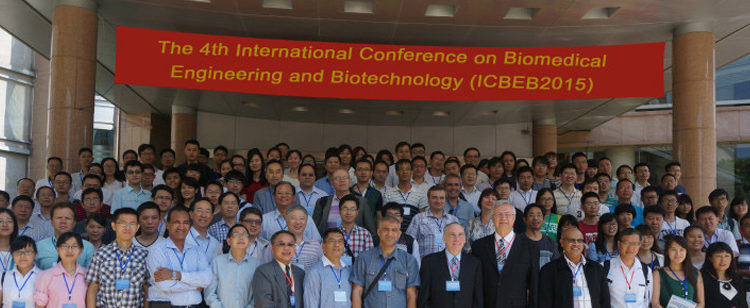
China: Quinta Conferencia Internacional de Biotecnología y de Ingeniería Biomédica , ICBEB 2016

Asia/China/ Julio del 2016/Reseñas/cn.icbeb.org

Bienvenidos  a ICBEB 2016!
  A la quinta  Conferencia Internacional de Biotecnología y Ingeniería de Biomédica ICBEB 2016
Se llevará a cabo en Hangzhou 1 de agosto de 2016.
Se realizaron en la 4ª Zhi. En ICBEB de 2015 , ICBEB de 2014 , ICBEB 2013 , ICBEB 2012 , basado en el éxito del 4ta., ICBEB 2016. Seguirá centrándose en la ingeniería transversal biomédica, materiales biomédicos, imagen biomédica, ingeniería biomecánica y otras disciplinas de la cooperación y el intercambio .
Cuatro años, los académicos ICBEB campo biomédico, investigadores, brindando intercambio investigación de vanguardia, plataforma internacional para la discusión, con el fin de alcanzar logros académicos compartidos aplicación propósito de los resultados. 2016, ICBEB se centrará en el establecimiento de dos seminarios – Tercer Simposio de Imágenes Biomédicas y Biología Molecular Rama de la primera sesión.
Aquí, en nombre del comité organizador ICBEB, para darle la bienvenida a asistir a la Quinta Conferencia de Ingeniería Biomédica e Internacional de Biotecnología, el Tercer Simposio de Imágenes Biomédicas y Molecular Biología rama de los primeros intercambios mutuos, con sus homólogos en otros países del mundo aprender unos de otros.

Fuente: https: http://cn.icbeb.org/

Fuente imagen: http://cn.icbeb.org/images/banner01.jpg

欢迎来到2016年ICBEB!

生物第五届医学工程与生物技术国际学术会议,ICBEB 2016年8月2016年1将于日至4日在杭州召开。在ICBEB 2015ICBEB 2014ICBEB 2013ICBEB 2012年 ,前四届成功举办的基础上,ICBEB 2016将继续致力于生物医学工程、生物医学材料、生物医学影像、生物力学工程等学科的跨领域合作交流。

四 年来,ICBEB为生物医学领域的学者、研究人员,提供前沿性研究交流、讨论的国际平台,以达到学术成果共享,成果应用的目的。2016年,ICBEB将 重点设立两个研讨会——第三届生物医学影像研讨会和第一届分子生物学分会。在此,谨代表ICBEB组委会,欢迎各位参加第五届生物医学工程与生物技术国际 学术会议,第三届生物医学影像研讨会和第一届分子生物学分会,与世界其他国家同行相互交流,相互学习。


Comparte este contenido:

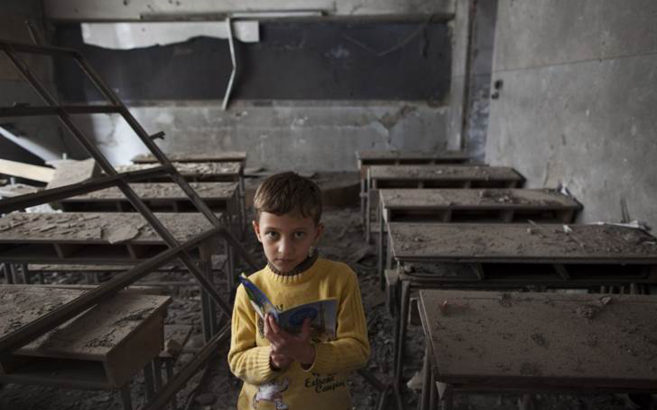
Irak: Iraq’s war children face void without world’s help- UNICEF country chief

Asia/Irak/Julio 2016/Autor:  Tom Esslemont / Fuente: Reuters

Resumen:  Una generación de niños se enfrentan a la sombría perspectiva de estar sin una educación, a menos que el gobierno iraquí, sus aliados y los organismos de ayuda reconstruyan las comunidades desgarradas por años de guerra, dijo el viernes un funcionario superior de la agencia oficial de los niños de ONU.

A generation of children face the bleak prospect of going without an education unless the Iraqi government, its allies and aid agencies rebuild communities torn apart by years of war, a senior U.N. children’s agency official said on Friday.
Peter Hawkins, UNICEF representative in Iraq, said recent fighting between government forces, backed by a U.S.-led coalition, and Islamic State fighters, had cut off thousands of children from school and healthcare.
«We are faced with a whole generation losing its way and losing prospects for a healthy future,» said Hawkins in an interview.
Government institutions, faced with financial deficit, are collapsing leaving them dependent on U.N. agencies to provide schools and teacher training, following more than a decade of sectarian violence, Hawkins said during a visit to London.
«What is needed is a cash injection through central government so that we can see it building the systems required for an economic turnover,» he told the Thomson Reuters Foundation.
Conflict has worsened the situation across Iraq, with an estimated 4.7 million children – about a third of all children in the country – in need of assistance, the U.N. agency said in a report last month.
Mass movements of people forced from their homes by fighting in areas like Ramadi and Falluja, west of the capital, Baghdad, put one in five Iraqi children at risk of death, injury, sexual violence, abduction and recruitment into fighting, the report said.
UNICEF said earlier this year that at least 20,000 children in Falluja faced the risk of forced recruitment into fighting and separation from their families.
«A big problem is the lack of schools, with a lack of investment in recent years meaning the systems have all but collapsed,» Hawkins said.
CHILD RECRUITMENT
Thousands of civilians across much of western Iraq’s rugged Anbar province have been driven from their homes into the searing desert heat in the last two years, as a tide of Islamic State fighters took control of key towns and cities.
Despite losing considerable ground on the battlefield, a massive suicide bombing in Baghdad’s central shopping district of Karrada last weekend showed Islamic State remains capable of causing major loss of life.
In Anbar, where fighting has ruined scores of residential areas, many of the people displaced by the militants were now «in limbo», waiting in displacement centres, Hawkins said.
Nearly one in five schools in Iraq is out of use due to conflict. Since 2014 the U.N. has verified 135 attacks on educational facilities and personnel, with nearly 800 facilities taken over as shelters for the displaced, UNICEF data shows.
But Hawkins said he expected thousands of families to soon return home and rebuild their lives.
In Ramadi, where government forces retook control last December, UNICEF will help the ministry of education reestablish schools, provide catch-up lessons and teacher training over the summer after it had been «flattened» by fighting, Hawkins said.
The veteran aid worker, who has also worked in Angola, Sri Lanka, Afghanistan and Pakistan, said his «biggest fear» was that children could get caught up in a battle to retake Mosul, Iraq’s biggest northern city still held by the militants.
Protection of children must be part of a military strategy to retake Mosul, said Hawkins.
Pressures on UNICEF’s $170 million annual budget for 2016-17, which Hawkins said was short by $100 million, were hampering its ability to reach all those affected and may mean some child protection programmes are abandoned, he said.

Fuente de la noticia: http://www.dailymail.co.uk/wires/reuters/article-3681136/Iraqs-war-children-face-void-without-worlds-help-UNICEF-country-chief.html

Fuente de la imagen: https://www.google.co.ve/search?q=guerra+escuela+irak&espv=2&biw=1366&bih=681&source=lnms&tbm=isch&sa=X&ved=0ahUKEwj3282inOXNAhUBJh4KHUrlCjUQ_AUIBigB&dpr=1#imgdii=UXBgFFweGa111M%3A%3BUXBgFFweGa111M%3A%3Bkoao8M7azQY4qM%3A&imgrc=UXBgFFweGa111M%3A

Comparte este contenido:

Libro: Las Mentiras de la Segunda Guerra Mundial, del autor Philippe Faverjon

Asia/Rusia/Julio del 2016/Resumen/http://www.elresumen.com

A nadie le asombra que la historia esté íntimamente relacionada con la mentira. Así, en el tumulto de la Segunda Guerra Mundial, hubo acontecimientos emblemáticos que se manipularon hábilmente.

Desde la enmascarada eutanasia de niños alemanes discapacitados, en 1933, a la mascarada de Gleiwitz que desencadenó la invasión a Polonia y el estallido de la guerra; desde el levantamiento de Varsovia hasta el sacrificio inútil de los kamikazes, sin olvidar el «reparto» del mundo en Yalta, Philippe Faverjon revela la cara oculta de la última guerra mundial.

Nada es anecdótico en este apasionante relato. Basándose en los descubrimientos más recientes, el autor explica lo bien que funcionan estos engaños.

Por ejemplo, el campo de concentración de Theresiendstadt, antecámara de la muerte, en una visita de la Cruz Roja fue transformado por sus propios habitantes en una ciudad balnearia para judíos privilegiados: la célebre organización humanitaria no se enteró de nada.

Lo mismo pasó en Katyn: el descubrimiento en abril de 1943 de un osario de oficiales polacos asesinados por el NKVD, organismo de seguridad soviético antecesor de la KGB, causó enseguida una gran polémica orquestada por los rusos, cuya verdad recién salió a la luz en los años noventa.

Un libro que pone al descubierto una increíble suma de errores humanos y de decisiones arbitrarias protegidas por el sello de la mentira.

Autor: Philippe Faverjon

Género: Historia / Guerra / Ciencias Sociales / Humanidades

Idioma: Español

Fuente:http://www.elresumen.com/libros/las_mentiras_de_la_segunda_guerra_mundial.htm

Fuente Imagen: http://www.elresumen.com/libros/las_mentiras_de_la_segunda_guerra_mundial.jpg

Comparte este contenido:

Pakistan: Reforms in health, education sectors need of hour: governor

Asia/Pakistan/Julio 2016/Autor: Editor / Fuente: pakistantoday.com.pk

Resumen:  El Gobernador de Punjab, Malik Rafique Rajwana, dijo que ha sido sugerido el sistema de colaboración público-privada, como reformas en los sectores de salud y educación.

Punjab Governor Malik Rafiq Rajwana said that public-private partnership system has been suggested, as reforms in the health and education sectors was the need of the hour.

Speaking at the residence of former MNA Sheikh Rasheed, the governor said that doctors should perform their duties at government hospitals efficiently and diligently so good health services can be provided to the patients.

He said that Punjab government was going to run big hospitals and educational institutions with the help of public-private partnership to improve standard of medical treatment and education.

He said that the government would provide more budget to health institutions, and free medical treatment facilities would be offered to the needy.

He said that corporate culture needs to be adopted and strengthening of human resource sector should be ensured for providing quality education and health facilities to the masses.

The governor said that Multan Metro Bus project was being completed on a fast pace, and after its completion, the people would be able to enjoy safe journey in air-conditioned buses.

He disclosed that the Multan Institute of Kidney Diseases and Children Complex Hospital would be inaugurated soon.

Fuente de la noticia: http://www.pakistantoday.com.pk/2016/07/08/city/lahore/reforms-in-health-education-sectors-need-of-hour-governor/

Fuente de la imagen: http://cache.pakistantoday.com.pk/Governor-Punjab.jpg

Comparte este contenido:

China and Russia Establish Association of Universities to Expand Educational Cooperation

Asia/China/Julio 2016/Autor: Arthur Dominic Villasanta / Fuente: chinatopix.com

Resumen: Las cabezas de las principales universidades de China y Rusia se reunieron recientemente para discutir la cooperación chino-rusa en los campos científicos y educativos.

The heads of some of China’s and Russia’s leading universities met recently to discuss Chinese-Russian cooperation in the scientific and educational fields.
The Rectors Forum took place at the Lomonosov Moscow State University as a part of the XVII session of the Russian-Chinese Commission for Humanitarian Cooperation. The discussion involved a wide range of issues, including Chinese universities participating in academic exchanges and the development of the youth intellectual competition system.
«This forum will go down in the history of relations between our countries,» said Victor Sadovnichiy, Rector of the Moscow State University (MSU).
He said the implementation of the state strategy depends on the efficiency of Russia’s and China’s scientific and educational cooperation. He noted that the first contacts in the field of education and science between Russia and China began during the early 17th century.
The forum resulted in the Declaration to establish the «Association of Universities of the Russian Federation and the People’s Republic of China» signed by Sadovnichy and Zhu Shanglu, Chairman of the Beijing University Council.
In addition, agreements about the cooperation in various spheres of activity were signed between the specialized educational institutions of China and Russia. Among these are medical and technical sciences, linguistics, public administration, education, agriculture and transport.
Representatives of student sports organizations signed a memorandum of intent to the Russian-Chinese student festival of winter sports. Fifteen agreements were signed between universities and research and educational organizations of China and Russia.
Currently, 200 Russian and 600 Chinese universities have established partnerships in areas that are strategically important to both countries. They have concluded over 900 direct contracts with each other and have created eight professional associations of Russian and Chinese universities.
There are about 25,000 Chinese students studying in Russian universities while 17,000 Russian students are studying in China. There are 1,500 Chinese students enrolled at Moscow University, a number that might increase to 100,000 in the future.
Shenzhen is working on building a joint Chinese-Russian university. This university is a cooperative project of MSU and the Beijing University of Technology.
The architectural foundation for the new university’s future building will be similar to the main building at MSU. Construction of this building should be completed by late 2018. China has taken the initiative of creating the university while MSU will provide educational programs and research and development.

Fuente de la noticia: http://www.chinatopix.com/articles/94686/20160707/china-russia-establish-association-universities-expand-educational-cooperation.htm

Fuente de la imagen: http://images.chinatopix.com/data/thumbs/full/88897/600/0/0/0/higher-learning.jpg

Comparte este contenido:

Japón: Teachers say Japan’s young voters need to have political awareness nurtured in schools

Asia/japón/Julio 2016/Autor: MIZUHO AOKI / Fuente: japantimes.co.jp

Resumen:  Tres estudiantes de secundaria, de 18 años de edad, en Shinagawa Joshi Gakuin en Tokio dijeron que estaban contentos de emitir su voto en las elecciones de la Cámara Alta del domingo, estando entre los primeros adolescentes de la nación a unirse al electorado.

Three 18-year-old high school students at Shinagawa Joshi Gakuin in Tokyo said they were excited to cast their ballots in Sunday’s Upper House election, being among the nation’s first teenagers to join the electorate.

“Just the thought of having a chance to possibly change the future (of this country), and the prospects of seeing more policies addressed to younger generations makes me excited,” said Rena Yamaguchi, a third-year student at the school, while her two fellow students nodded.

“It’s a historic event, and I’m proud to be among the first 18-year-olds to vote,” agreed Mizuki Inoue.

The students also admitted, however, to being slightly bewildered, and were not exactly confident about selecting a party or a candidate.

They have studied campaign pledges and followed media coverage. But rather than making things clear, the long lists of policy pledges have left the girls uncertain about how to make the best decision.

“We want to know what we are supposed to look for before casting our votes,” Inoue said.

Now that the voting age has been lowered from 20 to 18, the nurturing of political literacy among young people is becoming increasingly important to overcome the strong sense of apathy and inertia that has characterized them in recent decades.

Observers naturally see this as an opportunity to get younger generations more involved in politics.

Educators, however, are caught in a dilemma, trapped between cultivating students’ political literacy and maintaining political neutrality as required by law.

Education ministry guidelines require teachers to maintain this “neutrality” by refraining from expressing their personal political views.

“It’s easily said. But in reality, it’s hard to maintain that neutrality,” said Shigeyuki Yamane, a social studies teacher at Kokugakuin Kugayama High School in Tokyo.

In light of the new minimum voting age, the school held a special class about the importance of voting and the basic rules of an election. It also conducted a mock election last year, hoping to raise student awareness.

But when it comes to teaching students about contentious political issues, it can get difficult, he said.

“Even just nodding when a student expresses an opinion about a certain political party may give the impression that I support that party,” Yamane said.

When discussing contentious issues such as the constitutionality of the Self-Defense Forces, he made sure to introduce the different stances of political parties to ensure neutrality.

“It makes us nervous,” Yamane said. “Political neutrality, after all, is to introduce both sides of an argument.”

In Japan, political education had long been almost a taboo topic, observers say.

Shigeo Kodama, a professor of education at the University of Tokyo, said the taboo originally functioned to keep certain ideologies from manifesting themselves in school education.

From the late 1950s to 1970s, the Japan Teachers’ Union (Nikkyoso), which was a strong supporter of opposition parties and mainly leftist-leaning, staged strikes to fight the conservative government’s education policies, particularly the textbook screenings and rating system for teachers.

To prevent ideological confrontations, schools gave short shrift to political issues, Kodama said.

Also, university student movements in the 1960s against issues such as Japan’s security alliance with the United States were rife, later spreading to high school students, with some setting up barricades to close schools in protest.

In response to those events, in 1969, the education ministry issued guidelines banning high school students from engaging in political activities.

“With the guidelines, politics were put on a par with alcohol and tobacco,” Kodama said.

Rather than cultivating students’ social awareness, schools put weight on nurturing their ability to pass high school and university entrance exams, though that focus has been changing slowly in the past two decades, he said.

One recent change was the education ministry’s scrapping of the 1969 guidelines last year, lifting the longtime ban on political activities by high school students.

“Schools avoided exposing young people to politics for a long time,” Kodama said. “Considering that, it’s not something that can be changed overnight.

“Japan is still struggling to transform the educational system it adopted during the period of rapid economic growth (between the 1950s and 1970s),” Kodama said.

One lingering concern is that educators are still refraining from raising political issues in class due to fears of violating neutrality. But teachers need to understand, Kodama said, that ensuring political neutrality means teaching students about both sides of contentious issues, and explaining why political parties are fighting over them.

“Otherwise students may never understand,” Kodama said. “The teacher’s role is to fully explain a current situation without taking sides, and to think together with students.”

Shigeo Kawaguchi, a social studies teacher at Denen Chofu Gakuen High School, agreed, saying teachers must provide students with many different points of view on current political issues.

He attempted to stimulate students think about such issues by introducing several newspaper articles in his classes.

He has also shown a placard used in a rally to oppose the security legislation to expand the scope of overseas operations of the Self-Defense Forces. Kawaguchi was among the participants in the rally .

“I don’t think I’m violating political neutrality,” Kawaguchi said. “I’m showing them that adults should have opinions on (political issues).

“I believe children won’t form political opinions unless teachers say what they think,” he said. “I always tell students it is OK to have different opinions from mine.”

Shiori Ito, 16, one of Kawaguchi’s students, said his introduction to current political issues helped deepen her understanding of what was going on in society.

“I think it has given me the chance to gain more knowledge about society,” said Ito, a second-year student who will be speaking in the United States this summer about the voting age change on a travel-abroad program.

Although Ito is not eligible to vote in Sunday’s election, she welcomed the change. “It is a great opportunity for society to hear the voices of teenagers. We could change society.”

Kawaguchi also said it is important for adults to discuss social issues to cultivate political awareness among young students.

“Their parents and their grandparents need to discuss politics in front of them,” Kawaguchi said. “But sadly, many don’t.”

Fuente de la noticia: http://www.japantimes.co.jp/news/2016/07/08/national/politics-diplomacy/teachers-say-japans-young-voters-need-political-awareness-nurtured-schools/#.V4CoINLhC01

Fuente de la imagen: https://www.google.co.ve/search?q=Teachers+say+Japan%E2%80%99s+young+voter&source=lnms&tbm=isch&sa=X&ved=0ahUKEwjVpv6CuuXNAhWEJB4KHaxvAQEQ_AUICCgB&biw=1366&bih=637

Comparte este contenido:
Page 627 of 773
1 625 626 627 628 629 773