Page 625 of 772
1 623 624 625 626 627 772

China también falsifica universidades

Asia / China / 10 de julio de 2016 / Por: ADRIÁN FONCILLAS de elperiodico.com

El timo está tan arraigado que en el 2013 se creó una web de denuncia y en tres años han trascendido al menos 400 casos de centros falsos

Una setentena de estudiantes masticaban su frustración por haberse quedado fuera de una prestigiosa universidad de Jinan(capital de la provincia oriental de Shandong) cuando recibieron una propuesta salvadora: un programa piloto en un centro asociado que tras cuatro años y 32.000 yuanes (unos 4.300 euros) les otorgaría el mismo diploma. Se acercaba ya la graduación cuando descubrieron que era tan solo un papel salpicado de sellos falsos, que los profesores que ya no contestaban al teléfono no tenían ninguna relación con la prestigiosa universidad y que habían pasado sus últimos cuatro años en una realidad paralela levantada con el detallismo de un entomólogo.

China padece una bien ganada reputación de epicentro global de las falsificaciones, da igual una camiseta que una universidad. El caso de Shandong integra la modalidad más refinada y audaz del timo: universidades físicas que tienen todo lo que se espera de una universidad excepto el registro en el Ministerio de Educación. Es más habitual que el engaño se reduzca a publicitar universidades que nadie llegará a pisar tras desembolsar la matrícula porque solo existían en una web.

FENÓMENO ARRAIGADO

El fenómeno está tan arraigado que justificó la creación de una web en 2013 donde ya se han listado 400 centros falsos gracias a las investigaciones de sus responsables y las denuncias ciudadanas. La última entrega incluyó 30 nuevos centros la semana pasada, pocos días después de que nueve millones de estudiantes superaran el gaokao o examen de Selectividad chino. Las universidades están extendidas en 12 provincias pero se concentran en Pekín, donde se ubican las más rutilantes. La estafa ha evolucionado desde la ligera alteración del nombre del centro (Universidad de Xinghua por Tsinghua) a la utilización de otros existentes pero sin permiso para la docencia universitaria. “Es fácil descubrir el truco cuando falsean el nombre de una universidad célebre, pero es más difícil si utilizan otros menos conocidos”, ha explicado a la prensa local Xia Xue, fundador de Sdaxue.com, la web de denuncia.

Se acercaba ya su graduación cuandouna setentena de estudiantes descubrió que la carrera que habían cursado no existía oficialmente

La operación exige un alarde sincronizado de propaganda. Los delincuentes envían sus ofertas pocos días antes que las universidades legítimas y en ocasiones abren oficinas cercanas a las sedes de los exámenes del gaokao. Sus páginas webs incluyen fotografías robadas en internet que muestran campus ajenos con lustrosas aulas, laboratorios, bibliotecas, dormitorios o campos de tenis, promesas de un futuro esplendoroso apuntaladas con las declaraciones de antiguos alumnos, el florido currículo del profesorado y el número de cuenta en el que ingresar la matrícula antes del inminente cierre de plazo.

La lucha contra el fraude es difícil. Los timadores muestran una actividad febril: en cuanto uno de sus centros es descubierto, ofrecen el siguiente. Tres universidades falsas de las provincias de Shandong, Guangdong y Hunan compartían la misma IP.

MODELO MERITOCRÁTICO

El engaño está estimulado, paradójicamente, por un sistema educativo exitoso y menos permeable a la corrupción que otros ámbitos. El modelo meritocrático descansa en un filtrado que empieza en el colegio y encauza a los mejores a las más prestigiosas universidades del país. La educación es gratuita en amplios tramos yhay muchas becas para los centros públicos, siempre las más prestigiosas. Los ricos deben enviar a sus hijos mediocres al extranjero o matricularlos en universidades privadas sin pedigrí que reparten diplomas más en base al dinero desembolsado que a los conocimientos demostrados.

China es el único país en vías de desarrollo con un 99 % de escolarización infantil y juvenil e invirtió el equivalente a casi 350.000 millones de euros en 2012, según datos oficiales. Incluso en las épocas más oscuras ha preservado el prestigio de la educación, con la sola excepción de la Revolución Cultural. Candidatos llegados de todo el país se examinaron durante siglos en el pequinés Templo del Lama en busca de un puesto de funcionario en la Corte y hoy se ve la universidad como un salvoconducto a una vida mejor. Su relevancia ha alimentado el mercado negro de títulos para los que quieren lustrar su currículo sin desgastar las coderas.

La prensa nacional ha recogido numerosos y variados casos. Los nueve miembros de una banda fueron condenados años atrás por otorgar diplomas falsos a unos 200 ejecutivos con un volumen de la estafa que superó el medio millón de euros. Otra web china ofrecía diplomas de las más prestigiosas universidades británicas. Es habitual que las empresas y las agencias de colocación en China comprueben los títulos de los aspirantes.

Fuente original: http://www.elperiodico.com/es/noticias/sociedad/china-tambien-falsific-universidades-5259160


Comparte este contenido:

Drunkorexia: la nueva moda de beber alcohol y no comer nada

Mundo / 10 de julio de 2016 / Por: Terra.cl
Se trata de un trastorno relacionado con la alta preocupación por la estética.

Los altos índices de alcoholismo por parte de la juventud chilena están dando paso a un nuevo desorden alimenticio que puede generar problemas de salud en el futuro: se trata de la drunkorexia, donde los jóvenes reducen al mínimo la cantidad de alimentos que consumen para compensar así el alto contenido calórico del alcohol.

La drunkorexia es un desorden conductual que no ha sido reconocido aún como enfermedad por la Asociación de Psiquiatría Americana, pero que si no se trata podría transformarse en un problema mayor. Por un lado, tiene relación con el preocupante consumo de bebidas alcohólicas y también con la importancia que se le da a la apariencia física. Según explica el Dr. Gabriel Dukes, psiquíatra de Clínica Avansalud, “los jóvenes quieren verse bien y temen engordar, por eso compensan las calorías del alcohol consumiendo menos alimentos. Se trata de un trastorno relacionado con la alta preocupación por la estética”, explica.

La drunkorexia puede aumentar durante los meses de verano debido al periodo de vacaciones, donde hay mayor frecuencia de reuniones y ‘carretes’ con consumo de alcohol y quienes se ven más afectados son aquellos que con anterioridad han presentado trastornos alimenticios y señales de obsesión por la figura corporal.

El Dr. Dukes comenta que “el aumento de peso es visto como un posible rechazo por parte del sexo opuesto y por el grupo social, pero el gran problema es que puede que quienes sufren de drunkorexia tengan una apariencia física normal, pero en realidad no están sanos, ya que la falta de alimentos implica una deficiencia de vitaminas y proteínas, el ‘verse bien’ es sólo una apariencia que puede estar ocultando anemia, debilidad, etc.”, comenta el especialista.

Detectar las primeras señales de la drunkorexia es de suma importancia para los familiares y amigos de quienes la padecen, ya que no se presenta de forma solitaria y puede estar ocultando otros diagnósticos como una crisis severa de adolescencia o trastornos de personalidad. “Una de las razones por las que los jóvenes consumen alcohol es porque mejora el ánimo y genera desinhibición, efectos que son especialmente buscados por los tímidos y depresivos, ya que los ayuda a tener más personalidad y sentirse más alegres, pero hay que entender que estos efectos son transitorios y luego la persona vuelve a su estado normal”, acota el Dr. Dukes.

Otros de los síntomas que se puede reflejar en un joven drunkoréxico son  los problemas de salud, promiscuidad sexual, mal rendimiento escolar, cansancio, preocupación excesiva por el peso, ansiedad, insomnio, trastornos de ánimo, desgano y alto consumo de alcohol. “La conducta puede obedecer a muchas razones, por lo que el paciente requerirá de un tratamiento multidisciplinario compuesto por psicólogos, nutriólogos y psiquiatras con el fin de mejorar tanto la adicción del alcohol como los posibles problemas médicos que puedan existir por la falta de alimentos, como por ejemplo, la anemia”, afirma el Dr. Dukes.

¿Cómo reconocer la drunkorexia? A continuación algunos de los síntomas que revelan si alguien puede estar padeciendo este trastorno

:-Alto consumo de alcohol acompañado de desinterés por la comida o falta de apetito

-Preocupación excesiva por la imagen corporal

-Anemia, desnutrición, debilidad y somnolencia durante el día

-Ansiedad, cansancio, trastornos de ánimo

 Fuente: https://vidayestilo.terra.cl/mujer/drunkorexia-la-nueva-moda-de-beber-alcohol-y-no-comer-nada,b731baf7b0d55310VgnVCM5000009cf154d0RCRD.html
Comparte este contenido:

Ecologically Sustainable Growth Is Possible: An Interview With Robin Hahnel

Mundo / 10 de julio de 2016 / By Kevin Young

While the world must reduce its resource consumption and output of pollution in the face of climate change, we don’t need to demand that people sacrifice their economic well-being, says radical economist Robin Hahnel. «Green growth is possible.»

Can we have economic growth while confronting climate change? In this interview, radical economist Robin Hahnel argues that ecological sustainability is perfectly compatible with increases in economic well-being. While we must drastically reduce the physical matter used and discharged within the global economy («throughput»), we can simultaneously improve life for most people. Fighting for an ecologically sustainable form of growth must be central to the work of the climate justice movement.

Kevin Young: Many environmentalists argue that we must limit economic growth or even undergo de-growth in order to adequately reduce greenhouse gas (GHG) emissions. Many economists argue that it’s possible to «decouple» growth and emissions. Who’s right?

Robin Hahnel: With few exceptions economists were completely oblivious to the fact that our economic train was barreling toward environmental disaster. So we owe a huge «thank you» to environmentalists for warning us that the kind of economic growth we have been pursuing will not only continue to damage the environment in myriad ways, it is on course to trigger irreversible, cataclysmic climate change within a few decades.

However, those who point out that it is possible for economic well-being per capita to grow indefinitely while protecting the environment are correct. Yes! Green growth is possible. When spokespeople for the steady-state and de-growth movements deny that green growth is possible and say that we must reconcile ourselves to stagnant or declining living standards to avoid environmental disaster, they are wrong, and do the environmental movement great harm.

What cannot continue to grow indefinitely is throughput. Ecological economists define throughput as physical inputs from the natural environment (e.g., iron ore or topsoil) used in production processes, as well as physical outputs of production (usually thought of as waste or pollution) such as airborne particulate matter and greenhouse gases released back into the environment where they are absorbed in natural «sinks.» Throughput must be measured in some appropriate physical units such as tons of iron ore, cubic meters of topsoil, and cubic tons of carbon dioxide.

What economists define as economic growth is not the same as growth of throughput. When economists refer to economic growth they mean growth of GDP, the value of the final goods and services produced during a year. Of course, growth of GDP fails to represent growth of economic well-being for a host of reasons that are well known. Nonetheless, assuming it could be measured properly, economic well-being can grow even as throughput remains constant or decreases. In the literature this is called decoupling, which means separating the growth of the value of what we produce from the quantity of throughput we use to produce it.

Where critics are correct is that business-as-usual economic growth has failed to decouple. In fact, it has us on a suicidal trajectory! But that does not mean that a different kind of growth — growth that increases throughput efficiency at the same rate that it increases labor productivity, and therefore puts no more strain on the environment — is impossible. And that is what decoupling means: increasing throughput efficiency as much as we increase labor productivity. (As long as the rate of growth of productivity rises no faster than the rate of growth of throughput efficiency, throughput will not increase.) Moreover, there is plenty of evidence that decoupling is possible. We are doing it right now for greenhouse gas throughput. Of course we have to reduce GHG throughput much faster still to avoid cataclysmic climate change. The name of the game is to decouple increases in economic well-being from throughput big time. But anyone who argues that decoupling is impossible is wrong on both theoretical and empirical grounds.

From the perspective of the climate justice movement, what are the concrete implications of the debate about growth?

Those who deny the possibility of decoupling are both wrong and detract us from the task at hand. Worse still, they make it impossible to build a political coalition sufficiently numerous and powerful to prevent climate change. Why would lower classes in advanced economies support a movement that says their children cannot aspire to a higher standard of living? Why would any of the four billion people living in less developed economies who have yet to enjoy the benefits of economic development sign onto a movement that tells them they must give up any hope of enjoying those benefits? The answer is they won’t! Because economic growth is necessary to improve the lives of most of the world’s population, a «de-growth» platform is suicidal when trying to build a mass movement to prevent climate change. The tragedy is that our environmental movement does not have to preach this self-defeating sermon. Preventing climate change, and better protecting the environment in general, is perfectly compatible with increases in economic well-being.

Some argue that while ecologically sustainable growth is hypothetically possible, it is impossible within a capitalist system. Richard Harris, for instance, claims that green-growth advocates «assume that capitalism is sufficiently malleable that capitalist fundamentals can be ‘inverted’ such that corporations can, in one way or another, be induced to subordinate profit-making to ‘saving the Earth.'»

Capitalism can become a lot more green than it has been to date — which is damn lucky since replacing capitalism with eco-socialism isn’t going to happen fast enough to prevent climate change. Capitalists pursue profits via the easiest route. Of course they are not going to save the Earth out of the goodness of their hearts. But there is no reason we cannot make the route to profits from extracting and burning fossil fuels more difficult or impossible. And there is no reason we cannot make the route to profits by producing renewable energy and retrofitting buildings much more lucrative. There are many ways to intervene in markets to change results, and we will have to use all of them over the next decades because the kind of green new deal we need is going to have to be launched while economies are still very much capitalist.

What would a «green new deal» look like under capitalism? And are there any precedents for that kind of massive shift in economic priorities?

Replacing fossil fuels with renewables, transforming not only transportation but industry and agriculture as well to be much more energy efficient, and rebuilding our entire built infrastructure to conserve energy, will be an immense, historic undertaking. What is needed if we are to avoid unacceptable climate change is the greatest technological «reboot» in economic history. This is the only way to avoid literally broiling ourselves to death at some point in the century ahead, and, I might add, the only way to re-employ the tens of millions who lost their jobs in the Great Recession and the hundred million young people who will need jobs over the next two decades. The precedent is the massive shift of economic priorities the US economy went through between 1939 and 1942. Just as we responded to the menace of global fascism by shifting over 50 percent of production from consumption goods to war materials, we need a similar response to the equally dangerous menace of cataclysmic climate change.

Robert Pollin and collaborators at the Political Economy Research Institute have fleshed out the details of what a Green New Deal would look like not only for the United States, but also for many other parts of the world economy. A major finding is how little it would cost over the next several decades for the world to become free of fossil fuels. In short, Pollin and his collaborators demonstrate that the barriers to preventing climate change are political, not technological.

To what extent does confronting the climate crisis require changes in the consumption of the average working person in the global North?

What we consume will have to change. Where and how we live and work and transport ourselves will have to change. We will live more compactly. We will share larger, superior open spaces than we have today. We will consume more public and fewer private goods. But there is no reason that economic well-being cannot increase for future generations in the global North while adequately protecting the environment. Decarbonization will require that we live differently, but we can all live far better — and that is the message the environmental movement needs to emphasize.

You’ve also written a lot about international climate policy. Could you comment on the strategy of the Climate Justice Movement (CJM) vis-à-vis the 2015 COP 21 meeting in Paris?

The Climate Justice Movement made a strategic blunder. After every country announced its emission reduction pledge, the CJM had the opportunity to launch a major international campaign explaining which pledges were consistent with a country’s responsibilities (for creating the problem) and capabilities (for making contributions toward solving the problem.) Before the Paris meetings equity researchers had reached a broad consensus for how to judge proposals, and evaluations were readily available (see for example the Climate Equity Calculator). These evaluations showed that the pledges of more developed countries in most cases fell far short of their fair shares, while most pledges from less developed countries were consistent with their fair shares. The CJM should have made support for countries making fair pledges, and criticism of countries whose pledges fell short, its major priority in Paris. Progressives’ suspicions of global climate deals stem partly from the carbon trading mechanisms included in prior accords. Most leftists in the global North seem to reject carbon trading unequivocally, as a scam devised by polluters to thwart real change. But you’ve argued that carbon trading can be an effective short-term way to cut emissions while we work toward the longer-term goal of replacing the capitalist system.

The amount of ill-informed criticism of carbon markets, carbon trading, carbon offsets, etc., from the left over the past two decades would fill an ocean. Two things drive this fury: (1) None of us likes the idea of placing a price on nature and putting nature up for sale. In other words, rejection of carbon markets in any form is part of a justifiable disgust with the commercialization of life. (2) Many on the left — although by no means all — understand that markets are part of the problem. The problem is not just private ownership of the means of production. Coordinating our economic activities through markets is also an integral part of the economics of competition and greed we need to extricate ourselves from. So, people reason, if markets are part of the problem, how can a carbon market be part of the solution?

But besides massive ignorance regarding how carbon markets do and can work, here is what many leftists fail to understand: We live in a market system. And until we do not, the only way to change what happens is to intervene in or regulate markets. Do socialists denounce campaigns to raise the minimum wage on grounds that anything short of eliminating wage slavery altogether is a «false solution?» No. We recognize that until we can eliminate wage slavery, a higher price for wage-slaves is better than a lower one. The same holds for cutting carbon emissions. Until we can replace the market system we need to intervene in the market system to reduce GHG emissions. Right now those who find it in their interests to abuse nature by releasing GHGs into the atmosphere do so without paying a cent. In a market system one way to reduce emissions is to force emitters to pay for the damage they cause by charging them a tax per unit of emissions. Another way is to cap total emissions and require emitters to purchase permits for whatever they emit. In both cases we are selling off rights to abuse nature. Sorry about that, but until we replace the market system there is no alternative except to allow businesses to abuse nature.

Publicación original: http://www.truth-out.org/news/item/36723-ecologically-sustainable-growth-is-possible-an-interview-with-robin-hahnel


Comparte este contenido:

Empleados de Google y Apple tienen a sus hijos en escuelas sin computadora

 Noticia / 10 de julio de 2016 / Por: Revista Vinculando

«La pantalla perturba el aprendizaje. Disminuye las experiencias físicas y emocionales», dice un empleado de Microsoft que, al igual que muchos de Google, Apple y otras empresas de computación, escogió para sus hijos una escuela que no usa computadoras.

La Escuela Waldorf de Península, en California, ha sido elegida por muchos empleados de Google, Apple, Microsoft y otras grandes empresas de computación para que sus hijos se eduquen alejados de las pantallas, de acuerdo con el diario Le Monde. De hecho, ¾ partes de los alumnos inscritos, son hijos de personas que trabajan en el área de las nuevas tecnologías.

¿Por qué enviar a los hijos a una escuela que no usa computadoras, sobre todo este tipo de personas que se dedica a esta área?

Uno de estos padres, Pierre Laurent, que ha trabajado 12 años en Microsoft, recuerda que las computadoras son sólo herramientas «El que sólo tiene un martillo piensa que todos los problemas son clavos», dice. Además, «la pantalla perturba el aprendizaje. Disminuye las experiencias físicas y emocionales».

Laurent cuestiona a la tendencia actual de introducir a los niños al ámbito de las computadoras a una edad cada vez más temprana, Cuando le preguntan si no le preocupa que sus hijos estén en desventaja con el mundo acelerado, responde: «no sabemos cómo será el mundo dentro de 15 años, las herramientas habrán tenido tiempo de cambiar muchas veces.

El placer de la desconexión

Así como muchas otras personas, a Richard Stallman, el gurú del software libre, le gusta vivir desconectado: «la mayor parte del tiempo no tengo Internet. Una o dos veces por día, a veces tres, me conecto para enviar y recibir mis correos».

Hoy en día hay tanto personas que sufren de nomofobia, (miedo a no estar conectado teléfono, Internet, etcétera), como otros que buscan formas que los mantengan desconectados.

Por un lado hay niños y adolescentes que envían SMS y están conectados a las redes sociales a la hora de la comida, y adultos que pasan hasta 90% de su tiempo de trabajo entre correos electrónicos. Por otro lado hay programas que bloquean el acceso a internet por un tiempo determinado o que restringen el acceso a Facebook y Twitter, para así trabajar sin distracciones.

Esta actitud de quienes trabajan para las grandes compañías de la computación da mucho para reflexionar. ¿Qué tanto tiempo vamos a permitir a nuestros hijos que naveguen en una realidad virtual en lugar de disfrutar una vida real?. Artículo publicado en La Jornada.

N. del E. Artículo originalmente publicado el 8 de noviembre de 2012.

Para citar este artículo (APA):

Revista Vinculando, (2016). Empleados de Google y Apple tienen a sus hijos en escuelas sin computadora. Recuperado de Revista Vinculando: http://vinculando.org/noticias/hijos-de-empleados-de-google-y-apple-asisten-a-escuelas-sin-computadora.html

Comparte este contenido:

Israel: La herencia judía mizrají se incorpora en los programas escolares

Asia/Israel/10 Julio 2016/Fuente y Autor: Aurora-israel

En una decisión sin precedentes, el ministerio de Educación ha incorporado el legado cultural judío mizrají (oriental proveniente de los países musulmanes, sefardí y del Norte de Africa) a la currícula escolar.

El ministro de Educación Naftali Bennett expresó: «Después de 68 años, estamos corrigiendo un error histórico y voy a procurar que cada estudiante aprenda acerca de su herencia familiar y se enorgullezca de ella.» Los estudiantes de todas las edades aprenderán acerca del patrimonio sefardí y mizrají.

Bennett recibió las sugerencias de un comité encargado de la introducción de la cultura e historia mizrají y sefardí en el programa escolar israelí, coordinado por el poeta Erez Bitón. Entre ellas, se cuentan viajes de patrimonio histórico para los jóvenes a los Balcanes, la región del Magreb y España, visitas en las ciudades periféricas de Israel, y preguntas acerca de la historia judía mizrají en los exámenes de matriculación de la escuela secundaria.

Los judíos mizrajíes (orientales) provienen de Oriente Medio y los judíos sefardíes de la Península Ibérica, mientras que judíos ashkenazíes provienen típicamente de Europa Central y Oriental.

Bitón agradeció a Bennett, diciendo: «Este es un momento emocionante. Este trabajo es resultado de la dedicación de 100 personas que se sentaron juntas durante cinco meses.»

El comité recomienda que la promoción de la herencia judía sefardí y mizrají debe convertirse en una misión nacional y debe comenzar en el jardín de infantes y continuar a través de los institutos de educación superior.

Sobre el tema de la enseñanza del Holocausto, el comité recomendó que, junto con el foco central en la comunidad judía ashkenazí, las lecciones deban incluir también las experiencias y testimonios de judíos que vivían en el norte de África y en Tesalónica, Grecia, durante ese tiempo.

El comité también recomendó lecturas de las obras de Biton, así como las obras de los escritores Sami Michael, Dan Benaya Seri, Amira Hess y los poetas jóvenes Roy Hasan y Adi Kaisar en el plan de estudios de literatura.

Tambien recomendo que todos los estudiantes universitarios en los programas de educación y todos los profesores de historia cursen estudios obligatorios en la historia de la comunidad judía sefardí – mizrají desde el siglo XVII hasta el siglo XX como condición para recibir una licencia de enseñanza.

Para las clases de educación cívica, el comité recomendó la inclusión del «caso de los niños judíos yemenitas» (la desaparición de cientos de bebés y niños pequeños de familias de inmigrantes de Yemen, países árabes y los Balcanes desde 1948 hasta 1954), el movimiento de justicia social mizrají Panteras Negras, los disturbios de Wadi Salib, entre otros temas.

«Incluso si implican sentimientos de confrontación y debate, es importante promoverlos, ya que son parte integral del tejido social dinámico», dice el informe.

Cada año, alrededor de 30 de noviembre, el día que marca la expulsión de los judíos mizrajíes de los países árabes, debe ser una semana de estudios dedicada al tema, incluyendo viajes de estudios pertinentes, recomienda el informe.

Los estudiantes también deben aprender sobre el fallecido presidente Itzjak Navón, que era de origen sefardí, así como sobre el fallecido Rabino sefardí de Israel Ovadia Yosef.

El comité ha ampliado sus recomendaciones a la esfera académica, sugiriendo que el Consejo de Educación Superior en Israel debe comprender 50% de representantes mizrajíes-sefardíes. El consejo pidió además establecer una nueva facultad de estudios del patrimonio mizrají-sefardí bajo el área de humanidades e incrementar la investigación en el campo.

El coste global de las recomendaciones del comité sería de 250 millones de shekels (unos 64,3 millones de dólares) por año.

La ministra de Cultura Miri Regev, ella misma de origen marroquí y conocida defensora de la cultura mizrají y sefardí, alabó a Bennett y declaró: «estoy feliz e incluso emocionada de ver concretadas las recomendaciones del Comité Bitón y que el Ministerio de Educación sea una parte de la revolución por la justicia cultural. 2016 es el año en que comienza la edad de oro de la cultura mizrají en Israel».

Fuente de la noticia: http://www.aurora-israel.co.il/articulos/israel/Nacional/72505/

Fuente de la imagen: http://1.bp.blogspot.com/-PCN4dXjS19A/UdYTHgD1DQI/AAAAAAAAACg/y1Jf-DhcFsY/s244/judaismo.jpg

Comparte este contenido:

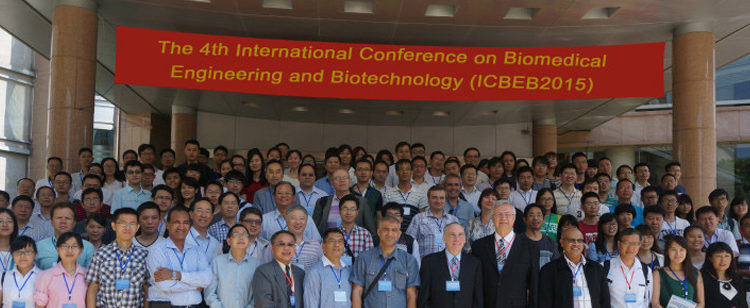
China: Quinta Conferencia Internacional de Biotecnología y de Ingeniería Biomédica , ICBEB 2016

Asia/China/ Julio del 2016/Reseñas/cn.icbeb.org

Bienvenidos  a ICBEB 2016!
  A la quinta  Conferencia Internacional de Biotecnología y Ingeniería de Biomédica ICBEB 2016
Se llevará a cabo en Hangzhou 1 de agosto de 2016.
Se realizaron en la 4ª Zhi. En ICBEB de 2015 , ICBEB de 2014 , ICBEB 2013 , ICBEB 2012 , basado en el éxito del 4ta., ICBEB 2016. Seguirá centrándose en la ingeniería transversal biomédica, materiales biomédicos, imagen biomédica, ingeniería biomecánica y otras disciplinas de la cooperación y el intercambio .
Cuatro años, los académicos ICBEB campo biomédico, investigadores, brindando intercambio investigación de vanguardia, plataforma internacional para la discusión, con el fin de alcanzar logros académicos compartidos aplicación propósito de los resultados. 2016, ICBEB se centrará en el establecimiento de dos seminarios – Tercer Simposio de Imágenes Biomédicas y Biología Molecular Rama de la primera sesión.
Aquí, en nombre del comité organizador ICBEB, para darle la bienvenida a asistir a la Quinta Conferencia de Ingeniería Biomédica e Internacional de Biotecnología, el Tercer Simposio de Imágenes Biomédicas y Molecular Biología rama de los primeros intercambios mutuos, con sus homólogos en otros países del mundo aprender unos de otros.

Fuente: https: http://cn.icbeb.org/

Fuente imagen: http://cn.icbeb.org/images/banner01.jpg

欢迎来到2016年ICBEB!

生物第五届医学工程与生物技术国际学术会议,ICBEB 2016年8月2016年1将于日至4日在杭州召开。在ICBEB 2015ICBEB 2014ICBEB 2013ICBEB 2012年 ,前四届成功举办的基础上,ICBEB 2016将继续致力于生物医学工程、生物医学材料、生物医学影像、生物力学工程等学科的跨领域合作交流。

四 年来,ICBEB为生物医学领域的学者、研究人员,提供前沿性研究交流、讨论的国际平台,以达到学术成果共享,成果应用的目的。2016年,ICBEB将 重点设立两个研讨会——第三届生物医学影像研讨会和第一届分子生物学分会。在此,谨代表ICBEB组委会,欢迎各位参加第五届生物医学工程与生物技术国际 学术会议,第三届生物医学影像研讨会和第一届分子生物学分会,与世界其他国家同行相互交流,相互学习。


Comparte este contenido:

Irak: Iraq’s war children face void without world’s help- UNICEF country chief

Asia/Irak/Julio 2016/Autor:  Tom Esslemont / Fuente: Reuters

Resumen:  Una generación de niños se enfrentan a la sombría perspectiva de estar sin una educación, a menos que el gobierno iraquí, sus aliados y los organismos de ayuda reconstruyan las comunidades desgarradas por años de guerra, dijo el viernes un funcionario superior de la agencia oficial de los niños de ONU.

A generation of children face the bleak prospect of going without an education unless the Iraqi government, its allies and aid agencies rebuild communities torn apart by years of war, a senior U.N. children’s agency official said on Friday.
Peter Hawkins, UNICEF representative in Iraq, said recent fighting between government forces, backed by a U.S.-led coalition, and Islamic State fighters, had cut off thousands of children from school and healthcare.
«We are faced with a whole generation losing its way and losing prospects for a healthy future,» said Hawkins in an interview.
Government institutions, faced with financial deficit, are collapsing leaving them dependent on U.N. agencies to provide schools and teacher training, following more than a decade of sectarian violence, Hawkins said during a visit to London.
«What is needed is a cash injection through central government so that we can see it building the systems required for an economic turnover,» he told the Thomson Reuters Foundation.
Conflict has worsened the situation across Iraq, with an estimated 4.7 million children – about a third of all children in the country – in need of assistance, the U.N. agency said in a report last month.
Mass movements of people forced from their homes by fighting in areas like Ramadi and Falluja, west of the capital, Baghdad, put one in five Iraqi children at risk of death, injury, sexual violence, abduction and recruitment into fighting, the report said.
UNICEF said earlier this year that at least 20,000 children in Falluja faced the risk of forced recruitment into fighting and separation from their families.
«A big problem is the lack of schools, with a lack of investment in recent years meaning the systems have all but collapsed,» Hawkins said.
CHILD RECRUITMENT
Thousands of civilians across much of western Iraq’s rugged Anbar province have been driven from their homes into the searing desert heat in the last two years, as a tide of Islamic State fighters took control of key towns and cities.
Despite losing considerable ground on the battlefield, a massive suicide bombing in Baghdad’s central shopping district of Karrada last weekend showed Islamic State remains capable of causing major loss of life.
In Anbar, where fighting has ruined scores of residential areas, many of the people displaced by the militants were now «in limbo», waiting in displacement centres, Hawkins said.
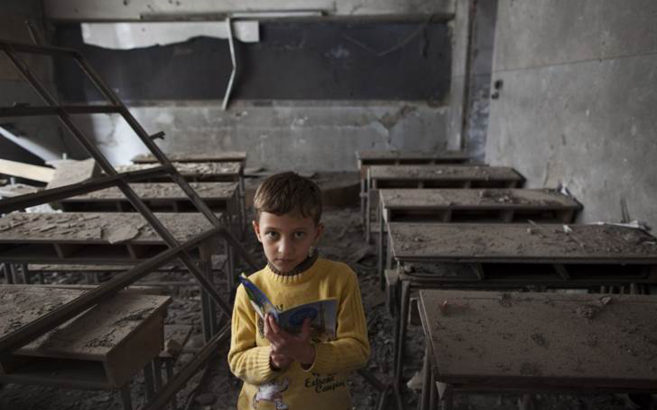
Nearly one in five schools in Iraq is out of use due to conflict. Since 2014 the U.N. has verified 135 attacks on educational facilities and personnel, with nearly 800 facilities taken over as shelters for the displaced, UNICEF data shows.
But Hawkins said he expected thousands of families to soon return home and rebuild their lives.
In Ramadi, where government forces retook control last December, UNICEF will help the ministry of education reestablish schools, provide catch-up lessons and teacher training over the summer after it had been «flattened» by fighting, Hawkins said.
The veteran aid worker, who has also worked in Angola, Sri Lanka, Afghanistan and Pakistan, said his «biggest fear» was that children could get caught up in a battle to retake Mosul, Iraq’s biggest northern city still held by the militants.
Protection of children must be part of a military strategy to retake Mosul, said Hawkins.
Pressures on UNICEF’s $170 million annual budget for 2016-17, which Hawkins said was short by $100 million, were hampering its ability to reach all those affected and may mean some child protection programmes are abandoned, he said.

Fuente de la noticia: http://www.dailymail.co.uk/wires/reuters/article-3681136/Iraqs-war-children-face-void-without-worlds-help-UNICEF-country-chief.html

Fuente de la imagen: https://www.google.co.ve/search?q=guerra+escuela+irak&espv=2&biw=1366&bih=681&source=lnms&tbm=isch&sa=X&ved=0ahUKEwj3282inOXNAhUBJh4KHUrlCjUQ_AUIBigB&dpr=1#imgdii=UXBgFFweGa111M%3A%3BUXBgFFweGa111M%3A%3Bkoao8M7azQY4qM%3A&imgrc=UXBgFFweGa111M%3A

Comparte este contenido:
Page 625 of 772
1 623 624 625 626 627 772