Page 1265 of 2493
1 1.263 1.264 1.265 1.266 1.267 2.493

Schools don’t need chaplains, they need qualified counsellors

By David Zyngier

Students need support, but religious commitment does not equate to professional counselling

ince Trump’s election in the US new legislative measures aim to impose hardline Christian values across US society as part of Project Blitz. The Congressional Prayer Caucus Foundation (CPCF), which claims more than 600 politicians as members across state legislatures, is using the banner of “religious freedom” to impose Christianity on American public, political and cultural life.

Sound familiar? The In Australia, the Human Rights Commission had been asked to investigate the National School Chaplaincy Programme (NSCP) earlier this year, but declined on the grounds Philip Ruddock was already reviewing the country’s religious freedoms for the government.

While the NSCP is formally not religion-specific, 99% of chaplains are Christian while only 52% of Australians identified as Christian in the 2016 census.

Who runs the chaplaincy programs? How are they selected?

In 2014, the Abbott government removed the provision to fund secular student wellbeing officers introduced by the previous Labor government, meaning all chaplains had to be affiliated with a religion. Following the invalidation of NSCP by the high court in June 2014, the government redesigned NSCP, with funding now being delivered via states and territories rather than directly to schools

In 2018, there were 3,288 chaplains employed under NSCP in public and private schools so far costing the taxpayer almost $1b. Chaplains are sourced by and from various Christian church groups. These all have a Christian mission. Scripture Union Queensland, for instance, the largest provider of school chaplains in Australia, proclaims that “Our MISSION is to bring God’s love, hope and good news to children and young people”.

Critics of the NSCP argue that chaplains are seriously under-qualified to deal with vulnerable young people, that it is not appropriate to have a religious worker in a public school, and that the money spent on the programme is better needed elsewhere, such as to help children with disabilities.

The Australian Psychological Society has repeatedly criticised the NSCP. The director of the Black Dog Institute has expressed concern at the funding of chaplaincy over programmes backed by scientific evidence. Associate professor Andrea Reupert, director of Monash University’s mental health in schools’ project, described a chaplain’s comments to a student suffering from an eating disorder that she was “hungering for the word of the Lord” as inappropriate and appalling. Even the vice chancellor of the School of Divinity questions its propriety.

What are chaplains not meant to do?

They may not conduct religious services or ceremonies or lead students or staff in religious observances or deliver special religious instruction. There is considerable evidence that at least some chaplains are in breach of this directive.

Parents must give their prior consent to the provision of chaplaincy services to their child. There is much anecdotal evidence to suggest that this is often not the case.

What are the outcomes of the NSCP?

School chaplains or professional counsellors: If schools only had a choice

89% of school chaplains are employed in lower SES state schools. These under-resourced schools are glad to have any extra assistance. The websitesof the various state education departments are quite clear about their duties. Schools engage chaplains to support the educational, social and emotional wellbeing of students. According to a review by the National School Chaplaincy Association the issues that chaplains were confronted with more frequently included “behaviour management issues”, “peer relationships and loneliness”, “student-family relationship issues” and “grief and loss”. These are undoubtedly serious issues that students require help with. The question is: Should it be chaplains providing that help?

Your child has appendicitis. If given a choice between an unqualified but very empathetic and dedicated first-aider, and a fully qualified doctor, who would you choose to operate on your child?

As Professor Dennis Altman wrote, “our secular society is being eroded – one school child at a time”. We should either remake school chaplaincy as a proper welfare program or scrap it.

Source of the article: https://www.theguardian.com/commentisfree/2018/jun/21/chaplains-or-counsellors-schools-should-have-a-choice
Comparte este contenido:

«La educación chilena no es modelo a seguir»

Por Marcela Isaías

El pedagogo Mario Aguilar rechaza la visión educativa de mercado y se pronuncia por una enseñanza liberadora.

«Hoy en Chile los niños pintan menos, juegan menos, hacen menos deporte, menos teatro porque más que educados son adiestrados para responder a una prueba estandarizada». La afirmación la comparte el educador chileno de la corriente pedagógica humanista, Mario Aguilar. Hay que prestar atención a su opinión de especialista sobre el modelo educativo chileno, hoy ponderado por las políticas oficiales que lo valoran como un proyecto exitoso y a imitar. En su visión, «no es un modelo a seguir».

Mario Aguilar preside el Colegio de Profesores de Chile, la organización gremial de los docentes que reúne a más de 70 mil educadores en el país trasandino. También es magíster de la Universidad de Chile y suscribe a la corriente del pensamiento del Nuevo Humanismo. Es autor, entre otros libros, de Pedagogía de la intencionalidad (junto a la educadora Rebeca Bize). Aguilar estuvo en Rosario la semana pasada y volverá a visitar la ciudad en octubre próximo para inaugurar un congreso internacional de educación.

La pedagogía de la intencionalidad —dice Aguilar— se apoya en una perspectiva humanizadora, liberadora y transformadora de la educación. Una idea que se emparenta, entre otros, con el pensamiento de Paulo Freire.

—¿Qué caracteriza a este movimiento humanista y educativo?

Para el humanismo universalista inspirado en el pensamiento de Silo (fundador del Movimiento Humanista) nada de lo humano le es ajeno. Por lo tanto la preocupación por el desarrollo humano y personal está, pero también está la preocupación por la economía, por la política, por lo social y por la educación. Para esta corriente el ser humano es un ser histórico y social, y por eso es un transformador de su realidad, de sí mismo pero siempre en relación con el medio, interactuando con él. Lo social importa mucho. Y la educación es una herramienta de transformación, de evolución personal pero sobre todo de transformación social.

—¿Cómo se traduce este pensamiento en una idea de enseñanza y aprendizaje?

Nosotros decimos que la educación debe ser humanizadora, transformadora y liberadora. Estos tres aspectos son muy centrales: un ser humano no puede desarrollarse si a su alrededor no se desarrollan también los otros seres humanos. La educación debe desarrollar esa noción del sociabilidad, del otro, del legítimo otro que habla (Humberto) Maturana (filósofo). Otro que es tan legítimo como yo. Y que en una sociedad materialista, consumista, individualista como la que vivimos hoy eso parece casi fuera de lugar. La educación debe desarrollar ese concepto de libertad pero también de ética; y ambas, libertad y ética, generan un individuo responsable socialmente. Esto debe ser un elemento central en cualquier propuesta educativa. Si la propuesta educativa, y hoy eso pasa mucho particularmente en Chile, promueve solo el individualismo, la competencia y si la educación es solo una herramienta para un estatus económico es una educación empequeñecida, empobrecida. Nosotros queremos rescatar el real sentido de la educación: humanizador, transformador y liberalizador.

—¿Cómo responde el magisterio chileno a ese modelo de educación de mercado?

El gremio docente que presido es muy crítico de la educación economicista, que la entiende como un bien de consumo y que se la adquiere en un mercado. De hecho en Chile se ha montado una verdadera industria educativa, como un negocio que debe dar rentabilidad al inversionista. Nosotros rechazamos esa visión. Defendemos la educación como derecho social, humano fundamental y no un hecho económico. Aparejada a esta concepción neoliberal de cómo se administra la educación, está lo que pasa en la sala de clase. El neoliberalismo ha hecho mucho daño instalando esta noción de una educación estandarizada, conductista con las evaluaciones cuantitativas donde se supone que calidad de la educación es igual a al resultado de estas pruebas. Para nosotros la educación es algo mucho más complejo y mucho más integral que simplemente un resultado.

—Sin embargo, el modelo educativo chileno basado en estas pruebas es puesto como ejemplo por las políticas educativas oficiales de la región.

El modelo de educación chileno es lo que no se debe hacer en educación. Así lo deben mirar los demás países. Somos muy críticos y como gremio docente estamos empujando a recuperar el derecho a la educación integral de los niños. Porque nuestros niños más que educados son adiestrados para responder a una prueba estandarizada. Hoy en Chile los niños pintan menos, juegan menos, hacen menos deporte, menos teatro porque eso no está evaluado en estas pruebas estandarizadas; la educación se centra en lo que tiene que ver con esos rendimientos y eso no es educación.

—En la Argentina hay como un furor por mejorar «la calidad educativa» bajo esas premisas evaluativas…

Nosotros estamos en discusión hasta en con el concepto de calidad, porque es un concepto empresarial. La educación no es mercado y por tanto no aplica esa lógica. El docente se ha visto forzado a ser un productor de rendimiento en estas pruebas estandarizadas, y eso por donde uno lo mire no es educación. A la educación no le debe importar tanto el resultado sino el proceso, cómo una persona se va transformando para crecer y ser mejor persona. El gran objetivo de la educación debería ser siempre ayudar a las ciudadanas y los ciudadanos a construirse en buenas personas; como consecuencia vamos a tener una sociedad mejor. Eso a la educación estandarizada no le interesa, solo la ubicación en el ránking que hace que tengan luego mejores presupuestos las escuelas o los docentes mejores salarios, según la productividad obtenida. Es monstruoso lo que genera esto: en definitiva, que los niños sean un número.

—¿Cómo se resiste a esta idea de competencia, de la cual hasta las familias se han convencido que es mejor?

Es difícil, hasta hay docentes que defienden esta idea de educación empobrecida y reducida. Nosotros impulsamos la discusión en la sociedad, con las autoridades, en el Parlamento. Y no nos ha ido tan mal porque se han generado debates en las sesiones, y en alianza con el gremio se está preparando una serie de seminarios para discutir este tema. Hoy hay un gobierno muy neoliberal, aun así le damos lucha a esa idea. Lo que promueven estos sistemas basados en la competencia es el individualismo, y en pedagogía ese es un virus muy dañino.

—Las estudiantes chilenas están dando una fuerte pelea, abriendo paso a la agenda feminista…

Estamos absolutamente compenetrados con esa lucha y apoyamos la agenda feminista, más como gremio docente donde el 73 por ciento del profesorado en Chile son mujeres. El machismo en Chile es muy fuerte y está muy arraigado, por eso es una revolución cultural la que están encarando. Es muy sanador lo que está pasando. Nos hace bien a todos que se avance hacia una sociedad más igualitaria, sin violencia de género y sin sexismo.

>>> La construcción de un nuevo paradigma educativo

La Corriente Pedagógica Humanista Universalista (Copehu) está integrada por educadoras y educadores de diferentes países, que trabajan en «la construcción de un paradigma educativo integral para el desarrollo pleno del ser humano».

Andrea Novotny es cofundadora de la Copehu. Recuerda que este movimiento surgió en 2011, junto con la primera edición del libro de Mario Aguilar, Pedagogía de la intencionalidad. «Propone la construcción de un nuevo paradigma educativo basado en una nueva concepción del ser humano y de la conciencia», explica Novotny sobre los fines que persigue esta corriente educativa.

Según los postulados de la Copehu, «la educación humanizadora parte de la experiencia y se propone habilitar, despertar en las nuevas generaciones el gusto por aprender, reflexionar, investigar, transformar…».

Para dar debate a estas ideas, sobre el sentido del «para qué» se educa y «cómo» contribuir al desarrollo integral de las nuevas generaciones, la Copehu realiza encuentros que llaman Parques de Estudio y Reflexión.

Fuente del artículo: https://www.lacapital.com.ar/educacion/la-educacion-chilena-no-es-modelo-seguir-n1632436.html

Comparte este contenido:

‘The importance of great teaching on children’s success’

By Peter Tait

We seem to be no closer to establishing what the most important factors are that make children succeed, apart from brilliant teachers, writes Peter Tai

As a society, we spend an inordinate amount of time, resources and money looking at how to improve the quality of education in our schools.

The questions we ask ourselves are always the same. How do we improve the quality of teaching and learning? (and its corollary, our examination results?) How do we make our children more motivated and competitive? And how do we get children to value and ‘own’ their education?

And yet, after all the talk of new methodologies and curricula; after new and different methods of teaching and models of assessment; after all the time and money spent on technology; after the personalisation of education and differentiated teaching; after learning styles and habits of mind; after mindfulness and Every Child Matters; after the debates about continuous and formative assessment; and after all the constant tinkering, bureaucratic and legislative, with their greater focus on data and compliance, we seem to be no closer to establishing what are the most important factors that make children succeed.

The only consistent factor we can identify is the role of the teacher, whose abilities and skillset, knowledge and enthusiasm are crucial in determining the success or otherwise, of the children they teach.

Teaching, after all, is about engagement, about getting children to listen and switch on. The best investment any government can make is to get the most effective, the most talented, the best teachers they can in front of the children.

By best, I don’t mean those who are the best qualified, but those teachers who know how to enthuse and connect with children regardless of their own levels of education. I mean those teachers who can properly engage with children and teach them by inspiring and challenging them.

Sometimes the pathway dictates that the process comes down to hard work rather than inspiration, but teaching is all about the relationship between teacher and pupil more than anything else.

Children will work harder for a teacher they respect, even if they demand more and insist on discipline and high standards. One can only speculate what would have been the impact if all the money spent on technology had gone instead into lowering the teacher-pupil ratio and improving the identification, selection and training of the most effective and passionate teachers. Where would we be now? In a somewhat better place, I would suggest.

I look back at outstanding teachers from my own teaching career and remember, in particular, one woman, whose ability with children was legendary. She was strict, uncompromising, but children wanted her approbation.

One particular year she took on a particularly difficult class of Year 4 children, two of whom had considerable physical and intellectual difficulties and could not even print their names and yet finished the year with impressive cursive writing – achieved through repetition, practice, discipline and unwavering high expectations.

She made such a difference to their young lives and all who were fortunate enough to have her as a teacher.

Good teachers don’t need the security of extra resources and technology that, evidence suggests, can detract rather than add to the learning process.

The best teachers entered the profession to make a difference

The best teachers entered the profession to make a difference  Photo: Getty Images

While they may use resources to embellish their lessons, they will not allow the resources to become the lesson. The best teachers are always wanting to do and find out more about their own craft, pushing out the boundaries of their learning and teaching, which is why many exceptional teaches re-work or even discard their teaching notes on a regular basis and look for new topics, and ways, to teach.

This lesson came home to me when I was asked to introduce art history into the sixth form in a New Zealand school and finding – after the subject had been offered, and places filled – that my knowledge of the period (Italian Art, 1300 – 1650) was almost as deficient as were my resources.

That year, with a few old text books and slides, I learnt alongside the students and at the year’s end, we were the top performing department in the school with one student in the top 10 in national scholarships.

The next year, I went to Italy and soon had the best resourced art history department anywhere with videos and CD Roms, slides, a library of outstanding books of reproductions, computer programmes on every aspect of the course, but my students never did quite so well ever again.

I think they learned better, as I did, by having to think more, by having to eke out what they could from the meagre resources, by having to think and having a teacher learning alongside them. There was no hiding place for any of us.

Teachers need to keep learning and growing – it is not a profession for the cynical or indifferent. The best can be identified by their enthusiasm and interest in pedagogy. They are not characterised by their own high academic performance, but by a thirst for passing on the benefits of education.

They may be unorthodox, idiosyncratic, employing a variety of approaches to get children to want to learn and to question what they are being taught. They are typified by their passion, their non-negotiable standards, breadth of interests, high expectations, understanding of how children learn, empathy, an insistence on greater self-discipline and by their relationship with their pupils.

Interestingly, children know who the best teachers are, even if they try and avoid them in favour of the more popular variety who may make their lives easy. They often criticise them to their parents for being too demanding and only realise later the opportunity they have squandered.

These are the teachers who entered the profession in order to make a difference. And they do.


Source of the article: https://www.telegraph.co.uk/education/educationopinion/12201014/The-importance-of-great-teaching-on-childrens-success.html

Comparte este contenido:

La educación de los argentinos

Por Gladys Seppi Fernández


Diagnosticar el mal puede reducirse a dolorosas palabras: educación mediocre o, directamente, mala educación generalizada.

Como sucede con cualquier enfermedad, por el lado menos pensado aparece el síntoma. Los detonantes de la mala educación de los argentinos, el espejo en el que nos reflejamos, aparecen siempre y nos inundan, pero se hicieron más visibles en Rusia, como actos de patoterismo, irracionalidad, falta de respeto.

Entonces nos indignamos; “nosotros no somos” así, protestamos; “ese pequeño grupo no nos representa”, nos defendemos.

Sin embargo, tal vez sea hora de no dejar pasar estas descomposturas que muestran lo rasgado de la educación del argentino. Atender el síntoma para empezar a curar la enfermedad.

Diagnosticar el mal puede reducirse a pocas palabras, ciertamente dolorosas: educación mediocre o, directamente, mala educación generalizada.

El mal se viene gestando desde hace muchas décadas. ¿Ocho? ¿Siete? Es tiempo suficiente para que demasiados –personas mayores, adultos, jóvenes, adolescentes y niños– tengamos impresas las marcas que nos distinguen: productos de la demagogia familiar y luego escolar, que todo lo hace a medias y califica de acuerdo con la propia medida de los educadores: un 10 aunque se merezca un 4. Un resultado mediocre.

Tal vez nos dejamos engañar por el aprobado fácil, el pase y el certificado de estudios ganado a medias, que nos autoriza a ejercer un oficio o una profesión.

Un aviso que circula en las redes advierte de que en nuestro país, y por lo que venimos analizando, “los pacientes mueren a manos de médicos recibidos en nuestras universidades, las obras bajo tierra estallan porque los responsables no se hacen responsables… y la justicia se pierde en manos de malos jueces”. “El colapso de la educación es el colapso de la nación”, concluye.

Lo triste es que los argentinos no terminamos de concientizarnos de semejante enfermedad, aunque suframos las consecuencias.

Sufrimos cuando llevamos a un hijo al hospital y, en medio de pasillos mal o nada preparados, tenemos que esperar por horas la atención de una enfermera malhumorada que no nos trata bien y de un médico demasiado apurado para creer en la bondad de su diagnóstico y en la posibilidad de la curación.

Sufrimos en toda repartición pública, un banco, oficinas municipales, gubernamentales, educativas, cuando las esperas son insoportables y, llegado el turno, no se satisface nuestra necesidad.

Todos padecemos nuestra argentina enfermedad, porque a todos alguna vez nos toca ser los clientes, el público, el paciente. Nada decimos cuando somos el hijo o el alumno de nuestros poco exigentes maestros que facilitan el camino con una nula prevención del futuro, todo para hoy, lo que produce un escaso desarrollo neuronal y pobre desempeño.

Nuestros músculos intelectuales son débiles, mal preparados para el crecimiento y la superación.

¿Será porque la escuela argentina no ha encontrado aún sus para qué, sus fines, y como consecuencia no tiene conductores idóneos ni directivas claras? Lo cierto es que entrega a la sociedad bocanadas de productos a medio terminar.

La imaginamos, entonces, como un carro empantanado en el mismo terreno cenagoso que ella crea, sin saber cómo salir del fango y qué camino seguir, porque no hay camino. No se lo ve.

Ella misma ha formado –¿debemos decir mal formado?– a los que la conducen. Ella permitió las trampas en los exámenes, las copias, no exigió nada, o sólo el menor esfuerzo.

De ella, los conductores que hoy tenemos. Ministros de Educación, directivos, profesores, maestros… ¿dónde se formaron? ¿Qué fines persiguieron? ¿Qué principios los guían? ¿Qué valores los sostienen, dan fuerza a su trabajo, los apasionan?

Los mismísimos ministerios y las secretarías educativas, las asesorías que abundan, las direcciones escolares y hasta los docentes, son mayoritariamente cargos ocupados por personas no idóneas, ausentes o cumple-horarios, incapaces de dar soluciones y, mucho menos, de innovar y aceptar buenas propuestas. Buena memoria, repeticiones, escasa participación, nula creatividad.

¿Cómo pretender, entonces, que los que nos representan dentro y fuera del país sepan adaptarse a las circunstancias y a los modelos propuestos por países organizados, si se han nutrido en el todo vale argentino, placentero y cómodo, tan a resultas del amiguismo, escaso de méritos e incapaz de castigar o de premiar sus acciones?

Un desperdicio, porque hay importantes talentos, gente que actúa en forma aislada hasta perder el aliento, y sin aliento alguno.

Una pena, porque si no advertimos de una buena vez la situación de peligro en que nos encontramos, al carro empantanado que nos lleva a todos se lo va a llevar la correntada de nuestra historia hueca.

Fuente del artículo: http://www.lavoz.com.ar/opinion/la-educacion-de-los-argentinos


Comparte este contenido:

What Asian schools can teach the rest of us

By Andreas Schleicher

The latest Program for International Student Assessment (PISA) focused on science, a discipline that plays an increasing role in our economic and social lives.

From taking a painkiller to determining what is a «balanced» meal, from drinking pasteurized milk to deciding whether or not to buy a hybrid car, science is pervasive.

And science is not just test tubes and the periodic table; it is the basis of nearly every tool we use — from a simple can opener to the most advanced space explorer.
In 2012, Shanghai came out as the top performer among all 65 education systems that were compared in mathematics, reading and science.
Some wondered to what extent Shanghai’s success was exceptional in China. In 2015, PISA provides data from Beijing, Jiangsu, Guangdong and Shanghai.
These regions combined again show strong science performance, outperformed only by Singapore, Japan, Estonia, Taiwan (which appears in the report as Chinese Taipei), Finland and Macau.
In fact, 13% of the top-performing students in the 68 countries and economies with comparable data in PISA 2015 come from these four provinces in mainland China alone.
So the world will continue to look to China as a global player in education.
education.

Social mobility key

Similarly, while the American dream of social mobility seems nothing more than that — a dream — for this generation of American students, it is emerging as a new reality in much of East Asia.
Between 40% and 80% of the quarter of the most disadvantaged students in the four provinces of mainland China, Hong Kong, Japan, Korea, Macau, Singapore, Taiwan and Vietnam perform as well as the 25% top-performing students around the world.
In the Western world, only Estonia and Finland match that level of student resilience against social disadvantage.
But there are also areas where China can look to other countries for inspiration.
Content knowledge in science, where China excels, is important. But it is equally important to be able to «think like a scientist,» and here Chinese students perform less well on the PISA test than when tested on content.
Source of the article: https://edition.cnn.com/2016/12/06/opinions/education-pisa-rankings-china/index.html
Comparte este contenido:

Más ciencia, más educación sexual

Por Mileyda Menéndez Dávila

 El pueblo más feliz es el que tiene mejor educados a sus hijos en la instrucción del pensamiento y la educación de los sentimientos

José Martí

Hablar de sexo no solo está de moda: es un derecho que todas las personas necesitan ejercer a plenitud desde edades tempranas, por su propio bienestar y en aras de esa sociedad sin violencia a la que aspira la mejor parte de la Humanidad.

Sin embargo, en nuestras sociedades modernas persiste cierta ambivalencia ante esa necesidad, que se manifiesta, al decir de la Doctora Mariela Castro, «por un lado, en un gran interés por saber más, y por otro, en una amplia resistencia para hablar directamente del tema y transformar las relaciones de poder que perpetúan las desigualdades e inequidades, particularmente las de género».

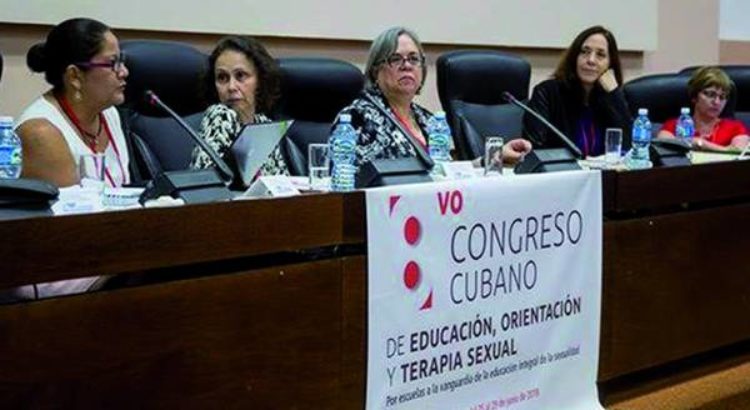
Así lo expresó la diputada cubana y directora del Centro Nacional de Educación Sexual (Cenesex), en la apertura del Congreso Cubano de Educación, Orientación y Terapia Sexual, que en su octava edición estuvo dedicado al rol de los sistemas educativos latinoamericanos para materializar una Educación Integral de la Sexualidad (EIS) que conciba la escuela como uno de sus espacios más importantes, pues lo que ocurre en ese tercio de jornada marca la vida de sus protagonistas a muy largo plazo.

Por mucho que se invierta en asistencia médica o control judicial, quien resulta abusado, despreciado o subvalorado sistemáticamente en ese ámbito difícilmente logra ser feliz o desea ser útil a sí mismo o a la sociedad.

Esa institución tiene el encargo de establecer el diálogo con la familia y la comunidad, de poner sus fortalezas al servicio de una labor multisectorial y socializar saberes y valores basados en la evidencia científica, no en prejuicios que perpetúen asimetrías, apuntó la presidenta de Sexología 2018.

En el marco de este congreso se desarrolló la 3ra. Reunión de Expertas/os en Programas y Estrategias de EIS en América Latina y el Caribe y un taller para acelerar esos procesos con el aporte de Naciones Unidas, con el afán de consensuar recomendaciones para ampliar los programas escolares y potenciar la educación sexual de personas que viven en condiciones de vulnerabilidad, exclusión o discriminación, sobre todo niños, niñas y adolescentes no escolarizados, gente con discapacidades diversas, pueblos indígenas, afrodescendientes y personas con identidades sexuales no empoderadas.

Cosecha y proyección

El Congreso de Educación, Orientación y Terapia Sexual se estrenó como espacio de diálogo científico hace 25 años, y muy pronto se consolidó como un pilar del Programa Nacional de Educación y Salud Sexual por su capacidad para convocar lo mejor de la investigación y la asistencia en materia de Salud Sexual y Reproductiva a nivel nacional y de todo el orbe. La reflexión ética y centrada en el derecho que hoy caracteriza a las ponencias y debates es una conquista que un cuarto de siglo atrás estaba entre los sueños de su equipo fundacional.

La coyuntura cubana es muy favorable para sumar tales presupuestos al flexibilizado currículo de todos los niveles educativos, pero la prevención de actos violentos o discriminatorios en las más de 5 000 instituciones en activo requiere un personal docente cada vez más culto, capacitado y sensible, afirmó la Doctora Ena Elsa Velázquez, ministra de Educación.

En estas citas bianuales también han ido ganado presencia varias redes y articulaciones sociales que consolidan la defensa de los Derechos Sexuales y Reproductivos de nuestra ciudadanía a partir de un activismo inclusivo y respetuoso. Comunicarsex, la red de activistas y profesionales en el ámbito de la Comunicación sobre sexualidad, debutó este jueves con un panel sobre el rol de los medios en la deconstrucción de estereotipos y la legitimación de nuevos paradigmas e imaginarios sociales en los que el sexo no constituya moneda de cambio, sino un valor a compartir.

En esa cuerda, otra plaza consolidada en la cita bianual de la Sexología criolla es el Coloquio Internacional Trans-identidades, Género y Cultura, que en su sexta edición tuvo como aperitivo dos cursos precongreso en los que los expertos españoles Samuel Díez Arrese e Iñaki Goñi Garatea compartieron la experiencia ibérica en el manejo con la familia y las instituciones escolares que acogen a menores con una construcción identitaria transexual.

El mayor reto para la EIS es diversificar lenguajes y soportes para contender con los ideales conservaduristas que se reposicionan en la región latinoamericana, urgida de mantener sus conquistas sociales y hacer cumplir los Objetivos de Desarrollo del Milenio, destacó la Doctora Mariela Castro.

Fuente del artículo: http://www.juventudrebelde.cu/suplementos/sexo-sentido/2018-06-29/mas-ciencia-mas-educacion-sexual


Comparte este contenido:

Too Little Access, Not Enough Learning: Africa’s Twin Deficit in Education

Por Kevin Watkins

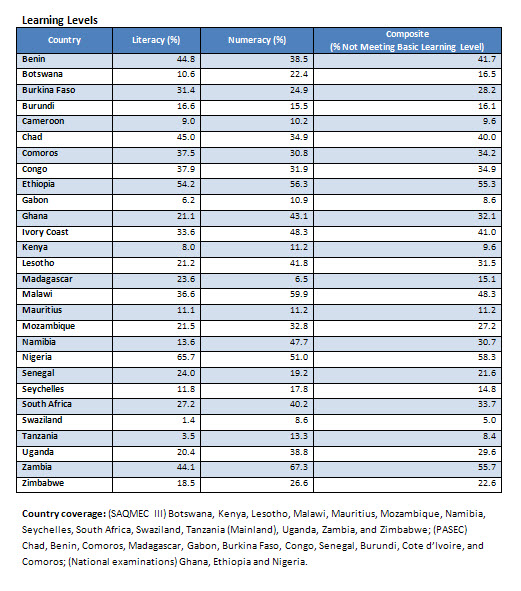
Africa’s education crisis seldom makes media headlines or summit agendas and analysis by the Brookings Center for Universal Education (CUE) explains why this needs to change. With one-in-three children still out of school, progress towards universal primary education has stalled. Meanwhile, learning levels among children who are in school are abysmal. Using a newly developed Learning Barometer, CUE estimates that 61 million African children will reach adolescence lacking even the most basic literacy and numeracy skills. Failure to tackle the learning deficit will deprive a whole generation of opportunities to develop their potential and escape poverty. And it will undermine prospect for dynamic growth with shared prosperity.

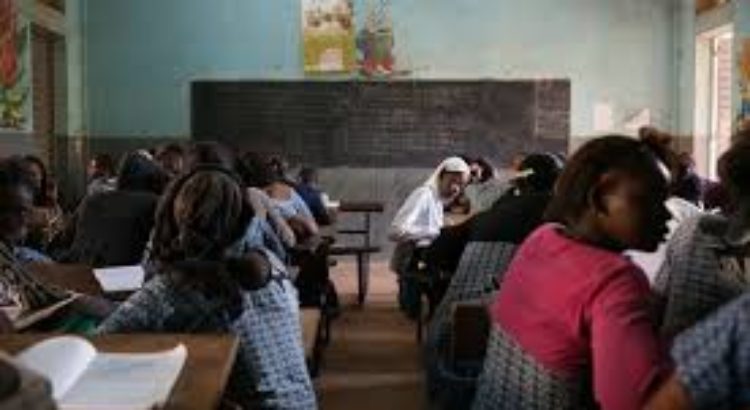
If you want a glimpse into Africa’s education crisis there is no better vantage point than the town of Bodinga, located in the impoverished Savannah region of Sokoto state in northwestern Nigeria. Drop into one of the local primary schools and you’ll typically find more than 50 students crammed into a class. Just a few will have textbooks. If the teacher is there, and they are often absent, the children will be on the receiving end of a monotone recitation geared towards rote learning.

Not that there is much learning going on. One recent survey found that 80 percent of Sokoto’s Grade 3 pupils cannot read a single word. They have gone through three years of zero value-added schooling. Mind you, the kids in the classrooms are the lucky ones, especially if they are girls. Over half of the state’s primary school-age children are out of school – and Sokoto has some of the world’s biggest gender gaps in education. Just a handful of the kids have any chance of making it through to secondary education.

The ultimate aim of any education system is to equip children with the numeracy, literacy and wider skills that they need to realize their potential – and that their countries need to generate jobs, innovation and economic growth.

Bodinga’s schools are a microcosm of a wider crisis in Africa’s education. After taking some rapid strides towards universal primary education after 2000, progress has stalled. Out-of-school numbers are on the rise – and the gulf in education opportunity separating Africa from the rest of the world is widening. That gulf is not just about enrollment and years in school, it is also about learning. The ultimate aim of any education system is to equip children with the numeracy, literacy and wider skills that they need to realize their potential – and that their countries need to generate jobs, innovation and economic growth. From South Korea to Singapore and China, economic success has been built on the foundations of learning achievement. And far too many of Africa’s children are not learning, even if they are in school.

The Center for Universal Education at Brookings/This is Africa Learning Barometer survey takes a hard look at the available evidence. In what is the first region-wide assessment of the state of learning, the survey estimates that 61 million children of primary school age – one-in-every-two across the region – will reach their adolescent years unable to read, write or perform basic numeracy tasks. Perhaps the most shocking finding, however, is that over half of these children will have spent at least four years in the education system.

Africa’s education crisis does not make media headlines. Children don’t go hungry for want of textbooks, good teachers and a chance to learn. But this is a crisis that carries high costs. It is consigning a whole generation of children and youth to a future of poverty, insecurity and unemployment. It is starving firms of the skills that are the life-blood of enterprise and innovation. And it is undermining prospects for sustained economic growth in the world’s poorest region.

Tackling the crisis in education will require national and international action on two fronts: Governments need to get children into school – and they need to ensure that children get something meaningful from their time in the classroom. Put differently, they need to close the twin deficit in access and learning.

Why has progress on enrollment ground to a halt? Partly because governments are failing to extend opportunities to the region’s most marginalized children. Africa has some of the world’s starkest inequalities in access to education. Children from the richest 20 percent of households in Ghana average six more years in school than those from the poorest households. Being poor, rural and female carries a triple handicap. In northern Nigeria, Hausa girls in this category average less than one year in school, while wealthy urban males get nine years.

Conflict is another barrier to progress. Many of Africa’s out-of-school children are either living in conflict zones such as Somalia and eastern Democratic Republic of Congo, in camps for displaced people in their home country, or – like the tens of thousands of Somali children in Kenya – as refugees. Six years after the country’s peace agreement, South Sudan still has over 1 million children out of school.

The Learning Deficit

Just how much are Africa’s children learning in school? That is a surprisingly difficult question to answer. Few countries in the region participate in international learning assessments – and most governments collect learning data in a fairly haphazard fashion.

The Learning Barometer provides a window into Africa’s schools. Covering 28 countries, and 78 percent of the region’s primary school-age population, the survey draws on a range of regional and national assessments to identify the minimum learning thresholds for Grades 4 and 5 of primary school. Children below these thresholds are achieving scores that are so low as to call into question the value-added of their schooling. Most will be unable to read or write with any fluency, or to successfully complete basic numeracy tasks. Of course, success in school is about more than test scores.

It is also about building foundational skills in teamwork, supporting emotional development, and stimulating problem-solving skills. But learning achievement is a critical measure of education quality – and the Learning Barometer registers dangerously low levels of achievement.

The headline numbers tell their own story. Over one-third of pupils covered in the survey – 23 million children – fall below the minimum learning threshold. Because this figure is an average, it obscures the depth of the learning deficit in many countries. More than half of students in Grades 4 and 5 in countries such as Ethiopia, Nigeria and Zambia are below the minimum learning bar. In total, there are seven countries in which 40 percent or more of children are in this position. As a middle-income country, South Africa stands out. One-third of children fall below the learning threshold, reflecting the large number of failing schools in areas servicing predominantly low-income black and mixed race children.

Disparities in learning achievement mirror wider inequalities in education. In Mozambique and South Africa, children from the poorest households are seven times more likely than those from the richest households to rank in the lowest 10 percent of students.

Unfortunately, the bad news does not end here. Bear in mind that the Learning Barometer registers the score of children who are in school. Learning achievement levels among children who are out of school are almost certainly far lower – and an estimated 10 million children in Africa drop out each year. Consider the case of Malawi. Almost half of the children sitting in Grade 5 classrooms are unable to perform basic literacy and numeracy tasks. More alarming still is that half of the children who entered primary school have dropped out by this stage.

Adjusting the Learning Barometer to measure the learning achievement levels of children who are out of school, likely to drop out, and in school but not learning produces some distressing results. There are 127 million children of primary school age in Africa. In the absence of an urgent drive to raise standards, half of these children – 61 million in total – will reach adolescence without the basic learning skills that they, and their countries, desperately need to escape the gravitational pull of mass poverty.

learning levels

What is Going Wrong?

Rising awareness of the scale of Africa’s learning crisis has turned the spotlight on schools, classrooms and teachers – and for good reason. Education systems across the region urgently need reform. But the problems begin long before children enter school in a lethal interaction between poverty, inequality and education disadvantage.

The early childhood years set many of Africa’s children on a course for failure in education. There is compelling international evidence that preschool malnutrition has profoundly damaging – and largely irreversible – consequences for the language, memory and motor skills that make effective learning possible and last throughout youth and adulthood. This year, 40 percent of Africa’s children will reach primary school-age having had their education opportunities blighted by hunger. Some two-thirds of the region’s preschool children suffer from anemia – another source of reduced learning achievement.

Parental illiteracy is another preschool barrier to learning. The vast majority of the 48 million children entering Africa’s schools over the past decade come from illiterate home environments. Lacking the early reading, language and numeracy skills that can provide a platform for learning, they struggle to make the transition to school – and their parents struggle to provide support with homework.

Gender roles can mean that young girls are removed from school to collect water or care for their siblings. Meanwhile, countries such as Niger, Chad and Mali have some of the world’s highest levels of child marriage – many girls become brides before they have finished primary school.

School systems in Africa are inevitably affected by the social and economic environments in which they operate. Household poverty forces many children out of school and into employment. Gender roles can mean that young girls are removed from school to collect water or care for their siblings. Meanwhile, countries such as Niger, Chad and Mali have some of the world’s highest levels of child marriage – many girls become brides before they have finished primary school.

None of this is to discount the weaknesses of the school system. Teaching is at the heart of the learning crisis. If you want to know why so many kids learn so little, reflect for a moment on what their teachers know. Studies in countries such as Lesotho, Mozambique and Uganda have found that fewer than half of teachers could score in the top band on a test designed for 12-year-olds. Meanwhile, many countries have epidemic levels of teacher absenteeism.

It is all too easy to blame Africa’s teachers for the crisis in education – but this misses the point. The region’s teachers are products of the systems in which they operate. Many have not received a decent quality education. They frequently lack detailed information about what their students are expected to learn and how their pupils are performing. Trained to deliver outmoded rote learning classes, they seldom receive the support and advice they need from more experienced teachers and education administrators on how to improve teaching. And they are often working for poverty-level wages in extremely harsh conditions.

Education policies compound the problem. As children from nonliterate homes enter school systems they urgently need help to master the basic literacy and numeracy skills that they will need to progress through the system. Unfortunately, classroom overcrowding is at its worst in the early grades – and the most qualified teachers are typically deployed at higher grades.

Public spending often reinforces disadvantage, with the most prosperous regions and best performing schools cornering the lion’s share of the budget. In Kenya, the arid and semi-arid northern counties are home to 9 percent of the country’s children but 21 percent of out-of-school children. Yet these counties receive half as much public spending on a per child basis as wealthier commercial farming counties.

Looking Ahead – Daunting Challenges, New Opportunities

The combined effects of restricted access to education and low learning achievement should be sounding alarm bells across Africa. Economic growth over the past decade has been built in large measure on a boom in exports of unprocessed commodities. Sustaining that growth will require entry into higher value-added areas of production and international trade – and quality education is the entry ticket. Stated bluntly, Africa cannot build economic success on failing education systems. And it will not generate the 45 million additional jobs needed for young people joining the labor force over the next decade if those systems are not fixed.

Daunting as the scale of the crisis in education may be, many of the solutions are within reach. Africa’s governments have to take the lead. Far more has to be done to reach the region’s most marginalized children. Providing parents with cash transfers and financial incentives to keep children – especially girls – in school can help to mitigate the effects of poverty. So can early childhood programs and targeted support to marginalized regions.

Africa also needs an education paradigm shift. Education planners have to look beyond counting the number of children sitting in classrooms and start to focus on learning. Teacher recruitment, training and support systems need to be overhauled to deliver effective classroom instruction. The allocation of financial resources and teachers to schools should be geared towards the improvement of standards and equalization of learning outcomes. And no country in Africa, however poor, can neglect the critical task of building effective national learning assessment systems.

Aid donors and the wider international community also have a role to play. Having promised much, they have for the most part delivered little – especially to countries affected by conflict. Development assistance levels for education in Africa have stagnated in recent years. The $1.8 billion provided in 2010 was less than one-quarter of what is required to close the region’s aid financing gap.

Unlike the health sector, where vaccinations and the global funds for AIDS have mobilized finance and unleashed a wave of innovative public-private partnerships, the education sector continues to attract limited interest. This could change with a decision by the U.N. secretary-general to launch a five-year initiative, Education First, aimed at forging a broad coalition for change across donors, governments, the business community and civil society.

There is much to celebrate in Africa’s social and economic progress over the past decade. But if the region is to build on the foundations that have been put in place, it has to stop the hemorrhage of skills, talent and human potential caused by the crisis in education. Africa’s children have a right to an education that offers them a better future – and they have a right to expect their leaders and the international community to get behind them.

Comparte este contenido:
Page 1265 of 2493
1 1.263 1.264 1.265 1.266 1.267 2.493