ABSTRACT. This article reflects on schools as spaces for the reconstruction of reality. If the school is an important part of the strategy to prepare for critical solidarity and active democratic citizens in society, it is obvious that it may or may not be successful in so far as the classrooms are converted into a space where this same society can be submitted to revision and criticism and where the necessary skills are developed to perfect and participate in the community. It is not a place to convert the societal groups and cultures without power into extras of the curriculum or additional themes to ease our conscience as happens in many of our classrooms when they develop what I call the “tourist curricula”. On the contrary, an anti-marginal education must revise and reconstruct the knowledge of each group and culture of the world. It is necessary to construct educational practices to teach students to unmask the political, historical and semiotic dynamics that condition their interpretations and expectations and their possibilities for participating in reality.
The educational policies of most industrialised countries are now opting for official curricula that stipulate obligatory cultural content, especially those countries controlled by conservative governments or, in the case of Spain, a social democratic government. It is curious that this is happening at a time when, in forums of debate and reflection about education, one of the important themes for the majority of educational professionals is how to treat cultural diversity, antiracist and anti-sexist school practices and the defence of minority cultures without power. These official curricula tend to propose policies of homogenisation, the construction and legitimation of a form of “official knowledge” (Apple, 1993), with only one vision and interpretation of reality, which principally serves the interests of economic, political, military and cultural groups that have power. However, these are the same governments that, at some point in time, must admit the reality of different cultures within their borders. For many of these governments, this recognition came during the 1960s when an increasing number of social groups organised around the dimension of race, gender and nationality, began to vindicate their rights. But despite this, these governments continue to assume that the only valid and valuable model is that of a young, Christian, middle-class, heterosexual, slim, healthy, strong, white, male. This image is difficult to combat unless the meaning and results of what can be called ‘new social movements’ are revised (i.e. those movements which in the beginning were formed around Marxist ideology, which later separated from it in order to carry out very specific social fights). Such movements, for example, include: ecological, pacifist and neighbourhood movements; the defence of ethnic and religious minorities; homosexual and lesbian rights organisations and animal protection groups.
In this sense, the rapid diffusion of the philosophical positions under the heading of ‘post-modernism’, with their emphasis on ‘difference(s)’, favour the concentration on particularisms. This becomes so ironical that it creates an incapacity to establish relationships and commitments between phenomena that have important similarities, such as the problems of unequal opportunities, marginalisation and oppression. These problems are the fruit of oppression, rooted and supported by the interests of the most favoured social groups that control the political, economic, cultural, religious and military spheres. There results, in the words of Stuart Hall (1992), such a “hyperabstraction and an excess of theorization” that we forget about the concrete and more general historical problems. We must not forget that the fight against marginalisation and oppression can not be carried out in the form of fragmented tasks, where each social group functioning around important variables (gender, ethnicity, nationality, sexuality, age) tries to solve its problems alone.
The key Marxist concept of social class has become of secondary importance even though it is the category that has coordinated the fight against the principle forms of exploitation in discourses over justice, social responsibility, democracy and solidarity throughout this century. In these new social movements, hardly any interest on the part of the working class can be observed. Sometimes, it appears as if this social class no longer exists even though there is an increasing amount of evidence showing the loss of working place autonomy, increased levels of proletarianisation and a greater number of easier and shamelessly produced dismissals.
When class consciousness disappears, it is more difficult to collaborate with immigrant and ethnic minority groups. The debate about immigration and the marginalisation of oppressed ethnic groups needs to be undertaken in the context of economic dynamics and within the framework of economic exploitation, or a form of democratic racism may be created. Democratic racists are those citizens that recognise democratic norms for their group of ‘equals’ and exclude the rest, with good conscience. They can be passive in the presence of racist attitudes which take place in their environment or fall into an application of democratic norms that favour racist behaviors. The real problems of emigration, immigration and ethnic communities that do not accept the established norms are not analysed. The social response is tinted with corporatism, with obsessions for the physical defence of the territory and ‘acquired rights’ converted into privileges. In general, it is necessary to keep in mind that marginalisation is related to the concept of deviance. But any norm or scale by which something or someone is measured and analysed is always a social construction: it is elaborated in one specific sociohistoric and geographic moment, in the bosom of one concrete community and in accordance with the economic, cultural, political, religious and military interests of the social groups that, in this period, hold the reins of power.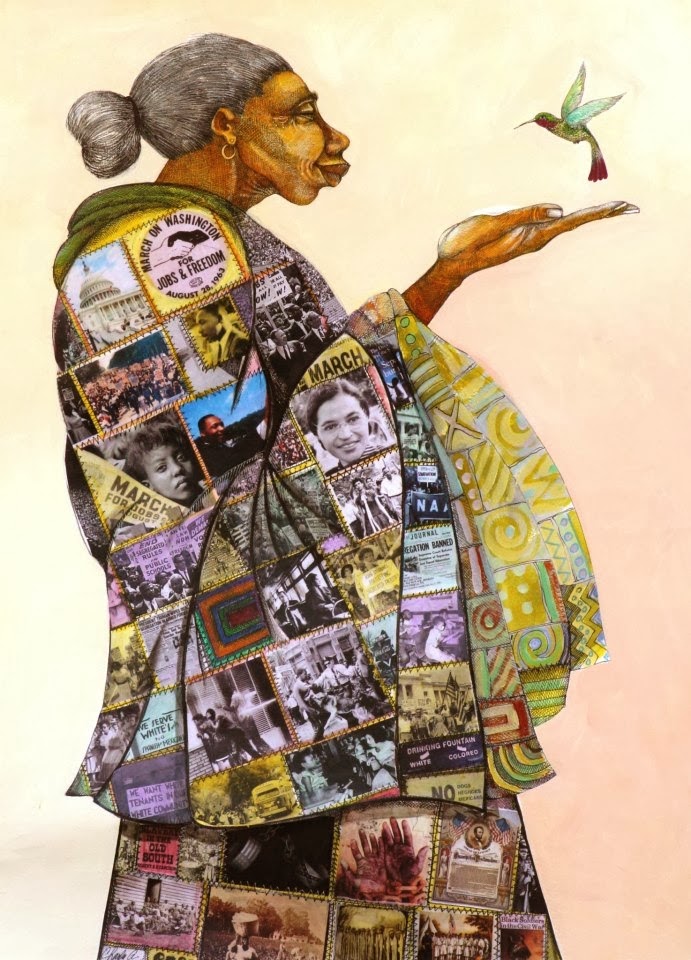
There is an urgent need for a more holistic reconceptualisation as well as a praxis that favours coordination and negotiation between all groups including marginal, omitted and social collectives without power. Concepts such as democracy, solidarity, freedom and justice cannot be so plurally formulated that they produce antagonistic results or societies where these values are converted into aspirations difficult to imagine and achieve. In this sense, the dimension of social class can serve to coordinate and negotiate the strategies of women’s groups, nationalists’ collectives, handicapped persons, gay and lesbian collectives, etc. as well as respond to the difficult forms of marginalisation and discrimination to which they are submitted. What present societies need are strategies to improve their levels of democracy and therefore, to live withdifferences, without converting it into exclusion.
.
Education and the Reconstruction of Reality
The schools are not at the margin of this process. On the contrary, the same trends and types of analysis shape educational programmes which reinforce, legitimise, and also contradict, the results of previous postures. Educational action is political and ethical action, in spite of the liberal and conservative discourses that want to obliterate this idiosyncrasy. If the school is an important part of the strategy to prepare active, critical and democratic citizens in a society that wants to change in a similar direction, it is obvious that it may or may not be successful in so far as classrooms are converted into a space where this same society can be submitted to revision and criticism and the necessary skills are developed to perfect and participate n the community.
It is not an attempt to convert the societal groups and cultures without power into curriculum extras or additional themes to ease our conscience as happens in many of our classrooms when they develop the ‘tourist curricula’ (Torres Santome, 1993): curricula where the information about silent, marginal, oppressed and powerless communities is presented in a deformed manner, with many superficialities, centred in decontextualised anecdotes. It is a more generalised form translated into a series of isolated lessons or topics destined to give students contact with current realities and problems which do not appear in the principal didactic resources and are disconnected from the official programme of the school. The tourist curricula are the result of working sporadically: for example, on one day treating such themes as the fight against racial prejudice and on another, women’s oppression, the working class, pollution, war or oppressed languages. Silenced social situations that are considered problematic in a concrete society (oppressed ethnic groups, silent national cultures, social class, gender and age discriminations, etc.) are analysed from distant, strange or problematic perspectives which do not relate to every person in the classroom. In addition, it is usually made clear to the students that solutions do not depend upon anyone in particular and that they are outside our reach. Often a class of problems is contemplated in a way which emphasises our incapability to resolve them.
The most frequently adopted tourist curriculum strategies include the following:
(a) trivialisation: the study of culinary customs, folklore, way of dressing, holiday rituals, the decoration of houses, etc. from a tourist perspective;
(b) the souvenir, or exotic treatment of information with a quantitative present of little importance in available didactic resources;
(c) disconnection: the separation of diversity into ‘the day of …’, when these types of social problems are considered on a specific day and sometimes in only one subject; and
(d) stereotypification: the stereotyping of people and situations to justify marginalisation.
It is a fact that some classes of curricula are based upon distortion, deforming or hiding the history and the origins of these communities that are the object of marginalisation and/or xenophobia. This is the most perverse case of curricula treatment, since it tries to construct a history ‘made-to-suit’ and makes situations of oppression appear ‘natural’. It explains that, if oppressed or marginal groups exist, it is due to their genetic inferiority, to laziness, to innate badness, etc. It is also possible to resort to explanations of marginalisation based upon the family structure of these populations, in that they still maintain barbaric customs, inadequate lifestyles, etc.
One of the most sophisticated forms of distortion is the ‘psychologisation’ of racial and social problems, that is, attempting to find the explanations of marginal situations based on analyses centred upon individuals or interpersonal relations, without taking social structures into account. In this way, not long ago, it was common to claim that the marginalisation of black people was due to their deficient genetic base and/or lower intelligent quotient. In this form of distortion, the attention is never placed upon the power structure which causes marginalisation or the political, economic, cultural, military and religious conditions that explain these situations of oppression.
Neither can we continue using modalities of curriculum treatment sustained by hierarchical visions of ‘superiority’ placing some cultures above others. This is something seen in schools which emphasise the deficits of oppressed people and cultures, portraying them, for example, as very poor and incapable of getting ahead without us, their saviours and redeemers. They are considered uncultured, ignorant and backward because the criteria used to measure them are always those which the dominant and colonial groups impose. The dynamics of exploitation, pillaging and colonisation to alter their lifestyles and values and so facilitate their domination are not emphasised. In this form of curriculum work, it is frequent to hear such words as ‘donation’, ‘sacrifice’ and ‘charity’ in relation to the people of the Third World, while others, such as ‘justice’, ‘solidarity’ and ‘equality’ hardly appear.
A democratic and non-exclusive education should not fragment cultural content to reflect only the history, traditions, products and voices of the hegemonic social groups with economic, political, social, military and religious power or what is generally referred to as European culture. On the contrary, an anti-marginal education must revise and reconstruct the knowledge of each group and culture of the world.
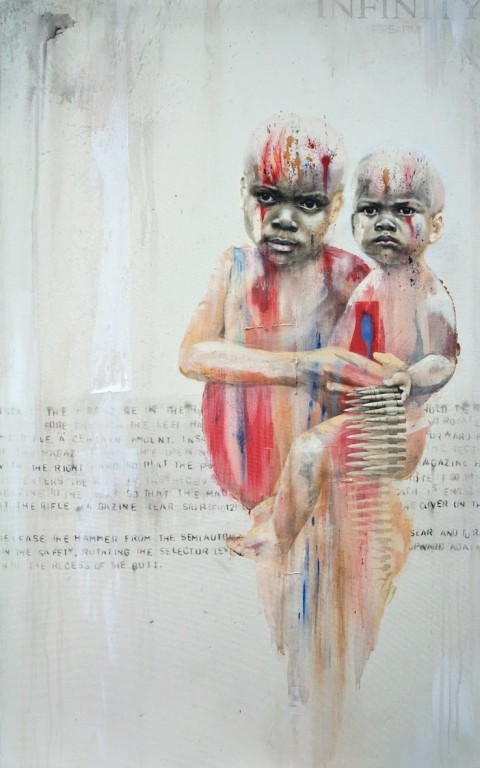 It should not be forgotten that assimilationism has been the most frequent educational strategy to solve questions of cultural diversity. It is a strategy that continues to be employed even though it is now more hidden. For example, when a core curriculum is legislated, as in the case of Spain, the schools are forced to study the same cultural content, which is a new form of neo-assimilationism. The core curriculum is not the result of debate and consensus among all cultures and groups, but a programme elaborated with hardly any discussion and imposed upon citizens. A core curriculum arising from, and directed to, a democratic and just society should be the consequence of public participation, solidarity and commitment among the different communities and social groups and the different alternatives proposed by them. Schools should be forced to incorporate the history and experience of women, silent nationalities, ethnic minorities and oppressed social groups. As Michael Apple (1993, p. 62) emphasises, “a ‘common culture’ can never be an extension to everyone of what a minority mean and believe”.
However, the official culture of the majority of Western governments, through the promotion of the core curricula, only values knowledge pertaining to the capabilities of the working-aged masculine world. A glance at the textbooks permits us to observe numerous silent, hidden perspectives and realities. In these textbooks, the disfiguration of the working class is obvious. A manipulated ‘theory of consensus’ does not depict the history, culture and reality of why working struggles were indispensable to counteract exploitation (i.e. schedule excess hours and abusive rhythms of work, low salaries, poor living conditions, absence of participation in the management of the business, etc.) or how to introduce changes in society, in the long march toward a more democratic, equal and free society.
In Spain there are also other inadmissible silences. One example is that realistic data on the rural and fishing cultures can hardly be found, which is somewhat ironic, keeping in mind that Spain is a country with many kilometres of coast and a high percentage of people living in rural areas. Other omissions include children, adolescents and senior citizens. Therefore, young people do not know the significance of being young, a senior citizen, or of the cultural peculiarities that they produce, contest and resist (e.g. comic books, rock music, fashion, etc.). Also omitted as specific foci of attention are: ethnic minorities without power, the national culture, the Third World, the poor, the voices of homosexuals and lesbians and mentally and/or physically handicapped people.
In general, it can be affirmed that the culture with which schools work, is reduced to what is called ‘Western culture’ or more precisely, ‘Eurocentrism’. The history, tradition, products and lifestyles of such large continents as Africa, Asia and Oceania are not considered other than in a stereotypical form from the perspective of the power structure of the more industrialised countries.
Every anti-discrimination curricular project should provide sufficient information for students to gain insights into the causes of violence and marginalisation and, in this way, the implications of their achievements in quality of life to the detriment of other more distant peoples and cultures; and information that permits a glimpse of hope for a better world. The history of humankind is filled with examples that contribute to optimism, to victories over injustice, the conquest of liberties. For this reason, it is important to emphasise and analyse the social conquests that countries and social groups have achieved through an appropriate analysis of the practices to confront forms of oppression and domination.
This attention to social collectives with silent and manipulated voices does not mean simply adding more content to school programmes, since they are presently overworked. Something that is typical in many teaching and learning practices, such as the situation of women, the history and present situation of gypsies, the hunger of the Third World, unemployment, etc., are additions to textbook contents. These themes are usually presented in an isolated form not clearly connected with the rest of the course contents, nor are they explicitly evaluated or taken into consideration in the final course evaluation.
In order to treat these silent and marginal cultures appropriately, it is necessary to redefine the present culture, taking into consideration the silent voices of nations, collectives and social groups. This is a task that surpasses the curriculum proposals of an additive character and one which is normally limited to the social sciences, especially to history. All areas of knowledge need to be revised and their contents updated to incorporate these dimensions and absent voices. By adding these themes to existing courses, rather than restructuring them, it frequently appears as if new topics permit the continuation of conceptions of the hegemonic social groups to maintain their situation of power and privilege in this sociohistorical moment. This is especially true with dates, perspectives and theories that cannot be easily silenced since the mass media put them easily within reach of the majority of the people within society. One example of this additive approach was the initiation of evolutions theories in biology textbooks, evolution was only one lesson more. In this lesson, Charles Darwin and his theory of evolution are explained in a superfluous and anecdotal form. But in the rest of the lessons from the same textbook, in all themes when evolutionism could compete with creationism, creationism is continued as the exclusive perspective and therefore, the only valid one. As a consequence, the theory of evolution is reduced to anecdotal information, so as not to restructure the entire vision of science in all of those questions having to do with this theory.
Another example is the case of Eurocentrism of ‘chauvinistic Westerners’ which affects such fields of knowledge as mathematics and the physical and natural sciences where the hegemonic perspective is catalogued as realms of objectivity, disinterest and neutrality. In this way, it is concealed that inventions and discoveries considered as Western achievements were actually those of the Chinese and some Arabic countries, hundreds of years ago for, for example, in the field of agriculture: the iron plough, the multitube seed drill; in the area of astronomy and cartography: the recognition of sunspots as solar phenomena, quantitative cartography, equatorial astronomical instruments; in the field of engineering: cast iron, water power, suspension bridges, the driving belt; in domestic and industrial technology: petroleum, natural gas, paper, the magic lantern, porcelain, the umbrella, chess, brandy and whisky, paper money; in the field of medicine and health: the circulation of the blood, diabetes, immunology; in the area of mathematics: the decimal system, negative numbers, decimal fractions, using algebra in geometry; in magnetism: the first compasses, magnetic remanence and induction; in the physical sciences: seismography, spontaneous combustion and phosphorescent paint; in the field of transportation and exploration: the kite, the parachute, the rudder, masts and sailing; in sound and music: the large tuned bell, the first understanding of musical timbre; in warfare: chemical warfare, poison gas, smoke bombs and tear gas, the crossbow, gunpowder, guns, cannons, mortars and repeating guns (Temple, 1987).
A ‘silence of women’ was caused in a series of 26 episodes produced by the British Broadcasting Company (BBC) in 1990 and 1991 entitled They Made Our World. It was an attempt to study the life and work of those people who made significant contributions to the development of the world. Altogether 28 individuals were selected, all of whom were men born in Europe (no one in Spain) and the USA: Francis Bacon, Isaac Newton, Joseph Priestley, Antoine-Laurent Lavoisier, Michael Faraday, James C. Maxwell, Charles Lyell, Charles Darwin, Gregor Mendel, Edward Jenner, Louis Pasteur, James Watt, George and Robert Stephenson, Alexander Graham Bell, Wilbur and Orville Wright, Henry Ford, Wilhelm Rontgen, Guglielmo Marconi, John L. Baird, Leo H. Baekeland, Albert Einstein, Robert Oppenheimer, Alexander Fleming, Ernest Rutherford, Alan Turing, and Thomas Edison (Reiss, 1993, pp. 18-19). The vision of science with which students are in contact usually appears with ahistorical tints, at the margin of social, political and cultural contexts. It is hardly made clear that the people who do research are conditioned by the context in which they live and in addition, by their own preconceptions, prejudices and expectations. All fields of scientific research are influenced by interests, values, suppositions and beliefs. A knowledge of dimensions such as the gender of who is doing the research, their religious beliefs, ethnic origin, values, political commitments and the origin of financial support, is necessary to understand the majority of the results and lines of research. Such female researchers as Diane Fossey, by introducing her own experience as a woman, revolutionised the study of animal behaviour when living with gorillas in the volcanoes of Virunga, Rwanda. In this way, she was able to revise the predominant explanation up until that time which gave the passive role to the female in the reproduction of the species.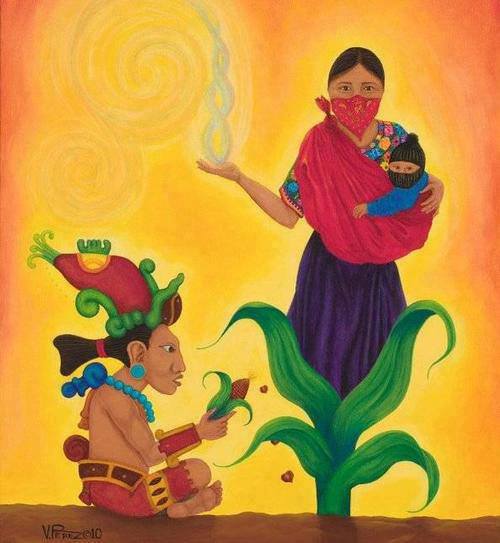
No one can deny how the military interests of such countries as the USA, United Kingdom, Germany, etc. conditioned the development of science. As a result, we now have arms of destruction that can annihilate the life of the entire planet. The sophistication of death machines has reached limits unimaginable in science fiction. However, we still have not resolved such problems as hunger, pollution of the planet, the origin and treatment of numerous illnesses or the use of alternative forms of non-contaminating energy.
Narcissistic Eurocentrism is also visible in the field of the humanities. The literature, poetry, painting and music of many Western artists, such as, Wolfgang Amadeus Mozart, Giuseppe Verdi, Gustave Flaubert, Victor Hugo, Antonin Artaud, Johann W. von Goethe, Isabelle Eberhardt, Lord Byron, the Marchioness of Alorna, Henri Matisse, Eugene Delacroix, Paul Klee, etc. are not entirely, comprehensible without taking into account their oriental influence, an influence which is increasingly observed in a significant number of Western artists.
At the present time, there are around 300 million people who belong to nearly 200 different ethnic groups who have their future threatened. In commercialised curricular materials, these groups do not exist because their reality is ignored or in some cases these themes are treated in a circus-like manner. Frequently, the Third World is presented from two perspectives: (a) as exotic sensual places with superstitious people, who live in a happy savage state with few daily problems, specialise in magic and folk medicine and are incapable of constructing scientific knowledge; and (b) as scenarios of every class of warfare between ethnic groups as a form of hidden discourse that defines these groups as primitive, without evolution and therefore, with an innate preference for violence and war. In general, it is Manichean constructed information, in which an undervaluation of those people is assumed. A historical continuity never appears to the readers in which all variables are considered in order to understand the reason for their underdevelopment, poverty, violence and options for massive emigration to the ‘first’ world countries. Perhaps, as Alber Memmi (1971, p. 155) affirms, “The most serious lack that the colonialized suffer is to find themselves out of history and society”‘.
This racist treatment, in summary, is nothing more than a coherent elaboration and organisation of information with racism typical of Western culture from the nineteenth century. Since that time, the method that has been proposed defends a “form of biologization of social thinking that makes absolute the different, converting it into a natural characteristic” (Wieviorka, 1991, p. 84). In this manner, it is easier to present what is a sociocultural construction as an innate characteristic of inferiority, and is the most comfortable way to promote social, economic, political and cultural exclusion.
An education that follows the line of constructing a more democratic and just society needs to reconstruct curriculum knowledge, taking into account the points of view of those who belong to silent and excluded cultures without power. It is urgent to redefine our entire culture to avoid the deformations that created the dominant, Eurocentric, masculine conceptions and the visions of the social groups with more power. In each theme of study, it should be obligatory to take into consideration the points of view of those who have something to say but who, until this moment, have not had the opportunity. A similar model of work, for instance, is that which was carried out by some schools and intellectuals during 1992 to celebrate the five hundredth anniversary of the ‘discovery of America’, according to the conception of history of Spanish hegemonic groups. The objective of whoever decided to carry out the work of decolonising history, was to reconstruct this historical event, taking into consideration the voices and reality of those who suffered the process of invasion and colonisation. It was not Christopher Columbus who discovered the American continent, since numerous Indian communities had lived there for thousands of years beforehand. It was and is necessary to employ a better reconceptualisation from the perspective of the silent ethnic groups by using the strategy of modifying institutionalised stereotypes and erroneous conceptions about groups, collectives, ethnic groups and nations. It is necessary to elaborate new models, concepts and a new paradigm capable of promoting a more democratic and just vision of reality, regaining the presence of those who were and are eliminated from history. A similar task is to attempt to reconstruct history, like women’s movements have been doing for some time, in order to defend their place in history. It does not just mean adding new themes, but reconstructing traditional themes while keeping in mind absent perspectives.
The research about some of these people, ethnic groups, women, etc., is now becoming important, but we run the risk that this research will remain in isolated and erudite studies which will only reach people more sensitive toward these type of topics, and will not force a reinterpretation of hegemonic discourse. Another risk is that these studies may be converted into one textbook chapter or appendix without changing textbook content as a whole. One example of this type of ‘additive’ approach is what happened with the introduction of the evolutionist theories in Spanish textbooks. Given the impact of these theories, the textbooks eventually incorporated the theories of evolution as only one more topic, but did not re-elaborate the other themes in accordance with the evolutionist theory, as mentioned above. There appeared some reference to evolutionism, but normally it was reduced to a short biography of Charles Darwin. However, in the rest of the book creationist positions were promoted. Apparently, the new theory was justified, but it did not change the hegemonic argument of the Roman Catholic Church and in particular of the conservative groups that saw a danger in losing key support for the ‘justification’ of their privileges and positions of power.
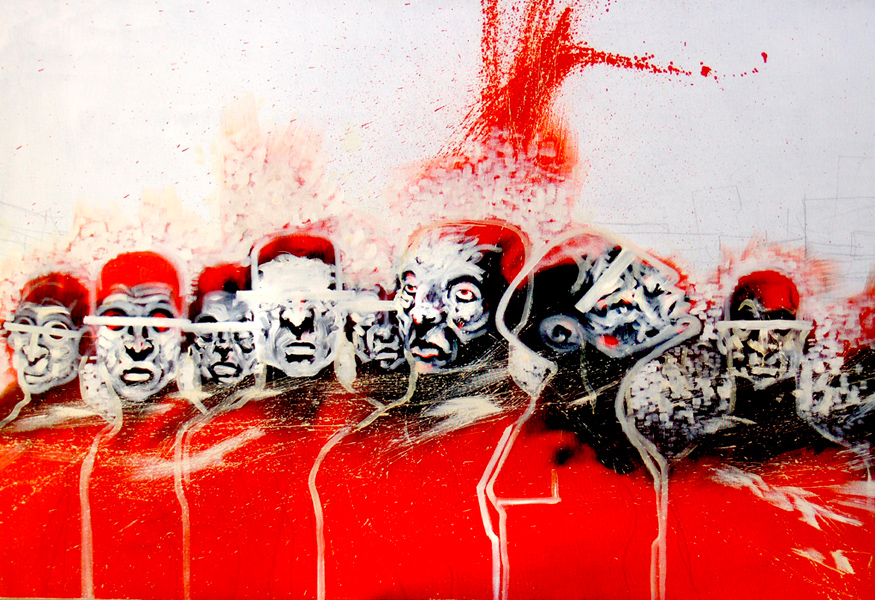 The support of creationist theories is usually based upon explanations involving personal intelligence and other innate features. It is worth remembering that the theory (ecclesiastic parable) of ‘innate talents’, as promoted by fundamentalist positions of the Roman Catholic Church, was used to guarantee all kinds of social, economic and political stratifications. Even the biblical metaphor of creation (i.e. the creation of Eve and therefore all women) facilitated arguments to justify male dominance and female oppression. If scientific arguments stand in contradiction to literal and conservative readings of religious texts, such arguments are ignored. These readings tend to defend situations of oppression and exclusion and postpone solving them until life after death. When proponents of evolutionist theories appear within the Catholic Church, (i.e. the French Jesuit Pierre Theilhard of Chardin), they are silenced by Church censors.
Along this line, it is necessary to remember that the students who belong to the dominant ethnic group need to keep in mind that they are members of this group. Not questioning the fact that they are themselves an integral part of the ethnic group with more economic, political, military and cultural power, will condition their construction of knowledge. Only taking into consideration one’s own ethnicity, can one view other ethnic groups as deficient. The ‘dishistorisation’ of the construction of ethnic identities facilitates the reproduction of conceptions and explanations of social behaviour as something innate.
“Only racism permits one to consider as eternal, substantiving it, an historical relation that began at some point in time in the past”, said Memmi (1971, p. 132) trying to explain some characteristic or real or imagined peculiarity, in support of the dominant or colonialist group. It is necessary to remember that this way of thinking, behaving and speaking, including the language itself, is also explained and legitimated by those groups with sufficient power to impose them as universal norms. These behaviours serve to facilitate the access and control of economic and cultural resources and structures of power. It is necessary to construct educational practices which teach students to unmask the political, historical and semiotic dynamics that condition the interpretations, expectations and possibilities to participate in reality. Apart from the knowledge learned in schools, the students have previous concepts, experiences, conceptions of life, expectations and prejudices which have been learned in their families, neighbourhoods and especially through the mass media. An anti-exclusive school is one in which all this passively acquired previous knowledge is contrasted, using democratically constructed and reconstructed criticism and taking account of the perspectives of social class, gender, sexuality, ethnic group and nationality.
An anti-discrimination curriculum will facilitate the reconstruction of the history and culture of silent groups and peoples. In order to do this, it is essential that the students participate in debates about the construction of knowledge, about the conflictive interpretations of the present and, at the same time, force themselves to identify their own positions, interests, ideologies and assumptions (Banks, 1993, p. 5). Students should also learn to discern how knowledge is constructed, disseminated and legitimated; in what way the selection, construction and reconstruction of knowledge influences personal perspectives, experiences, presumptions, prejudices, frames of reference and positions of power; and how to revise the knowledge that surrounds each context.
In knowledge formulation, the identity of the person that is explaining, interpreting and acting over reality, is influenced by such factors as one’s position of power, gender, sexual preference, class, ethnic group and age. The identification of the positions of who constructs knowledge has usually been put aside, which has served to reproduce arguments with negative effects for women, people of the Third World, minority groups without power, nations without states (i.e. those people who claim a nationality not officially recognised as such by the government of the country of which they are a part) and the working class. Some of these dimensions are beginning to be taken into consideration, thanks principally to the efficient coordination of the vindications of people united in the defence of such perspectives – for example, the feminist movements’ emphasis on how history is written from a masculine position. Also, the movement of black people and other such groups have insisted for some time that the partiality and bias of the hegemonic culture is constructed from white people with power.
However, it is important to note that the additive form of work in the schools was very positive because it permitted the criticism of the reproductionist theories which failed to analyse the meaning of what was occurring in the schools. It was not the Spanish Government that stimulated the teachers to construct and incorporate topic work on such themes in the classroom. On the contrary, if today the government talks about diversity and cross-curriculum, it is due to thepraxis of many teachers who have been successful in linking their classrooms with the more urgent problems of society (wars, oppressed cultures, unemployment, drugs, the problems of women, etc.). However, as intellectual critics, we ought to focus on the detection of our own faults and learn how to revise them. It is from this perspective that we often introduce problematic societal questions in ‘tourist’ form with a certain superficiality, something sporadic and out of context and with an excess of optimism.
Some people thought that it would be relatively easy for students without a voice and whose culture was continually denied, to suddenly regain their voice, analyse their own reality and perhaps, transform it. This excess of optimism causes some teachers to blame themselves and stop moving forward when their attempts fail. It is essential to acknowledge that this task is not easy for many reasons and that understanding is needed in order not to lose momentum. Those who feel ‘different’ are unappreciated by everyone, and they are very afraid when suddenly asked to talk about their experiences and feelings. It is important that they see that our interest in them is serious and that we are not trying to discover their weak points in order to attack them. Those who belong to ignored cultures and oppressed social groups observe that the only way to enjoy the same privileges that the social groups with power enjoy, is to deny themselves. This denial is described by Frantz Fanon when, in relation to the people of colonised countries, he writes: “The colonized person is envious and the colonist does not ignore it when looking in the other direction, but on the contrary, is bitterly checking and always alert, for he knows that ‘the colonized want to occupy our position’. It is true that there is not a colonized person who does not dream at least once a day of the time when he or she will change position with the colonist” (Fanon, 1973, p. 34). Those who feel different are converted into mute people by their resentments, fears and doubts. Since it takes time for the members of such groups to gain confidence, the best strategy to reconstruct and submit to critical analysis the injustices and problems of these groups, is not through the dedication of ‘the day of…’.
It is necessary that silent and oppressed cultures and the problems of the working class are presented in such school resources as reference books, novels and stories, newspapers, magazines, illustrations, videos, games, decor, etc. As a result, there can arise points of view that incorporate the reality of diversity, not only in the social sciences, but in all areas of knowledge. This will gradually build students’ confidence in the teachers and consequently lead to a better understanding of their true intentions. At the same time, they must be able to see that teachers are critical of their own advantages and see evidence of their solidarity and empathy with them. If we admit that school and life must be connected, as John Dewey said, it is obvious that our own sociopolitical commitments need to be submitted to a critical revision in the school with this aim: the detection of our own contradictions and an attempt to overcome them.
Every social group possesses a concrete knowledge of the reality in which it participates, that is the fruit of social relations, social and productive experiences and of the influences of the mass media. It is also assumed that in this knowledge, doses of partiality and contradictions can be detected and overcome to the extent that we participate in a process where our participation, discussion and criticism are assured. With such a philosophy, the manipulation or reification of knowledge transmitted through textbooks can be counteracted. The establishment of fixed compartments between academic knowledge (that which only serves to pass examinations) and social knowledge (that which is used to understand and solve daily problems) would be eliminated.
Beforehand, however, it is necessary to face one of the principle obstacles of the dichotomisation of knowledge or the form in which information is presented to students. Facing reality in the school, by means of presentations divided into subjects, facilitates the manipulation of more conflictual realities. It does not help with understanding the social situations and conflicts of the past or present. Reality appears like the Tower of Babel, without the possibilities of being understood, due to an inability to connect the different information with which it enters into contact. Dislocations are produced with ease between the different fields of knowledge. Communication is not stimulated and it is not possible for a dialogue to take place between parts of knowledge even though they have the same aspect of reality and history as their centre of study. Useful knowledge and the quality of analysis about concrete realities depend upon the possibility for dealing with entire issues, the connections and interactions between parts and the resultant consequences to the whole.
For many years, an interdisciplinary and integrated form of curriculum has been emphasised. However, the majority of students have had to work with a knowledge impaired by a large division of subjects without any visible connection between them, and on many occasions, a similar division within the same subject. The fragmentation of knowledge, typical of many schools, is the consequence of societal and political fragmentation which has been alluded to before. Fragmenting knowledge runs the risk of losing contact with reality; it does not favour a ‘sensitivity’ toward knowledge and its union with daily problems. The result is something incoherent with a conception of the school as a living space where students and teachers learn solidarity, to develop objectives and strategies and to revise their teaching and learning processes. Committing oneself to an emancipatory education means, to paraphrase Cameron McCarthy (1990), a critical redefinition of school knowledge from the heterogeneous perspective and identities to the disadvantaged social groups; a process that goes further than the language of ‘inclusivity’ and puts the emphasis upon the relationships and the plurality of voices as central strategies in the production of knowledge.
 It is the mission of schools to help boys and girls understand how knowledge is constructed. In order to accomplish this, the students need to have opportunities to research and discover how specific conceptual models, research strategies, perspectives and prejudices condition the construction knowledge. They also need to explore how their own conceptions and options can be biased and limited by their assumptions, positions and experiences which can reinforce situations of oppression and marginalisation.
Education must contribute to the development of the students’ ability to make decisions, based upon reflection and dialogue; to construct the skills needed to assure their social participation; to analyse the political effects of their actions and to act as democratic, responsible, critical and jointly liable people. The schools have to commit themselves to the promotion of values, attitudes and behaviours that respect pluralism and cultural diversity and that make compatible the enrichment of cultural idiosyncrasies of every people and race while at the same time, creating solidarity between them. There is, however, a relation of ‘non-synchrony’ (McCarthy, 1990) in racial relations, gender, class, nationality and sexuality in the school as well as in the other spheres of society. Non-synchronisation is the result of the fact that the people in schools are not uniform. It is normal to have important differences in the interests, needs, desires and identities that divide the different minority groups without power. Such groups do not share a similar consciousness and perspective in their institutional relations. For any of the dimensions that are chosen for analysis and praxis, be it race, nationality, gender, sexuality or handicap, their intersection with the dimension of social class is going to help us better understand and propose anti-discrimination strategies. The linking of social class with other dimensions is not an obstacle to the establishment of unity around any of the other variables. We have to be conscious that contradictions and non-synchronies are going to be produced in any of the modalities of intervention and praxis. As Cameron McCarthy explains (1990, p. 95), “different race-class-gender groups not only have qualitatively different experiences in schools, but actually exist in constitutive tension, often engage in active competition with each other, receive different forms of rewards, sanctions and evaluation, and are ultimately structured into differential futures”.
A truly democratic society must facilitate the dismantlement, denouncement and elimination of those forms of oppression, as well as prejudices and unjust conceptions. Such a society recognises cultural, linguistic and cultural plurality without converting them into forms of discrimination. The philosophy of equal opportunities for all children does not only refer to sitting at a school desk and forgetting about the important inequalities in access to a worthy job, a home, a culture, health care and satisfactory living conditions. Neither can the schools be considered neutral arenas. The teaching staff, resources, school tasks, modalities of organisation and strategies of evaluation can not be considered neutral, if the students do not learn to understand clearly the origins of social, economic and political inequalities of society and the world in which we live.
An anti-discriminatory education has to recognise the errors of the past and unveil the way in which the educational system has been one of the focal points of the politics of assimilation by creating monocultures. To be conscious of the forms in which the schools are doing these tasks is one of the first steps to overcoming this politics of partiality and domination. However, it is essential to be conscious of a series of obstacles in order to overcome them:
(a) The culture of individualism dominates our society and impregnates our educational work. It is difficult to construct and work in teams.
(b) The culture of excellence and competition promoted in our educational system will be further reinforced by the Administration’s evaluation plan to be implemented by the ‘Instituto Nacional de Calidad y Evaluacion’, as announced in LOGSE (An educational reform law recently passed by the Spanish Government General Organic Law of the Educational System). One danger of governmental intervention is that it tries to control the educational system to such an extent that it results in a higher level of centralisation and the teachers and students are left without any decision-making authority. The implementation of an interventionist policy, through a centralised evaluation of the educational system, will probably produce more homogenised curriculum contents and practices, while at the same time producing a greater level of teacher deprofessionalisation.
The promotion of scholastic institution evaluations through homogeneous examinations to test the level of compliance with the obligatory contents of the educational system, can result in the end of school autonomy. At the same time, a similar praxis of control can indirectly produce a standardisation of textbook contents and curriculum resources. This is something that goes against a curriculum policy that respects diversity. Administrative interventions and controls such as these serve only to benefit the large publishers that control the textbook market and that tend to include the same cultural contents, with the same type of information, from the same point of view. The curriculum materials end up having an exclusive objective: that the students pass official examinations imposed by the national government. It is also important not to forget that the modalities of evaluation have a direct influence upon teaching practices and resources used in the classroom.
(c) The distorted vision of reality that the textbooks transport and the few sources of information to which the students have access in the schools. The textbook, like the Trojan horse, is one of the most efficient ways for the hegemonic groups to perpetuate their conceptions of the world. In these curriculum materials, like the rest of the mass media, “the area of symbolic production is not divorced from the unequal relations of power that structure other spheres” (Apple, 1993, p. 58). However, this too can be used to dismantle deformed visions and to silence distorted information. If used by committed and critical teachers, such materials can be a resource to learn to detect distorted arguments and typical forms of reasoning used in the manipulation of information. This has become even more urgent with the resurgence of authoritarian and neofascist forms, however tinted they may be with populism. When conservative governments and entrepreneurs work together with more coordination, democratic practices tend to be reduced to voting from time to time with the expectation that it is impossible to better and correct the defects of society. There have been only a few times in history when it was as urgent as it is in the present, to regain the typical Utopias of the political left.
(d) The difficulties of introducing and working with the mass media in classrooms and schools. The mass media has been converted into one of the most significant instruments of manipulation. Social groups with power invest large quantities of money to control the mass media and other spheres of representation in order to reinforce and reconstruct racial, class and gender meaning in support of their political and economic interests. In the classroom, we are forced to analyse critically and deconstruct the popular knowledge produced by the different television and radio channels and in general by the cultural industries. This implies reviewing the texts and images about the cultures and traditions of the community upon which the students base the reconstruction of their individual and collective identities. According to Noam Chomsky (1993, p. 31), the schools need to provide students with “mechanisms of intellectual self defense” in order to be able to defend themselves from the manipulation of information to which they are submitted by the mass media and institutions with strong political and economical interests.
(e) The lack of resources for teacher education in these areas. The governmental administration of education is not interested in teacher education and intervention.
(f) The difficulty teachers have in sharing materials, support staff, antiracist, anti-sexist and anti<lassist experiences due to the dispersion and lack of coordination of those working in this line of action and commitment. It is essential to bring up to date and re-arm teachers. As teachers, we need to regain moral courage and critical capacity in light of the excessive weight and new attacks of conservative and neo-conservative politics. We need to make an effort to see with clarity the interconnections between educational problems and questions and more global political, economic and cultural processes.
In addition to overcoming the ethnocentrism, racism, gender and class discrimination that prevail in the majority of schools, education against discrimination supposes an intervention in other social realms where the different modalities of discrimination are forged and consolidated: in the workplace, the mass media, labour, cultural and sanitary policies, etc. The committed teacher must work with and not for the socially disadvantaged collectives (McCarthy, 1990, p. 122). Teachers also need to be committed to the problems of oppressed women and to participate in workers’ organisations because facing inequalities in education implies intervention in the other social, economic and political realms where discrimination is also forged.
In summary, it is necessary to regain a political language for education and coordinate our work within broader strategies in order to transform society. This implies coordinating forces with other social movements away from the walls of the schools. There are urgent common problems which must be grouped together. The fragmentation of our fights around small ghettos and private problems affecting only few people are inadequate models of analysis. As citizens of a democracy, we are forced to commit ourselves to define social problems and formulate multiple proposals to solve them. This is indeed a task which requires a certain amount of Utopianism. The possibility of imagining new futures is an indispensable condition in order to transform existing situations of discrimination.
References
Apple, M. W. (1993). Official Knowledge, Democratic Education in a Conservative Age. New York: Routledge.
Banks, J. A. (1993). The canon debate, knowledge construction, and multicultural education, Educational Researcher, 22, pp. 4-14.
Benedict, R. (1983). Race and Racism. London: Routledge & Kegan Paul.
Chomsky, N. (1993). Crónicas de la discrepancia. (Entrevistas de David Barsamian). Madrid: Visor.
Fanon, F. (1973). Los condenados de la tierra. Mexico: Fondo de Cultura Econ6mica, 4th edn.
Finkielkraut, A. (1992). El País, 24 de Abril. Suplemento Babelia, pp. 11-12.
Hall, S. (1992). Race, culture, and communications: looking backward and forward at cultural studies,Rethinking Marxism, 5, pp. 10-18.
McCarthy, C. (1990). Race and Curriculum, Social inequality and the theories and politics of difference in contemporary research on schooling. London: Falmer Press (Spanish translation in press by Ediciones Morata:Racismo y currículum).
Memmi, A. (1971). Retrato del colonizado. Madrid: Cuadernos para el Diálogo.
Reiss, M. J. (1993). Science Education for a Pluralist Society. Buckingham: Open University Press.
Temple, R. (1987). The Genius of China: 3000 years of science, discovery, and invention. New York: Simon & Schuster.
Torres Santomé, J. (1991a). El curriculum oculto. Madrid: Morata.
Torres Santomé, J. (1991b). La Reforma educativa y la psicologizacion de los problemas sociales in VV. AA.Sociedad, Cultura y Educación. Homenaje a la memoria de Carlos Lerena Alesón, pp. 481-503. Madrid: C1DE and Universidad Complutense de Madrid.
Torres Santome, J. (1993). La culturas negadas y silenciadas en el curriculum, Cuadernos de Pedagogía, 217, pp. 60-66.
Wieviorka, M. (1992). El Espacio del Racismo. Barcelona: Paidós.
.)
Tessa Guze – Walking Home (2011)




 Users Today : 71
 Total Users : 35460088
 Views Today : 90
 Total views : 3418721