Page 1142 of 6723
1 1.140 1.141 1.142 1.143 1.144 6.723

Se abren las puertas a Francia en la 7ª Cumbre Digital de Líderes por la Educación

Europa/Francia/semana.com

En su primera versión virtual, la Cumbre apuesta por la exploración del modelo educativo de Francia como una alternativa de aprendizaje en medio de la pandemia y pospandemia.

La Cumbre Líderes por la Educación cada año atrae a un amplio grupo de profesionales del sector educativo, estudiantes y padres de familia. Es un evento de gran importancia para la pedagogía innovadora, el futuro de la educación en el país y en el exterior, y el intercambio de conocimientos concretos y operacionales. Mantener la Cumbre Líderes por la Educación en las circunstancias actuales es una señal clara de resiliencia y una apuesta por el futuro de Colombia. Este año, con Francia como país invitado de honor, el plurilingüismo y su modelo educativo tendrán un lugar privilegiado durante la Cumbre, para intercambiar experiencias entre profesionales colombianos y franceses.

En un mundo laboral cada vez más competitivo, abierto e internacional, tener un acercamiento a otras culturas y a otra comprensión del mundo es una ventaja indiscutible. Si bien es cierto que el manejo del inglés es imprescindible, no basta en el mundo global actual. Esta es una de las profundas convicciones y directrices del modelo educativo de ciertos liceos bilingües. En los cinco liceos franceses en Colombia, por ejemplo, la enseñanza del español, francés e inglés, y a veces de un cuarto idioma, ya es una exigencia.

Por esta misma razón, tras el encuentro de los ministros de Educación de Francia y Colombia en 2019, el 25 de agosto de este año se resolvió un proyecto de reintroducción y fortalecimiento del francés en los colegios públicos de Colombia, a raíz de una iniciativa piloto implementada entre 2019 y 2020 para mejorar la calidad de la enseñanza de este idioma en cinco colegios públicos de Bogotá. Se prevé la ampliación de esta primera experiencia a 20 instituciones en diferentes ciudades del país. Se realizará en colaboración estrecha con el Ministerio de Educación colombiano y las Secretarías de Educación de las diferentes ciudades, por medio de un conjunto de acciones complementarias desarrolladas, gracias a las Alianzas Francesas en Colombia, para el desarrollo de competencias lingüísticas y culturales. Esto permite el acceso de estudiantes y profesores a más de 250.000 herramientas disponibles en la plataforma digital Culturethèque, así como la evaluación de competencias lingüísticas por medio de los exámenes oficiales DELF (Diploma de Estudios de Lengua Francesa).

Con la enseñanza del francés, los cerca de 10.000 alumnos que participen en dicho proyecto y los más de 4.000 estudiantes de liceos franceses podrán acceder a un tercer idioma que les abrirá las puertas en un mundo de 300 millones de francófonos, impactando su vida laboral en el sector del turismo y comercio, la ingeniería, la cultura y más. Así, accederán al pensamiento de grandes intelectuales de la historia como Molière o Victor Hugo.

Más allá del interés cultural que motiva el aprendizaje del francés, practicar otro idioma abre las puertas a la educación y a las oportunidades de trabajo en el extranjero. En este caso, la Cumbre Líderes por la Educación es la oportunidad para que estudiantes y padres tengan mayor información sobre los estudios en Francia, cuarta nación en el mundo de acogida de alumnos colombianos, donde la oferta de educación superior y los 150 convenios de doble titulación con el país atraen a cerca de 4.500 estudiantes colombianos al año.

La Cumbre será además un espacio de diálogo sobre el aporte de otros modelos educativos en Colombia, siendo este uno de los objetivos del convenio del 25 de agosto, que busca el intercambio de experiencias y la colaboración entre los dos países en los campos de la innovación educativa, educación ciudadana, entre otros. La lucha contra el fracaso escolar, la apuesta por una escuela de la confianza que favorece la adquisición de competencias y saberes, la escolarización infantil desde los 3 años o antes, y la igualdad de oportunidades son características de gran importancia del modelo educativo francés.

Reducir la desigualdad en la educación es un tema clave, para ambos países. Desde 2012, Francia ha insistido en la escuela primaria y las escuelas de los barrios populares con el fin de mitigar la desigualdad social. En 2017, el ministro de Educación Nacional, Jean-Michel Blanquer, redujo a la mitad el número de alumnos en las clases de transición y primero de primaria en las zonas con más desafíos educativos, beneficiando a cerca de 300.000 alumnos.

Igualmente, en 2017 y 2018 se establecieron las evaluaciones nacionales en francés y matemáticas en transición, primero y quinto de primaria, y en noveno de bachillerato, permitiendo identificar los logros y brechas del alumno para que el docente adapte su pedagogía o para dedicar horas de acompañamiento adicionales al estudiante.

Finalmente, uno de los temas de mayor importancia de este modelo educativo, y que será abordado en la Cumbre, es la educación en la primera infancia, en que Francia tiene una larga experiencia, reforzada recientemente con la Ley para la Escuela de la Confianza (2019). La escolarización obligatoria a partir de los 3 años (en algunos casos desde los 2 años) beneficia a 30.000 niños en entornos aislados o en zonas prioritarias de educación. Gracias a este enfoque temprano sobre el desarrollo del lenguaje oral, la escritura y la autonomía, el alumno se prepara para ingresar con éxito a la escuela elemental y vivir en sociedad.

Hablar de plurilingüismo y de otros modelos educativos es abrirles nuevos horizontes a futuros estudiantes, profesionales y ciudadanos. La pandemia de la covid-19 demostró cómo el mundo está interconectado, y la educación debe abrirse a otros modelos adaptables al cambio que propicien la evolución en el mundo.

Fuente: https://www.semana.com/educacion/articulo/se-abren-las-puertas-a-francia-en-la-7-cumbre-digital-de-lideres-por-la-educacion/202038/

Comparte este contenido:

Entrevista a Cristina de Stefano: “Si ponemos al niño realmente en el centro, como pedía Maria Montessori, todo cambia para siempre”

Entrevista/Autor: Adrian Cordellat

La periodista italiana Cristina de Stefano ha dedicado cinco años a investigar la vida de esta mujer y su efecto en la pedagogía y educación actual

La periodista italiana Cristina de Stefano ha dedicado cinco años a investigar la vida de una de las mujeres más revolucionarias de la historia: Maria Montessori. Para ello ha buceado entre cientos de libros y cartas de la doctora, pedagoga y filósofa italiana. “Quería descubrir si Maria Montessori era una loca, como dicen algunos, o una astuta mujer de negocios, como afirman otros, una gran alma, como repiten sus seguidores, o mucho más que todo eso”, explica en la nota final del libro. El resultado es El niño es el maestro: vida de Maria Montessori (Lumen), una biografía que se devora como una novela en la que De Stefano cuenta con un increíble pulso narrativo la historia de vida de una iluminada, casi una mesías, una visionaria dueña de un carácter profundamente contradictorio y lleno de claroscuros, de zonas de sombra; la historia de vida de una mujer que soñó durante toda su existencia con cambiar al hombre a partir del niño y, con ello, con cambiar el mundo. “No tuvo éxito en su sueño y su revolución está inconclusa, pero todavía puede inspirarnos hoy en día”, asegura De Stefano.

PREGUNTA. Afirma que con esta investigación quería descubrir “a la persona real, más allá de la marca global que todavía lleva su nombre”. Ese precisamente, cuenta en el libro, era uno de los miedos de la Montessori anciana, pasar a la historia por haber creado un método pedagógico y un material didáctico, pero no por lo que ella consideraba su verdadera revolución: “haber visto al niño en su verdad, no una criatura inferior, sino potencialidad absoluta de futuro”. ¿Cree que hoy en día prima más el recuerdo de Montessori por su método que por su revolucionaria visión de la infancia?

RESPUESTA. Hoy decimos Montessori y vemos el material, en su mayoría colegios privados y un método que parece ser privilegiado. Me temo que hay demasiado marketing, e incluso demasiados negocios en torno al nombre Montessori, que ahora está por todas partes. El riesgo y lo más fácil es detenerse en el material. Escuchar su mensaje revolucionario es más complicado (y muchas veces incómodo para los adultos, ya sean padres o profesores), pero también más emocionante. Si ponemos al niño realmente en el centro, y no solo a través de las palabras, todo cambia para siempre.

P. El niño es el maestro: Vida de Maria Montessori es el retrato de un genio. Con sus luces y con sus sombras. ¿Qué es lo que más le ha sorprendido de lo que ha averiguado preparando la biografía de Maria Montessori?

R. No sospeché de su lado espiritual, que me conmovió profundamente. Maria Montessori cree en la observación científica, pero también cree en el milagro, en lo invisible, en el poder de la belleza. Este punto, por ejemplo, me hace sentirme cerca de ella. Hoy quien nos invita a crear belleza para ayudar al alma a desarrollarse es como un profeta que clama en el desierto. La modernidad casi siempre parece buscar lo feo por defecto. En sus escritos, Maria Montessori siempre usaba la palabra alma, sin miedo; un concepto que hoy se ha convertido casi en una palabra maldita. Y, en cambio, no hay criatura más naturalmente espiritual que el niño, que por instinto sabe escuchar su voz interior, sabe maravillarse en cada momento, sabe vivir perfectamente el presente. Obviamente estoy hablando del niño en sus inicios, antes de que la sociedad de adultos -partiendo de esa pequeña sociedad que es la familia- lo deforme.

P. A mí una de las cosas que más me ha impresionado es su faceta visionaria. Solo mediante la observación de los niños dejó por escrito muchos principios educativos que luego han sido avalados por la neurociencia. ¿Cree que ser tan adelantada a su tiempo le hizo ser y sentirse una incomprendida?

R. Estar por delante de los tiempos que te toca vivir siempre es una fuente de problemas. En su día, muchos consideraban a Maria Montessori como una loca. Sin embargo, casi todo lo que decía (sobre un parto respetado, sobre la vida prenatal, sobre el funcionamiento del cerebro infantil, sobre la polarización de la atención) ha sido confirmado muchos años después por la ciencia.

P. El tiempo histórico en el que le tocó vivir, precisamente, le hizo sufrir mucho a nivel personal. Una mujer como ella no encajaba en una sociedad en la que las mujeres tenían marcado su camino desde el nacimiento, así que ella tuvo que pagar su revolución con sufrimientos y renuncias personales. ¿Sería Maria Montessori más grande y reconocida en una sociedad como la actual?

R. Maria Montessori se impuso en un período muy difícil para la emancipación de la mujer. También en esto era muy moderna. Quería dejar una huella en el mundo, ser una persona que trabajaba. Incluso abandonó a su hijo durante muchos años para realizarse como médico. En todo caso no creo que el sufrimiento ayude. Pienso que, si hubiera vivido hoy, María Montessori habría hecho cosas aún más extraordinarias.

P. A mí otra de las cosas que más me ha sorprendido es algo que ya ha comentado: ver cómo un método que nació en un barrio humilde y para niños de familias pobres es hoy un sistema de enseñanza al que solo pueden acceder familias de un nivel socioeconómico alto. Es una gran paradoja.

R. Es una triste paradoja. Como cuento en el libro, esto es el resultado de cómo fue su vida. Las autoridades públicas de Roma no pueden o no quieren colaborar con ella y pronto son las élites, especialmente las anglosajonas, las que se interesan y financian su investigación porque las élites saben muy bien que la formación es fundamental para crear una clase dominante. Pero esta tendencia aún puede revertirse. Cada vez hay más escuelas públicas que adoptan el sistema Montessori. Aquellos que argumentan que los costos son altos a menudo ocultan su falta de voluntad para cambiar radicalmente la escuela. El material es caro, es cierto, pero es indestructible y dura décadas. Y luego están las aplicaciones Montessori en hogares para ancianos, en campos de refugiados, en países del tercer mundo. Nunca es demasiado tarde para volver a la inspiración del compromiso social que tuvo el método en sus inicios.

P. Leyendo el libro me ha parecido encontrar el momento en el que se produce ese tránsito entre método para niños de familias pobres y método educativo para niños de familias ricas: la apertura de la primera escuela Montessori en Estados Unidos. No sé si hay alguna información de qué le pareció a Maria Montessori esta evolución de su método pedagógico.

R. Sí, la primera escuela Montessori estadounidense fue creada para los hijos de los ricos, todos ellos banqueros y financieros. No encontré los comentarios de Maria Montessori sobre esta primera iniciativa, pero estamos hablando de una época en la que las cosas explotaron a su alrededor y ella en realidad no controlaba casi nada. En los mismos años, por poner otro ejemplo, los socialistas de Vienne crearon escuelas Montessori para niños que se morían de hambre después de la Primera Guerra Mundial. Todo esto sucedió en mitad de una absoluta falta de coordinación y planificación. Maria Montessori era una visionaria, pero ciertamente no una mujer práctica.

P. Le hacía la pregunta anterior porque si algo queda claro tras la lectura de tu biografía es que Maria, aunque no práctica, sí era muy protectora de su método. Lo quería controlar todo ella, hasta el punto de que le molestaban los libros que otras madres y profesoras publicaban explicando cómo aplicar el método Montessori en el colegio y en casa. Hoy hay cientos de libros y blogs dedicados al método, influencers que viven de divulgar sus principios en blogs y redes sociales… ¿Qué cree que pasaría por la cabeza de Maria Montessori si pudiese revivir y ver la expansión sin control de su metodología?

R. En la década de 1960, su hijo Mario intentó frenar esta proliferación incontrolada prohibiendo el uso del nombre Montessori, pero los jueces estadounidenses decretaron que ahora era patrimonio de la humanidad. A partir de ese momento cualquiera puede poner el nombre Montessori en una escuela o una caja de actividades, sobre todo porque es un nombre que vende. No creo que Maria Montessori fuese feliz viendo esto, pero al final este es el dilema de todo fundador: ¿difundir el mensaje diluyendo o preservando la pureza de los orígenes? Personalmente pienso que la difusión es más importante. Que la idea Montessori se filtre en el mundo, en las familias y en las escuelas solo puede mejorar las cosas.

P. Maria Montessori pensó durante toda su vida que “la educación es una técnica del amor” y que a través de ese amor se podía cambiar el mundo, empezando ese cambio por los niños. En un mundo como el actual, azotado por guerras, crisis de refugiados, pandemias globales y crisis climáticas, ¿adquiere más importancia si cabe esa visión de la educación de Maria Montessori?

R. El mundo de hoy es mucho menos violento que el del pasado. Eso es lo que dicen todas las estadísticas. Es la información sobre violencia la que ha aumentado. De ahí la sensación que tenemos de vivir tiempos peores a medida que avanza la humanidad. Dicho esto, creo profundamente en el sueño de Maria Montessori. Creo que, si a los niños se les permite desarrollarse armoniosamente, especialmente en los primeros años, serán adultos más equilibrados, más capaces de autocontrol, comunicación no violenta y capacidad de atención. No es casualidad que María Montessori dijera que no debemos educar «para» la paz, sino educar «en» la paz. Es diferente. Es mejor. Sin embargo, son los adultos los que tienen que cambiar, y esto ya es más difícil.

Fuente e imagen tomadas de: https://elpais.com/elpais/2020/09/22/mamas_papas/1600780299_997192.html

Comparte este contenido:

Preparan en Angola regreso a clases bajo la Covid-19

África/Angola/prensa-latina.cu

Instituciones en Angola alistan el retorno a las clases presenciales partir del 5 de octubre, bajo regulaciones sanitarias especiales por la Covid-19, que registra hoy un saldo de casi cinco mil infectados.
Un decreto ejecutivo, suscrito por la ministra de Educación Superior, Ciencia, Tecnología e Innovación, Maria do Rosário Bragança, orientó que las entidades públicas y privadas del sector deben retomar el año académico de manera gradual, a fin de asegurar una adecuada evaluación de las condiciones de bioseguridad.

A fines de marzo, tras la detección de los primeros contagios por la Covid-19, el gobierno decidió la interrupción de las actividades docentes en los distintos subsistemas e indicó que la reanudación estaría sujeta al análisis en cada plantel para evitar la propagación de la enfermedad.

Como parte de los aseguramientos, el ministerio de Salud informó la realización hoy de unas tres mil pruebas serológicas a igual número de profesores en Luanda a fin de valorar la exposición del personal docente al virus SARS-CoV2, causante de la pandemia.

Según el secretario de estado para Salud Pública, Franco Mufinda, al menos cinco de cada 100 personas examinadas en el país, mediante análisis de biología molecular, resultaron positivas para la infección por la Covid-19.

A escala nacional, lo más preocupante es la situación en la provincia de Luanda, con más del 90 por ciento de los casos positivos y alrededor del 92 por ciento de los muertos debido a la virosis

De acuerdo con el gobierno, el 5 de octubre empezarán las clases en la enseñanza universitaria y en parte de la secundaria básica; luego deberán incorporarse los grados inferiores de manera escalonada.

Por el momento, Angola acumula cuatro mil 905 casos confirmados de la Covid-19, lo que incluye 179 muertos, mil 833 recuperados y dos mil 893 con la virosis en activo, señaló el más reciente parte institucional.

Entre los enfermos, hay 10 en estado crítico y 19 graves, pero la mayoría, un total de dos mil 720, no manifiesta ningún síntoma clínico de la dolencia, expuso el galeno.

Los centros de tratamiento a la Covid-19 atienden a 466 contaminados, los restantes casos activos están en régimen de aislamiento domiciliario.

Fuente: https://www.prensa-latina.cu/index.php?o=rn&id=400135&SEO=preparan-en-angola-regreso-a-clases-bajo-la-covid-19
Comparte este contenido:

Quino, dibujante de sonrisas, maestro de la vida

América del sur/Argentina/prensa-latina.cu

El mundo llora hoy a Quino, un dibujante de sonrisas, padre de los hispanohablantes que lo siguieron a lo largo de seis décadas con su Mafalda, ese personaje de infinito ingenio, quien planteó nuevos dilemas y profundas reflexiones.
En este malogrado 2020 donde no hay un ser humano en el planeta que no cuente los días para que acabe, se va uno de los más grandes dibujantes del mundo hispano Joaquín Lavado (Quino), un hombre sinigual, marcado por la justicia social, quien con su pincel dejó a mediante su filosofía y enseñanzas cientos de llamados de atención por un mundo mejor. 

A Quino lo conocí el 9 de noviembre de 2017. Una multitud se abalanzó sobre él durante una presentación de su Mafalda en guaraní, organizada por la embajada paraguaya en Buenos Aires.

Era la primera vez que su ingeniosa niña hablaba en una lengua originaria y Quino estaba feliz.

Aunque su salud ya se encontraba algo débil, en una repleta sala del Centro de Altos Estudios Universitarios (CAEU) de la Organización de Estados Iberoamericanos para la Educación, la Ciencia y la Cultura (OEI), entre aplausos, escuchaba atento los ingeniosos diálogos de Mafalda y sus amigos en una lengua ancestral.

Quizás hacía una profunda reflexión en ese momento de cuán lejos llegó con su lápiz a través de una ingeniosa niña, llena de simpatía, comprometida ante el mundo y que odiaba la sopa. Desde su asiento escuchaba atento varios de los fragmentos de su obra en guaraní y sonreía.

Fue en uno de los últimos actos en vivo que se le vio al padre de Mafalda, esa filósofa urbana que tantas verdades enseña, con reflexiones que parecieran haberse escrito ahora mismo.

Con su Mafalda, traducida a más de 25 idiomas, Quino dio voz a toda una generación, retrató un momento especial en la historia latinoamericana de la década de 1960 y 1970 cuando miles de jóvenes trataban de cambiar y mejorar el mundo.

A través de Mafalda, se hizo eco de esas aspiraciones y se constituyó en un icono.

La tira latinoamericana más vendida a nivel internacional, supo romper los estereotipos y con su vitalidad calar hondo en una América marcada por momentos muy duro de su historia y en una Argentina, por ejemplo, en la que incluso burló la censura de la dictadura.

Pero Quino fue mucho más que Mafalda, fue también Felipe, Manolito, Susanita, Guille y Libertad, fue Argentina y América Latina, esa que hoy deja huérfana por su partida el genial creador de viñetas, el padre de muchos que despiden con dolor al maestro de la vida.

Fuente e imagen tomadas de: https://www.prensa-latina.cu/index.php?o=rn&id=400230&SEO=quino-dibujante-de-sonrisas-maestro-de-la-vida-foto
Comparte este contenido:

Padece tecnoestrés 75 por ciento de la fuerza laboral en México: UNAM

México es uno de los países con mayor estrés laboral a nivel mundial, pues aproximadamente el 75 por ciento de la fuerza de trabajo lo adolece y la pandemia agrava la situación con la aparición del tecnoestrés, aseguró Erika Villavicencio-Ayub, de la Facultad de Psicología (FP) de la UNAM.

La especialista universitaria en salud ocupacional indicó que, previo a la pandemia por la COVID-19, hasta el 25 por ciento de los trabajadores tenía algún trastorno mental como depresión, aunque no necesariamente requerían tratamiento psiquiátrico.

Según sus estimaciones, es muy probable que esa cifra ascendiera para tener hoy uno de cada dos trabajadores con algún padecimiento mental.

Ante esto, la investigadora sugirió a instituciones y empresas establecer programas de contención emocional, reforzar las habilidades de los líderes que son el eje central de los equipos de trabajo en la función de facilitadores, así como proveer una cultura laboral enfocada al bienestar de la persona.

Tecnoestrés y desconexión

La Coordinadora de Psicología Organizacional de la FP expuso que alrededor del 70 por ciento del trabajo en México se realiza en la modalidad de teletrabajo, aunque la cifra está en constante cambio por las medidas implementadas por la Secretaría de Salud en algunas entidades federativas.

Hay personas, explicó, que siguen en confinamiento, en el llamado home office.  Otras tienen un esquema mixto para evitar saturar los centros laborales, y una parte in situ (en el sitio), porque su cometido es la producción o el trabajo físico.

Para la especialista no hay que olvidar que el empleado es un ser biopsicosocial, y cuando en su labor la fórmula se desequilibra y se le asignan jornadas y cargas más fuertes, el jefe o el dueño de la organización se siente con el derecho de exigir que esté conectado 24/7, incluidos fines de semana, obviamente se considera una cultura laboral tóxica que conlleva al estrés, y que repercute en la productividad.

“Ahí aparece el denominado tecnoestrés, derivado del uso desadaptativo de las tecnologías. Aunque depende de la situación, también podemos hablar de una tecnofatiga, cuando se está expuesto a largas horas con exceso de carga laboral”, añadió.

Esto sucede porque el cerebro está acostumbrado y reacciona a estímulos que son físicos. Migrarlo a las plataformas digitales trae una serie de configuraciones distintas en donde hace un esfuerzo adicional mientras se habitúa a interactuar con estas distintas expresiones de comunicación, precisó.

¿Tengo tecnoestrés?

Villavicencio-Ayub indicó que algunos de los síntomas son compartidos con otros trastornos, aunque una de las primeras señales se manifiesta en la piel, la caída del cabello y algunas otras como la afectación del ciclo sueño-vigilia, además de presentar dificultades para conciliarlo.

Otro trastorno es el consumo excesivo de alimentos. Hay personas a las que se les suma el exceso de conectividad con preocupaciones y angustias, depresión, miedos, y pudiera ser que los índices de estos se eleven y se acompañen con el mismo tecnoestrés.

“Si hablo con mi jefe de que estoy estresado corro el riesgo de que me quite de la fila, porque ya no soy el soldado que necesita en esta guerra, ¿y qué hacemos?, lo escondemos y lo desquitamos con la gente que más confianza tenemos: pareja, hijos, padres y llevamos el estrés laboral a un conflicto familiar”, describió.

Recomendaciones

Una de las primeras recomendaciones de la investigadora de la FP es la urgencia de una reforma legal en materia de la Ley Federal del Trabajo, a fin de que se establezca el derecho del trabajador a desconectarse fuera de los horarios convenidos de trabajo.

“Que esa desconexión se respete por ley, porque las personas necesitamos atender otros aspectos de la vida. Como seres biopsicosociales se ha invadido el hogar por estas causas, y en la medida que la persona pueda equilibrar su vida, tener descanso y actividades y despejarse mentalmente, sacará el desgaste que tiene por esta conectividad”.

Es momento, dijo, de organizar los equipos colaborativos para responder y llegar a un índice de productividad más alto con menos desgaste personal.

“En ese sentido, mi recomendación empieza con el autocuidado, es como el mensaje que nos dan al abordar un avión: colóquese la mascarilla para poder ayudar a los demás. Con esa metáfora, si la trasladamos al ámbito laboral, trabajaremos mejor en la medida que yo tenga hábitos saludables, que cuide alimentación, rutinas de despertar y dormir e higiene”.

Al concluir, subrayó que la meta es tener la menor afectación mental al finalizar la pandemia, porque el trabajo tóxico impacta en nuestro sistema inmunológico y éste debe permanecer lo más fuerte posible para que ninguna otra enfermedad lo ataque.

Fuente e imagen:  DGCS UNAM

Comparte este contenido:

Digital fences: the financial enclosure of farmlands in South America

Latin America is the region with the greatest level of inequality in terms of land concentration in the world: 1% of rural landowners hold 51% of farmland. While the region as a whole already holds a high GINI index of 0.79, South America, however, leads with an index of 0.85, the highest concentration in the entire continent.1 2 The expansion of the agricultural frontier, induced mainly by the global demand for soybeans and meat, is the main factor aggravating poverty and the unequal access to land in South American countries, mainly in those regions labelled as priority zones for the expansion and investment of the agribusiness.

According to a FAO (Food and Agriculture Organisation of the United Nations) assessment carried out in 2000, around 2.8 billion hectares of arable land were available at the time in the world to expand the agricultural frontier, 80% of it in Sub-Saharan Africa and Latin America, particularly in seven countries: Angola, Congo, Sudan, Argentina, Bolivia, Brazil and Colombia.3 A review of the 2012 study decreased the extension of the “arable expansion zones” to 1.4 billion hectares by excluding marginal land (of low quality for agriculture), forest protection areas and non-agricultural areas, but including five other potential areas: Mozambique, Tanzania, Zambia, Indonesia and Venezuela.4 Amid multiple post-2008 crises, the pressure on the control of land and resources of interest, such as water and biodiversity, increased considerably in these “land reserve zones”, either for productive use or as financial assets. On top of this, nature-based climate solutions to overcome the climate crisis, focused on using forests and other ecosystems as the main carbon stocks, end up intensifying even more the dispute over land reserves and real estate speculation around the world.
In this report, we assess the land situation in five agribusiness expansion and investment zones in South America: Orinoquia or the Llanos Orientales (Eastern Plains) in Colombia; Matopiba in the Brazilian Cerrado region; and -the regions located along the export corridor of the Paraná-Paraguay waterway- the dry Chiquitan forests of Bolivia, the Chaco Seco of Paraguay and the Argentinian Chaco. In these five expansion zones one can find:
  1. A high concentration of the best arable land in large properties, usually over two thousand hectares. Even in Bolivia, which imposes limits of up to five thousand hectares per owner, in the expansion zone of Santa Cruz and Beni, areas of up to six thousand hectares have been legalised and titled. In the Orinoquia region in Colombia, the average property reaches 10 thousand hectares, while 36% of the Argentinian surface is controlled by properties ranging from 10 to 20 thousand hectares. North from there, in Paraguay, 40% of the land is encased in 600 properties that are over 10 thousand hectares each. In the Brazilian Cerrado, one can now find estatesof over one million hectares with soy production;
  2. The prevailing use of these lands for soybean monocultures or livestock pastures destined for export, as well as a significant increase in the destructionof native vegetation resulting from the accelerated conversion of land use by the advance of the agricultural frontier. Of the 16.5 million hectares converted to agricultural use in Brazil in the last 10 years, 12 million of these were set apart for soybeans. Bolivia’s deforestation record stands out (five million hectares in 2019 alone), while 80% of the Argentinian Chaco was converted into land for pasture and agricultural production;
  3. The increased foreign control of land as well as of export-oriented logistical infrastructure, mainly by the export sector’s trading companies. The control of strategic port terminals by Cargill and COFCO in all these expansion zones, as well as the intense acquisition of Matopiba lands by pension and investment funds, are clear examples. The foreign takeover of the control of land is especially relevant in Paraguay, as it is estimated that 35% of its lands are under direct or indirect foreign control, whereas in the expansion zone of Santa Cruz de la Sierra, in Bolivia, 60% of its most productive lands are under the control of international corporations;
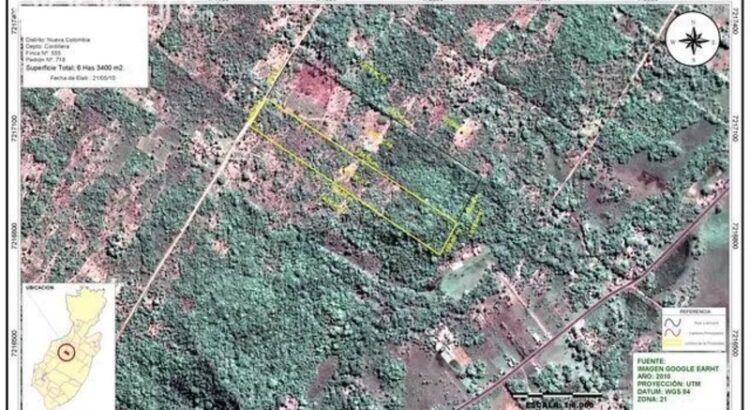
  4. Ongoing processes ofthe digitisation of land governance to resolve property rights through cadastre registration with land georeferencing have neglected collective territories in all the countries analysed, thus laying the groundwork to the handover of land to the land market;
  5. Massive individual titling of private properties and the suspension of collective titling and agrarian reform processes, including in Bolivia, ranked first in Latin America for its protection of collective territorial rights. In the Santa Cruz region, 1.8 million hectares of the best lands were excluded from land reform by the land cadastre and later titled to agricultural corporations;
  6. Specific laws and policies for attracting capital market investments in land, in logistics infrastructure and in agribusiness value chains, secured by rural assets created specifically as debt guarantee, such as land (or parcels of it), the future harvest or even “environmental services”. Clear examples of this are Colombia’s zones of interest for rural, economic and social development (ZIDRES), which are privileged beneficiaries of land and credit policies, as well as the transformation of agribusiness bonds in Brazil into movable assets, including those issued in foreign currency and managed by the financial market with tax exemptions in their transactions.
In all the countries studied, the georeferenced cadastres became a requirement both for the land regularisation process and to access other public and credit policies in the financial system for rural properties. This trend to digitise land governance and the natural resources linked to it, is being reinforced by the World Bank: it has allocated USD 45.5 million for the registration of the Brazilian Cerrado’s private rural properties in the rural environmental cadastre (CAR) and has also assigned USD 100 million to the multi-purpose cadastre in Colombia.
[ An in-depth analysis of the five countries covered by this report is available in Spanish and Portuguese here]
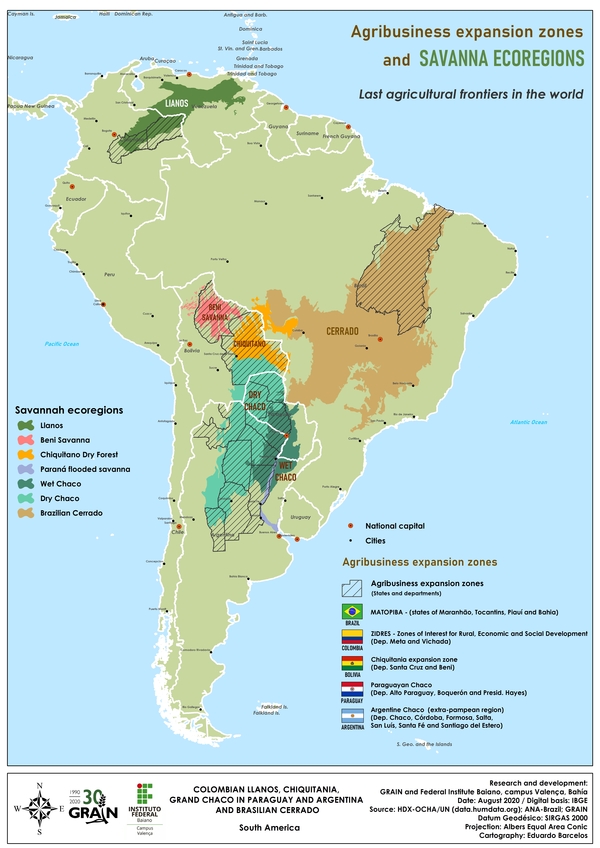
Click on map to zoom in


Although the improvements in localisation technology and the measurement of property limits – called land governance digitisation – can contribute to the process of titling/identification of public, vacant, collective/community and private lands in order to claim back properties under illegal status, the enrollment in the cadastre by each landholder without being verified by the state, ends up validating the historic process of land grabs. In the five main areas of expansion in South America covered by this report, there is widespread individual titling in favour of those who first access digital precision systems (GPS), on public, vacant lands and on lands traditionally occupied by traditional peoples and communities. This is authentic digital land grabbing.

Even in Argentina and Paraguay, where these cadastres must be integrated with the information contained in real estate registries before deciding on property rights to land, the focus on the title and on the accuracy of the GPS measurement has been replacing the verification criteria related to the compliance with the social and environmental function of the land and to the nature of the occupation. Therefore, in the current trend, cadastres are being used as a new backing for property rights, validating wrongful titles derived from grabbing public lands and the territories of traditional peoples and communities. This is the case of Paraguay’s SIRT cadastre and the tierras mal habidas (lands illegally obtained), as well as Bolivia’s CAT-SAN, which gave registration priority of the best arable lands on dispute in Santa Cruz de la Sierra to agricultural corporations. Brazil currently allows, by means of a Decree, the regularisation of up to 1,500 hectares of public lands through CAR and on information provided by the applicant.
There is a clear focus on georeferencing in agribusiness expansion zones and almost exclusively over private rural properties, comprising the entirety, or part, of communal lands and agrarian reform settlements under collective land management. Even if communal lands are certified, public institutions and banks have been demanding their registration in the cadastres as private rural properties, which generates the overlap of several individual cadastres with collective lands, or even the deletion of these territories from the map.
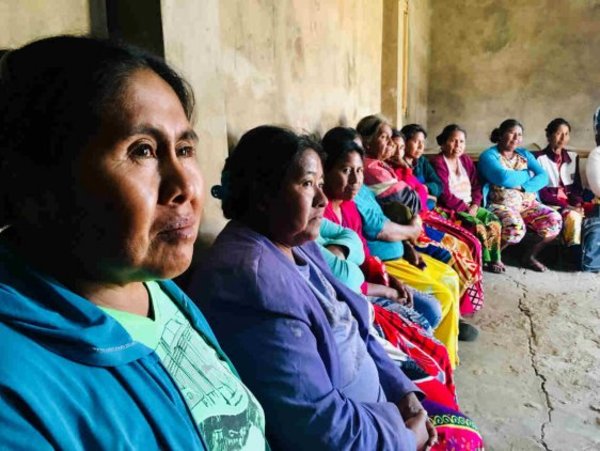
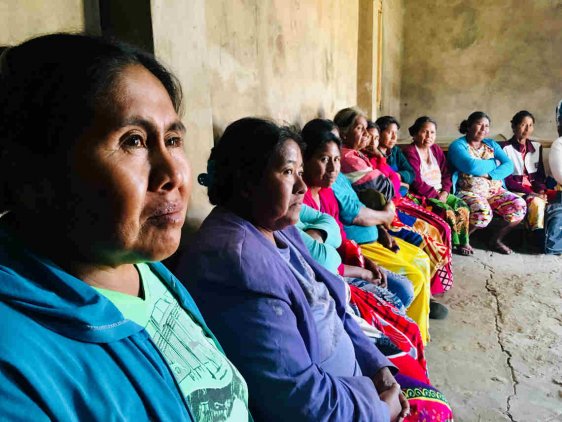
Women from the OMMI organisation, from the community El Estribo. Paraguay. Credit: Nicolás Avellaneda – Plurales Foundation
This pressure to register them in the cadastre as private property occurs because public lands, collective/communal territories and agrarian reform settlements are inalienable and can not be used as debt guarantees, thus, hindering the way of the real estate and securities markets for financial investments based on rural assets on private property.
With this digital redesign of land use -focused on individual private property- and the land regularisation that has followed -based on individual titles to consolidate property rights, millions of hectares are being injected in the land market, in global value chains (including in “sustainable” ones) and in the stock market, since it is now possible to sell and use them in relation to debt.
It is from these virtual territories legalised by the cadastres that the main agents that operate the agribusiness value chain promote the idea of sustainable global chains, whose production would be deforestation-free.5 Once the crimes of the invasion of public lands and deforestation (as in the case of the CAR in Brazil) have been erased, from the moment they’re registered in the cadastres, the origin of the products in the value chain -mainly soya and meat- is re-issued, and are then validated as «sustainable» by the verification and traceability systems of the new technological infrastructure of these long chains, typical for commodities (Blockchain technology).6 But this doesn’t stop there. Out of sight from the map, out of mind from the world and the same satellite images that guarantee the land and the environmental compliance of private properties become systems of surveillance and criminalisation against peoples and communities that have been “erased” from their own territories, whose way of life has become a crime against property.
In addition to the “green” re-issue of the real estate market and the commodities chain, the issue of new financial securities on rural assets – such as land ownership and environmental services (green bonds) – is allowed. Its purpose: to provide a buffer for liquidity in the capital market and to leverage financing for production and infrastructure in the agribusiness value chain. Properties holding titles and georeferenced in the CAR and/or SIGEF (Land Management System) cadastres in Brazil, for example, represent the new guarantee for issuing financial securities on land and natural resources, such as the Environmental Reserve Quota (Cota de Reserva Ambiental – CRA) on one hectare of native vegetation or the agribusiness bonds, that have the land, the future harvest or environmental services as debt guarantee for loans obtained from investors, mainly foreigners. This way, the digitization of land governance and of its natural resources by linking georeferenced cadastre and the real estate registry becomes the new guarantee, as well as the means for the quick delivery of business transactions from land in this digital phase of the financial economy. An unprecedented concentration of land, natural resources and the agro-food system is underway, no longer by the agribusiness sector, but by a few actors from the financial market, further deepening the scarcity inherent to the corporate agrifood system.
It is not just a digital makeover of the surface that is underway, but a recomposition via images «with technological precision» of the history of landscapes, territories, agrobiodiversity and their peoples. As a rule, the territories of the «erased» peoples, identified as demographic «voids» or private properties, are precisely in the priority areas of agribusiness expansion and investment. These are contemporary arenas not only of land disputes, but of the right to exist, the right to other ways of life, other types of development and future possibilities outside the realm of private property and the financial market.
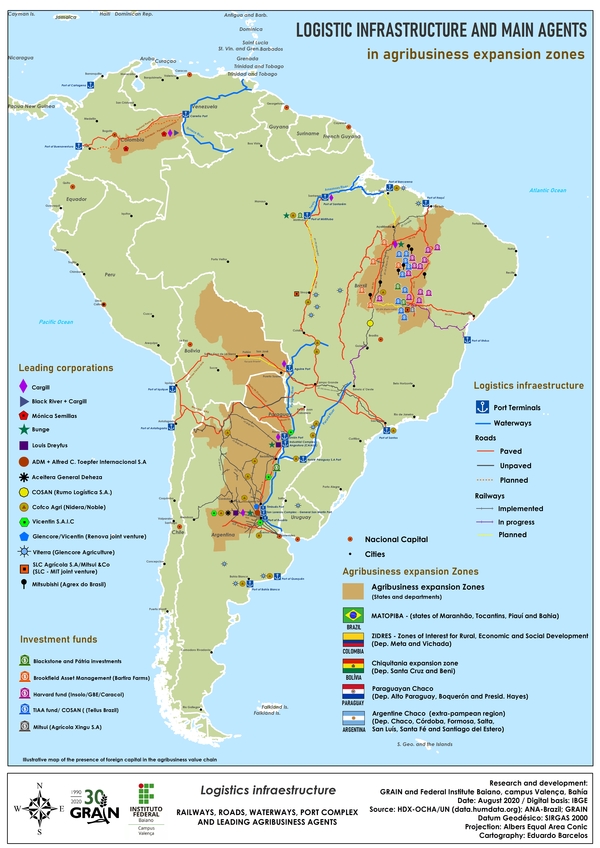
Click on map to zoom
BRAZIL – MATOPIBA
In 2000, the FAO identified the Cerrado region as the world’s most important agricultural expansion zone.7 In the following decade, MATOPIBA was defined by the United States Department of Agriculture (USDA) as “Brazil’s latest agricultural frontier”.8 Currently, the Cerrado region accounts for approximately 45% of the national agricultural area, responsible for 52% of the country’s soybean production with much of its land and logistics infrastructure handled by foreign agroindustrial conglomerates, like the agro ABCD, the Chinese Cofco Agri, but even by actors that are not part of the sector, like Brookfield Asset Management, Cresud Mitsui, Mitsubishi, Valiance Capital, Private Equity Patria Investimentos/Blackstone and other foreign investment funds such as the Teachers Insurance and Annuity Association of America – TIAA and Harvard Endowment.9 10 11 12 13 14 15 16 17
An unimagined financialisation of land, natural resources and the agro-food system is underway in Brazil, mainly through a credit system financed by the capital market and no longer controlled by the State, which demands an ever-increasing release of land as private property, the main guarantee for financing, and a debureaucratisation of land regularisation processes to speed up land titling.18 Land digitisation is crucial for this.
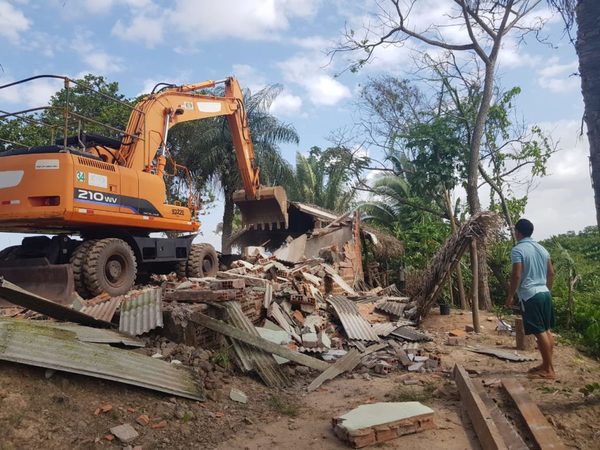
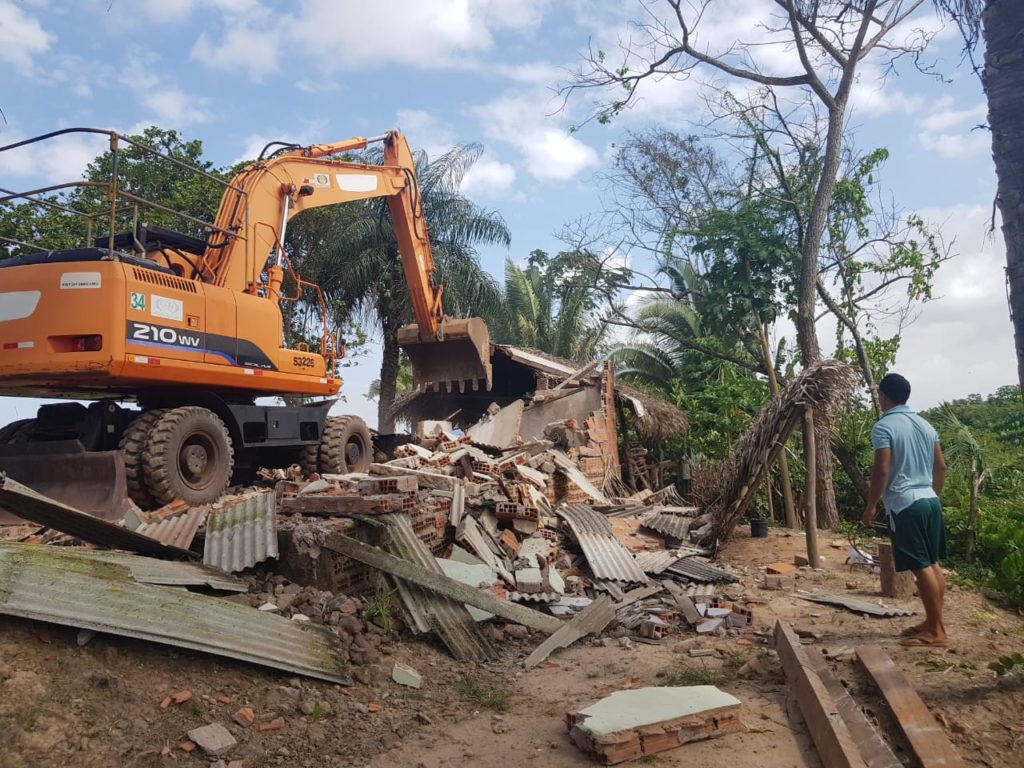
The Cajueiro (MA) community in Brazil struggling for the right to exist has its houses destroyed for the construction of the private port in the region by the WTorre construction company, in association with China Communications Construction Company (CCCC) Photo : Vias de Fato @Media Ninja

The deletion of collective territories and the digital redesign of land as private property through the Rural Environmental Cadastre (CAR) is evident: as of March 2019, only 6% of the territory available for cadastration (34.5 million hectares) in the CAR information system (SICAR) was acknowledged as indigenous land, quilombola territories and territories of traditional peoples and communities, although official data indicates that indigenous territories solely account for 117 million hectares or 13.7% of the national territory.19 20 However, although official government databases point out that about 43% of the country’s territory consists of private areas, 91% of it was declared private rural property in the land cadastre of the national rural registration system (SNCR), an increase of one third from 2016 to 2018, following the approval of the so-called “Land Grab Act”. 21 22

COLOMBIA – ORINOQUÍA
In 2016 Colombia created the zones of interest for rural, economic and social development (ZIDRES: Zonas de Interés de Desarrollo Rural, Económico y Social) so that public and vacant lands of any size could be granted by contract/concession and for an unspecified span of time to the agroindustry, breaking with what had been the norm until then, of privileging the allocation of public lands to the most vulnerable categories of people from the countryside, indigenous peoples, Afro-descendants and victims of the armed conflict. In addition to the subsidised land concession, economic operations based in the ZIDRES are the main recipients of development and funding benefits with privileged credit lines.23
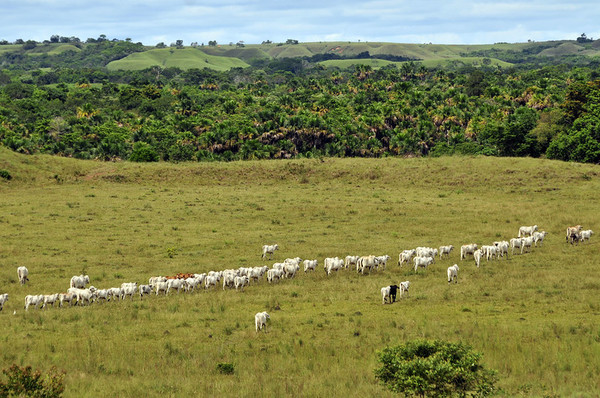
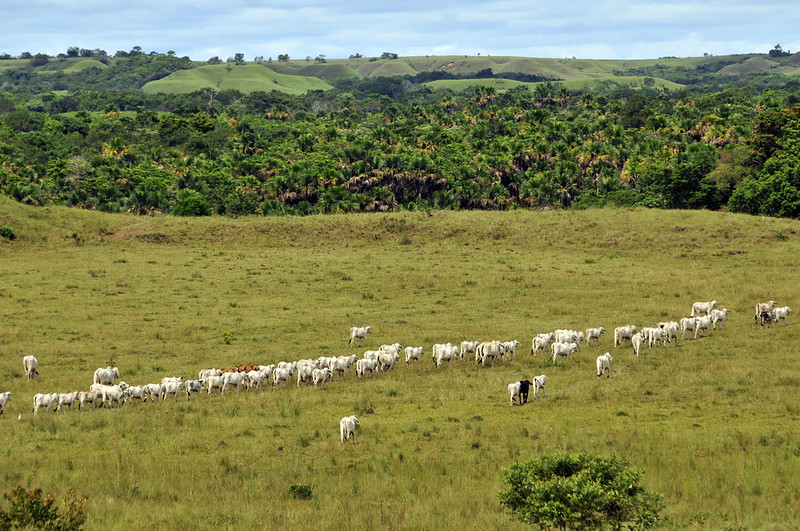
Cattle in the «llanos». Credit: ©2011CIAT/NeilPalmer @Flickr

Of the approximately 7.2 million hectares (6.2% of the territory) authorised to be used as ZIDRES, 5.5 million hectares are in the Llanos Orientales or Orinochia (76.3%), of which 4.8 million are in Vichada (66%) and 2.3 million in Meta (32%), the main departments of the ecorregion.24 This has resulted in the establishment of an authentic market of public lands – of the baldíos de la Nación – in the region. The irregular accumulation of baldíos (wastelands) is especially intense in Orinochia, mainly in the region of Altillanura, considered the last agricultural frontier of Colombia and the place with the highest land concentration in the country, with properties extending on average beyond 10 thousand hectares.25

The registration of these extensive wastelands as private properties in the multipurpose cadastre – the electronic land information and georeferencing system in Colombia – lays the groundwork for the consolidation of private property over public lands and their insertion in the land market. Although the cadastre does not require property registration records and, therefore, cannot justify the issuance of titles that confer the right to own land, the World Bank is committed to the integration of cadastre and land registration systems, with funding of USD 100 million, through the IBRD, having as goal the digitisation of 100% of the country’s territory through the issuance of 67 thousand titles covering 1.5 million hectares by 2025.26
ARGENTINA – CHACO
Argentina has also been integrating territorial information based on geospatial precision technology, but unlike Brazil and Colombia, the spatial cadastre is already connected to the real estate registration system that issues property rights titles. Although the information contained in the cadastre and in the property’s registration documents must match, there is no general rule as to how to verify the origin of the title, the nature of the possession or the fulfillment of the social function of the land before validating the titles. Each province is allowed to define its own procedure for land regularisation and issuance of the cadastral certificate. This document constitutes, modifies or transfers property rights in the country.27 The national program of rural titling (ProntAR) also allows private property regularisation over public lands in favour of cooperatives and agricultural consortia that demonstrate peaceful and uninterrupted possession.
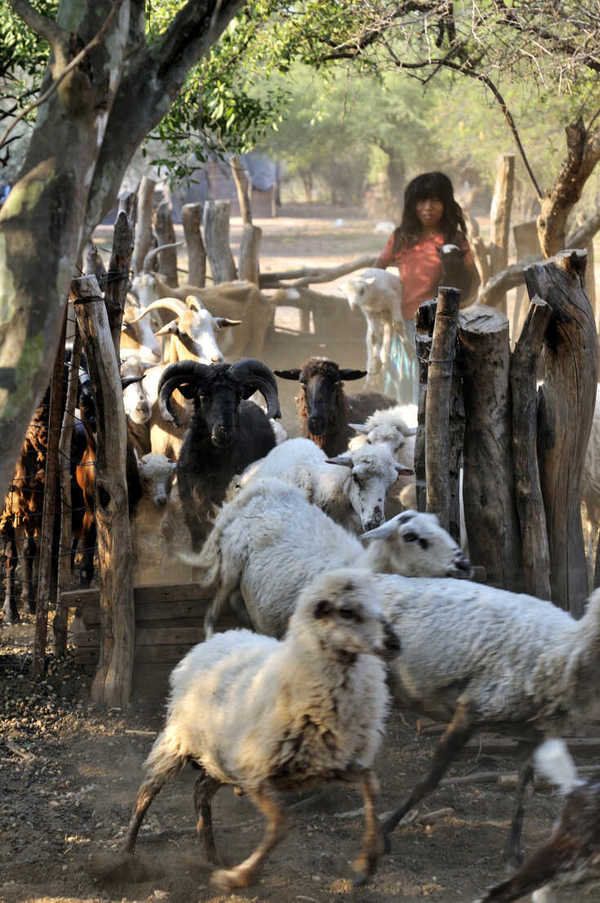
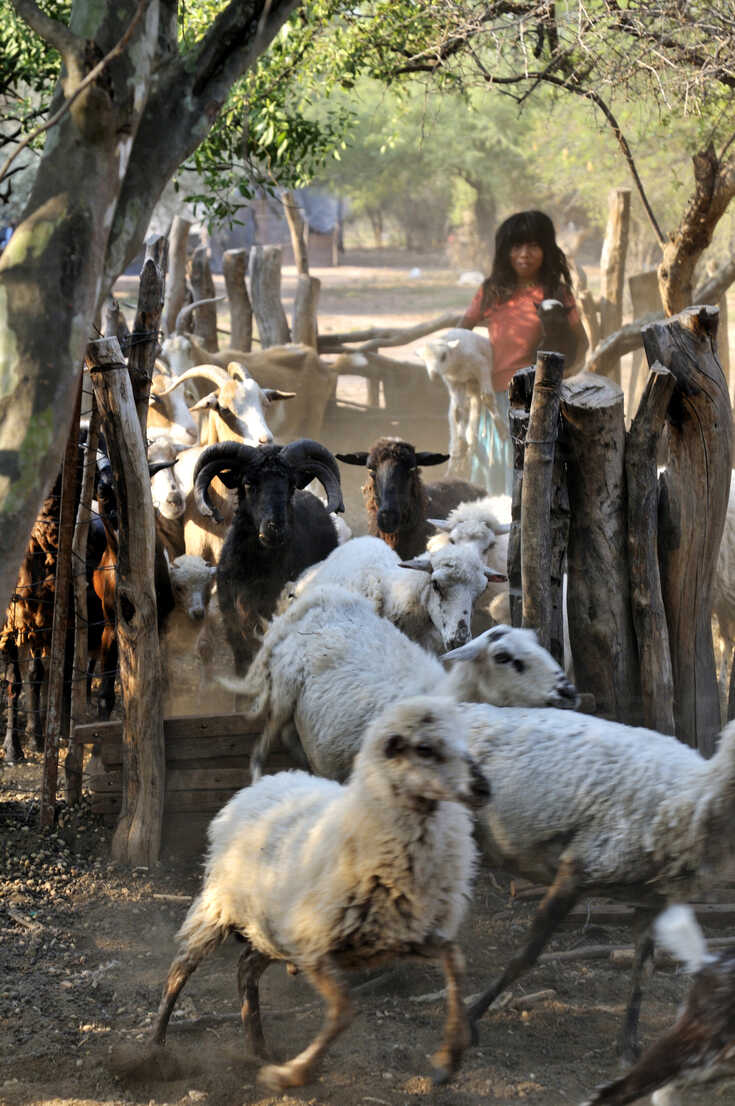
Argentina, Gran Chaco, Salta; Wichi girl herding goats. Credit : WestEnd61

Whereas those who do not have access to georeferencing technology are not entitled to a cadastral certificate and the title, the integration of geospatial information without proper analysis of the registration documents and of the nature of possession may end up endorsing the historic land grab of public lands, especially in favour of foreigners, given the deregulation of the limits to land access by foreigners that has been implemented since 2016 by the Macri government.28 Until 2017, 40,216.5 hectares received land titles and benefited 1,040 farmers (usually related to livestock production). In its report the government doesn’t clarify, though, whether those benefiting were small, medium or large farmers, individuals or legal entities, nationals or foreigners.29

Property titling is fundamental to the process of financing the rural credit system in Argentina, which has been mainly leveraged since the 2000s by the creation of trusts (fideicomissum) through investment funds. These then hold land as a guarantee, as well as by the issuance of securities on production, such as warrants, issued even in dollars and only to foreign actors.30 31 Between 2004 and 2008, the creation of temporary trust in the rural sector increased by 271%, and according to the 2018 Census, 208 trusts (fideicomissum) held 235 thousand hectares in the country. 3233
The expansion across Latin America of Argentinian mega-companies like Los Grobo was driven by the creation of trusts (fideicomissum). In turn, warrants with financial guarantees accounted for 87% of the certificates issued in 2018, representing around USD 806 million.
PARAGUAY – CHACO
Government incentives have been continuously promoting plots of land at bargain prices in the Paraguayan Chaco, either through credit policies or by the subsidised regularisation of the illegal land grab of public lands. Of the 7.8 million hectares of public land or those bought with the use of public budget from 1954 to 2003 and granted illegally in the country (the so-called tierras mal habidas), 80% are located in the Chaco region.34 On average, 4,600 hectares were allocated per person, mainly to politicians, local elites and military personnel.35
In 2014, with the support of the United Nations Development Programme (UNDP), the Land Resources Information System (LRIS) was created to identify the geographic and registration situation of the fiscal lands granted by the state and to update the situation of the 1,011 peasant colonies of the eastern region through the institute for rural and land development (INDERT) in order to initiate the procedures for the return of «wrongly held» lands (tierras mal habidas), according to article 47 of the Agrarian Statute. Although INDERT should verify the origin of the title, the type of occupation and the socio-environmental function of the land, as well as if the holder meets the criteria of an agrarian reform beneficiary to validate the registration at the georeferenced cadastre, INDERT considers legitimate those titles that have already been paid for, even irregular ones that have simply been registered on the SIRT cadastre.36
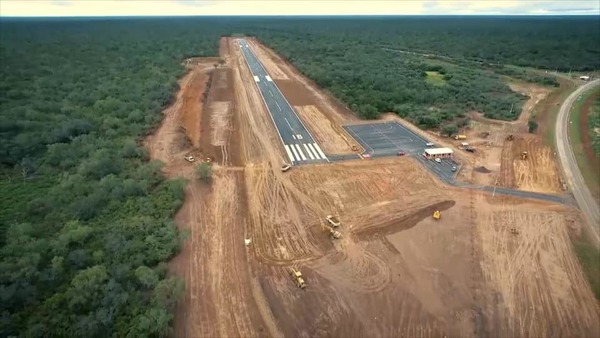
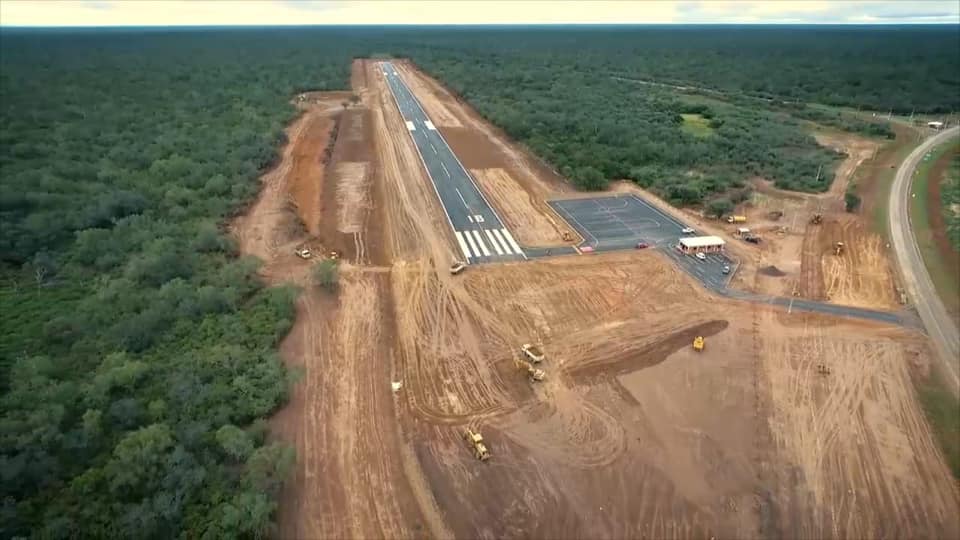
Construction of a new paved landing strip at the Infante Rivarola airfield , with access from the Transchaco Route. Credit : MOPC – Ministry of Public Works and Communications of Paraguay
The enrollment in the cadastre has served to cover up and legitimise wrongful titles and illegal possessions in the settlements, orchestrating an authentic digital land grab of the tierras mal habidas.37 Once dully titled and recognised, the lands “legally” obtained by this digital makeover are injected into the land market and end up backing up rural assets as debt guarantees in favour of foreign investors, the same that have historically dominated the agribusiness value chain in Paraguay.38 Backed by rural assets, it is through the capital market that financialised agribusinesses intend to transform the Chaco region into a zone of development and investment. To that end, investors envision turning the region into an international transport hub, which would triple to around USD 5 billion the annual value of the commodities transported through the Transchaco highway (Route number 9), the main export corridor for the region’s production to the port terminals in the Paraguay-Parana waterway.39
BOLIVIA – CHIQUITINIA (SANTA CRUZ AND BENI)
Although rough figures point to a greater land extension set apart for indigenous peoples and/or collective and community titles, about 70% of the best arable lands in the country are reserved and titled in favour of agribusiness companies, particularly international ones, located in the Chiquitania region.40 41
During the process of land redistribution and titling in Bolivia (saneamiento de las tierras), priority zones were identified. This was in the framework of the national land management project, financed by the World Bank (1992-1995) and associated with another project of the bank called Proyecto de Tierras Bajas del Este.42 43 These zones were meant to guarantee the right to property over those lands with the best agricultural potential in the country. The goal: to build an economic framework for the commercial production of soybeans for export. These priority zones were composed of areas under dispute in terms of possession and ownership, which were, therefore, supposed to carry out the Integrated Land Use Cadastre ( Saneamiento Integrado al Catastro, CAT-SAN), a modality that combines the registration of the property in public registries with the enrollment in a legal cadastre containing georeferenced information about the property, offering priority on property rights in the event of overlapping titles over the same area. Of the 2.5 million hectares identified as priority zones, 1.8 million are in Santa Cruz de la Sierra, according to the company INYPSA hired by the World Bank.44 45
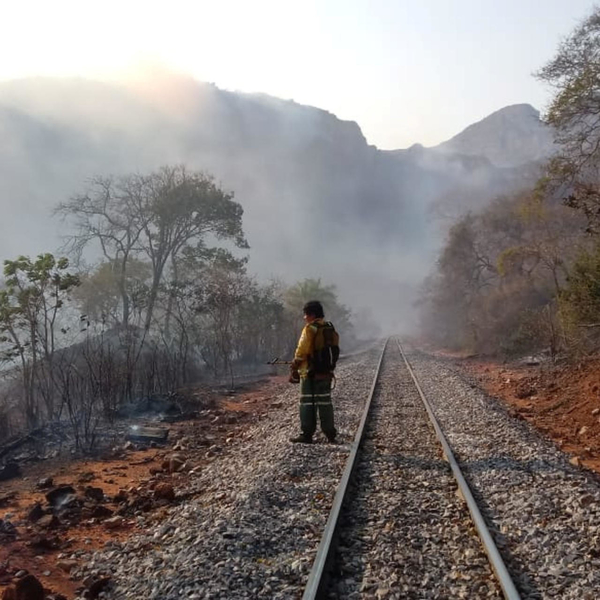
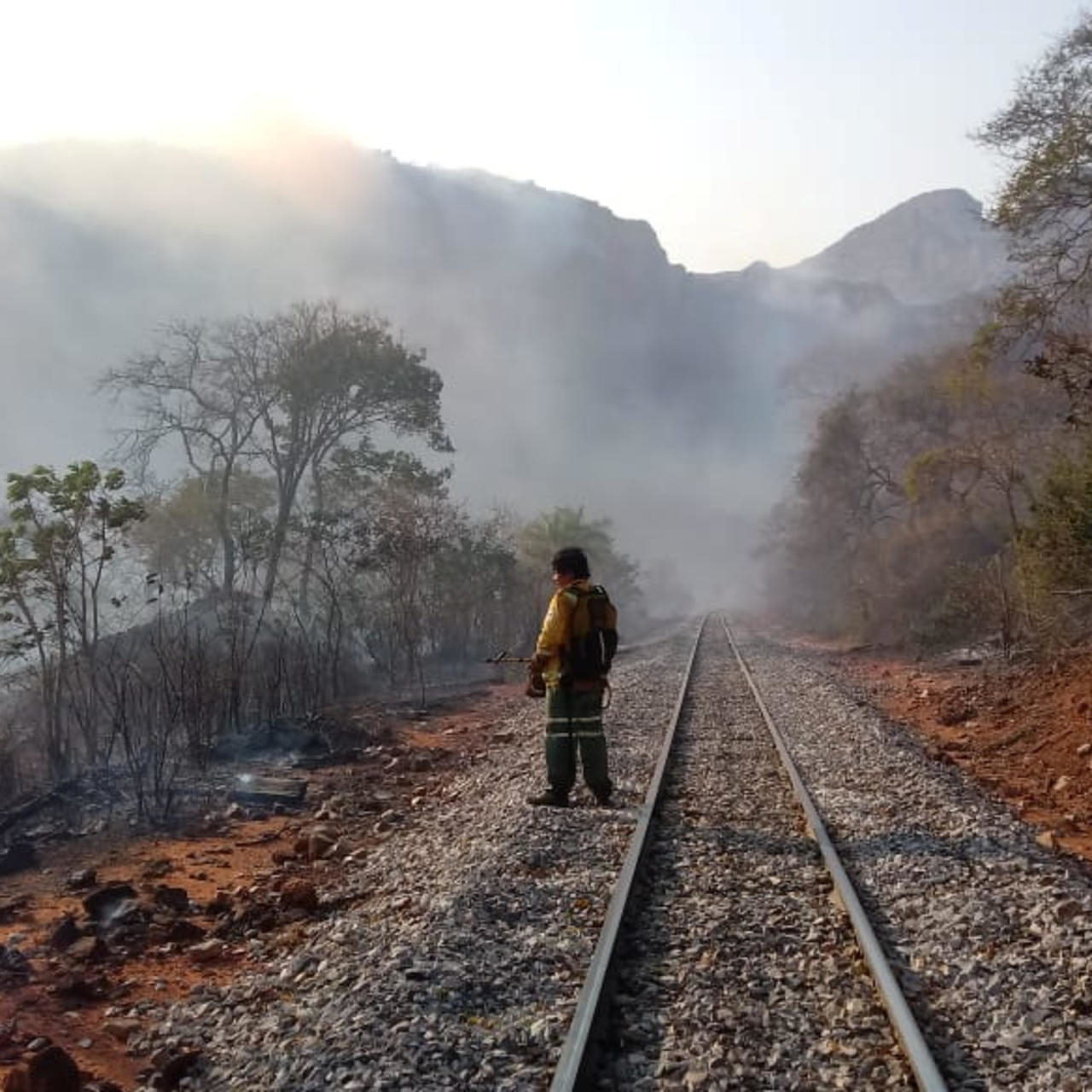
Area affected by forest fires that destroyed hectares of forest in Robore, Bolivia, August 19, 2019. Credit : Santa Cruz Department via REUTERS

As a result of this program, there was an increase in titles given to medium-sized properties and agricultural companies, especially foreign ones. It is estimated that transnational companies like ADM, Cargill and Bunge, as well as financial actors such as the Venezuelan investment group Gravetal, control directly or indirectly (contract farming) about 60% of the most productive lands in Santa Cruz de la Sierra. 46 47 48

The individual titling of properties was essential to introduce arable land in the land market, considering that the Community Land of Origin (tierras comunitarias de origen – TCOs) and community properties cannot be commercialised; they cannot be sold or given as guarantee. Individual titling of properties was also essential if access to land was to be given to foreign companies, as the sale or assignment of public land to foreigners in Bolivia is prohibited. The individual private digitisation and titling program of fiscal lands (whether small, medium or large) was the first step towards facilitating the handover of land to foreign capital, either through sale or contract, and therefore establishing the special agribusiness investment zone in Chiquitania.
RESISTANCE OF TERRITORIES:
– Comprehensive land reform and collective territories against the commodification and financialisation of land, natural resources and the agro-food system. Collective territories, agrarian reform settlements (for a fixed period, usually over 10 years) and public lands are lands out of the real estate market, such as commodities, and the securities market, as assets in the financial market. As they cannot be sold, leased (with exceptions) or offered for debt enforcement by financial institutions, they are territories of resistance to the process of commodification and financialisation of land, resources and the food system.
 
– Access to land is not land regularisation. A constitutional and legal provision exists in all countries where these areas of agribusiness expansion exist, that allows the priority allocation of public lands to the collective territories of indigenous peoples and traditional communities, as well as to the beneficiaries of agrarian reform settlements.Before creating any land regularisation program based on the issuance of individual property titles, it is the obligation of states and multilateral funding agencies such as the World Bank to allocate public and private lands recovered due to irregularities to indigenous peoples, Afro-descendant communities, traditional communities and to those benefiting from agrarian reform.
– Land governance digitisation cannot generate property rights. Geo-referenced cadastres cannot be legal criterion to support the legality of titles registered in public registry offices or of land tenure. Otherwise, the process of land digitalisation risks turning into a real redesign of the surface focused on private property, opening the gates to a massive digital land grab.
– Prior to cadastres and titling, we must build binding systems of verification and constantly monitor the fulfilment of the social and environmental function of the land. The verification and monitoring of the compliance with the social and environmental function of the land, of the origin of the possession (non-violent) and of the validity of the titles registered based on the survey of the history of the chain of title, are that which allow public or private property, individual or collective, to be protected in any State, whether liberal or social.
– Digital land cadastres cannot be a requirement to access public policies and rural credit, at the risk of excluding from land those who do not have access to it, cannot pay for georeferencing or even register as a collective territory. The massive investment by the World Bank to enroll land in these cadastres as private property – whether small, medium or large – has contributed to the deletion of collective territories and their insertion in the land market.
– Private ownership of land does not mean ownership of the natural resources, called “environmental services”. Forests, native vegetation, water, biodiversity and their environmental functions are not part of the rural patrimony of the owner. In all Western democratic constitutions the environment makes up the core of human rights in regards to human dignity. This means that it is a non pecuniary asset, neither public nor private, protected by the legal regime of community property that cannot be appropriated (not even by state entities) and sold on the market like any other commodity. These environmental elements belong to no one. They are destined to all the present and future generations, especially to the traditional peoples and communities that protect them and have used them as a source of survival for thousands of years. The appropriation of these resources by the land owner or by financial titles excludes all, including future generations, from the equitable access to the means that enable life to grow, threatening life itself on the planet.
– Financialisation creates scarcity. The issuing of financial assets or securities on land ownership (or on parcels of land) and on community assets that do not comprise rural assets, such as environmental services (native vegetation, water and biodiversity) must be prohibited. The transformation of land as a value into shares aims to give liquidity to the financial market, placing land (or fractions of it) and its resources, such as crops and so-called «environmental services», in the hands of a few financial agents, who go on to control and speculate on land prices, carbon and biodiversity markets and on agricultural commodities, endangering the entire food system.
Furthermore, the commitment to leverage financing for environmental management through the financial market by issuing environmental assets (green bonds) leads to an even greater scarcity of environmental goods to be protected. Within the logic of supply and demand and the typical speculations of financial assets, the scarcer a commodity is, the higher its market value will be. In an extractive economy that causes scarcity of forests and native vegetation, through high rates of deforestation, scarcity of clean air, climate deregulation, and with increasing emissions of greenhouse gases, the green assets that these scarce natural resources represent will be increasingly valued in financial market. The higher the profit of the extractive economy of agribusiness and oil, the higher the profit of the financialised green economy, thus rendering it ineffective for the management of the environment. The appropriation and financialisation of land and natural resources are mechanisms that induce greater scarcity.
The collective stewardship of biodiverse lands by the world’s indigenous peoples, traditional and peasant communities for nearly 12,000 years is what has preserved the environment and the supply of food and nutritional diversity for all of humanity. Therefore, the real alternatives lie in keeping the essentials outside the realm of property and markets.
This report contains:
  • Map of Expansion Zones and Savannah Ecoregions
  • Map of logistics infrastructure in the expansion zones
  • Map of Corporations and Investment Funds in the Expansion Zones
  • Map of logistics infrastructure and agribusiness actors in areas of expansion
  • Table detailing the map features
*******
Acknowledgments: Junior Aleixo, PhD researcher at the Postgraduate Program of Social Sciences in Development, Agriculture and Society (CPDA/GEMAP/UFFRJ), who collaborated with data and the review of the report; Eduardo Barcelos, professor at the Instituto Federal Baiano (IFBAIANO), responsible for the cartography/maps in the report.
 
__________________________
1 The GINI index measures the degree of inequality in the distribution of access to land between landowners/land occupiers in a given region and period of time. “Zero” indicates maximum equality of access to land and “one” indicates maximum inequality. Thus, the index measures the relative inequality between those who own the land and not its concentration, excluding landless workers, for example. Only recently have countries’ census begun to include categories of collective land possession and ownership, such as the indigenous territories as well as the territories of Afro-descendant and traditional communities, which has also masked census data.
2 OXFAM, Desterrados: Tierra, poder y desigualdad en America Latina , 2016, p.25. Available at: https://www.cpalsocial.org/documentos/320.pdf
3 This figure does not take into account the non-agricultural uses of these lands, such as mining, infrastructure, human settlements and areas of environmental protection. In FAO and Fischer et al.(2000) Perspectivas por sectoresprincipales. 2000 in Agricultura Mundial: hacia los años 2015/2030. Available at:http://www.fao.org/3/y3557s/y3557s08.htm
4 Meanwhile, FAO projects the growth of around 70 million hectares in the world by 2050, with an increase of 132 million hectares in developing countries, especially in Latin America and Sub-Saharan Africa, and a decrease of 63 million hectares in developed countries. In Nikos Alexandratos y Jelle Bruinsma, World Agriculture towards 2030/2050: the 2012 revision. Rome: FAO, 2012 2012. P. 10-12.Available at:http://www.fao.org/3/a-ap106e.pdf
5 Cargill, ADM and other companies showed in their 2020 reports that almost 100% of the soybeans bought in Brazil and in the MATOPIBA region come from zero deforestation zones. Two main problems: 1. Identifying sustainability only by the absence of deforestation; 2. Adopting the parameters of “legal” deforestation of the Forest Code, which legalised illegal deforestation carried out until 2008 with the adhesion to CAR (self-declaratory) – this concerns 29 million hectares throughout Brazil and permits for more than 88 million hectares of legal deforestation. Therefore, compliance with the Forest Code means granting forgiveness for years of illegal use of property. Please check the 2020 Cargill’s report, which uses CAR as a synonym for legalised ownership: https://static1.squarespace.com/static/5b48c2572487fdd7f1f29d1c/t/5cb0af23e2c483e4f71058ba/1555083 ; https://www.cargill.com/doc/1432166466608/soy-progress-mid-year-report-2020-en.pdf045257/DP_Monitoring_Web.pdf and ADM’s report available at: https://assets.adm.com/Sustainability/2019-Reports/2019-Soy-Progress-Report.pdf. Accessed on 11 September 2020.
6 Blockchain has been literally built as a blockchain that records the information of all transactions in a cashbook on a permanent manner (impossible to be undone), capable of being tracked by users, which would provide a reliable, secure digital infrastructure to ensure the step-by-step compliance of global value chains. Microsoft and IBM are developing it.
7 Landers, 2001, p.39 in Diana Aguiar, As veias abertas para a expansão do capital: tensões territoriais no projeto de transformação do Tapajós em corredor logístico.UFRJ.2019, p. 84.
8 United States Department of Agriculture. Foreign Agricultural Service. Brazil’s Latest Agriculture Frontier in Western Bahia and Matopiba. 26 July 2012. Available at: https://ipad.fas.usda.gov/highlights/2012/07/Brazil_MATOPIBA/
9 In 1975, the Cerrado region accounted for 9% or 540 thousand hectares of the soybean production in the country, whereas 20% of the area corresponded to corn, 22% to cotton and 25% to sugarcane. In 2015, these numbers jumped to 52% or 17.4 million hectares of soybean production; 49% corresponded to corn, totalling seven million hectares; 98% to cotton production; and 49% to the sugarcane production, totalling five million hectares. In EMBRAPA, INPE & IPEA. Dinâmica Agrícola no Cerrado. Análises e projeções. 2020 p. 42 e 44 -45. Available at: https://ainfo.cnptia.embrapa.br/digital/bitstream/item/212381/1/LV-DINAMICA-AGRICOLA-CERRADO-2020.pdf
10 ADM, Bunge, Cargill and Louis Dreyfus.
11 Cofco Agri is a branch of the Chinese state-owned corporation Cofco International, a producer and trader in the global supply chains of grains, oil seeds, coffee and sugar. The conglomerate bought 100% of Noble Agri’s capital and currently controls Nidera’s plants, silos and warehouses in South America. Available at: https://www.cofcointernational.com/
12 “Harvard’s land grabs in Brazil are a disaster for communities and a warning to speculators”, 2020. Available at:https://grain.org/e/6456
13 Brookfield Asset Management is a Canadian investment fund that has been in Brazil for about 120 years, place where its first investment plaza was established.
14 Mitsui is one of the most important conglomerates in Japan. They operate in the agro-food chain and in financial services. In Brazil, they invest in land through a joint venture with SLC Land Co.; more specifically, in two farms located in São Desidério (BA) and Porto dos Gaúchos (MT). They also control Agrícola Xingu S/A, which also owns land in São Desidério (BA).
15 Mitsubishi Corporation is represented in Brazil by its subsidiary Agrex do Brasil. It acts as producer, supplier of agricultural inputsand landowner in the states of Maranhão, Tocantins and Piauí, accounting for 28 thousand hectares. Available at: http://www.agrex.com.br/nossos-negocios/producao-agricola
16 Pátria Investimentos has land in the states of Bahia, Tocantins and Mato Grosso. It also manages the Miritituba port in Itaituba (PR) through the company Hidrovias do Brasil and has the concession for expansion of highway BR 163, which connects Sinop (MT) to Port, it also has investments from Temasek, a Canadian investments fund, and from the International Finance Corporation, the investments branch of the World Bank.
17 According to the CCR report, these financial funds controlled 868,488 hectares of land in the Matopiba region, although it is known that these figures are underestimated.
18 According to information from the Ministry of Economy, in 2019 alone there were approximately R$ 160 billion invested in LCA, R$ 40 billion in CRA and R$ 9 billion in CDCA. In Junior Aleixo, “A Lei do Agro e a busca por uma ‘nova safra de proprietários”. Available at: https://jornalggn.com.br/desenvolvimento/a-lei-do-agro-e-a-busca-por-uma-nova-safra-de-proprietarios-por-junior-aleixo/
19 “Regularização ambiental e fundiária tensionam pela massiva privatização das terras públicas e territórios coletivos no Brasil”, 2019. Available at: https://grain.org/e/6219
20 Data from the Fundação Nacional do Índio (Funai, Brasil). Available at: http://funai.gov.br/index.php/indiosno-brasil/terras-indigenas. Accessed 29 April 2020.
21Sparoveck et al. “Who owns Brazilian lands? Land use police 87”, 2010. Atlas da Agropecuária Brasileira (Imaflora/Geolab/Esalq). Available at: www.imaflora.org/atlasagropecuario.
22 Paul Alentejano, “O mistério do crescimento exponencial das terras cadastradas no Incra e a MP 910: prenúncio de um crime em andamento”, Outras Mídias, May 5, 2020.: https://outraspalavras.net/outrasmidias/alerta-grilagem-de-terras-dispara-no-pais/. Accessed on 11 September 2020.
23 The ZIDRESs cannot or could not be established on priority areas such as the entitled indigenous reserves or the areas in the process of entitlement, collective territories of black communities, peasant reserve zones, and strategic ecosystems, natural parks and wetlands. However, UPRA considered the reserves delimited and approved by ANT, excluding the other areas claimed. In Áreas de referencia para identifición de ZIDRES, Metodología para estimación indicativa, UPRA, 2018. P. 38-39. Available at: http://bibliotecadigital.agronet.gov.co/handle/11438/8641
24 The Zidres also reach 5.5% of the area of the department of Casanare (404.4 ha) and 3.7% of the area of the department of Arauca (268.5 ha). Ibid. p. 85-87.
25 Atillanura is a sub-region of Orinoquia, comprised by the municipalities of Puerto López, Puerto Gaitán and Maripiripán in the department of Meta, and La primavera, Cumaribo, Puerto Carreño and Santa Rosalía in the department of Vichada. In this sub-region, family agricultural units (UAFs), the minimum unit of the rural property, can reach 1,300 hectares.
26 Project No. 165294 Available at: https://projects.worldbank.org/en/projects-operations/project-detail/P162594. See alsohttps://www.larepublica.co/economia/el-recaudo-municipal-subira-27-billones-con-el-nuevo-catastro-multiproposito-2902917Accessed on 11 September 2020.
27 The cadastre becomes the legal foundation for the issuance and legitimacy of property titles in the country in accordance with Act 26,209/2007.
28 Decree 820/16 amended Act 26,737/2011 and eased the former criteria by excluding from the limitation of access to land by foreigners lands under usufruct, surface, use, dwelling and antichresis. Rural properties located in areas considered “Industrial Zones’ or that develop renewable energy production projects are also no longer subject to the limitations of acquisition by foreigners, opening thus to the international market the “green transition” economy. In addition, only companies that have more than 51% of their capital controlled by foreign companies are considered foreign. The previous limit was 25%.
29 Informe de gestión 2016-2017. Dirección Nacional de Tierras y Unidades Agropecuarias. Available at: https://www.magyp.gob.ar/sitio/areas/tierras/informe_de_gestion/180803_informe_de_gestion.pdf
30 Fiduciary property is a temporary property on behalf of the fiduciary creditor (usually banks and, most recently, investment funds) usually in exchange for real estate funding (widely used in construction). Act 24,441/94 allowed the creation of temporary legal entities by investment funds, who now detain rural assets as loan guarantees to leverage investments in the agribusiness sector. In S. Frederico; C. Gras, “Globalização financeira e land grabbing: constituição e translatinização das megraempresas argentinas”. In J. A. Bernardes et al., (orgs.), 1º Edition. Globalização do agronegócio e land grabbing: a atuação das megaempresas argentinas no Brasil. Rio de Janeiro: Lamparina, 2017. p. 11-32 .
31 Issued by any farmer who owns rural production, including in dollars. They are more common during the soybean harvest, from May to June, and are regulated by Act 9,643. Available at: https://www.warrantsnet.com/port-warrants-1.html. Accessed on 11 September 2020.
32 D. Fernández, “Concentración económica en la región pampeana: el caso de los fideicomisos financeiros”, Mundo Agrario, v. 11, n. 21, 2010.
332018 National Agricultural Census, which refers to the reference period that dates from 1 July 2017 to 30 June 2018. Available at: https://cna2018.indec.gob.ar/informe-de-resultados.html P.91
34 Among the irregularities, the attribution to people who do not meet the requirements of beneficiaries of the agrarian reform, as well as the titling of more than one parcel per beneficiary, resulting in entire soybean agrarian colonies with irregular titles.
35 Paraguay’s truth and justice commission (CVJ) pointed out that, during the regime of dictator Alfredo Stroessner, agrarian reform lands were illegally allocated, mainly by and for politicians and the military personnel. Among the beneficiaries, Carlos Casado’s S/A group was the most emblematic one, accumulating a total of 6 million hectares in the region. In Comisión de Verdad y Justicia Paraguay (2008). “Informe Final: Tierras Mal Habidas”. Tomo IV. Available at: http://www.derechoshumanos.net/lesahumanidad/informes/paraguay/Informe_Comision_Verdad_y_Justicia_Paraguay_Conclusiones_y_Recomendaciones.htm. The Truth Commission report would be delivered to President Lugo, deposed from office in August 2008, and the Attorney General’s Office and the Ministry would have started the procedures to recover the “tierras mal habidas”; however, until today, no illegal title has been declared void and no property has been recovered, nor were political and institutional leaders sentenced.
36 Inés Franceschelli. “Bajo el manto de la modernidad, se oculta mejor el histórico despojo”. BASE-IS http://www.baseis.org.py/wp-content/uploads/2016/04/Bajo-el-manto-de-la-modernidad-.pdfAccessed on 11 September 2020.
37 A bill for land registration is under discussion in the country in order to create the national system for public cadastre enrollment and registration (SINACARE). It was submitted by the rural sector without any debate with society and, as takes place in Brazil, it aims at facilitating the regularisation of public land as private property. BASE-IS, August 2020. Available in: https://www.baseis.org.py/ley-de-registro-unico-de-tierras-las-trampas-del-mercado/.Accessed on 11 September 2020.
38 Paraguay Agricultural Corporation (PAYCO), for example, is the result of investments made by the German Investment and Development Corporation (DEG) with RíoForte, the financial branch of the Portuguese group Espiritu Santo, and now has direct ownership over 136 thousand hectares of land throughout the country, as well as over 11 thousand hectares obtained through lease agreements. Available in : http://payco.com.py/#/es/presencia_en_paraguay
39 The highway was funded by the US Mennonite Central Committee. Available at: https://economia.uol.com.br/noticias/bloomberg/2019/07/22/paraguai-quer-transformar-regiao-do-chaco-em-hub-de-transporte.htm. Mennonite cooperatives own approximately two million hectares in the Chaco region and, together with the Uruguayans and the Brazilians, they dominate the milk and meat sectors. Association of Mennonite Colonies of Paraguay (ACOMEPA). Available at: http://acomepa.com/. Accessed on 11 September 2020.
40 According to INRA data about titled land in the country: 28% corresponds to indigenous territories (TCO – Community Land of Origin); 27% corresponds to community ownership by peasants and intercultural communities; 14% corresponds to average properties and agricultural companies; and 31% to public fiscal lands. Instituto Nacional de Reforma Agraria (INRA/2018).
41 66% of the country’s arable land is in the Chiquitania and 70% in the department of Santa Cruz de la Sierra. In Agricultural Census, 2013, Bolivia. La Paz, Bolivia: National Institute of Statistics, 2015. Available at: http://censosbolivia.ine.gob.bo/censofichacna/. See also: «Denuncian ‘descarada’ privatización de las tierras fiscales en favor del agro cruceño», 2020. Available in:http://www.ftierra.org/index.php/tema/tierra-territorio/934-denuncian-descarada-http://www.ftierra.org/index.php/tema/tierra-territorio/934-denuncian-descarada-privatizacion-de-tierras-fiscales-en-favor-del-agro-cruceno. Accessed on 11 September 2020.
42 Technical and financial cooperation from the World Bank for the preparation of the national land management project (PNAT) from 1992 to 1995, responsible for creating and operating INRA and executing CAT-SAN to consolidate about 3 million hectares with successive credits of USD 24.7 million and 7.5 million. In: COLQUE; INK and SANJINÉS. Segunda Reforma Agraria: una historia que incomoda. Fundación Tierra. 2016, p. 141-150. Available at: http://www.ftierra.org/index.php/publicacion/libro/151-segunda-reforma-agraria-una-historia-que-incomoda
43 A funding worth USD 50 million by the World Bank and the Inter-American Development Bank (IDB) to expand soybean production in Santa Cruz de la Sierra, which included the construction of productive and transport infrastructure as well as rural credit mechanisms and land use plans. In Enrique C. Balliván, “Empresas Transnacionales em el agronegócio soyero”. Fundación Tierra. 2017, p.18-19. Available at: http://www.ftierra.org/index.php?option=com_mtree&task=att_download&link_id=169&cf_id=52
44 This modality would be required for areas: i) with technical and/or legal irregularities in agrarian procedures; ii) under conflict over property rights; iii) with evidence of non-compliance with the economic and social function of the land; iv) under land possession but without title; and v) executing projects of public interest. In: Op.cit. Colque et al. 2016, p 149-150. CAT-SAN gained approximately USD 70 million from international cooperation as well as external credits from the World Bank, the Inter-American Development Bank, the Nordic Development Fund, USAID, among others. The funding was granted to foreign companies that were the main executors of the land titling program, using georeferencing technology and measuring parcels by satellite imagery.
45 Spanish company specializing in planning management as well as in geoinformation and georeferencing service. It carried out the digitization to adjudicate two million hectares through CAT-SAN in Santa Cruz and La Paz. In Colque et al. op. cit. 2016. p.147.
46 Enrique C. Balliván, 2017, op.cit., p. 25 -28.
47 In contract farming, both land and labour are subordinated to the global commodity chain through production contracts signed with the major traders of the sector. In addition, the contract also entails the acquisition of certain inputs, usually imported, with the application of intellectual property, such as fertilizers, pesticides, and conventional and transgenic seeds. Pesticides and seeds usually represent the most relevant part of operating costs, reaching 60% of costs in Bolivia.
48 Comunicaciones Aliadas, “Bolivia: Acelerado proceso de extranjerización de tierras,” 14 August 2018 : https://www.farmlandgrab.org/28372. Accessed on 11 September 2020.
Source and Image: https://grain.org/en/article/6529-digital-fences-the-financial-enclosure-of-farmlands-in-south-america
Comparte este contenido:

El silencio nunca fue la opción de las mujeres iraquíes

Huda Samir/ AMENAS


Por más que se quiera invisibilizarlas, las mujeres en Irak sostienen una lucha constante por sus derechos. Después de sufrir el régimen de Sadam Husein, ahora resisten las embestidas de las política islámicas radicales.

Con la caída de la dictadura de Sadam Husein y del Estado iraquí, las mujeres iraquíes esperaban poder tener más voz sobre su futuro y sus derechos. Sin embargo, desde entonces, se les han arrebatado los limitados derechos que habían conseguido, así como los derechos fundamentales por ser simplemente ciudadanas. No obstante, en general, las mujeres se han negado a permanecer en silencio a la luz de todos los cambios que las rodean.

Han pasado 17 años desde el colapso del gobierno de Sadam y, sin embargo, la lucha y el sufrimiento de las mujeres iraquíes no han variado. Con los cambios políticos es como si, en realidad, les hubieran sacado la alfombra de debajo de los pies. La situación política en Irak se volvió completamente contra ellas, debido a las milicias y los partidos afiliados al gobierno fundamentalista islámico iraní. Las mujeres iraquíes también tuvieron que sufrir la destrucción, causada tanto por la ocupación de Estados Unidos como el hecho de que el Daesh controlara muchas ciudades de Irak. Todos estos desastres son los que han contribuido a la inestabilidad económica, la violencia, la destrucción y el sufrimiento continuado de las mujeres iraquíes.

Bajo la nueva situación política impuesta en 2003 y posteriormente, las mujeres iraquíes se vieron ahora obligadas a cubrirse la cabeza. Perdieron el derecho a viajar sin acompañantes. Su seguridad y protección se vio amenazada por las milicias e islamistas políticos que ostentaban más poder en el gobierno. Día tras día, las mujeres continuaron perdiendo sus derechos y esto coincidió con la pérdida de muchos servicios básicos, como la luz y el agua potable. Había una carencia absoluta de oportunidades laborales, lo que hizo aumentar la pobreza y la falta de vivienda para las mujeres.

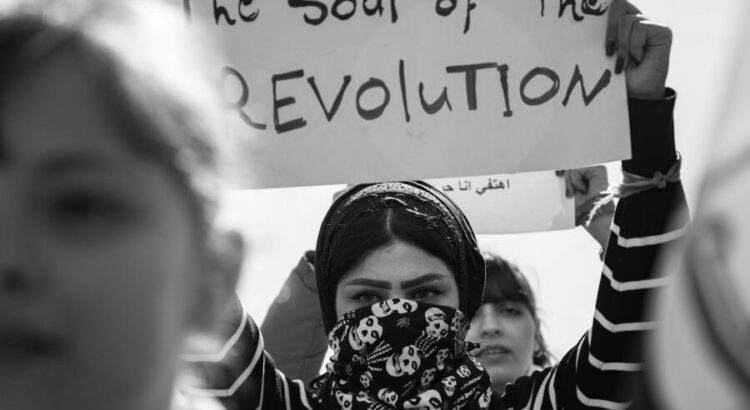
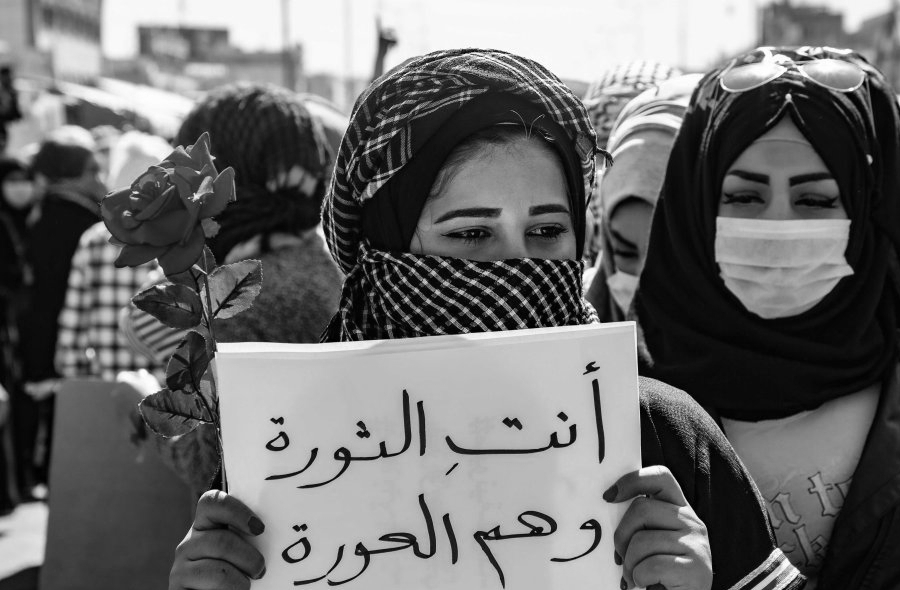
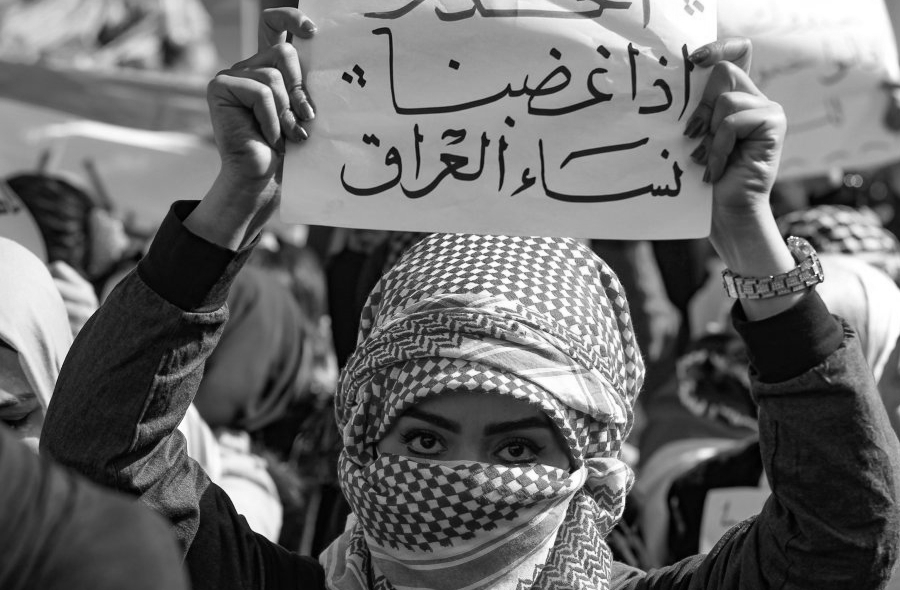
Irak manifestaciones mujeres la-tinta
Imagen: Hussein Faleh / AFP

El levantamiento de 2019 en Irak no se ha acobardado y continúa exigiendo mejores condiciones de vida. La participación de las mujeres en estas protestas fue muy evidente e inspiradora para muchas mujeres en todo el mundo, aunque tuvieron que pagar un precio: han perdido la vida en una serie de asesinatos sistemáticos. Riham Yaqub es la última víctima de esos asesinatos sistemáticos, que vienen afectando a las mujeres activistas en las últimas dos décadas. Y, por desgracia, tampoco va a ser la última.


Riham Yaqub vivía en la ciudad de Basora, que se encuentra en el sur del país. Ahí es donde la mayoría de las milicias chiíes, respaldadas por Irán, controlan la riqueza y la política de la ciudad. Riham era feminista y activista, y trabajaba como nutricionista. Participó con miles de mujeres en las protestas iraquíes de 2019 y 2020 para pedir el relevo de quienes ocupaban el poder en la gobernación de Basora, para impulsar que las mujeres se levantaran contra las injusticias y protestaran contra el gobierno, para exigir el fin de la división sectaria, los deficientes servicios y el desempleo. Riham fue asesinada por hombres armados desconocidos cuando se encontraba en el interior de su automóvil, el 19 de agosto de 2020.


Hay muchas otras historias parecidas a la de Riham Yaqub. El 29 de octubre de 2019, la activista y periodista Sarah Talib, embarazada de varios meses, fue asesinada junto a su esposo frente a su hija de cuatro años, en su pequeño departamento. El 25 de septiembre de 2018, Suad Al Ali, una de las fundadoras de la organización “Waad Al Aalami”, fue asesinada cuando salía de su casa. Exigía apoyo para las manifestaciones, tomar postura contra el sectarismo y reformas en las leyes civiles iraquíes. Nadie ha rendido cuentas por estos asesinatos ni ha pagado el precio de los crímenes cometidos contra estas mujeres.

Son muchas las mujeres que han perdido la vida a causa de las milicias que quieren impedirles que participen en las protestas. Los asesinos pretenden enviar un mensaje claro a las mujeres de que sus vidas están en peligro si participan. Mujeres como Aliaa Al Saadi, Nur Rahim, Huda Jader, Yinan Al Shahmani participaron en el levantamiento de octubre de 2019, curando a los hombres y a las mujeres heridas. Proporcionaron comida y agua en la plaza Tahrir y, aunque estaban haciendo el bien a los demás, muchas de ellas siguieron siendo secuestradas y asesinadas por grupos de milicias.

El creciente asesinato de mujeres activistas en estos estados fundamentalistas islámicos, bajo gobiernos corruptos, hace que la gente vea que las mujeres ya no aceptan su destino. Estas mujeres son fuertes y empoderadas, y se niegan a guardar silencio sobre su maltrato, sin importar quién o qué gobierno se cruce en su camino para detenerlas. A pesar de estos asesinatos, las mujeres vencerán. Serán escuchadas. Las mujeres en Irak no van a callarse y triunfarán con la esperanza y los sueños puestos en una sociedad mejor.

Irak mujer manifestacion la-tinta
Imagen: Ahmad Al Rubaye / AFP

*Por Huda Samir para AMENAS / Foto de portada: Hussein Faleh – AFP  / Traducido del inglés para Rebelión por Sinfo Fernández

Fuente: AMENAS

Imágenes: La Tinta

Comparte este contenido:
Page 1142 of 6723
1 1.140 1.141 1.142 1.143 1.144 6.723