Saltar al contenido principal
Page 2581 of 6792
1 2.579 2.580 2.581 2.582 2.583 6.792

Más de 40 víctimas de abusos rompen silencio con campaña de Save the Children

Madrid, 07 nov (EFE)

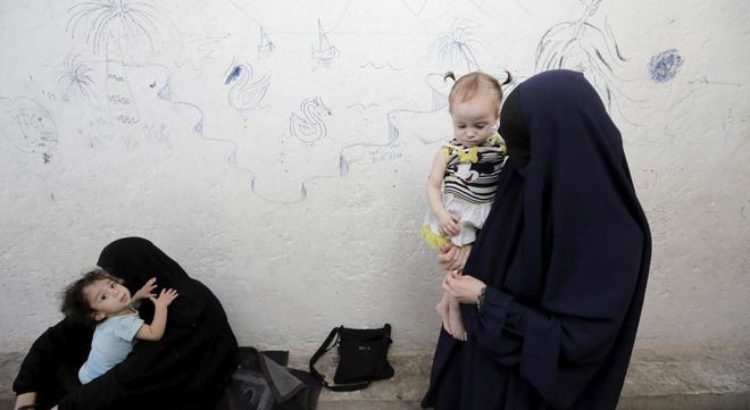
Másde 40 personas que sufrieron abusos sexuales durante su infancia han roto su silencio y han contado la «terrible realidad» que sufrieron gracias a una campaña de Save the Children para visibilizar y concienciar sobre esta lacra «oculta».

En un comunicado, esta onegé recuerda que el pasado 4 de octubre lanzó su campaña «Rompo el silencio» a través de la cual más de 40 personas han denunciado que sufrieron violencia sexual durante su infancia y han sido atendidas por una psicóloga de la organización.

«Emiliano, Alexandra, Nadia o Àlex fueron algunas de las víctimas que con su testimonio rompieron el silencio y apoyaron la campaña en un primer momento», indica la ONG.


También Lola, que con 61 años ha sido otra de las personas que ha contado los abusos que padeció. «Yo también rompo el silencio. Quiero gritar al mundo lo que pasa impunemente en muchos hogares. Gracias, muchas gracias por abrir la caja de Pandora donde nos escondemos millones de niños”, expuso Lola a Save the Children.

Con estos testimonios, Save the Children quiere denunciar que el sufrimiento de muchas personas «sigue permaneciendo oculto debido al encubrimiento» de sus conocidos o de las instituciones que no detectaron o no denunciaron los abusos.

El director general de la ONG, Andrés Conde, subraya en el comunicado que es de «vital importancia» que la población se solidarice y apoye a las víctimas, y pide que el Gobierno apruebe, dentro del proyecto de Ley de Protección Integral frente a la Violencia contra la Infancia, medidas específicas de lucha contra el abuso sexual a menores.

Asimismo, Conde insta a todos los grupos parlamentarios a apoyar esta iniciativa y urge a acelerar los trámites para que la aprobación llegue lo antes posible. EFE

Fuente; https://www.lavanguardia.com/vida/20181029/452618345695/mas-de-40-victimas-de-abusos-rompen-silencio-con-campana-de-save-the-children.html

Comparte este contenido:

Libro: Movimientos sociales en la red

Por: América Latina en Movimiento. 

Este libro, que se inscribe en el proyecto de la Comunidad Web de Movimientos Sociales (CWMS), en la primera parte explora el debate que se viene desarrollando en torno a la Internet, para ubicar con mayor precisión lo que se encuentra en juego en este ámbito, sus potencialidades y límites, sus desafíos, sus lógicas y efectos organizativos, particularmente en lo referido a flujos y redes; en suma, el estado de la situación, condición básica para pensar en estrategias.

En la segunda parte, presenta un estudio indagatorio sobre la incorporación de la Internet en las organizaciones sociales involucradas en la CWMS, respecto a los usos y aprovechamiento, motivaciones y percepciones, las implicaciones socio-organizativas y comunicacionales.

Fuente de la reseña: https://www.alainet.org/es/libros/movimientos-sociales-en-la-red

Link para descargar el libro: https://www.alainet.org/sites/default/files/msr-web_0.pdf

Comparte este contenido:

Sanguinetti: hay quienes «no entendieron lo que es la educación popular»

América del Sur/ Uruguay/ 07.11.2018/ Fuente: www.subrayado.com.uy.

Sanguinetti participó de un acto político en Toledo, y habló extensamente de su visión de la educación pública.

Recordó que cuando su gobierno llevó adelante la Reforma Rama, “con toda la oposición de los que no entendieron lo que es la educación popular, y siguen sin entenderla, porque Rama era un viejo loco, y yo era un servil de los organismos financieros internacionales porque estaban poniendo la plata para construir los edificios que necesitábamos para las escuelas de tiempo completo, que ya no podían tener dos turnos”.

Habló de las escuelas como factor integrador de la sociedad uruguaya, donde se encontraban “con la misma túnica y con la misma moña, ricos, pobres, negros, blancos, todos iguales ante la ley”.

Sostuvo que Varela fundó la esencia de la educación en las escuelas, y Batlle y Ordóñez “la hizo grande con los liceos y con las escuelas industriales, y eso es el mandato que tenemos”, dijo.

“Sabemos que vamos a tener visiones enfrentadas, pero estamos dispuestos con serenidad, con las razones, como lo hicimos siempre, seguir adelante con nuestro programa de la reforma de la educación”, dijo.

Fuente de la noticia: https://www.subrayado.com.uy/sanguinetti-hay-quienes-no-entendieron-lo-que-es-la-educacion-popular-n517937

Comparte este contenido:

India ranks 37 in quality of education

Asia/ India/ 07.11.2018/ Source: www.deccanchronicle.com.

Singapore has the best education in science and math in the world, followed by Finland, Switzerland, Lebanon, Netherlands, Qatar, Belgium, Estonia, Honh Kong and the US, according to the World Economic Forum. India stands at the 37th position.

The quality of math and science education depends upon public funding and the education system.

The countries ranked up to 36 spent more than 6 per cent of their GDP on education against 3.3 per cent in India.

“Our education system gives more stress on marks and grades rather than quality. Our education policy should be changed to address quality concerns,” an expert said.

Dr Srini Bhupalam, an education expert, said, “It has been proven that quality of education can be provided pretty effectively to small populations.”

“If you look at the list, most of the countries population is very small. It’s always a challenge to do the same for very large populations. Nevertheless we have a lot of scope to do better,” he added.

He said Indian students were good at reproducing on paper due to rote learning. “We cannot expect any change in our rankings until the method of teaching is transformed into practical, concept and application based,” he said.

“Our testing and evaluation methods also need to be transformed to measure students understanding and application for creative problem solving,” Dr Bhupalam said.

Dr Narsimha Reddy, Principal, Hyderabad Public School, said, “Small countries are progressing in science, math and technology. The government must take education as a challenging field. The curriculum and methodology should be altered to teach science and math’’.

He said most teaching happens to score marks. “What, why, where, when and how are the most important questions in science and math. How many schools are really making students curious and inquisitive,” Dr Reddy asked.

He said hands-on experience was given top priority in developed countries.

“What facilities are available in our schools. Teachers are busy finishing the syllabus and parents are worried about marks. Curriculum and pedagogy have to be changed,” Dr Reddy said.

Not everyone was in agreement that Indians did poorly in maths.

P. Obul Reddy Public School principal Anjali Rajdan said Indian students do very well in maths but the WEF ranking did not reflect it.

“I can accept the ranking in science as our labs and infrastructure are not at par with other countries, so standing 37th is humbling.”

Source of the notice: https://www.deccanchronicle.com/nation/current-affairs/041118/india-ranks-37-in-quality-of-education.html

Comparte este contenido:

Sex Education In Ghana Should Be Prioritised (Video)

Africa/ Ghana/ 07.11.2018/ Source: www.modernghana.com

The United Nations Population Fund (UNFPA) is leading the process of harmonizing sexual and reproductive health education in Ghana.

It has consequently in collaboration with Civil Society Organisations (CSOs) among other stakeholders, whose work focuses on the area, put together a national guideline document for Comprehensive Sexual and Reproductive Health Education (CSE).

This would be for both in-school and out-

of-school education purposes.

The move is to adopt a standardized approach towards delivering CSE in the country in line with the international United Nations Educational, Scientific and Cultural Organization (UNESCO) guidelines for CSE.

It forms part of a joint programme being implemented by UNFPA in collaboration with the United Nations Children’s Fund (UNICEF), aimed at empowering adolescent girls.

An orientation workshop on the national guidelines for the CSE has therefore been held in Accra for the relevant CSOs to collate their inputs for workable curricula to be developed to facilitate teaching and learning in the area.

The workshop, attended by 42 participants was organized by the UNFPA with funding support from Global Affairs Canada.

Mr. Niyi Ojuolape, Country Representative of UNFPA, said it was one of the key activities being carried out for the CSOs as part of a concerted advocacy effort to drive home the need for an updated CSE content.

He said in order to achieve greater national impact, it was imperative to harmonize CSE delivery

across the board, insisting that CSOs had a significant role to play.

Mr. Ishmael Kwasi Selassie, a facilitator for the workshop, said community-based CSE by the standard of the new guidelines was intended to be delivered to young people starting from age six and terminating at age 24.

“It is a systematic approach to equip young people with knowledge, skills, attitudes, and values they need to determine and enjoy their sexuality, that is, physically and emotionally, individually and in relationships” he stated.

He said the objective was to provide young people with an avenue to acquire accurate and reliable information on reproductive health and rights.

Source of the notice: https://www.modernghana.com/news/895067/sex-education-in-ghana-should-be-prioritised.html

Comparte este contenido:

Is education reform finally paying off for Indonesian kids?

Por: University of Melbourne.

Over the past two decades, income inequality has been increasing in Indonesia, leading to growing worries about disparities in living standards and education.

A particular concern of economists in this environment of climbing inequality is the issue of intergenerational mobility – the extent to which parents’ education or income affects the socioeconomic status of their offspring.

Scholars have described a strong relationship between inequality and social immobility – meaning that the greater the inequality in a country, the greater likelihood that someone will inherit their parents’ socioeconomic status. This finding has been dubbed the “Great Gatsby curve”,(link is external) in reference to the way that the book’s title character defies this relationship and overcomes his simple upbringing.

Educational attainment is one of the most common measures used by economists and sociologists to determine the extent to which socioeconomic status is transferred from one generation to the next. Indonesia has invested huge amounts in education and implemented several progressive policies designed to promote mobility.

In fact, government spending on education has more than doubled since the New Order period. Since 2009, more than 20 per cent of the state budget has been spent on education, in accordance with the Law 20 of 2003 on the National Education System (although there is some debate about how this 20 per cent figure is calculated). These funds have been used to implement a variety of progressive policies, ranging from scholarship programs for poor students to elimination of school fees and school grants.

As the first member of my Betawi family to pursue higher education, I wondered how many other Indonesians had a similar experience to me. What is the relationship between parental education and children’s schooling in Indonesia? Are the government’s efforts to expand education making it any easier for people from families without high levels of education to attain higher levels of schooling?

To explore these questions, I examined the results of four waves of the Indonesian Family Life Survey (IFLS), from 1997, 2000, 2007 and 2015. I examined the educational achievement (in terms of years of schooling) of young people aged 16 to 27 at the time of the survey. My study examined the educational achievement of young people against their father’s education. This is because although many studies have shown only slight differences between whether a mother or father’s education level is used in these comparisons, some(link is external) studies(link is external)argue that the father’s education can be more important for the outcomes of their offspring.

The results showed some interesting findings. First, the average years of schooling increased from 9.21 in 1997 to 10.71 in 2015. Both boys and girls increased their total years of schooling. Average years of schooling for boys improved from 9.2 in 1997 to 10.53 in 2015. Girls fared slightly better, with average years of schooling increasing from 9.2 in 1997 to 10.9 in 2015.

Significantly, the study showed an increase in educational mobility from 1997 to 2015. To examine mobility, I calculated an “intergenerational persistence” coefficient – a measure of the degree to which a father’s education affects children’s education. This coefficient decreased from 0.53 in 1997 to 0.44 in 2015. Notably, there was little change from 1997 to 2007, when the coefficient decreased to 0.51, suggesting that most improvements in mobility have occurred over the past decade.

Despite the improvements observed, however, parental background still plays a major role in shaping children’s futures. In fact, the coefficient of persistence is still considerably higher in Indonesia than in most other nations, with Latin American countries the only close match for Indonesia.

Further, my study somewhat surprisingly showed little difference in intergenerational persistence between urban and rural areas. Living in an urban, developed area seemingly does not automatically promote greater opportunities for educational mobility compared to rural areas. In fact, my study showed that although mobility has improved in urban areas over recent years, historically, mobility was greater in rural areas than in urban ones.

Finally, the intergenerational coefficient declined from 0.55 in 1997 to 0.45 in 2015 for women, and from 0.51 in 1997 to 0.43 in 2015 for men. These findings suggest that female students are less mobile than male students, a finding that is common to many other studies. However, in the Indonesian case, the gap between males and females has narrowed significantly over recent years, and there is now little difference in mobility between genders.

What explains these results? Given the decline in intergenerational persistence over the past decade, there are suggestions that the government’s hefty investment in education may be starting to improve mobility. In 2007-2008, the government spent about 16 per cent of the state budget on education. Since 2009 it has consistently allocated more than 20 per cent.

Past studies have shown that total public expenditure on education has a positive relationship with mobility – the more a government spends on education, the more mobile students become. Public investment in education can compensate for a lack of investment in education by poor families.

One of the most prominent educational policies over the past decade has been the implementation of the School Operational Assistance Grants (BOS). These grants are provided directly to schools every three months on the basis of the number of students at the school. They are designed to increase the enrolment rate by reducing the costs of education borne by parents. Schools can also use BOS funds for activities such as personnel management, infrastructure and professional development.

In 2012, the government also introduced a new regulation that prohibits the charging of fees in primary and junior secondary schools but allows for voluntary parental contributions to maintain the active engagement of parents in school development.

On the demand side, the government has expanded its assistance program for poor students, the Indonesia Smart Card (KIP). Through this program, students are provided with a cash-transfer based on school attendance. The funds can be used for education fees, or other costs associated with attending school, such as transportation, books and uniforms.

In addition to increases in educational expenditure, the government has also put considerable efforts into promoting early childhood education over recent years. The enrolment ratio of children in early childhood education has increased from 15 per cent in the early 2000s to 47 per cent in 2012. Improvements in early childhood education could have also played a role in increasing mobility.

My small study suggests that parental education is still a major determinant of educational outcomes in Indonesia. Further studies are required to confirm my findings, but government investment in education does appear to be making a difference.


Comparte este contenido:
Page 2581 of 6792
1 2.579 2.580 2.581 2.582 2.583 6.792
OtrasVocesenEducacion.org