Page 2998 of 6814
1 2.996 2.997 2.998 2.999 3.000 6.814

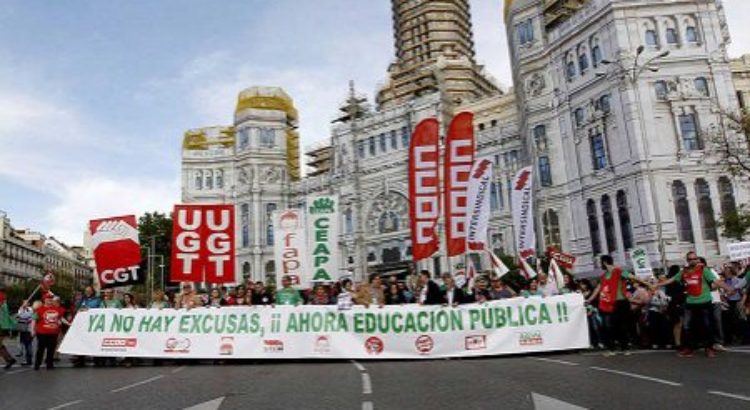
La ‘Marea Verde’ volvió a manifestarse contra los recortes educativos del gobierno de Rajoy (Audio)

España / 13 de mayo de 2018  / Autor: Redacción / Fuente: Más Voces

Sindicatos de enseñanza realizaron el martes manifestaciones en todo el Estado español para protestar contra los recortes educativos del Gobierno de Mariano Rajoy. La Marea Verde que aglutina a profesores, padres y alumnos volvió a las calles para reclamar sus derechos. Los portavoces sindicales han reclamado al Gobierno del Partido Popular la reversión de unos recortes en Educación que cifran en 9000 millones de euros.

Las manifestaciones han servido también para exigir al Gobierno la derogación de la Ley Orgánica de Mejora de la Calidad Educativa (LOMCE), entre otras medidas.

Además, los manifestantes han denunciado que la inversión en educación no recupera los niveles anteriores a la crisis económica.

Bajo el lema ‘Ya no hay excusas. Ahora Educación Pública’, se llevaron a cabo casi una treintena de manifestaciones y concentraciones por todo el Estado español. La ‘marea verde’ vuelve ante la pasividad del gobierno del Partido Popular y a la espera de que la clase política se ponga manos a la obra para un pacto por la Educación en la que también participe la comunidad educativa.


Fuente de la Noticia:

http://masvoces.org/La-Marea-Verde-volvio-a-manifestarse-contra-los-recortes-educativos-del

Comparte este contenido:

Meet the 2018 Teacher of the Year Honored by Trump the White House Doesn’t Want You to Hear (Audio)

USA / May 13, 2018 / Democracy Now

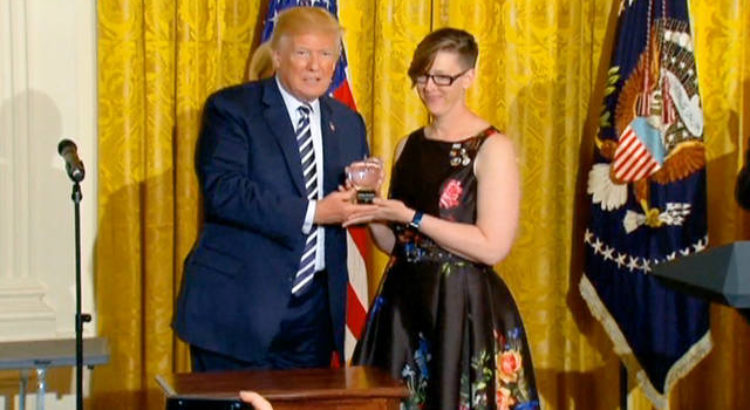
When Mandy Manning received her 2018 Teacher of the Year award at the White House Wednesday, the press was barred from her speech, and President Trump did not mention who she teaches: immigrant and refugee children. While she was at the White House, Manning handed President Donald Trump a stack of letters from her refugee and immigrant students, while billionaire Education Secretary Betsy DeVos looked on. She also wore six politically themed buttons as she accepted her award from Trump, featuring artwork from the 2017 Women’s March, a rainbow flag and the slogan “Trans Equality Now!” Mandy Manning joins us from Spokane, Washington, where she is an English and math teacher at the Joel E. Ferris High School. She was named 2018 National Teacher of the Year by the Council of Chief School State Officers.


Transcript
This is a rush transcript. Copy may not be in its final form.

AMY GOODMAN: This is Democracy Now!, democracynow.org, The War and Peace Report, as we turn now to the 2018 Teacher of the Year. When Mandy Manning received her award at the White House on Wednesday, the press was barred from her speech, and President Trump did not mention who she teaches: immigrant and refugee children.

MANDY MANNING: Over the next year, I want students to know I am here for refugee and immigrant students, for the kids in the Gay Straight Alliance and for all the girls I’ve coached over the years, to send them the message that they are wanted, they are loved, they are enough, and they matter.

AMY GOODMAN: That’s 2018 Teacher of the Year Mandy Manning. While she was at the White House, Manning handed President Donald Trump a stack of letters from her refugee and immigrant students. Manning also wore six politically themed buttons as she accepted her award from President Trump, while billionaire Education Secretary Betsy DeVos looked on. Manning’s buttons featured artwork from the 2017 Women’s March, a rainbow flag and the slogan “Trans Equality Now!” This is President Trump presenting her her award.

PRESIDENT DONALD TRUMP: To Mandy and all of the amazing educators here today, your tireless dedication doesn’t just inspire your students, it inspires all of us. And I can tell you, it very much inspires me. We honor you and every citizen called to the noble vocation of teaching. Now it is my privilege to present Mandy with the National Teacher of the Year award.

AMY GOODMAN: For more, we’re joined by Mandy Manning, who has returned from Washington, D.C., to Washington state, to her home in Spokane. There, she teaches English and math to refugee and immigrant students at the Joel E. Ferris High School. She was named 2018 National Teacher of the Year by the Council of Chief School State Officers.

Welcome to Democracy Now!, Mandy, and congratulations.

MANDY MANNING: Thank you. Thanks very much.

AMY GOODMAN: So, can you talk about your message at the White House, what took place on Monday? You were with the secretary of labor, the secretary of education. You were with the president of the United States.

MANDY MANNING: Mm-hmm. So, it actually was on Wednesday afternoon. And the White House really did a good job of honoring us. We had a reception, and we had an opportunity to be on a panel with Secretary DeVos and Secretary of Labor Acosta. The four finalists sat there, and we got to speak about some very, very important issues facing education, like school safety and the opioid crisis. And, of course, I spoke about my students, my immigrant and refugee students at the Newcomer Center here. We had a reception, and then the presentation of the award was next. And I spoke to the audience and gave my remarks, and then we had a short intermission, which is where I had my opportunity to hand the letters to the president from my students. And I also asked him if he would be willing to come to Spokane and meet my students, my immigrant and refugee students, to see how amazing, dedicated, focused and what productive members of our community they are as future citizens of our United States.

AMY GOODMAN: The press was barred from recording your speech?

MANDY MANNING: I didn’t know that until after, after the ceremony, when I spoke with a reporter afterwards. That’s when I found out that my remarks were not witnessed by the press.

AMY GOODMAN: That they were prevented from being in the room. Well, I didn’t think it would be particularly subversive to play a clip of your speech at the White House, but apparently it is, so we’re going to play it from a recording made by a friend of yours on their cellphone. This is a clip.

MANDY MANNING: I am honored and humbled to be the vehicle through which my students may tell their stories. I am here for David, a future IT specialist who hopes to one day be able to attend university. I am here for Tamara, who is currently studying pre-med at Eastern Washington University. I am here for Safa and Tara, both future elementary school teachers. I am here for Safa—I mean, for Solomon and Gafishi, who believe that the United States is the place where they have found the center of their lives, where they can have dreams and hopes to be someone. You see, my students are immigrants and refugees brand new to our nation. I teach in the Newcomer Center at Ferris High School in Spokane, Washington. And all of the students who come through my classroom have three things in common: They are just learning English. They have escaped trauma to find new lives in our nation, and they are focused and determined to be productive citizens of our United States. And most importantly, they succeed.

AMY GOODMAN: The speech no one saw but those in the room, like, oh, the education secretary, DeVos, the labor secretary, Acosta. President Trump, I don’t believe was there at that point. But again, the press barred from being in the room and recording that speech. Mandy Manning, you were talking there about your students. Talk about the countries they come from, as you teach at the—what’s known as the Newcomer Center. President Trump did not mention, in his awarding you the Teacher of the Year award, that you teach refugee and immigrant students.

MANDY MANNING: Yes. So, I teach in the Newcomer Center, which is a specialized English-language development program for brand-new immigrant and refugee students. So these are the students who just came to the country, like one to three months prior to starting school here in the United States. And they also know very little English. So, my students come from all over the world. They come from Iraq, Afghanistan, several countries in Africa, such as Uganda, Sudan, Eritrea, Rwanda, Tanzania—all over. I have Syrian students. I also have current students from Burma-Myanmar. I’ve had students from Micronesia, Malaysia, Chuuk island in Micronesia, the Marshall Islands, students from El Salvador—all over.

AMY GOODMAN: And, Mandy, can you talk about the pins you wore as President Trump recognized you as the Teacher of the Year?

MANDY MANNING: Sure. So, I teach—I not only teach immigrant and refugee students, but I also have worked closely with the Gay Straight Alliance. I was a co-adviser before becoming the Washington state Teacher of the Year. And I also coach girls’ basketball. And on my girls’ basketball team, I have had a trans boy, who had to, you know, be on the girls’ basketball team. But these pins represent my students. And I wanted them to know 100 percent that as I stood there in this White House, that I am there for them. I am there to be the vehicle through which they can tell their stories, and I want to represent them. And so, that’s what my pins represented. And the one from the Women’s March is the one that represents the DREAMers and the DACA immigrants.

AMY GOODMAN: And you were also speaking—this past Wednesday is in the midst of the teacher walkouts and strikes around the country. Can you comment on these?

MANDY MANNING: Well, at the heart of every teacher is their students. And in many states and in many areas, we are underserving many of our students. And sometimes it takes that collective voice, where teachers come together, to ensure that they have the supplies that they need and the equipment and also the compensation to be the very best that they can be for their students. And so, sometimes we don’t have a choice. When we want what’s best for our students, we have to come together with that collective voice, because that’s when we can make change.

AMY GOODMAN: Do you endorse these strikes and walkouts, oh, from West Virginia to Oklahoma to Arizona?

MANDY MANNING: I believe that, yes, anything that we can do to ensure that our students have what they need, because that’s—you know, that’s what teachers want. We want what’s best for the students.

AMY GOODMAN: And, you know, the last time we saw a televised event that involved teachers and students at the White House was after the Valentine’s Day massacre in Parkland, the Marjory Stoneman Douglas High School, February 14th, where both students and staff, teachers, were gunned down. There, they told President Trump directly—some of them said—one, the husband of a teacher, said, “No, we don’t want teachers to be armed.” President Trump and Vice President Pence went to the NRA convention on Friday, right after giving you that award on Wednesday. There, people were not allowed to bring in guns to the NRA meeting, the National Rifle Association meeting. Your thoughts on guns in the schools?

MANDY MANNING: Well, of course, I can only speak for myself, but I will never and do not ever want to carry a gun in the classroom. The most important thing in my classroom is the relationships that I build. And I strongly feel that if we had guns in our schools, and particularly if I carried a gun, it would dramatically impact the feeling in my classroom and my ability to connect with my students. And I just—I think that it’s an idea that is a temporary Band-Aid to make people feel like that might be—make us feel more safe. But in reality, if we bring more guns into the school, I personally would feel less safe. Plus, you know, the relationships that we build and the connections in the community would be so deeply impacted. So, I would never, ever carry a gun in my classroom.

AMY GOODMAN: Did you get a chance to discuss this with Secretary of Education DeVos or Secretary of Labor Acosta—guns in the schools, the strikes, the walkouts?

MANDY MANNING: We did have an opportunity to speak about guns and school safety. But we really focused on the fact that in order to have safe schools, we need to have connected schools, which means students need to feel connected to their peers, they need to feel connected to their teachers, and they need to feel like their school represents them and is a safe place for them. And so that was the focus of our discussion, that the key to school safety is ensuring that teachers can do the things that they need, and have the latitude in their classrooms to meet the needs of the students within their individual classrooms—

AMY GOODMAN: Mandy—

MANDY MANNING: —and that schools need to be places—go ahead.

AMY GOODMAN: Go ahead. “And schools need to be places…”

MANDY MANNING: That meet the needs of the community within which they reside.

AMY GOODMAN: Could you end by sharing a letter from one of your students? You asked them to write letters to President Trump?

MANDY MANNING: Yes. And they wrote just beautiful letters. So I did—I chose one from a student, and I will leave his name off, but from a student from Iraq. So, he says, “Dear President Trump.” Oh, he put his name in here, so I’ll say it. “Dear President Trump, My name is Yusif, and I am from Iraq. In January 2017, you won the presidency. I should have arrived in the U.S.A.; however, because you signed the immigration ban, I had to wait until March. My mother was already here in Spokane, Washington, and I had not seen her in four years. When I graduate from college, I will be a DJ. And if you want to learn more about me and my mom’s story, you can watch our video on YouTube. Search ‘Maha Al’Majidi’ and click on the video called ‘Iraqi refugee reunites with her son.’ Sincerely, Yusif.”

So, the letters are just beautiful. And some are very supportive of the president. Most of them say “thank you” and how much they appreciate being here the United States. And, of course, some—I was just listening to the show, your show, a little bit earlier, and some do speak about his language about people from Africa and how that hurts, and it encourages other people to use that same kind of language. And it does not make for positive connections within our community. So, the students were great. They had great insights into our nation. And they were very respectful and kind.

AMY GOODMAN: Mandy Manning, when President Trump called country—called Africa, which he called a country, Africa, Haiti, other countries “s—hole countries”—I mean, you’re an English teacher. You teach refugees and immigrants. What did you tell your students that day?

MANDY MANNING: I told them that we love them, that we know their value and that we can see that this is a place for them to come to have hope and dreams and be someone, and that we want them here and that they are lovely, beautiful human beings who make the United States a richer, more beautiful country.

AMY GOODMAN: Mandy Manning, we want to thank you for being with us, English and math teacher who teaches refugee and immigrant students from everywhere, from Iraq to Syria to Burma, at the Joel E. Ferris High School in Spokane, Washington. She was just named the 2018 National Teacher of the Year by the Council of Chief School State Officers. Last Wednesday, President Trump presented her with the award during a ceremony at the White House. This is Democracy Now!Stay with us.

Source:

https://www.democracynow.org/2018/5/7/meet_the_teacher_who_staged_a
Comparte este contenido:

Banco Mundial: En el futuro, las niñas podrían tener más educación que los niños

Banco Mundial / 13 de mayo de 2018 / Autor: Leticia Hernández / Fuente: El Financiero

La proporción de mujeres que tiene más educación que sus padres ha ido creciendo, aunque las economías en desarrollo aún deben invertir una cantidad considerable en los menores.

En el futuro, tu hija podría tener más educación que tú, ya que, de acuerdo con un estudio del Banco Mundial, la proporción de mujeres que tienen más educación que sus padres está aumentando respecto a la de los hombres en algunos países.

Según el documento ‘¿Progreso equitativo? Movilidad económica entre generaciones en todo el mundo’ publicado este miércoles por el Banco Mundial, en un futuro no muy lejano, la proporción de mujeres con más educación que sus padres será mayor que la de los hombres en su misma situación a nivel mundial.

“Las mujeres en las economías de altos ingresos ahora exhiben tasas más altas de educación terciaria (superior) que los hombres. La reversión de la brecha de género inició desde 1960 y la ventaja de las mujeres ha crecido en las economías de altos ingresos”, señaló el Banco Mundial en los resultados del estudio.

La educación es el principal activo para el progreso del individuo, es la herramienta para superarse y acceder a mejores ingresos y condiciones de vida y ahí justo está el problema en las economías en desarrollo, como México, que tienen sistemas educativos deficientes y de baja matrícula en niveles de escolaridad medio y superior.

«Debemos invertir en los niños desde una edad muy temprana para que estén bien alimentados y reciban una buena educación y es necesario lograr que las comunidades sean un lugar seguro en el que los niños puedan crecer, aprender y prosperar, así como generar condiciones económicas equitativas mediante la creación de empleos y el mejoramiento del acceso a financiamiento”, señaló Kristalina Georgieva, directora ejecutiva del Banco Mundial en la presentación del reporte en Washington.

Por lo que mejorar el acceso a la escolaridad secundaria es una prioridad en muchas de las economías en desarrollo una vez que han alcanzado la matrícula del 100 por ciento en el nivel primaria; de igual forma deben mejorar la calidad del aprendizaje y reducir las amplias desigualdades en aprendizaje, lo que requiere políticas para alinear a todos los participantes y hacer que el sistema educativo completo funcione para el aprendizaje.

El organismo analizó a las personas nacidas entre 1940 y 1980, y encontró también que en movilidad económica, que se refiere a cuando los hijos superan la situación económica de sus padres, las niñas tienen mayores índices de movilidad.

“Desde 1960, las niñas también tienen mayores índices de movilidad que los niños. En el mundo en desarrollo, la tendencia está en la misma dirección. La brecha de género está estrechándose rápidamente en la movilidad absoluta. Estas tendencias sugieren un futuro no muy lejano cuando la movilidad ascendente en relación con los padres será mayor entre las niñas que entre los niños en el mundo en desarrollo.

La movilidad se ha estancado durante los últimos 30 años, de acuerdo con el estudio que analiza la movilidad económica entre padres e hijos a través del prisma de la educación, un activo crucial que influye en los ingresos personales a lo largo de toda la vida.

Al analizar en detalle seis grandes países en desarrollo —Brasil, China, Egipto, India, Indonesia y Nigeria—, se observa que la movilidad económica aumentó en todos ellos desde la década de 1940 hasta la década de 1980, sin bien en diversos grados. No obstante, a partir de la década de 1960 el progreso ha sido más lento en cuatro de estos países y se ha estancado por completo en China y Nigeria. Se observan tendencias mundiales hacia la convergencia de género en Brasil, China, Egipto e Indonesia, donde las brechas en la movilidad entre niñas y niños son casi inexistentes. Tal convergencia no ha ocurrido en India o Nigeria, donde las disparidades de género son casi tan grandes hoy como lo eran hace medio siglo.

La posibilidad de ascender en la escala económica, independientemente de la situación socioeconómica de los padres, contribuye a reducir la pobreza y la desigualdad y puede contribuir a impulsar el crecimiento económico al brindar a todos los habitantes la oportunidad de usar sus talentos.

Las personas que viven en sociedades con un mayor grado de movilidad son más optimistas respecto del futuro de sus hijos, y este optimismo puede dar lugar a sociedades con más aspiraciones y cohesión.

“Todos los padres desean que sus hijos tengan una vida mejor que la de ellos; sin embargo, las aspiraciones de muchísimas personas -especialmente las personas pobres- se ven frustradas debido a la desigualdad de oportunidades”, afirmó Kristalina Georgieva, directora ejecutiva del Banco Mundial.

El análisis se centra en las personas nacidas entre 1940 y 1980 y establece que 46 de los 50 países con las tasas más bajas de movilidad ascendente desde la base hasta la parte alta de la escala se encuentran en el mundo en desarrollo.

El informe se utiliza la nueva Base de Datos Mundial sobre Movilidad Intergeneracional que tiene una cobertura sin precedentes pues abarca 148 países donde vive el 96 por ciento de la población mundial.

Fuente de la Noticia:

http://www.elfinanciero.com.mx/economia/en-el-futuro-las-ninas-podrian-tener-mas-educacion-que-los-ninos

Comparte este contenido:

¿Quién es la maestra premiada como docente del año que la Casa Blanca no quiere que conozcamos?

Estados Unidos / 13 de mayo de 2018 / Autor: Redacción / Fuente: Democracy Now

Mandy Manning recibió en Estados Unidos el premio 2018 a la Maestra del Año en un evento en la Casa Blanca, pero la prensa no pudo acceder a su discurso y el presidente Trump no mencionó con qué población trabaja como docente: niños y niñas inmigrantes y refugiados. Manning aprovechó su presencia en la Casa Blanca para entregar al presidente Donald Trump pilas de cartas de sus estudiantes refugiados e inmigrantes, ante la mirada atenta de la multimillonaria secretaria de Educación Betsy DeVos. Además, al acercarse a recibir el premio, lucía seis prendedores con consignas políticas que mostraban, por ejemplo, arte de la Marcha de Mujeres 2017, la bandera de la diversidad y la frase “¡Igualdad Trans Ya!”.

Para ampliar esta información, vea (en inglés) nuestra conversación con Mandy Manning que se comunica con nosotros desde Spokane, Washington, donde trabaja como docente de inglés y matemática en la secundaria Joel E. Ferris. Fue nombrada Maestra del Año 2018 a nivel nacional por el Consejo de Directivos de Escuelas Estatales (CCSSO por su sigla en inglés).

Fuente de la Noticia:

https://www.democracynow.org/es/2018/5/7/meet_the_teacher_who_staged_a
Comparte este contenido:

Noticias ONU: Educación, ¿sueño o realidad? (Audio)

ONU / 13 de mayo de 2018 / Autor: Noticias ONU / Fuente: Radio ONU

Millones de jóvenes en el mundo no ven la educación como un derecho, sino como un privilegio: 61 millones de niños no tienen acceso a educación primaria, 60 millones a los primeros cursos de secundaria y 142 millones a los últimos de este ciclo.  El Secretario General se ha reunido con el enviado especial de la ONU para educación y un grupo de activistas jóvenes que solicitan una mayor y mejor financiación de la enseñanza.


Fuente de la Noticia:

https://news.un.org/es/audio/2018/05/1433502

Comparte este contenido:

INTERFAZ 01 – Primer revista informativa sobre educación (Video)

México / 13 de mayo de 2018 / Autor: AIEDMX / Fuente: Youtube

Publicado el 30 abr. 2018
Primer revista informativa sobre educación con @OmarCepedaCastr y @AnaC_Olvera
Nuestro objetivo es gestionar y generar información en los temas de educación, cultura, ciencia, tecnología e innovación a través de soportes informativos

Fuente: https://www.youtube.com/watch?v=4Lk13iEHh2E
Comparte este contenido:

Беларусь: Чаму шкодная настальгія па савецкай адукацыі

Беларусь / 13 мая 2018 / Аўтар: Кацярына Маслаковым / Крыніца: Zautra

Міфы пра савецкую адукацыю развейваюць Уладзімір Мацкевіч (метадолаг, адзін з заснавальнікаў Лятучага ўніверсітэта), Уладзімір Дунаеў (адзін з заснавальнікаў і першы прарэктар ЕГУ) і Таццяна Сініца (дацэнт кафедры псіхалогіі БДУ).

Міф № 1. У СССР склалася асобная сістэма адукацыі – «савецкая»

Кажучы сцісла, «савецкай адукацыі» як асобнага паняцця не існуе – гэта міф. Была адукацыя ў СССР, якую, дарэчы, спрабавалі рэфармаваць восем разоў, аднак ні разу не давялі справу да канца. Не існуе і ніводнай скразной тэмы, якая б характарызавала «савецкую адукацыю». Напрыклад, такая рыса, як бясплатнасць адукацыі, не заўсёды была характэрная для СССР (хоць пра гэта і рэдка ўспамінаюць, але ў прамежку з 1940-га да 1956-га года навучанне было платным і ў старшай школе, і ў ВНУ).

Часам «савецкая адукацыя» асацыюецца з абмежаваннем універсітэцкай аўтаноміі і акадэмічнай свабоды. Але і гэта не зусім дакладна. Прыклад універсітэцкай аўтаноміі ў Савецкай Беларусі – выбары рэктараў універсітэтаў. Дарэчы, беларусы лёгка адмовіліся ад гэтага права крыху пазней пасля распаду СССР, у 1996 годзе. Калі ж знік сам артыкул «Акадэмічная свабода і ўніверсітэцкая аўтаномія» з Закона аб адукацыі ў 2009 годзе, гэтаму не надалі асаблівага значэння.

Міф № 2. Адукацыя ў СССР была добрая

Калі крытэрыем ацэнкі эфектыўнасці адукацыі ў СССР разглядаць поспех краіны, то ўсё выглядае не так адназначна.

У 1920-я гады была створаная ўнікальная сістэма адукацыі, якая мела вырашыць праблемы індустрыялізацыі і мусіла вывесці краіну на ўзровень індустрыяльна развітых краін. Гэта дасягалася за кошт высокай стандартызацыі адукацыі, калі чалавек, які пачаў адукацыю на Далёкім Усходзе, мог працягнуць яе ў Маскве. Такім чынам, універсальнасць адукацыі ў СССР адпавядала патрэбам індустрыяльнага грамадства.

У 1950-я гады на Захадзе загаварылі пра тое, што грамадства змяняецца, і ў хуткім часе там адбылося рэфармаванне сістэмы адукацыі, а ў СССР адукацыя заставалася на ўзроўні індустрыяльнага грамадства, без намёку на яго дыверсіфікацыю. Менавіта з пачатку 1960-х гадоў мінулага стагоддзя адукацыя ў СССР пачала адставаць ад сусветных патрабаванняў, а разам з ёю ў тыле аказалася і сама краіна.

У 1980-х гадах, калі загаварылі пра маштабнае рэфармаванне адукацыі ў СССР, стала відавочна, што ўсе перавагі «савецкай» адукацыі засталіся ў мінулым, а само ўяўленне, што «савецкая адукацыя найлепшая ў свеце» засталося выключна ідэалагічным штампам і элементам прапаганды.

Міф № 3. Толькі пры савецкай сістэме адукацыі маглі з’явіцца «зоркі» савецкай навукі

Пра «зорнасць» адукацыі ў СССР найлепш кажа статыстыка: ад перыяду царскай Расіі да постсавецкіх часоў краіна дала свету 25 лаўрэатаў Нобелеўскай прэміі, у той час як ЗША – 314 (пры гэтым каля 80 % з іх нарадзіліся менавіта ў Амерыцы, а не імігравалі).

Палова ўсіх Нобелеўскіх лаўрэатаў у свеце – выпускнікі 14 ВНУ.

Да таго ж нельга забываць, што многія савецкія дасягненні 1950-х і 1960-х гадоў сталі вынікам адукацыі дасавецкіх часоў, ды і ў рамках адукацыі ў СССР існавала элітная адукацыя, не характэрная для СССР у цэлым.

Міф № 4. У СССР добра фінансавалася сістэма адукацыі

Адукацыйную палітыку можна разглядаць як баланс трох зменных: даступнасці, якасці і яе цаны (бюджэтных выдаткаў на яе). Унікальнасць беларускай адукацыі заключаецца ў міфалагізацыі савецкай спадчыны. Беларусь пазіцыянуе сябе спадкаемніцай «савецкай адукацыі», пры тым, што гэта спадчына не мае ніякага дачынення да зместу савецкай адукацыі, хіба што да эканамічнай палітыкі ў галіне адукацыі.

У СССР выдаткі на адукацыю з 1950-х гадоў і да 1981 года скараціліся ў два разы адносна ВУП, а ў разліку на аднаго студэнта – у шэсць разоў.

Эканомія на адукацыі – палітыка СССР, якая засталася і ў Беларусі, але прымае зараз іншыя формы. Калі ў савецкіх ВНУ вучылася не больш за 15 % выпускнікоў школ, сёння ў Беларусі гэтая лічба дасягае амаль 90 %.

Каб захаваць якасць адукацыі, неабходна ўкладваць грашовыя рэсурсы. У Беларусі гэта пытанне вырашаюць за кошт павелічэння колькасці «платнікаў» сярод навучэнцаў ВНУ. У краіне месцаў у ВНУ больш, чым выпускнікоў школ: у 2010 годзе на 30 %, цяпер крыху менш.

Запыт на масавую адукацыю – гэта, канешне, запыт на сацыяльную роўнасць і пэўны ўзровень адукацыі з боку эканомікі, які нельга атрымаць па-за вышэйшай адукацыі. Аднак у Беларусі вышэйшая адукацыя стала таксама і спосабам прыцягнення грошай у казну.

У выніку студэнтаў становіцца больш, але якасць адукацыі пагаршаецца.

Міф № 5. Далучэнне да Балонскага працэсу палепшыць адукацыйную палітыку ў Беларусі

Беларусь – выключны выпадак. Краіну прынялі ў Еўрапейскую прастору вышэйшай адукацыі «пад сумленнае слова», чакаючы, што яна выканае ўмовы Дарожнай карты.

На дадзены момант Дарожная карта не імплементаваная нават на чвэрць.

Нельга сказаць, што ў краіне зусім не рабіліся спробы паўплываць на сітуацыю, аднак яны мелі сумныя наступствы для ініцыятараў. Па меркаванні Уладзіміра Дунаева, тры міністры адукацыі Беларусі – Маскевіч, Жураўкоў і Тозік – паплаціліся кар’ерай у выніку свайго жадання правесці рэформы. На больш нізкім узроўні аматары рэформаў таксама мелі шмат клопатаў: у 2017 годзе Рэспубліканскі савет рэктараў ВНУ выступіў з крытыкай Міністэрства адукацыі, аднак акрамя звальнення сямі рэктараў, іншых змен не адбылося.

І ўсё ж хай і не так, як чакалася, але далучэнне Беларусі да Балонскага працэсу прынясе свае змены, але не так хутка. Балонскі працэс мае на мэце гуманітарна-тэхналагічнымі сродкамі сфармаваць еўрапейскую ідэнтычнасць. Праз механізм стандартызацыі адукацыі і мабільнасць студэнтаў у межах Еўропы ствараецца новая гістарычная супольнасць людзей – еўрапейцы.

Артыкул Крыніца:

http://www.zautra.by/art.php?sn_nid=28013

Comparte este contenido:
Page 2998 of 6814
1 2.996 2.997 2.998 2.999 3.000 6.814