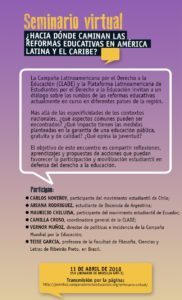
– Después de que hagan clic en dicho enlace, se descargará un archivo llamado “Gotomeeting Opener.exe”. En seguida, se abrirá una ventana para la videoconferencia.
– Le recomendamos utilizar los navegadores Internet Explorer o Mozilla Firefox.
– Le recomendamos que se conecte 10 minutos antes de la hora prevista al inicio del evento (15h00 de Brasil) y acceda al enlace indicado.
– Para quienes participen del diálogo como oyentes, solicitamos que mantengan su webcam (cámara) y micrófono inactivos durante todo el evento.
– Para quienes se conecten desde tablets o celulares, bastará descargar el aplicativo de Go to Meeting. Luego que ustedes pinchen para iniciar el aplicativo, se abrirá una ventana en la que será solicitado el número de ID de la reunión, que es: 532703357.
– Para aclarar dudas, presentar comentarios o enviar preguntas a las y los participantes, mande un mensaje para la persona que modera el debate desde la ventana del “Chat”.
América del Sur/ Argentina/ 09.04.2018/ Fuente: diariolaopinion.com.ar.
El Fondo Becario Municipal es regulado por la ordenanza Nº 4551 que estipula que el presupuesto municipal debe asignar anualmente una partida específica para ser distribuida en becas de fortalecimiento a la educación. Constituye una acción sostenida y fundamental de las políticas educativas del Municipio, que entiende a la educación como el único camino posible para el desarrollo.
Hay 6 líneas de becas: inicial, primarias y secundarias, universitarias, terciarias y de escuelas agrotécnicas, que tienen como objetivo apostar al estudio de carreras estratégicas para el desarrollo de la ciudad, y también de aquellas que el Ministerio de Educación de la Nación ha considerado prioritarias. Además, existe la línea becas para situaciones extraordinarias, que contempla todas las solicitudes que no se enmarquen en el resto de las líneas y requieran una consideración especial.
El crecimiento en la demanda de becas para este 2018 reflejó un aumento del 40%. Por este motivo, se tomó la decisión de aumentar el monto mensual estipulado y la cantidad de beneficiarios y beneficiarias, teniendo en cuenta el contexto y el aumento de las necesidades. El objetivo es ayudar a la mayor cantidad de estudiantes para que continúen con sus estudios.
Las becas para escuelas primarias llegan este año a 643 estudiantes y cada una tiene un valor de 550 pesos, mientras que los aportes para las secundarias tendrán como destino 555 estudiantes, también con un valor de 550 pesos cada una. En total son 704.380 pesos que se distribuyen entre estudiantes de escuelas primarias y secundarias de la ciudad. El resto se divide entre jardines, escuelas especiales y el Centro de Formación Profesional Nº 5.
Si se toma en cuenta el aporte total que se realizará a través de esta línea de becas en el transcurso del año, la cifra se ubica por encima de 1.400.000 pesos. Un importe que representará un incremento superior al 20% en relación a lo otorgado el año anterior.
Respecto al resto de las líneas, la Comisión determinó la entrega de 189 becas para educación terciaria y universitaria, así como de situaciones extraordinarias. De estos 189 estudiantes, 69 corresponden a renovaciones, 103 son nuevos becarios y 17 pertenecen a escuelas agrotécnicas.
Mensualmente, se distribuirán cerca de 180.000 pesos mensuales, con una inversión anual superior a 1.600.000 pesos. Sumando los aportes mensuales de becas para nivel inicial, primario y secundario, la inversión total de la Municipalidad se ubicará en torno a los 3.000.000 de pesos.
Como expresa Mariana Andereggen, secretaria de Educación, “detrás de cada uno de estos números hay una historia de esfuerzos, hay una persona a la que se acompaña a construir su futuro y a cumplir sus sueños: hay adolescentes que pueden sentirse incluidos y desarrollar una vocación, como en el caso de quienes asisten a escuelas agrotécnicas; hay jóvenes que pueden transitar su educación terciaria y universitaria; y hay adultos que deciden dar un volantazo y tomar el timón de su actividad laboral, potenciando su capacitación para acceder a más y mejores puestos de trabajo. Tal es el caso de las enfermeras que desarrollan los acompañamientos terapéuticos, o de las mamás que una vez criados sus hijos deciden tomar una carrera docente, una tecnicatura o licenciatura”.
“Nuestras becas son más abarcativas, más que otros programas nacionales, como el caso de progresar que se entrega hasta los 24 años. Y eso nos enorgullece, porque detrás de cada ayuda económica hay personas apostando por el futuro y por los sueños. Y a través de ellos, nosotros estamos apostando a la ciudad”, concluyó la funcionaria.
Fuente de la noticia:https://diariolaopinion.com.ar/noticia/215197/en-cada-beca-hay-una-persona-con-un-futuro
United Kingdom/ 09.04.2018/ From: www.independent.co.uk.
Los niños que viven en la pobreza llegan a las puertas de la escuela con «piel gris, dientes pobres, cabello y uñas». Los niños desnutridos están llenando sus bolsillos con comida y yendo a la escuela con uniformes sucios a medida que crece el número de personas que viven en la pobreza , han advertido los directores.
Malnourished children are stuffing their pockets with food and turning up to school in dirty uniforms as the numbers living in poverty grows, headteachers have warned.
Pupils are arriving to school on Monday wearing uniforms they have been in all weekend, while others do not turn up to school because they have no shoes, staff have said.
And schools are going out of their way to give parents debt advice – and one primary school headteacher recently opened his school during the severe snow to ensure his pupils got a hot meal that day.
Number of children in poverty surges by 100,000 in a year
Speaking at the National Education Union (NEU) conference, NUT section, conference in Brighton, school leaders described how pupils arrived at the school gates with grey skin, poor teeth, hair and nails.
A survey, by the NEU and the Child Poverty Action Group, found that three in five (60 per cent) school staff believe child poverty has worsened since 2015.
And the vast majority (87 per cent) say it is having a significant impact on the learning of their pupils.
A head from a school in Cumbria, who would only give her name as “Lynn”, said her pupils put “food in their pockets to take home because they’re not sure if they’re going to get another meal that day”.
“In some establishments I would imagine that would be called stealing, but in ours it’s called survival,” she said.
Lynn added that her members of staff have washed dirty uniform for pupils and they have used their own money to buy families beds.
She added: “You can go into the town where we are and the children are wearing uniform, often something that we’ve given them, and they are wearing that at weekends.”
And Lynn described seeing children from a nearby affluent secondary school and comparing them to youngsters who had been to her school.
“My children who have gone from me up to the local secondary school have grey skin, poor teeth, poor hair, poor nails, they are smaller, they are thinner,” she said.
Louise Regan, from a Nottinghamshire primary school, said she noticed a difference when taking pupils to sporting events with other schools.
“You think ‘our kids are really small’, you don’t notice it because you’re with them all the time. When you then see them with children of the same age that are in an affluent area, they just look tiny.”
Ms Regan added that her school gives out food and clothing, such as winter coats and shoes, to those families in need.
She said: “We’ve had children who haven’t come to school because they didn’t have shoes, we’ve gone and bought shoes, taken them to the house and brought the child into school,” she said.
In 2015/16, there were four million children in the UK living in poverty, according to the Child Poverty Action Group (CPAG) – equivalent to nine in every classroom of 30 pupils.
A Department for Education spokesman said they have launched a social mobility action plan – which sets out measures to close the attainment gap between disadvantaged students and their classmates.
He added: “Alongside this we continue to support the country’s most disadvantaged children through free school meals, the £2.5bn funding given to schools through the Pupil Premium to support their education and the recently announced a £26m investment to kickstart or improve breakfast clubs in at least 1,700 schools.”
Many of the union members described the situation facing their poorest pupils and families as “heartbreaking”, the study said.
One headteacher told the press at the NEU conference in Brighton said that league table positions were becoming secondary to dealing with the impact of financial hardship among pupils.
Jane Jenkins, from a Cardiff primary school, said that children have turned up with just a slice of bread and margarine in their lunchbox. “It is really tough,” she said.
“When people are asking you about standards and you know, “why is your school not higher in the league tables”, often that is very much a secondary consideration for us these days,” Ms Jenkins added.
TODOS LOS SÁBADOS SE CELEBRA UNA VISITA AL “MUSEO VIVO”
La Red de Centros de Medio Ambiente de la Comunidad ofrece decenas de actividades gratuitas durante los fines de semana y días festivos de primavera. Así, tanto los Centros de Educación Ambiental como los Centros de Visitantes del Parque Nacional de Guadarrama presentan alternativas divulgativas, educativas y de ocio diseñadas para que toda la familia pueda disfrutar de los recursos que ofrecen estos espacios naturales y protegidos.
Forman parte de la Red, que acaba de cumplir su vigésimo aniversario, los ocho Centros de Educación Ambiental (CEA) de la Comunidad de Madrid: Arboreto Luis Ceballos, Bosquesur, Caserío del Henares, El Águila, El Campillo, El Cuadrón, Hayedo de Montejo-Reserva de la Biosfera Sierra del Rincón y Polvoranca. Igualmente, se incluyen en la Red de Centros de Medio Ambiente de la Comunidad de Madrid los cuatro centros de visitantes ubicados en el territorio madrileño del Parque Nacional Sierra de Guadarrama: La Pedriza, Valle de la Fuenfría, Valle del Paular y Peñalara.
Para todos los públicos
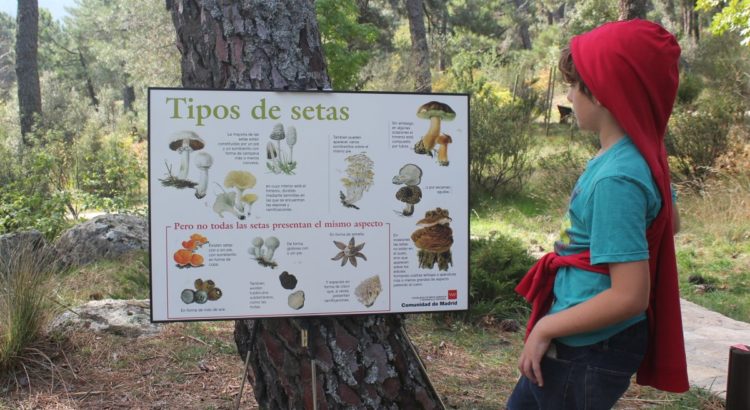
El Arboreto Luis Ceballos (San Lorenzo de El Escorial) ofrece todos los sábados de abril, mayo y junio una visita guiada al “museo vivo de especies forestales”, un espacio singular que reúne más de 300 árboles y arbustos autóctonos de la Península y Baleares. También en el Arboreto se celebrarán, el 21 de abril, actividades con motivo de la conmemoración del Día de la Tierra, una programación en la que participan otros centros de la Red.
El CEA Bosquesur (Fuenlabrada) centra sus propuestas en fomentar la educación ambiental en familia, aprendiendo más sobre pájaros, árboles o insectos. En el Caserío del Henares, en San Fernando de Henares, se han programado diversas sendas guiadas por el Parque Regional del Sureste, además de sesiones de voluntariado ambiental y de agricultura ecológica, que tendrán aplicación práctica en el huerto colectivo del Centro.
Preparar la huerta de primavera o la fabricación de cosméticos naturales son algunas de las propuestas del CEA El Águila, en Chapinería. Este centro organizará el 19 de mayo una feria de productores y artesanos de la Sierra Oeste.
Junto a talleres, juegos, recorridos guiados y visitas a productores locales, el Centro El Campillo (Rivas Vaciamadrid) acoge dos exposiciones, una sobre los valores del Parque Regional del Sureste y otra denominada “Renueva tu energía, ahorro con ciencia”.
En el municipio de Garganta de los Montes, el CEA El Cuadrón cuenta a partir del sábado 7 de abril con una exposición de fotografías de Félix Grande Bagazgoitia que muestra la belleza de la Sierra de Guadarrama. Bajo el título “Turismo a tu ritmo”, se convocan paseos y recorridos para conocer pueblos de la zona como Canencia, Pinilla de Buitrago, Gargantilla del Lozoya, El Berrueco o Braojos. La Sierra de la Cabrera y su conocido Pico de la Miel también encuentran un hueco en la programación.
El CEA Polvoranca, ubicado en Leganés, anima a conocer el Parque Botánico, un espacio único con plantas de los cinco continentes. A lo largo de los próximos meses irán preparando la huerta de verano y llevarán a cabo actividades de voluntariado ambiental y juegos y talleres para toda la familia. Asimismo, se podrá visitar la exposición “Ilustraciones Botánicas”, de plantas presentes en el Parque Polvoranca.
Por último, el Centro de Educación de Ambiental Hayedo de Montejo, en plena Reserva de la Biosfera Sierra del Rincón, desarrolla durante las próximas semanas actividades sobre el agua, la madera, las abejas, los árboles, las aves o, por ejemplo, la variedad botánica presente en el Hayedo, enclave especial declarado Patrimonio de la Humanidad.
Actividades en el Parque Nacional
Los Centros de Visitantes del Parque Nacional de la Sierra de Guadarrama utilizan recursos como los juegos de pistas o los recorridos guiados para dar a conocer la extraordinaria biodiversidad del Parque, las actuaciones que se llevan a cabo para conservar y proteger los distintos ecosistemas o los pueblos que encuentran en este importante territorio protegido de la Comunidad de Madrid.
América del Sur/ Paraguay/ 09.04.2018/ Fuente: www.mspbs.gov.py.
Dr. Miguel Ruoti, presidente de la Sociedad Paraguaya de Ginecología manifestó la preocupación por la gran cantidad de niñas madres que se registran en el país.
Indicó que si bien en los últimos años se vio una reducción de niñas embarazadas, admitió que esta reducción no ha sido significativa por lo que aún sigue persistiendo esta problemática. Informó que por día, dos niñas menores de 16 años quedan embarazadas.
Una de las estrategias fundamentales refirió que es el acceso a la educación y a los métodos anticonceptivos. “Es una campaña minuciosa que pueda dar sus frutos a largo plazo”, señaló. Ruoti sostuvo que la educación debe iniciarse desde el seno familiar, a los efectos de disminuir las altas tasas.
Admitió que pese a los esfuerzos realizados hasta el momento, todavía sigue siendo insuficiente.
Resalta que el embarazo y la maternidad temprana pueden traer riesgos y complicaciones para la salud de la madre y el recién nacido, como también impactos negativos en el proyecto de vida de una adolescente.
En cuanto a mortandad, indica que de 99 madres que fallecieron, 10 son adolescentes. Explicó que estas cifras representan un problema de salud pública muy grande, “como una carga social, tanto para la adolescente como su entorno familiar, la consejería en métodos de anticoncepción se vuelve una necesidad”, aduce.
El responsable de la Sociedad de Ginecología indicó que la tasa de mortalidad de madres adolescentes no es alta en comparación con las muertes de madres adultas. Son muertes prevenibles y esto se logra con prevención del embarazo.
Dos de cada diez nacimientos de mujeres paraguayas son de adolescentes de entre 15 a 19 años. A diario se registran dos partos en niñas de entre 10 y 14 años. Un promedio de 700 recién nacidos al año, hijos de niñas madres y en estos casos se presume que son producto de abuso sexual, porcentaje que sufrió un incremento exponencial en la última década, del 68%.
Fuente de la noticia:https://www.mspbs.gov.py/portal/14569/con-educacion-buscan-prevenir-que-mas-adolescentes-se-conviertan-en-madres.html
Isaac, a 15-year-old boy, watched as a group of men grabbed a young girl. It was a bustling new year’s eve in Kibera, Kenya’s largest slum, and he knew she was in trouble.
He also knew he didn’t have the strength to fight off those older, larger men. Having been taught to intervene if he sees predatory behaviour, Isaac called over another man to help confront the group.
«Everyone started arguing,» explains Isaac. «The group said the girl was their ‘catch’ and they had to rape her.»
After 20 minutes, they decided to let her go.
«The stories you hear are shocking,» says Anthony Njangiru, a field co-ordinator for the Kenyan non-profit Ujamaa, which trains boys like Isaac to help stop violence against women and girls in the slums of the capital, Nairobi.
«Not everyone is so lucky,» he says.
Changing attitudes
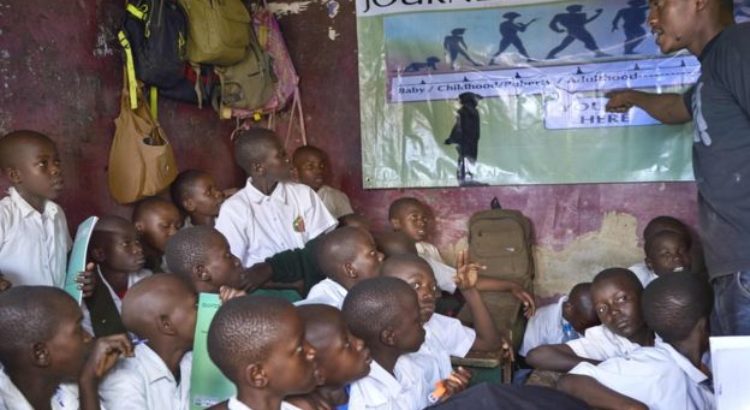
Mr Njangiru teaches a programme called Your Moment of Truth to boys, aged 14 to 18, in secondary school.
He is one of many instructors, and the classes cover everything from sex education, to challenging rape myths, consent, and how to intervene if the boys witness an assault taking place.
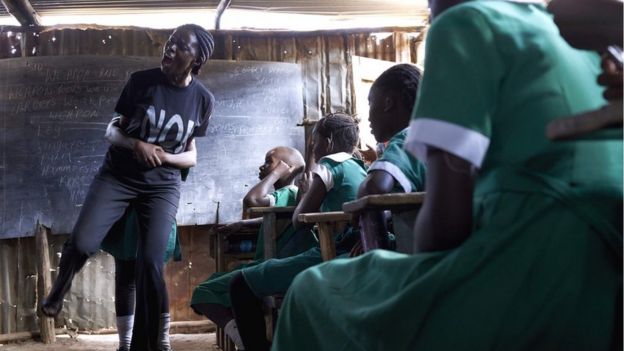
Image copyrightALEX MCBRIDEImage captionTraining for girls in how to resist a sexual assault
For younger boys, aged 10 to 13, a programme called Sources of Strength focuses primarily on body changes.
The course takes place over weekly two-hour lessons, for six weeks, and each class is divided into two, with girls taught their own set of skills.
Since the organisation first began, Ujamaa has taught 250,000 children in over 300 schools across Nairobi.
When it comes to the boys, it’s ultimately about changing their perceptions and attitudes towards girls.
«If we, as boys and men, are part of the problem, then we can be part of the solution,» says Mr Njangiru. «We can be the first people to change.»
Confident ‘no’
The programme has been working to stop boys thinking that if a girl said «no» to sex what she actually meant was «yes». Or that it was justifiable to rape a girl if she wore a short skirt.
«They tend to use the girl’s weakness to their own advantage,» says Mr Njangiru. «If she says no, but she doesn’t confidently say no, for them it’s a ‘go zone’ – they just do whatever they want.»
The results are impressive, according to research from Stanford University in the US.
Following the Your Moment of Truth classes, the percentage of boys who intervened when they witnessed a physical and sexual assault rose from 26% to 74%.
Boys were also found to be less likely to endorse myths about sexual assault and the incidence of rape by boyfriends and friends had fallen.
Among female participants in the project, there was a remarkable 51% decrease in the reported incidence of rape.
Violence against women
Sexual harassment has become a worldwide issue and these programmes in Kenya, teaching young people how to recognise and prevent sexual violence, seem to be working.
Violence against women is a huge problem in Kenya.
This worsens once you enter Nairobi’s slums, where research has suggested that almost a quarter of girls will have been victims of sexual assault in the previous year.
From: http://www.bbc.com/news/education-43466365
Image copyrightALEX MCBRIDE. Image captionThe boys are taught about respect, consent and «the journey to manhood».
In the rubble of Syria’s long war, there are all kinds of images of destruction and despair.
But despite all the odds, in the depths of the siege of Eastern Ghouta, there are young people still trying to study and plan for a future.
Such students rely on universities offering online degrees – and as well as the challenges of staying alive, they have to find access to electricity and internet connections.
Mahmoud, a 20-year-old in Eastern Ghouta, has been studying computer science with the US-based University of the People, which offers degrees to people out of reach of conventional higher education.
‘Heavy shelling’
He took classes at secondary school in Eastern Ghouta through years of civil war and the siege – but then had nowhere to continue his studies into university.
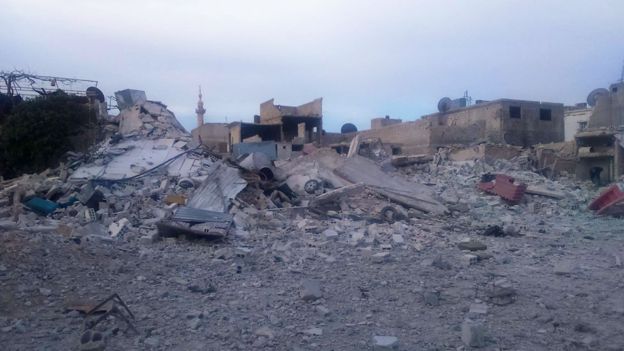
Image captionThe shattered home of a student in Eastern Ghouta. He survived by being elsewhere at the time it was hit.
«When I finished high school I couldn’t find a university that offered computer science degrees,» he tells the BBC.
Studying and getting a degree are important as a way of looking forward, says Mahmoud, a symbol of something better in the future.
«I think I’ve put my first step on the road,» he says.
The University of the People is billed as the alternative university for people with no other alternative. It was used by Syrian students during the battle for Aleppo when the city’s own university was hit by rockets.
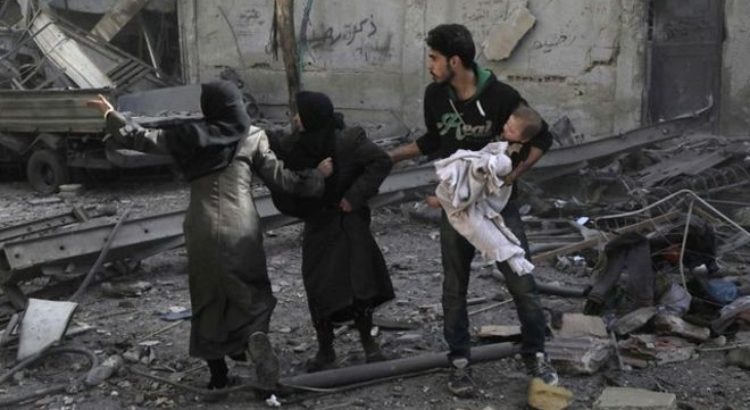
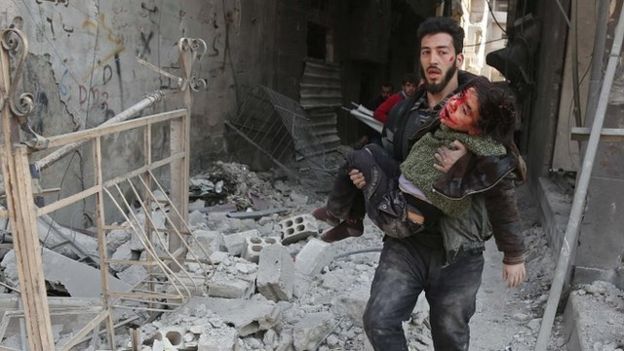
Image copyrightGETTY IMAGESImage captionRescuing a child after an air strike during the siege
It allows students to study for an accredited degree entirely online, with support from the likes of Google and the Gates Foundation, and staffed by volunteer academics and retired university lecturers.
In Eastern Ghouta, described by the UN secretary general as «hell on earth», the university has about 10 students still following courses.
‘Survival’ and ‘hope’
But how can anyone focus on studying during such attacks?
«Of course there are a lot of psychological effects because of what is happening around us,» says Mahmoud.
«When the bombardment, the shelling, gets very heavy, the only thing we think about is our survival.
«And then when the bombardment gets better, even for a short amount of time, we go back to thinking about our jobs, our studies, what are we going to do in the future.
«I think personally that this dilemma is a psychological problem in itself.
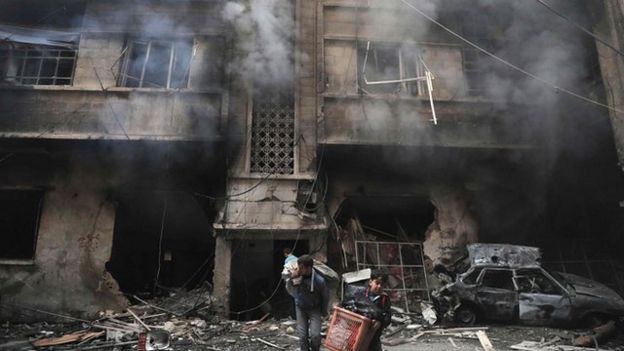
Image copyrightGETTY IMAGESImage captionMoving through the smoking ruins after an attack last week
«Because our minds wander between two separate lives – the life of a young person trying to complete his studies and achieve his goals – and the life of a 20-year-old just trying to get through the day and to survive again to see another day.»
But having the opportunity to study, in a place cut off and encircled, is a rare source of «optimism», he says.
«I want to graduate, to have a degree. For us under siege that’s a very big opportunity. It gives students hope.»
It’s a remarkable type of determination.
«I’m motivated to learn and want to keep learning. If I have the chance, I want to be part of the process of rebuilding the country again,» says Mahmoud.
‘We’ve had a bloody day today’
But it’s far from easy.
Until last month, it was «difficult but manageable» to keep up his studies, relying for power on local generators.
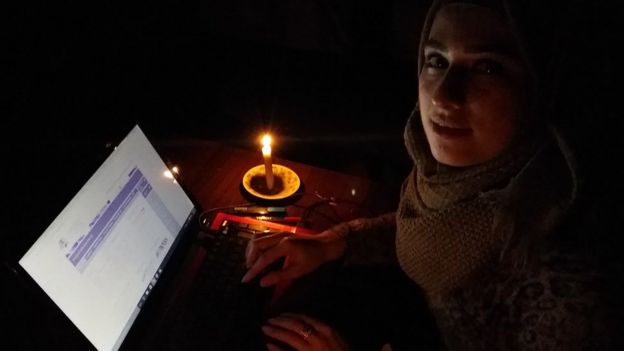
Image captionMariam – a student who worked by candlelight during the battle for Aleppo
«Things like electricity, internet connection, everything I need for my virtual study was hard to get because of the siege and sometimes not available at all.»
But the situation has worsened.
All the families in his building have had to move down to take shelter together in the basement, he says.
Another computer studies student, Majed, has had his home demolished by an air raid. He has been struggling with unreliable internet connection and problems charging his phone.
While many students around the world are preparing for exams, he sent a message last week to say: «We’ve had a bloody day today. Dozens of air strikes.»
On Tuesday, Majed said a ceasefire for negotiations seemed to be holding.
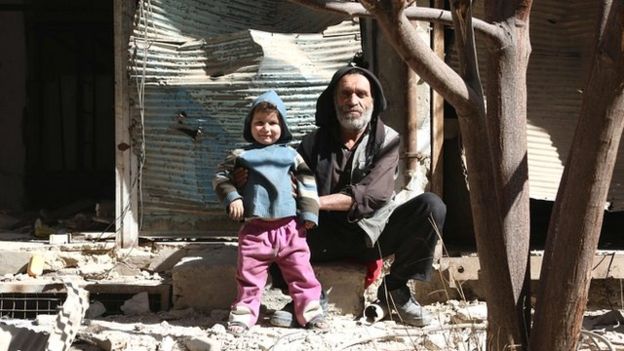
Image copyrightGETTY IMAGESImage captionFamilies emerging from underground shelters earlier this week
But food and power remained scarce and very expensive and people had moved to makeshift bomb shelters to escape the shelling.
He fears for Syria’s next generation, missing out on education and with the risk of «ignorance and child labour».
While other students are counting down the days to final exams, he has been counting the numbers of victims.
But Majed says he still has «faith» and is looking to the future. He wants to get a PhD.
«Our lives should continue, the war should not prevent us. In the end we’re the ones to rebuild the country and repair the damage.
«I believe education will help us build our future.»
OtrasVocesenEducacion.org existe gracias al esfuerzo voluntario e independiente de un pequeño grupo de docentes que decidimos soñar con un espacio abierto de intercambio y debate.
¡Ayúdanos a mantener abiertas las puertas de esta aula!




 Users Today : 16
 Total Users : 35490828
 Views Today : 17
 Total views : 3604240