Page 3274 of 6793
1 3.272 3.273 3.274 3.275 3.276 6.793

China: China Education Resources Inc. Soccer Program Update

China/Enero de 2018/Fuente: Nasdaq

Resumen:

China Education Resources, Inc. («CER») (TSX-V: CHN) (OTC: CHNUF), una compañía de tecnología de la información con tecnología líder de sistemas inteligentes y contenidos para proporcionar aprendizaje en línea / fuera de línea, cursos de capacitación y redes sociales para maestros, estudiantes y profesionales de la educación, hoy ofrece a los accionistas e inversionistas una actualización de su programa de fútbol.

Además de su comunicado de prensa del 6 de diciembre de 2017, CER está trabajando en un programa de entrenamiento de fútbol para niños. Sobre la base de los productos y contenidos de educación de fútbol existentes de CER, CER ha alquilado un espacio de 2,900 pies cuadrados en un centro comercial para comenzar su programa de entrenamiento de fútbol para niños. El programa ofrecerá entrenamiento de fútbol cara a cara junto con la plataforma de entrenamiento de fútbol en línea de CER con contenidos de video y la interacción en línea / fuera de línea entre los estudiantes, entrenadores y padres.

China Education Resources, Inc. («CER») (TSX-V:CHN) (OTC:CHNUF), an ed-tech company with leading technology of intelligent system and contents to provide online/offline learning, training courses and social media for teachers, students and education professionals, today provides shareholders and investors with an update on its soccer program.

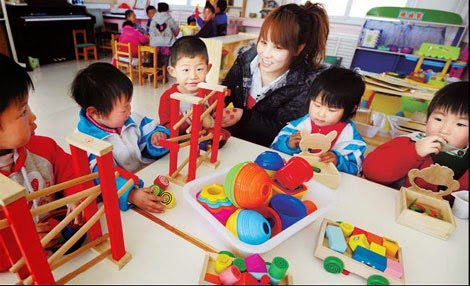
Further to its press release of December 6, 2017, CER is working on an indoor kids soccer training program. Building upon CER’s existing soccer education products and contents, CER has rented a 2,900 square feet space in a shopping mall to start its indoor kids soccer training program. The program will offer face to face soccer training together with CER’s online soccer training platform with video contents and online/offline interaction among students, coaches and parents.

Shopping malls in big cities of China now house early-stage educational institutes that offer classes covering every conceivable subject, ranging from English language to arts. According to research reports, the early-stage education market is still nascent in China, with 2017 sales revenue expected to top $30 billion USD. «Asian parents spend seven times more money on their kids’ education than American parents do. Connecting users and teachers through the internet is another way to solve the imbalance in the educational resource distribution.» industry observers said.

The Central Government of China is in the process of implementing national soccer plan with the aim of popularizing soccer knowledge and skills, developing soccer interests through organizing soccer activities on campus in various forms, and supporting family -oriented social soccer activities. The Government also encourages in-depth integration of internet technology with soccer education, with a focus on mobile internet, e-commerce, data, new technology and new industry; supporting the development of soccer mobile applications, internet and mobile phone soccer games, soccer theme animation and film and television works.

Without a doubt, there is a huge soccer market in China, and we believe soccer education has a great potential. We are pleased to have made progress on our soccer program and will continue to update shareholders on CER’s future development.

In collaboration with China’s education administrators and experts, China Education Resources has been helping to transform the curriculum of the world’s largest educational system. Recognizing the need to address education reform changes, China Education Resources has created educational tools and curriculum for China’s entire kindergarten through twelfth grade system. The Company is playing an integral part in transforming China’s educational system through helping to convert the existing educational system from a memory-based learning system to a creative thinking and interactive approach. Presently, China Education Resources has over 1 million kindergartens through twelfth grade teachers registered through its Web portal. For more information, please visit www.chinaeducationresources.com or call (604) 331-2388.

Safe Harbor Statement

Certain statements made herein, and other statements relating to matters that are not historical facts and statements of our beliefs, intentions and expectations about developments, results and events which will or may occur in the future, constitute «forward-looking information» within the meaning of applicable securities legislation. Forward-looking information and statements are typically identified by words such as «anticipate», «could», «should», «expect», «seek», «may», «intend», «likely», «plan», «estimate», «will», «believe» and similar expressions suggesting future outcomes or statements regarding an outlook. All such forward-looking information and statements are based on certain assumptions and analysis made by China Education Resources, Inc.’s management in light of their experience and perception of historical trends, current conditions and expected future developments, as well as other factors management believes are appropriate in the circumstances. These statements, however, are subject to a variety of risks and uncertainties and other factors that could cause actual events or results to differ materially from those projected in the forward-looking information or statements. Important factors that could cause actual results to differ from these forward-looking statements include those described under the heading «Risks and Uncertainties» elsewhere in the Company’s MD&A filed at www.SEDAR.com. The reader is cautioned not to place undue reliance on forward-looking information or statements. Except as required by law the Company does not assume the obligation to revise or update these forward-looking statements after the date of this document or to revise them to reflect the occurrence of future, unanticipated events.

The TSX Venture Exchange has not reviewed, and does not accept, responsibility for the adequacy or accuracy of the contents of this press release.

Fuente: http://www.nasdaq.com/press-release/china-education-resources-inc-soccer-program-update-20180122-00571

Comparte este contenido:

Pay of Australian university heads called into question after UK protest

Australia/Enero de 2018/Fuente: The Guardian

Resumen:

Los australianos deberían cuestionar cuánto ganan los vicerrectores de la universidad, ha declarado el ministro de educación, en medio de la controversia en el Reino Unido sobre el «escandaloso» salario del vicerrector de la Universidad de Bath, que era solo la mitad del equivalente mejor pagado de Australia.

Simon Birmingham dijo el jueves que las universidades deberían reconsiderar los pagos de sus altos ejecutivos, algunos de los cuales ganan más de un millón de dólares al año en beneficios salariales y de alojamiento.

El miércoles, la vicerrectora de la Universidad de Bath, Dame Glynis Breakwell, se retiró después de la controversia sobre su salario de £ 468,000 al año ($ 812,500). El furor provocó una conversación nacional y llevó a los estudiantes a las calles en señal de protesta.

Australians should question how much university vice-chancellors earn, the education minister has declared, amid controversy in the UK over the “outrageous” salary of the University of Bath’s vice chancellor that was only half that of Australia’s highest-paid equivalent.

Simon Birmingham said on Thursday that universities should reconsider the pay packets of their senior executives, some of whom earn more than a million dollars a year in salary and accommodation benefits.

On Wednesday, the University of Bath vice-chancellor, Dame Glynis Breakwell, retired after controversy over her salary of £468,000 a year ($812,500). The furore led to a national conversation and drove students to the streets in protest.

According to the Australian, 12 vice-chancellors in Australia took home more than a million dollars in 2016, and the University of Sydney’s Michael Spence nearly doubled Breakwell’s total pay at $1.44m.

Breakwell was paid less than UNSW’s Ian Jacobs ($1.25m) and the Australian Catholic University’s Greg Craven ($1.24m), among others. The vice-chancellor of Oxford, Louise Richardson, made even less at £350,000 ($600,000), putting her below the heads of Newcastle University, James Cook University, and the University of Southern Queensland.

Birmingham said the international comparison should prompt taxpayers to ask if they were “getting value for money”.

“While Australians recognise the high level of skills needed to run a university, many taxpayers would question why remuneration should exceed global benchmarks.”

Vice-chancellor salaries are set by each university’s board or senate without government input.

The president of the National Tertiary Education Union, Jeannie Rea, said the salaries were “extremely embarrassing” and “out of proportion”.

“It used to be the case that a vice-chancellor would be paid some proportion, or related to that of a senior professor, plus some. They saw themselves as leaders of an academic institution, now they see themselves as CEOs.”

Belinda Robinson, the chief executive of Universities Australia, said the minister’s attack on salary was an attempt to distract from the government’s recent $2.2bn cuts to university funding.

“This distraction strategy will not hoodwink the community,” she said.

Rea agreed: “It’s somewhat flippant to say you can redistribute vice-chancellor’s salary and be able to pay for a whole lot of things. The underfunding of university places is a much bigger problem than that.”

Guardian Australia contacted several universities about the salaries of vice-chancellors.

The ACU’s deputy vice-chancellor, Stephen Weller, said Craven’s salary included the accommodation costs of managing a national, multi-campus university.

The University of Sydney, UNSW and the University of Queensland similarly said the million-dollar sums included superannuation and a housing allowance.

A spokesman for the University of Queensland, whose vice-chancellor Peter Høj earns $1.15m a year, said “the combined annual salaries of all Australia’s vice-chancellors comprise about 2% of the government’s latest cuts to the university sector”.

“UQ has 52,000 students and is ranked in the top 50 of more than 10,000 universities globally. As a point of comparison, the University of Bath has 17,308 students enrolled.”

Fuente: https://www.theguardian.com/australia-news/2018/jan/22/pay-of-australian-university-heads-called-into-question-after-uk-protest

Comparte este contenido:

Francia: Déçu par ses élèves de 5e, un professeur de français leur inflige un contrôle délirant

Francia/Enero de 2018/Autor:Hervé Hillard/ Fuente: Ouest France

Resumen:

Le había pedido a sus alumnos de quinto grado que leyeran «The Kingdoms of the North», de Philip Pullman, y escribiera una hoja de lectura. Solo tres de ellos lo han hecho, esta profesora de francés decidió vengarse al infligir finalmente un interrogatorio surrealista en un breve extracto de «Sí, sí en la granja», con una docena de preguntas dignas de EC1. Lo cual creó una controversia y un #YesOuiGate en las redes sociales.


Il avait demandé à ses élèves de 5e de lire un roman, « Les royaumes du nord », de Philip Pullman, et d’en écrire une fiche de lecture. Seuls trois d’entre eux l’ayant fait, ce professeur de français a décidé de se venger en leur infligeant finalement une interro surréaliste sur un court extrait de « Oui-Oui à la ferme », avec une dizaine de questions tout juste dignes du CE1. Ce qui a créé une polémique et un #OuiOuiGate sur les réseaux sociaux.

« Oui-Oui, un pantin de bois un peu étourdi, est chauffeur de taxi dans la capitale du Pays des Jouets, Miniville »… Ainsi commence l’extrait de 7 lignes de « Oui-Oui à la ferme », écrit par Enid Blyton, sujet du contrôle d’un professeur de français pour ses élèves de 5e. Oui, de 5e. Contrôle qui consiste en dix questions évidentes dont toutes les réponses sont soit « Oui-Oui », soit « oui ». Suivies par six questions sur la couverture du livre à peine dignes du niveau du CE1.

La raison de cette interro délirante ? La déception de ce professeur de français face à la paresse de ses élèves. En début d’année, il leur avait demandé de lire, petit à petit, chapitre par chapitre, « Le royaume du Nord » de Philip Pulman, un roman d’heroic fantasy entre « Harry Potter » et « Game of Thrones », plusieurs fois primé en Grande-Bretagne, dont il s’était dit qu’il leur plairait.

Le contrôle qui a donné naissance au #OuiOuiGate.
Le contrôle qui a donné naissance au #OuiOuiGate. | Capture écran

Deux élèves avaient lu les trois premiers chapitres

Peine perdue. Au bout d’un mois, sur 23 élèves, 3 seulement avaient lu le livre entier. Sur les 20 restants, deux avaient lu les trois premiers chapitres. Les autres n’avaient même pas ouvert le livre.

Dépité par tant de paresse, le professeur a décidé de leur donner une petite leçon avec ce contrôle humoristique – et qui n’était évidemment qu’une plaisanterie, un « fake ».

Le professeur a ensuite publié toute l’histoire sur un groupe de privé de Facebook, consacré à l’enseignement. Mais ses deux messages – son coup de gueule et le fac-similé du contrôle – ont été rendus publics. Une journaliste l’a notamment publié sur Twitter. Et le tout a déclenché une avalanche de réactions sur les réseaux sociaux. À tel point qu’on hashtag #OuiOuiGate est même né.

Voir l'image sur TwitterVoir l'image sur Twitter

Car l’initiative du professeur divise, et pas seulement les enseignants. Pour schématiser, il y a ceux qui sont pour – « une petite leçon à bon compte » – et ceux qui désapprouvent – « on ne doit pas humilier un élève ».

Quoi qu’il en soit, tout le monde se mettra peut-être d’accord sur la phrase du romancier Daniel Pennac, prononcée sur France Culture, ce week-end : « Si un élève vous dit qu’il n’aime pas lire, il ne sait pas ce qu’il dit. Si vous le croyez, il est foutu. Et vous aussi comme professeur ».

Fuente: https://www.ouest-france.fr/education/enseignement/decu-par-ses-eleves-de-5e-un-professeur-de-francais-leur-inflige-une-interro-delirante-5517215

Comparte este contenido:

Advocacy for Quality Education for All in Africa

África/Enero de 2018/Fuente: Modern Diplomacy

Resumen:  La Directora General de la UNESCO, Audrey Azoulay, abogó por la educación como inversión prioritaria para el desarrollo sostenible en una conferencia organizada por la Agencia Francesa de Desarrollo (AFD) en París el 19 de enero de 2018.

Durante una mesa redonda con los Ministros de Educación de Senegal, Serigne Mbaye Thiam, y Francia, Jean-Michel Blanquer, así como con la directora ejecutiva de la Alianza Mundial para la Educación, Alice Patricia Albright, la Directora General delineó las prioridades para enfrentar los desafíos de acceso y calidad educativa en una región que todavía cuenta con 32 millones de niños que no asisten a la escuela y enfrenta el avance de la urbanización, así como las situaciones de conflicto y crisis.

Para implementar el Programa de Educación 2030, el Director General delineó tres prioridades para África. Primero, la relevancia de la enseñanza y el aprendizaje, hasta la educación superior. Esto implica adaptar los planes de estudio y las pedagogías, capacitar a los docentes y aprovechar los nuevos conocimientos del campo de las ciencias cognitivas.

UNESCO Director-General, Audrey Azoulay, advocated for education as a priority investment for sustainable development at a conference organized by the French Development Agency (AFD) in Paris on 19 January 2018.

During a round table with the Ministers of Education of Senegal, Serigne Mbaye Thiam, and France, Jean-Michel Blanquer, as well as the CEO of the Global Partnership for Education, Alice Patricia Albright, the Director-General outlined priorities to meet the challenges of educational access and quality in a region that still counts 32 million out-of-school children and faces advancing urbanization as well as conflict and crises situations.

To implement the 2030 Education Agenda, the Director-General outlined three priorities for Africa. First, the relevance of teaching and learning, right through to higher education. This involves adapting curricula and pedagogies, training teachers and drawing on new knowledge from the field of cognitive sciences.

The second priority is to better articulate education, health and employment policies, while the third priority focuses on the transmission of values for responsible citizenship and peace education. In this regard, the Director-General shared UNESCO’s initiative, led with with African Ministers of Education, to develop educational content based on the ten volumes of The General History of Africa.

In all of these dimensions, the Director-General stressed that priority attention should be given to gender equality, in particular to the education of young adolescent girls.

“The challenges are immense and we must all contribute through our mandates. UNESCO coordinates Sustainable Development Goal 4 and focuses on its added value: supporting public policies, sharing innovation and research, collecting statistical data and monitoring results,” concluded the Director-General.

The event, opened by the Director- General of the French Development Agency, Rémi Rioux, was held in preparation for the Global Partnership for Education’s Replenishment Conference, to be co-hosted by France and Senegal, in Dakar on 1 and 2 February, in which UNESCO will participate. This conference is a unique opportunity to increase international mobilization and aid to education, which has been steadily decreasing since 2009.

Fuente: http://moderndiplomacy.eu/2018/01/22/advocacy-quality-education-africa/

Comparte este contenido:

Puerto Rico: Educación busca saber dónde están los maestros

Puerto Rico/Enero de 2018/Fuente: El Nuevo Día

En un intento por determinar dónde exactamente está ubicado todo el personal docente de la agencia, el Departamento de Educación solicitó esta tarde a todos los maestros a que informen a la agencia el lugar exacto dónde están laborando.

A través de un comunicado de prensa, la secretaria de Educación, Julia Keleher, informó que necesitan tener un cuadro claro de dónde están los maestros para poder llenar las plazas vacantes de maestros que existen a tres semanas de iniciadas las clases. Los maestros tendrán que entrar a la página cibernética de Educación y actualizar su información a través del “Portal del Empleado”.

Asimismo, se indicó que los directores deberán actualizar la información de sus escuelas a través de un formulario electrónico que se les hizo llegar a inicios de enero. Los datos que se piden en el informe son “imprescindibles”, lee la declaración escrita de la agencia.

De acuerdo a Educación, de las 1,110 escuelas que actualmente hay abiertas, solo tienen la información de 661.

“Tenemos suficientes maestros en nuestro sistema para cubrir las vacantes. Pero, sin esos datos que estamos solicitando y recopilando el reto de poder brindarle a los estudiantes los maestros que necesitan será mucho más complejo. Espero contar con la colaboración y compromiso de todos. Estoy convencida de que todos desean el mayor bienestar para los niños y niñas de Puerto Rico por lo que cuento con el apoyo requerido”, indicó Keleher.

Educación suspenderá el pago de sueldo a través de depósito directo de los docentes que no entreguen la información requerida antes del próximo viernes, 26 de enero, por lo cual tendrán que pasar por la División de Recursos Humanos en Hato Rey para recoger su cheque hasta que cumplan con la directriz.

Al momento, solo el 67.1% de los abonados de la Autoridad de Energía Eléctrica (AEE) cuentan con servicio de electricidad. Hasta el martes pasado, 337 escuelas públicas todavía estaban a oscuras.

En entrevista previa con El Nuevo Día, Keleher señaló que la agencia estaba procesando la asistencia diaria del personal docente en las escuelas a través de solicitudes en papel debido a la falta de electricidad para operar los ponchadores biométricos en los planteles. No obstante, estas solicitudes estaban llegando al nivel central sin las firmas requeridas de los supervisores. Ante esto, Keleher adelantó que evaluaban la suspensión de los pagos por depósito directo hasta que los supervisores -que habían sido notificados por escrito de sus fallas- entregaran los documentos con las firmas requeridas.

Tanto la Federación de Maestros como la Unión Nacional de Educadores y Trabajadores de la Educación (Unete) tronaron contra la directriz de la secretaria.

“Los educadores llenan sus hojas de asistencia semanales, donde se incluye su ubicación y de haber sido reclutados precisamente por Recursos Humanos de la agencia. Definitivamente, este actuar denota la dictadura bajo la cual una de las funcionarias mejor pagadas de nuestro país , quien devenga un cuarto de millón de dólares anuales, con suma arrogancia e insensibilidad pretende dejar a miles de jefas de familia y jefes de familia sin su sustento, de manera ilegal”, manifestó la presidenta de la Federación de Maestros, Mercedes Martínez.

Asimismo, el presidente de Unete, Emilio Nieves, calificó la medida como una “absurda, insensible, dictatorial e ilegal”,  al argumentar que no se pueden detener los pagos a los trabajdores que han cumplido con su trabajo.

“Si a esta altura desconoce dónde están ubicados los maestros, tiene un grave problema de administración con su equipo de trabajo, las regiones educativas y los distritos escolares. Si es un problema de comunicación de información, la agencia tiene que garantizar el servicio de internet y de computadoras en cada centro de trabajo. Por otro lado, las limitaciones administrativas que tengan los directores no son de la responsabilidad de los maestros”, expresó Nieves.

Fuente: https://www.elnuevodia.com/noticias/locales/nota/educacionbuscasaberdondeestanlosmaestros-2391795/

Comparte este contenido:

Grecia: Empowering local first responders to reach refugee and migrant women

Grecia/Enero de 2018/Fuente: UNFPA

Resumen:

Hace más de dos años, Grecia se convirtió en el centro de una crisis de refugiados y migración, con cientos de miles de personas ingresando al país, muchos de ellos arriesgando la muerte para escapar de la guerra, la persecución y la privación. Solo en 2016, llegaron a Grecia unas 173,000 personas, lo que desborda comunidades y recursos locales.

Muchas de estas personas llegadas eran mujeres y niñas con graves necesidades de salud reproductiva, incluidos los servicios de salud materna y el manejo clínico de la violación.

El UNFPA lanzó una respuesta de emergencia, desplegando trabajadores humanitarios y clínicas móviles para brindar atención esencial de salud reproductiva.

Over two years ago, Greece became the centre of a refugee and migration crisis, with hundreds of thousands of people streaming into the country, many of them risking death to escape war, persecution and deprivation. In 2016 alone, some 173,000 people arrived in Greece, overwhelming local communities and resources.

Many of these arrivals were women and girls with serious reproductive health needs, including maternal health services and clinical manage of rape.

UNFPA launched an emergency response, deploying humanitarian workers and mobile clinics to provide essential reproductive health care.

“At the start of any crisis, it is critical to ensure that women, girls and other vulnerable groups have access to sexual and reproductive health care, including the prevention and treatment of sexual violence, prevention of HIV and sexually transmitted infections, and comprehensive obstetrics care,” said Felicia Jones, a UNFPA sexual and reproductive health coordinator.

Many refugees and migrants in Greece have serious reproductive health needs. Photo by Lynsey Addario for Time.

Over 1,000 consultations were provided in the last months of 2016 alone.

Now, UNFPA is handing over operations to the Government of Greece.

The crisis is far from over; some 48,000 refugees and migrants are estimated to be in Greece today. But intensive partnerships and training efforts have strengthened local actors’ abilities to provide these life-saving services, benefitting both refugees and host communities.

Enormous vulnerabilities

Refugee and migrant women face enormous vulnerabilities. Uprooted from their homes, separated from their support networks, they often travel along dangerous routes. They have little privacy, sometimes sleeping in the open.

Gender-based violence is commonplace, but rarely reported.

Between July 2016 and June 2017, 350 refugees or migrants reported experiencing gender-based violence, including sexual assault, forced marriage, physical assault, psychological abuse, denial of services, trafficking and rape – but the actual number of cases is likely to be significantly higher.

A case management training in Greece. Photo by UNHCR and UNFPA

Sexual violence survivors require a package of clinical care, including treatment of wounds, emergency contraceptives, post-exposure prophylaxis to prevent HIV transmission, as well as access to psychosocial and legal support.

But before the onset of the crisis, Greece did not have protocols for the clinical management of rape that were in line with international standards.

UNFPA began training medical practitioners, social workers, psychologists, camp managers and others on providing psychological first aid, case management, clinical management of rape, and the provision of sensitive and confidential services for survivors.

Police, lawyers and others were also reached with trainings about the sensitive handling of sexual and gender-based violence.

“The training is practical and tailored to suit the situation in Greece,” said a participant in a case management training in Ionnina, Greece.

Urgent reproductive health needs

The need for maternal health care and other reproductive health services was also staggering.

Tayma Abzali, 24, with her baby Helen, in a tent in November of last year. Lynsey Addario for Time.

In a typical refugee or migrant population, 4 per cent of women will be pregnant – meaning thousands of women were in need of care.

At the onset of the crisis, UNFPA supported the deployment of two mobile reproductive clinics, which provided prenatal and post-partum services, as well as other reproductive health care such as family planning. And UNFPA provided medical commodities to outreach workers from the Hellenic Centre for Disease Control.

But to ensure services are sustainable, UNFPA began tailoring trainings – on sexual and reproductive health, adolescent sexual reproductive health, and life skills education – to local needs.

“Being trained in sexual and reproductive health provides me the knowledge to support and better advise the beneficiaries of my programme,” said the participant of one training.

Moving forward

Since 2015, UNFPA has trained 1,350 people in Greece and 200 from the wider region. Many of those trained are now serving as trainers.

These efforts are “important for the refugees and even for the Greek people,” said one health expert, noting that services will improve for local communities, as well.

UNFPA’s efforts were conducted in close collaboration with the Government of Greece, including the General Secretariat for Gender Equality. Until late 2016, support was also received from the United States Bureau of Population, Refugees, and Migration and the Government of Norway.

On 14 December, UNFPA handed over reproductive health operations to the Government of Greece in a ceremony held in Athens.

“The first step has been done. Trained staff and protocols exist now in Greece,” said a medical coordinator who participated in one of the training exercises, adding that it is now up to local actors to keep up the momentum. “If these protocols will remain only a theory, without being implemented in the field, then all these trainings and trained staff will be useless.”

Fuente: https://www.unfpa.org/news/empowering-local-first-responders-reach-refugee-and-migrant-women

Comparte este contenido:

Libro: Escenas militantes Lenguajes, identidades políticas y nuevas agendas del activismo estudiantil universitario

Escenas militantes 
Lenguajes, identidades políticas y nuevas agendas del activismo estudiantil universitario

Rafael Blanco. [Autor] 

Colección Grupos de Trabajo. 
ISBN 978-987-1309-23-8
CLACSO. Grupo Editor Universitario.
Buenos Aires.
Octubre de 2017

Escenas militantes analiza las agendas, los lenguajes y las identidades políticas que caracterizan al activismo estudiantil universitario con posterioridad a la crisis de representación del año 2001 en Argentina. Este activismo articula distintas tradiciones políticas del siglo XX con experiencias emergentes del tiempo presente: la atención a la especificidad de los saberes y la formación, la mirada atenta a las articulaciones con la comunidad o “el territorio”, la politización progresiva de lo que antes era considerado “personal” como el género y la sexualidad, van a ir integrándose a las agendas de las agrupaciones junto con la búsqueda de nuevas formas de “llegar” –o interpelar– al estudiantado. El libro se detiene en el lugar que la política tiene en la cotidianidad universitaria tanto para quienes militan como para quienes no, en las articulaciones entre las causas militantes en el interior de la institución (con sus lógicas, discursos y estéticas) y los acontecimientos que marcan el pulso del no siempre distinguible “afuera” de la universidad, y en los procesos de politización que dejan huellas en las biografías de estudiantes. Un punto especial de atención está puesto en las modalidades mediante las que la transformación de los órdenes público, privado e íntimo ingresa en las dinámicas de las agrupaciones y en las formas de politización de los actores universitarios. A partir de entrevistas, un sostenido trabajo de observación y el relevamiento de materiales producidos por distintas agrupaciones se reconstruyen y analizan aquí distintas escenas que condensan algunos de los temas, estilos e identidades colectivas que traman los repertorios y causas militantes del activismo universitario entre el 2001 y el presente.
Fuente: https://www.clacso.org.ar/libreria-latinoamericana/libro_detalle.php?orden=&id_libro=1331&pageNum_rs_libros=2&totalRows_rs_libros=1275
Descargar .pdf
Comparte este contenido:
Page 3274 of 6793
1 3.272 3.273 3.274 3.275 3.276 6.793