Page 3467 of 6815
1 3.465 3.466 3.467 3.468 3.469 6.815

Australia: Coalition ‘considering all options’ to cut university spending, Birmingham says

Australia/Diciembre de 2017/Fuente: The Guardian

Resumen:

El ministro de educación, Simon Birmingham, está «considerando todas las opciones» para recortar el gasto en educación superior en medio de informes que podrían financiar fondos de investigación de alto nivel y programas para estudiantes desfavorecidos si el gobierno no puede aprobar los $ 2.8bn en recortes de fondos que están estancados en el Senado.

El gobierno intensificó su guerra de palabras con el sector universitario por los cambios en el financiamiento terciario, con Fairfax Media informando que el gobierno está apuntando a cambios no legislativos en la financiación, incluido el Programa de Participación y Alianzas para la Educación Superior, o Heppp, que ayuda a los estudiantes de las familias de bajos ingresos acceden a la universidad.

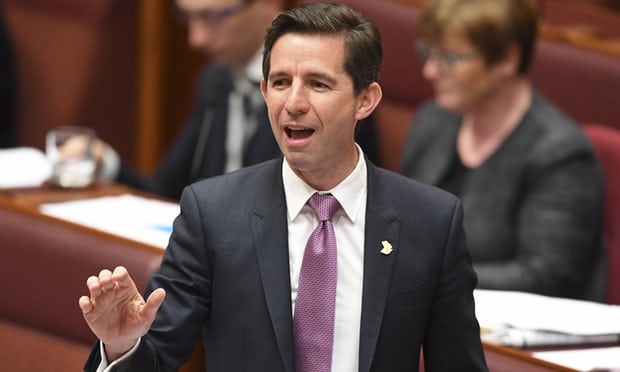
The education minister, Simon Birmingham, is “considering all options” to trim higher education spending amid reports high-end research funding and programs for disadvantaged students could go if the government is unable to pass the $2.8bn in funding cuts that are stalled in the Senate.

The government ramped up its war of words with the university sector over changes to tertiary funding, with Fairfax Media reporting the government is targeting non-legislative changes to funding, including axing the Higher Education Participation and Partnerships Program, or Heppp, which helps students from low-income families access university.

More worryingly for universities, the government is reportedly also considering a funding freeze for student enrolments at 2017 levels, which would in effect pause the demand-driven funding system.

Birmingham did not deny the story on Monday, saying the government was “considering our options for higher education policy” in light of the decision by Labor, the Greens and the Xenophon party to block its budget measures.

“Labor, the Greens and Xenophon blocked $2.8bn of budget savings in favour of yet more spending,” he said. “Their unacceptable approach would further grow the taxpayer-funded student debt burden and deliver even faster revenue increases for universities.

“It beggars belief that Labor, the Greens and Xenophon parties are unwilling to make even modest reductions in the rate of spending growth, which under our reforms would still increase university funding by 23% over the next four years.

“With taxpayer funding to universities having grown at essentially twice the rate of the economy since 2009, it’s fair and reasonable to continue to expect a modest contribution to budget repair.”

The government’s higher education bill would impose a two-year 2.5% efficiency dividend on universities, lower the Help debt repayment threshold to $42,000 and increase fees by a cumulative total of 7.5% by 2021. It would also introduce performance contingent funding aimed at increasing graduate outcomes.

But the opposition from tertiary lobby groups including Universities Australia and the Group of Eight has prompted the minister to ramp up his language on the need for funding reform.

In October, he warned that demand-driven funding for the tertiary education system would come under “increasing question and pressure” unless universities focused more on graduate outcomes.

Tim Pitman, a higher education researcher from Curtin University, said that while any cut to the Heppp would be “damaging”, the demand-driven system was the “elephant in the room”.

“Decades of statistics show that the most surefire way of increasing representation of disadvantaged students is to expand the sector,” he said.

He said recent equity statistics show that after a period of the growth in enrolments from students from low socioeconomic background following the introduction of the demand-driven system, the figure was starting to plateau.

That meant any change to the system now could send enrolments into reverse.

“If the demand-driven system was to be paused the sector would, if not contract, it would stop growing and the first students to take a hit would be those disadvantaged students,” he said.

The Universities Australia chief executive, Belinda Robinson, said the threat of non-legislative changes would be “in direct defiance of the will of the Australian people and the parliament”.

“Both the public and lawmakers would quite rightly take a dim view of any bid to go around the legislative process for investment in higher education,” she said. “There was a clear message from the Senate on proposed cuts to universities and that was ‘don’t do it’.”

Fuente: https://www.theguardian.com/australia-news/2017/dec/04/coalition-considering-all-options-to-cut-university-spending-birmingham-says
Comparte este contenido:

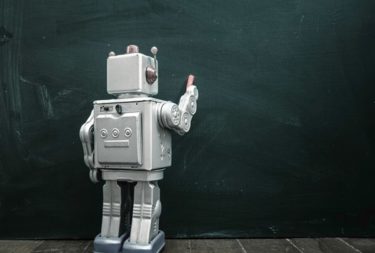
Classroom robots – China’s educational gambit poses questions for the West

China/Diciembre de 2017/Fuente: Diginomica

Resumen:

La inteligencia artificial (IA) cambiará fundamentalmente la naturaleza de la enseñanza en el futuro y requerirá un replanteamiento radical del papel de los docentes en el proceso.

Este fue uno de los hallazgos clave de un panel de discusión titulado «AI y VR: ¿El próximo salto gigante para la educación?» En la Cumbre Mundial de Innovación para la Educación en Doha a principios de este mes.

Jingfang Hao, novelista de ciencia ficción y fundador de WePlan, una aplicación que ayuda a los ciudadanos chinos a sacar el máximo provecho de sus planes telefónicos, dijo que creía que AI tendría un impacto positivo en la educación, ya que ayudaría a adoptar un enfoque más personalizado para aprender.

Artificial intelligence (AI) will fundamentally change the nature of teaching in future and will require a radical rethink of the role of teachers in the process.

This was one of the key findings of a panel discussion entitled “AI and VR: Next giant leap for education?” at the World Innovation Summit for Education in Doha earlier this month.

Jingfang Hao, a science fiction novelist and founder of WePlan, an app that helps Chinese citizens to get the most out of their ‘phone plans, said she believed AI would have a positive impact on education as it would help usher in a more personalised approach to learning. She explained:

AI can analyse learners’ cognitive and knowledge levels and provide personalised lessons going at the right speed for each individual. Teachers can then set up creative workshops to support this learning and organise studies so they’re based on cooperative teamwork.

Another problem the technology could help solve is how to deal cost-effectively with rising numbers of learners entering the education system. Joerg Draeger, an executive board member of the Bertelsmann Foundation in Germany, pointed out:

Education is becoming a mass issue as more people want it around the world. But with that growing mass, there’s also growing heterogeneity. It’s hard for teachers to deal with diversity and mass at the same time and heterogeneity is very expensive so education is becoming more costly. For example, even though students are studying the same things, US studies show that costs are 2.3 times higher now than in the 1970s because class sizes are smaller and more diverse. So the old analogue systems are coming to their limits and AI helps them scale.

In countries such as China, where access to good schools and teachers tends to be limited to urban areas, AI is also seen as a possible means of helping to boost educational attainment in rural districts. Yao Zheng, founder and chief executive of RoboTerra, which provides kits for 10 to 18 year old Chinese learners to build their own robots and learn how to code, explained:

The most exciting thing is if AI teachers can be used to help humans know what they don’t know. Most professions focus on their own areas like math or languages, but it’s difficult for teachers, especially in rural areas, as they’re supposed to be expert in everything. So AI has a role to play in providing fact- and knowledge-based learning and the human teacher can moderate those activities in the classroom.

China’s AI strategy

A key problem when such technology has been implemented in rural districts to date, however, is that few teachers or students understand how to use it. This “cognition gap” means there is “still quite a long way to go”, Zheng warned.

Nonetheless, China is taking the adoption of AI in the education sphere very seriously. The sector already boasts numerous start-ups such as Master Learner, an online system that marks homework and tests. According to research firm IT Juzi, the market is also ranked third behind only medicine and automobiles as having experienced the most change as a result of the technology.

And such rankings are not just idle vanity – a government plan released by China’s State Council in July revealed that AI-enabled education is now part of the national strategy. It is, in fact, a key element of a wider development roadmap that aims to make the country a global centre of AI innovation worth $150 billion by 2030.

But such ambitions and enthusiasm are potentially worrying for the West due to the competitive advantage that AI could afford the workforce of the future – even if China does still has a long way to go to achieve its goals. As Bertlesmann’s Draeger puts it:

To compete in the twenty-first century, we need twenty-first century tools.

By way of contrast with the Chinese attitude though, more developed countries see AI largely as a threat that could lead to potentially devastating job losses, including those belonging to educators. But RoboTerra’s Zheng believes that, although the technology will undoubtedly change the role of teachers, it will far from eliminate them. Instead she is certain that they will remain as important as ever. She explained:

The teacher has to be at the centre – they’re not replaceable. In fact, they’ll have more time for personal interaction with students…Teachers will help learners in the social and emotional dimension of their development and AI will help teachers to evaluate their students more effectively. So it’ll be important to rethink the teacher role, and teaching training will need to change too.

Re-thinking the teacher’s role

Bertlesmann’s Draeger agreed. While about 80% of a teacher’s day is currently spent on transferring knowledge and 20% on catering to their emotional requirements, the balance could end up shifting the other way. As he pointed out:

If you ask a teacher why they chose their job, they say it’s because they wanted to teach children and build a relationship with them. So if technology is used to help teachers deal with the emotional side of things, AI could open up the time they need to spend on relationships and the things that matter.

But the things that matter into the future will not necessarily be traditional academic skills, which “are no longer enough”, according to Saku Tuominen, founder of HundrEd, a Finnish organisation that is researching global innovation in education and disseminating best practice.

Instead today’s academic focus must be supplemented by developing soft skills such as problem-solving, empathy, curiosity and collaboration to help create a ‘growth mindset’ and complement the work of machines that are likely to take over more mundane, repetitive tasks. Tuominen explained:

We should be teaching academic, life, thinking and doing skills…We need to focus on teaching students to be smart in life not just in their grades, which means teaching them to ask questions and solve problems. Many of the jobs available now didn’t exist when I was in school and people have ended up in them because they were hobbies that became jobs. So we need to change education to make learners better prepared – and if they’re curious and can think critically, they’ll be in much better shape for the future.

Dr Amal Al-Malki, founding dean of the College of Humanities and Social Sciences at Hamad bin Khalifa University in Qatar, agreed. But she also believes that the time is now right to start looking at how to foster “digital intelligence” too. She concludes:

We need to teach children to love learning and to carry that on throughout their lives. But we also need to start teaching children how to behave ethically both as individuals and in the digital world around them. It’s about grounding ethics into a technological context.

My take

Although the West may be shying away from adopting AI in an educational context, China is betting its future on the technology as a way to solve key challenges. These include how to provide quality education to 188 million school children in a cost-effective fashion, particularly in rural areas that have traditionally been under-resourced and under-served.

This situation, combined with the country’s enthusiasm for technology of all types, has the potential to put the western workforce of the future at a competitive disadvantage if ways are not found to grasp the nettle and use AI, not to destroy teaching jobs, but to supplement and enhance them.

Fuente: https://diginomica.com/2017/12/04/classroom-robots-chinas-educational-gambit-poses-questions-west/

Comparte este contenido:

Francia: Handicap: «L’école inclusive», une priorité

Francia/Diciembre de 2017/Autor: Charly Triballeu/Fuente: RFI

Resumen: Con motivo del Día Internacional de las Personas con Discapacidad, el Ministerio de Educación Nacional de Francia ha elegido el tema de la «escuela inclusiva» para abrir el debate sobre la discapacidad en las escuelas, un término que se refiere a un deseo para incluir a los estudiantes con discapacidades en los salones de clase. En noviembre de 2016, el defensor de los derechos humanos Jacques Toubon describió como «preocupante» la situación de acceso a la escuela para niños con discapacidades, aunque destaca el progreso realizado desde 2005.

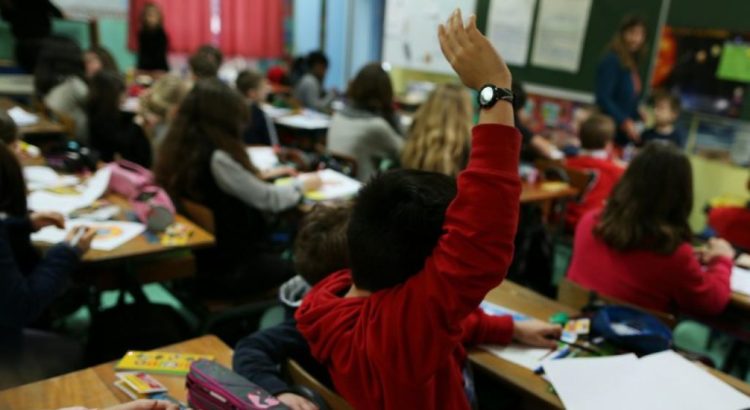
A l’occasion de la Journée internationale des personnes handicapées, le ministère de l’Education nationale en France a choisi le thème de « l’école inclusive » pour ouvrir le débat sur le handicap dans les établissements scolaires, un terme qui désigne une volonté d’inclure les élèves handicapés dans les salles de classe.  En novembre 2016, le Défenseur des droits Jacques Toubon qualifiait de « préoccupante » la situation de l’accès à l’école pour les enfants handicapés, bien que soulignant les progrès accomplis depuis 2005.

 « Des transformations durables pour une école inclusive ». Le thème retenu par le ministère français de l’Education à l’occasion de la Journée internationale des personnes handicapées se déclinera en différentes « actions de sensibilisation dans les établissements scolaires » lundi 4 décembre, détaille l’institution. Des outils et des ressources, notamment des courts-métrages, des films (« Intouchables », « Le Discours d’un roi »), une bibliographie et différents jeux pour animer une séance de sensibilisation au handicap seront mis à disposition des professeurs des écoles via le site Eduscol.

Contacté par RFI, le ministère explique que l’objectif de cette journée est de « permettre à la communauté éducative d’échanger sur le handicap, le fait d’accepter les différences et de les vivre ensemble ». Selon les chiffres du ministère, en 2016-2017, 300 815 enfants en situation de handicap ont été scolarisés dans les écoles et établissements relevant du ministère de l’Éducation nationale (public et privé).

Depuis le 11 février 2005, une loi existe pour garantir l’inclusion des enfants en situation de handicap à l’école. « Le remplacement du terme ‘intégration’ par celui ‘d’inclusion’ a son importance », souligne Marie-Hélène Jacques, enseignant-chercheur en Sciences de l’Education à l’ESPE [Ecole supérieure du professorat et de l’éducation] de l’Académie de Poitiers. « L’intégration pointe la différence des personnes, quand l’inclusion signifie que c’est à l’environnement d’accueil – l’école – de s’adapter pour accueillir la personne dans sa singularité et rendre les apprentissages accessibles », ajoute-t-elle.

«L’école doit s’adapter aux enfants handicapées, et non l’inverse»

 Comment une école devient-elle « inclusive »? Selon Marie-Hélène Jacques, il s’agit d’abord de porter un soin tout particulier à la formation initiale des enseignants, et à l’apprentissage de la pédagogie différenciée. « Un enseignant de mathématiques doit par exemple pouvoir adapter son cours à un élève autiste, qui a besoin de rituels, d’une planification précise de son activité », explicite-t-elle. « Cet enseignant peut utiliser un planificateur avec des pictogrammes, qui signifie à l’enfant quand l’activité commence et quand elle se termine. Des tablettes numériques peuvent également lui permettre de visualiser les activités qui l’attendent de façon à être moins anxieux et d’aborder l’apprentissage en toute sérénité », ajoute Marie-Hélène Jacques.

« L’école doit s’adapter aux enfants handicapées, et non l’inverse », confirme Jean-Louis Garcia, président de l’APAJH [Association pour adultes et jeunes handicapés]. Très liée à l’Education nationale depuis ses débuts en 1962, l’association défend l’idée que l’inclusion des enfants handicapés à l’école, en plus d’être bénéfique pour eux, permet aux autres élèves de « grandir et d’ouvrir leur esprit », témoigne M. Garcia.

Dans cette optique, l’APAJH participe dans certains départements à la formation initiale et continue des enseignants. Mais bien que la formation aux handicaps soit inscrite dans la loi, « dans les faits, chaque ESPE choisit ou non de délivrer des formations sur le handicap à ses élèves », indique Jean-Louis Garcia. Théoriquement, tout enseignant qui débute doit être en mesure d’accueillir un enfant handicapé car il a appris la pédagogie de la différenciation, mais dans la réalité est bien différente : c’est « au petit bonheur la malchance, pour ceux qui ne reçoivent pas de formation », explique-t-il, avant de souligner l’existence d’institutions où « ça marche », où l’inclusion est même une priorité. « Il faut aussi s’appuyer sur les belles réalisations, garder son optimisme », conclut-il.

L’école inclusive : une «utopie» ?

L’école inclusive n’est pas une « utopie », atteste Marion Aubry, vice-présidente de l’association TouPI [Tous pour l’inclusion], qui cite en exemple l’Italie, la Catalogne, la Suède, où les établissements spécialisées « n’existent pas ». Si la France n’est pas dernière au classement, la jeune femme regrette que le pays « ne mette pas vraiment les moyens en place pour mettre en œuvre l’école inclusive, que ce soit au niveau de la formation des profs, de l’accompagnement des AVS ».

La vice-présidente de l’association estime que le chemin est encore long avant d’atteindre l’idéal d’une école inclusive. Selon elle, « il y a toujours autant d’élèves handicapées dans les institutions spécialisées, dans lesquelles ils reçoivent très peu d’enseignement. On a une culture en France qui est de « ghettoïser » les enfants handicapés ». La jeune femme, qui accompagne au quotidien des familles, a été témoin de situations critiques : « bien que bénéficiant d’une décision de la maison départementale des personnes handicapées, des enfants n’ont toujours pas d’AVS en novembre / décembre », raconte-t-elle.

Dans ces situations, le manque d’accompagnement des élèves les force à rester chez, et oblige au moins l’un des parents à se rendre disponible. En cause : l’augmentation de la demande d’accompagnants. « En 2006, 26 000 élèves étaient accompagnés par une AVS. Il y en a 164 000 aujourd’hui. En conséquence, les Académies n’arrivent plus à suivre », déplore Marion Aubry. Et la « sanctuarisation » de 50 000 contrats aidés annoncés par la secrétaire d’Etat aux Personnes handicapées ne satisfait pas non plus la vice-présidente de TouPI, qui plaide pour la création « de vrais postes, moins précaires rémunérés correctement ».

L’enjeu majeur de la sensibilisation

« On observe le plus souvent que les réticences à accueillir un enfant handicapé dans une classe ne viennent pas des jeunes enfants, mais de leurs parents, qui considèrent que l’enseignant va trop s’occuper de cet enfant « différent », détaille Marie-Hélène Jacques. Des campagnes de sensibilisation sont donc régulièrement organisées par les différentes associations. Si la Journée internationale des personnes handicapées contribue à mettre en lumière les enjeux budgétaires et politiques qui entourent l’école inclusive, elle éclaire également la réalité quotidienne des associations, pour qui « la Journée des personnes handicapées, c’est tous les jours », conclut Marion Aubry.

Fuente: http://www.rfi.fr/france/20171202-ecole-inclusive-priorite-handicapes-journee-internationale

Comparte este contenido:

Music education in Africa

África/Diciembre de 2017/Fuente: Music in Africa

Resumen: La educación en las artes es tan esencial como en cualquier otro campo y, aunque muchos músicos creen que puede manchar su creatividad y su punto de vista original, no hay duda de que hay más aspectos positivos que negativos que restar del estudio de la música. Al igual que el gran Picasso, que produjo pinturas de realismo antes del cubismo pionero, los músicos novatos deben aprender los principios básicos antes de que puedan ser apreciados por su creatividad.

Education in the arts is just as essential as in any other field and although many musicians believe that it can taint their creativity and original point of view, there is no doubt that there are more positives than negatives to take away from studying music. Just like the great Picasso, who produced realism paintings before pioneering cubism, novice musicians must learn the basic principles before they can be appreciated for their creativity.

But music education does not only go as far as music theory; it also involves other aspects of the industry such as business, stagecraft, copyright and media studies, to name a few. It is incumbent on today’s music professional to know as much about the music industry as possible if they want to participate in a highly competitive sphere where only the best get to make a living from their efforts.

At Music In Africa we see education as one of the central elements still missing from music in most countries on the continent. If one considers the exceptional artists and many musical styles that originated on the continent, then Africa is arguably the world’s richest source of musical talent. It unfortunate, however, that much of the talent that Africa produces is neglected in favour of other professions deemed more important by society or political structures.

This is why Music In Africa strives to provide our readership with authoritative educational content about all the aspects of music, such as instrument lessons, lessons on how to build your own instrument, information about what avenues you can take to educate yourself in various African countries and expert tips on the best practices required to be a successful music professional, among others.

Check out some of the educational material we have on our portal below and make sure you return to this page daily as we continue to add content during the month of December.

Fuente: https://www.musicinafrica.net/magazine/music-education-africa

Comparte este contenido:

Libro: La comunicación mediatizada. Hegemonías, Alternatividades, Soberanías

La comunicación mediatizada 
Hegemonías, Alternatividades, Soberanías

Susana Sel. [Compiladora] 

Daniel Hernández. Guillermo Mastrini. Damián Loreti. César Bolaño. Hélio Lemos Sõlha. Rosa María de Lahaye Guerra. Jovana Cestille. Mariano Mestman. Christian Delgado Bajarano. Alexandra Fierro Morales. Fernando de Tacca. Silvia Pérez Fernández. Blanca Eekhout. Thierry Deronne. Rita de Cássia Lahoz Morelli. [Autores de Capítulo]

ISBN 978-987-1543-14-4
CLACSO.
Buenos Aires.
Marzo de 2009

Este libro analiza el rol de los medios de comunicación en tanto espacios de poder político, económico y social, que constituyen un campo de disputa de los sentidos culturales e ideológicos más significativos, en el contexto de las dramáticas transformaciones regionales que en las últimas décadas produjera el proceso de concentración del capital. Los estudios incluidos examinan estas situaciones, que han generado resistencias y prácticas diversas de intervención política también en el ámbito comunicacional. El abordar la comunicación y los medios implica relevar el proceso venezolano como un gran laboratorio donde coexisten experiencias de medios comunitarios, populares y alternativos, en el cual se construye un nuevo sistema público a partir de redes alternativas, y donde los medios masivos aún en poder de grandes grupos configuran hegemonías excluyentes. En el campo de la comunicación, atendiendo las demandas de participación y democratización de amplios sectores sociales, el Estado venezolano genera iniciativas constitucionales de regulación y la emergencia de experiencias mediáticas estatal-comunitarias, reinstalando la función social de los medios, objetivo excluido de las agendas mercantilizadas. Un hito importante en la búsqueda de una nivelación del desequilibrio informativo generado por la dominación lo constituye la aprobación de la Ley de Responsabilidad Social en Radio y Televisión. Por ello se ha identificado a Venezuela como epicentro de los debates en torno al futuro de la comunicación alternativa y pública. Desde otros procesos se destacan también experiencias de nuevas prácticas en la conflictividad social en Colombia, Argentina y Brasil, así como la capacidad regulatoria del Estado, funcional en estas últimas décadas a los grupos concentrados del capital, que necesariamente debe ser transformada en una herramienta significativa para un proyecto de sociedad más inclusiva y participativa. Proyectos que sitúan en lugar central el derecho a la información y la comunicación, y requieren nuevos marcos legislativos en relación con un sistema público de medios. Un proyecto geopolítico opuesto al de la dominación que, tras más de cinco décadas de guerra declarada o encubierta hacia la Revolución Cubana, se desarrolla con fuerte énfasis desde el espacio mediático.
Fuente: http://www.clacso.org.ar/libreria-latinoamericana/buscar_libro_detalle.php?id_libro=12&campo=titulo&texto=comunicacion
Descargar .pdf
Comparte este contenido:

Apertura en Jeju (República de Corea) de la reunión del Comité intergubernamental de salvaguardia del patrimonio cultural inmaterial

Diciembre de 2017/Fuente: UNESCO

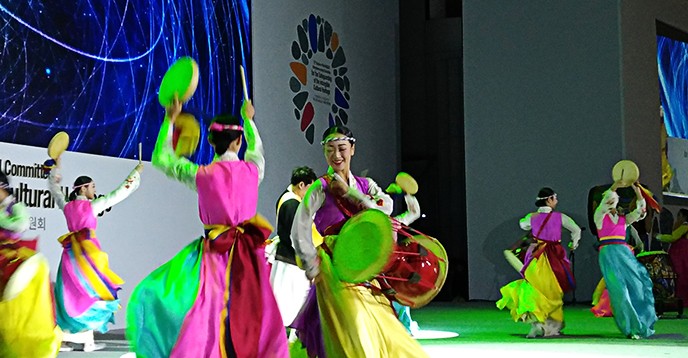
El Comité intergubernamental de salvaguardia del patrimonio cultural inmaterial inauguró hoy en la isla de Jeju su 12ª reunión anual en una ceremonia que incluyó una muestra de artes escénicas tradicionales coreanas, como el arirang.

“Es mucho lo que se ha conseguido desde que la Convención de 2003 entró en vigor, en 2006. Es importante recordar que la vida de la Convención no es ni mucho menos estática. Al contrario, es una Convención que crece continuamente, adaptándose a las necesidades cambiantes de la comunidad internacional. Y gracias a esa adaptabilidad hoy continúa siendo de gran relevancia”, dijo Francesco Bandarin, Subdirector General de Cultura de la UNESCO. Bandarin recordó también que la Convención para la salvaguardia del patrimonio cultural inmaterial ha tenido un ritmo de ratificaciones más rápido que cualquier otra convención cultural y que “hoy cuenta con 175 Estados Partes”.

“El patrimonio cultural inmaterial engloba las expresiones más valiosas de la humanidad, precisamente porque va al corazón mismo de nuestra manera de entender el mundo, entender a los demás y entendernos entre nosotros. […] Su centro son las personas, porque solo las comunidades que lo practican pueden definirlo y salvaguardarlo. En línea con esta visión, la Convención de 2003 tiene su arraigo en la convicción de que el patrimonio cultural inmaterial es vivo y dinámico y está en continua evolución, como una fuerza de conocimiento a la vez tradicional e innovadora”, dijo Byong-hyun Lee, presidente del Consejo Ejecutivo de la UNESCO, que preside además el Comité intergubernamental.

Por su parte, Kim Jong-Jin, que preside la Administración del Patrimonio Cultural de la República de Corea, recordó el compromiso de largo aliento de su país con la Convención de 2003 y declaró: “Como estipula la Convención de 2003, el patrimonio cultural inmaterial es un puente que une pasado y futuro, que simboliza la identidad y la autoestima de las comunidades que lo practican”.

Durante su reunión, que continuará hasta el 9 de diciembre, el Comité examinará los informes periódicos presentados por 11 Estados Partes en la Convención, que resumen las medidas legales, regulatorias y de otros órdenes tomadas para salvaguardar el patrimonio cultural en sus territorios. El Comité debatirá también sobre el papel del patrimonio inmaterial en situaciones de emergencia, el impacto general de la Convención y el uso de los recursos económicos del Fondo del Patrimonio Cultural Inmaterial.

El Comité examinará seis candidaturas de inscripción en la Lista del Patrimonio Inmaterial que precisa medidas urgentes de salvaguardia, cuyo objetivo es conseguir cooperación y asistencia internacional para expresiones culturales amenazadas. Además, este año se han presentado 34 candidaturas de inscripción en la Lista representativa del patrimonio cultural de la humanidad, así como dos propuestas de inscripción en el Registro de buenas prácticas de salvaguardia y otras dos solicitudes de asistencia internacional para planes de salvaguardia o inventarios del patrimonio cultural inmaterial.

En la actualidad, la Lista de salvaguardia urgente del patrimonio cultural inmaterial cuenta con 47 elementos inscritos, en 26 países. Por su parte, la Lista representativa cuenta 365 elementos de 108 países, en tanto que el Registro de buenas prácticas de salvaguardia tiene 17 programas ya inscritos.

El patrimonio cultural inmaterial engloba prácticas y expresiones culturales vivas que se transmiten de una generación a otra. Incluye tradiciones orales, artes del espectáculo, usos sociales, rituales, actos festivos, conocimientos y prácticas relativos a la naturaleza y el universo y saberes y técnicas vinculados a la artesanía tradicional.

El Comité intergubernamental de salvaguardia del patrimonio cultural inmaterial está formado por representantes de 24 Estados Partes en la Convención elegidos para mandatos de cuatro años. Se reúne una vez al año.

Fuente: https://es.unesco.org/news/apertura-jeju-republica-corea-reunion-del-comite-intergubernamental-salvaguardia-del-patrimonio?language=fr

Comparte este contenido:

Puerto Rico: Educación certifica tres escuelas como Microsoft Showcase School

Puerto Rico/Diciembre de 2017/Fuente: Metro

No hay duda de que la tecnología es una importante herramienta en el proceso de enseñanza-aprendizaje. Cada vez son más los educadores que enriquecen la experiencia en el salón de clases con el uso efectivo de la tecnología. De igual forma, es alentador ver que los estudiantes siguen mostrando interés en desarrollar competencias como la programación. A través de la labor que Microsoft está realizando en conjunto con el DE, estamos acelerando la innovación en la educación y ayudando a dotar los jóvenes con destrezas para enfrentar la competitividad en un mundo globalizado y tecnológico”, dijo en una comunicación escrita Herbert Lewy, Gerente General de Microsoft Caribe.

Escuelas puertorriqueñas brillan por uso de tecnología

La Escuela Dr. Carlos González de Aguada, la Superior Vocacional Nueva de Loíza y la Intermedia José Horacio Cora de Arroyo son la nueva cepa de escuelas públicas que recientemente fueron certificadas como Microsoft Showcase Schools, reconocimiento del que gozan solo diez instituciones educativas en Puerto Rico.

 Julia Keleher, secretaria del Departamento de Educación de Puerto Rico, explicó que “en éstas y otras escuelas públicas tenemos la meta de que nuestros maestros utilicen la tecnología en el proceso de enseñanza, enriqueciendo sus clases al convertirlas en un entorno interactivo. Gracias a Microsoft, al liderazgo de los directores y al compromiso de los docentes de estas escuelas, cada vez hacemos nuestra visión una realidad. Felicitamos a estas nuevas Microsoft Showcase Schools y agradecemos la labor y compromiso de los docentes y estudiantes”.

Julia Keleher

Por su parte, Keren Henríquez, Directora de Educación de Microsoft Caribbean, comentó que: “Las escuelas reconocidas como Microsoft Showcase School son instituciones que crean ambientes de aprendizaje innovadores y dinámicos con un fuerte elemento tecnológico integrado en todo el proceso educativo. Esta certificación reconoce que la innovación pedagógica en las escuelas públicas de Puerto Rico es posible y, además, destaca la alianza entre Microsoft y el DE para impulsar la educación del siglo 21, al incorporar la tecnología al salón de clases”.

 “Nos complace darle la bienvenida a estas tres escuelas a este exclusivo programa donde solo un selecto grupo de escuelas a nivel mundial son admitidas por sus prácticas de enseñanza innovadoras. Como Showcase School, Microsoft estará ofreciendo apoyo a estas escuelas para llevarlas a su próximo nivel con adiestramientos a los maestros y estudiantes y promoviendo las certificaciones profesionales en tecnología Microsoft entre estudiantes y maestros”, agregó Herbert Lewy, gerente general de Microsoft Caribbean.

Más jóvenes aprenden el lenguaje de la codificación

 De igual forma, Microsoft también se unió al esfuerzo corporativo global “Yo Puedo Programar” fomentar la enseñanza de los conceptos de las ciencias de computación “Computer Science Education for All” para que niños y jóvenes de todas las edades aprendan a programar de una forma fácil, divertida y gratuita.

 Keren Henríquez, directora de Educación de Microsoft Caribbean, explicó que, mediante la realización de un tutorial de codificación en línea, los jóvenes aprenderán en una hora los fundamentos básicos de la programación. En el mismo tanto niños como jóvenes interactuarán con la tecnología y aprenderán a crear aplicaciones, video juegos y páginas web de forma divertida. La iniciativa “Yo Puedo Programar” es parte de “La semana del Código” (Week of Code) que se celebrará en Puerto Rico y a nivel global el 1ro de diciembre. Para participar, los jóvenes pueden acceder la página web www.yopuedoprogramar.com

Fuente: https://www.metro.pr/pr/noticias/2017/12/03/educacion-certifica-tres-escuelas-como-microsoft-showcase-school.html

Comparte este contenido:
Page 3467 of 6815
1 3.465 3.466 3.467 3.468 3.469 6.815