Page 3887 of 6793
1 3.885 3.886 3.887 3.888 3.889 6.793

¿Cómo está la calidad de la educación superior en Colombia?

América del sur/Colombia/02 Septiembre 2017/Fuente: Semana

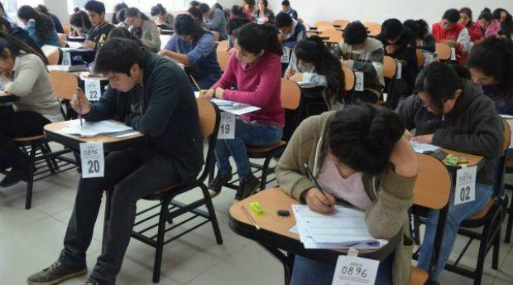
MinEducación lanzó los resultados de medición de calidad en educación superior. El Modelo de Indicadores de Desempeño de Educación (Mide) evaluó 226 de las 292 instituciones que hay en el país.

Ministerio de Educación Nacional presenta  nuevos resultados de medición de calidad en Educación Superior

Este lunes, las instituciones de educación superior (IES) conocieron los resultados del Modelo de Indicadores de Desempeño de la Educación (Mide), que permite conocer cómo están en materia de calidad. De acuerdo con la ministra de Educación, Yaneth Giha, el Mide se aplicó a 226 de las 292 Instituciones de Educación Superior que hay en el país.

Este modelo se construye teniendo en cuenta los datos de los diferentes sistemas de información que existen en la actualidad, relacionados con la educación superior como el Sistema Nacional de Información de la Educación Superior (Snies), el Observatorio Laboral para la Educación (OLE), el Sistema para la Prevención de la Deserción de la Educación Superior (Spadies) y los resultados de las Pruebas Saber 11º y Saber PRO del Icfes, entre otros.

“Hemos avanzado mucho en calidad de la educación, sin embargo, debemos ir más allá y para lograrlo es necesario contar con información que nos permita tomar las decisiones correctas, tener indicadores claros para saber dónde estamos, en qué hemos mejorado y en qué nos falta mejorar”, precisó Giha.

De hecho, hace tres años, el Ministerio de Educación Nacional presentó por primera vez el Modelo de Indicadores de Educación Superior (Mide). Para las Instituciones de Educación Superior, esta herramienta ofrece un marco de referencia para que revisen aspectos puntuales en su gestión y avancen en sus procesos de mejora continua. Al mismo tiempo, para los estudiantes y padres de familia les permite conocer el estado de las diferentes instituciones de educación superior, por ejemplo, a la hora de elegir dónde estudiar.

Por su parte, la información del Mide les permite al Ministerio de Educación y al gobierno nacional diseñar, ajustar e implementar programas y políticas públicas encaminadas a elevar la calidad de la educación superior en el país.  “El modelo reconoce que en Colombia las instituciones de educación superior no son iguales, ni pretendemos que sean iguales. Por ejemplo, no todas las IES atienden a la misma población, tienen los mismos objetivos y ofrecen programas en las mismas áreas de conocimiento”, explicó Giha.

Es por eso que ‘El MIDE ‘U’‘ evalúa el desempeño de las IES que ofrecen programas universitarios de pregrado. Este año la herramienta tuvo en cuenta 174 instituciones de educación superior, de las cuales 48 son públicas y 127 privadas; fueron clasificadas en siete grupos, teniendo en cuenta las áreas del conocimiento y los niveles de formación, así:

• Instituciones universitarias con 2 a 4 áreas de conocimiento.
• Instituciones universitarias de 5 a 8 áreas de conocimiento.
• Universidades de 2 a 4 áreas de conocimiento.
• Universidades de 5 a 8 áreas de conocimiento.
• Instituciones de educación superior especializadas en un área de conocimiento.
• Instituciones de pregrado con enfoque de maestría.
• Instituciones de educación superior con enfoque doctoral.

Así mismo, la cartera educativa lanzó también el modelo para las áreas Técnico Profesional y Tecnológico, denominado MIDE ‘T’, que evaluó 149 Instituciones de Educación Superior –algunas de ellas también evaluadas en el MIDE U–, de las cuales 49 son públicas y 100 privadas. El modelo agrupa las IES de la siguiente manera:

• Instituciones Técnico Profesionales.
• Instituciones Tecnológicas.
• Instituciones Universitarias.
• Y universidades que ofrecen programas de formación técnica y tecnológica.

Principales conclusiones del Mide
De acuerdo con el Mide, estos son algunos de los avances que se han dado en materia de educación superior para el país.

Aumento en número de graduados
En los últimos cinco años ha aumentado en un 30% el número de graduados de programas de pregrado y en un 90% los de posgrado.

Reducción en la deserción
En programas universitarios, la deserción bajó 1 punto porcentual en los últimos dos años, mientras que en programas de formación técnica o tecnológica disminuyó 5 puntos. Esto significa que se logró que alrededor de 48.000 jóvenes permanecieran en el sistema educativo, en el nivel superior.

Formación docente
En los últimos tres años se han registrado 1.950 docentes adicionales con doctorado y 7.171 nuevos docentes con maestría.

Empleabilidad de egresados
De acuerdo con la cartera educativa, la empleabilidad formal de los egresados de programas universitarios de las instituciones evaluadas es del 81,28%. Al mismo tiempo, la empleabilidad formal de los egresados de programas Tecnológicos y Técnicos Profesionales de las instituciones evaluadas es del 73%.

Investigación
En los últimos tres años se observa un incremento del 19% en los artículos registrados anualmente en Web of Science y del 22% en Scopus. En investigación de instituciones con programas de formación técnica o tecnológica, es de resaltar que las instituciones medidas registraron ante Colciencias 384 patentes de utilidad y 84 empresas de base tecnológica. Si bien hay algunos avances en investigación, también es importante avanzar en el cierre de brechas. Diez de las 174 instituciones evaluadas en MIDE U generan el 50% de la producción científica, según datos de Colciencias.

La realidad sobre la educación superior en Colombia
En el país se han alcanzado importantes logros en materia de educación superior. En cobertura, por ejemplo, en los últimos diez años, el país aumentó en 20 puntos porcentuales su tasa de cobertura, al pasar de 31,6% en 2007 a 51,2% en 2016. Además, se destaca como una de las naciones de América Latina con el mayor crecimiento de matrícula en educación superior, desde el año 2000.

Hoy en día Colombia cuenta con 49 instituciones de educación superior y 1.093 programas académicos que cuentan con acreditación en alta calidad. De esta manera 730.000 jóvenes, es decir el 16,9% de los estudiantes matriculados en programas de pregrado, se encuentran estudiando en programas o Instituciones acreditadas.

Sin embargo, el país debe seguir avanzando en materia de calidad y cobertura; para lograrlo es necesario contar con información que permita a las instituciones tomar las decisiones correctas, tener indicadores claros para saber dónde están, en qué han mejorado, y en qué les falta mejorar. De ahí la importancia del Mide. “Este es un instrumento en permanente construcción que debe seguir mejorando en la medida que los sistemas de información también mejoren y el sistema de educación siga evolucionando”, concluyó Giha.

Fuente: http://www.semana.com/educacion/articulo/ministerio-de-educacion-nacional-presenta–nuevos-resultados-de-medicion-de-calidad-en-educacion-superior/537962

Comparte este contenido:

Australia: Research shows the importance of parents reading with children – even after children can read

Oceanía/Australia/Septiembre del 2017/Noticias/https://theconversation.com/

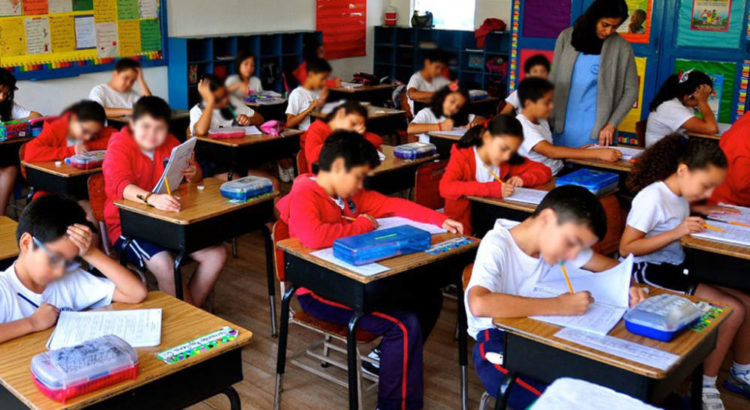
Many of us will be able to recall the enjoyment of shared reading: being read to and sharing reading with our parents. However, my research has found that of the 997 Year 4 and Year 6 respondents at 24 schools who took part in the 2016 Western Australian Study in Children’s Book Reading, nearly three-fifths reported that they were not being read to at home.

A sample of these children also participated in interviews, where I asked them how they felt about shared reading. While a few children did not mind no longer being read to, others were disappointed when it stopped. For example, when I asked Jason about his experience of being read to by his parents, he explained:

… they kind of stopped when I knew how to read. I knew how to read, but I just still liked my mum reading it to me.

His experience is common, with other recent research suggesting that more than one-third of Australian respondents aged six to 11 whose parents had stopped reading to them wanted it to continue.

But why is it so important for us to keep reading with our children for as long as possible?

Research has typically found that shared reading experiences are highly beneficial for young people. Benefits of shared reading include facilitating enriched language exposure, fostering the development of listening skillsspellingreading comprehension and vocabulary, and establishing essential foundational literacy skills. They are also valued as a shared social opportunity between parents and their children to foster positive attitudes toward reading.

When we read aloud to children it is also beneficial for their cognitive development, with parent-child reading activating brain areas related to narrative comprehension and mental imagery. While most of the research in this area focuses on young children, this does not mean that these benefits somehow disappear as children age.

As young people’s attitudes towards reading reflect their experiences of reading at home and at school in childhood and beyond, providing an enjoyable shared reading experience at home can help to turn our children into life-long readers.

However, not all shared reading experiences are enjoyable. Some children described having poor quality experiences of being read to, and children did not typically enjoy reading to distracted or overly critical parents. In some cases, parents attempted to outsource this responsibility to older siblings, with mixed results.

While many children really enjoyed the social aspects of reading and being read to as valuable time with their parents, they also felt that they learned from these experiences. For example, listening was felt to provide an opportunity to extend vocabulary, and improve pronunciation. Gina recalled the advantage she lost when her parents stopped reading to her, as:

… when they did read to me when I was younger, I learnt the words; I would like to learn more words in the bigger books and know what they are so I could talk more about them.

Similarly, Craig explained how being read to enabled his academic advantage in literacy, as “they were teaching me how to say more words”, and “that’s why I’m ahead of everyone in spelling and reading and English”. When this stopped “just because my mum thought I was smart enough to read on my own and started to read chapter books”, Craig was disappointed.

In addition, children were sometimes terrified of reading aloud in the classroom, and this fear could potentially be alleviated through greater opportunities to practice at home.

Hayden’s anxiety around reading aloud at school related to his lack of confidence, and his tendency to compare his skills with those of his peers. He described himself as “always standing up there shivering, my hands are shivering, I just don’t want to read, so I just start reading. And I sound pretty weird”. No-one read with him at home, so he had limited opportunity to build his confidence and skills.

This research suggests that we should not stop reading with our children just because they have learned to read independently.

We should continue reading with our children until they no longer wish to share reading with us, ensuring that these experiences are enjoyable, as they can influence children’s future attitudes toward reading, as well as building their confidence and competence as readers. It is worth the effort to find time to share this experience with our children in the early years and beyond.

Fuente: https://theconversation.com/research-shows-the-importance-of-parents-reading-with-children-even-after-children-can-read-82756

Imagen: https://lh3.googleusercontent.com/HJvBgzyBnur4OIJFzg7YAmbScb_R41EWLo4__PVbFfhzA5iFnR-UxUM3DW2fuvgVyhVgPQ=s85

Comparte este contenido:

Has South Africa’s labour movement become a middle class movement?

Africa/ Septiembre del 2107/

Noticias/https://theconversation.com/


Do South African trade unions still represent the working class?

The South African labour landscape has undergone massive changes in the past few years that have left the country’s trade union movement almost unrecognisable from yesteryear.

The Congress of South African Trade Unions, still the country’s largest trade union federation, has been bleeding members for a while and has been shaken to the core by the exit of the National Union of Metal Workers of South Africa. This exit has led to a new formation, the South African Federation of Trade Unions. Both labour federations still claim to represent the interests of the working class.

Something else, perhaps more fundamental has been changing within South Africa’s trade union movement. The membership base has shifted significantly from one dominated by unskilled and semiskilled workers to one that shows bias towards skilled and professional workers. This is captured in a series of surveys undertaken between 1994 and 2014, before the National Union of Metal Workers’s exit.

The data shows that less than 1% of members within the trade union movement classified themselves as professional in early years of democracy. The picture had changed radically by 2008 with 20% of the respondents classifying themselves as professional. It would therefore seem that South Africa’s trade union federation had become a home for middle class civil servants, rather than a working class federation.

The evolution

A group of labour scholars has been conducting surveys of Congress of South African Trade Unions members before every parliamentary election since 1994. The intention of the survey, titled Taking Democracy Seriously, was to study the impact of union democracy on parliamentary democracy.

The data set (drawn from five surveys, with the last conducted in 2014 just before National Union of Metal Workers of South Africa was expelled) tell us much more than just what union members’ attitudes towards democracy is. It paints a complex picture of who trade unions actually represent.

At its high point, the federation had a membership of 2.2 million. This was the result of three waves of unionisation.

The first wave of members comprised of workers who were organised into the initial manufacturing unions that resulted from the militancy of the 1973 strikes.

The second wave started in 1985 with the National Union of Mineworkers – the first to organise black miners and what was to become the largest union in the country – joining the Federation of South African Trade Unions in 1985.

The third wave came with the public sector unions that emerged after 1990. This wave benefited from the Labour Relations Act of 1995 which brought public sector employees under the same dispensation as the private sector in terms of collective bargaining and organisational rights.

In the early years of democracy public sector unions were so marginal to the federation and debates in labour studies that the researchers did not even include any unions from the public sector.

The professional factor

From 1994 union members were asked to classify themselves as being professional, clerical, supervisors, skilled, semi-skilled, or unskilled. Less than 1% classified themselves as professional in 1994, 1998 and 2004.

The data reflects a major shift in the last two surveys conducted after the inclusion of public sector unions in the sample. 20% of respondents classified themselves as professional in 2008, and 19% in 2014. This constituted a fifth of federation membership base, certainly a massive shift from the early 1990s.

Those members who classified themselves as clerical remained more or less constant, with those classifying themselves as supervisors increasing slightly from 4% in 1994 to 6% in 2014.

What is interesting though, is an increase of those who classify themselves as skilled increasing from 21% in 1994 to 37% in 2014. Those who classify themselves as unskilled declined from 30% in 1994 to a mere 8% in 2014, almost equal to the members who are supervisors.

This means that while 60% of the federation was made of semi-skilled and unskilled workers in 1994, by 2014 roughly 60% classified themselves as either skilled or professional, a complete inversion.

Loss of unskilled members

What explains this major transformation in the federation’s membership composition? We explored three possible explanations.

The entry of public sector unions, representing civil servants like teachers and nurses, into the federation is a major factor. This is confirmed when one breaks down the levels of skill by whether members belong to private sector or public sector unions for the 2014 survey.

The data shows that 78% of union members who classify themselves as professionals is from public sector unions. The unskilled and semiskilled members tend to come from private sector unions.

Its clear that the increase in the number of professionals within the federation was mainly a result of the entry of public sector unions. But this factor does not provide enough of an explanation for the decline in the percentage of unskilled members. We have to look elsewhere for this.

The data suggests that the post-apartheid era facilitated upgrading of skills within the federation. The proportion of members who had Grades 5-7 declined from 15% in 1994 to a mere 2% in 2014. Those with Grades 8-10 declined from 44% in 1994 to 11% in 2014.

Members with Grades 11-12 increased from 31% in 1994 to 45% in 2014 and members with technical diplomas increased from 3% in 1994 to 20% in 2014. Those with university degrees rose from less than 1% in 1994 to 17% in 2014.

Almost 40% of the trade union members in our sample have tertiary qualifications in the form of technical diplomas or university degrees. But the skills upgrade explanation also leaves a bit of a puzzle.

Does the fact that these trade union members now have higher levels of formal qualifications mean that a much smaller proportion of the work in South Africa’s economy is now done by skilled rather than unskilled workers? The labour market data more generally does not support this assumption. We have to look elsewhere for additional explanations.

A significant portion of South Africa’s unskilled manual labour is no longer performed by trade union members. This is due to the rise of non-permanent employment through subcontracting, casual labour, or informal forms of employment.

This means that as the trade union movement was gaining skilled and professional members it was bleeding unskilled manual workers. This leaves the question: has South Africa’s labour movement become a middle class movement, rather than one that primarily represents the working class?

Fuente: https://theconversation.com/has-south-africas-labour-movement-become-a-middle-class-movement-82629

Imagen: https://lh3.googleusercontent.com/llIO1_ZVPe1P9j-rtW0UAcl7EgXBqhQt-lEyHVYcnwqP8jK2pSpAKIJennl1You9amXa=s85

Comparte este contenido:

India : At a crossroads of choice

Asia/India/Septiembre del 2017/Noticias/http://www.thehindu.com/

Build on your strengths to face situations positively.

Two roads diverged in a wood and I, I took the road less travelled by, and that has made all the difference.”

These lines from the poem, The Road not taken by Robert Frost, resonates with simplicity, couched in the wisdom of human experience.

As you are reading this, it is possible that you might be going through a similar dilemma, which is manifesting in various forms. It could be an uncertainty, about which course to apply for after school or if employed, wondering whether there are other choices to explore.

Whatever the scenario, it is the nature of the trajectory of life, to give us this hidden blessing to ask ourselves, “What do we do next?”, “Which road shall I take?”

Decisions

In personal interactions with students, one finds that the lack of introspection and self-reflection drowns out their own authentic voice. The barrage of noise from the expectations of their family, society or the opinions of friends, leaves them only more confused. Often, just the sheer demand of preparing for entrance exams and scoring marks, leaves very little time for harassed families and students to pay attention, to their calling within.

In this anxiety, decisions are made from a foundation of fear and anxiety. The decision to pursue a rigorous course of study such as medicine, engineering and law, is taken without understanding the nature of these professions. When we would ask students who opted for engineering, whether they had an idea of what an engineer’s work entails, the various branches in this field or whether they have an aptitude to create solutions, they would often reply that their choice of course was solely decided by a combination of marks and peer pressure.

What one forgets in this race is that these careers have both a high financial and time commitment, and unless one is aware of this, joining a course offers only temporary security. Many of us have faced such situations where we enrolled in courses only to find that we have neither the interest nor aptitude.

Practical measures

There are a few steps that one can take on a practical basis.

Firstly, understand that it is perfectly legitimate to be confused. This period of confusion, if approached in a healthy manner, can clear the way for what really needs to happen. If you view it is a gift that life has given to you, to channelise your frustration to actively research possibilities, you will find that this positive approach helps you, build your own strengths to face future situations.

Use your time to investigate the various options available. For example, if you feel that you are interested in human behaviour and helping people, explore the diverse areas where these skills can be used. You might want to look at psychology and find out the various fields where you can work. While being a psychologist maybe one option, the field of psychology has an important role in areas as diverse as armed forces and hospitality management. It is important to talk to people in the field, so you get a holistic perspective.

During your summer vacation, you might even want to consider volunteering or interning in your areas of interest. A young student of mine worked in a cancer hospice centre where she became very interested in building design and architecture, thinking about ways buildings can be spaces for healing! Open your mind and do not be afraid to move out of your comfort zone; you never know when the next opportunity is waiting to present itself.

Examples in history

Finally, understand and trust that we all have the potential to contribute in some way to the world we live in. There is no compulsion to have all the answers before you begin. The greatest leaders in history like Gandhi have harnessed immense, when everything they were secure about, crumbled.

Gandhi describes how being thrown out of a first class railway compartment in South Africa. The pain of a bruised ego and watching his identity as a lawyer crumble, was the stimulus for an inner calling, which led to a resistance movement that transformed a nation and continues to inspire many.

Our own stories may not be as dramatic! All we need to do is to trust those moments when we are at a crossroads of choice, and in complete humility, accept we do not know.

An adventure of unexplored trails will open itself and you will meet and live life, from your own reservoir of strength.

Fuente:http://www.thehindu.com/education/at-a-crossroads-of-choice/article19564854.ece

Imagen: https://lh3.googleusercontent.com/omCRKbXgB36MaXE_dDYzPpKFFEP7l6Fl-NeOAElH2MlykbPz1zSOzr4R9c8BOlA33_AX=s85

Comparte este contenido:

India: Is there a real you?

Asia/India/Septiembre del 2017/Noticias/http://www.thehindu.com

Who amongst us has not seen an usually mild person exploding into action when deeply moved or provoked? “This is not the Mahesh we know!” or “This is not like our mother at all!” is what we think or say.

Just as we slowly form impressions about another person, we build self-images as well. We gradually become so attached to this image of ourselves that any departure from it startles both us and others.

Is that person really you? Yes and no.

Many theatrical forms and dances have a way of signalling a change in the persona of the performer. He or she swings away from the audience and twirls back with a visible alteration of manner and expression. Suddenly, the shoulders either straighten or droop; the torso appears to grow or shrink or stoop; the mood alters. The whole audience understands and is ready to respond to the switch.

Dormant

Why do you think this is so? Because all of us recognise that every one of us is made up of different personalities. Even a Pope is a friend and a son, a brother and cousin, a student of or a teacher to someone else. Perhaps it is in realisation of this, that famous film star Peter Sellers said in an interview, “There used to be a me, but I had it surgically removed.” He sounds like he was joking, but to build his career he could not afford to have too strong a sense of the non-actor Peter Sellers.

Then, we have proof of how great and inspired teachers and leaders succeed in releasing a ‘you’ which you didn’t know was lying dormant in you. You may have read how a single exposure to Gandhiji’s talks or presence caused many people to abandon their everyday lives, even their families and careers, and join the struggle for swatantra. Ordinary women who were not even politically informed or motivated and for whom their jewellery was the last security, donated their ornaments in response to Gandhiji’s appeal for funds.

There could be a ‘real me’ that is added or implanted by someone — either casually with no ulterior motive, or with a plan to send you tumbling towards a future you did not plan for yourself.

So, the first rule of awareness of the self is, be aware! There may be hidden facets to your personality and instincts which could be stirred by unusual events or when you are under unnatural pressure.

National identity

Let’s take another look: we have slotted most people into ‘this sort of person’ and ‘not that sort of person’ and even go on to stereotype whole nations in the same manner. In the book Prejudice and Pride: School Histories of the Freedom Struggle in India and Pakistan, Krishna Kumar describes how differently the same incidents at the time of the Partition are recorded in history textbooks published in India. Pakistani scholar Rubina Saigol has confirmed this in her research as well. Perhaps we can ask ourselves some questions about the nature of this ‘me’ or ‘you’. In other words — identity.

Hence, as we mark yet another anniversary of the month that Britain let go of her colossal possession, here is a thought: Is there a national identity? Should there be one?

The late great Hindi novelist Nirmal Verma wondered how we could wipe the grime and fatigue of thousands of years and went on to say that our tradition has three epics: the Ramayana, the Mahabharatha and the unwritten epic of Indian civilisation itself, which is a fabulous mix of the eight different faiths that have flowered in the subcontinent.

Fuente: http://www.thehindu.com/education/is-there-a-real-you/article19564936.ece

Imagen:  https://lh3.googleusercontent.com/E7EFZN8jHPcQ097eQ0GRz6u2HVja2ht6oupWe-k0-CrZb6ay_8uXc8jcxkAkW7KWP9jK=s85

Comparte este contenido:

Revealed: who supports marriage equality in Australia – and who doesn’t

Oceanía/Australia/Septiembre 2017/Noticias/https://theconversation.com/


Ahead of the postal plebiscite on marriage equality, much is being written about the relative chances of a “Yes” or “No” outcome, and the strategies both sides need to influence public opinion.

However, the bulk of the public debate seems to be based on intuitive or speculative perceptions of the traits of people who are likely to oppose or support marriage equality, or on anecdotal evidence.

We used data from the Household, Income and Labour Dynamics in Australia Survey (HILDA) to assess trends in the degree of support for marriage equality, and to ascertain the characteristics of those Australians who do, or don’t, support it.


Further reading: Finding balance on marriage equality debate a particular challenge for the media


The data

In 2005, 2008, 2011 and 2015, the HILDA Survey asked its national panel to rate their degree of agreement with the statement “Homosexual couples should have the same rights as heterosexual couples do” on a scale from one (strongly disagree) to seven (strongly agree).

The HILDA data have strengths and weaknesses compared to recent poll data. The drawbacks are that they are relatively old (July 2015-February 2016), and do not collect information about views on same-sex marriage specifically.

However, they are collected with much more statistical rigour (probability sampling, population representativeness), feature sample sizes that dwarf those of opinion polls (>15,000 respondents), and encompass rich demographic information.

Degree of support

We find a pronounced trend between 2005 and 2015 in the degree to which Australians agree with the notion of same-sex couples having the same rights as different-sex couples.

As seen below, the percentage of people who “strongly agree” (the highest point in the scale) rose from 19.2% in 2005 to 46.3% in 2015. In contrast, the percentage of people who “strongly disagree” (the lowest point) fell markedly from 26.7% in 2005 to 12.9% in 2015.

The percentage of people who chose any of the five intermediate responses either remained stable, or decreased slightly.

Defining agreement as response points five to seven on the “agree side” of the aforementioned question, the 2015 HILDA Survey reveals agreement rates of 66%, up from 39.8% in 2005.

When agreement is defined as response options four to seven, the 2015 agreement rate grows to 78%.

Who supports equal rights?

Examination of the 2015 HILDA Survey data revealed marked differences in the degree of support for equal rights for same-sex couples across population subgroups.

Such support was significantly greater among:

  • women;
  • non-heterosexual (gay/lesbian, bisexual) people;
  • younger people;
  • people with degree-level or year 12 as their highest educational qualifications (compared to lower than year 12, or a professional qualification);
  • non-religious people;
  • people born in Australia or an English-speaking country (compared to people born in a non-English-speaking country);
  • people with higher incomes; and
  • people living in major cities (compared to those living in regional/remote areas).

Once these factors were accounted for, there were few and small differences across Australia’s states and territories.

Who sits on the fence?

About 12.4% of the 2015 HILDA Survey respondents selected the mid-point of the seven-category response scale when reporting on their agreement with the rights of same-sex couples.

This is an important portion of the Australian population. They represent those who may be swayed in either direction.

Examining their traits reveals these respondents were more likely to be men, heterosexual, older than 40, religious, to have below-year-12 education or professional qualifications, from a non-English-speaking background, in the bottom quartile of the income distribution, and from regional/remote areas of Australia.

Social change

The longitudinal nature of the HILDA Survey data enabled us to compare trends over time in support for the rights of same-sex couples between population segments.

Between 2005 and 2015, support rates increased across all of the population subgroups under scrutiny. This was even the case among groups that expressed the lowest levels of support.

For the most part, the group differences in support rates reported before remain reasonably constant over time. Interesting exceptions included a reduced “support premium” associated with holding university-level qualifications, and increasing religious disparities.


Further reading: To Christians arguing ‘no’ on marriage equality: the Bible is not decisive


What does all this mean?

The figures reveal an overwhelming tide of support toward the rights of same-sex couples within Australian society.

However, certain population groups are clearly lagging behind in their support. This includes male, older, and religious Australians, and those from non-English-speaking backgrounds. These same traits are also predictive of being undecided on the issue. This implies campaigners for a Yes vote should redouble efforts in putting forward arguments that appeal to these groups.

Even with a favourable outcome, the moral scrutiny to which the LGBT community is being subjected will likely have long-term negative consequences. Social friction and debates about the rights of same-sex couples are unlikely to disappear after the plebiscite. Our results point toward population groups that will need further convincing.

Fuente: https://theconversation.com/revealed-who-supports-marriage-equality-in-australia-and-who-doesnt-82988

Imagen: https://lh3.googleusercontent.com/eTGYR2xSmdtdAvRcfQXPCRdXHVwRhFbUdVnj23zp8XYOy23UogfzUWQK0LcioJ9rVQbXnA=s170


Comparte este contenido:

Argentina: La máquina de rayos X más potente del mundo desmanteló lo que se sabía de los agujeros negros

América del Sur/Argentina/Septiembre del 2017/Noticiashttp://www.infobae.com/

Más todavía si un postulado que hasta hoy se tenía sobre ellos se desmantela y obliga a un replanteo teórico. Su observación, se sabe, es dificultosa porque los agujeros negros no emanan luz. Son invisibles a excepción de los momentos en que devoran porque, de ese modo, la materia gira alrededor y forma anillos enormes que se llaman discos de acrecimiento.

«Vemos la emisión de la materia circundante justo antes de que sea consumida por el agujero negro. Esta materia circundante origina la forma de un disco, que sí se puede observar», explicó el físico Guillaume Loisel de Sandia National Laboratories en Albuquerque, Nuevo México. El fenómeno se debe a que la materia atraída hacia el disco de acrecimiento se calienta tanto que emite un brillo detectable a través de rayos X.

Los agujeros negros se pueden detectar gracias a sus discos de acreción (iStock)

Los agujeros negros se pueden detectar gracias a sus discos de acreción (iStock)

Sin embargo, podría existir un problema con un aspecto de la teoría sobre los agujeros negros y sus emisiones de disco de acreción debilitarían investigaciones de las últimos veinte años. Otra vía de detección es por la radiación plasma exótica que emite la materia al desaparecer en la frontera del agujero negro. «Los modelos utilizados para interpretar sus espectros nunca habían sido probados en el laboratorio hasta ahora», dijo Jim Bailey, otro integrante del equipo.

Hacía allí fueron. Para recrear físicamente las condiciones más cercanas posibles alrededor de un agujero, utilizaron la máquina Z de Sandia, el generador de rayos X más potente del planeta. Su objetivo era probar la llamada emisión electrónica de Auger, la noción de que bajo la inmensa gravedad de un agujero negro y radiación intensa, los electrones de hierro energizados no emiten luz en forma de fotones.

Los resultados, publicados en Physical Review Letters, fueron a contracorriente. El experimento de cinco años encontró que la emisión electrónica de Auger nunca ocurrió, como debería haber sucedido, cuando aplicaron energías intensas de rayos X a un compuesto de silicio.

Para el experimento, utilizaron la máquina Z de Sandia

Para el experimento, utilizaron la máquina Z de Sandia

Según los investigadores, el silicio experimenta el efecto Auger con más frecuencia que el hierro, por lo que las pruebas deberían haber demostrado el fenómeno en caso de que la presunción fuera verdadera.

Pese a la contundencia de los resultados, todavía no se baraja una solución posible que determine qué es lo que ocurre en realidad. Eso sí, el descubrimiento interpela a los astrofísicos. «Nuestra investigación sugiere que será necesario volver a trabajar muchos artículos científicos publicados en los últimos 20 años», advirtió Loisel.

Fuente: http://www.infobae.com/salud/ciencia/2017/08/30/la-maquina-de-rayos-x-mas-potente-del-mundo-desmantelo-lo-que-se-sabia-de-los-agujeros-negros/

Imagen: https://lh3.googleusercontent.com/QRlbZdB7iFjqYm43H_OeKqCebXFJLLDVGO5CKtiZxjOu_X_4gcSi6r9sIk7h5YG1WL7bkw=s151

Comparte este contenido:
Page 3887 of 6793
1 3.885 3.886 3.887 3.888 3.889 6.793