Page 4581 of 6815
1 4.579 4.580 4.581 4.582 4.583 6.815

Reino Unido: Hungary’s assault on academic freedom is a threat to European principles

 Europa /Reino Unido/Abril del 2017/Noticias/https://theconversation.com/

Tens of thousands of people recently demonstrated in the Hungarian capital of Budapest against attempts by their government to close the Central European University (CEU).

This was the second large-scale demonstration in Budapest in as many weeks – with protesters turning out en masse to challenge recent amendments to the national law on higher education that have been adopted by the Hungarian parliament.

As a university, CEU has a dual identity, and offers degrees accredited in both the US and Hungary. But the latest amendments make the university’s continued operation in Hungary virtually impossible. This is because the bill would require CEU to operate under a binding international agreement and to provide higher education programmes in its country of origin – the US – all within a very short time-frame.

At the time of writing, the legislation is on the desk of the Hungarian president for signature or referral to the Constitutional Court. Signature of the law would mean that the legislative changes would come into force, requiring a binding international agreement to be signed within six months of the publication of the law.

Referral to the Constitutional Court – a move which many of the protesters were calling for at the demonstration in Budapest – would mean that the law could be scrutinised for its legality and constitutionality.

Campaign against liberalism

CEU is a privately funded university with more than 1,400 students from more than 100 countries, that offers degrees accredited in both the US and Hungary. It is ranked among the top 200 universities in the world in eight disciplines. It excels in political science and international studies.

It has had its home in Budapest for more than 25 years, and is part of the life of the city. That CEU was founded after the fall of communism to promote democracy makes the current move against it all the more reprehensible.

The university, ably led by the rector Michael Ignatieff – a former Canadian politician and internationally renowned academic – has mobilised an impressive campaign for supporteSTADO DE dERECHO.

Michael Ignatieff, rector of the Central European University. Reuters.

The response has been huge – with leading academic institutions in Hungary and around the world, as well as governments, politicians and individuals condemning the moves by the Hungarian government. The hash-tag #IStandWithCEU has also been trending on Twitter.

Freedom to teach

This outpouring of support underscores the importance placed in institutions that promote education and critical thinking.

Academic freedom is also a prized European value, and countries across Europe rightfully take pride in the quality of their universities and support their development.

The freedom of universities to teach, research, and publish is fundamental to a free and open society. Article 13 of the Charter of Fundamental Rights of the European Union provides that:

The arts and scientific research shall be free of constraint. Academic freedom shall be respected.

The need for such explicit protection of academic freedom is clear: universities and academics have long been targeted by autocrats because of the threat that free and critical thinking poses to their continued existence. And for an attack of this nature to take place within the EU should be cause for concern across Europe.

This is because the precedent it would set puts all academic freedom at risk. It is also a stark reminder of the need for constant vigilance to safeguard European democracies.

Targeting European values

While CEU has said that it will take all legal steps available to it to challenge the Hungarian law, this is not just a legal fight.

This move to shut an independent university poses a fundamental question as to the extent to which European values can be ignored by an EU member state. Rule of law is supposed to be central to the operation of member states – and targeting freedom of expression through the closure of academic institutions runs directly counter to this.

Threat to academic freedom and European values. Reuters

This is not the only recent move by the Hungarian Government that potentially contradicts the rule of law. In October, a major national newspaper – Népszabadság – closed alleging government pressure. And the government has also recently targeted civil society with the proposed introduction of restrictive legislation justified by national security concerns and the need for additional transparency.

There also doesn’t seem to be much understanding within Hungary as to why the threatened closure of CEU is causing such outrage. Just a few days ago, in response to the protests and influx of letters in support of CEU, the Hungarian government spokesman called the situation a “storm of political hype” that was part of a “political circus”.

The European Commission has said it will discuss the situation in Hungary – and this is an important opportunity to reinforce fundamental EU principles.

But for now, individuals, institutions and governments in the UK, and across Europe, need to take note of what is happening in Hungary, and take action to make the closure of CEU a red line that cannot be crossed.

Fuente:

https://theconversation.com/hungarys-assault-on-academic-freedom-is-a-threat-to-european-principles-76042

Fuente Imagen :

https://lh3.googleusercontent.com/wWKNk55We2vyg0VNd8fe-ZZ_bKh-4_P8fLqNZioV2Pb3EHaESUiIku13-f6ZjYMOtGKf6Q=s85

Comparte este contenido:

Marchan en Argentina contra papel de EEUU en Siria y Venezuela

América del Sur/Argentina/Abril del 2017/http://www.2001.com.ve

Un grupo de activistas de agrupaciones de izquierda de Argentina marcharon este miércoles a la embajada de Estados Unidos en Buenos Aires, donde denunciaron el papel que juega Washington en las crisis de Siria y Venezuela.

Con grandes banderas y algunos con los rostros cubiertos, la protesta reclamó el respeto por «la autodeterminación de los pueblos», dijo Guillermo Caviasca, uno de los activistas.

«Cada pueblo tiene derecho a definir su futuro, ellos (el gobierno de Estados Unidos) no tienen por qué meterse en diferentes países generando golpes de Estado, maniobras desestabilizadoras o, literalmente, levantamientos armados de grupos de derecha o grupos terroristas», agregó Caviasca a la AFP.

Noemí Lamberti, integrante de la agrupación Movimiento Patriótico Revolucionario Quebracho, sostuvo que «los pueblos están siendo agredidos por el imperialismo a través de bombas, de explotación, a través de conspiraciones como la que desarrollan en nuestra hermana República de Venezuela, con la cual tenemos nuestra solidaridad y la hermandad como pueblo».

Quebracho dijo en un comunicado que «Estados Unidos y (el presidente Donald) Trump respalda a la derecha golpista de Venezuela y buscan voltear a (mandatario Nicolás) Maduro».

Trump ordenó la semana pasada la primera acción directa contra Siria, bombardeando con misiles una base siria en represalia al presunto ataque químico perpetrado por las fuerzas del presidente Bashar al Asad a una ciudad rebelde, que dejó 86 muertos.

Del lado venezolano, Washington urgió el lunes al mandatario Nicolás Maduro que «reconsidere» la decisión de inhabilitar durante 15 años a Henrique Capriles, uno de los líderes opositores más emblemáticos.

Además, pidió a Caracas garantizar que los ciudadanos ejerzan «su derecho a elegir a sus representantes en elecciones libres y justas» y que las fuerzas de seguridad «protejan la protesta pacífica» de los miles de venezolanos que salen a las calles desde principios de abirl en contra del gobierno.

Fuente:

http://www.2001.com.ve/en-el-mundo/157135/marchan-en-argentina-contra-papel-de-eeuu-en-siria-y-venezuela—video-.html

Fuente Imagen:

https://lh3.googleusercontent.com/3r_Z_sTXWZvnvwDHPorzQo7PZytlpIkMl7XShqrLzO9SvKq3Jm5Jd6_j0i2sf0By4pZj=s85

Comparte este contenido:

Australia: Why it’s the right time for Australia and India to collaborate on higher education

Oceanía/Australia/Abril del 2017/Noticias/https://theconversation.com

In 2060, India will be the most populous country, and likely have the largest economy, in the world. Roughly 20 million young people turn 18 every year, and according to some estimates, India’s middle class now numbers 300 million.

We have about 40 years in Australia to become a key partner of this future global centre. And there is no better starting point than higher education.

Prime Minister Malcolm Turnbull and Education Minister Simon Birmingham are currently visiting India, in part to promote higher education collaboration. Minister Birmingham has stated that his key objectives will include developing opportunities for Australian providers to deliver quality higher education in India, and emphasising Australia as an international education destination.

As higher education providers from competitor countries such as the UK are deepening their involvement in the Indian education sector, now is a crucial time for Australia to act.

University system in India

India contains a complex higher education landscape, with 760 universities and around 38,000 colleges.

Central government universities absorb just 3% of students and are relatively good quality. A wide range of state universities affiliate private and state colleges, which also award degrees. There is also a class of “deemed university” which was introduced fairly recently to cover private institutions established usually by business entrepreneurs.

…and the challenges it faces

As former Prime Minister Manmohan Singh stated – and as a new book shows in clear terms – the Indian higher education system faces major challenges.

This partly reflects a decision by India’s first Prime Minister Jawaharlal Nehru to channel research funds to independent non-teaching institutes, which has left central and state universities relatively starved of funds.

Indian universities – even elite institutions such as the Indian Institutes of Technology – do not feature in the top 100 universities in global rankings.

The upshot for the ordinary Indian student is that he or she is unlikely to be taught by a research active faculty member, unlikely to be able to acquire a good education with up-to-date curricula, and unlikely to have access to excellent facilities either in terms of teaching or extra-curricular activities.

Such deficits particularly affect the poor, women, rural areas, and north India.

So how does Australia fit into the picture?

The prospects for Australia to engage successfully with Indian higher education institutions are therefore not very high.

Certainly, the focus to date has been on working with the top institutions. But this means the mass of state-level universities and colleges do not typically receive the benefits of foreign collaboration.

Added to the problems are a relatively low knowledge base in Australia on Indian higher education and legal restrictions on foreign universities opening up campuses in India.

The Foreign Providers Bill, which would change the law in this regard, has been stalled. But India’s current government is keen to reform higher education.

Push for collaboration

Prime Minister Narendra Modi has indicated his desire to develop foreign collaborations.

The flow of Indian staff and students to Australia, and the beginnings of revitalisation of Indian studies in Australia, bodes well in terms of the development of partnerships and joint working.

There are success stories, too, such as joint PhD programmes at Monash University and the University of Melbourne, as well as comprehensive ties with Indian higher education developed at Deakin University – among a fairly wide range of examples.

Still, there is no sense in fudging. Such examples are – to use an Indian phrase – like the cumin seed in the camel’s mouth.

Five ways to do this

Australia, with a strong higher education sector and a particular strength in terms of the development of world-class full-spectrum universities, could expand collaborative efforts in several ways. These include:

  1. Agree on the mutual recognition of qualifications in India and Australia. There are currently issues with the recognition of Indian students’ prior learning when they come to study in Australia. India also does not recognise some Australian qualifications, such as accelerated masters’ degrees.
  2. Lobby the Indian government to allow Australian universities to open campuses in India where there is a compelling rationale for doing so. Apart from the direct benefits this would bring in terms of making foreign education available more cheaply to Indian students, it would allow the Indian government to benchmark their institutions against Australian counterparts.
  3. Develop a wide range of staff and student champions of the Australia-India relationship, building on programmes already running and activity already being generated among staff.
  4. Develop a comprehensive scholarship scheme for non-elite Indian students to facilitate the flow of talented students to Australia. This could be funded using a small percentage of the money universities receive from international students. It would help to build understanding of India in Australia, and also increase the diversity of Australian universities. A key advantage of this scheme is that it would allow Australian universities to develop reach into “ordinary India”.
  5. Develop a set of specialist collaborative research institutes in India around key challenges facing India and Australia, for example around water, infrastructure, poverty, security, health, and governance. These could serve as a basis for full spectrum campuses in the future.

Given the inventiveness of other countries in devising ways of collaborating with India, there will be real costs if Australia does not engage with these ideas in terms of opportunities for research collaboration and offering valuable learning experiences to Indian students.

The UK, in particular, has made great strides in this space, such as the Research Councils UK partnership with India, even as its visa restrictions hobble efforts to develop student mobility between India and the UK.

India and Australia have complementary strengths in higher education. A strategic approach could yield major benefits for both countries.

Fuente:

https://theconversation.com/why-its-the-right-time-for-australia-and-india-to-collaborate-on-higher-education-76011

Fuente Imagen:

https://lh3.googleusercontent.com/MnWIjNupglv1EWibdgmSDSKAen3Q6-KUxm7RmdEHC-l5YQPe7_T61W2Ca0XQIzO0DmEptg=s85

Comparte este contenido:

Costa Rica: Tele educación crece en América Latina

Centro América/Costa Rica/Abril del 2017/Noticias/https://www.crhoy.com/

BRECHA DIGITAL EN ESCUELAS HA DISMINUIDO CONSIDERABLEMENTE

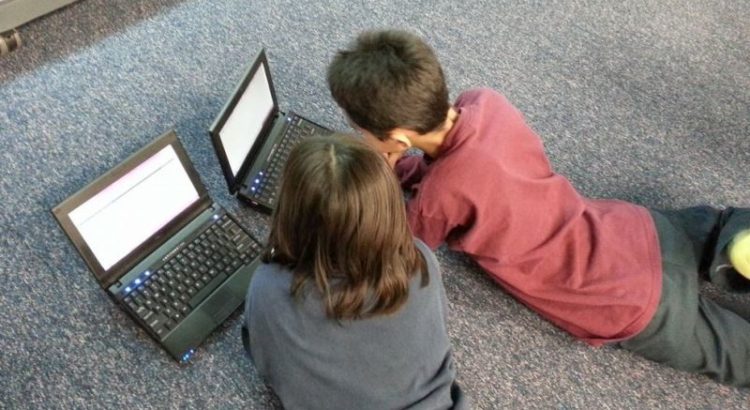
(La inclusión de Tecnologías de Información y Comunicación (TIC), permitió superar algunos de los principales desafíos en la educación latinoamericana.

Países como México, Argentina, Chile y Brasil optaron por hacer del desarrollo escolar un proceso más inclusivo

os resultados fueron una reducción de la brecha digital, la modernización de las técnicas de aprendizaje y mejoras en las posibilidades de los estudiantes.

Sin embargo, José Otero, Director de 5G Américas para América Latina y el Caribe destacó que no basta con instalar Internet en las escuelas o entregar a cada alumno una computadora para ver los beneficios.

“Sólo será posible si el proceso de integración de las TIC a la enseñanza cuenta con el apoyo de las autoridades encargadas de mejorar la educación. Son estas quienes conocen realmente cuáles son las falencias actuales en la enseñanza y las necesidades que deben ser solventadas”, indicó Otero.

En el 2016 el Ministerio de Educación Pública (MEP) indicó que en el país alrededor de 212 centros educativos tienen conexión a Internet por medio de fibra óptica, mientras que unas 4500 escuelas y colegios tienen algún otro tipo de enlace.

Fuente:

https://www.crhoy.com/nacionales/tele-educacion-crece-en-america-latina/

Fuente Imagen:

https://lh3.googleusercontent.com/i3Kvb7kAfMt1DqtF_VjUN5OyxNkhv7dC4NgLTTCDQw-kuuPFLxUaXCMWmvnzDjRl194jLWU=s85

Comparte este contenido:

Francia: Éducation Europa /fr bilan du quinquennat et enjeux pour demain

Europa/Francia/Abril  del 2017/Noticias/https://theconversation.com/

« Quand on ne fait pas de communication c’est rare qu’on la fasse pour vous », c’est ce que déclarait François Hollande lors des Journées de la Refondation le 2 mai 2016. Et il ajoutait, toujours sur le ton de la plaisanterie : « si on attend que les compliments, on est pas toujours satisfait, si on attend les critiques, on peut avoir son lot… ». C’était il y a longtemps, très longtemps, en 2016…

Depuis François Hollande a renoncé à être candidat. Et la refondation de l’École semble bien loin dans la campagne présidentielle. Peu de candidats en tiennent compte, or le bilan devrait pourtant en être fait. On peut aussi se demander si les promesses des candidats sont à la hauteur des enjeux pour l’école de demain.

Les mots de la refondation

« Refondation », le terme choisi par Vincent Peillon était habile. Il permettait à la fois de rassurer puisqu’il renvoyait à un passé glorifié et d’envoyer aussi un signal à ceux qui pensent que l’École doit évoluer et s’adapter. Mais si le terme était porteur de beaucoup d’espérances, il a aussi généré des déceptions devant les compromis et le manque de lisibilité des réformes.

Car il a manqué un slogan à cette refondation. La finalité de tout cet ensemble de dispositifs décrits dans la loi de 2013 n’apparaissait pas assez clairement. Si la loi d’orientation de 89 se résume à « l’élève au centre du système » et celle de 2005 au socle commun, il n’y a pas le même mot d’ordre pour la refondation. À tel point que les journées de la refondation le reconnaissaient implicitement tout comme le 1er rapport du comité de suivi de la refondation : il y a eu un manque de lisibilité des réformes alors que la lutte contre les inégalités aurait pu être ce mot d’ordre mobilisateur.

On notera aussi que les créations de postes absorbées par une forte démographie non anticipée, par la reconstruction de la formation initiale et d’un vivier de remplaçants ont été, elles aussi, peu visibles pour les enseignants comme dans l’opinion.

Les maux des réformes

Après la grandiloquence des premiers mois, on est passé assez vite de la refondation aux « réformes »…

Or, le terme est ambigu et génère pas mal de difficultés. Il y a évidemment la crainte du changement. Mais il serait trop facile de voir les mouvements sociaux qui ont accompagné les principales réformes comme relevant uniquement de la « résistance au changement ». Il y a aussi l’idée implicite mais très vivement ressentie que tout ce qui précède peut être « mis à la réforme ».

Avec des enseignants qui mettent beaucoup d’eux-mêmes dans leur travail, il y a une tendance à prendre comme une critique de son propre travail ce qui se situe au niveau de l’ensemble du système. Or on peut pourtant faire son métier du mieux que l’on peut dans un système qui dysfonctionne…

La réforme est aussi une décision prise d’en haut par un pouvoir politique et appliquée ensuite par une technostructure. Cela se heurte à une culture antihiérarchique des enseignants et des pratiques de management qui restent bureaucratiques dans l’encadrement.

La concordance des temps

La gestion du temps a été un des problèmes de ce quinquennat. Pour l’éducation, il y a eu d’abord du retard à l’allumage. La loi sur la refondation dont Vincent Peillon prévoyait le vote en décembre 2012, n’a été publiée au JO que le 8 juillet 2013. La période d’« état de grâce » a été occupée par des discussions et concertations qui, au final, n’ont abouti qu’à faire ressurgir les tensions qui avaient été mises de côté au moment des présidentielles et législatives.

Le problème du temps s’est posé aussi avec la réforme des rythmes. Celle-ci semblait acquise puisque sous le précédent ministre (Chatel) une large commission avait conclu à sa nécessité. Ensuite, l’attentisme a abouti au télescopage avec les élections municipales et les enjeux syndicaux. Autre retard : celui de l’élaboration des programmes avec la mise en place laborieuse du Conseil supérieur des programmes et la démission de son premier président. Enfin, la plus belle illustration est donnée par la conjonction de la réforme des programmes et du collège et en plus pour tous les niveaux, une année avant la fin du quinquennat. On y trouve la conjonction du retard et de la précipitation. D’une manière générale, les retards pris dans l’application de la loi ont accentué l’absence de lisibilité.

Mais, plus que tout, tout cela nous rappelle que le temps de l’éducation n’est pas celui du politique. Ministre de l’éducation n’est pas le poste plus facile, car il est difficile de voir les effets de son action. Les enfants qui sont rentrés au cours préparatoire en 2012 seront évalués dans l’année 2021 par le système PISA. Pas facile pour un personnel politique et des Français qui veulent des résultats immédiats…

De haut en bas

Et si la refondation était la dernière réforme de ce genre ? Car la question qui est posée par la refondation est aussi celle de la méthode utilisée pour la conduite du changement.

Dans notre pays centralisé et bureaucratique, nous fonctionnons toujours avec l’illusion d’une décision prise d’en haut et qui descendrait impeccablement jusque dans chaque salle de classe.

La réforme du Collège a combiné cette illusion avec l’autoritarisme. Le fait de publier le décret le lendemain d’une manifestation a été un handicap certain pour la suite.

Le paradoxe de cette réforme est qu’elle a donc été vécue comme l’expression d’une « prescription verticale » qui s’impose à tous alors que son enjeu était de redonner du pouvoir aux équipes dans les établissements.

Or, on le sait bien, beaucoup de changements se font « à bas bruit », loin du tintamarre des annonces ministérielles et des déclarations syndicales. L’enjeu pour l’avenir sera de (re)donner du pouvoir d’agir aux enseignants dans un cadre aux objectifs clairs.

Quels enjeux pour demain ?

Cette question de la gouvernance de l’Éducation nationale est peu abordée. Elle est pourtant essentielle. Car c’est toute la question de la conduite du changement et de la confiance envers les acteurs du système qui est posée.

Dans la campagne on s’est focalisé sur le mot très ambigu d’« autonomie ». Derrière beaucoup y voient la remise en cause de l’égalité républicaine et dénoncent tout ce qui pourrait accroître le pouvoir du chef d’établissement comme une « caporalisation » insupportable, une dérive managériale et une mise en concurrence

Toutefois on voit bien aussi que le système éducatif est trop bureaucratique. Ce système génère ses effets pervers : force d’inertie, faible adaptabilité aux situations locales, lourdeur des contrôles… Il contribue aussi à l’infantilisation et la déresponsabilisation des acteurs…

L’École gagnerait à être plus efficace. C’est un chantier difficile car il faut naviguer entre deux écueils, celui du conservatisme sclérosant et celui d’un libéralisme destructeur.

Le service public d’éducation est-il mortel ? Cette question pouvait paraître saugrenue il y a quelques années. Elle ne l’est plus. Le développement des écoles privées hors-contrat et le rôle croissant des fondations, l’idée du chèque-éducation, tout cela nous montre que ce qu’on croyait immuable peut demain être remis en question. Il faut bien sûr s’inquiéter et dénoncer la marchandisation de l’École. Mais on doit aussi comprendre que tout cela prospère sur la difficulté de l’École à s’adapter et à tenir ses promesses.

Pour rendre l’école plus juste, on ne peut pas se contenter de rafistolages sur un grand corps malade. Changer le pansement ou penser le changement ?

Fuente:

https://theconversation.com/education-bilan-du-quinquennat-et-enjeux-pour-demain-75956

Fuente Imagen:

https://lh3.googleusercontent.com/PpxS10nZNVGL1mqWeFI1RAsHrmOoW81hJmO3EiMwysfzFg4tuIGXI8__TZR40jTMVqld5ZY=s85

Comparte este contenido:

África: Uganda: Universities in Dilemma As Govt Parastatals Start Training Schools

África/Uganda/Abril del 2017/Noticias/http://allafrica.com/


National Water and Sewerage Corporation (NWSC) training manager, Dr Martin Kalibbala, shared that because most of the graduates that have joined their institutions have consistently failed to perform even when they have presented academic documents with good grades, they have resolved to put up vocational institutions to train those that will be working with them in the skills needed.

Dr Kalibbala told participants at an engineering conference at Makerere University yesterday that the Ministry of Education has already accredited Ggaba Vocational Skills Development Institute while Kachung in Lira District is under construction and that these will be used to retool their technicians.

«Few organisations are willing to pay for theory. Many of us want results. That is why the brightest of your students are not necessarily the most successful,» Dr Kalibbala said in his presentation.

Uganda Electricity Generation Company Ltd (UEGCL) senior engineer Musa Mukula also said his company was in the final stages of starting its own training institute because most of the people they take on lack the skills needed on the job.

But Busitema University’s dean of engineering department, Dr Wilson Musinguzi, said: «We need to be careful to avoid duplication of roles. Remember universities are grappling with low funding. That is why our lecturers are always threatening to lay down tools because their pay doesn’t equal the effort they put in to train and do research,» Dr Musinguzi said.

Prof Henry Alinaitwe, Makerere University College of Engineering, Design, Art and Technology principal said: «It is okay for them to train their technicians but they need to partner with us.»

Government already facilitates more than 50 technical and vocational training institutions in the country. These institutions are now worried that their students will not have where to go once government parastatals start their own training institutions.

Issues

Insist. Heads of parastatals say most graduates that have joined their institutions have consistently failed to perform even after presenting good grades.

Action. Ministry of Education has already accredited Gaba Vocational Skills Development Institute while Kachung in Lira District is under construction and these will be used to provide the required skills to technicians.

Fuente:

http://allafrica.com/stories/201704120004.html

Fuente Imagen:

https://lh3.googleusercontent.com/dVsz6SEH1i4q1dtBTLhRD2ybooFuqobFK2LoarkC2ZdWKe-nSa4Fh-R8MqhY5lUVlrfz=s85

Comparte este contenido:

Cuba: Ludoteca tecnológica de Bayamo jugar y educar en la modernidad

centro América/Cuba/Abril del 2017/Noticias/http://lademajagua.cu/

La Ludoteca bayamesa, ese espacio singular dispuesto desde hace varios años para que los pequeños del municipio cabecera de Granma, y otros que llegan de paseo, estimulen con el juego su desarrollo físico y mental, la amistad y la solidaridad, se ha abierto también a las nuevas tecnologías de la información.

La introducción de tablets y 26 computadoras con servicio de internet, en noviembre último, le proporciona a esa institución sociocultural una suerte de modernidad, que la hace de hecho más atractiva, amplía sus segmentos de atención, pero sin perder su esencia educativa.

GÉNESIS

La segunda mitad del siglo XX fue marco para el surgimiento de un nuevo tipo de instalaciones destinadas a propiciar el juego infantil y que fueron pasando de una función compensatoria a otra mucho más abarcadora, al insertar la actividad lúdica en los empeños de formación de la infancia.

Luego de la aprobación, en noviembre de 1959, de la Declaración Universal de los Derechos del Niño, exactamente al siguiente año, la Unesco aprobó y difundió internacionalmente el proyecto, que en todas partes funciona bajo el denominador común de contribuir a la educación infantil mediante  la principal y más efectiva herramienta pedagógica para el trabajo con los niños, por ser su lenguaje universal: el juego.

En Cuba se realizaron los primeros intentos de creación de ludotecas a partir de 1950,  y en la década de los años 80 funcionó una como una exposición denominada Un juego nuevo y otros viejos, en conmemoración del centenario de La Edad de Oro.

En esta época también se crearon en la Casa Natal de José Martí y en el Palacio Central de los Pioneros, y luego se fueron fundaron  ludotecas comunitarias en todo el país, con la orientación de la Organización de Pioneros José Martí, en coordinación con el Ministerio de Educación.

OTRA DIMENSIÓN

FOTO / Rafael Martínez Arias

La Ludoteca de Bayamo tiene el privilegio de haberse convertido en la primera de ese tipo en el país con la categoría de tecnológica y así lo adicionó a su identificador.

La puesta en marcha de una sala de video juegos o simuladores de juegos deportivos, estimula y amplía  la recreación de los niños, mediante equipos costosos en el mercado internacional y a los cuales aquí, sus beneficiarios, acceden de manera gratuita.

Instalada por la Empresa de Tecnología de Información para la Defensa, esa plataforma constituye una alternativa para que niños y adolescentes se diviertan y accedan a la tecnología moderna.

Mas, la Ludoteca tecnológica bayamesa no constriñe su función a la lúdica, sino posibilita las búsquedas en internet, lecturas virtuales y comienza a ser reconocida como espacio extracurricular por excelencia, donde los estudiantes pueden consolidar los conocimientos adquiridos en los centros escolares, complementar información y ampliar sus habilidades, al tiempo de divertirse  con los juegos didácticos.

El Máster en Ciencias de la Educación, Mario Núñez Álvarez, un joven que durante 14 años pedaleó cada mañana desde Bayamo hasta la escuela primaria Manuel Sanguily Garrite, de Pompita, donde ejercía, se estrena como director de la institución, en esta laboran 46 trabajadores, entre ellos 14 asistentes para el trabajo educativo, seis guías profesionales de pioneros y ocho técnicos en Computación.

Al referirse a la creciente afluencia a la entidad, resalta la estrecha coordinación con los centros educacionales para que sus alumnos acudan en las jornadas matutinas y vespertinas de lunes a viernes, mientras los sábados y domingos realizan visitas espontáneas.

Además del disfrute, el gran saldo positivo de esta experiencia, reconoce, es lo que ya aporta a los niños y adolescentes en el perfeccionamiento de sus tareas y trabajos prácticos, y en la apropiación de amplios conocimientos, en los que se prioriza la auténtica y pródiga historia nacional.

FOTO / Rafael Martínez Arias

Fuente: http://lademajagua.cu/ludoteca-tecnologica-bayamo-jugar-educar-la-modernidad/Fuente imagen

FOTO / Rafael Martínez Arias
https://lh3.googleusercontent.com/yUtMs-dHczewtfZlJNCsDxbWyyEOjmK5-kxNg1lrSYv4ttPhUlTBETXYnCkkry_Pbs0O=s85


Comparte este contenido:
Page 4581 of 6815
1 4.579 4.580 4.581 4.582 4.583 6.815