Page 6002 of 6794
1 6.000 6.001 6.002 6.003 6.004 6.794

Italia: Apple to open iOS App Development Center in Italy this October

Europa/Italia/Julio 2016/Autor: Mike Wuerthele / Fuente: appleinsider.com

Resumen:  Un alto directivo de Apple, Luca Maestri, ha declarado a la Universidad italiana de Nápoles Federico II, como el lugar para la primera incubadora de talento de codificación iOS en Europa, preparado para abrir sus puertas en pocos meses.

The Apple-sponsored site will support educators, as well as providing a curriculum for attendees of the college. Furthermore, Apple will partner with companies and organizations in Italy to enhance the educational materials presented, and to assist in finding opportunities for graduates.

At launch, 200 new students will be selected to participate in the nine-month class, with applicants from all over Europe invited to apply and take the admissions test. The university is seeking faculty for the program as well, according to Macerkopf.

«We are thrilled to be working with University of Nales Federico II to launch the first iOS Developer Academy in Europe,» said Apple’s Chief Financial Officer Luca Maestri. «Some of the most creative developers in the world come from Europe, and we are confident this center will help the next generation get the skills they need for success.»

The University of Naples Federico II is the oldest public university in the world, and is the third university in Italy ranked by enrolled students. It currently has a computer science department, but nothing else similar to Apple’s condensed developer program.

«Europe is home to some of the most creative developers in the world and we’re thrilled to be helping the next generation of entrepreneurs in Italy get the skills they need for success,» said Apple CEO Tim Cook when the program was initially announced in January 2016. «The phenomenal success of the App Store is one of the driving forces behind the more than 1.4 million jobs Apple has created in Europe and presents unlimited opportunities for people of all ages and businesses of all sizes across the continent.»

Apple also claims that the App Store is responsible for the creation of more than 75,000 jobs in Italy. Notable Italian developers include IK Multimedia and travel app purveyor Musement.

Apple expects expansion of the iOS App Development Center model in other European countries. No additional locations are known at this time. Several initiatives are underway in India, with a large design and development accelerator scheduled to open in Bengaluru in 2017.

Fuente de la noticia: http://appleinsider.com/articles/16/07/08/apple-to-open-ios-app-development-center-in-italy-this-october-

Fuente de la imagen: http://photos.appleinsidercdn.com/gallery/17498-15077-universityofnaples_720-l.jpg


Comparte este contenido:

China and Russia Establish Association of Universities to Expand Educational Cooperation

Asia/China/Julio 2016/Autor: Arthur Dominic Villasanta / Fuente: chinatopix.com

Resumen: Las cabezas de las principales universidades de China y Rusia se reunieron recientemente para discutir la cooperación chino-rusa en los campos científicos y educativos.

The heads of some of China’s and Russia’s leading universities met recently to discuss Chinese-Russian cooperation in the scientific and educational fields.
The Rectors Forum took place at the Lomonosov Moscow State University as a part of the XVII session of the Russian-Chinese Commission for Humanitarian Cooperation. The discussion involved a wide range of issues, including Chinese universities participating in academic exchanges and the development of the youth intellectual competition system.
«This forum will go down in the history of relations between our countries,» said Victor Sadovnichiy, Rector of the Moscow State University (MSU).
He said the implementation of the state strategy depends on the efficiency of Russia’s and China’s scientific and educational cooperation. He noted that the first contacts in the field of education and science between Russia and China began during the early 17th century.
The forum resulted in the Declaration to establish the «Association of Universities of the Russian Federation and the People’s Republic of China» signed by Sadovnichy and Zhu Shanglu, Chairman of the Beijing University Council.
In addition, agreements about the cooperation in various spheres of activity were signed between the specialized educational institutions of China and Russia. Among these are medical and technical sciences, linguistics, public administration, education, agriculture and transport.
Representatives of student sports organizations signed a memorandum of intent to the Russian-Chinese student festival of winter sports. Fifteen agreements were signed between universities and research and educational organizations of China and Russia.
Currently, 200 Russian and 600 Chinese universities have established partnerships in areas that are strategically important to both countries. They have concluded over 900 direct contracts with each other and have created eight professional associations of Russian and Chinese universities.
There are about 25,000 Chinese students studying in Russian universities while 17,000 Russian students are studying in China. There are 1,500 Chinese students enrolled at Moscow University, a number that might increase to 100,000 in the future.
Shenzhen is working on building a joint Chinese-Russian university. This university is a cooperative project of MSU and the Beijing University of Technology.
The architectural foundation for the new university’s future building will be similar to the main building at MSU. Construction of this building should be completed by late 2018. China has taken the initiative of creating the university while MSU will provide educational programs and research and development.

Fuente de la noticia: http://www.chinatopix.com/articles/94686/20160707/china-russia-establish-association-universities-expand-educational-cooperation.htm

Fuente de la imagen: http://images.chinatopix.com/data/thumbs/full/88897/600/0/0/0/higher-learning.jpg

Comparte este contenido:

EEUU: Clinton Embraces Sanders’ Plan for Tuition Free College

América del Norte/EEUU/Julio 2016/Autor: Harper Neidig / Fuente: The Hill

Resumen:  Hillary Clinton propuso el miércoles un plan para eliminar la matrícula universitaria para la mayoría de las familias, un tema empujado por Democrática presidencial principal rival Bernie Sanders.

Hillary Clinton on Wednesday proposed a plan to eliminate college tuition for most families, a topic pushed by Democratic presidential primary rival Bernie Sanders.

Under the plan, families making $125,000 or less will pay no tuition at public, in-state universities and colleges.

“The plan will be phased in over five years, but families earning $85,000 or less will immediately be able to attend an in-state college or university without paying any tuition,” reads an announcement on Clinton’s website.

The presumptive Democratic presidential nominee also unveiled a plan to use executive actions to offer a three-month moratorium on payments for those with federal student loans.

«American families are drowning in debt caused by ever-rising college costs, and it is imperative that the next president put forward a bold plan to make debt-free college available to all,» Clinton said in a statement. «My New College Compact will do just that — by making sure that working families can send a child or loved one to college tuition-free and by giving student debt-holders immediate relief.

“While [presumptive GOP presidential nominee] Donald Trump offers little more than broken promises to get rich quick, I remain committed to ensuring that a college degree is attainable for anyone in this country with the desire and determination to earn one.»

The new Clinton plan does not go as far as one proposed by Sanders, who has not yet endorsed her and is continuing to pressure the party to adopt some of his proposals.

The Vermont senator has made universal, tuition-free public college and university a major platform of his campaign. Clinton’s plan, according to the announcement, would relieve about 80 percent of students from the burden of tuition.

Shortly after the announcement, Sanders lauded Clinton for the proposal, saying the compromise «will have a profound impact on the future of our country.”

“I want to take this opportunity to applaud Secretary Clinton for the very bold initiative she has just brought forth today for the financing of higher education. This proposal combines some of the strongest ideas she fought for during the campaign with some of the principles that I fought for. The final product is a result of the work of both campaigns,» he said in a statement.

“Let me be very clear. This proposal, when implemented, will revolutionize the funding of higher education in America, improve the economic future of our country and make life immediately better for tens of millions of people stuck with high levels of student debt.»

Sanders refused to offer a timeline for endorsing Clinton during a meeting with House Democrats on Wednesday.

Even so, lawmakers viewed the coordination between the two campaigns Wednesday as a positive step toward party unity ahead of the convention later this month.

“Today is evidence that Sen. Sanders and Secretary Clinton are working together,” said Rep. Ben Ray Luján (D-N.M.), the chairman of the House Democrats’ campaign arm.

«He’s very committed to making sure that our message of doing something for the middle class is going to resonate,» said Rep. Jackie Speier (D-Calif.).

Fuente de la noticia: http://readersupportednews.org/news-section2/318-66/37864-clinton-embraces-sanders-plan-for-tuition-free-college

Fuente de la imagen: http://readersupportednews.org/images/stories/article_imgs21/021735-hillary-070616.jpg

Comparte este contenido:

Japón: Teachers say Japan’s young voters need to have political awareness nurtured in schools

Asia/japón/Julio 2016/Autor: MIZUHO AOKI / Fuente: japantimes.co.jp

Resumen:  Tres estudiantes de secundaria, de 18 años de edad, en Shinagawa Joshi Gakuin en Tokio dijeron que estaban contentos de emitir su voto en las elecciones de la Cámara Alta del domingo, estando entre los primeros adolescentes de la nación a unirse al electorado.

Three 18-year-old high school students at Shinagawa Joshi Gakuin in Tokyo said they were excited to cast their ballots in Sunday’s Upper House election, being among the nation’s first teenagers to join the electorate.

“Just the thought of having a chance to possibly change the future (of this country), and the prospects of seeing more policies addressed to younger generations makes me excited,” said Rena Yamaguchi, a third-year student at the school, while her two fellow students nodded.

“It’s a historic event, and I’m proud to be among the first 18-year-olds to vote,” agreed Mizuki Inoue.

The students also admitted, however, to being slightly bewildered, and were not exactly confident about selecting a party or a candidate.

They have studied campaign pledges and followed media coverage. But rather than making things clear, the long lists of policy pledges have left the girls uncertain about how to make the best decision.

“We want to know what we are supposed to look for before casting our votes,” Inoue said.

Now that the voting age has been lowered from 20 to 18, the nurturing of political literacy among young people is becoming increasingly important to overcome the strong sense of apathy and inertia that has characterized them in recent decades.

Observers naturally see this as an opportunity to get younger generations more involved in politics.

Educators, however, are caught in a dilemma, trapped between cultivating students’ political literacy and maintaining political neutrality as required by law.

Education ministry guidelines require teachers to maintain this “neutrality” by refraining from expressing their personal political views.

“It’s easily said. But in reality, it’s hard to maintain that neutrality,” said Shigeyuki Yamane, a social studies teacher at Kokugakuin Kugayama High School in Tokyo.

In light of the new minimum voting age, the school held a special class about the importance of voting and the basic rules of an election. It also conducted a mock election last year, hoping to raise student awareness.

But when it comes to teaching students about contentious political issues, it can get difficult, he said.

“Even just nodding when a student expresses an opinion about a certain political party may give the impression that I support that party,” Yamane said.

When discussing contentious issues such as the constitutionality of the Self-Defense Forces, he made sure to introduce the different stances of political parties to ensure neutrality.

“It makes us nervous,” Yamane said. “Political neutrality, after all, is to introduce both sides of an argument.”

In Japan, political education had long been almost a taboo topic, observers say.

Shigeo Kodama, a professor of education at the University of Tokyo, said the taboo originally functioned to keep certain ideologies from manifesting themselves in school education.

From the late 1950s to 1970s, the Japan Teachers’ Union (Nikkyoso), which was a strong supporter of opposition parties and mainly leftist-leaning, staged strikes to fight the conservative government’s education policies, particularly the textbook screenings and rating system for teachers.

To prevent ideological confrontations, schools gave short shrift to political issues, Kodama said.

Also, university student movements in the 1960s against issues such as Japan’s security alliance with the United States were rife, later spreading to high school students, with some setting up barricades to close schools in protest.

In response to those events, in 1969, the education ministry issued guidelines banning high school students from engaging in political activities.

“With the guidelines, politics were put on a par with alcohol and tobacco,” Kodama said.

Rather than cultivating students’ social awareness, schools put weight on nurturing their ability to pass high school and university entrance exams, though that focus has been changing slowly in the past two decades, he said.

One recent change was the education ministry’s scrapping of the 1969 guidelines last year, lifting the longtime ban on political activities by high school students.

“Schools avoided exposing young people to politics for a long time,” Kodama said. “Considering that, it’s not something that can be changed overnight.

“Japan is still struggling to transform the educational system it adopted during the period of rapid economic growth (between the 1950s and 1970s),” Kodama said.

One lingering concern is that educators are still refraining from raising political issues in class due to fears of violating neutrality. But teachers need to understand, Kodama said, that ensuring political neutrality means teaching students about both sides of contentious issues, and explaining why political parties are fighting over them.

“Otherwise students may never understand,” Kodama said. “The teacher’s role is to fully explain a current situation without taking sides, and to think together with students.”

Shigeo Kawaguchi, a social studies teacher at Denen Chofu Gakuen High School, agreed, saying teachers must provide students with many different points of view on current political issues.

He attempted to stimulate students think about such issues by introducing several newspaper articles in his classes.

He has also shown a placard used in a rally to oppose the security legislation to expand the scope of overseas operations of the Self-Defense Forces. Kawaguchi was among the participants in the rally .

“I don’t think I’m violating political neutrality,” Kawaguchi said. “I’m showing them that adults should have opinions on (political issues).

“I believe children won’t form political opinions unless teachers say what they think,” he said. “I always tell students it is OK to have different opinions from mine.”

Shiori Ito, 16, one of Kawaguchi’s students, said his introduction to current political issues helped deepen her understanding of what was going on in society.

“I think it has given me the chance to gain more knowledge about society,” said Ito, a second-year student who will be speaking in the United States this summer about the voting age change on a travel-abroad program.

Although Ito is not eligible to vote in Sunday’s election, she welcomed the change. “It is a great opportunity for society to hear the voices of teenagers. We could change society.”

Kawaguchi also said it is important for adults to discuss social issues to cultivate political awareness among young students.

“Their parents and their grandparents need to discuss politics in front of them,” Kawaguchi said. “But sadly, many don’t.”

Fuente de la noticia: http://www.japantimes.co.jp/news/2016/07/08/national/politics-diplomacy/teachers-say-japans-young-voters-need-political-awareness-nurtured-schools/#.V4CoINLhC01

Fuente de la imagen: https://www.google.co.ve/search?q=Teachers+say+Japan%E2%80%99s+young+voter&source=lnms&tbm=isch&sa=X&ved=0ahUKEwjVpv6CuuXNAhWEJB4KHaxvAQEQ_AUICCgB&biw=1366&bih=637

Comparte este contenido:

Carta de Anita Freire al presidente interino de Brasil, Sr. Michel Temer

(Traducción Kamil Gerónimo)

Excelentísimo Sr. Presidente Interino de Brasil

Prof. Dr. Michel Temer

Asunto: PAULO FREIRE: Wikipedia y SERPRO

En calidad de viuda, estudiosa y sucesora legal de la obra del Educador PAULO FREIRE, quiero, a través de esta carta, establecer un diálogo cordial y franco con su excelencia, aún cuando estamos nosotros dos, en términos ideológicos, en posiciones diferentes. Se trata de un asunto que ha sido divulgado por la prensa nacional, surgido desde el gobierno a través de la red del Servicio Federal de Procesamiento de Datos (SERPRO), una entidad pública, por tanto sobre la responsabilidad del Estado brasileiro; esta alteró el contenido de la biografía de mi marido en la enciclopedia libre Wikipedia, colocándolo como involucrado con un proyecto de educación atrasado y débil de carácter doctrinario marxista y manipulador.

Si no le hubiera conocido en la fiesta de graduación de una de sus hijas, creo que del curso de Psicología de la Pontificia Universidad Católica de São Paulo ocurrida en los jardines del Club Hípico de Santo Amaro en São Paulo, cuando sentados lado a lado en la Mesa Directora oí de su excelencia el enorme respeto y admiración que tenía por la obra y por la persona de Paulo Freire, no tendría la osadía de escribirle.

Como su excelencia sabe, como intelectual y jurista, mi marido jamás practicó ningún acto y nunca escribió ninguna palabra de las que se pudiese, en sana conciencia, otorgarle la marca de doctrinador marxista y hombre de principios filosóficos y educacionales débiles, acusaciones contenidas en la nueva biografía ahora publicada a través de Wikipedia.

Para la construcción de un país verdaderamente democrático es de la más alta importancia, que, órganos del Estado o que prestan servicios a este, como es el SERPRO, no estén compactando interpretaciones con espíritus liberales inescrupulosos, que, intencionalmente profanan la honra de un hombre que dio su vida para que la educación, sobretodo la de Brasil, posibilitara la liberación y la autonomía de los hombres y de las mujeres de nuestro querido país. Nunca bajo la batuta de la intolerancia, del fascismo o del comunismo.

Creo que el actual Ministro de Educación, natural del estado de Pernambuco, Mendonça Filho, como lo fue Paulo Freire, tendría el placer (personalmente considero que el deber) de aclarar e inhibir que falsedades sean dichas de su conterráneo, hombre ético, vertical y honorable, Patrón de la Educación Brasileira. Creo que el referido ministro se posicionará y actuará, positivamente, a favor, en el momento que fuese instigado a eso por su excelencia, contra la manipulación de la máquina del Estado al servicio del empequeñecimiento de uno de los más importantes hombres de esta Nación.

Está claro que Paulo Freire no es unanimidad, nadie lo es. El puede ser leído, analizado y contestado, eso hace parte de la libertad de expresión necesaria y deseable a la construcción de la cultura letrada de alto nivel de cualquier país. Sin embargo, el posicionamiento de quienes lo contradigan debe ser abierto, responsable, en el seno de la sociedad civil- en la calle, en la universidad y en las escuelas, a través de los medios de comunicación, en los sindicatos y foros, etc.- y nunca dentro, exaltado por el hecho tendenciosamente ideológico- no verídico, encubierto por el anonimato, de cualquier órgano de la sociedad política.

Es inconcebible que en una sociedad democrática se divulguen frases cargadas de odio o de prejuicio como: «Paulo Freire y el Asesinato del Conocimiento»- absurda e irónicamente, en el año en que Paulo Freire está siendo considerado en los Estados Unidos de Norteamérica como el tercer intelectual del mundo, de toda la historia de la humanidad, más citado, por tanto más estudiando en las universidades norte-americanas, que, en un principio están en contra del marxismo.

Contando con su comprensión e interferencia para que se restablezca la Justicia y la Verdad.

Cordialmente,

ANA MARIA ARAÚJO FREIRE
São Paulo, 30 de junio de 2016

Comparte este contenido:

España: El FMI rebaja el crecimiento de la zona euro en medio punto de PIB por el ‘Brexit’

Europa/ España/Julio del 2016/Noticias /economia.elpais.com
El Fondo de riesgos políticos en Europa y advierte del peligro de una ralentización global


El Fondo Monetario Internacional prevé que la zona euro perderá cinco décimas de Producto Interior Bruto entre 2016 y 2018 debido al Brexit. Si la institución sita en Washington vaticinaba antes del referéndum británico un crecimiento del PIB europeo del 1,7% en cada ejercicio durante los próximos tres años, ahora la estimación se rebaja al 1,6% en 2016, el 1,4% en 2017 y el 1,6% en 2018. O lo que es lo mismo, la salida de Reino Unido de la UE terminará restando una décima  de crecimiento este año, tres décimas el que viene y una décima en 2018. En total, unos 50.000 millones de euros menos en tres años.

A pesar de las turbulencias financieras desatadas, el FMI destaca que los efectos del Brexit han sido contenidos. Las primas de riesgo se dispararon en un primer momento, pero a continuación han descendido todas salvo en Grecia y Portugal. Las bolsas se desplomaron, pero después se han recuperado hasta un 5% por debajo del nivel anterior al plebiscito británico. En general, los mercados funcionan, la liquidez no se ha secado y la mayoría de los precios financieros se está restableciendo gracias a la actuación de los bancos centrales, señala el organismo dirigido por Christine Lagarde.

Aún así, el Fondo pronostica una cierta ralentización de la economía, sobre todo en Reino Unido. De acuerdo con sus estimaciones, ésta perderá un punto y medio de PIB sobre el crecimiento esperado hasta 2019. Y esos efectos se extenderán a la zona euro, aunque sea de forma «limitada». Los economistas del FMI auguran un panorama de renovada incertidumbre, menor confianza de los inversores, mayor volatilidad financiera y una demanda más baja procedente de Reino Unido. La economía británica tiene vínculos financieros muy estrechos con Europa y es el destino del 13% de las exportaciones de la zona euro, recuerda el informe elaborado con motivo de las visitas de los hombres de negro a Europa.

Riesgos políticos

De cara al futuro inmediato, el FMI vislumbra cada vez mayores riesgos perfilándose en el horizonte, y fundamentalmente los achaca a la coyuntura política. Desde las consecuencias del Brexit a la crisis de los refugiados, pasando por la preocupación por la seguridad, los riesgos a los que se enfrenta la UE son «principalmente políticos», subraya el organismo. Para colmo, el problema de los refugiados podría acabar creando nuevos controles fronterizos y dificultando la libertad de movimientos en el mercado único. Y todo este cóctel trufado de amenazas e incertidumbres se zanja en el informe con una conclusión tan meridiana como apremiante: «La incertidumbre persistirá en tanto en cuanto el nuevo estatus de Reino Unido con la UE no sea claro. La recomendación de mejorar y hacer más cohesiva la gobernanza de la unión económica sigue siendo válida, y ha tomado ahora incluso una mayor urgencia».

Es decir, eso implica una estrategia europea más coordinada, en la que los países con capacidad fiscal como Alemania deberían invertir más. A cambio, eso se debería compensar, según el Fondo, con un sistema de control de los déficits más estricto y cuya aplicación sea más automática. Lo cual suena a una llamada a la disciplina precisamente cuando España se enfrenta a la posibilidad de una multa por haber incumplido las metas presupuestarias comprometidas con Bruselas.

A medio plazo, el FMI advierte a Europa de que sus perspectivas de crecimiento son mediocres. «No hay lugar para la complacencia por una recuperación cíclica», sostiene. Máxime cuando en opinión del Fondo crece el peligro de una desaceleración global que podría acabar descarrilando la débil recuperación europea. De ahí que los expertos del Fondo insten a las autoridades europeas a perseverar en las reformas estructurales como la mejora de la inversión, la unión bancaria, el saneamiento de los balances de las entidades, la liberalización de los sectores profesionales y comerciales o la supresión de la dualidad entre fijos y temporales en el mercado laboral. «Sin acciones contundentes, la zona euro permanecerá vulnerable a la inestabilidad y a las repetidas crisis de confianza», remacha.

Por si fuera poco, el Fondo también alerta de la amenaza que supone una inflación demasiado baja: cuando los precios se estancan, el ajuste de la deuda y la competitividad se hace mucho más duro para países como España, con un enorme legado de endeudamiento y paro.

fuente: http://economia.elpais.com/economia/2016/07/08/actualidad/1467974376_098997.html

Fuente imagen http://ep01.epimg.net/economia/imagenes/2016/07/08/actualidad/1467974376_098997_1467975293_noticia_normfoto: PAUL J. RICHARDS AFP

Comparte este contenido:

Africa: Waverley Girls’ High receives solar-powered classroom

Alta Waverly de las niñas recibe el aula con energía solar 

África/Sudafrica /de julio del 2016 /Noticias /www.itnewsafrica.com

Dell abrió su noveno Laboratorio de Aprendizaje de energía solar en África del Sur en High Waverley de las niñas. Según la compañía, la apertura del Laboratorio de Aprendizaje de energía solar en la escuela proporcionará tecnología de clase mundial y la conectividad a cientos de niñas de comunidades con escasos servicios en Alejandría y Hillbrow.

Parte de 2020 legado de buen plan de Dell , que tiene como objetivo poner su tecnología y experiencia para trabajar donde se puede hacer el mayor bien para las personas y el planeta, Dell Laboratorios de Aprendizaje de energía solar proporcionan acceso a la tecnología directa a más de 5.000 estudiantes de escasos recursos en las comunidades donde la infraestructura de tecnología es limitada. Esta asociación específica en alta Waverley de las niñas es sólo uno de los proyectos de Dell y Sci-Bono han colaborado . Esto no es sólo una lucha por la escuela para competir y ofrecer las mismas facilidades que rodea a las escuelas privadas, pero sigue tratando de animar y preparar a las niñas para entrar en la industria de TI.

Natasha Reuben, Jefe de Transformación en Dell Sudáfrica afirma que: «Proporcionar una educación de clase mundial es un desafío permanente en todo el mundo en desarrollo, incluyendo África, América del Sur y Asia. Las apuestas son demasiado altas – la educación es demasiado importante – por lo que Dell toma este reto muy en serio. Dando la vuelta a las comunidades a las que llama su hogar siempre ha sido central para el sistema de valores de Dell. Creemos que el acceso a la educación y la tecnología no es un lujo, sino una necesidad «.

Impulsado por estos valores, Dell comenzó el proyecto de Laboratorios de Aprendizaje, que combina lo mejor de las nuevas tecnologías con ideas prácticas para entregar aulas donde más se necesitan.

Todo esto se vincula a la campaña Listo para el futuro de Dell: las tecnologías están cambiando rápidamente el mundo y las generaciones futuras deben estar preparados para eso. Mediante la combinación de la innovación de vanguardia, incluyendo escritorios virtuales y software, con las demandas contemporáneas de aula, laboratorios de aprendizaje, los alumnos y profesores a entender que el futuro en sus términos.

La iniciativa da presentaciones sobre la adquisición de talento para los estudiantes, incluyendo orientación sobre la forma de comercializar mejor a sí mismos en el mercado de trabajo. Dell empleados reciban sesiones de simulación de entrevista con cada estudiante para darles experiencia práctica. La compañía tiene mucha fe en este acercado, dice Rubén, como proyectos similares en el pasado han dado lugar a la contratación indefinida por parte de Dell de varios estudiantes del proyecto.

El futuro de la educación no es para que la tecnología conduce por la nariz, sino más bien para potenciar la TI. Si Laboratorios de Aprendizaje de Dell son una visión del futuro, la educación del futuro se ve mucho más brillante.


Fuente:http://www.itnewsafrica.com/2016/07/south-africa-waverley-girls-high-receives-solar-powered-classroom/

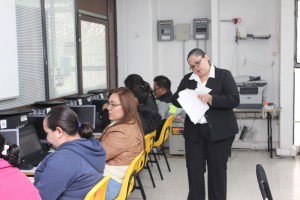
Fuente Imagen: http://www.itnewsafrica.com/wp-content/uploads/2016/07/Dell-300×225.jpg

Dell opened its ninth solar-powered Learning Lab in South Africa at Waverley Girls’ High. According to the company, the opening of the solar-powered Learning Lab at the school will provide world-class technology and connectivity to hundreds of girls from underserviced communities in Alexandria and Hillbrow.

Part of Dell’s 2020 Legacy of Good Plan, which aims to put its technology and expertise to work where it can do the most good for people and the planet, Dell solar-powered Learning Labs provide direct technology access to more than 5,000 underprivileged students in communities where technology infrastructure is limited. This specific partnership at Waverley Girls’ High is just one of the projects Dell and Sci-Bono have collaborated on. Not only does this school struggle to compete and offer the same facilities as surrounding private schools, but it continues to strive to encourage and prepare girls to enter the IT industry.

One of 11 labs globally, the Learning Labs are constructed inside standard shipping containers, using Dell’s Wyse thin client computers and Dell PowerEdge Servers to create a computer-empowered learning space. Solar panels take care of power requirements, while the computers use cloud technologies to run the latest Windows Office systems. The setup is also highly efficient, according to Dell, with each workstation requiring less than seven Watts of power, as opposed to 180 Watts for a typical PC.

Natasha Reuben, Head of Transformation at Dell South Africa states that: “Providing world-class education is an ongoing challenge across the developing world, including Africa, South America and Asia. The stakes are too high – education is too important – which is why Dell takes this challenge very seriously. Giving back to the communities it calls home has always been core to Dell’s value system. We believe that access to education and technology is not a luxury, but a necessity.”

Driven by these values, Dell started the Learning Labs project, which combines the best of new technologies with practical ideas to deliver classrooms where they’re needed most.

This all ties into Dell’s Future Ready campaign: technologies are rapidly changing the world and future generations need to be ready for that. By combining cutting-edge innovation, including virtual desktops and software, with contemporary classroom demands, Learning Labs enables learners and teachers to understand that future on their terms.

“Dell developed solar-powered Learning Labs through a pilot phase in Nigeria in 2013. It has shaped up so well that there are now ten similar sites in Africa, as well as a new site in Colombia. The concept works brilliantly. Instead of throwing technology at teachers and students, we looked at how to solve their problems. Learning Labs offers a classroom supported by new technologies and is entirely self-sustaining. It adapts the digital world for them, not the other way around,” Reuben said.

“Youth empowerment has always been a major focus for Dell. In keeping with youth month, Dell has embarked on a coaching and mentoring initiative, the Sci-Bono Youth Development Programme, which will see Dell employees share their knowledge and expertise with students,” she adds.

The initiative gives presentations on talent acquisition to students, including guidance on how to better market themselves in the job market. Dell employees host mock interview sessions with each student to give them hands-on experience. The company has a lot of faith in this approached, says Reuben, as similar past projects have led to the permanent hiring by Dell of several project students.

The future of education is not for technology to lead it by the nose, but rather to empower it. If Dell’s Learning Labs are a vision of the future, education’s tomorrow looks a lot brighter.


Comparte este contenido:
Page 6002 of 6794
1 6.000 6.001 6.002 6.003 6.004 6.794