Russia school shooting: Children and teacher killed in Kazan
Seven children and two adults have been killed in a shooting at a school in the Russian city of Kazan, officials say.
Twenty-one other people, mostly children, were injured. A 19-year-old suspect was detained.
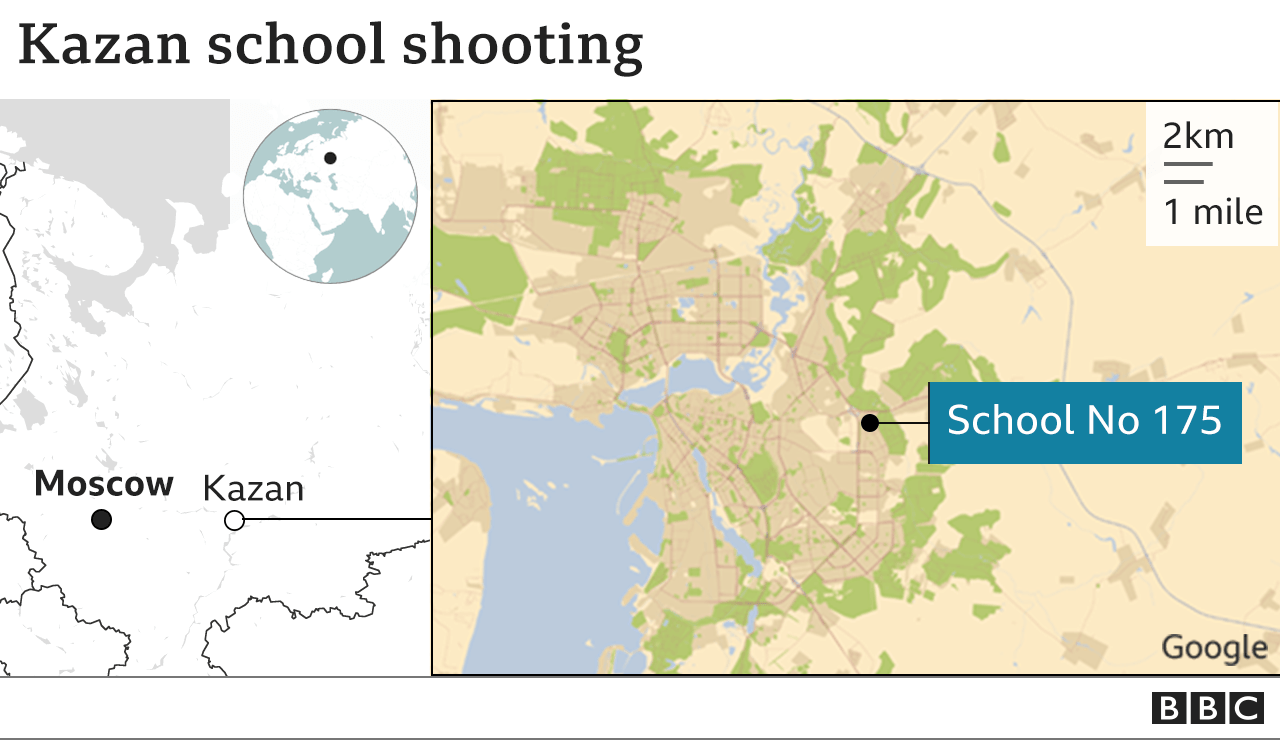
The attack happened in the capital of the republic of Tatarstan, 820km (510 miles) east of Moscow.
Russian PM Mikhail Mishustin spoke of «great sorrow» while Tatarstan’s leader Rustam Minnikhanov described the attack as a «major tragedy».
«We are deeply saddened that this has happened,» he said.
How did the attack unfold?
Mr Minnikhanov confirmed the deaths of seven children – four boys and three girls – as well as a female teacher and a female school worker at School No 175. It is believed the children were eighth graders (aged around 15).
Eighteen children and three adults were being treated in hospitals for gunshot wounds, fractures and bruising, Mr Minnikhanov added.
The attack began at about 09:20 local time (06:20 GMT), a source in the emergency services told Russian news agency Tass. The first signal from a panic button at the school was sent five minutes later.
«Everyone started panicking and saying ‘shut the doors’,» a student who witnessed the attack told the Mediazona news website. «About a minute later the head teacher started yelling: ‘We’re shutting the doors!’
«We got out about 15 minutes later, not out of the windows. I wanted to do that, but the teacher closed the window immediately and said no.»
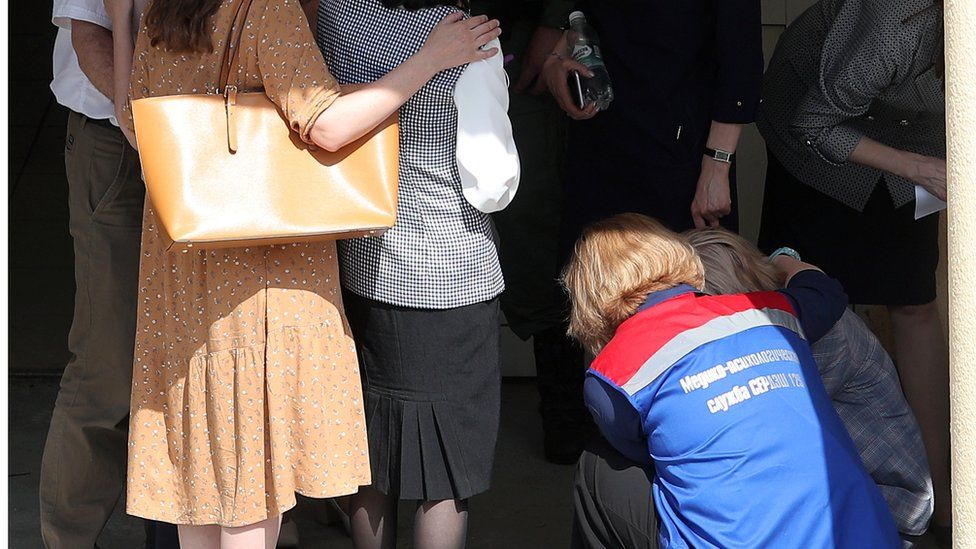
Footage shared on social media shows some children jumping from windows to escape as well as injured people being evacuated. Russian TV reported that two of the children had died after jumping from a second-floor window.
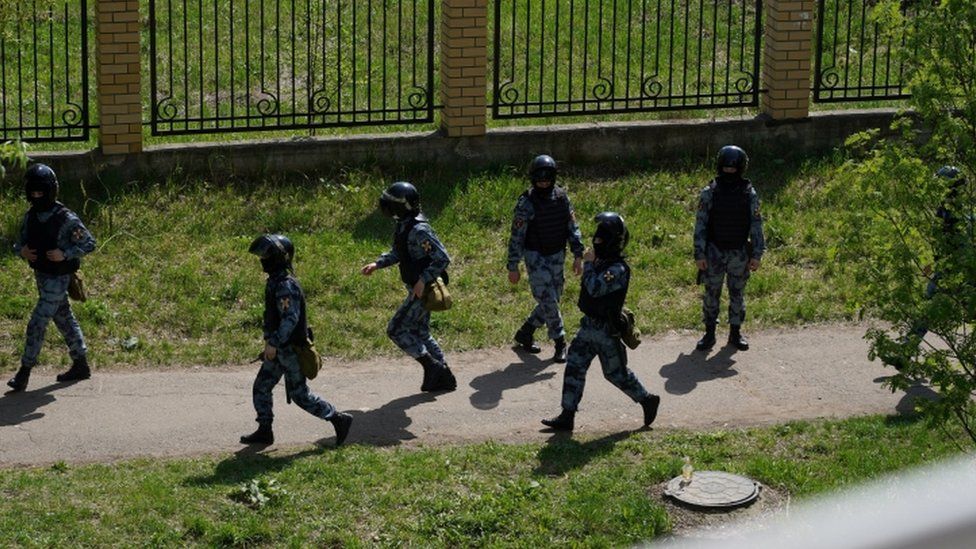
Heavily armed police and emergency vehicles responded to the incident.
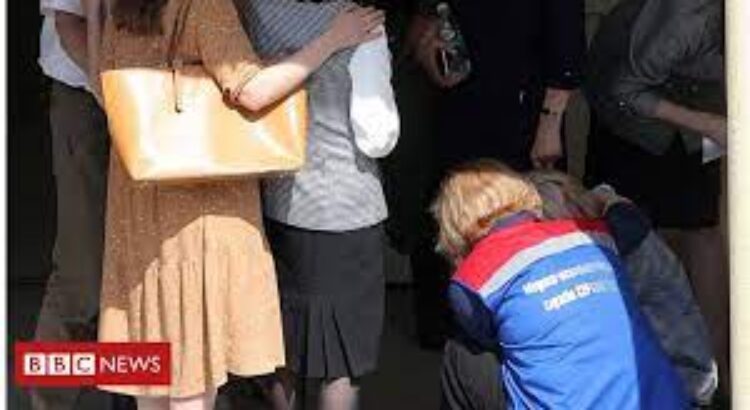
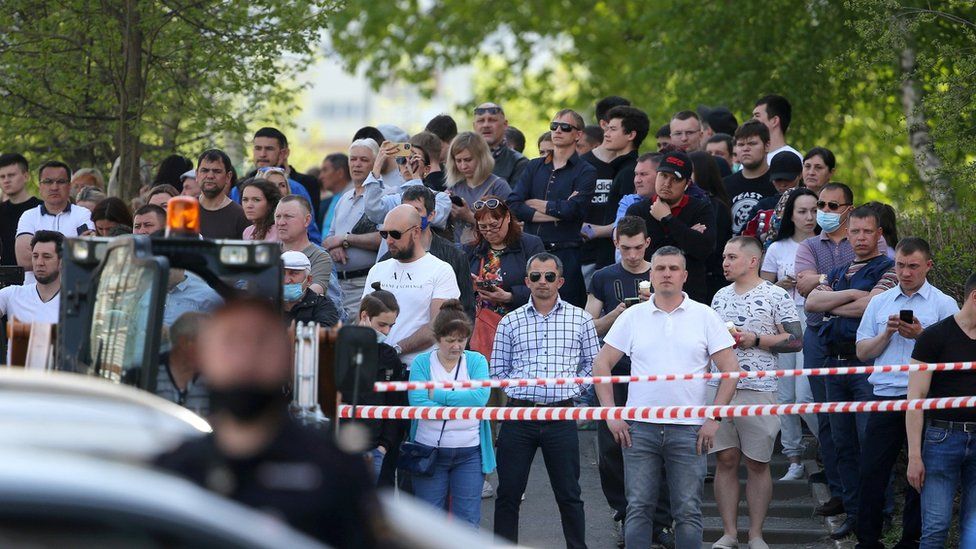
A Kazan resident outside the school told Moscow Echo radio station that people there were hysterical. «Parents are crying, medics are giving out medicine,» she said.
What do we know about the victims?
Elvira Ignatyeva, a 25-year-old English teacher, was killed trying to shield one of the children, a police source told Tass news agency, quoting eyewitnesses.
She had pushed the child out of the way in a corridor and tried to block the gunman but was shot and mortally wounded, the source said.
On her Instagram account, Ms Ignatyeva had often posted upbeat messages over photos of herself enjoying walks and nights out.
«It’s not that hard to make your life happy,» she wrote on 1 February. You just need to stop thinking that happiness is only possible somewhere over there, in the future, and learn to enjoy every actual minute, here and now…»
What do we know about the suspect?
Reports initially said that there were two gunmen and that one of them had been killed. But officials later said there was only one suspect, named locally as Ilnaz Galyaviev.
Russian investigators say he is a Kazan resident and it is believed he once studied at the school.
Mr Minnikhanov said the suspect was a registered firearm owner. According to Russian MP Alexander Khinshteyn, the suspect received a firearms licence only recently. The MP said it was for a semi-automatic shotgun.
Officials did not comment on the possible motive for the attack although Mr Minnikhanov called the attacker a «terrorist».
The suspect went on social media before the attack, posting that he planned to kill a «huge number» of people before shooting himself. Screenshots of his account, now blocked, show him wearing a black mask with the word «god» written across it in red.
A video on social media captured a teenager lying on the ground apparently being detained outside the building.
https://twitter.com/i/status/1392023118080876546
What has the reaction been?
Authorities have called for all schools in Tatarstan to be inspected and have their security stepped up.
A day of mourning will be held on Wednesday to honour the victims.
Kremlin spokesman Dmitry Peskov said President Putin had ordered the chief of Russia’s National Guard to «work out as a matter of urgency new regulations on the types of weapon that can be in civilian circulation and that can be owned by the public».
The instruction was issued «given the type of firearm used by the shooter», Mr Peskov said. «The fact is that sometimes types of small arms are registered as hunting weapons, which in some countries are used as assault rifles,» he explained.
Poorly guarded schools and a gun debate
Olga Ivshina, BBC News
People in Kazan seem to be completely shocked and devastated by what has happened. It is a big city – with more than one million people – which has enjoyed peace and stability over the past decade.
Schools in Kazan – as well as in most other Russian cities – are not really guarded. Usually it is just one or two unarmed private security guards who meet people coming to the school at the gates. Often many of these so-called security officers are pensioners with no special training. But even if they had any it is hard to confront an armed person with bare hands.
It is worth mentioning that the Kazan gunman allegedly used a gun very similar to one the attacker in Crimea used in 2018. It is a relatively cheap but powerful rifle which can be bought for the equivalent of just $280 (£200). There are a lot of discussions now in Russia about whether the regulations for civilian gun ownership should be changed.
How frequent are school shootings in Russia?
Shootings at schools are relatively rare in Russia compared with other countries.
In November 2019 a 19-year-old student shot dead a classmate and injured three others before killing himself in the far eastern city of Blagoveshchensk. Investigators said the motive for the attack may have been a personal conflict
In February 2013, a 15-year-old student shot dead a teacher and a police officer, injuring a second police officer, when he took hostages at a school in Moscow. Investigators said the killer appeared to have had an «emotional breakdown»
Fuente de la Información: https://www.bbc.com/news/world-europe-57069589
Israel, Hamas trade deadly fire as confrontation escalates
Prime Minister Benjamin Netanyahu says the Israeli military has dealt a tough blow to Gaza militants and warns that fighting with Hamas will continue for some time
By FARES AKRAM and JOSEF FEDERMAN Associated Press
11 May 2021, 16:09
• 7 min read
GAZA CITY, Gaza Strip — A confrontation between Israel and Hamas sparked by weeks of tensions in contested Jerusalem escalated Tuesday as Israel unleashed new airstrikes on Gaza while militants barraged Israel with hundreds of rockets. The exchange killed a number of militants and civilians in Gaza and at least three people in Israel.
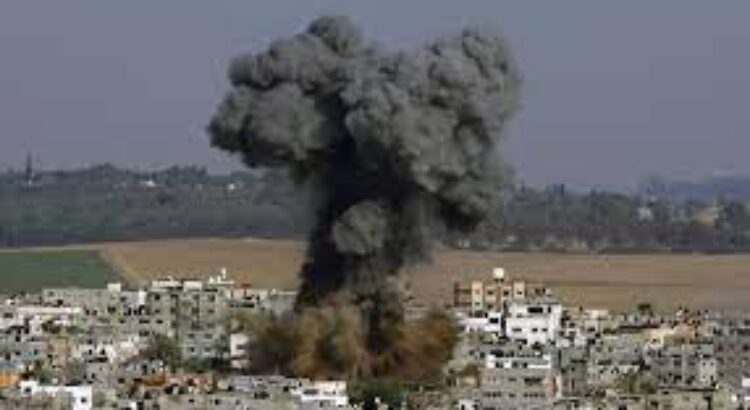
The barrage of rockets from the Gaza Strip and airstrikes into the territory continued almost nonstop throughout the day, in what appeared to be some of the most intense fighting between Israel and Hamas since their 2014 war. The fire was so relentless that Israel’s Iron Dome rocket-defense system seemed to be overwhelmed. Columns of smoke rose from many places in Gaza.
By late Tuesday, the violence extended to Tel Aviv, which came under fire from a barrage of rockets launched from the Gaza Strip. A 50-year-old woman was killed. The outgoing volleys set off air raid sirens across the city, and the main international airport closed temporarily.
Hamas said it launched a total of 130 rockets, its most intense strike so far, in response to Israel’s destruction of a high-rise building in Gaza earlier in the evening. The sound of the outgoing rockets could be heard in Gaza. As the rockets rose into the skies, mosques across Gaza blared with chants of “God is great,” “victory to Islam” and “resistance.”
One rocket struck a bus in the central city of Holon, just south of Tel Aviv. Medics said three people, including a 5-year-old girl, were wounded and the bus went up in flames.
Since sundown Monday, 28 Palestinians — including 10 children and a woman— were killed in Gaza, most by airstrikes, health officials there said. The Israeli military said at least 16 of the dead were militants.
Two women were killed by rockets fired from Gaza that hit their homes in the southern city of Ashkelon — the first Israeli deaths in the current violence. At least 10 other Israelis have been wounded since Monday evening.
Prime Minister Benjamin Netanyahu warned that the fighting would continue for some time. In a nationally televised speech late Tuesday, he said Hamas and Islamic Jihad “have paid, and will pay, a heavy price.”
“This campaign will take time, with determination, unity and strength,” he said.
Even before the two Israeli deaths, the Israeli military said it was sending troop reinforcements to the Gaza border, and the defense minister ordered the mobilization of 5,000 reserve soldiers.
Lt. Col. Jonathan Conricus, a military spokesman, told reporters that the objective was to send a “clear message” to Hamas.
Diplomats sought to intervene. U.N. Secretary-General Antonio Guterres demanded a halt to the “spiraling» violence, a U.N. spokesman said. U.S. Secretary of State Antony Blinken spoke to the Israeli foreign minister to condemn the Hamas attacks and “reiterate the important message of de-escalation,” the State Department said.
The barrage of rockets and airstrikes was preceded by hours of clashes Monday between Palestinians and Israeli security forces, including dramatic confrontations at Jerusalem’s Al-Aqsa Mosque compound, a sacred site to both Jews and Muslims. The current violence, like previous rounds, including the last intifada, or uprising, has been fueled by conflicting claims over Jerusalem, which is at the emotional core of the long conflict.
In a sign of widening unrest, hundreds of residents of Arab communities across Israel staged overnight demonstrations denouncing the recent actions of Israeli security forces against Palestinians. It was one of the largest protests by Palestinian citizens in Israel in recent years.
In the central Israeli town of Lod, police fired tear gas and stun grenades after mourners threw rocks at officers during the funeral of an Arab man allegedly shot to death by a Jewish resident the night before. Thousands took part in the funeral, and police said the crowd set fire to a patrol car, a bus and a motorcycle. Two police officers were injured.
Israel and Hamas have fought three wars and numerous skirmishes since the militant group seized control of Gaza in 2007. Recent rounds of fighting have usually ended after a few days, often helped by mediation by Qatar, Egypt and others.
Israel carried out dozens of airstrikes, including two that targeted high-rise apartment buildings where militants were believed to be hiding.
One strike demolished a 12-story building in Gaza City that housed the offices of top Hamas officials. Israeli drones fired a series of warning shots at the roof to give people time to leave the building before it was destroyed. There were no immediate reports of casualties.
At midday, an airstrike hit a building in central Gaza City, sending terrified residents running into the street, including women and barefoot children. The Islamic Jihad militant group confirmed that the strike killed three of its commanders.
Another strike hit a high-rise as people were conducting dawn prayers, killing a woman, her 19-year-old disabled son and another man, residents said. Health officials confirmed the deaths.
The Gaza Health Ministry said 28 people, including 10 children and the woman, have been killed and 152 wounded. Ashraf al-Kidra, a spokesman for the ministry, said Israel’s “relentless assault” was overwhelming the health care system, which has been struggling with a COVID-19 outbreak.
The escalation comes at a time of political limbo in Israel.
Netanyahu has been caretaker prime minister since an inconclusive parliamentary election in March. He failed to form a coalition government with his hard-line and ultra-Orthodox allies, and the task was handed to his political rivals last week.
One of those rivals is Israel’s defense minister, who is overseeing the Gaza campaign. It was not clear whether the political atmosphere was spilling over into military decision-making, though the rival camps have unanimously expressed support for striking Hamas hard.
The support of an Arab-backed party with Islamist roots is key for the anti-Netanyahu bloc. But the current tensions might deter the party’s leader, Mansour Abbas, from joining a coalition for now. The sides have three more weeks to reach a deal.
The current violence in Jerusalem coincided with the start of the Muslim fasting month of Ramadan in mid-April.
Critics say heavy-handed police measures helped stoke nightly unrest, including a decision to temporarily seal off a popular gathering spot where Palestinian residents would meet after evening prayers. Another flashpoint was the east Jerusalem neighborhood of Sheikh Jarrah, where dozens of Palestinians are under threat of eviction by Jewish settlers.
Over the weekend, confrontations erupted at the Al-Aqsa Mosque compound, which is the third holiest site of Islam and the holiest site in Judaism.
Over several days, Israel police fired tear gas, stun grenades and rubber bullets at Palestinians in the compound who hurled stones and chairs. At times, police fired stun grenades into the carpeted mosque.
On Monday evening, Hamas began firing rockets from Gaza. From there on, the escalation was rapid.
Gaza militants fired more than 500 rockets at Israel, with about one-third falling short and landing in Gaza, Conricus said.
At midday, a barrage of some 10 rockets whizzed above the southern city of Ashdod, filling the skies with streaks of white smoke.
A rocket that hit an apartment building in Ashkelon injured six people, according to Israeli paramedic service Magen David Adom. A building in Ashdod was also hit, lightly wounding four, Israeli police said.
The military hit 130 targets in Gaza, including two tunnels militants were digging under the border with Israel, Conricus said. He did not address Gaza Health Ministry reports about the dead children.
Seven of the deaths in Gaza were members of a single family, including three children, who died in an explosion in the northern Gaza town of Beit Hanoun. It was not clear if the blast was caused by an Israeli airstrike or errant rocket.
Federman reported from Jerusalem. Associated Press writers Karin Laub in the West Bank, Ilan Ben Zion in Jerusalem and Samy Magdy in Cairo contributed.
Fuente de la Información: https://abcnews.go.com/International/wireStory/israeli-airstrikes-hit-hamas-commanders-home-gaza-tunnels-77616065
US Professor Who Found Stereotypes Influence Use of Deadly Force Inspires Police Reforms
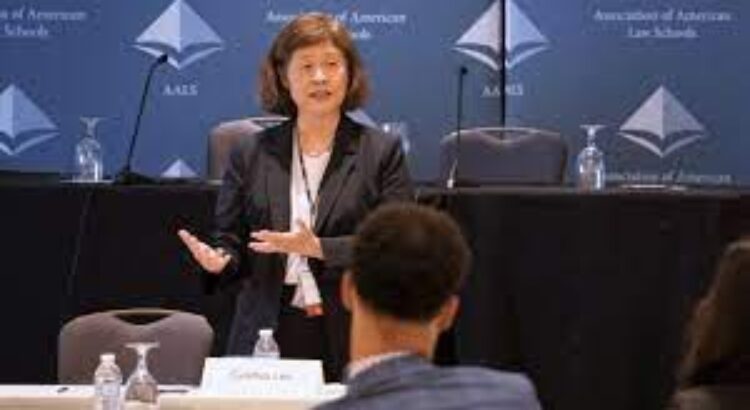
WASHINGTON – Long before police brutality emerged as a dominant public issue in the United States, Cynthia Lee, a George Washington University professor and an expert on race and self-defense, devoted much of her research to deadly police shootings of unarmed Black men and women.
In a 2004 study, she concluded that stereotypes about African Americans, often working at a subconscious level, influenced a police officer’s split-second decision about whether to use deadly force, accounting for the disproportionately large number of Black victims in police shootings.
In 2018, she authored a groundbreaking law journal article on reforming laws governing police use of deadly force. Most states, she learned, allowed police officers to use deadly force as long as they had a «reasonable belief» in the need for such action.
This standard, however, allowed juries to believe that an officer’s use of force was justified even if it wasn’t necessary or proportional. Lee’s solution: changing the law to make it equally important to assess whether an officer’s actions leading up to a shooting were reasonable, and requiring the use of force to be necessary, proportionate and based on an immediate need.
At the time she wrote the article, Lee thought the chances of states adopting her model were «fairly slim.» But her work began to attract attention in the wake of incidents in which police officers killed African Americans while attempting to take them into custody, including the death of George Floyd in Minneapolis nearly a year ago, which touched off international protests and a push for police reform.
In the year since Floyd’s death, one city and two states — Washington, D.C., Virginia and Connecticut — have used Lee’s model to adopt stringent use of deadly force statutes. The measures were adopted as part of comprehensive police reform legislation.
In Delaware, members of the Law Enforcement Accountability Task Force have also expressed interest in her model, Lee said.
While Washington, Virginia and Connecticut account for only a handful of the more than 1,000 deadly police shootings a year in the U.S., reform advocates hope that these changes will help rein in police use of excessive force.
The controversy over police use of force is front and center on Capitol Hill, where Senate Democrats and Republicans are fighting over House-passed legislation that would end qualified immunity, the legal doctrine that protects individual police officers from lawsuits for misconduct. In March, the House approved the George Floyd Justice in Policing Act that would, among other things, ban the use of chokeholds, strengthen federal civil rights laws and end qualified immunity.
Lee is hoping that her model statute finds its way into the national debate.
«It’s the kind of change we need because we need to make sure the police officers are treating people fairly and with respect and that people are not getting unnecessarily hurt or killed by the use of force,» said Democratic Virginia state Senator John Bell, an early supporter of Lee’s proposal.
Criticism of model statute
Critics say the changes force juries to second-guess police officers’ split-second decisions on the use of deadly force, whether to fire a gun or wrestle a suspect to the ground or subdue him or her in some other life-threatening hold.
«They changed the law to say, ‘What would a civilian who looks at the use of force say about whether it was reasonable or not,'» said John Krupinsky, president of the Connecticut State Fraternal Order of Police.
Barry Friedman, a New York University law professor who has argued that a dearth of laws has left police to police themselves, praised Lee’s proposed reform.
«We need to pass statutes to tell the police specifically how it is that they should police, and her statute is an effort to do that,» he said.
While other states such as California, Colorado and Maryland, spurred by the Black Lives Matter protest movement, have enacted strict police use-of-force standards in the past couple of years, none stemmed from the work of Lee.
«Of course, you always hope that your research will have real-world impact,» Lee told VOA. «I wanted to inform discussions about policing, but I never imagined that my work would actually become law in any state, let alone two states and the District of Columbia.»
Given that juries largely remain sympathetic to police officers, Lee’s model statute is unlikely to lead to a sharp increase in convictions. Lee said it could have a deterrent effect, however, encouraging police officers to «act with more care» before using deadly force.
But changing police culture is likely to take time. The Washington statute has yet to be made permanent. The Virginia legislation went into effect March 1, while the Connecticut statute doesn’t take effect until next year.
Deadly force standard
In the United States, the use of deadly force is governed both by a landmark 1989 Supreme Court decision known as Graham v. Connor and by individual state laws. The Supreme Court ruling requires that all claims of excessive force against a police officer be judged from the perspective of «an objectively reasonable officer.»
«It’s not your judgment or my judgment. It’s ‘how would a reasonably objective officer judge the situation,'» explained David Harris, a University of Pittsburgh law professor.
For decades now, the high court ruling has served as the default standard for police use of deadly force in the country, Harris said. Every police officer in America is trained on its legal significance. When an officer is sued over excessive force in a civil case, it is Graham v. Connor that applies. But when an officer involved in a deadly shooting faces criminal charges, state criminal statutes take control, according to Lee.
At the time Lee conducted research for her model statute, only nine states and the District of Columbia did not have use of deadly force statues. Most of the other states focused solely on the reasonableness of an officer’s belief in the need to use deadly force. Consequently, instead of assessing an officer’s conduct, juries probe whether an officer’s fear of the suspect is reasonable: Was the suspect holding a gun? Was he or she resisting arrest?
«I felt that the real focus should be on the actions of the officer,» Lee said, «because the officer is the one on trial.»
To ensure an officer is held accountable, Lee’s model statute requires that juries consider whether an officer acted reasonably before using deadly force. But what makes an officer’s actions reasonable? Lee offers a couple of factors for a jury to consider.
First, the model instructs the jury to consider whether the officer used any de-escalation measures, such as trying to calm the suspect or using less-lethal force.
Second, it requires that jurors consider whether the officer’s conduct increased the risk of a deadly confrontation. Importantly, the statute allows the jury to consider the officer’s actions «before the moment in time» when the officer is fearing for his life.
Borrowing from self-defense law in civilian homicide cases, Lee’s model legislation allows the jury to find an officer guilty of manslaughter if the officer’s belief in the need to use force was «honest but unreasonable» or if the officer’s belief was reasonable but actions were unreasonable.
Applying the model
To demonstrate how her model could alter the outcome of a deadly shooting case, Lee applied it to the 2014 police killing of Tamir Rice. Rice, a 12-year-old African American boy, had been carrying a replica toy gun when a white police officer arrived on the scene and almost immediately shot the youth. Two experts hired by Cleveland prosecutors applied the Supreme Court standard and concluded that the use of force in the case was justified.
But Lee said that a jury relying on her model statue could reach a different conclusion. The jury would note that by driving too closely to Rice, the officers put themselves in a vulnerable position, increasing the risk of using deadly force to protect themselves. Had they parked their car further away from the scene, they could have talked to the boy and convinced him to drop his gun, instead of «immediately firing on him.»
Lee’s model is hardly a recipe for radical change. To critics on the left, it doesn’t go far enough. Still, it took nothing short of Floyd’s death beneath the knee of former Minneapolis police officer Derek Chauvin — and an enthusiastic outreach effort by Lee’s students — for legislators to take a close look at her model statute.
In January 2020, a former student, then working for District of Columbia Councilmember Kenyan McDuffie, shared Lee’s model statute with her boss. But it wasn’t until after Floyd’s death that Lee learned that McDuffie had incorporated her measure into a use-of-force bill. Within days, the council unanimously adopted the statute as part of emergency police and justice reform legislation.
«I was floored when I found out that D.C. had enacted police reform legislation that included my model statute,» Lee said.
But the council took her statute one step further, she said. It held that police officers may use deadly force only after «all other options have been exhausted.»
«This was a great addition to my model statute,» Lee said.
Gregg Pemberton, chairman of the D.C. Police Union, said many of the provisions in the district legislation had been enacted by the Metropolitan Police Department years ago.
«The MPD does not have issues with racial profiling or police brutality,» Pemberton said.
Less than a month after the District of Columbia adopted her model statute, an official in Connecticut Governor Ned Lamont’s office emailed Lee to inform her about proposed changes to the state’s use of deadly force statute based on her model legislation.
«I was surprised and pleased to learn that Connecticut was looking into adopting key provisions from my model statute,» Lee said.
In late July, Lamont, a Democrat, signed the bill into law, with an effective date of April 1. Shortly before the bill was to take effect, however, Lamont, under pressure from law enforcement groups, signed a bill delaying the effective date until January 1, 2022.
Around the time Connecticut lawmakers were debating changing the state’s use-of-force standards last year, Virginia Governor Ralph Northam, a Democrat, called a special session of the state general assembly to meet on August 18 to pass criminal justice and policing reform.
At that time Virginia was one of nine states that didn’t have a use-of-force statute. So Lee drafted a model statute for Virginia, including the District of Columbia requirement that an officer exhaust all other options before using deadly force. She had her research assistant send the document to about a dozen lawmakers.
In October, Northam signed into law police reform legislation sponsored by state Senator Mamie Locke. It went into effect March 1. Unlike in Washington D.C. and Connecticut, law enforcement agencies were relatively open to the proposed changes.
Dana Schrad, executive director of the Virginia Association of Chiefs of Police, said the group worked with state lawmakers «to make sure that there was a standard in there that allowed a law enforcement officer to protect his or her own life.»
Fuente de la Información: https://www.voanews.com/usa/race-america/us-professor-who-found-stereotypes-influence-use-deadly-force-inspires-police
Por: Periódico Digital Centroamericano y del Caribe
«Los gobiernos deberían abordar las barreras financieras y tecnológicas que impiden a las niñas asistir a la escuela para limitar el daño que el COVID-19 ha causado a su educación y a sus perspectivas de futuro».
América Latina. “Vidas Detenidas 2”, el estudio global de Plan International, que recaba información sobre el impacto del COVID-19 en niñas y jóvenes y que se realizó en 14 países en el mundo a lo largo del 2020, incluyendo a Ecuador, Brasil, y Nicaragua, revela que las niñas y las jóvenes de todo el mundo consideran que la educación es el ámbito de su vida que se ha visto más profundamente afectado por la pandemia del COVID-19.
El acceso limitado a la tecnología, el apoyo insuficiente de las escuelas y colegios y el espacio físico para estudiar en casa, han sido las principales dificultades que han enfrentado las niñas y mujeres jóvenes al aprender desde casa.
“Lo más difícil es la falta de internet,” menciona Emily, una niña ecuatoriana de 17 años … “Solía usar el internet del vecino, pero no sé qué pasó, nos cortó incluso cuando mi madre estaba ayudando para pagar el costo “.
La soledad y las responsabilidades domésticas también han interferido en la capacidad de las chicas para seguir el ritmo de la educación a distancia mientras las escuelas y los colegios han estado cerrados, y para concentrarse y enfocarse cuando estudian en casa.
En el estudio, con su propia voz, las estudiantes también citaron la falta de dinero para los datos, los teléfonos móviles y otros costes relacionados con el aprendizaje en línea, y el hecho de no tener a nadie que les ayude a explicar las lecciones o los conceptos, como obstáculos frecuentes para el aprendizaje durante la pandemia.
“El futuro de las niñas y las mujeres jóvenes está en peligro. La pandemia ha aumentado las desigualdades existentes y corremos el riesgo de un verdadero revés para la igualdad de género.” asegura Débora Cóbar, Directora Regional de Plan International para América Latina y El Caribe.
Una encuesta llevada a cabo por Plan International, como parte del estudio en curso el año pasado, reveló que el 19% de las niñas de todo el mundo creen que el COVID-19 las obligará a dejar de lado temporalmente su educación, mientras que el 7% teme tener que abandonar la escuela por completo.
En el momento más crítico de la primera oleada de la pandemia, durante el año pasado, 1.500 millones de alumnos se vieron afectados por el cierre de escuelas, que se produjo en 194 países de casi toda Europa, África, América Latina y Asia.
Jacqui Gallinetti, Directora de Monitoreo, Evaluación, Investigación y Aprendizaje de Plan International, dijo: “COVID-19 ha cambiado profundamente la vida de todos nosotros en el último año. Pero su impacto no afecta por igual, y la pandemia hace evidente las desigualdades preexistentes, ya sea entre ricos y pobres, jóvenes y mayores, hombres y mujeres.
“El futuro de las niñas y las jóvenes de muchos países está amenazado, y las políticas gubernamentales deben reconocerlo, mientras salimos de la pandemia y nos adaptamos a una nueva normalidad, escuchando las preocupaciones que han planteado”.
El estudio también encontró que la interrupción considerable en la educación de las niñas y mujeres jóvenes durante el último año, combinada con el miedo al virus en sí y la necesidad de adaptarse a las medidas de confinamiento, ha afectado su salud mental. El 80% de encuestadas mencionó haber experimentado episodios de ansiedad.
“Apenas como, hay días en los que me siento como si estuviera bajo presión, no sé cómo explicarlo, pero es una tristeza muy grande, muy fuerte”, expresa Ana, de Nicaragua (16 años).
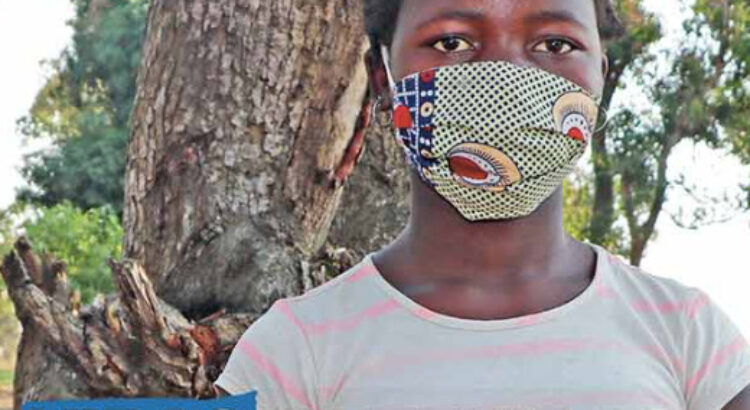
Xiluva, de 17 años, de Mozambique, dijo: “Espero que podamos volver a las clases; que no aumenten los casos de matrimonios precoces durante la pandemia, porque creo que durante este periodo algunas niñas serán sometidas a matrimonios precoces, otras estarán embarazadas.
“Como las niñas están en casa sin hacer nada, algunos miembros de la familia no aceptan que la niña no contribuya a la alimentación. Obligan a la niña a salir a buscar comida; para los padres, tener una niña en casa es una carga sobre sus espaldas y para librarse del peso entregan a sus hijas a un hombre”.
Plan International insta a los gobiernos de todo el mundo a financiar y permitir un regreso seguro a la escuela para todos las alumnas y alumnos, reconociendo que las niñas corren un mayor riesgo que los niños de abandonar la escuela de forma permanente.
La organización también pide que se mejore la formación tanto de las/os profesoras/os como de las/os alumnas/os en el uso de la tecnología, para mejorar la calidad del aprendizaje a distancia en los países donde las escuelas permanecen cerradas y para que la educación sea más resistente en caso de futuras crisis.
Esto incluye la planificación para futuros cierres, identificando a las alumnas y alumnos más necesitados de apoyo e invirtiendo en métodos de alta y baja tecnología, como la radio, la televisión y el aprendizaje en línea, así como la distribución de kits escolares con planes de estudio, material de papelería y bolígrafos.
“La reconstrucción y el avance deben realizarse desde la igualdad y requiere de esfuerzos de todas las autoridades, gobiernos y sociedad civil. Los gobiernos deben abordar las barreras financieras para que las niñas asistan a la escuela y limitar el daño que la pandemia ha causado a su educación y perspectivas futuras,” señala Débora Cobar.
Fuente. Periódico Digital Centroamericano y del Caribe
Esta historia es parte del especial “Estudiar en pandemia” de Diario Libre.
Un equipo de Diario Libre se movió por Santo Domingo y pueblos del interior del país para conocer las experiencias de los niños, adolescentes, padres y maestros sobre la educación a distancia y semipresencial en esta pandemia. El viaje llegó hasta las primeras comunidades haitianas al otro lado de la frontera.
Las historias encontradas son un reflejo de la desigualdad que ha traído la pandemia del COVID-19 en el sistema educativo. También, de la deserción, el rezago y de los retos de los maestros para nivelar a esos alumnos que por desmotivación o falta de equipos se han alejado de lo académico.
Del recorrido, Diario Libre compiló en un video las experiencias más reveladoras sobre la situación en muchos hogares. Y las fotografías que se comparten a continuación también reflejan esa covidianidad educativa.
Un niño repasa en su hogar en Villa Mella las clases contenidas en un cuadernillo confeccionado por el Ministerio de Educación para la educación a distancia por la pandemia, en abril de 2021. ( DIARIO LIBRE/PEDRO BAZIL)
Una niña residente en La Guázara, Barahona, observa los cuadernillos que le entregaron en la escuela para estudiar a distancia, el 13 de abril de 2021. Al fondo está el televisor del hogar en el que, por asuntos técnicos, no puede sintonizar las clases que imparte el Gobierno para su grado. ( DIARIO LIBRE/EDDY VITTINI)
Un adolescente, residente en Las Salinas, Barahona, mira el televisor del hogar en el que, por fallas técnicas, no puede sintonizar las clases que imparte el Gobierno para su grado, el 13 de abril de 2021. ( DIARIO LIBRE/EDDY VITTINI)
Un adolescente con la laptop que recibió del Gobierno dentro del programa República Digital, el 13 de abril de 2021. ( DIARIO LIBRE/EDDY VITTINI)
Hermanos se distraen con el celular de su madre una mañana de abril de 2021. ( DIARIO LIBRE/PEDRO BAZIL)
Una adolescente residente en Pedernales ayuda a su madre a lavar la ropa como parte de sus ocupaciones diarias tras desconectarse de las clases a distancia en la pandemia, el 14 de abril de 2021. ( DIARIO LIBRE/EDDY VITTINI)
Un niño juega frente a su casa en El Limón, Jimaní, en horas en que el Ministerio de Educación transmite clases a distancia por televisión, el 15 de abril de 2021. ( DIARIO LIBRE/EDDY VITTINI)
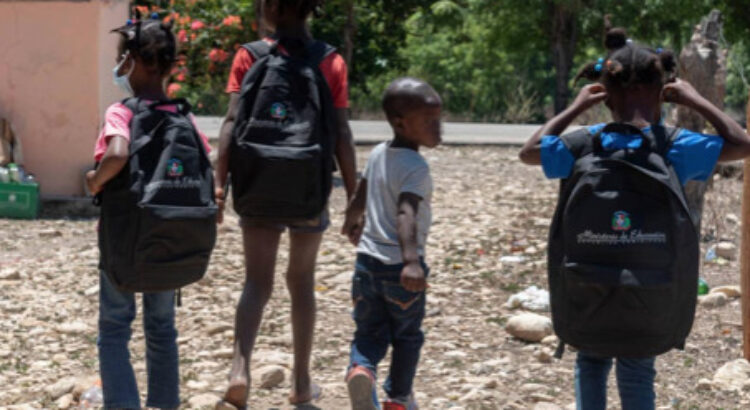
Una escuela cerrada en Los Tres Charcos, Oviedo, por la pandemia, el 14 de abril de 2021. ( DIARIO LIBRE/PEDRO BAZIL)
Alumnos llegan a una escuela en Pedernales para recibir clases semipresenciales, el 14 de abril de 2021. ( DIARIO LIBRE/EDDY VITINI)
Niños reciben clases semipresenciales de su maestra en una escuela de Pedernales, el 14 de abril de 2021. ( DIARIO LIBRE/EDDY VITTINI)
Un niño descansa mientras toma clases semipresenciales en una escuela de Pedernales, el 14 de abril de 2021. ( DIARIO LIBRE/EDDY VITINI)
El portero de una escuela en Jimaní esparce alcohol en las manos de una visitante al centro como parte de las medidas protocolares de higiene para el retorno seguro a la escuela durante la pandemia, el 15 de abril de 2021. ( DIARIO LIBRE/EDDY VITTINI)
Una madre lleva a su hijo a la escuela a tomar clases semipresenciales, en El Limón, Jimaní, el 15 de abril de 2021. ( DIARIO LIBRE/EDDY VITTINI)
El portero de la escuela de la comunidad haitiana Los Algodones camina hacia el recinto educativo de color azul y amarillo, el 29 de abril de 2021. ( DIARIO LIBRE/PEDRO BAZIL)
En la pizarra de un aula de la escuela de la comunidad haitiana Los Algodones queda parte de las clases presenciales dadas el 29 de abril de 2021. ( DIARIO LIBRE/PEDO BAZIL)
Dos alumnas de una escuela de la comunidad haitiana Tilory conversan mientras esperan que lleguen los demás estudiantes al aula, el 29 de abril de 2021. ( DIARIO LIBRE/PEDRO BAZIL)
El informe titulado «Una nueva generación: 25 años de esfuerzos en favor de la igualdad de género en la educación» muestra que desde 1995 se han matriculado 180 millones más de niñas en la enseñanza primaria y secundaria alrededor del mundo.
Un informe de la oficina regional de la Unesco indica que en América latina y el Caribe se registró “un progreso significativo” en la matriculación de las niñas y que se acerca a la universalización en el nivel primario, pero aun persisten barreras en el acceso para sectores vulnerables en Guatemala, Haití, Surinam, Honduras, Uruguay y Nicaragua.
El informe titulado “Una nueva generación: 25 años de esfuerzos en favor de la igualdad de género en la educación” muestra que desde 1995 se han matriculado 180 millones más de niñas en la enseñanza primaria y secundaria alrededor del mundo.
El reporte destaca que en la región “se ha registrado un progreso significativo en la educación de las niñas, acercándose a la universalidad en el acceso a la educación primaria”.
Y da como ejemplo a Guatemala donde la tasa de finalización de primaria de las niñas más pobres “ha aumentado más del doble en tan solo 15 años, prácticamente eliminando la brecha con los niños”.
También destaca el caso de México en cuyo segundo ciclo de secundaria “el porcentaje de niñas matriculadas pasó del 38% en 1995 al 84% en 2018”, mientras que en Costa Rica pasó de un 38% en 1995 al acceso universal en el 2018.
No obstante destaca que en Haití, Guatemala, Surinam, Honduras, Uruguay y Nicaragua, “persisten grandes disparidades de género en el acceso a la educación, en particular entre el alumnado más vulnerable”.
En Belice, por ejemplo, “casi ninguna joven pobre de zonas rurales finalizó el segundo ciclo de escuela secundaria”.
Asimismo, son los hombres jóvenes de la región quienes tienen más probabilidades de desvincularse de la educación y abandonar la escuela antes de tiempo.
A nivel mundial, el informe destaca que hay tres veces más mujeres matriculadas en las universidades que hace dos décadas.
Mientras que en la región esa diferencia a favor de las mujeres se evidencia en casi todos los países latinoamericanos.
“El mundo ha cambiado significativamente en los últimos 25 años, cuando las niñas luchaban por hacer realidad su derecho a la educación. Hoy en día, hay más niñas que niños matriculados en las escuelas y universidades”, dijo Manos Antoninis, director del Informe.
Y agregó: “Una agenda de igualdad de género para los próximos 25 años requiere un nuevo enfoque en todo el mundo, incluida América Latina y el Caribe”.
Por su parte Claudia Uribe, directora de la OREALC/UNESCO Santiago afirmó: “Veinticinco años después de la histórica Declaración y Plataforma de Acción de Beijing, las niñas enfrentan muchas menos barreras para acceder a la escuela”.
Pero indicó que “hay otros factores que las alejan de alcanzar su potencial, como son algunas normas culturales que establecen bajas expectativas para ellas en materia educativa”.
El informe de UNESCO destaca que el lento progreso en los avances en materia de igualdad de género en la educación “se debe a la persistencia de normas de género negativas en la educación”.
En las zonas rurales de muchos países de ingresos bajos y medios, “a menudo se espera que las niñas se casen y asuman funciones domésticas, lo que actúa como una barrera para su educación, como ocurre entre las niñas indígenas de Guatemala y México”, precisa el reporte.
Eso es lo que le quedó a nuestra madre Patria, un montón de hembras paridas “cargando” con una barriga ´e mango, pues es lo único que en estos aciagos tiempos nuestra Pacha Mama les ha regalado con creces para nutrir a su frágil descendencia.
Las razones que nos han traído a esta “situación país” obedecen a un sin número de intereses encontrados de los grupos hegemónicos que hoy “conducen” los destinos de todos los que tuvimos el privilegio de nacer en esta tierra de “gracia” por eso en honor a nuestros paisanos, hombres y mujeres que han perdido su vida buscando una mejor “calidad de vida” hoy iniciamos esta serie de textos sobre lo que hoy golpea a “lo venezolano”.
Deseos no empreñan
Cuando entenderán los “afectados” que el hecho de que el territorio de la República Bolivariana de Venezuela posea un cuantioso volumen de riquezas en minerales y biodiversidad no es sinónimo de prosperidad para el “pueblo” que aquí reside.
Feracidad a raudales
Aquí y acuyá usted lanza una pepa ´e lo que sea y ahí tiene su “mata”, sin embargo doscientos años después aún no hemos entendido a los Bolivarianos cuando afirman que el talento sin probidad es un azote.
Donde come uno
Ese cuento se difuminó como la sombra “barata” porque en este tiempo y en el que fue “mejor” igualito si no alcanza para uno, mucho menos para dos.
Así, pare de contar
En este espacio geográfico contamos con diversas potencialidades que están allí “prestas” para ser desarrolladas atendiendo a un proyecto país que se “perdió” en el tiempo.
Ergo aspiramos que lo brevísimo de estas mudas cavilaciones sea el “detonante” para seguir construyendo sueños en nuestra Matria.
OtrasVocesenEducacion.org existe gracias al esfuerzo voluntario e independiente de un pequeño grupo de docentes que decidimos soñar con un espacio abierto de intercambio y debate.
¡Ayúdanos a mantener abiertas las puertas de esta aula!






 Users Today : 40
 Total Users : 35494422
 Views Today : 54
 Total views : 3613576