Page 16 of 102
1 14 15 16 17 18 102

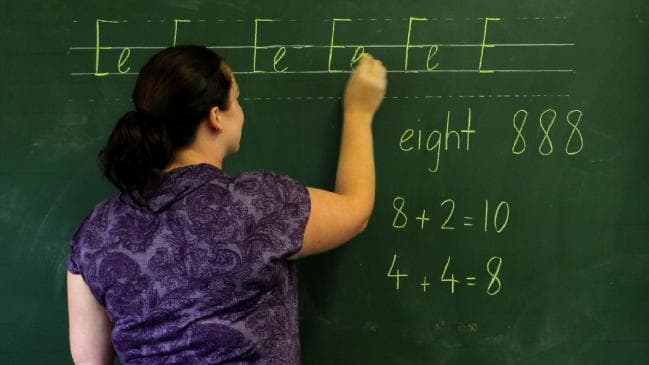
Australian teachers are ‘at the end of their tethers’ and abandoning the profession, sparking a crisis

Oceania/ Australia/ 23.01.2019/ Source: www.news.com.au.

Australia is facing an education crisis as hordes of disillusioned and burnt-out teachers flee the profession, with potentially damaging ramifications for the whole country.

Former educators have spoken to news.com.au about the “miserable” conditions driving an estimated 40 per cent of graduates to quit within the first five years of entering the workforce.

And at the other end of the spectrum, a growing number of veterans are walking away from the job in frustration.

“By the time I walked out of that classroom on my very last day as a teacher, I didn’t feel any sadness or regret — just relief,” former teacher Sally Mackinnon, who quit after 13 years, told news.com.au.

“I was at the end of my tether. My time was up. I didn’t want to be a teacher who just didn’t give a crap and was turning up for a job. Kids deserve more than that. They deserve passion and energy. But it’s so hard to maintain that, and I wasn’t alone.”

Research and first-hand accounts of former teachers indicates a potent mix of stress, workload, parental abuse and pay are combining to push many to breaking point.

A decade since leaving, Ms Mackinnon knows of only one or two ex-colleagues who are still employed full-time, with most having left or moved to part-time hours.

“These are really good teachers,” she said. “That makes me really sad.”

Up to 40 per cent of graduate teachers quit the profession within the first five years of work, sparking a national education crisis.Source:News Limited

Adam Voigt became a school principal at just 35 after a long run as a respected teacher, but he also walked away from his dream career due to its crushing reality.

“It’s not just about paying teachers more. It’s not just about improving conditions. We’ve got to get sophisticated about how we tackle the problem to meet the entire workforce’s needs.”

A BROKEN SYSTEM

Since leaving, Mr Voigt has become an education consultant who works with individual schools to improve their culture and conditions, addressing the issues forcing teachers out.

“If you view the education workforce as a bucket and you want high-quality water in it, you can pour better quality in or you can fix the two big holes in the bottom,” Mr Voigt said.

“The first thing most would do is fix the holes, but we’re not.”

Labor this week announced a plan to raise university entrance scores for education degrees, in a bid to lift teacher quality.

While it was an “admirable” idea, Mr Voigt said it would do little on its own to help.

“Nationally, we need to have the uncomfortable conversation around pay and conditions. Tanya Plibersek wants the same level of competition to get into teaching as you find with medicine. You’ve got to pay teachers like doctors then.

“What’s the point of luring them into teaching degrees if they quit after a few years of working? It’s a waste of time and energy.

“We can’t wait until teachers are completely wrung out to deal with why they’re unhappy. We need to figure out how we’ve gotten here in the first place.”

Growing up, Ms Mackinnon loved school and adored her teachers, and always wanted to follow in her mum’s footsteps by becoming an educator.

After graduating, she went to university and then achieved her lifelong dream, which she “absolutely loved”.

“I threw myself in 100 per cent. I was dedicated and did the long hours, my life revolved around the classroom,” she said.

“But at about the 10-year mark something happened. I wasn’t sure I could continue to work as passionately as I had. It was time to move on.”

A combination of factors contributed to tear away at her spirit — the constantly growing and enormous burden of administrative tasks one of the big issues.

“I went from being able to spend most of my time dedicated to my students, planning great lessons and putting my energy into my classroom, to being taken over by meetings, paperwork and checking boxes for the sake of it,” Ms Mackinnon said.

It’s something Mr Voigt can relate to, saying the role of a principal has shifted from school leader and mentor to corporate manager.

Most of the paperwork he had to do was “pointless” box-ticking and red tape that offered little-to-no value to the school environment, he said.

“There was a study about how principals spend their time and less than one per cent was talking to teachers about students. That should be the core business of their role.

“For principals, it’s the administrative load they’re expected to carry. The sheer volume of paperwork is absolutely enormous. What you’re expected to deal with and the hours you’re expected to work are huge.

“They’re sitting in their offices forced to write reports and do admin when they should be helping teachers to become better teachers.”

Another factor that current and former teachers say is making the job a nightmare is the attitude of parents, which seems to have shifted dramatically in the past decade.

Mr Voigt said the “blame game” was becoming worse, with mums and dads expecting schools to be a single solution for every requirement.

“We wind up crowding schools with nonsense. Instead of teaching kids how to learn and to be good citizens, we teach them how to drive, how to eat, how to have manners … all of those things that take up precious time.”

The biggest losers from the teaching crisis will be Australian students — and that will have long-term ramifications for the whole country.

The biggest losers from the teaching crisis will be Australian students — and that will have long-term ramifications for the whole country.Source:istock

And when a kid gets in trouble, the teacher inevitably does too, he said.

“Thirty years ago, if you got in trouble at school then you were in trouble twice — once there and again at home,” he said.

“Now, the parent goes down to the classroom and thumps desks and complains. We’re no longer on the same page about turning these kids into good citizens. We’re arguing about who’s right.”

An assistant principal in Sydney, who asked not to be named, said educators were now focusing on how to deal with aggressive parents.

“Part of initial meetings with my new colleagues at a new school included plans to support me as I cop abuse from both parents and students.

“We (are meant to) report each incident that occurs … but many don’t because they simply don’t have time.”

Ms Mackinnon also said students and their parents began to change as she was leaving the job — something her teacher friends say only got worse with the rise of social media and smartphones.

“The perception of being a revered position has gone and it’s quite thankless,” she said.

TEACHERS ARE MISERABLE

Ms Mackinnon entered a new career as a personal stylist and started her own business in Melbourne 10 years ago, which has been a huge success.

She’s occasionally asked if she misses her former life and whether she ever considered going back one day.

“I feel sad to say it, but no, absolutely not,” Ms Mackinnon said.

“I caught up with a girlfriend recently who is still teaching and she said her job feels more like being a policewoman. She’s one of the few that still is teaching, by the way. Most of my friends have either left or gone part-time.”

Sally Mackinnon quit teaching and started a new career as a personal stylist and said she hasn’t looked back.Source:Supplied

Another former teacher, who spoke on the condition of anonymity, said there was a risk of future educators “becoming so disillusioned that they don’t enter it in the first place”.

“Teaching is the most incredibly rewarding job and I’d hate to see there ever being a time when society runs out of quality teachers,” they said.

Meanwhile, the former assistant principal said he was burning out and “doing damage to myself” but, since leaving, couldn’t be happier.

“It’s mainly about the workload and level of disrespect from parents,” he said.

There was a growing awareness about the issues facing teachers — and the national consequences of the exodus from the workforce, Mr Voigt said.

It’s not just young teachers quitting — veterans at the other end are also burning out and leaving.

It’s not just young teachers quitting — veterans at the other end are also burning out and leaving.Source:Supplied

However, the conversation still has negative undertones that needed to be addressed.

“People seem to have lost trust in schools and teachers over a long period of time,” Mr Voigt said.

“The conversation is about how they should just be happy because they get to knock off at 3.30pm and they get lots of holidays. The teaching workforce isn’t soft. They’re representative of any workforce and they’re landing in awful conditions.”

CHILDREN ARE SUFFERING

The consequences of the worsening issue affect more than just parents, with Australia running the risk of an entire generation of kids receiving a sub-par education.

A report by the Australian Institute for Teaching and School Leadership warned the mass exodus of teachers would lead to “the loss of quality teaching graduates, which could in turn impact the development of a strong workforce of experienced, high-calibre teachers”.

For graduates, most enter the profession with “positive motivations to teach … and a desire to be good teachers”, the report said.

But a high workload and a lack of support cause many to become disillusioned and exit early into their careers.

Across the board, a government report in 2014 indicated that 5.7 per cent of the teaching workforce was walking away each year.

“The students will suffer,” Mr Voigt said. “They already are. We have a big problem and we need to do something.”

In a paper for the Australian Journal of Teacher Education, Shannon Mason from Griffith University said teacher attrition is “costly, both for a nation’s budget and for the social and academic outcomes of its citizens”.

And the problem would be worst-felt in non-metropolitan areas, in undesirable schools and in specific discipline areas such as senior mathematics and science, Ms Mason warned.

“The teaching profession is becoming devalued in a context of heightened pressure to perform on standardised testing, intensificration of teachers’ workloads and a broadening of the role that teachers play in the lives of their students,” she said.

Source of the notice: https://www.news.com.au/finance/work/at-work/australian-teachers-are-at-the-end-of-their-tethers-and-abandoning-the-profession-sparking-a-crisis/news-story/43c1948d6def66e0351433463d76fcda
Comparte este contenido:

Kiribati: “En las islas del Pacífico los niños están para ser vistos, no oídos”

Oceanía/Kiribati/10 Enero 2019/Fuente: El país

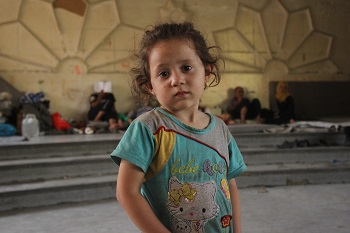
Hay pocos lugares tan aislados y dispersos como Kiribati. Este país del Pacífico central, de solo 116.000 habitantes, está compuesto por 33 atolones de coral diseminados en una zona mayor que el subcontinente indio. Kiribati está lejos de casi todo, mecido en verdiazules aguas ecuatoriales, pero incluso aquí llega la violencia contra los niños y niñas. De hecho, los 14 estados insulares del océano Pacífico concentran cuatro de los cinco países con más agresiones contra las mujeres del mundo y una de las mayores tasas de violencia contra la infancia. Allí donde se han recabado datos, siete de cada diez adultos, incluyendo maestros, admiten pegar a los menores con los que conviven.

“Aquí, la violencia contra la infancia es una lacra tremenda, pero escondida”, explica desde Fiyi Sheldon Yett, el representante de Unicef en el Pacífico. “Una de las razones es la percepción de que si te ahorras el palo, malcrías al niño”. En otras palabras, se considera que disciplinarlo utilizando la fuerza o agresiones verbales es necesario para educarlo y para que asimile su puesto en la base de jerarquía social. Las faltas de respeto a padres y profesores en países occidentales suelen atribuirse al poco rigor de los métodos educativos. “A estas normas sociales se suman cuestiones estructurales como la desigualdad y la pobreza; el poco interés de algunos Gobiernos en priorizar la cuestión y la falta de formación e información por parte de las familias,” añade Yett. Otro factor es el estrés parental exacerbado por cuestiones como el desempleo y las catástrofes naturales.

El maltrato y abandono de la infancia le cuesta 209.000 millones de dólares anuales a Asia del este y el Pacífico, el equivalente a un 2% del Producto Interior Bruto (PIB), y su incidencia es 10 veces mayor que la de todas las formas de cáncer juntas. En Vanuatu, se cobra hasta el 4% del presupuesto del país. “Las cifras son importantes para persuadir a los Gobiernos de que adopten medidas”, explica desde Tailandia Rachel Harvey, especialista de protección de la infancia de Unicef en Asia-Pacífico. “Acabar con la violencia no es solo un imperativo moral; si no protegemos a los menores, estamos socavando el desarrollo económico de nuestros países y no alcanzaremos los Objetivos de Desarrollo Sostenible (ODS)”.

Relaciones tóxicas

Según Harvey, los costes se desprenden de la demanda de servicios sociales y de los problemas de salud física y mental, que impiden una participación plena en la vida económica y social y pueden causar problemas como depresión crónica, consumo de drogas, conductas sexuales de riesgo y suicidio. Además, los supervivientes son más proclives a seguir recibiendo —y propinando— maltratos el resto de su vida y a padecer dolencias cardíacas y diabetes. Buena parte de estos problemas tienen su origen en un fenómeno descrito recientemente por la ciencia.

Atizar constantemente a un niño, ridiculizarlo en público o decirle que no llegará a nada en la vida cada vez que se equivoca les puede parecer poca cosa, pero neurobiólogos como los de la Universidad de Harvard en EE UU sugieren lo contrario. Se ha descubierto que la producción continuada de hormonas del estrés como el cortisol interfieren en el desarrollo del cerebro, alterando la arquitectura y la química neuronal. El daño afecta de por vida la capacidad de la persona de aprender, progresar en el terreno laboral y mantener relaciones estables. “Sobre todo si se produce en los primeros 1.000 días de vida”, señala Harvey.

Estudios en el Pacífico dan cuenta de la magnitud del reto: un 71% de los menores en Fiyi han experimentado violencia física y/o psicológica en su hogar; frente a un 72% en las Islas Salomón, un 78% en Vanuatu y un 81% en Kiribati. “Los niños están para ser vistos, no para ser oídos”, reza un dicho en las Islas Salomón. Hace apenas una década que se recogen datos sobre violencia en la región, por lo que los expertos coinciden en la importancia de seguir recabando más y mejores informaciones sobre el fenómeno y la eficacia de las intervenciones. Pero no es tan sencillo parece.

“Recolectar datos sobre violencia contra la infancia es muy caro y hacerlo en lugares tan remotos como las islas del Pacífico es extremadamente difícil”, explica Yett, de Unicef. Sabe por experiencia que, a menudo, la única forma de acceder a centenares de islas es en barco y a través de aguas embravecidas. “Es difícil llegar allí y saber qué ocurre en las comunidades, que son todas diferentes entre sí. Al contrario de lo que suele pensar la gente, trabajar con poblaciones pequeñas y aisladas es tanto o más complicado que hacerlo con grupos mayores y más concentrados”.

El Pacífico está realizando avances en materia de igualdad de género. Sin embargo, tiene tres de los cinco países del mundo con una mayor proporción de chicos adolescentes que aprueban que un hombre pegue a su esposa. En las Islas Cook, formadas por volcanes subacuáticos cubiertos de corales, una de cada cuatro mujeres considera que “el hombre debe mostrar que él es el jefe”, y una de cada tres víctimas no se lo cuenta a nadie.

Según un informe de Unicef y el Fondo de Población de la ONU, entre un 60% y un 80% de las mujeres en el Pacífico sur sufren violencia física y sexual durante su vida, tanto por parte de sus parejas como de otros hombres. En el archipiélago de Vanuatu, una de cada cuatro mujeres afirma que su primera experiencia sexual fue una violación antes de los 15 años. Para los niños, presenciar violencia en el hogar puede ser tan dañino como sufrirla, y al hacerse mayores tienen más probabilidades de emparejarse con personas que les maltratan y de agredir a sus propios hijos, perpetuando un ciclo de violencia intergeneracional. “La violencia contra las mujeres y contra la infancia van de la mano y deben abordarse de forma conjunta”, apunta Yett.

Esfuerzo colectivo

“La única forma de acabar con la violencia es mediante un esfuerzo colectivo”, afirma el responsable de Unicef en el Pacífico. “Los servicios educativos, de salud y de bienestar social deben arrimar el hombro, y necesitamos leyes adecuadas y medios para hacerlas cumplir, además de enseñar a las familias nuevas formas amorosas y constructivas de educar a los niños,” explica. Por ello, su equipo trabaja con organizaciones a todos los niveles: desde Gobiernos nacionales y locales, hasta escuelas, comunidades religiosas y grupos de la sociedad civil. Sensibilizando, formando, aportando apoyo técnico.

Una de las entidades con las que colabora Unicef es el Grupo de Apoyo a las Víctimas de Samoa (SVSG), una ONG creada en 2005 para acoger a las niñas que han sufrido agresiones y darles oportunidades de formarse y trabajar. “Al principio no fue sencillo porque nadie quería hablar sobre violencia, pero cuando más la escondemos, peor”, señala la presidenta de SVSG Siliniu Lina Chang.

Países de Asia-Pacífico se reunieron este octubre en Camboya para intercambiar experiencias sobre la cuestión, incluyendo el problema emergente del acoso online, y este 2019 se celebrará un foro político de alto nivel en la ONU.

“Tenemos que asegurarnos de que los Gobiernos comprendan la importancia del tema”, afirma Yett. “No es una inversión a la que puedas poner una placa y señalar con el dedo como es el caso de un edificio nuevo. El trabajo con las familias es lento y difícil de mostrar, pero es esencial para el desarrollo de las sociedades, en el Pacífico y en todo el mundo”. La violencia llega lejos, pero el cambio, también.

Fuente: https://elpais.com/elpais/2018/11/14/planeta_futuro/1542211827_015390.html

Comparte este contenido:

Why we need to take food education in Australian schools more seriously

Oceania/ Australia/ 07.01.2018/ Source: theconversation.com.

Schools are expected to do a lot of important things. We frequently hear calls for schools to make children job-ready, help drive economic innovation, provide them with greater literacy and numeracy skills, maintain social cohesion and fairness through anti-bullying and gender equity programs, prevent obesity and promote students’ mental health. And much more. So what is happening about food in secondary schools?

The renewal of interest in food issues

In recent years, there has been a renewal of interest in food education, particularly in secondary schools. This is partly encouraged by celebrity chef television shows, the surge in obesity, growing unease about our environmental impacts, and the diverse, multicultural nature of contemporary Australian food. This range of interests is reflected in what is being taught in Australian schools.

The renewed interest is seen among various international innovations. One example is compulsory cooking programs in English and Welsh schools. These programs require students to develop an enjoyable meal repertoire consistent with the UK dietary recommendations, and sustainably source school food.

An associated venture is the Food Teachers’ Centre in London. This provides in-school professional development for food teachers.

How is food education taught in Australian secondary schools?

The current Australian curriculum splits food education into two streams: the health and physical education (HPE) stream and the design and technologies stream. Nutrition principles are taught in the HPE stream and food skills (such as cooking) are taught in the technologies stream. If a school is fortunate enough to have a year 7 or year 8 home economics course, the two streams may be combined in the one course.

The duration of food education courses in secondary schools varies a lot, from none to one or two hours a week, often for a year or less. At senior levels (years 11 and 12) elective subjects are offered in the various states and territories such as Food Technology or the new food studies curriculum in Victoria.

Research with home economics teachers in Queensland and elsewhere in Australia suggests time and resources are often inadequate for teaching the diverse knowledge and skills associated with food.


Aspects of food may be taught in science (such as food chemistry) or in humanities (such as cultural foods and environmental issues) or in PE. But most food education happens in home economics, and contrary to many people’s opinions, it is alive and well in many parts of Australia.

Food education takes place in preschools, primary schools and secondary schools, though in different ways and to different degrees. Programs like the kitchen garden scheme have been well received.

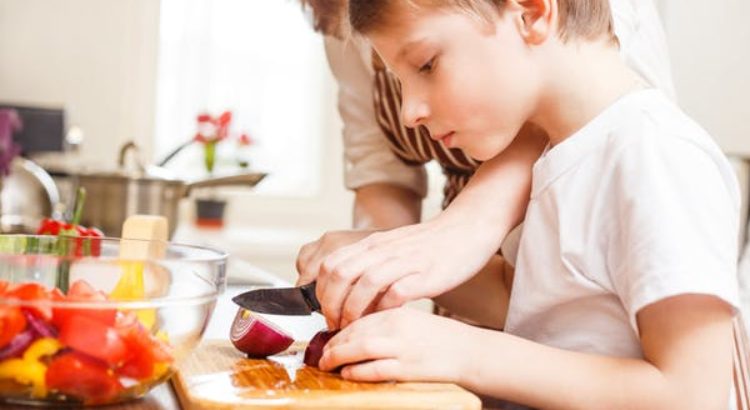
Many teachers deal with food, in all its aspects, across the school years. These include activities like growing food in school gardens, cooking it, analysing its nutritional properties and environmental impacts, exploring local farms, shops and food markets, taking part in BBQ or Masterchef style competitions and catering for schools and Fair Food Universities.

Research in secondary food education

growing evidence base, mainly in the US, Canada, western Europe and Australia suggests food literacy and skills education programs lead to greater confidence in performing practical food skills, such as planning and preparing meals, interpreting food labels, basic food safety, food regulations. This, in turn, is associated with healthier dietary choices.

Australian research in this area has grown strongly over the past ten years. It has provided evidence for the establishment of several food literacy frameworks with focuses on food gatekeepers and families as well as broader environmental aspects of food systems.

Understanding how to read food labels can help people make healthier choices. from www.shutterstock.com

Recent research has shown many secondary school food teachers tend to favour practical domestic skills and associated knowledge. They express less interest in broader historic, social, environmental and ethical issues. Food and health professionals remain strongly supportive of food education – especially for acquiring practical skills – as does the general public.

Our recent work has also examined the views of parents and recent school leavers who live independently. Although they hold a broad spectrum of opinions, around two thirds see food education as an important life skills subject. Most think it should be compulsory for between one and three hours per week in each of years 7 to 10. These views contrast sharply with the priorities of most secondary schools.

Current and future challenges

Food education in Australian secondary schools is now facing several challenges. These challenges are related to changes in population health status, changing food patterns, food technologies, food and beverage marketing and environmental impacts.

The fundamental question is: Does it meet the present and future life needs of students and their families? At present, food education tends to be patchy, with some emphasis on students’ acquisition of food preparation skills but lesser coverage of environmental and social issues, marketing practices or family dynamics.


Possible solutions include providing more intensive education about food in university teacher education programs and continuing professional education for food teachers. These teachers also need more adequate timetable allocations and resources.

A comprehensive food education framework from pre-school to senior secondary school is required to prevent repetition and reinforce skills learned in the early years. This has begun in the UK and in the RefreshED program in Western Australia. A more focused curriculum across all years of education is required. This should be accompanied by continuing evaluation of the impact of food education on students, their families and the wider population.

Source of the notice: https://theconversation.com/why-we-need-to-take-food-education-in-australian-schools-more-seriously-106849


Comparte este contenido:

Educación emocional: ¿una asignatura escolar pendiente?

Por: Infobae.com.

Matemáticas, lengua, idiomas. Pocos dudan de la necesidad de aprender cada una de las materias que el sistema educativo propone, pero ¿qué pasa con las emociones? ¿Se puede enseñar a manejarlas en las escuelas? ¿Y en casa?

La inteligencia emocional es la capacidad de sentir, entender, controlar y modificar estados anímicos propios y ajenos. La Organización Mundial de la Salud (OMS) propuso el desarrollo de las «Habilidades para la vida» (life skills) en 1986 y luego, en 1993, elaboró un nuevo documento centrado en la Educación (Life Skills Education in School), en el cual define dichas habilidades como «capacidades para adoptar un comportamiento adaptativo y positivo que permita a los individuos abordar con eficacia las exigencias y desafíos de la vida cotidiana».

Es que los beneficios de implementar estas habilidades son significativos. En España, por ejemplo, el Grup de Recerca en Orientació Psicopedagògica (GROP) demostró que los jóvenes con un mayor dominio de sus emociones presentan un mejor rendimiento académico, mayor capacidad para cuidar de sí mismos y de los demás, predisposición para superar adversidades y menor probabilidad de implicarse en comportamientos de riesgo -como el consumo de drogas-.

Así y todo, sólo una universidad pública española ofrece, desde 2012, la asignatura Educación Emocional en el grado de Magisterio (la Universidad de La Laguna, en Tenerife).

La necesidad de enseñar el manejo de las emociones es primordial en el actual contexto de cambio de paradigma. «Hoy el acceso a la información no es un problema», expresa Matías Liberati de la ONG Resaca Solidaria, donde se dedican a la inclusión de niños, niñas y adolescentes a través de la enseñanza de estas herramientas.

Y agrega: «Los chicos acceden a la información que necesitan desde su celular o computadora; aplicar la educación emocional es lo que nos permitirá un cambio genuino para la persona, ya que identificando los estados de ánimo de alumnos y docentes se detectan situaciones personales que afectan directa o indirectamente el acceso al conocimiento».

Beneficios sin fronteras
La presencia de la educación emocional en los procesos de enseñanza y de aprendizaje comienza a ser considerada en diferentes latitudes. Actualmente, más de 20 países la aplican en sus colegios; entre ellos Dinamarca, México, Nueva Zelanda y Suiza. En tanto, en nuestro país, la provincia de San Juan plantó bandera y sancionó la Ley Nº 1327-H, donde la incluyeron «como práctica necesaria para el desarrollo integral de los educandos».

Los beneficios de ofrecerles estas herramientas a los niños y niñas desde edades tempranas son múltiples. El licenciado en psicología Lucas Malaisi, presidente de Fundación Educación Emocional, los explica: «La Educación Emocional es una estrategia de promoción de la salud que busca mejorar la calidad de vida de las personas mediante la dinamización de habilidades emocionales y hábitos salutógenos. Se trata de educar desde y para la salud, buscando esparcirla y fortalecerla, cuyas técnicas son de baja complejidad y, por tanto, de fácil y económica implementación. Además, por si fuera poco, al instalarhábitos salutógenos se obtienen resultados sustentables, es decir que perduran en el tiempo. Se trata de tecnologías psicológicas de vanguardia al servicio de la educación y el bien común», explica.

¿Y en casa?

Mientras aguardamos a que esta práctica se expanda y pueda ser adoptada en cada uno de los establecimientos escolares, aplicarla en el hogar es de igual o mayor importancia. ¿Podemos impartir a nuestros hijos la educación emocional? ¡La respuesta es sí!

El psicólogo Alejandro Schujman, especializado en familias y adolescencia, explica que para hacerlo es necesario legitimar las emociones: «Todos tenemos celos, enojos y tristeza. No hay emociones buenas y malas».

Y suma que para poder hacerlo, es necesario educar con el ejemplo: «Los chicos no escuchan todo el tiempo los discursos largos y aburridos que podamos darles, pero no dejan de mirarnos; entonces, la mejor manera de educar las emociones es que un padre o madre o cualquier adulto pueda gestionar de manera saludable las suyas. No digo que no hay que enojarse o entristecerse; por el contrario, tiene que ver con poder transitar cada una de las emociones y aceptarlas», detalla Schujman.

¿Más fácil? Por ejemplo, si ante un reto un hijo o hija le dice a su padre que no lo quiere más, el psicólogo aconseja no reprimir ese sentimiento ni taparlo con la culpa, con frases conocidas del estilo: «¿cómo me decis esto?'» o «¡yo, que doy la vida por vos!».

¿Te suenan? Bueno, la idea es aceptar que en ese momento el niño está atravesado por el enojo y aceptar su sufrimiento porque también es sano enseñarle a sufrir y no, en el afán de querer que sea feliz, eliminar la tristeza o algún otro sentimiento parecido.

Por último, Schujman asegura que el primer paso para que todos podamos educar emocionalmente, sin importar si somos maestras, tías, padres, madres o abuelos, es tener la convicción y ganas de enseñarles a los más pequeños desde los sentimientos. ¿El paso siguiente? Tan sencillo como buscar información, bibliografía, consultar con especialistas y poner atención a estos temas.

Fuente de la reseña: https://www.infobae.com/tendencias/masmariana/2018/12/06/educacion-emocional-una-asignatura-escolar-pendiente/

Comparte este contenido:

Australia: Student protests show Australian education does get some things righ

Oceania/ Australia/ 10.11.2018/ Source: theconversation.com.

Australia’s education system often suffers a barrage of criticism – claims of stagnant or declining NAPLAN results, slippage in international comparisons and rankings, and an irrelevant curriculum, tend to draw the attention of politicians, the media, and the Australian public.

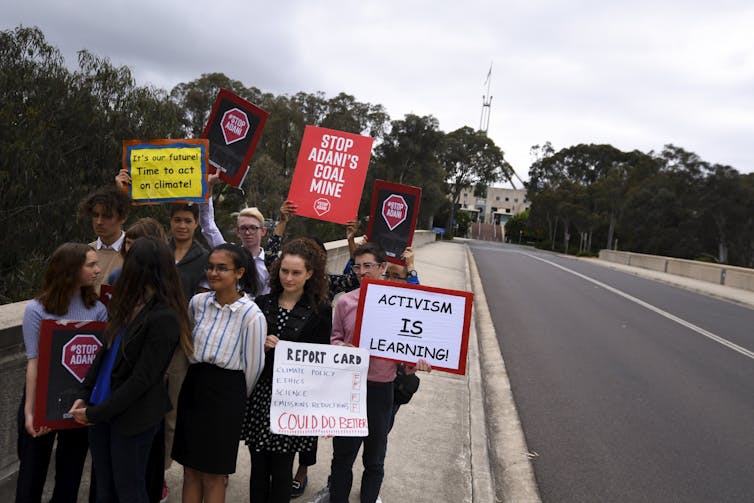
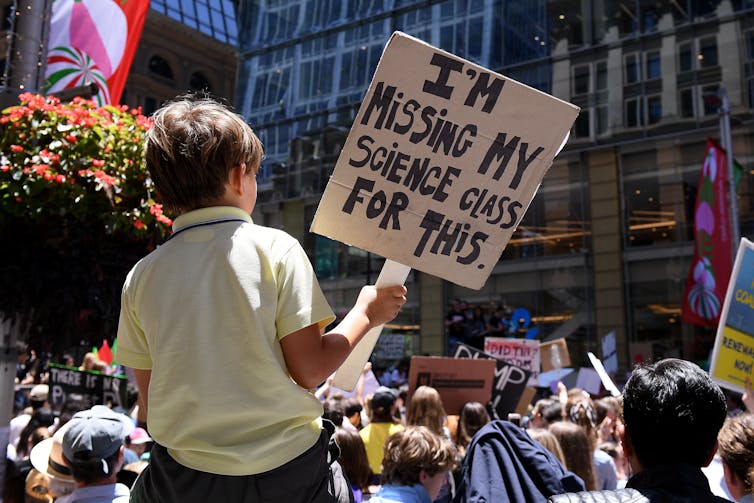
It’s not often we are able to celebrate what’s right in Australia’s education system. But yesterday’s student presence at Parliament house and Friday’s protests where more than 15,OOO Australian students skipped class to demand greater action on climate change should be cause for celebration.


Far from being concerned about an afternoon off school, parents should feel satisfied schools and teachers are doing their job. Participation in these protests meets many of the key goals of our current education system, including students’ capacity to engage in, and strengthen, democracy. Rather than proof of a flawed education system, politically active and engaged students are evidence many aspects of our education system are working well.

Students want action on climate change

Protests called out the federal government’s lack of action on climate change during the protests. Wednesday’s parliament house rally specifically targeted the Adani coal mine project. Students were also seeking an audience with the prime minister to have their concerns heard.

The government’s response to these protests has been, at best, dismissive. Students’ actions have not been recognised as a genuine attempt to engage in robust democratic debate about climate change. Before Friday’s walk-out, Scott Morrison relegated students to the confines of their classrooms, “what we want”, he argued, “is more learning in schools and less activism”.

The students are right: activism is learning. Lukas Coch/AAP

Other members of government have been equally off-hand. Senator James McGrath was more concerned with a spelling error on a single student’s placard than the basis of their grievance. Resources minister Matt Canavan deemed protests as nothing more than a quick ticket “to the dole queue”.

The government’s response is both misinformed and misdirected. Beyond the obvious lack of recognition of political protest as a fundamental pillar of democracy, and means to political change, it also demonstrates a lack of recognition of the goals of Australian schooling, as outlined in our Melbourne Declaration.

The Melbourne Declaration and the role of education

The Melbourne Declaration on Educational Goals for Young Australiansis a document signed by all Australian education ministers which outlines the mandated knowledge, skills and values of schooling for the period 2009-2018. The declaration is a national road map for education and a statement of intent by both federal and state governments, across partisan lines.

The declaration outlines two key goals:

  1. Australian schooling promotes both equity and excellence
  2. all young Australians become: successful learners, confident and creative individuals, and active and informed citizens

It’s the first goal that gathers public attention as excellence and equity, in the form of measurable academic outcomes, dominates public discussion (think NAPLAN, My School, and PISA). More often than not, we’re told it’s here we’re getting things wrong.


In the second goal, the declaration attends to the broad purpose and significance of education. That is, the democratic purpose of education, as an avenue for students’ successful participation in civil society. If events of the last week are anything to go by, our students are all over goal two.

Students at a rally demanding action on climate change in Sydney, Friday, November 30, 2018. Dan Himbrechts/AAP

Sustainability is a stated priority in the Australian curriculum. Beyond understanding sustainable patterns of living and impacts of climate change, students are expected to develop skills to inform and persuade others to take action. Through these protests, relevant sections of the Melbourne Declaration read like a tick-list of student achievement. Students have demonstrated:

  • the ability to think deeply and logically, and obtain and evaluate evidence
  • creativity, innovation, and resourcefulness
  • the ability to to plan activities independently, collaborate, work in teams and communicate ideas
  • enterprise and initiative to use their creative abilities
  • preparation for their roles as community members
  • the ability to embrace opportunities and make rational and informed decisions about their own lives
  • a commitment to participate in Australia’s civic life
  • ability to work for the common good, to sustain and improve natural and social environments
  • their place as responsible global and local citizens.

The Melbourne Declaration is a recognition that education is more than a classroom test and more than measurable results. This is not to suggest the much lauded 3R’s (reading, writing and arithmetic) are not important in education – they are. Rather, it’s an understanding that education and learning is also, and importantly, social, and sometimes immeasurable in nature and practice.


Australian students’ activities over the past week evidence their knowledge and capabilities in an education system valuing both economic and democratic functions of education.

Rather than dismiss students’ actions as ill-informed or misdirected, or deny their capacity to effectively participate in democratic processes, we should recognise their learning and achievements. Let’s celebrate this achievement in Australian education, and encourage their capacity as active and informed citizens within our democracy.

Australian students understand progress happens when individuals join together to demand change. Politicians, take heed.

Source of the notice: http://theconversation.com/student-protests-show-australian-education-does-get-some-things-right-108258

Comparte este contenido:

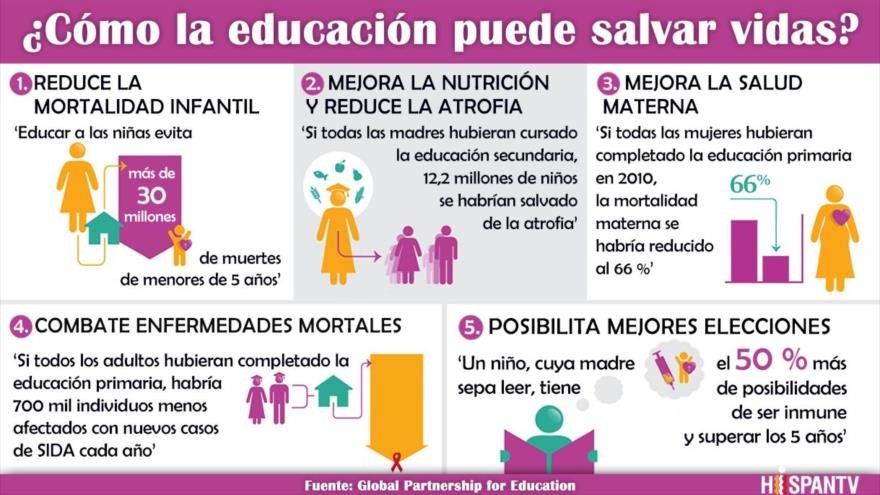
Infografía: ¿Por qué la educación salva vidas en todo el mundo?

Autor: Redacción / Fuente: HispanTV


En la presente infografía los explicamos cómo la vinculación entre la educación y la salud puede salvar vidas de los seres humanos.

Las personas con una mejor educación son mucho menos vulnerables a los riesgos que atañen a la salud, así analiza la plataforma Global PartnershipforEducation, dedicada a fortalecer los sistemas educativos en los países en desarrollo.

Además, indica que los niños no solo deben contar con una buena salud para poder aprender, sino que también deben aprender a estar saludables.

Cuanto más sean educadas las madres, es mucho más probable que tomen decisiones más saludables para ellas y para sus hijos, recalca el organismo.

Fuente:

https://www.hispantv.com/noticias/salud/395158/educacion-salud-salvar-vida-ninos

ove/mahv

Comparte este contenido:

Vietnam y Australia fortalecen la cooperación en educación general

Asia/Vietnam/06 Diciembre 2018/Fuente: Vietnam plus

Las iniciativas para la cooperación Vietnam- Australia en la educación general centraron debates de un seminario organizado aquí por la Comisión Australiana de Comercio e Inversión (Austrade) y el Servicio municipal de Educación y Formación.

Al destacar el potencial de la cooperación bilateral este sector, Karen Lanyon, Cónsula General de Australia en esta ciudad sureña, señaló que su país es uno de los principales destinos para los estudiantes vietnamitas debido a su educación de alta calidad y reconocida a nivel mundial.

Por su parte, Nguyen Van Hieu, jefe adjunto del Servicio municipal de Educación y Formación, destacó los resultados de las actividades del intercambio y cooperación entre los estados australianos y esta metrópolis, incluida la organización de cursos y capacitación para maestros y gerentes de escuelas vietnamitas.

Las autoridades municipales quieren fortalecer la colaboración con Australia en la educación y explotar nuevas posibilidades de cooperación para mejorar la calidad de la enseñanza y programas educativos, desarrollar la capacidad de los estudiantes y acelerar la integración internacional del sector, agregó.

Fuente: https://es.vietnamplus.vn/vietnam-y-australia-fortalecen-la-cooperacion-en-educacion-general/96949.vnp

Comparte este contenido:
Page 16 of 102
1 14 15 16 17 18 102