Page 1705 of 2546
1 1.703 1.704 1.705 1.706 1.707 2.546

Libro: La buena y la mala educación

La buena y la mala educación

  • Autor: Inger Enkvist
  • Editorial: Ediciones Encuentro, S.A.,
  • Año 2011
  • Nro. paginas: 320

Sinopsis¿Qué entendemos por una buena calidad educativa? En torno a esta pregunta se desarrolla este libro, que ahonda en los diferentes sistemas escolares. Asimismo, aboga por un cambio de mentalidad y la necesidad de recuperar la lectura, el esfuerzo del alumno y la importancia de las asignaturas. El libro tiene el propósito de explicar en qué consiste la buena calidad educativa. Estudiando diversos sistemas escolares, tanto con buenos como con malos resultados, se muestran las razones por las que el modelo educativo prevaleciente en muchos países occidentales no funciona. Y propone un cambio de mentalidad y política educativa en la que el esfuerzo del alumno, el apoyo de la familia y el aprendizaje de los contenidos y, muy especialmente, de la lengua tengan un papel central.

Fuente de la reseña: https://books.google.co.ve/books/about/La_buena_y_la_mala_educaci%C3%B3n.html?id=vE2VpwAACAAJ&redir_esc=y&hl=es

Fuente de la imagen: http://www.educaciontrespuntocero.com/wp-content/uploads/2013/12/buenaymalaeducacion.jpg


Comparte este contenido:

Zimbabwe: Nleya to open school of audio engineering

África/Zimbabwe/12 Junio 2016/Fuente:Thestandard /Autor:Winstone Antonio

Resumen: Nleya abrira una escuela de ingeniería de audio y tecnología en música a mediados de septiembre en Belvedere, Harare, para formar a los ingenieros de sonido, productores musicales, artistas y deejays.

LOCAL sound engineer Mbaki Nleya is set to open a school of audio engineering and music technology in September in Belvedere, Harare, to train sound engineers, music producers, artistes and deejays.

Speaking to The Standard Style last week, Nleya — the director of Shownation Entertainment and tutor at the Zimbabwe College of Music — said the institution’s mission is to help improve the quality of sound in the country, which he said was far below international standards.

«We have witnessed a lot of musicians and producers who come into the music industry, but some of them know the basics and we want them to improve on that,» Nleya said.

«The initiative came about after the realisation that there was need to advance and improve the quality of sound since most people are operating backyard studios.»

Meanwhile, Nleya, in partnership with Tendai Madau, has embarked on a project aimed at keeping studio engineers, music producers’ and artists abreast with the evolving technology by hosting a three-day workshop at Harvest House Church in Bulawayo.

«The project was aimed at improving the quality of sound in the country, which I believe is below the standards if we are comparing it to that of South Africa,» he said.

«We have conducted similar workshops in Mutare, Chiredzi, Gweru and Plumtree.

Nleya said they were encouraging musicians to be part of the programme.

«Most of our musicians record and leave it up to the producers and engineers to do everything, yet they should be in control of the process and decide how the final product would sound like,» Nleya said.

Fuente de la noticia: https://www.thestandard.co.zw/2016/05/29/nleya-open-school-audio-engineering/

Fuente de la imagen:http://www.thestandard.co.zw/wp-content/uploads/2016/01/mix.jpg

Comparte este contenido:

Internationalisation needs to be two-way

América del Norte/Canadá/Junio 2016/Autor: Karen McBride / Fuente: universityworldnews.com

Resumen:  En la década pasada, la internacionalización se ha convertido en una estrategia central para la mayoría de las instituciones canadienses, con el apoyo de las políticas y prácticas sólidas.

Over the past 50 years, as the national voice advancing international education on behalf of its 150 member institutions ranging from K-12 to universities, the Canadian Bureau for International Education or CBIE, has encouraged, assisted and closely monitored internationalisation in Canada. We take a look here at what this success entails and at the prospects for Canada’s next 50 years in international education.

Internationalisation by numbers

CBIE’s 2016 membership survey identified the top three internationalisation priorities as:

  • International student recruitment (66%);
  • Increasing the number of students engaged in education abroad (59%); and
  • ‘Internationalisation at Home’, including internationalisation of the curriculum (52%).

In a survey conducted by Universities Canada in 2014, 95% of Canadian universities indicated that internationalisation or global engagement is included as part of strategic planning, with 82% identifying internationalisation as a top five priority.

In addition, 81% offer collaborative academic programmes with international partners. Moreover, Canada has twice the world average of international co-authorship – 43% of Canadian papers are co-authored with one or more international collaborators.

Given the value placed by Canadian institutions on internationalisation – and the centrality to that effort of hosting international students on campus – it comes as no surprise that there are more students from abroad in Canada than ever before.

In 2014, the country hosted 336,000 international students holding study permits (all levels combined: K-12, college, university undergraduate and graduate), an 83% increase since 2008 and an increase of 10% over 2013.

This number does not include short-term students such as exchange or second language students, who do not require a study permit, and therefore significantly underrepresents Canada’s international student population.

Unfortunately, the increase in inbound students to Canada is not mirrored in the outbound student population. Canadian students have traditionally not studied abroad in large numbers and Universities Canada reports that annually fewer than 3.1% of full-time Canadian students at all levels have an education abroad experience.

This is despite reports from Canadian students who have studied abroad on the transformational nature of the experience, its many contributions to their academic and career achievements, and its value in enhancing their communication skills, self-awareness and adaptability.

Institutions are on board: 78% of universities provide funding to support student participation in study abroad programmes and both colleges and universities are finding innovative ways to offer more flexible learning abroad options.

It is not only participating students and their institutions who value the career skills they gained. In a 2015 survey by the Leger polling firm, 82% of employers who hire recruits with international experience reported that these employees enhance their company’s competitiveness.

Two-thirds of hiring managers stated that Canada is in danger of being left behind by the growing economies of China, Brazil and India unless young Canadians learn to think more globally. The economic implications for Canada are significant, given that we are a country heavily dependent on international trade, accounting for 3.3 million jobs. We need to develop our talent to ensure that we are competitive.

Internationalisation for all

Increasingly, internationalisation is a central pillar in the quest for excellence of Canadian educational institutions. Recently, CBIE’s Internationalisation Leaders’ Network released an Internationalisation Statement of Principles for Canadian Educational Institutions designed “to serve as a guidepost in their demanding, fast-paced and complex work”.

It could be said that consensus on the need to reinforce fundamental principles – what we have called ethical internationalisation – is the most important recent trend in internationalisation. The next stems from this, and it is making internationalisation pervasive throughout our educational institutions, including bringing significant reform to curriculum, teaching practices, research and campus life.

In 2015, we saw a greater focus on ‘Internationalisation at Home’ – that is, internationalisation infused in the ethos of the institution and that leads to positive learning outcomes for all students.

Given the vast benefits of internationalisation, and recognising that mobility is not possible for every student, providing an avenue to prepare every student for the global context is imperative. Canada must take a proactive, inclusive approach and make the full spectrum of international education a priority, as other countries have done.

The global engagement challenge

Canada faces the task of getting more of its students outbound for educational experiences in other countries and preparing them to become global citizens in all the ways that the term implies.

Beyond economic imperatives, education institutions play a critical role in developing Canadians who are prepared to participate and lead in the global village, the leaders of tomorrow who can negotiate, analyse, connect and engage in meaningful ways at the international level.

CBIE endorses the recommendation of the government’s Advisory Panel on Canada’s International Education Strategy, seeking 50,000 study abroad awards annually for Canadian students.

With its emphasis on youth engagement in international cooperation activities, and Prime Minister Justin Trudeau’s personal interest (he is in fact also minister of youth), CBIE is urging the new government to establish a signature programme in time for Canada’s 150th anniversary in 2017. We are also urging the private sector to step up to the challenge and pledge its support to such an effort.

What about the next 50 years?

As we move forward in making international education achievable for all students, we will need to expand the conversation to answer these important questions:

How do we increase the scale and scope of international experiences for students, thereby ensuring that they have the knowledge, skills and competencies they need in a globalised world?

How do we enlist the support of the professoriate broadly, in order to ensure that all students benefit from global perspectives in their studies?

How do we ensure that both government and the private sector are seized with the issue?

And how do we raise public awareness of the long-term benefits of global engagement and the richness that stems from our interdependence?

While celebrating past successes, there is much work yet to do.

Fuente de la noticia: http://www.universityworldnews.com/article.php?story=20160607135127850

Fuente de la imagen: https://www.google.com/search?q=Canadian+Bureau+for+International+Education&client=ubuntu&hs=y3q&channel=fs&source=lnms&tbm=isch&sa=X&ved=0ahUKEwixuvmc3aDNAhXH2R4KHUDOBYUQ_AUICigD&biw=1301&bih=673


Comparte este contenido:

Forum of Regions of Belarus and Russia discusses education and health issues

Europa/Bielorusia/Junio 2016/Autor: Editor  / Fuente: tvr.by

Resumen:  Nuevos proyectos en el sistema de educación se han discutido hoy en día como parte del Foro de las Regiones de Bielorrusia y Rusia en una reunión a la que asistieron alrededor de 100 especialistas de los dos países. Cada lado presenta sus logros y se acerca al proceso educativo.

New projects in the education system have been discussed today as part of the Forum of Regions of Belarus and Russia at a meeting attended by about 100 specialists from the two countries. Each side presented its achievements and approaches to educational process.

The meeting also discussed the main cooperation areas, among which are human resources development and, of course, experience exchange. One of the innovations is student volunteers to work in children’s health camps. Now Belarusian students will be able to teach English to Russian children. A number of agreements have been signed today.

Health care representatives discussed areas of cooperation between the regions. An agreement on recognising postgraduate education is planned to be signed. The experts also raised about ten issues, one of them being infant mortality. In Belarus, this rate is the lowest. Therefore, Russian colleagues had an opportunity to familiarise themselves with the experience of Belarusian specialists.

Fuente de la noticia: http://www.tvr.by/eng/news/ekonomika/voprosy_obrazovaniya_i_zdravookhraneniya_obsudili_v_ramkakh_foruma_regionov_belarusi_i_rossii/

Fuente de la imagen: https://www.google.com/search?q=Forum+of+Regions+of+Belarus+and+Russia+discusses+education+and+health+issues&client=ubuntu&hs=Zw&channel=fs&source=lnms&tbm=isch&sa=X&ved=0ahUKEwjR8MP60aDNAhVJlR4KHdS7A-8Q_AUICSgC&biw=1301&bih=673

Comparte este contenido:

Education in South Africa: A system in crisis

Africa/Sudáfrica/Junio 2016/Autor: Sipho Masondo / Fuente: city-press.news24.com

ResumenUniversidad publica un estudio concluyente que cita la influencia indebida de los sindicatos, falta de conocimiento de los contenidos por parte del profesor y muy poco tiempo para el aprendizaje.

South Africa’s education system will not work effectively until undue union influence and critical educational factors are resolved, according to Stellenbosch University researchers.

They describe these factors as binding constraints, which include weak institutional functionality, poor teacher content knowledge and insufficient learning time for pupils.

The findings are included in a summary of several education-related research papers produced by education experts affiliated to the University of Stellenbosch’s Research on Socio-Economic Policy unit.

“The binding constraints approach argues that some problems are so severe that, unless they are first resolved, no amount of money or time spent solving the less severe problems will help,” says the study, titled “Identifying Binding Constraints in SA Education”.

It maintains that there are some critical educational inputs or factors without which learning cannot effectively take place.

The report reflects concerns expressed by academics, practitioners and the public at large about the influence exerted by unions, especially the SA Democratic Teachers’ Union (Sadtu) – perceived as interfering with the ability of the education system “to act in the best interests of children”.

“This in turn undermines efforts to implement higher levels of accountability and compromises capabilities in the sector,” the researchers conclude.

The report is another independent study to support Department of Basic Education Minister Angie Motshekga’s report on jobs for cash.

That study, published two weeks ago by City Press, found that Sadtu officials had captured the education system and were in effect running education in six provinces: North West, KwaZulu-Natal, Gauteng, Limpopo, Mpumalanga and Eastern Cape.

These researchers found that beyond advocating for improved pay, benefits and conditions of work, “Sadtu remained strongly opposed to national policies implementing any forms of monitoring or control of teachers’ work, even where accountability systems were disconnected from punitive measures”.

The report called for unions to be held accountable for their conduct in schools.

Sadtu has consistently refused its cooperation. Methods the department is introducing to hold teachers accountable include testing teachers’ and principals’ competencies, periodic evaluation of teachers, performance contracts for principals, a biometric clocking system to monitor teachers’ comings and goings, pay that is linked to performance, making education an essential service and the introduction of inspectors to monitor the delivery of the curriculum.

Sadtu has consistently rejected all these initiatives.

A number of studies contained in the report jointly found that in many schools, fewer than half of the official curriculum was being covered by the end of the year and fewer than half of the officially scheduled lessons were being taught.

Researchers laid the blame at the door of: inadequate teaching time; teacher absenteeism; and insufficient opportunity for pupils to learn.

The report said the National School Effectiveness Study showed that most Grade 5 pupils wrote in their books only once a week, or less. It added that only 3% of Grade 5 pupils across the country wrote in their books every day.

“Of greatest concern is how little extended writing there is in the books… [pupils] write one paragraph every month. In one instance, a shocking 44% of the Grade 4 pupils had not written any paragraphs during the entire school year,” the report charged.

On inadequate teaching time, the report observed that out of the 130 maths lessons scheduled for Grade 6 pupils during the 2012 academic year in 58 schools in North West, teachers had only administered 50 lessons by November.

“The researchers note that frequently the problem was not teacher absenteeism but rather a lack of teaching activity, despite teacher presence,” it said.

While it has long been established that teacher content knowledge is significantly related to learning outcomes, the report has concluded that raising teacher knowledge on its own was also insufficient.

“Teachers need to know how to translate that knowledge for effective learning in the classroom. This implies that content knowledge and pedagogical skills both need to be good.”

For example, the 2007 South and Eastern Africa Consortium for Monitoring Educational Quality showed that only 32% of Grade 6 maths teachers in South Africa had desirable subject knowledge, said the report.

On weak institutional functionality, the report attributed the underperformance of many pupils in provinces such as the Eastern Cape and Limpopo to poor administration.

Research conducted in Gauteng schools, which previously fell under North West before the changing of provincial boundaries in 2005, revealed improvements after their incorporation into Gauteng because a better-performing province was associated with improved student performance.

Fuente de la noticia: http://city-press.news24.com/News/education-in-south-africa-a-system-in-crisis-20160531

Fuente de la imagen: http://cdn.24.co.za/files/Cms/General/d/4035/52aadfc2eb0b41a88f17eb3bae7c46f7.jpg

Comparte este contenido:

EEUU: We behave a lot more badly than we remember

América del Norte/EEUU/Junio 2016/Autor: Francesca Gino y Maryam Kouchaki  / Fuente: theconversation.com

ResumenEn una encuesta realizada en EEUU en el año 1997. realizada por News and World Report, a 1.000 estadounidenses se les hizo la siguiente pregunta: «¿Quién es la persona que es más probable que entre en el cielo?» Según los encuestados, el entonces presidente Bill Clinton tuvo la oportunidad de un 52 por ciento; estrella del baloncesto Michael Jordan tuvo la oportunidad de un 65 por ciento; y la Madre Teresa tuvo la oportunidad de un 79 por ciento.

In a 1997 U.S. News and World Report survey, 1,000 Americans were asked the following question: “Who do you think is most likely to get into heaven?” According to respondents, then-president Bill Clinton had a 52 percent chance; basketball star Michael Jordan had a 65 percent chance; and Mother Teresa had a 79 percent chance.

Guess who topped even Mother Teresa? The people who completed the survey, with a score of 87 percent. Apparently, most of the respondents thought they were better than Mother Teresa in regards to their likelihood of getting into heaven.

As the results of this survey suggest, most of us have a strong desire to view ourselves in a positive light, especially when it comes to honesty. We care very much about being moral.

In fact, psychological research on morality shows that we hold an overly optimistic view of our capacity to adhere to ethical standards. We believe that we are intrinsically more moral than others, that we will behave more ethically than others in the future and that transgressions committed by others are morally worse than our own.

So, how do these beliefs of our moral selves play out in our day-to-day actions? As researchers who frequently study how people who care about morality often behave dishonestly, we decided to find out.

Unethical amnesia

One key result of our research is that people engage in unethical behavior repeatedly over time because their memory of their dishonest actions gets obfuscated over time. In fact, our research shows, people are more likely to forget the details of their own unethical acts as compared to other incidents – including neutral, negative or positive events, as well as the unethical actions of others.

We call this tendency “unethical amnesia”: an impairment that occurs over time in our memory for the details of our past unethical behavior. That is, engaging in unethical behavior produces real changes in memory of an experience over time.

Our desire to behave ethically and see ourselves as moral gives us a strong motivation to forget our misdeeds. By experiencing unethical amnesia, we can cope with the psychological distress and discomfort we experience after behaving unethically. Such discomfort has been demonstrated in prior research, including our own.

How forgetting works

We found evidence of unethical amnesia in nine experimental studies we conducted on diverse samples with over 2,100 participants, from undergraduate students to working adults. We conducted these studies between January 2013 and March 2016.

We chose a wide range of populations for our studies to provide a more robust test of our hypotheses and show that unethical amnesia affects not only college students but also employed adults.

In our studies, we examined the vividness and level of detail of people’s memories when they recalled unethical acts as compared with other acts.

For instance, in one of our studies, conducted in 2013, we asked 400 people to recall and write about their past experiences: some people recalled and wrote about their past unethical actions, some about their past ethical actions, and others recalled and wrote about other types of actions not related to morality.

We found that, on average, participants remembered fewer details of their actions and had less vivid memories of unethical behaviors as compared to ethical behaviors or positive or negative (but not unethical) actions.

In follow-up studies conducted either in the laboratory at a university in the northeast United States or online in 2014 and 2015, we gave people the opportunity to cheat on a task. A few days later, we asked them to recall the details of the task.

For instance, in one study, we gave 70 participants the opportunity to cheat in a dice-throwing game by misreporting their performance. If they did, they would earn more money. So, they had an incentive to cheat.

When we assessed their memory a few days later, we found that participants who cheated had less clear, less vivid and less detailed memories of their actions than those who did not.

Why does it matter?

Is having a less vivid memory of our misdeeds such a big problem? As it turns out, it is.

When we experience unethical amnesia, our research further shows, we become more likely to cheat again. In two of the studies we conducted out of the nine included in our research, we gave over 600 participants an opportunity to cheat and misreport their performance for extra money.

A few days later, we gave them another chance to do so. The initial cheating resulted in unethical amnesia, which drove additional dishonest behavior on the task that participants completed a few days later.

Because we often feel guilty and remorseful about our unethical behavior, we might expect that these negative emotions would stop us from continuing to act unethically.

But we know that is not so. Our experiences and news headlines from across the globe suggest that dishonesty is a widespread and common phenomenon.

Our work points to a possible reason for persistent dishonesty: we tend to forget our unethical actions, remembering them less clearly than memories of other types of behaviors.

So, what if people actively pursued scheduled time to reflect on their daily acts? In our research we showed that unethical amnesia most likely happens because people limit the retrieval of unwanted memories about when they engaged in dishonesty. As a result, these memories are obfuscated.

Perhaps creating a habit of self-reflection could help people keep such memories alive and also learn from them.

Fuente de la noticia: http://theconversation.com/we-behave-a-lot-more-badly-than-we-remember-59727?utm_medium=email&utm_campaign=Latest%20from%20The%20Conversation%20for%20June%2010%202016%20-%205020&utm_content=Latest%20from%20The%20Conversation%20for%20June%2010%202016%20-%205020+CID_ebbef61515f7d9803c2b1149ba7502ef&utm_source=campaign_monitor_us&utm_term=We%20behave%20a%20lot%20more%20badly%20than%20we%20remember

Fuente de la imagen: https://62e528761d0685343e1c-f3d1b99a743ffa4142d9d7f1978d9686.ssl.cf2.rackcdn.com/files/125414/width926/image-20160606-13043-1nm51pa.jpg

Comparte este contenido:

UN Chief Admits He Removed Saudi Arabia From Child-Killer List Due to Extortion

ONU/Junio 2016/Autor: Alex Emmons and Zaid Jilani / Fuente: The Intercept

Resumen:  Secretario General U.N., Ban Ki-moon, reconoció públicamente el jueves que eliminó a la coalición liderada por Arabia Saudita de una lista negra de asesinos de niños, de actualmente bombardear Yemen -72 horas después de que se publicó- debido a una amenaza financiera para cortar los fondos para los programas de las Naciones Unidas.

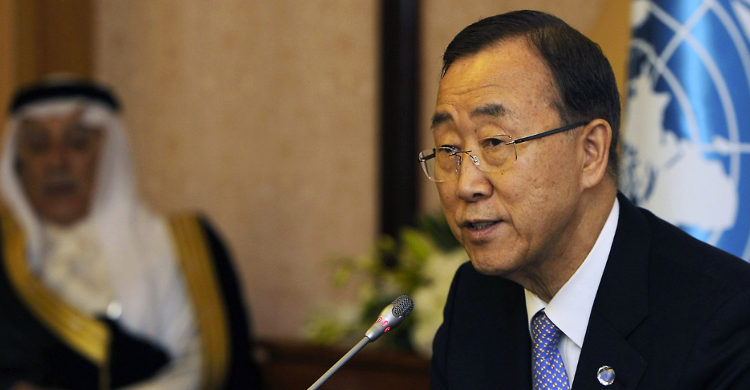
U.N. Secretary-General Ban Ki-moon publicly acknowledged Thursday that he removed the Saudi-led coalition currently bombing Yemen from a blacklist of child killers — 72 hours after it was published — due to a financial threat to defund United Nations programs.

The secretary-general didn’t name the source of the threat, but news reports have indicated it came directly from the Saudi government.

The U.N.’s 2015 “Children and Armed Conflict” report originally listed the Saudi-led coalition in Yemen under “parties that kill or maim children” and “parties that engage in attacks on schools and/or hospitals.” The report, which was based on the work of U.N. researchers in Yemen, attributed 60 percent of the 785 children killed and 1,168 injured to the bombing coalition.

After loud public objections from the Saudi government, Ban said on Monday that he was revising the report to “review jointly the cases and numbers cited in the text,” in order to “reflect the highest standards of accuracy possible.”

But on Thursday, he described his real motivation. “The report describes horrors no child should have to face,” Ban said at a press conference. “At the same time, I also had to consider the very real prospect that millions of other children would suffer grievously if, as was suggested to me, countries would defund many U.N. programs. Children already at risk in Palestine, South Sudan, Syria, Yemen, and so many other places would fall further into despair.”

Saudi Arabia is one of the U.N.’s largest donors in the Middle East, giving hundreds of millions of dollars a year to U.N. food programs in Syria and Iraq. In 2014, Saudi Arabia gave $500 million — the largest single humanitarian donation to the U.N. — to help Iraqis displaced by ISIS. Over the past three years, Saudi Arabia has also been become the third-largest donor to the U.N.’s relief agency in Palestine, giving tens of millions of dollars to help rebuild Gaza and assist Palestinian refugees.

“It is unacceptable for member states to exert undue pressure,” the secretary-general said. “Scrutiny is a natural and necessary part of the work of the United Nations.”

Ban called the decision “one of the most painful and difficult decisions I have had to make.”

Saudi Ambassador to the U.N. Abdallah al-Mouallimi, who held his own press conference afterward, offered his own back-handed confirmation of what happened. “We didn’t use threats,” he said, “but such listing will obviously have an impact on our relations with the U.N.”

“It is not in our style, it is not in our genes, it is not in our culture to use threats and intimidation,” he concluded.

Ban has invited a team from the Saudi-led coalition to New York to conduct a “joint review” ahead of scheduled U.N. discussions on the report, scheduled for August.

On Monday, however, after the changes were announced, the Saudi ambassador to the U.N. declared that the changes were “final and unconditional” and that Saudi Arabia had been “vindicated.”

Fuente de la noticia: http://readersupportednews.org/news-section2/318-66/37387-un-chief-admits-he-removed-saudi-arabia-from-child-killer-list-due-to-extortion

Fuente de la imagen: http://readersupportednews.org/images/stories/article_imgs21/021400-ban-ki-moon-061116.jpg

Comparte este contenido:
Page 1705 of 2546
1 1.703 1.704 1.705 1.706 1.707 2.546