Page 2074 of 2546
1 2.072 2.073 2.074 2.075 2.076 2.546

Papua Nueva Guinea: 200 days countdown to FIFA U-20 Women’s World Cup

Papua Nueva Guinea: 200 days countdown to FIFA U-20 Women’s World Cup

Papua Nueva Guinea/Abril de 2016/ Papua Nueva Guinea ONE

Resumen: Hoy se cumplen 200 días para ir en la cuenta regresiva hacia el puntapié inicial de la Copa Mundial Femenina Sub-20 de la FIFA en noviembre. la Copa Mundial de Fútbol Sub-20 de la FIFA se llevará a cabo del 13 de noviembre a la 3 de diciembre.

TODAY marks 200 days to go in the countdown towards the kick off of the FIFA U-20 Women’s World Cup in November.
Local Organising Committee Chief Executive Officer Seamus Marten said a lot has been happening behind the scenes to ensure that Papua New Guinea successfully hosts the FIFA U-20 Women’s World Cup come November.
“The coming months will be exciting because we will be launching the mascot, the trophy and the balls that will used during the tournament. We also have the tri nation’s series between the PNG Women’s U-20 and USA and Japan, so it is quite an exciting build up for us.
“Right now, we have a team of host broadcasters including FIFA TV who are in the country to map out the best possible camera positions for the telecast of the tournament. It’s very important for them because they will be running the broadcast coverage of the matches to 100 countries around the world. It will be an opportunity for Papua New Guinea to show the world that we can,” Marten said.
The team comprises representatives from Host Broadcast Services (HBS), Mediapro and Transvision who are the transmission service providers to the host broadcasters and FIFA TV.
They will visit Sir John Guise and the National Football stadium and will inspect potential International Broadcast Coordination Centre (IBCC) sites.
The team will also be meeting with EMTV who have the broadcast rights to telecast the tournament within PNG and will also be meeting with Telikom and NICTA officials.
An estimated 200 million viewers will be watching the FIFA U-20 Women’s World Cup from 100 countries worldwide.
The FIFA U-20 Women’s World Cup will be held from 13 November to 3 December.
Fuente:
http://www.onepng.com/2016/04/200-days-countdown-to-fifa-u-20-womens.html

foto:
https://4.bp.blogspot.com/-lqHSSYvKVGw/VyCaSHo5zTI/AAAAAAAAU5A/eW9WNdg_x2YXtDBpLMcuL6oggMRpzG-4ACK4B/s640/Fifa.jpg
Comparte este contenido:

Argentina: Ministro de Educación Bullrich encabezó la Mesa de Infraestructura Tecnológica

América del Sur/Argentina/Abril 2016/Fuente y Autor: Terra

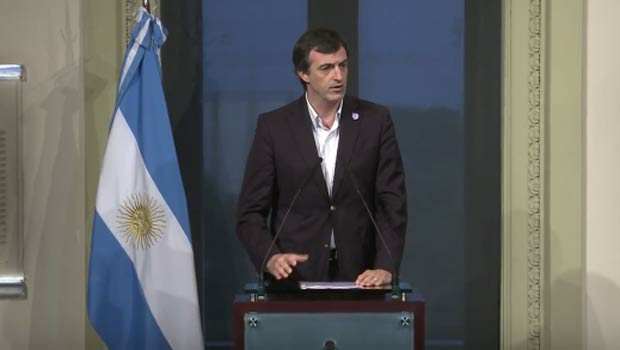
El ministro de Educación y Deportes de la Nación, Esteban Bullrich, encabezó hoy junto a exponentes internacionales una mesa de trabajo sobre infraestructura tecnológica para la Educación Digital con el objetivo de mejorar la tecnología en el aula.

Al respecto, el jefe de la cartera educativa nacional remarcó que: «La tecnología avanza todo los años y por eso demanda de nosotros una actualización».

A su vez, afirmó: «Es un debate que debemos darnos. Y cuestionarnos regularmente en qué invertimos la plata en tecnología».

El encuentro organizado por Educar tuvo como objetivo el intercambio de ideas sobre la estrategia de infraestructura tecnológica que mejor se adecua a la Argentina para implementar la Educación Digital en los distintos niveles: inicial, primario y secundario.

Y al mismo tiempo, conocer otros modelos y experiencias internacionales.

La reunión incluyó teleconferencias con referentes internacionales de la educación, como el profesor indio Sugata Mitra, en donde el eje principal fueron las claves para la innovación tecnológica.

El evento tuvo lugar en una sede céntrica de la Fundación Teléfonica y participaron: el jefe de Gabinete del Ministerio de Educación nacional, Diego Marías; la secretaria de Calidad e Innovación Educativa, Mercedes Miguel; y el director ejecutivo de Educ.ar, Guillermo Fretes.

La nómina de asistentes se completa, entre otros, con la ministra de Educación porteña, Soledad Acuña; Alicia Bañuelos, ministra de Ciencia y Tecnología de San Luis; Jorge Aguado, subsecretario de Políticas en Ciencia, Tecnología e Innovación Productiva del MinCyT; y Miguel Brechner, presidente del Plan Ceibal de Uruguay.

Fuente de la noticia:http://noticias.terra.com.ar/argentina/ministro-de-educacion-bullrich-encabezo-la-mesa-de-infraestructura-tecnologica,7ae32876ea144df9824c9623e22bf1e0iikdlj1f.html

Fuente de la imagen:http://agenciasanluis.com/notas/wp-content/uploads/2016/01/Bullrich.jpg

Comparte este contenido:

Tonga: Tupou College leads medal count

Tonga: Tupou College leads medal count

Tonga/Abril de 2016/Matanga Tonga Online

Resumen: Después de los primeros dos días en competición de atletismo de Tonga en el 92ª Anual Inter-Colegial, la escuela Tupou Colegio y sus niños, portan la medalla de ganadores entre 19 escuelas secundarias y media
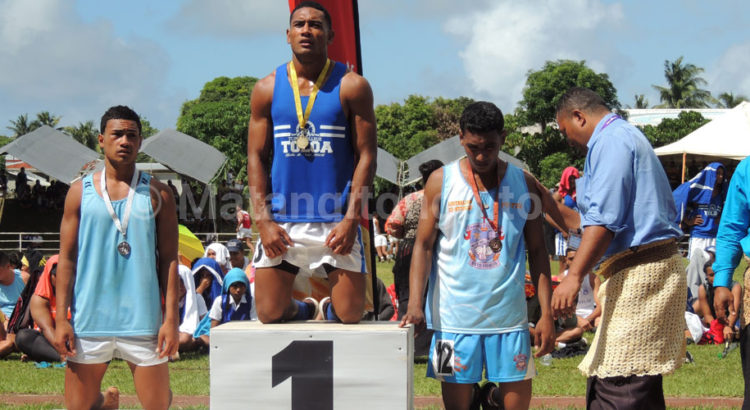
After the first two-days of competition at Tonga’s 92nd Annual Inter-Collegiate Athletics Competition, all boys boarding school Tupou College led the medal count on Wednesday, 27 April.
The four-day competiton which began on Tuesday, 26 April at Teufaiva Outdoor stadium is heating up with athletes from 19 secondary and middle schools from throughout Tonga competing vigorously.
The results released by the Sports Committee of medals awarded on the first two-days from 26-27 April, Tupou College led with 16 gold medals, 11 silver and 12 bronze.
Tupou High School came in second with 15 gold medals, six silver and seven bronze.
In third, was Queen Sālote College with nine gold, 12 silver and eight bronze.
On Thursday, the third day more medals were awarded while more finals were held in the 800m, 100m, 400m hurdles and 200m for both girls and boys, with field events including javelin, high jump and long jump.
The medal tally will be rounded up today, Friday 29 April the final day of the competition.
Fuente:
http://matangitonga.to/2016/04/29/tupou-college-leads-medal-count

Comparte este contenido:

Fiji: Colonel Seruiratu Commends Cadets

Fiji: Colonel Seruiratu Commends Cadets

Fiji/Abril de 2016/Fiji Sun

Resumen: La Escuela Superior de las Fuerzas Militares de Fiji (RFMF) jefe de gabinete Coronel Litea Seruiratu elogió los 483 cadetes que participaron en el paso de salida-desfile en los terrenos de la escuela, así mismo otorgó a sus cuatro mejores cadetes la batuta de honor

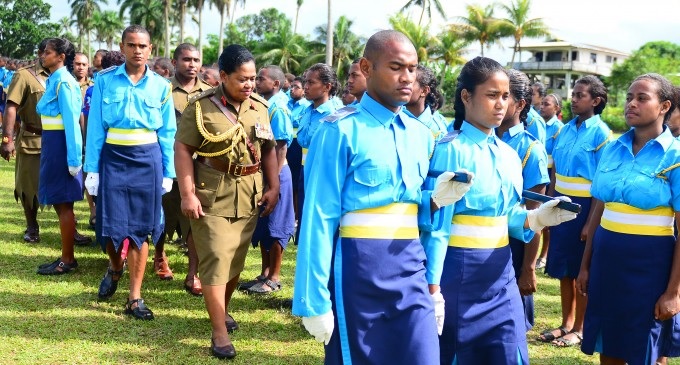
Gospel High School chief guest Republic of Fiji Military Forces (RFMF) chief-of-staff Colonel Litea Seruiratu yesterday commended the 483 cadets who took part in the passing-out-parade at the school grounds.
“As cadets standing here today, they are leaders in their own rights and they might therefore continue to resemble the acquired leadership qualities in life,” Colonel Seruiratu said.
“I would like to thank the young men and women on parade today for a fine display of marching and foot drills.
“The general turnout today is immaculate and the standard portrayed is second to none. I am confident to say that we are equally impressed with their dedication and most obvious is their delight in the achievement today.”
Colonel Seruiratu said in time cadets would face the pressures and demands that would come with the task before them. Eight students with hearing and speaking disabilities were included in the parade.
“It also comes at a time in which the core values, cultures, traditions, social, economic, and religious structure are being challenged,” she said.
“It is something that we should face up to and rise to the challenges, so that we can be confident that our future generations are best prepared to deal with whatever lied ahead of them.”
The school awarded their four best cadets yesterday and the Baton of Honour was taken out by Iliesa Moceituba of St John House.
Students were divided into the four houses of St Mathew – green house, St Mark – blue house, St Luke – red house, and St John – yellow house.
Colonel Seruiratu thanked the principal and teachers of Gospel High School as well as parents of the students who encouraged their students to take part in the passing-out parade.

Edited by Rusiate Mataika

Fuente:
http://fijisun.com.fj/2016/04/29/colonel-seruiratu-commends-cadets/

Comparte este contenido:

Todos somos Extranjeros

Post escrito a medias con Edita Olaizola al salir de una master class del profesor Itamar Rogovsky

Laura Rosillo

28/abril/2016

Ya no quedan maestros. Personajes que sobre una tarima te sacuden de tu modorra, ponen patas arriba tus certezas y dejan que entre aire nuevo y ventile todos los rincones de tu cerebro cargadito de mensajes televisivos. Maestros que, iluminados por la vehemencia de su discurso, olvidan el micrófono porque en realidad nos hablan al oído, tienen el poder de dirigirse individualmente a cada uno de nosotros.Es la segunda vez que escribo un post con Edita Olaizola. Somos buenas amigas y los pocos ratos que estamos juntas nos ofrecen múltiples alegrías.  Una de ellas, por ejemplo, es aprender de un gran maestro.  Escuchamos, anotamos, preguntamos, reflexionamos, comentamos… y así nos enriquecemos juntas y disfrutamos de la vida.

A veces, con un poco de suerte, escuchamos a un brillante gurú, que nos emociona superficialmente y del que no recordamos nada al día siguiente.

Los maestros son otra cosa, ya nunca volveremos a pensar igual, incorporan a nuestra propia visión y experiencia nuevos escenarios y nuevos ángulos de percepción.

Nos estamos refiriendo a  Itamar Rogovsky, un maestro de los que casi no quedan, que desde la sencillez, la proximidad y la argumentación retórica más clásica, vino a demostrar que todos somos extranjeros… y esto en esta ciudad, la nuestra, que se cree capital de un quimérico estado, y que, efectivamente, nos hace sentirnos extranjeras en nuestra propia casa.

Rogovsky

Y nosotras, con los oídos bien abiertos y tomando notas sin parar teníamos la certeza de que su relectura hoy iba a ampliar nuestro pequeño mundo y fuimos adentrándonos en la descripción que del momento presente iba perfilando el profesor Rogovsky.

Nos advirtió que ni citas, ni autores, pero detrás de cada frase se escondía un libro recién leído o recién recordado, un autor de cabecera, una cita anotada en una servilleta de un bar o en una libreta guardada en un bolsillo…

La afirmación de arranque asentía que “todos somos extranjeros” para llegar al colofón de que como trabajadores somos extraños, extranjeros, estamosfuera de lugaren nuestra empresa.

Las referencias al enfrentamiento judío/palestino, musulmán/cristiano, latino/yankee, blanco/negro, nos sirven para generalizar el problema de que para cada individuo, el “otro” es un extranjero y nosotros mismos lo somos desde que nacemos y somos expulsados del “paraíso”, del útero de nuestra madre.

Y así encerrados en nuestra propia cultura, en nuestra zona confortable, el “otro” es vivido siempre como un “invasor” si quiere mantener sus valores y principios, como un “extranjero” si pretende integrarse y adoptar los nuestros.

Y lo mismo sucede en las organizaciones en las que cualquiera que no se disuelva en la mediocridad de lo establecido, lo usual, lo prescrito por la cultura de la empresa, es considerado un extranjero y, en consecuencia, un enemigo que debe ser expulsado de la comunidad compacta y hermética que configuran tantas organizaciones hoy.

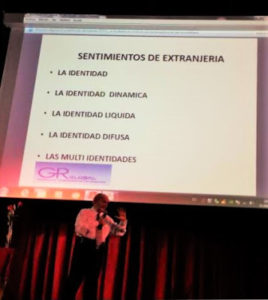
Itamar extranjeríaDe hecho, aseguró que «el sentimiento de extranjería es el paradigma de la situación organizacional actual«.
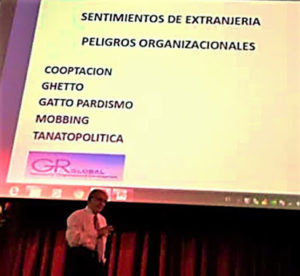
Y los “Jinetes del Apocalipsis” contra los que debe luchar ahora la dirección de la empresa o en su ayuda Recursos Humanos para renovar, reinventar, reiniciar… las relaciones empresa/trabajador, nos decía el profesor Rogovsky, son la cooptación, el ghetto, el gatopardismo, el mobbing y la tanatopolítica… plagas todas ellas relacionadas con la exclusión del “otro”, con el sentimiento de extranjería que insuflan muchas organizaciones para situarse sus directivos en un plano superior, excluyente, elitista, autoritario… que responde más a estructuras y relaciones eficientes en el siglo XX pero que son claramente obsoletas en el siglo XXI.

Gracias, maestro.

Fuente: http://lrosilloc.blogspot.com/

Fuente de la imagen de cabecera: Imagen: www.diarioinformacion.com

Comparte este contenido:

Trinidad y Tobago advierte que no llevara a cabo el plan de ajuste elaborado por el FMI

T&T Government Says It Will Not Enter Into Agreement With IMF

Trinidad & Tobago/ 28 ABR, 2016/ El Nodal.com

Resumen: El gobierno de Trinidad y Tobago dice que no va a entrar en cualquier programa de ajuste estructural con el Fondo Monetario Internacional ( FMI ) , pero defendió su decisión de contar con asesores del FMI y el Banco Mundial lo que ayudará a hacer frente a la eactivación de la economía de las islas gemelas que conforman la República. Legisladores de la oposición han criticado al gobierno tras ocho meses de tratar de engañar a la población de que se llegaría a un acuerdo con la institución financiera con sede en Washington debido al descenso significativo de los ingresos en el país, como consecuencia de la caída de los precios del petróleo en el Mercado mundial.

The Trinidad and Tobago government says it will not enter into any structural adjustment program with the International Monetary Fund (IMF), but defended its decision to have advisors from the IMF and the World Bank assist it to deal with reviving the economy of the oil-rich, twin-island republic.

Finance Minister, Colm Imbert, speaking in Parliament, on yesterday, said “we are not in any standby arrangement and, under this PNM (People’s National Movement) administration, under the leadership of Dr. Keith Christopher Rowley, there will be no standby arrangement with the IMF.”

Opposition legislators have criticised the eight month old government of seeking to hoodwink the population and enter into an agreement with the Washington-based financial institution, as the country deals with a significant decline in revenue, as a result of the drop in oil prices on the world market.

Last weekend, the leader of the Movement for Social Justice (MSJ), David Abdula, described as “an amazing indication of the abject failure” the decision of the government to seek the assistance of the two financial institutions in dealing with the sluggish local economy.

“It’s an indication that he’s (Imbert) unsure of what he’s doing and if that is an indication of that, then that contributes to the lack of confidence, generally, in the economy,” Abdulah said.

Last week, Imbert told reporters that teams from the two Washington-based financial institutions were here, assisting the Rowley administration saying “we have made arrangements for experts, primarily from the World Bank but also from the IMF to give us advice on a number of pressing matters.

“The first one would be an appropriate oil and gas fiscal regime in the current environment of low oil prices and declining production in our oil and gas fields.

“One of the things we need to do at this time, with low oil prices, is to model a fiscal regime that would achieve two objectives which are quite often contradictory and one is to maximise revenue for the government.”

Imbert, who led a delegation to Washington for talks with the financial institutions there, said the new regime would also be to “provide incentives to oil companies”.

Imbert defended the decision to establish the new regime, telling legislators “multi-national companies charge expenses in their head office which are unreasonable and thereby deprive Trinidad and Tobago of revenue.

“So this much reviled and hated IMF…will help this country to design a competitive oil and tax regime, which will boost revenue for Trinidad and Tobago and assist us with transfer pricing, which will allow us to earn as much revenue as we can from the multi-nationals.”

He said the IMF assists countries all over the world and accused the opposition of wanting to “frighten people for absolutely no reason”.

Imbert told legislators that regarding the composition of the Economic Advisory Board “we made sure to bring as many diverse views as possible because the PNM is all inclusive.

“We have people on the right, people on the left, people in the middle, we have trade unionists, we have businessmen, we have academics, all together in one creative beautiful mixture.”

Earlier this month, the Central Bank of Trinidad and Tobago (CBTT) said the effects of depressed oil prices and global growth uncertainties will weigh on the Trinidad and Tobago economy in 2016.

In its latest economic bulletin released here, the CBTT said that domestic real gross domestic product (GDP) is projected to contract by close to two per cent, as a result of forecast declines in both the energy and non-energy sectors.

It said year-on-year inflation is forecast to settle around its 10-year average of six per cent, given the impact of the widening of the value added tax (VAT) base on food prices while the unemployment rate is expected to rise marginally to 4.1 per cent.

Meanwhile, dismissed Central Bank of Trinidad and Tobago governor, Jwala Rambarran, today, said he expects there to be more layoffs as the country deals with the downturn in economic growth.

“We see every week layoffs…further retrenchment…so the job losses are happening,” he said, telling television viewers that “strange enough, that is happening in a period where you have had significant slack in the labour market.

“Our labour market is an area that needs significant reform,” he said.

Fuente: Source: Trinidad y Tobago advierte que no llevara a cabo el plan de ajuste elaborado por el FMI

PRIDE

Comparte este contenido:

in England : Pay more so teachers stay at disadvantaged schools, says thinktank

Nick Clegg says poorer pupils are facing a ‘cocktail of disadvantage’.

Resumen:  El informe del comité de expertos de la Fundación Social de Mercado del Reino Unido encontró en una reciente nvestigación que las escuelas más necesitadas de Inglaterra lucharon para retener a los maestros experimentados, cuya ausencia en ese tipo de escuelas impiden a que los alumnos que más los necesitan, obtengan menos resultados en términos de calidad de su formación. «Esto proporciona una explicación de por qué la desigualdad educativa en Inglaterra persiste.» Sostiene el informe.

Disadvantaged pupils are being held back by high levels of teacher turnover, and schools should offer mentoring and extra pay to keep staff, according to a new report looking at the causes of educational underachievement.

The report by the Social Market Foundation thinktank found that the most deprived schools in England struggled to retain experienced teachers, leading to worse outcomes for pupils who most needed the help.

“We find stark inequalities in access to the highest quality teachers resulting in poorer pupils being taught by poorer quality teachers,” the report argues. “This provides an explanation as to why educational inequality in England persists.”

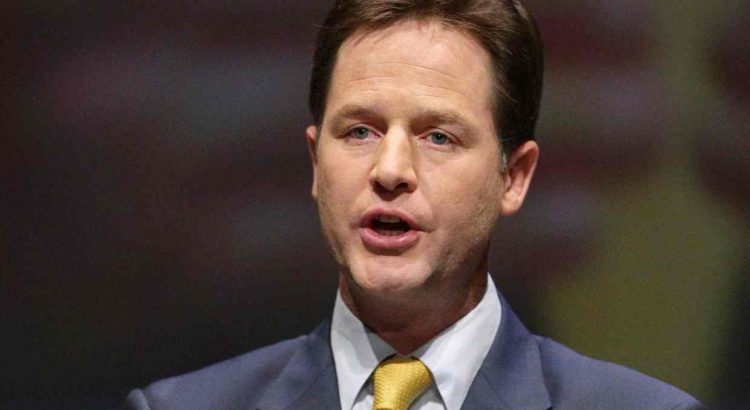
Nick Clegg, the former deputy prime minister and chair of the SMF’s inequality commission, said in launching the report: “This new research suggests that poor pupils are facing a cocktail of disadvantage – they’re more likely to have unqualified teachers, non-specialist teachers, less experienced teachers, and to have a high turnover of teachers.

“Many new teachers, to their credit, choose to teach in schools in poorer areas. Improving their pay and the support they receive could mean they are more likely to stay in those schools as they become more experienced and effective.”

Teachers in poorer schools are more likely to leave or move

The research found that the 20% of schools with the highest proportion of pupils eligible for free school meals (FSM) were more likely to have to recruit younger, less experienced teachers.

But as they gained experience the teachers were also more likely to move to other schools or leave teaching all together, increasing the rate of staff turnover and meaning they were replaced with more young teachers.

Using Department for Education statistics from 2013, the research found that teachers at secondary schools in the worst-off areas were 70% more likely to leave than those in the top 20% of best-off schools.

“It appears that many new, inexperienced teachers are getting jobs in deprived schools but are not getting the support they need, are struggling to cope and then are leaving as a result. This helps explain why poor students are also exposed to higher teacher turnover,” the report says.

“The way the system currently operates means that higher-deprivation schools are much more likely to get poor quality teachers.”

In order to break the cycle, the report suggests offering higher pay and support to keep young teachers. Using workforce statistics, it suggests allowing £530 extra a year for primary school teachers and nearly £1,300 for secondary school teachers.

Related:Academy trusts accused of failing disadvantaged pupils

But higher pay alone is “clearly not sufficient” to retain staff, it says. “It is hard to know how large the pay incentives would need to be to attract experienced teachers back into high-FSM schools,” the authors note. Instead, mentoring and support would help retain and improve existing teachers, while publishing school retention rates would encourage schools to do more to keep staff.

Looming teacher shortages were likely to make matters worse for struggling schools, according to Rebecca Allen, the director of Education Datalab and one of the authors.

“Teacher recruitment and retention has become much more difficult since the period we studied here,” said Allen.

“Given that more disadvantaged schools were already doing worse than more advantaged schools in recruiting to longstanding shortage subjects such as physics and maths, it seems most likely that more widespread shortages will disproportionately affect them.”

Fuente:  Pay more so teachers stay at disadvantaged schools, says thinktank

Photograph: Dave Thompson/PA

Comparte este contenido:
Page 2074 of 2546
1 2.072 2.073 2.074 2.075 2.076 2.546