Page 804 of 2546
1 802 803 804 805 806 2.546

Libro: Política universitaria Dimensiones de la evaluación en la universidad

Política universitaria
Dimensiones de la evaluación en la universidad

Juan Ignacio Piovani. Fernanda Beigel. Martín Unzué. Sonia Marcela Araujo. Daniela Perrotta. Armando Alcántara. Fernando Correa. Mariana Versino. Sergio Friedemann. Fabiana Bekerman. Javier Blanco. [Autores]
……………………………………………………
 

ISSN: 2362-2911
IEC/CONADU
Argentina – Buenos Aires
Agosto de 2015

La evaluación de instituciones, carreras y desempeños académicos individuales fue introducida en la universidad argentina en la década del 90, como un componente de la reforma neoliberal. Los dispositivos resultantes expresaron el saldo de una negociación con los intereses de diversos actores, así como una relativa adaptación a sus prácticas, lo que permitió que la evaluación se incorporara, no sin contradicciones pero aparentemente de manera irreversible, a la cultura académica, y generara cambios significativos cuyos alcances aún deben ser, ellos mismos, evaluados.
Instituto de Estudios y Capacitación (IEC-CONADU) Federación Nacional de Docentes Universitarios
Argentina
Para descargar el libro, haga click aquí:
Descargar .pdf
Fuente de la Reseña:
http://www.clacso.org.ar/libreria-latinoamericana-cm/libro_detalle.php?id_libro=845&pageNum_rs_libros=4&totalRows_rs_libros=1296
Comparte este contenido:

España: Ecoembes lanza la Red de Colegios EducaEnEco

Europa/España/Septiembre de 2016/Fuente: Compromiso RSE

Ecoembes puso en marcha este viernes la primera fase de su programa de educación ambiental “Red de Colegios EducaenEco”. El proyecto, que se desarrollará durante el curso 2016/2017 y que comenzará en Madrid, Castilla y León, Extremadura y Canarias, tiene un objetivo claro: que el reciclaje esté presente en el día a día de más de mil colegios españoles. Este programa se integra en las acciones de educación que realiza Ecoembes y da un paso más allá al implicar a toda la comunidad educativa. El reto es que tanto alumnos como profesorado y personal no docente trabajen juntos para conseguir un colegio más sostenible.

Para ello, se facilitarán las herramientas necesarias para que todos los centros puedan reciclar y concienciar sobre la importancia de este gesto para cuidado del medio ambiente. Una de las claves es la combinación de formación con la distribución de más de 38.000 papeleras amarillas (envases de plástico, latas y briks) y azules (papel y cartón) en los colegios participantes, así como cartelería y otros materiales para poner en práctica los conocimientos adquiridos.

Para el desarrollo del programa y consciente de que cada centro tiene necesidades específicas en esta materia, Ecoembes desplegará una red de educadores ambientales especializados que asesorarán de manera personalizada a cada colegio sobre la ubicación más adecuada de las papeleras y ofrecerán formación a todos los profesionales del centro, ya que la participación de todos es fundamental para la consecución de los objetivos planteados.

Óscar Martín, consejero delegado de Ecoembes, ha destacado que “el planteamiento de este programa supone un paso importante en la evolución de los proyectos educativos que hemos desarrollado hasta ahora. Desde hace muchos años venimos elaborando recursos educativos, luego comenzamos con los talleres en aula y ahora, dando respuesta a la demanda de los propios centros, les dotamos de recursos materiales y ampliamos la formación”.

Cooperación de todos

En este sentido, el educador ambiental asesorará a conserjes, equipo de limpieza, bedeles, personal de comedor y cocina, entre otros, para ayudarles a integrar correctamente la separación de residuos en sus tareas diarias. Y es que el personal no docente es un agente clave en la gestión de los residuos de un colegio y, por tanto, su participación será determinante para el éxito del programa.

Por otro lado, con el profesorado y el equipo directivo se desarrollará formación para repasar estrategias de concienciación en materia de reciclaje, así como ideas y recursos para integrar el medio ambiente en el aula.

Además, el programa de Ecoembes se completará con actividades adaptadas al currículum escolar en todos los cursos de educación primaria. Con ayuda del educador ambiental, se mostrará a los niños los beneficios que tiene el reciclaje para el cuidado del medio ambiente y el impacto de sus gestos diarios en la conservación del entorno. Estas sesiones se ajustarán a los diferentes niveles para que los alumnos de todas las edades puedan comprender y asumir los valores medioambientales.

Por último, también se contactará con las Asociaciones de Madres y Padres de Alumnos (AMPAS) para que puedan recibir formación si lo desean y llevar así el reciclaje del aula al hogar.

Fuente de la Noticia:

http://www.compromisorse.com/rse/2016/09/19/ecoembes-lanza-la-red-de-colegios-educaeneco/

Comparte este contenido:

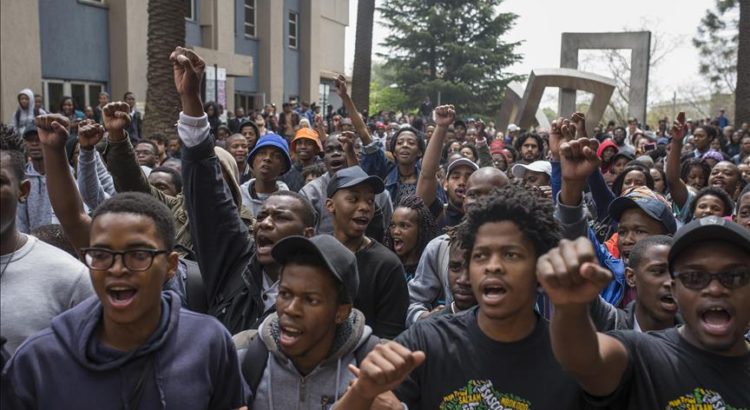
Sudáfrica: Calls for uni shutdown over tuition hike

África/Sudáfrica/Septiembre de 2016/Fuente: AA.com

RESUMEN: Los estudiantes de la Universidad de Witwatersrand en Johannesburgo  cerraron el lunes las entradas al campus en una medida destinada a cerrar la universidad, después de un anuncio de aumento de la matrícula para el año académico 2017. El Secretario General del Consejo de Representantes de Estudiantes (SRC), Fasiha Hassan dijo que los estudiantes estaban enojados porque sus demandas no se habían cumplido y que se embarcarán en protestas en el campus. «No podríamos pagar las cuotas en 2015, y todavía no se pueden permitir en la actualidad. Por lo tanto estamos llamando de forma gratuita, la calidad y la igualdad en la educación «, dijo en un comunicado enviado a la Agencia Anadolu. En otros comentarios en Twitter, los estudiantes dijeron que rechazaron el aumento de las tasas y se unirían en protesta.

——————————————————–

Students at the Witwatersrand University in Johannesburg on Monday closed entrances to the campus in a move aimed at shutting down the university, after a tuition hike announcement for the 2017 academic year.

Secretary-General of the Students Representative Council (SRC), Fasiha Hassan said students were angry because their demands had not been met and they would embark on protests on campus.

“We could not afford the fees in 2015, and we still can’t afford them today. Thus we are calling for free, quality and equal education,” she said in a statement sent to Anadolu Agency.

In other comments posted on Twitter, students said they rejected the increase in fees and would unite in protest until the university shut down.

“No fee increment will be accepted until the realization of free education,” the SRC said on Twitter.

Higher Education Minister, Blade Nzimande announced Monday universities would individually decide to increase fees but they should not exceed 8 percent for the 2017 academic year.

Last year, thousands of students marched to the seat of government, and the Union buildings in the capital, Pretoria to protest against a proposed tuition hike for the 2016 academic year.

Protesting under the banner #FeesMustFall, students called for free tertiary education.

Lectures were suspended at several universities across the country, while university properties worth millions of rands were vandalized.

After days of protests, President Jacob Zuma announced there would not be any tuition fee hike for the 2016 academic year.

University officials warned at the time that this would cripple them financially affecting their educational programs.

At the time of writing this story, several police officers were seen gathering at the Witwatersrand University to avoid any violent protests.

Groups of students were also seen closing strategic entrances to the campus.

Students at other universities across the country have also been meeting to discuss the way forward after the announcement of fee increases.

Fuente: http://aa.com.tr/en/africa/s-africa-calls-for-uni-shutdown-over-tuition-hike/648704

Comparte este contenido:

Entrevista a Agustina Blanco: Por qué no funciona el sistema de evaluación de la secundaria

Argentina/20 septiembre 2016/Autora: Paola Bruno/Fuente: mendozapost

Una posibilidad de recuperar una mala nota tras otra. En febrero, mayo, julio, octubre, diciembre y la lista se sigue engrosando con “múltiples opciones”. Y el adolescente que va a la secundaria tiene claro (yo diría, clarísimo) que cuando le va mal en un tema, no importa que materia sea, tiene muchas oportunidades de volver a rendir ese tópico y no toda la materia. Es decir, si tiene mil posibilidades, las usa todas.

Esta supuesta “flexibilidad” del sistema (que ayudaría al alumno) ha traído un fracaso educativo tras otro y de calidad, ni hablar. En la actualidad, hay pocos alumnos que construyan más contenidos y sumen competencias comunicativas, por el contrario, sienten que la escuela secundaria no les sirve para el mundo del trabajo.

Ella es clara: “Hacer cada vez más laxo el sistema no contribuye con la cultura del esfuerzo”. Ella es Agustina Blanco, consultora en temas de mejora escolar y magister en Relaciones Internacionales de la Universidad de Nueva York, Estados Unidos. La especialista llegó a Mendoza para participar del Pre Foro de Calidad Educativa 2015, que se realizó el 2 de julio en el Hotel Diplomatic.

 ¿Por qué no funciona el sistema de evaluación en la secundaria?

–  Soy muy escéptica a estar permanentemente bajando la vara, los chicos son muy vivos, saben que si les dan diez mil oportunidades las van a aprovechar hasta el final. Hacer cada vez más laxo el sistema no contribuye con la cultura del esfuerzo.

 ¿Qué habría que hacer para mejorar?

–  Primero, tener un enfoque integral de la evaluación. Por ejemplo, detectar en forma temprana a los chicos que no están a nivel para acompañarlos desde el lado de la pedagogía, tras el objetivo que estén mejor. Nadie quiere perder a la mayoría de los chicos porque les va mal.

En segundo lugar, hay que inyectarle un poco de rigor a los profesores y a los alumnos. No hay que bajar la vara y sí hay que subir las expectativas sobre los docentes y los estudiantes.

Pero la vara está baja. Hoy, por ejemplo, los chicos escriben “bida” y no “vida”, no interpretan lo que leen e igual pasan de año.

– Da mucha tristeza. Uno quisiera que los chicos puedan recibir en la escuela tanto lo cognitivo como las habilidades blandas. Que todos se reciban con esto para desarrollar una vida plena en el futuro; y eso tiene que ver con tener juicio crítico, poder decidir por sí mismo.

– ¿Cómo se cambia este sistema educativo?

Con un enfoque integral. Y uno de los aspectos fundamentales es la formación docente y el aumento de las expectativas, tanto en los alumnos como en los docentes. Tenemos que volver a “enamorar” a los alumnos con el conocimiento, tenemos que invitarlos a que se fascinen con lo que les enseñamos.

– ¿Cómo se hace para volver a “fascinar” a los alumnos con la escuela?

Con un sistema educativo integral, pero sobre todo con un docente altamente calificado. Pienso en un profesional que ingresa con un bagaje interesante de conocimientos y competencias. Pero después, en el día a día, estudia constantemente, se actualiza, trabaja en equipo (esto de pensar juntos) y es parte de un proceso en el que se tomen decisiones. Así se forma a un verdadero profesional, no solo en educación, en todos los ámbitos.

– ¿Por qué los chicos creen que hoy la escuela no les sirve para el mundo laboral?

Los chicos le encuentran poco sentido a la escuela. Sobre todo por lo que ellos piensan que pueden necesitar en el futuro. También me parece que hay poca articulación entre la escuela y el mundo laboral, debiera haber más diálogo respecto de las necesidades de los chicos. Creo que hay un tercer factor que tiene que ver con la capacitación docente, ya lo dije, hace falta modernizar el sistema y que se adapte más a nuestra actividad.

«Los chicos le encuentran poco sentido a la escuela».

¿Por qué en la Argentina no van de la mano la equidad y la calidad educativa?

Me parece que las últimas décadas en la Argentina hubo una gran cantidad de alumnos que ingresaron al sistema educativo formal, esto es lo positivo. Lo que creo es que no se ha dado es un acompañamiento simultáneo de profesionales bien formados que se requieren para poder recibir a estos chicos y estar bien preparados frente al aula y enseñar a un alto nivel.

Muchos docentes se quejan y dicen que la escuela es una guardería, es decir, los chicos van pero no aprenden los conocimientos y habilidades básicas.

Y mientras no haya una inyección muy fuerte en la formación docente va a ser muy difícil ver un cambio. Hay mejora en algunas provincias, por ejemplo Salta. La esencia del sistema educativo de calidad está en la formación de buenos docentes y directores. Con esto se logra no solo retenerlos, también hay que garantizar el piso de aprendizaje de los chicos para que tengan un futuro mejor.

La formación docente de calidad, ¿incluye al profesor taxi?

Claramente, no. Los profesores tienen que estar al menos un turno completo en una escuela y tener espacios de diálogo y reflexión, capacitaciones rentadas de planificación, eso es lo que hace a un profesional. Si no es pedirle que sean héroes y que lleguen a sus casas y empiecen a pensar cómo armar una clase, qué didáctica fantástica generar para que los alumnos se interesen. Muchos docentes están superados, abrumados y es comprensible.

Para construir calidad

Agustina Blanco también es licenciada en Administración de Empresas, coautora del libro La Escuela Protagonista (Temas, 1999) y miembro de la Escuela de Educación de la Universidad de San Andrés. En la actualidad es miembro del consejo asesor de Educar 2015 y está trabajando en el desarrollo de una plataforma digital para la formación de Directores de Escuela para América Latina.

La especialista llegó a Mendoza y disertó en el Pre Foro de Calidad Educativa, que por primera vez se realizó en territorio mendocino. El encuentro estuvo organizado por el Proyecto Educar 2015, la Mesa de Encuentro por la Educación de Mendoza y el Consejo Empresario Mendocino.

El foro fue un momento de reflexión para mejorar el sistema educativo, sobre todo para hablar sobre la calidad.

 Participaron prestigiosos profesionales y autoridades del Gobierno escolar. En este sentido, Blanco analizó el caso de Finlandia, país que se ubica en la excelencia de la calidad educativa.

– ¿Qué hizo Finlandia para ser número uno?

Fue un proceso a largo plazo y tuvo un consenso republicano muy amplio. Fueron trazando objetivos y respetaron los tiempos del proceso. Llegaron a un alto nivel; ellos lograron equiparar equidad y excelencia academia en la mayoría de los alumnos.

Cuando vieron los resultados de los exámenes PISA (Informe del Programa Internacional para la Evaluación de Estudiantes o Programme for International Student Assessment) fue una gran sorpresa. Repito, el proceso fue gradual y comenzó en 1974.

¿Cuáles fueron los pilares de este sistema educativo?

Cambiaron a lo largo del tiempo, pero básicamente son: profesionalismo de los docentes, confianza, colaboración y responsabilidad compartida.

¿Se podrá lograr en la Argentina?

Se puede debatir el modelo, lo que es clave es que el núcleo central es garantizar una formación docente de excelencia. También se necesita un gran involucramiento de la sociedad para que realmente el sistema educativo se pueda transformar.

¿Cómo trabajan otros países de la región?

Y, por ejemplo, Argentina y Chile hace unos doce años estaban equiparados, los resultados PISA daban más o menos igual (400 y 410); ahora, hay una brecha importante. Lo que hizo Chile es ser más riguroso con la formación docente y la evaluación; hoy evalúa a sus docentes, fue un diálogo difícil con los gremios, pero finalmente aceptaron. Se definieron los estándares de la buena docencia y eso repercute. Tuvieron algo claro “todos los chicos pueden estar en el sistema”.

Los países con alta calidad educativa, ¿cómo atienden la diversidad?

Tienen aulas heterogéneas porque saben que tienen chicos con distintos ritmos de aprendizaje, tienen planificaciones para cada caso. Un docente que tuvo mentores, que tuvo muchas prácticas, logra poner a trabajar a los chicos en equipo; se sabe que es mucho más estratégico juntar a los estudiantes que tienen el mismo grado de dificultad y que se las arreglen hasta que solucionen la consigna. Y a los que están más avanzados juntos, y quizá después pueden cambiar. Se hace en todas partes del mundo.

– Y la tecnología, ¿que rol cumple?

A la tecnología hay que incorporarla, entenderla y quererla. Los chicos la necesitan porque el mundo laboral se lo va a pedir.

Fuente: http://www.mendozapost.com/entrevista/13601/

Comparte este contenido:

Argentina: Sesenta y cinco millones, la cifra del Fondo Educativo

Argentina/20 de septiembre de 2016/Fuente: La Voz del Pueblo

El total que sumaría desde el 2013 hasta diciembre de este año, Sesenta y cinco millones, la cifra del Fondo Educativo.

En estos días volvió a surgir en el ámbito del municipio local y más concretamente en el Concejo Deliberante una discusión que ya parece interminable en torno a los destinos que el gobierno vecinalista ha dado y sigue dando a los recursos que recibe por el llamado Fondo de Financiamiento Educativo.

Este Fondo es de origen nacional y fue instrumentado por la Ley 26.075, cuya finalidad era aumentar la inversión en educación y mejorar la eficiencia en el uso de los recursos con el propósito de garantizar la igualdad de oportunidades en el aprendizaje y la calidad en la enseñanza.

La ley dispuso por el plazo de 5 años, una asignación específica de recursos coparticipables con las provincias y la Ciudad Autónoma de Buenos Aires, que tiene la finalidad de garantizar condiciones equitativas en la educación nacional.

Asimismo la provincia de Buenos Aires estableció un sistema de coparticipación automática de parte de esos recursos recibidos con los municipios que la componen, con el fin de cubrir gastos ligados exclusivamente con la educación. Para ello, se estableció que los municipios podrán afectar este dinero a la mejora de la infraestructura escolar de gestión estatal, en cualquiera de los niveles del Estado.

La coparticipación de estos fondos denominados bajo el título de Fondo de Financiamiento Educativo comenzó a ser recibida por los municipios bonaerenses a partir de 2013, y de acuerdo a información proporcionadas por diversas fuentes confiables a La Voz del Pueblo, los montos que llegaron a nuestro partido fueron los siguientes: año 2013 $ 4.157.811; año 2014 $ 9.222.822; año 2015 21.826.426 y hasta agosto del corriente año $ 19.673.386, perfilándose que para 2016 el monto a recibir estará algo por encima de los 30 millones de pesos. Es decir que Tres Arroyos durante los 4 años de establecido el programa habrá accedido a aproximadamente 65 millones de pesos.

Primeras discusiones
Si nos trasladamos a los primeros meses del año 2013, cuando los tresarroyenses tomaron conocimiento del arribo de las primeras partidas de dinero del Fondo en cuestión, comenzaron las primeras discusiones respecto del destino que debería darse al mismo.

Fue entonces cuando el intendente Carlos Sánchez manifestó que ese dinero venía a reemplazar otras partidas que habían dejado de percibirse, y por lo tanto eran de libre disponibilidad. Este argumento, a partir de la lectura de la legislación que creó este aporte, fue rebatido por otros sectores políticos que señalaron que a Sánchez no le asistían razones valederas.

Fue en ese momento cuando los ediles del Frente para la Victoria y la entonces consejera escolar Laura Aldalur, plantearon la posibilidad de crear un ámbito de estudio y programación de la utilización de los fondos a recibir, incluyendo en este espacio la participación activa de sectores del Departamento Ejecutivo, del Concejo Deliberante, el Consejo Escolar y las asociaciones cooperadoras de los establecimientos educativos del partido, como una forma de que fueran los propios beneficiarios los que determinaran necesidades y prioridades en el uso de esos dineros. La propuesta no avanzó y es el gobierno municipal el que sigue administrando y fijando el criterio de utilización, con una activa intervención en la entrega de aportes por parte de Hugo Fernández, jefe de Gabinete.

En más de una oportunidad, la oposición coincidió en subrayar que una parte de los fondos se asignaron a cuestiones ajenas a las que dispuso su creación. A tal punto que en la última sesión del Concejo se aseguró que de los más de 21 millones de pesos percibidos en 2015, sólo ha sido informado el destino de 15 millones. Al respecto, una fuente consultada por este medio indicó que una de las finalidades probables habría sido el pago de sueldos en áreas determinadas.

Nuevo intento
A pesar de los continuos planteos sobre el manejo de esta importantísima partida en un tema tan sensible como es la educación, incluyendo las críticas y protestas planteadas por la oposición en su conjunto en ocasión de las diferentes rendiciones anuales de cuentas presentadas por el Ejecutivo al Concejo Deliberante, no hubo mayores cambios. La muestra más reciente es el rechazo del vecinalismo en el Concejo a la creación de una Comisión por el Fondo Educativo.

Según aseguran en el Frente Renovador y Cambiemos, impulsores de la iniciativa de conformar la citada Comisión, se buscaba acercar ideas sobre prioridades y destinos más equitativos hacia los distintos establecimientos. Cabe señalar que esto no es una novedad en el ámbito de las municipalidades, dado que -por ejemplo- en Azul existe por ordenanza una Comisión Asesora del Fondo Educativo Municipal que juntamente con la Secretaría de Educación y Cultura del municipio trabajan en el mismo sentido que proponía el proyecto local. También se discutió la decisión municipal de afectar fondos al programa de Capacitación de Enfermeras a través del CRESTA. Solamente el doble voto del presidente del Concejo posibilitó el rechazo del proyecto.

Resolución clave
Ante las discrepancias se plantó la concejala vecinalista, Marta Pellegrini, quien defendió la tarea del municipio en el reparto y destino de los fondos, mencionando además que nunca el Tribunal de Cuentas de la Provincia había realizado objeciones.

Este Tribunal de Cuentas, que por otro lado, y de acuerdo con informaciones publicadas en los principales medios nacionales, se encuentra en la mira de las máximas autoridades provinciales, por, entre otras cuestiones, el nombramiento de familiares y allegados en dicho organismo y graves falencias en su accionar, emitió el día 4 de diciembre de 2014 una resolución muy interesante respecto del destino a dar de los recursos del Fondo.

En tal sentido, en su artículo 2° se establece que «los municipios podrán utilizar los recursos del Fondo de Financiamiento Educativo para el ejercicio 2015 en: a) construcción y/o mantenimiento de infraestructura escolar de gestión estatal en cualquiera de los niveles del Estado. b) Generar programas de capacitación y apoyo pedagógico destinados al mejoramiento de la calidad educativa y a evitar la deserción escolar. c) Adquisición y/o mantenimiento de equipamiento escolar. d) cualquier otra finalidad estrictamente educativa».

Pero en su artículo 3° es más preciso aún ya que indica que «los gastos efectuados deberán ser imputados según los siguientes clasificadores presupuestarios: 3.4.1. (tierras y terrenos) 3.4.2. (Construcciones) 3.4.3. (Máquinas y Equipos) y 3.4.4. (equipos de seguridad)».
Con esto queda establecido mucho más específicamente cuál es el direccionamiento que la Provincia quiso darle al Fondo de Financiamiento Educativo. Y se brinda un parámetro concreto, desde el cual se puede determinar sin lugar a dudas si se dio el uso correcto o por el contrario, ha sido desnaturalizado.

Fuente de la Noticia:

http://www.lavozdelpueblo.com.ar/nota-43586-sesenta-y-cinco-millones,-la-cifra-del-fondo-educativo

Comparte este contenido:

México: Tras regreso a clases haremos valer instalación de mesas de diálogo: CNTE Chiapas

América del Norte/México/20 Septiembre 2016/Fuente y Autor: radioformula

El dirigente de la Sección 7 de la Coordinadora Nacional de Trabajadores de la Educación en Chiapas, José Luis Escobar, aseveró que lo único que puede vulnerar la decisión definitiva de regresar a clases es el incumplimiento del gobierno en lo ofrecido; «mientras tanto, es definitiva y volvemos todos».

En entrevista para el programa «Fórmula Detrás de la Noticia», dijo esperar que el gobierno cumpla y no haya agravios que impliquen la imposición de la reforma educativa, que haya apoyo a infraestructura y social a los alumnos con calzado, mochilas, útiles escolares y disminución del precio del pasaje en algunas ciudades de Chiapas. 

Ante esto, precisó que desde el 2013, no hay maestros cesados, notificados, ni víctimas de descuentos por estar en algún movimiento. 

«Lo que sí nos preocuparía es que el gobierno intentara imponer alguno de los instrumentos de esta reforma educativa y entonces sí detonaría que otra vez volvamos a las calles, pero la reforma educativa en Chiapas desde el 2013 no opera».

Asimismo, José Luis Escobar reiteró que están convencidos que una vez que regresen a clases, tienen que hacer valer el ofrecimiento del gobierno de la instalación de las mesas de diálogo a nivel nacional independientemente de las locales que tengan para atender problemas de carácter local.

Llamó a la Secretaría de Gobernación y a la Secretaría de Educación Pública revisar, y empezar a construir una verdadera reforma educativa que tome en cuenta a los maestros y alumnos.

Fuente de la noticia:

http://www.radioformula.com.mx/notas.asp?Idn=626872&idFC=2016&sURL=

Fuente de la imagen:

http://www.radioformula.com.mx/images/notas/20160919_09_51_CnteChiapas_GF.jpg

Comparte este contenido:

Neoliberal Savagery and the Assault on Higher Education as a Democratic Public Sphere


By Henry A. Giroux

Across the globe, a new historical conjuncture is emerging in which attacks on higher education as a democratic institution and on dissident public voices in general – whether journalists, whistleblowers, or academics – are intensifying with alarming consequences for both higher education and the formative public spheres that make democracy possible. Hyper-capitalism or market fundamentalism has put higher education in its cross hairs and the result has been the ongoing transformation of higher education into an adjunct of the very rich and powerful corporate interests. Marina Warner has rightly called these assaults on higher education, “the new brutalism in academia.”[i] It may be worse than she suggests. In fact, the right-wing defense of the neoliberal dismantling of the university as a site of critical inquiry is more brazen and arrogant than anything we have seen in the past. What we are witnessing is an attack on universities not because they are failing, but because they are public. This is not just an attack on political liberty but also an attack on dissent, critical education, and any public institution that might exercise a democratizing influence on the nation. In this case the autonomy of institutions such as higher education, particularly public institutions are threatened as much by state politics as by corporate interests. How else to explain in neoliberal societies such as the U.S., U.K. and India the massive defunding of public institutions of higher education, the raising of tuition for students, and the closing of areas of study that do not translate immediately into profits for the corporate sector?

The hidden notion of politics that fuels this market-driven ideology is on display in a more Western-style form of neoliberalism in which the autonomy of democratizing institutions is under assault not only by the state but also by the rich, bankers, hedge fund managers, and the corporate elite. In this case, corporate sovereignty has replaced traditional state modes of governance that once supported higher education as a public good. That is, it is now mostly powerful corporate elites who despise the common good and who as the South African Nobel Prize winner in literature, JM Coetzee, points out “reconceive of themselves as managers of national economies” who want to turn universities into training schools equipping young people with the skills required by a modern economy.”[ii] Viewed as a private investment rather than a public good, universities are now construed as spaces where students are valued as human capital, courses are defined by consumer demand, and governance is based on the Walmart model of labour relations. For Coetzee, this attack on higher education, which is not only ideological but also increasingly relies on the repressive, militaristic arm of the punishing state, is a response to the democratization of the university that reached a highpoint in the 1960s all across the globe. In the last twenty years, the assault on the university as a center of critique, but also on intellectuals, student protesters, and the critical formative cultures that provide the foundation for a substantive democracy has only intensified.[iii]

Coetzee’s defense of education provides an important referent for those of us who believe that the university is nothing if it is not a public trust and social good; that is, a critical institution infused with the promise of cultivating intellectual insight, the civic imagination, inquisitiveness, risk-taking, social responsibility, and the struggle for justice. Rather than defining the mission of the university by mimicking the logic of the market in terms of ideology, governance, and policy, the questions that should be asked at this crucial time in American history might raise the following issues: how might the mission of the university be understood with respect to safeguarding the interests of young people at a time of violence and war, the rise of a rampant anti-intellectualism, the emerging specter of authoritarianism, and the threat of nuclear and ecological devastation? What might it mean to define the university as a public good and democratic public sphere rather than as an institution that has aligned itself with market values and is more attentive to market fluctuations and investors than educating students to be critically engaged citizens? Or, as Zygmunt Bauman and Leonidas Donskis write: “how will we form the next generation of … intellectuals and politicians if young people will never have an opportunity to experience what a non-vulgar, non-pragmatic, non-instrumentalized university is like?”[iv] As public spheres – once enlivened by broad engagements with common concerns – are being transformed into “spectacular spaces of consumption”,[v] financial looting, the flight from mutual obligations and social responsibilities has intensified and resulted in not only a devaluing of public life and the common good, but also a crisis in the radical imagination, especially in terms of the meaning and value of politics itself.[vi]

What I am suggesting is that the crisis of higher education is about much more than a crisis of funding, an assault on dissent, and a remaking of higher education as another institution designed to serve the increasing financialization of neoliberal driven societies; it is also about a crisis of memory, agency, and the political. As major newspapers all over the country shut down and the media becomes more concentrated in the hands of fewer mega corporations, higher education becomes one of the few sites left where the ideas, attitudes, values, and goals can be taught that enable students to question authority, rethink the nature of their relationship with others in terms of democratic rather than commercial values, and take seriously the impending challenges of developing a global democracy.

The apostles of predatory capitalism are well aware that no democracy can survive without an informed citizenry, and they implement a range of policies to make sure that higher education will no longer fulfill such a noble civic task. This is evident in the business models imposed on governing structures, defining students as customers, reducing faculty to Wal-Mart workers, imposing punishing accounting models on educators, and expanding the ranks of the managerial class at the expense of the power of faculty.

As politics is removed from its political, moral, and ethical registers – stripped down to a machine of social and political death for whom the cultivation of the imagination is a hindrance, commerce is the heartbeat of social relations, and the only mode of governance that matters is one that rules Wall Street. Time and space have been privatized, commodified, and stripped of human compassion under the reign of neoliberalism. We live in the age of a new brutalism marked not simply by an indifference to multiple social problems, but also defined by a kind of mad delight in the spectacle and exercise of violence and what the famed film director, Ken Loach, has called “conscious cruelty.”[vii] America is marked by a brutalism that is perfectly consistent with a new kind of barbaric power, one that puts millions of people in prison, subjects an entire generation to a form of indentured citizenship, and strips people of the material and symbolic resources they need to exercise their capacity to live with dignity and justice.

For those of us who believe that education is more than an extension of the business world and the new brutalism, it is crucial that educators, artists, workers, labour unions, and other cultural workers address a number of issues that connect the university to the larger society while stressing the educative nature of politics as part of a broader effort to create a critical culture, institutions, and a collective movement that supports the connection between critique and action and redefines agency in the service of the practice of freedom and justice. Let me mention just a few. 

First, educators can address the relationship between the attack on the social state and the transformation of higher education into an adjunct corporate power. As Stefan Collini has argued, under the regime of neoliberalism, the “social self” has been transformed into the “disembedded individual,” just as the notion of the university as a public good is now repudiated by the privatizing and atomistic values at the heart of a hyper-market driven society.[viii] Clearly, in any democratic society, education should be viewed as a right, not an entitlement. This suggests a reordering of state and federal priorities to make that happen. Much needed revenue can be raised by putting into play even a limited number of  reform policies in which, for instance, the rich and corporations would be forced to pay a fair share of their taxes, a tax would be placed on trade transactions, and tax loopholes for the wealthy would be eliminated. It is well known that the low tax rate given to corporations is a major scandal. For instance, the Bank of America paid no taxes in 2010 and “got $1.9 billion tax refund from the IRS, even though it made $4.4 billion in profits.”[ix]

In addition, academics can join with students, public school teachers, unions, and others to bring attention to wasteful military spending that if eliminated could provide the funds for a free public higher education for every qualified young person in the country. While there is growing public concern over rising tuition rates along with the crushing debt students are incurring, there is little public outrage from academics over the billions of dollars squandered on a massive and wasteful military budget and arms industry. As Michael Lerner has pointed out, democracy needs a Marshall Plan in which funding is sufficient to make all levels of education free, while also providing enough social support to eliminate poverty, hunger, inadequate health care, and the destruction of the environment. There is nothing utopian about the demand to redirect money away from the military, the powerful corporations, and the upper 1 percent. 

Second, addressing these tasks demands a sustained critique of the transformation of a market economy into a market society along with a clear analysis of the damage it has caused both at home and abroad. Power, particularly the power of the largest corporations, has become more unaccountable and “the subtlety of illegitimate power makes it hard to identify.”[x] Disposability has become the new measure of a savage form of casino capitalism in which the only value that matters is exchange value. Compassion, social responsibility, and justice are relegated to the dustbin of an older modernity that now is viewed as either quaint or a grim reminder of a socialist past. This suggests, as Angela Davis, Michelle Alexander, and others have argued, that there is a need for academics and young people to become part of a broader social movement aimed at dismantling the repressive institutions that make up the punishing state. The most egregious example of this is the prison-industrial complex, which drains billions of dollars in funds to put people in jail when such funds could be used for expanding public and higher education.We live in a country in which the police have become militarized, armed with weapons from the battlefields of Iraq and Afghanistan.[xi] The United States prison system locks up more people than any other country in the world, and the vast majority of them are people of color.[xii] Moreover, public schools are increasingly modeled after prisons and are implementing policies in which children are arrested for throwing peanuts at a school bus or violating a dress code.[xiii] The punishing state is a dire threat to both public and higher education and democracy itself. The American public does not need more prisons; it needs more schools, free health services, and a living wage for all workers.  

Third, academics, artists, journalists, and other young people need to connect the rise of subaltern, part-time labour – or what we might call the Walmart model of wealth and labour relations – in both the university and the larger society to the massive inequality in wealth and income that now corrupts every aspect of American politics and society. No democracy can survive the kind of inequality in which “the 400 richest people…have as much wealth as 154 million Americans combined, that’s 50 percent of the entire country [while] the top economic 1 percent of the U.S. population now has a record 40 percent of all wealth and more wealth than 90 percent of the population combined.”[xiv] Senator Bernie Sanders provides a statistical map of the massive inequality at work in the United States. In a speech to the U.S. Senate, he states:

Today, Madam President, the top 1% owns 38% of the financial wealth of America, 38%. And I wonder how many Americans know how much the bottom 60% own. They want people to think about it. Top 1% own 38% of the wealth. What do the bottom 60% own? The answer is all of 2.3%. Top 1% owns 38% of the financial wealth. The bottom 60% owns 2.3%. Madam President, there is one family in this country, the Walton family, the owners of Wal-Mart, who are now worth as a family $148 billion. That is more wealth than the bottom 40% of American society. One family owns more wealth than the bottom 40% of American society…That’s distribution of wealth. That’s what we own. In terms of income, what we made last year, the latest information that we have in terms of distribution of income is that from 2009-2012, 95% of all new income earned in this country went to the top 1%. Have you all got that? 95% of all new income went to the top 1%, which tells us that when we talk about economic growth, which is 2%, 3%, 4%, whatever it is, that really doesn’t mean all that much because almost all of the new income generated in that growth has gone to the very, very, very wealthiest people in this country.[xv]

Democracy in the United States, and many other countries, has been hijacked by a free-floating class of ultra-rich and corporate powerbrokers and transformed into an oligarchy “where power is effectively wielded by a small number of individuals.”[xvi] At least, this is the conclusion of a recent Princeton University study, and it may be much too moderate in its conclusions. 

Fourth, academics need to fight for the rights of students to get a free education, for them to be given a formidable and critical education not dominated by corporate values, and to have a say in the shaping of their education and what it means to expand and deepen the practice of freedom and democracy. In many countries such as Germany, France, Denmark, Cuba, and Brazil, post-secondary education is free because these countries view education not as a private right but as a public good. Yet, in some of the most advanced countries in the world such as the United States and Canada, young people, especially from low income groups have been excluded from getting a higher education and, in part, this is because they are left out of the social contract and the discourse of democracy. They are the new disposables who lack jobs, a decent education, hope, and any semblance of a life better than the one their parents inherited. They are a reminder of how finance capital has abandoned any viable vision of a better future for young people. Youth have become a liability in the world of high finance, a world that refuses to view them as an important social investment. 

Fifth, there is a need to oppose the ongoing shift in power relations between faculty and the managerial class. Too many faculty are now removed from the governing structure of higher education and as a result have been abandoned to the misery of impoverished wages, excessive classes, no health care, and few, if any, social benefits. As political scientist Benjamin Ginsburg points out, administrators and their staff now outnumber full time faculty producing two-thirds of the increase in higher education costs in the past 20 years. This is shameful and is not merely an education issue but a deeply political matter, one that must address how neoliberal ideology and policy has imposed on higher education an anti-democratic governing structure. 

Sixth, it is important to stress once again that education must be viewed not simply as a practice endemic to schooling but goes on throughout society through a range of cultural apparatuses extending from the mainstream media to various aspects of screen culture. Education is at the center of politics because it is crucial to how agency is formed, how people view themselves and their relations to others. Educators and other cultural workers must acknowledge that domination is as much ideological as it is economic and structural. This means taking on the challenge of embracing the symbolic and ideological dimensions of struggle as part of the struggle against oppression and domination. Educators need to launch pedagogical campaigns aimed at dismantling the common sense logic of neoliberalism: people are only consumers, government is the enemy, the market should govern all of social life, social bonds are a pathology, self-interest is the highest virtue, and last but not least the market should govern itself. University faculty must join together and find ways to press the claims for economic and social justice and do so in a discourse that is aimed at multiple audiences and is both rigorous and accessible. Universities need to defend not only the idea of the university as a democratic public sphere but also faculty as public intellectuals capable and willing to question authority, hold power accountable, and be critical of existing affairs.

Finally, seventh, the fight to transform higher education cannot be waged strictly inside the walls of such institutions by faculty and students alone. As radical social movements more recently in Spain, Portugal, and India have made clear, there is a need for new social and political formations among faculty, unions, young people, cultural workers, and most importantly social movements, all of which need to be organized in part for the defense of public goods and what might be called the promise and ideals of a radical democracy. Any struggle against the anti-democratic forces that are mobilizing once again all over the world must recognize that power is not global and politics is local. A financial elite operates now in the flow and international spaces of capital and have no allegiances to nation-states and can impose their financial will on these states as we have seen recently in some European countries. Resistance must address this new power formation and think and organize across national boundaries. Resistance on a global level is no longer an option, it is a necessity.

Neoliberal societies now live in the shadow of the authoritarian corporate state, but the future is still open. The time has come to develop a political language in which civic values and social responsibility – and the institutions, tactics, and long-term commitments that support them – become central to invigorating and fortifying a new era of civic engagement, a renewed sense of social agency, and an impassioned international social movement with the vision, organization, and set of strategies capable of challenging the neoliberal nightmare that now haunts the globe and empties out the meaning of politics and democracy.

Photo: Google Images


[i] Marina Warner, “Dairy,” The London Review of Books 36:17, September 11, 2014.

[ii]JM Coetzee, “JM Coetzee: Universities head for extinction” Mail & Guardian, November 1, 2013.

[iii] Ibid.

[iv] Zygmunt Bauman and Leonidas Donskis, Moral Blindness: The Loss of Sensitivity in Liquid Modernity, (Cambridge, UK: Polity Press, 2013), p. 139.

[v] Steven Miles, Social Theory in the Real World (Thousand Oaks, Sage, 2001), p. 116.

[vi] Joshua Kurlantzick, Democracy in Retreat (New Haven: Yale University Press, 2013).

[vii] Fran Blandy, “Loach film on shame of poverty in Britain moves Cannes to tears,” Yahoo News, May 13, 2016.

[viii] These two terms are taken from Stefan Collini, “Response to Book Review Symposium: Stefan Collini, What are Universities For,” Sociology 1-2 (February 5, 2014).

[ix] Michael Snyder, “You won’t believe who is getting away with paying zero taxes while the middle class gets hammered,” InfoWars.com, February 19, 2013.

[x] Susan George, “State of Corporations: The Rise of Illegitimate Power and the Threat to Democracy,” in Transnational Institute and Occupy.com. State of Power 2014: Exposing the Davos Class (February 2014).

[xi] Radley Balko, Rise of the Warrior Cop: The Militarization of America’s Police Forces (New York: Public Affairs, 2013), and Jill Nelson, ed. Police Brutality (New York: Norton, 2000).

[xii] Michelle Alexander, The New Jim Crow (New York: The New Press, 2010).

[xiii] Henry A. Giroux, Youth in a Suspect Society (New York: Palgrave, 2012).

 [xiv] David DeGraw, “Meet the Global Financial Elites Controlling $46 Trillion in Wealth,”Alternet, August 11, 2011.

[xv] Sen. Bernie Sanders, “A Threat to American Democracy,” RSN, April 1 , 2014

[xvi] Tom McKay, “Princeton Concludes What Kind of Government America Really Has, and It’s Not a Democracy,” Popular Resistance, April 16, 2014.


Bio:
Henry A. Giroux
 is University Professor for Scholarship in the Public Interest at McMaster University in Hamilton, Ontario. His many books include Theory and Resistance in Education(1983), Critical Theory and Educational Practice (1983), Teachers as Intellectuals: Toward a Critical Pedagogy of Learning (1988), Border Crossings: Cultural Workers and the Politics of Education (1992),Living Dangerously: Multiculturalism and the Politics of Culture (1993), Pedagogy and the Politics of Hope Theory, Culture, and Schooling (1997), Impure Acts: The Practical Politics of Cultural Studies(2000), Public Spaces/Private Lives: Democracy Beyond 9/11 (2003), Take Back Higher Education: Race, Youth, and the Crisis of Democracy in the Post Civil Rights Era (co-authored with Susan Searls Giroux, 2004), The Terror of Neoliberalism: Authoritarianism and the Eclipse of Democracy(2004), The University in Chains: Confronting the Military-Industrial-Academic Complex (2007),Youth in a Suspect Society: Democracy or Disposability? (2009), America’s Education Deficit and the War on Youth (2013), and America’s Addiction to Terrorism (2016).
Comparte este contenido:
Page 804 of 2546
1 802 803 804 805 806 2.546