Page 3 of 100
1 2 3 4 5 100

España: Alfaro estudia retrasar una semana el inicio del curso escolar

Alfaro estudia retrasar una semana el inicio del curso escolar

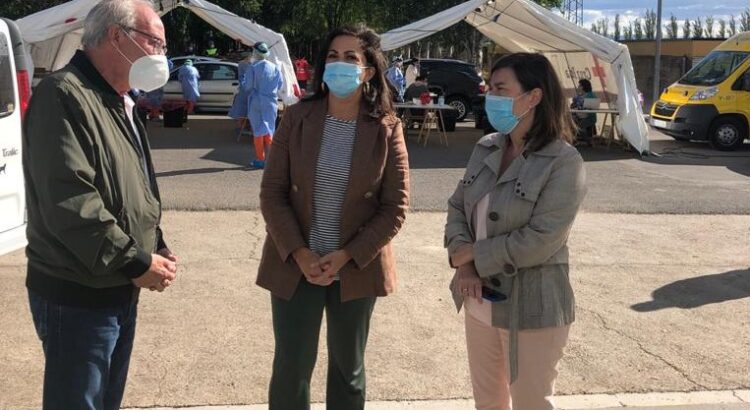
Se puede decir que el foco COVID se ha asentado en Alfaro después de registrar cerca de 160 casos activos, superando así los acumulados desde el inicio de la pandemia hasta el pasado 17 de agosto (107). Tras finalizar la segunda jornada de cribado perimetral en la zona de La Molineta con 3.294 PCR, la evolución de la curva de la pandemia en la localidad es poco esperanzadora.

A pesar de que tras las primeras 500 PCR realizadas, tan solo 50 o 60 hayan dado positivo, según apunta el alcalde del municipio, Julián Jiménez, se espera que la cifra vaya en ascenso conforme se notifiquen los resultados de las pruebas. Ante este escenario «extraño», el consistorio ya apunta a una «medidas más drásticas» que permitan frenar el avance del virus.

En concreto, Jiménez ha puesto en conocimiento del Gobierno de La Rioja la posibilidad de retrasar el inicio del curso escolar en Alfaro al 14 de septiembre: «El 8 es festivo en el pueblo, por lo que se empezaría el miércoles 9. Pero opino que es mejor ganar tres días más de autoconfinamiento y suprimir las clases, una medida que ya he trasladado a la Consejería de Salud y que se valorará en las próximas reuniones».

El martes, más PCR

Se estima que durante los tres días que dura el cribado perimetral se realicen cerca de 4.000 PCR, pero el trabajo no cesa ahí. El Ayuntamiento de Alfaro continuará con el dispositivo durante los próximos dos días para realizar pruebas a aquellos sectores de la población más vulnerables, como personas mayores, y con aquellas que no han acudido al dispositivo de La Molineta.

Jiménez destaca el «cumplimiento generalizado» del autoconfinamiento por parte de la población alfareña e insiste en que no hay que criminalizar a ningún grupo social, «como se ha hecho con los jóvenes, porque la gente está muy concienciada con cortar esta cadena de transmisión comunitaria».

Fuente de la Información: https://nuevecuatrouno.com/2020/08/30/alfaro-estudia-retrasar-una-semana-inicio-curso-escolar/

Comparte este contenido:

Wuhan reabre sus colegios y guarderías el próximo 1 de septiembre, no siendo obligatorio llevar mascarilla

Wuhan reabre sus colegios y guarderías el próximo 1 de septiembre, no siendo obligatorio llevar mascarilla

El próximo 1 de septiembre, las guarderías y los colegios de la ciudad china de Wuhan, en la que se registraron los primeros casos de coronavirus SARS-CoV-2, empezarán el curso escolar, según han informado las autoridades municipales.

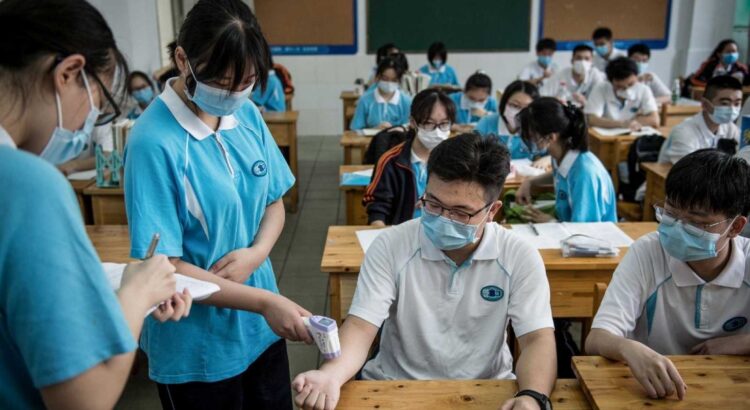
Este sábado, en un comunicado publicado en su página web, el Gobierno de Wuhan indicó que los casi 1,4 millones de alumnos que volverán el próximo martes a las aulas no estarán obligados a cubrirse nariz y boca con mascarilla “en el campus en circunstancias normales”.

No hace falta que los estudiantes se coloquen la mascarilla en el campus, pero deberían llevarla por si acaso”, señaló el subdirector del Departamento de Educación de Wuhan, Wang Chifu. Las autoridades sí recomendaron su uso en el trayecto hasta y desde el centro educativo.

En este sentido, aconsejaron evitar el transporte público para ir al colegio con el objetivo de minimizar el contacto humano, e insistieron en mantener la distancia de seguridad e higiene de manos, además del uso de la mascarilla, en caso de que sea inevitable su uso.

Deberá llevar mascarilla todo el personal empleado en colegios y guarderías, en cuyo acceso tomarán la temperatura a todos los estudiantes antes de permitirles entrar.

El Gobierno de Wuhan aseguró contar con un plan de enseñanza presencial, a distancia y mixta que irá adaptando según varíen las circunstancias sanitarias después del inicio del curso, previsto para el próximo martes.

Ese día, 1 de septiembre, casi 1,4 millones de estudiantes volverán a las aulas de 2.842 centros educativos de la ciudad, que estuvo sometida a una estricta cuarentena entre finales de enero y principios de abril y que, paulatinamente, ha ido rebajando las medidas de prevención.

Los colegios y las guarderías de Wuhan seguirán sometiéndose a lo largo del curso a inspecciones sanitarias y desinfecciones periódicas.

Asimismo, las autoridades municipales han pedido a los padres que informen inmediatamente a los centros educativos si sus hijos presentan síntomas habituales de la COVID-19, como la fiebre. Las cifras oficiales chinas señalan que se han registrado en el país asiático 85.022 contagios desde el inicio de la pandemia, de los cuales murieron 4.634 personas.

Este viernes, China sumó 9 nuevos positivos, todos ellos diagnosticados a viajeros procedentes del extranjero, mientras que el casillero de contagios locales permaneció en cero por decimotercer día consecutivo.

Fuente de la Información: https://www.cordobabn.com/articulo/internacional/wuhan/20200829131235057951.html

Comparte este contenido:

América Latina: La pandemia del hambre

La pandemia del hambre

Frei Betto

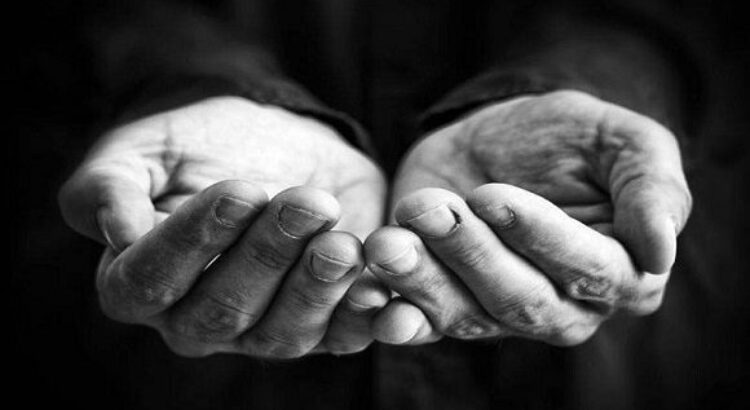
El hambre en el mundo se duplicará debido a la pandemia que afecta al planeta, en el caso de no tomar las medidas necesarias.

En abril, el Banco Mundial preveía que la contracción de la economía brasileña en 2020 sería del 5% del PIB. Ahora, en junio, la predicción es de un 8% a un 10%. Y el gobierno esperaba un crecimiento del 2%…

Como la pandemia afecta principalmente a los trabajadores autónomos e informales que, para sobrevivir, no pueden quedarse confinados en sus casas, se prevé que el número de brasileños en situación de pobreza aumentará este año de 41,8 millones (2019) a 48,8 millones de personas, lo que equivale al 23% de la población.

Se considera pobres a todos los que sobreviven con ingresos diarios inferiores a 27,5 reales o mensuales inferiores a 825 reales. Este año serán 7 millones más de brasileños. El auxilio de emergencia alivió un poco el drama social. Pero, ¿hasta cuándo?

Una investigación realizada por la empresa Plano CDE, que analiza la vida y el consumo de las clases C, D y E, indica que entre marzo y abril de este año, de los 58 millones de brasileños de las clases D y E (con ingresos mensuales de hasta 500 reales) 51 millones vieron sus entradas reducidas a la mitad o menos. Y de los 100 millones de la clase C (con ingresos mensuales entre 500 y 2 000 reales), 29% sufrieron igual pérdida.

De las familias brasileñas, el 70% con ingresos mensuales inferiores a 3 135 reales dependen de ciclos económicos favorables para alimentarse y pagar las cuentas. Con la Covid-19, todo indica que este año esas familias quedarán sumamente endeudadas. En abril, el aumento de las deudas en la clase C fue del 36%, y en las clases D y E, del 47%.

Según el Instituto Brasileño de Geografía y Estadística (IBGE), entre 2009 y 2019, el número de favelas creció un 107,7%. Hoy suman 13 151 en 734 municipios, y en ellas viven 5,1 millones de personas. Con la caída del 10% del PIB en este año, debido a la pandemia, esa situación tiende a empeorar, a menos que se apruebe un programa de ingresos mínimos para cada familia que habite en una favela.

Brasil cuenta hoy con 28,5 millones de personas desempleadas. El dato fue divulgado por el IBGE el 16 de junio. De ese total, 17,7 millones declararon que no podían buscar empleo debido a las restricciones impuestas por la pandemia.

La América Latina y el Caribe albergan el 8,5% de la población mundial. Entre 2000 y 2020, el hambre se redujo casi a la mitad en los 33 países de la región. De 73 millones de hambrientos se pasó a 38 millones, según la FAO. Ello ocurrió gracias a los gobiernos progresistas, que implementaron políticas sociales, programas de alimentación escolar y medidas de apoyo a la agricultura familiar.

Pero se inició un retroceso a partir de 2015, el mismo año del lanzamiento de la Agenda 2030 de la ONU, cuyo Objetivo de Desarrollo Sustentable es “hambre cero”. El número de personas que viven con inseguridad alimentaria en la América Latina y el Caribe alcanzó los 43 millones en 2018. Para 2020, la Cepal prevé un aumento de 16 millones en situación de pobreza extrema. Esa realidad se ve retratada por el código de las Banderas Blancas, adoptado ahora en varios países, entre ellos Perú, Honduras, Guatemala y El Salvador: la familia desprovista de todo alimento coloca frente a su casa una tela blanca como señal de que necesita un socorro alimentario urgente.

En el Continente no faltan alimentos. Falta justicia. Hoy, 84 millones de niños en la América Latina y el Caribe dependen de la escuela para tener acceso a una buena alimentación. De ellos, 10 millones solo ingieren una comida mínimamente nutritiva al recibir la merienda escolar. Ahora el virus los excluye de la escuela y los acerca al hambre.

La Cepal y la OIT calculan que la Covid-19 dará por resultado 300 millones más de pobres en la región, de los cuales 83 millones estarán en situación de pobreza extrema. El PIB del Continente debe decrecer un 5%. Ello se debe a la paralización de los mercados internos, la disminución del flujo de las cadenas globales, la caída de los precios de las materias primas y la interrupción del trabajo informal de los migrantes. La crisis elevará la tasa de desempleo al 11,5%, lo que significa 12 millones de nuevos desocupados. Actualmente son 25 millones. A finales del año serán 37 millones.

Hoy, de los 292 millones de trabajadores de la América Latina y el Caribe, 158 operan en la informalidad. En los jóvenes entre 15 y 24 años, el índice llega a 62,4%. La pandemia ha provocado la pérdida del 80% de los ingresos de los trabajadores informales. En el mundo, del 60%.

Los gobiernos latinoamericanos y caribeños solo destinan el 0,7% del PIB a las poblaciones más vulnerables. Como mínimo, debería ser el 3,4% para garantizar la sobrevivencia de 214 millones de personas que ingresarán en las filas de la pobreza en lo que resta del año. Los países más afectados serán Brasil, Argentina, México, Ecuador y Nicaragua.

Según la OIT, este gran lockdown arrojó, en todo el mundo, a 2 mil 700 millones de personas al desempleo o la informalidad. En el nivel global, el Banco Mundial calcula que la crisis de la Covid-19 puede sumar a 70 millones de personas a los 632 millones que sobreviven hoy en la pobreza extrema, o sea, personas con ingresos diarios inferiores a 9, 50 reales o mensuales inferiores a 285. El PIB planetario sufrirá una reducción del 5,2% en 2020. Será la peor recesión en ocho décadas.

En el mundo, puede aumentar en 250 millones el número de personas con inseguridad alimentaria. Más de 30 países están amenazados por la pandemia del hambre. El Informe Global 2020 sobre Crisis Alimentarias, de la ONU, revela que existen 318 millones de personas en 55 países con inseguridad alimentaria aguda. Muchas tienen qué comer, pero no la cantidad diaria suficiente de calorías que se requiere. Si tenemos en cuenta la ingestión calórica, el número aumenta a 2 mil 500 millones de personas subalimentadas. Agravadas por la Covid-19, perduran las causas del hambre: conflictos armados, condiciones climáticas extremas (desequilibrio ambiental), dificultades de acceso a la tierra y al empleo, y turbulencias económicas.

El reverendo británico Thomas Malthus se engañó al prever, en 1789, que en los siglos venideros la producción de alimentos crecería aritméticamente (1-2-3-4) y la población geométricamente (1-2-4-8). Habría más bocas que pan. Cuando lo declaró, el mundo tenía mil millones de habitantes. Hoy somos casi 8 mil millones y sobran alimentos, suficientes para saciar al menos a 12 mil millones de seres humanos. Por tanto, lo que falta es compartirlos. El hambre perdura porque hay muchas familias sin tierra y muchas tierras en manos de pocas familias.

Miles de millones de familias no tienen recursos para comprar comida, que ha dejado de tener valor de uso y pasado, con el capitalismo, a tener valor de cambio. Esa mercantilización del bien más esencial para nuestra sobrevivencia biológica es un crimen horrendo. Los agricultores ya no pueden llevar sus productos al mercado para venderlos. Deben entregarlos a un intermediario que los revende al sistema que los procesa, transporta, envasa y distribuye a los puntos de venta.

Hoy son los bancos, las multinacionales y los fondos de pensiones los que dominan el mercado delos alimentos y promueven especulaciones mediante derivativos de commodities. Cuando se produce una interrupción en esa cadena, los agricultores se ven obligados a quemar o enterrar los productos. Un crimen de lesa humanidad practicado en honor al dios Capital.

Frei Betto es asesor de la FAO en el tema de soberanía alimentaria y educación nutricional, y autor, entre otros libros, de O marxismo ainda é útil? (Cortez).

Autor: Frei Betto

Fuente de la Imagen: El Diario Exterior.

Fuente de la Información: http://www.cubadebate.cu/opinion/2020/06/22/la-pandemia-del-hambre/#.X0upvShKh0w
 

Comparte este contenido:

‘Wisdom’ of Guatemala’s indigenous people needed for sustainable development: A UN Resident Coordinator blog

‘Wisdom’ of Guatemala’s indigenous people needed for sustainable development: A UN Resident Coordinator blog

The wisdom and knowledge of indigenous people in Guatemala is central to the realization of the 17 Sustainable Development Goals or SDGs, targets agreed by countries around the world to end poverty, maintain peace and preserve the health of the planet. In this blog, the UN Resident Coordinator in Guatemala Rebeca Arias Flores explains how sustainable development is not new, but simply a new name that draws on ancient wisdom that is renewed with each generation of indigenous people.

“Now more than ever, we must heed the wisdom of indigenous peoples. This wisdom calls upon us to care for the earth so that not only our generation may enjoy it, but that future generations may as well.»

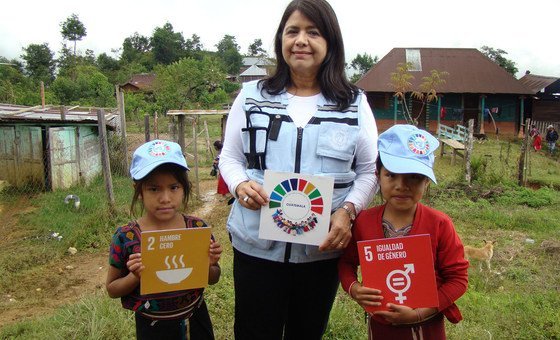
The UN Resident Coordinator in Guatemala, Rebeca Arias, Flores promotes the Sustainable Development Goals with the help of two young children., by UN Guatemala/Hector Delgado

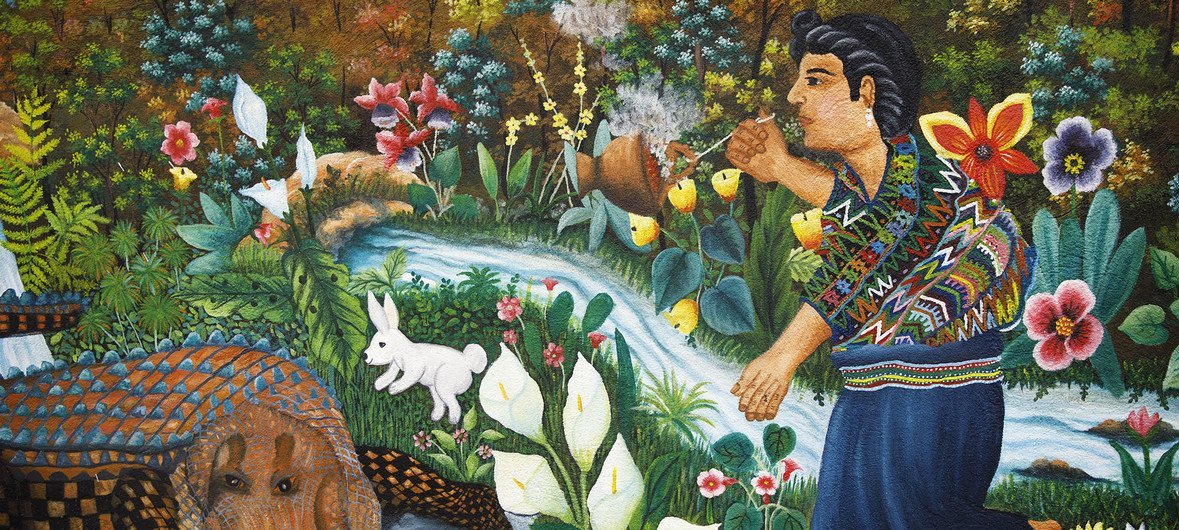
This wisdom is passed down to us through stories and spirits. Consider the example of Nawal, a supernatural spirit of harvests that can take on animal forms, according to Mesoamerican beliefs. On certain days in the indigenous calendar, people call on Nawal for a good harvest. It is a fine thing to have one good harvest. It is even better for the earth to yield its bounty again and again. To enjoy such repeated success, farmers in the area know they must respect the seasons, to plant, to sow, to let the land lay fallow for a time.

This wisdom was also articulated in a declaration from 2012, on an auspicious date in the Mayan calendar. It was Oxlajuj B’aktun or a “change of era,” the end of a cycle that lasts more than 5,000 years. On that date, the three UN entities working with indigenous peoples came together in Guatemala, their first joint meeting outside the UN’s New York headquarters.

Together, they issued a declaration pleading with humanity to respect human rights, promote harmony with nature, and pursue development that respects ancestral wisdom. These three bodies included the Permanent Forum for Indigenous Issues, the Mechanism of Experts on the Rights of Indigenous Peoples, and the Special Rapporteur on the Rights of Indigenous Peoples.

This wisdom found its way into “K’atun: Our Guatemala 2032”, the national plan which has guided sustainable development of three successive administrations. It serves as the compass for the country’s UN Cooperation Framework for Sustainable Development 2020-2024, created in collaboration with the Government of Guatemala.

Indigenous Guatemalans hit hardest by coronavirus pandemic

To pursue K’atun, we must look at the status of indigenous peoples. In Guatemala, they are amongst the most vulnerable people because they are constantly displaced from their ancestral lands. Data from recent years show that the poverty rate among indigenous people was 79 per cent, almost 30 points above the national average. Even before the COVID-19 pandemic eight out of every 10 indigenous girls, boys and adolescents, live in poverty. Only six finish primary school, only two go to secondary school, and one goes to university. Six in 10 indigenous children under five years of age suffer from chronic malnutrition.

COVID-19 is devastating for all of Guatemala. Many people are sick, some are dying, and countless others are losing their livelihoods because of the disease itself and because the quarantine prevents them from working and earning money.

However hard the pandemic hits Guatemala, it will hit the indigenous peoples even harder. They were already the furthest left behind, and now they will be set back even more. The situation of indigenous women, who are often the main providers for their families, is even more worrisome.

Indigenous people hold key to collective survival

And yet, indigenous people are seeking their own solutions, drawing on their own ingenuity. They are using traditional knowledge and practices to contain the disease.

We all must concern ourselves with the wellbeing of indigenous peoples, for their sake. We must respect their wisdom, for their sake. We must protect their human rights, for their sake. We must include them in decision-making, for their sake. It is only right.

But we must also do this for the sake of all Guatemalans. All of Guatemala, indeed, the whole world, has much to learn from indigenous peoples. It is a painful irony that they have been so exploited and oppressed, and yet they may hold a key to our collective survival. It is a painful irony, too, that indigenous people are among those most affected by climate change, and yet they contribute the least to it.

Without indigenous people, neither Guatemala nor the rest of the world will achieve sustainable development. Without indigenous people we cannot enjoy the gifts of the earth and maintain them for all those who will come after us. This is and must be the work of all governments and all people.

75 years ago, the signatories of the United Nations Charter reaffirmed “the dignity and worth of the human person.”

Now, let us reaffirm that belief once more. And let us ensure that indigenous people are included in it.”

The UN Resident Coordinator

The UN Resident Coordinator, sometimes called the RC, is the highest-ranking representative of the UN development system at the country level. In this occasional series, UN News is inviting RCs to blog on issues important to the United Nations and the country where they serve.
Fuente de la Información: https://news.un.org/en/story/2020/08/1070862
Comparte este contenido:

South Africa: Moral Panic Over Human Trafficking Is Hurting Children, Says Report

South Africa: Moral Panic Over Human Trafficking Is Hurting Children, Says Report

A report has been published that says points to a harmful moral panic about child trafficking.

The moral panic is being used by authorities to discourage migrants.

The rights of children are being violated by the application of trafficking laws.

A recently published report suggests that incidents of «child trafficking» in South Africa are exaggerated and that migrant children are bearing the brunt of this «myth».

The study was conducted by Dr Rebecca Walker and Dr Stanford Mahati, both from the African Centre for Migration and Society at the University of the Witwatersrand, along with Centre for Child Law (CCL) researcher Isabel Magaya.

It was commissioned by the Centre «out of a concern that the moral panic around child trafficking in South Africa is used to discourage cross-border migration and impinge on peoples rights».

Also, the report says, there were concerns that state officials, who deal with undocumented migrant children, are using using child trafficking measures «to justify practices that violate the rights of children».

The authors looked at legislation, prosecutions, «myths and realities» and oversaw field work in which, amongst others, «children on the move» were interviewed.

Their findings reflected that the discourse of child trafficking did not reflect the realities on the ground and is «based more on speculation and a moral panic shaped by anecdotal evidence».

While their study was done on a relatively small scale in Cape Town, Gauteng, Ehlanzeni District and Musina, it showed the majority of child migrants had not been trafficked.

And there was limited understanding by key people, including border control officials, as to what legally constitutes child trafficking.

«Most children have either made a decision on their own to come to South Africa or have been influenced by their peers or relatives, including parents, to come here to improve their economic situation and access basic services like education.

«Though the movement of children under these conditions challenges norms about the ideal childhood and exposes children to a number of vulnerabilities, this does not mean that their experiences can, conveniently, be described as trafficking,» the authors said.

«Describing them as such is dangerous and generates a lot of problems in the lives of children on the move.

«Furthermore, the complex, everyday realities of children crossing borders, including the risks they face in encountering corruption amongst border officials, confronting xenophobia, and being denied access to documents, do not fit with an overall focus on children as victims who need to be ‘put back in place’ in their own countries or homes.»

Underlying these challenges was access to documentation which enabled access to education.

Barriers made migrant children more vulnerable and more at risk of being «trafficked».

Harsh immigration and migration policies, founded on an anti-trafficking stance, «misrepresent and diminish the severity of many of the key vulnerabilities faced by migrant children».

«They also heighten the risks that children face as their experiences, which do not amount to trafficking, are ignored and sidelined.

«The key to considering the experiences of children on the move is recognising that in reality the migration of children is unlikely to change. «

They said any approach directed at children should focus on facilitating safer movement, ensuring access to support, and making sure children were documented so as to reduce the risk of greater harm.

The authors said a much larger, comprehensive study was needed to formulate a reliable picture of child trafficking in a broader context of child migration.

«This can then inform policy making and, most importantly, challenge claims that are based on myth rather than evidence,» they concluded.

GroundUp is being sued after we exposed dodgy Lottery deals involving millions of rands. Please help fund our defence. You can support us via Givengain, Snapscan, EFT, PayPal or PayFast.

Read the original article on GroundUp.
Fuente de la Información: https://allafrica.com/stories/202008270456.html


Comparte este contenido:

Hebei: Niños aprenden Opera Hahaqiang durante vacaciones de verano

Hebei: Niños aprenden Opera Hahaqiang durante vacaciones de verano

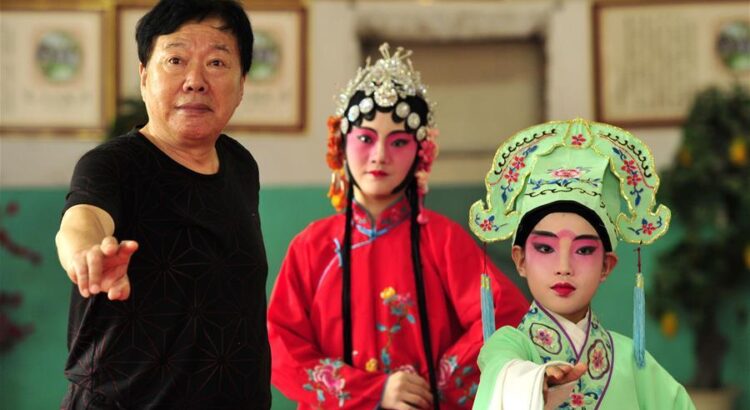
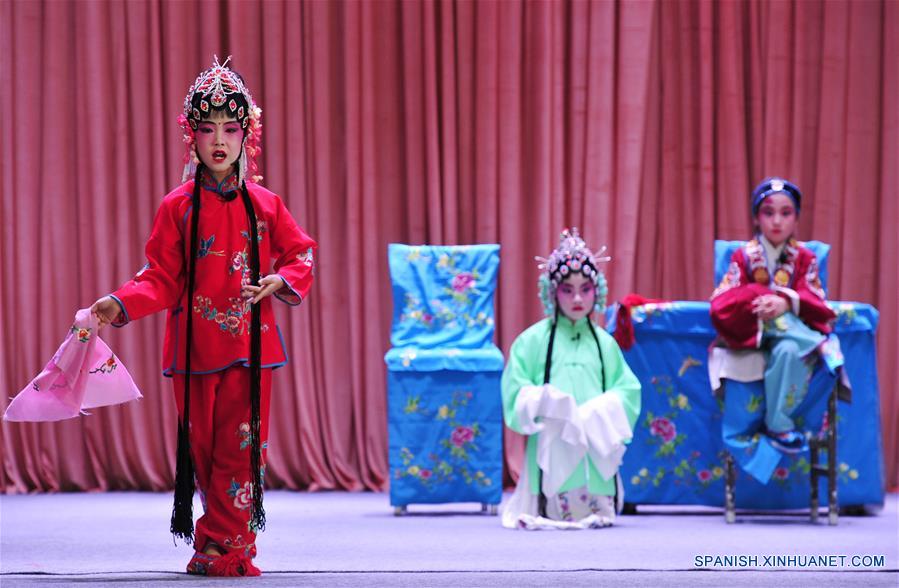
CANGZHOU, 27 agosto, 2020 (Xinhua) — Liu Zongfa (i), heredero de la Opera Hahaqiang, enseña a los niños en una base de patrimonio en el poblado de Mumendian del distrito de Qingxian, provincia de Hebei, en el norte de China, el 27 de agosto de 2020. Algunos niños pasaron sus vacaciones de verano aprendiendo Opera Hahaqiang, una ópera local en partes de las provincias de Hebei y Shandong. La Opera Hahaqiang fue catalogada como patrimonio nacional inmaterial en 2006. (Xinhua/Mu Yu)

CHINA-HEBEI-OPERA-NIÑOS-PRACTICA

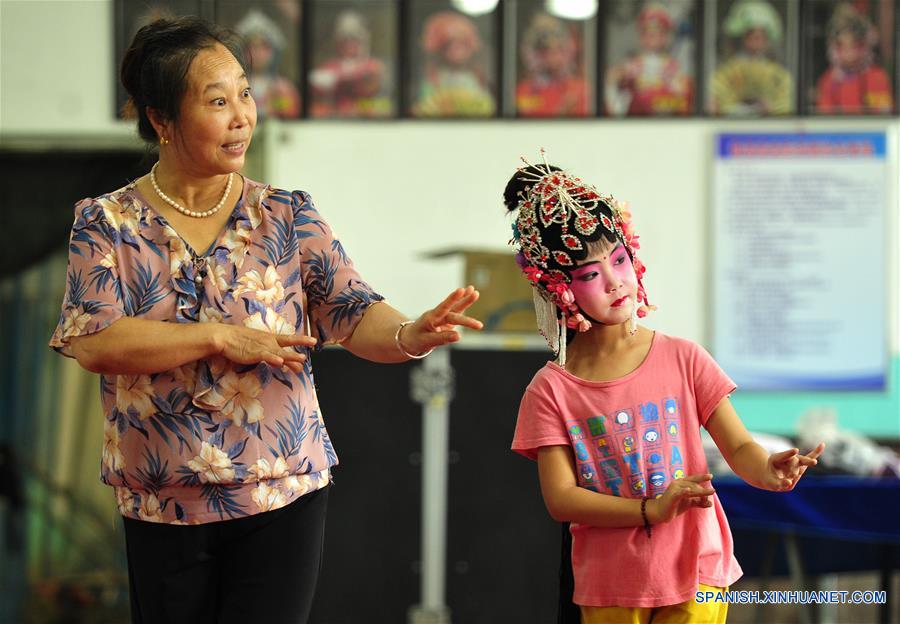
CANGZHOU, 27 agosto, 2020 (Xinhua) — Una niña aprende la Opera Hahaqiang de una maestra en una base de patrimonio en el poblado de Mumendian del distrito de Qingxian, provincia de Hebei, en el norte de China, el 27 de agosto de 2020. Algunos niños pasaron sus vacaciones de verano aprendiendo Opera Hahaqiang, una ópera local en partes de las provincias de Hebei y Shandong. La Opera Hahaqiang fue catalogada como patrimonio nacional inmaterial en 2006. (Xinhua/Mu Yu)

CHINA-HEBEI-OPERA-NIÑOS-PRACTICA

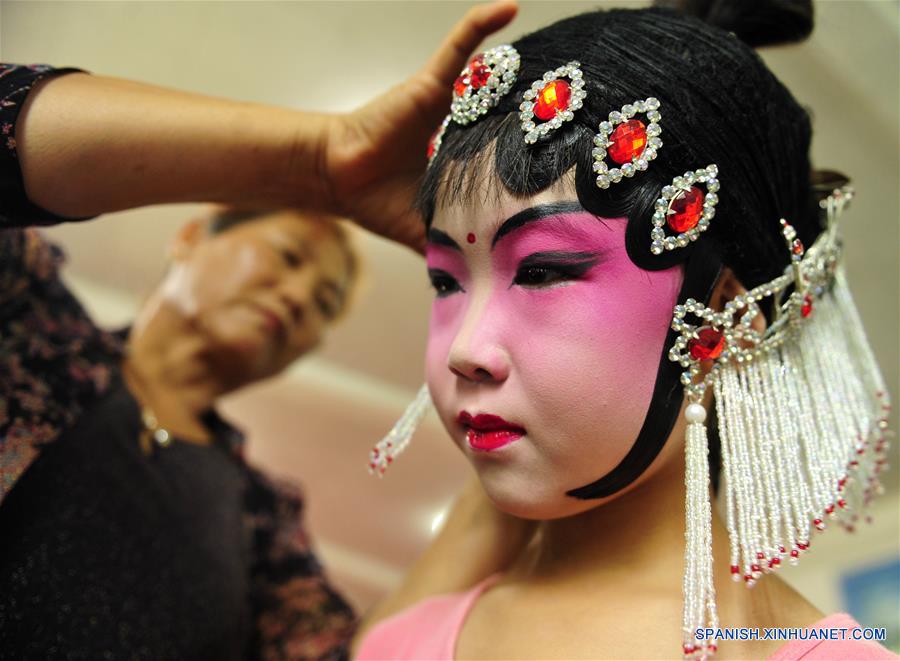
CANGZHOU, 27 agosto, 2020 (Xinhua) — Una niña es maquillada antes de interpretar la Opera Hahaqiang en una base de patrimonio en el poblado de Mumendian del distrito de Qingxian, provincia de Hebei, en el norte de China, el 27 de agosto de 2020. Algunos niños pasaron sus vacaciones de verano aprendiendo Opera Hahaqiang, una ópera local en partes de las provincias de Hebei y Shandong. La Opera Hahaqiang fue catalogada como patrimonio nacional inmaterial en 2006. (Xinhua/Mu Yu)

CHINA-HEBEI-OPERA-NIÑOS-PRACTICA

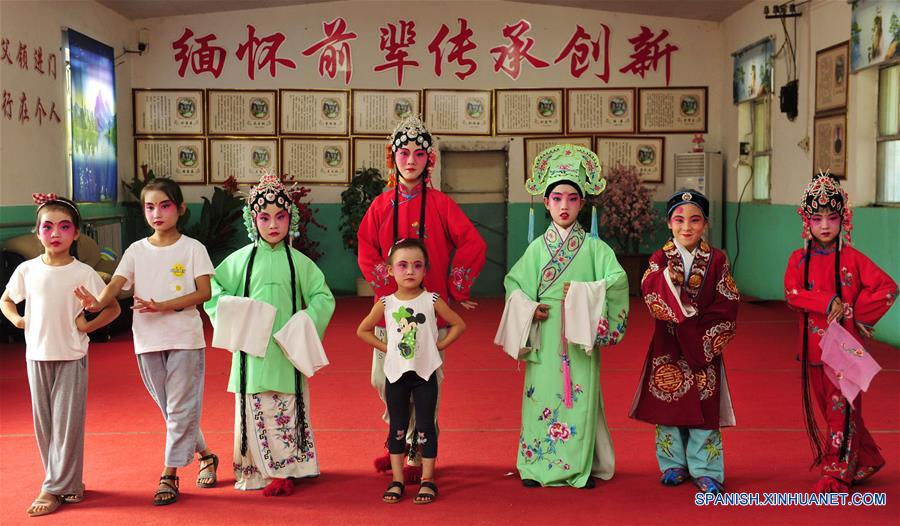
CANGZHOU, 27 agosto, 2020 (Xinhua) — Niños interpretan la Opera Hahaqiang en una base de patrimonio en el poblado de Mumendian del distrito de Qingxian, provincia de Hebei, en el norte de China, el 27 de agosto de 2020. Algunos niños pasaron sus vacaciones de verano aprendiendo Opera Hahaqiang, una ópera local en partes de las provincias de Hebei y Shandong. La Opera Hahaqiang fue catalogada como patrimonio nacional inmaterial en 2006. (Xinhua/Mu Yu)

CHINA-HEBEI-OPERA-NIÑOS-PRACTICA

 CANGZHOU, 27 agosto, 2020 (Xinhua) — Niños se preparan para interpretar la Opera Hahaqiang en una base de patrimonio en el poblado de Mumendian del distrito de Qingxian, provincia de Hebei, en el norte de China, el 27 de agosto de 2020. Algunos niños pasaron sus vacaciones de verano aprendiendo Opera Hahaqiang, una ópera local en partes de las provincias de Hebei y Shandong. La Opera Hahaqiang fue catalogada como patrimonio nacional inmaterial en 2006. (Xinhua/Mu Yu)

Fuente de la Información: http://spanish.xinhuanet.com/photo/2020-08/31/c_139323765.htm

Comparte este contenido:

Inglaterra – Coronavirus: ‘Reassuring’ study of children’s ‘tiny’ risk

Coronavirus: ‘Reassuring’ study of children’s ‘tiny’ risk

Parents should be «reassured» Covid-19 has not caused the deaths of any otherwise healthy schoolchildren in the UK, researchers say.

Children’s risk of needing hospital treatment for coronavirus is «tiny» and critical care «even tinier», they say.

However, black children, those who are obese and very young babies have a slightly higher risk.

The BMJ study looked at 651 children with coronavirus in hospitals in England, Wales and Scotland.

It covers two-thirds of all children’s admissions in the UK due to Covid-19 between January and July and confirms what is already known about the minimal effects of the virus on children.

A «strikingly low» 1% of these 651 children and young people – six in total – had died in hospital with Covid-19 compared with 27% across all other age groups, the study found.

Eighteen per cent of the children needed intensive care.

And the six who had died had had «profound» underlying health conditions that had often been complex and themselves life-limiting.

Children with such conditions remained vulnerable to the virus and must take precautions, the researchers said.

But for others, the risk was extremely low.

«There have been no deaths in otherwise healthy school-age children,» said study author Prof Calum Semple, from the University of Liverpool.

«There is no direct harm from children going back to school,» he added.

Co-author Dr Olivia Swann, from the Royal Hospital for Sick Children, in Edinburgh, said she hoped the findings would be «extremely reassuring for parents across the UK».

The most common symptoms in children admitted to hospital were a fever, cough, nausea or vomiting and shortness of breath.

Older children were more likely to have stomach pain, headache and a sore throat.

Of the 651 children in the study, 42% had an underlying health condition – the most common ones being illnesses affecting the brain and nervous system (11%), cancer (8%) and asthma (7%).

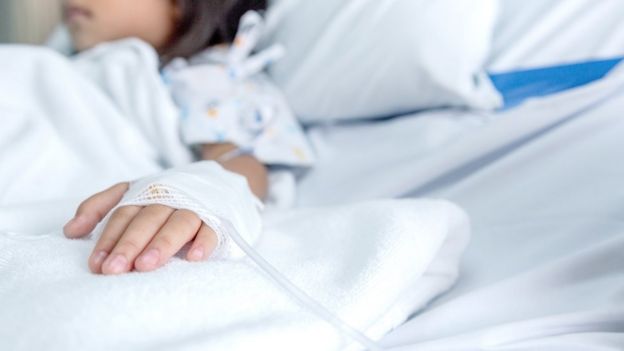
Child in hospital bed

But having asthma – unlike being obese – had not made the children more likely to need intensive care.

Of the children studied, 52 were also diagnosed with a multisystem inflammatory syndrome linked to coronavirus, with the first case seen by doctors in mid-March.

These children – none of whom died – were more likely than the others to be older, about 10, and from ethnic minorities.

And they were five times more likely to be admitted to intensive care, where they responded well to treatment.

‘Higher incidence’

Based on their study, the definition of this syndrome could now be broadened to include symptoms such as fatigue, headache, sore throat and muscle pain, the researchers said, on top of the symptoms already listed by the World Health Organization.

Dr Liz Whittaker, of Imperial College London, said the findings echoed other studies of Covid-19 in children.

«Very low numbers of children have been admitted to critical care and the researchers reported a very low death rate – particularly in comparison to adults but also in comparison to the death rate due to other infections, influenza, chicken pox, meningitis, group-A-strep[tococcus] sepsis etc, and other causes of childhood death – for example, road traffic accidents,» she said.

The fact black children were more commonly affected by the very rare inflammatory syndrome «reflects the higher incidence of coronavirus infection in these communities», Dr Whittaker added.

Fuente de la Información: https://www.bbc.com/news/health-53932294

Comparte este contenido:
Page 3 of 100
1 2 3 4 5 100