Page 371 of 472
1 369 370 371 372 373 472

Francia: Anti-elitism algorithm to decide which secondary school Paris pupils attend

Europa/Francia/16 de Septiembre de 2016/Autor: Henry Samuel/Fuente: The Telegraph

RESUMEN: Un algoritmo decide qué escuela secundaria asisten los niños parisinos, en parte, basando su cálculo en su posición social en un intento de abordar el elitismo. Los críticos advierten la posibilidad que podría llevar a multitudes de parisinos a enviar a sus hijos a escuelas privadas. Hasta ahora, la zona de influencia de un alumno francés es el único criterio para decidir a qué escuela secundaria asistirá. Pero a partir de 2017, esta decisión se calculará a través de un algoritmo que también tendrá en cuenta si un niño es de una familia de bajos ingresos. Noticias del sistema informático se produjo días después de que Thomas Piketty, Economista francés estrella y autor del éxito de ventas de capital internacional en el siglo XXI, advirtió que «los alumnos desfavorecidos» están siendo excluidos de los establecimientos «socialmente SELECT» en Francia.

An algorithm is to decide which state secondary school Parisian children attend, in part basing its calculation on their social standing an attempt to tackle elitism.

Critics warn the chance could prompt droves of Parisians to send their children to private schools.

Until now, a French pupil’s catchment area is the sole criterion for deciding which secondary school he or she attends.

But from 2017, this decision will be calculated via an algorithm that will also factor in whether a child is from a low-income family.

News of the computerised system came days after Thomas Piketty star French economist and author of international bestseller Capital in the Twenty First Century warned that «disadvantaged pupils» are being shut out of «socially select» establishments in France.

«The level of social segregation seen in secondary schools is reaching unacceptable heights, notably in Paris,» he wrote in a blog post in Le Monde. The most upscale schools only had 0.3 per cent of its pupils from underprivileged backgrounds compared to 65 per cent on the other end of the scale.

The decision to use the algorithm by Paris’ education chief came just days after the French education minister, Najaf Vallaud-Belkacem, appeared to pour cold water on the idea.

«I think we should break away from the French myth of a global, uniform measurement, a political-technocratic revolution,» he told Le Monde. «I don’t think that an algorithm should be seen as a magic wand» to improve the social mix, he insisted.

Her words followed controversy over a similar computerised system that has been used since 2008 to decide which lycées French high school pupils should attend based on similar criteria.

While defenders of the system insist it has cut «the social segregation index» by 30 per cent, controversy struck in August when it transpired that 83 per cent of this year’s intake to a Paris lycée came from low-income pupils following an apparent glitch in the algorithm.

The lycée algorithm is based on pupils’ preferences, their marks and whether they receive grants for low income families and can send them to the other side of a large catchment area.

François Weil, Paris’ chief education officer, said the calculation would be different in secondary schools as younger children cannot be expected to travel too far from home.

Peep-Paris, a parents’ union, slammed the move, saying: «They want to correct the city’s (educational) policies by displacing children. But they shouldn’t be carrying the can. What I expect from the authorities is to make all state secondary schools attractive so that people want to go to them.»

Mr Piketty warned that the algorithm would only improve the social mix in Paris if it was also applied to Paris’ private secondary schools, which teach a third of the French capital’s pupils. Parents’ howls of protest were totally unjustified, he added, as such establishments all receive huge state subsidies.

Failure to do include them would see an even higher percentage of families send their children to private schools, he warned.

It was unclear on Wednesday whether private schools would be included.

Mr Weil’s office said: «(Private schools) will be included in different ways. We can agree on aims for social make-up, recruitment strategies.»

Le Monde said that suggested that the algorithm would likely not apply to them.

Fuente: http://www.telegraph.co.uk/news/2016/09/14/anti-elitism-algorithm-to-decide-which-secondary-school-paris-pu/

Comparte este contenido:

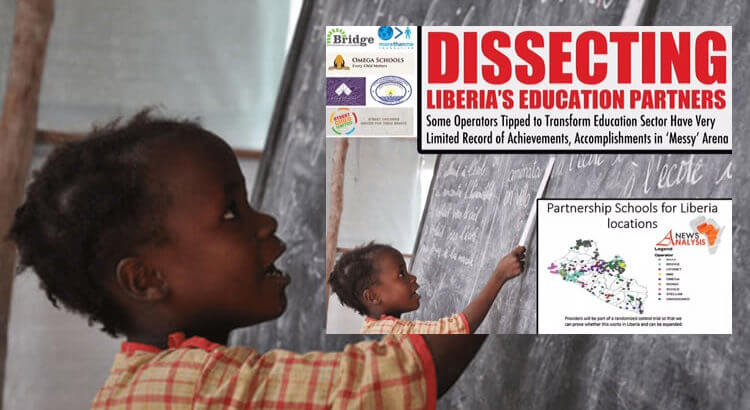
Liberia: Some Operators Tipped to Transform Sector Have Limited Achievements in ‘Messy’ Arena

África/Liberia/16 de Septiembre de 2016/Autor: Rodney D. Sieh/Fuente: Front Page Africa

RESUMEN: Liberia esta en medio de lo que algunos desearían, en una importante transformación de la educación, entre el  éxito o el fracaso, entre nadar o hundirse en el dilema de las carreras  contra el tiempo para rescatar lo que muchos, incluyendo a la presidenta Ellen Johnson-Sirleaf, han concluido como un escenario un tanto desordenado, humedeciendo las esperanzas de decenas de niños pequeños que se encuentran en las esquinas de las calles al lado del tráfico durante el horario escolar. El gobierno a través del Ministerio de Educación recientemente tomó la controvertida decisión de externalizar el sector de los operadores privados en lo que el Ministro George Werner anuncio con bombo y platillo como una oportunidad para que los niños aprendan. «Todos los niños merecen una gran educación – una que le permita seguir sus sueños y lograr su potencial. Y sin embargo, en Liberia estamos fallandole demasiado a nuestros hijos. Nuestros profesores, nuestras escuelas y nuestro sistema todos se enfrentan a desafíos profundos en incorporarlos. Por desgracia, es en las comunidades más pobres, donde los retos son mayores.»

Liberia is in the midst of what some hope would be a major education transformation, a make or break, sink or swim dilemma racing against time to rescue what many including President Ellen Johnson-Sirleaf have concluded is a somewhat messy arena, dampening the hopes of scores of young children found on the street corners and traffic sideways during school hours.

The government through the ministry of Education recently took the controversial decision to outsource the sector to private operators in what Minister George Werner trumpeted as an opportunity for children to learn.

“Every child deserves a great education – one that allows her to follow her dreams and achieve her potential. And yet in Liberia we are failing too many of our children. Our teachers, our schools and our system all face deep and embedded challenges. Unfortunately, it is in the poorest communities where those challenges are greatest.”

Werner’s gamble hopes to improve on the disturbing statistics that out of 1.5 million children enrolled in primary school, some 42 percent of primary age children remain out of school.

While Werner and the government have labeled the dilemma “an injustice that needs to be addressed, many remain unsure that the outsourcing of the sector to private operators is the best approach to buck the trend holding back Liberia’s future generation from derail.

At a recent Cabinet meeting, the Ellen Johnson-Sirleaf led government was briefed on the status of the Partnership Schools for Liberia (PSL) undertaken by the Ministry of Education in concert with private operators targeting some 185 schools in 13 counties across the country.

Much of the attention was initially pointed at Bridge International Academies, the sole partner announced by the MoE when the outsourcing plan was initially announced. The school trumpets itself as the most polarizing chain of private schools in Africa.

The partnership includes 185 schools, 92 randomly chosen as PSL schools and 93 forming a comparison group. The partnership would enable the following eight private operators to run, manage and operate selected schools.

The MoE has broken down the distribution as follows: BRAC – 20; Bridge International Academies– 23; Liberian Youth Network, LIYONET – 14; More than Me – 6; Omega – 19; Rising – 5; Stella Maris – 4 schools; Street Child – 12 schools.

Over the past few weeks, FrontPageAfrica has been dissecting the partners and made some rather peculiar discovery, that a lot the operators have very limited exposure to Liberia terrain.

Bridge International Academies

SCHOOLS ALLOCATED: 23

THEIR PITCH: BIA trumpets itself as the world’s largest education innovation company serving the 700 million families who live on less than $2 USD per day. “We strive to provide the highest quality education product to the more than 100,000 students who attend Bridge’s more than 400 nursery and primary schools across emerging markets in Africa and (soon to open) in Asia.”

BIA pitches itself as a data-driven and technology-enabled using smartphones, tablets, and “closed loop” Learning Lab to monitor teacher and student performance in real time and says it constantly reviews and revises to ensure that it offers a world class education that will prepare students for the 21st century. Outside of the classroom, BIA works with governments and civil society organizations to create customized teacher training modules, English Language Learning curricula, and “pop up” schools for refugees and other vulnerable populations.

THE MISSING LINK: BIA took a hit recently when the Ugandan government announced that it would shut down all schools operated by Bridge. Janet Museveni, Uganda’s minister of education and sports, announced last month that the government will close the 63 for-profit nursery and primary schools run by Bridge International in the country after deciding they fell short of standards on education, hygiene and sanitation.

In a statement to parliament, Museveni said that in Uganda the material used by Bridge “could not promote teacher-pupil interaction” and that the poor hygiene standards “put the life and safety of school children in danger”.

Bridge International has been funded by the World Bank, the UK’s Department for International Development, Bill Gates and others.

Like Liberia and Kenya, Uganda had turned to private providers to fill the gaps in infrastructure, teaching and other resources which have opened up under its universal primary and secondary education programmes.

In May 2015, over 100 organizations signed a statement critical of the privatization of education in Kenya and Uganda, which slammed Bridge International specifically for delivering poor quality education for too high a fee.

In its defense, Bridge International said it was sincerely concerned over Museveni’s statement to the Ugandan parliament, which it said threatened to force 12,000 children out of their schools and 800 Ugandans out of work.

“We are waiting to receive the report [into Bridge schools in Uganda] to review the ministry’s concerns,” said Michael Kaddu, head of corporate and public affairs for Bridge International Academies in Uganda.

“We have been working closely with the ministry to put the needs of the children first and come to a speedy resolution of any issues made known to us.

EXPECTATIONS: Despite the controversy, Bridge says recent results point to gains by its pupils in standard deviation on core reading skills, standard deviation on Math compared to their peers in neighboring schools, based on USAID-designed exams administered by an independent monitoring and Evaluation Company – this translated into over 250 additional days of learning.

LIYONET

SCHOOLS ALLOCATED: 14

THEIR PITCH: The Liberian Youth Network (LIYONET), is a registered non-governmental, non-political and non-for-profit organization committed to promoting children and youth participation in sustainable development and good leadership leading to bringing up a generation of children and young people who are responsible citizens of Liberia, through provision of socio-economic empowerment, integration, access to basic services (education and information), self-reliance, gender mainstreaming and civil and constitutional rights of communities-residents and vulnerable persons.

THE MISSING LINK: Until the partnership announcement very little information was available regarding the network. FrontPageAfrica has been unable to trace any previous engagement in education. The network has no website or record or trail of its work to education or working with kids.

EXPECTATIONS: LIYONNET has been allocated schools in Bong and Sinoe counties respectively, notably in the Fuamah, Panta-Kpaai and Zota Districts in Bong and the Tarjuwon District in Sinoe. With very little experience in education, the jury is out on how much reach and impact the organization will have on transforming education for the rural and mostly-poor constituents.

BANGLADESH RURAL ADVANCEMENT COMMITTEE (BRAC LIBERIA)

SCHOOLS ALLOCATED: 20

THEIR PITCH: BRAC launched operations in Liberia in 2008 and has been working for a better future for Liberians with programmes in microfinance, agriculture, poultry and livestock, health, and Empowerment and Livelihoods of Adolescents; programmes that benefit more than half a million people.

THE MISSING LINK: While much of the attention was focused on Bridge, many were puzzled as to how the organization got its foot in the door of Liberia’s education outsource – particularly when it has not demonstrated experience in the area in Liberia.

Ironically, the organization which has been in Liberia since 2008 did not prioritize education as it had in next door Sierra Leone, Uganda, South Sudan, Philippines, Haiti and Afghanistan.

More importantly, an internal BRAC report on its schools in Bangladesh found that students found much of the course work difficult, in part because the BRAC methodology which equates learning with memorization. Moreover, according to the report, many of the children found the materials completely new. It is unclear how BRAC intends to adapt its model to suit Liberia’s pressing needs.

The report concluded that the strict discipline and rigid lines of authority found throughout BRAC and its programs — can be discomfiting to western sensibilities.

“This characteristic of BRAC’s program functions as a two-edged sword. On the positive side, BRAC has succeeded in setting basic standards for its schools, including the number, age, and sex of students; the size, shape, and decorations of classrooms; the teacher and students arriving and leaving at the right time; and the holding of regular meetings of the parent and school committees.”

EXPECTATIONS: The organization trumpets its primary schools’ operations in Bangladesh where it has been non-formal education to disadvantaged and out-of-school children, particularly girls. It will be interesting to see how it performs in Liberia where it has made no inroads in education.

Where BRAC could come in handy is if it can put some of the experiences trumpeted from its work in Bangladesh where it has prepared students to sit for the government Shomaponi Examination, the equivalent of the WAEC. BRAC primary schools are free, and include textbooks, notebooks, and other educational materials.

There are currently over 22,000 BRAC primary schools operating throughout the world. Liberia expects a lot and BRAC must prove it has earned its stripes. Under the partnership, BRAC has been allocated schools in Lofa and Nimba counties, in Foya, Kolahun, Zorzor, Voinjama, Saclapea and Gbehlay Geh.

OMEGA (Ghana)

SCHOOLS ALLOCATED: 19

THEIR PITCH: Founded by Ken & Lisa Donkoh, and James Tooley in 2008, and backed by Pearson’s Affordable Learning Fund, Omega Schools is a social enterprise on a mission to deliver quality education at the lowest cost on a grand scale.

The model has proven to be extremely attractive to parents, enabling its schools to be full within 10 days of opening. Currently the chain has 38 schools educating over 20,000 students and seeking to double that number in a year.

 In Ghana, Omega Schools has responded to need for low-income schools with an innovative Pay-As-You-Learn model – a chain of low cost private schools with specialized curriculum, assessment, technology and management modules that are benefiting the poor and empowering aspirations of low income families and their communities.

THE MISSING LINK: While Omega has been given high marks for its work in Ghana, it is entering unfamiliar territory in a rural Liberia setting lacking stable electricity and in some cases, very limited internet facilities.

But more importantly, a working Paper by author Curtis Riep suggests that the Omega Chain of Private Schools in Ghana which claims to bring education to the poorest is instead delivering a high-burden cost for access.

Riep finds that Omega Schools’ impact on access is «negligible,» quality of education suffers as expenditures are driven down, and the cost of these schools actually represents a high percentage of household income.

He concludes that this model of privatization represents a «for-profiteering» endeavor, exploiting the poorest members of Ghanaian society and their basic right to education.

EXPECTATIONS: Omega has been assigned schools in Bong, Margibi, Montserrado and Nimba counties respectively. Omega is expected to improve performances in Salala, Suacoco, Zota, Gibi, Marshall, Greater Monrovia, Buu-Yao, Gbehlay-Geh and Saclepea.

 If Omega can do a quarter of what it has on paper in Ghana, the areas benefiting from its program could see vast improvements. Located in Kasoa, on the outskirts of Accra has been hailed for its all-inclusive and no-hidden-fee model.

MORE THAN ME ACADEMY (US-Liberia)

SCHOOLS ALLOCATED: 6

THEIR PITCH: The academy uses education as a catalyst for transformative social change for every girl in Liberia.

MISSING LINK: Bolstered by heavy international media attention at the height of Ebola, the academy was asked by the MoE to replicate its model and add capacity to the ministry to meet their priorities. While the academy says it remains committed to maintaining a center of excellence by scaling its successes into pilot government schools across the country, results so far has not been convincing.

The Academy was in 2014 dogged by allegations of rape when its recruiter was accused of having sexual relations with ten students, ages 12 to 16.

In court documents, the students claimed that the recruiter took advantage of the school’s free education program to use them as sex slaves. The stain from that episode continues to raise questions over MTN’s ability to transcend the larger realities of Liberia’s education dilemma.

EXPECTATIONS: MTM has been allocated six schools in Bomi, Montserrado and Gbarpolu with emphasis in the Klay, West Bank, Senjeh, Bopolu and Dewoin districts. Many are unsure whether MTN with only one school to its credit in less than five years has enough pedigree to now be ranked amongst the top-carrying partners selected for the partnership.

RISING ACADEMY (Sierra Leone)

SCHOOLS ALLOCATED: 5

THEIR PITCH: The academy created by a group of Canadian and British entrepreneurs to address Sierra Leone’s education dilemma, uses simple pillars: teach strong values, select and train teachers carefully, make the student the protagonist of the classroom, develop well-crafted and engaging class plans and create a feedback culture.

In Sierra Leone, the school charges a flat fee, with no extra charges, of 25,000 Leones (US$3.5) per week, with a possibility of a scholarship for students that cannot afford this rate.

“The wage bill is kept low by paying teachers the average salary of state schools—but with the benefit of guaranteeing on-time payment which is already a huge competitive advantage,” according to Francisco Guarisse, who has spent some time working with Rising.

Rising has grown from 1 school and 80 students to 8 schools and more than 1000 students. The academy made its mark at the height of the deadly Ebola virus outbreak by continuing to provide education despite schools being closed during the epidemic as teachers provided daily Ebola prevention and literacy classes.

The academy says it remains committed to rigorous, transparent, independent evaluation. What sets Rising apart is its partnership with Oxford University which monitors its performance. The academy says its students develop excellent literacy, numeracy and spoken English, as the foundation for success in further study, work and day-to-day life.

MISSING LINK: According to a baseline report dubbed a longitudinal Study of learning, progression, and personal growth in Sierra Leone, the Students in the Rising Academy Network achieved in mathematics an average scale Score of 475 Compared to those in other private schools (matched. In age and circumstance) who achieve an average score of 458 And those in government funded schools who achieve an average score of 450.

The report noted that only 5% Of Rising Academy Network Students achieved the benchmark at the start of the study (before Teaching began). 62% performed very poorly.

The scale of the challenge to improve mathematics outcomes is clear and the study will monitor the migration of students out of low performance bands as a measure of equity in performance standards. Students in the Rising Academy Network Achieve an average scale score of 193 compared to those in other private schools (matched

EXPECTATIONS: Rising has been allocated schools in Bomi and Montserrado Counties and will be expected to mirror its successes in Sierra Leone to parts of Liberia where basic education remains a challenge in Suehn Mecca, West Bank, Dewoin.

Around 1,300 schools were destroyed during the Civil War that lasted from 1991 to 2002. The academy has thrived under similar conditions like Liberia, in Sierra Leone where two thirds of children were out of school due to the war, it has made inroads.

STREET CHILD

SCHOOLS ALLOCATED: 12

THEIR PITCH: The UK registered charity helps to create opportunities through education for some of the most vulnerable children in the world. It expanded its reach to Liberia in 2008 looking to help out-of-school children, many of whom are living full-time on the streets, and offer them the chance to improve their lives by going to school and reuniting them with their families.

The charity says it works with communities to construct basic schools and promote the importance of education and identify members of the community to undertake distance teacher training.

The project has grown over the past 3and a half years to support almost 400 teachers and has a presence in a total of 127 communities across Sierra Leone. As a result, Street Child has now created first ever access to education for over 17,000 children in rural communities.

MISSING LINK: While the charity is doing some good for needy kids in Liberia, it’s education model remains suspect in the absence of a track record of deliverables toward education in Liberia.  

EXPECTATIONS: The charity has been allocated schools in Grand Cape Mount, Margibi and Montserado Counties with particular emphasis in Todee, Tewor, Tallah Tomb, Gibi, Marshall and Garwula districts.

Beyond the charitable aspects of looking out for the poor and needy, SC will be required to show Liberians that it deserves the twelve schools under its watch and is capable of bringing out the best of the kids and improving scores.

STELLA MARIS

SCHOOLS ALLOCATED: 4

THEIR PITCH: Stella Maris Polytechnic (SMP) is one of the successful institutions under the highly-rated Catholic schools’ system. Founded in 1988, the school is owned and operated by the Roman Catholic Archdiocese of Monrovia with approximately 2,000 students.

The school is recognized by Liberia’s National Commission on Higher Education as an approved baccalaureate granting school of higher learning, and is a member of the Association of African Universities.

The school traces its history back to the Arthur Barclay Vocational Institute that had its roots in a donation of land to the church in 1972. Eventually the planned school was renamed as the Arthur Barclay Technical Institute and first held classes in February 1979.

Catholic leaders then considered starting a Catholic college beginning in 1985, which eventually led to the establishment of Don Bosco Polytechnic.  That school included Arthur Barclay Technical Institute which then became the Arthur Barclay Technical Institute.

Stella Maris Polytechnic elementary school supports those who are in need in the wider community in Liberia.

MISSING LINK: Catholic schools in Liberia have a strong track record of discipline and academic performance but impact has been slowed due to funding issues in recent years. Nevertheless, the schools under the catholic umbrella remain a vibrant contributor to Liberia’s post-war resurgence.

EXPECTATION: The catholic-backed institution has been allocated schools in Dorbor and Trehn districts in Grand Kru and Karleway 2 and Sodoken districts in Maryland. Many expect that the model that has worked in the past will continue here despite insurmountable odds.

THE VERDICT

Werner may have been right in his conclusion that “Change is not easy” as he heralded his argument that the public system alone cannot address Liberia’s pressing education challenges singlehandedly.

According to Werner: “We have some great public schools in Liberia but we have far too few of them. And we already have a diverse set of school operators from government and non-government sectors in our education system.

We must work together and draw on the best of both sectors if we are to achieve the results we want to see. While the government will always remain responsible for ensuring every child’s right to education, we need to work far more collaboratively with others to strengthen our public schooling sector. This must happen fast.  We cannot risk failing another generation of children.”

Despite Werner’s lament, the jury is still out on the effectiveness of low-cost private schools. Various reports and assessments have been mixed regarding the level of impact on disadvantaged and poverty-stricken environments.

The bottom line is many remain unsure that these low-cost private schools work for communities at the bottom of the economic barrel, particularly in some communities in Liberia lacking electricity, internet access and the high-tech model a lot of the schools are trumpeting as part of the successes in other countries.

In the coming months, evaluation and testimony from students and families experimenting Liberia’s venture into the model could prove to be a deciding factor as to how far this could go in helping Liberia fix its messy education system.

Expectations are high but accomplishing much in so little time could prove to be a daunting dilemma for the Liberian experiment

Some experts project two years as an ideal time to begin growing and seeing which operators can pull it off and work in the most difficult and remote districts.

It will be critical to see how the monitory and evaluation of this partnership would be enforced or regulated. If privatization is on the table, some observers say, it would have been key to look at successful school systems operating in Liberia to either participate in the PSL program or obtain license learned from their model to replicate in the flailing public school system.

Also, questions are being raised as to how the MoE came up with the criteria for allotting schools per organization with some of the partners accepted having no or limited track record of education work in Liberia being allotted larger number of schools compared to others who have.

What many agree on is that reforming Liberia’s education system is a work in progress and a process likely to take a long time as private operators — for-profit companies and charitable organizations — embark on a quest to take charge of 120 government primary schools, in a one-year pilot project that could make or break Liberia’s venture into a nationwide charter school system.

Fuente: http://www.frontpageafricaonline.com/index.php/politics/1983-dissecting-liberia-s-education-partners-some-operators-tipped-to-transform-education-sector-have-very-limited-record-of-achievements-accomplishments-in-messy-arena
Comparte este contenido:

Vietnam education ministry’s plan for multiple-choice math test sparks debate

Asia/Vietnan/16 de Septiembre de 2016/Fuente: Tuoitrenews

RESUMEN: Un plan para reemplazar el papel de matemáticas de la escuela nacional actual por un único examen de opción múltiple ha traído opiniones mezcladas entre eruditos locales y el público. El jueves pasado, el Ministerio de Educación y Formación de Vietnam (MoET) anunció el primer borrador de sus ajustes propuestos para el  examen nacional de la escuela secundaria del país, a entrar en vigor el próximo año. El examen fue introducido por primera vez en 2015 después de los exámenes de graduación de la escuela y de acceso a la universidad que antes estaban separados. Los ajustes propuestos por la MoET incluyen cambios sustanciales en los papeles de prueba del examen, incluyendo la sustitución de la tradicional prueba de matemáticas escrita por un documento de opción múltiple.

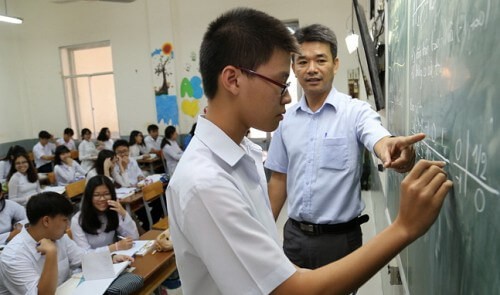
A plan to replace the current national high school math paper with a multiple-choice only exam has brought mixed opinions from both local scholars and the public.

Last Thursday, Vietnam’s Ministry of Education and Training (MoET) announced the first draft of its proposed adjustments to the country’s national high school exam, to take effect next year.

The exam was first introduced in 2015 after the previously separate high school graduation and university entrance exams were merged.

The proposed adjustments by the MoET include substantial changes to the exam’s test papers, including the replacement of the traditional written math test with a multiple-choice paper.

The current format features ten problems to which students are required to write their answers, including their step-by-step workings, before arriving at a solution.

The proposed new math paper will comprise of 50 problems, all in multiple-choice format, for which only one of four given answers is correct.

Questions for the test will be drawn at random by a computer from a standardized and updated question list, according to the ministry’s plan.

The proposal was quickly met with mixed reactions, some raising questions over the proposed formats effectiveness in testing students’ mathematical thinking, while others embraced the change as an effective countermeasure to cheating.

The Vietnam Mathematical Society (VMS) was one of the first and most vocal opponents of the plan, calling a press conference on Monday to publicly voice their objection to the proposed math paper.

According to VMS Secretary General-cum-Vice President, Prof. Dr. Phung Ho Hai, most members of the Society’s Executive Committee agreed that the change from a written math paper to multiple-choice question list was a hasty decision that would leave students and teachers unprepared.

The professor added that the effectiveness of multiple-choice math tests employed by the Vietnam National University Hanoi, upon which the new national math paper is based, had not been properly evaluated.

Therefore, Hai said, the new test format should not be applied until its academic credentials are proven.

“The Executive Committee of VMS strongly advises that the MoET retains the current written format for the math paper in the 2017 national high school exam,” Hai said.

The VMS further explained that employing multiple-choice questions in testing mathematical logic and thinking would completely eliminate students’ analytical and problem-solving skills by encouraging tips and tricks to skip to the final answer, rather than demonstrating a full understanding of the logical steps to arrive at a particular solution.

However, Assoc. Prof. Dr. Nguyen Hoi Nghia, deputy director at Vietnam National University-Ho Chi Minh City, offered a different view, saying that the benefits of multiple-choice tests have not been fully understood in Vietnam even by mathematicians and administrative officials.

According to professor Nghia, objective study is required before reaching any conclusion on whether or not to implement the format in Math papers.

Nghia said he expected the MoET to host national and international seminars on the issue and draw experience from the public and published international math experts.

“In my opinion, the current science of multiple-choice testing does not disqualify it from testing pure mathematical knowledge,” Nghia said.

“Of course a detailed route to its application should be outlined, so that students and teachers can be properly prepared for the transition.”

In addition to a change in the math paper, the MoET’s planned changes to the national high school exam include two new test papers; natural sciences and social sciences, each consisting of 60 multiple-choice questions.

The natural sciences paper tests students’ aptitude in physics, chemistry, and biology, while the social sciences paper is comprised of questions on history, geography, and ethics.

The two new papers will replace the current five separate tests on physics, chemistry, biology, history, and geography, a move the MoET said would reduce costs in organizing the national exam.

Fuente: http://tuoitrenews.vn/education/37041/education-ministrys-plan-for-multiplechoice-math-test-sparks-debate

Comparte este contenido:

Defending public education in Canada and throughout the Americas

América del Norte/Canadá/16 de Septiembre de 2016/Autor: Scott Neigh/Fuente: Rabble.ca

RESUMEN: En el programa de esta semana en «Habla Radio Radical», Scott Neigh habla con Steve Stewart. Él es el Secretario Técnico de la Iniciativa para la Educación Democrática en las Américas, también conocida como la Red SEPA, que reúne a organizaciones de todo el hemisferio que están comprometidos con la defensa y la mejora de la educación pública.

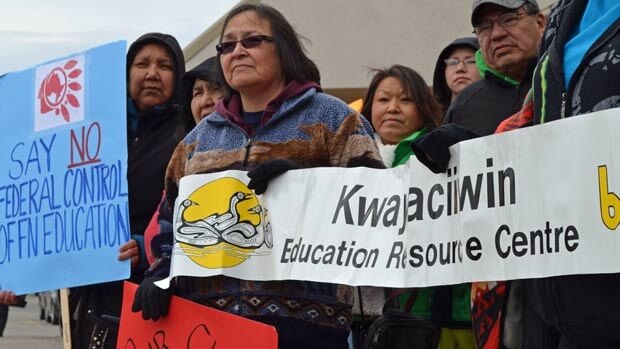
On this week’s episode of Talking Radical Radio, Scott Neigh speaks with Steve Stewart. He is the technical secretary for the Initiative for Democratic Education in the Americas, also known as the IDEA Network, which brings together organizations from across the hemisphere that are committed to defending and enhancing public education.

You can make a case that all struggle is local. No matter the issue, no matter the strategy, no matter how many other people and places and groups are also involved, the actual doing of it always comes down to you and those you are immediately with, in whatever circumstance you find yourselves, making choices and taking action. Still, while some struggles are only local, most are either already broader in scope, or could be if people had the opportunity and will to come together across difference and distance to do the work of making common cause.

Take, for example, the education sector. No matter what jurisdiction you live in, the last twenty years have no doubt seen your school system face some or even all of the following: cuts; at least partial privatization, whether that is direct or through the reallocation of resources away from the public system and towards non-public alternatives in less visible ways; rhetorical attacks on teachers; legal attacks on teachers’ collective bargaining rights; the imposition of standardized testing and other pedagogically dubious corporate-backed changes that get touted as «reforms»; and various other manifestations of the cut/privatize/deregulate agenda captured by the term «neoliberalism.» At various times and in various places, teachers, parents, and students in different places have all acted to oppose this agenda — unfortunately, it’s not uncommon for these groups to be dividied in all sorts of ways (often because of debliberate efforts to keep them apart by those trying to impose this agenda), but sometimes they succeed in working together and forging a common resistance.

The IDEA Network emerged in the late 1990s out of precisely this recognition of common threats to public education spanning not one or two jurisdictions, but all of North, Central, and South America. The network «brings together organizations that share a commitment to protecting and improving public education,» particularly teachers’ organizations and students’ organizations, and also encompasses a network of education researchers and a network of Indigenous educators. In the moment of its founding, the main threat to public education in this hemisphere took the form of negotiations to create a Free Trade Area of the Americas that would have, among other things, opened the door to the neoliberal restructuring of education systems from Canada to Chile. In those years, mobilizing against the FTAA both directly and at various international gatherings formed the centre of the network’s work. Since the defeat of that agreement, attacks on public education have not abated but have become less centralized, so the IDEA Network has focused on research, on sharing resources and strategies among members for defending public education in their respective contexts, and on mobilizing solidarity actions when member organizations are facing repression or crisis. In the Canadian context, a number of teachers unions have been involved at various points, and occasionally student groups, but the main force behind it in this country has been the British Columbia Teachers Federation, which has a long and remarkable history of international solidarity work. Stewart talks about the ongoing, hemisphere-wide threats to public education, and about the work of the IDEA Network to support struggles to defend it.

To learn more about the IDEA Network, click here.

Fuente: http://rabble.ca/podcasts/shows/talking-radical-radio/2016/09/defending-public-education-canada-and-throughout-americ

Fuente de la imagen: http://www.cbc.ca/news/canada/first-nations-education-needs-fresh-ideas-leaders-say-1.2255180

Comparte este contenido:

EEUU: Nearly half a million U.S. citizens are enrolled in Mexican schools. Many of them are struggling

América del Norte/Estados Unidos/16 de Septiembre de 2016/Autora: Kate Linthicum/Fuente: Los Angeles Times

RESUMEN: Hace dos décadas, un equipo de investigadores de Estados Unidos y México descendió en Dalton, Ga., para estudiar el creciente número de inmigrantes mexicanos que habían venido a trabajar en las fábricas de alfombras de la ciudad. Victor Zuñiga, sociólogo de la Universidad de Monterrey, estaba interesado en  el cambio demográfico destinado a escuelas locales, así que se sentó con un profesor que le dijo algo que no podía sacar de su cabeza. «El problema con los estudiantes latinos», dijo, «es que desaparecen.» Zuñiga regresó a México con la intención de descubrir lo que había sucedido a esos niños, muchos de los cuales habían salido de los EE.UU. después de que miembros de la familia fueron deportados. Lo que descubrió fue preocupante: Muchos estudiantes se esforzaban por integrarse en las escuelas mexicanas porque no podían leer ni escribir en español. Otros no estaban en la escuela en absoluto porque carecían de las acreditaciones necesarias. En total, cerca de un tercio o bien habían  repetido un año o habían perdido un año o más de la escuela. «Sufren tanta humillación», dijo Zúñiga. «Ellos son invisibles.»

Two decades ago, a team of U.S. and Mexican researchers descended on Dalton, Ga., to study the growing number of Mexican immigrants who had come to work in the city’s carpet mills.

Victor Zuñiga, a sociologist at the University of Monterrey, was interested in what the demographic shift meant for local schools, so he sat down with a teacher who told him something he couldn’t get out of his head.

“The problem with Latino students,” she said, “is they disappear.”

Zuñiga returned to Mexico intent on finding out what had happened to those kids, many of whom had left the U.S. after family members were deported.

What he discovered was troubling: Many students struggled to integrate into Mexican schools because they couldn’t read or write in Spanish. Others weren’t in school at all because they lacked the necessary accreditations. In all, nearly a third had either been held back a grade or had missed a year or more of school.

“They suffer so much humiliation,” Zuñiga said. “They are invisible.”

This week, Zuñiga joined more than 100 academics, advocates and lawmakers from both sides of the border in Mexico City for a symposium on the issue organized by UCLA. The conference was called: “The Students We Share.”

On the grounds of a 19th century mansion owned by the university on the city’s verdant south side, researchers presented a series of staggering statistics to an audience that included a White House education advisor, Mexico’s deputy secretary of education and a group of elected officials from the California Legislature.

Nearly half a million children who are U.S. citizens are enrolled in Mexican schools, according to the Mexican government. And there are at least another half a million Mexican-born young people who spent part of their life in the U.S. who have now returned home, according to estimates.

Most of the students educated in the U.S. and now living in Mexico are clustered in the northern border states, including Chihuahua and Baja California, said Monica Jacobo, a researcher at the Center for Research and Teaching in Economics. About half of elementary school-age children born in the U.S. arrive in Mexico without the necessary identity documents to enroll in school, she found, and many end up missing class or even entire grades while their parents scramble to obtain the paperwork.

“Mexico is failing us,” said Maggie Loredo, a 26-year-old translator who lives in the central Mexican state of San Luis Potosi.

Loredo was born in Mexico but moved to Georgia with her parents illegally at age 3. By the time she was 18, she realized she couldn’t get a driver’s license, apply for college scholarships or legally work in the U.S., and decided to return to a country she barely knew.

Loredo didn’t apply for Mexico’s public universities because she couldn’t pass the entrance exams, which require written Spanish and a knowledge of Mexican history. The private school she sought to attend wouldn’t accept her U.S. high school transcripts.

“We often feel like foreigners,” she said. “We need programs that will help us adapt in our country. We need resource centers for deportees and returnees at universities. Why not support us with scholarships and leadership programs?”

“These kids we’re talking about have enormous potential, but we’re losing them,” said Patricia Gandara, the UCLA education professor who helped organize the conference. “We want to reframe these kids as bilingual, bicultural assets as opposed to problems.”

The responsibility lies with the U.S. government, as well as with Mexico, Gandara said.

“Many of these [students] are U.S. citizens, and a lot of them will come back,” she said. “We can’t just wash our hands of them while they’re in Mexico.”

The focus of the conference was not only to bring to light the challenges of return migration, but also to devise solutions.

Most agreed that increasing bilingual education on both sides of the border is a good way to start. Students in Mexico who attended school in Texas, where bilingual education is common, adapted better than those who attended school in Arizona, where voters passed a ballot measure limiting the use of Spanish in the classroom, said Rocio Inclan, director of the office of civil and human rights at the National Education Assn.

Mexican officials also spoke of the need to increase the amount of English spoken at Mexican schools. In an interview, Javier Treviño, Mexico’s deputy secretary of education, said he would like to see young returnees be trained as teachers, to help shore up the sparse ranks of Mexican teachers who speak English.

“They have the right to education, and we have the duty to provide it,” Treviño said.

Many at the conference called on Mexico to do more to ease the burden on returning or U.S.-born students. Although the Mexican government recently changed requirements that once forced students to have all U.S. identity documents and diplomas “Apostilled,” a lengthy and cumbersome certification process, many schools continue to refuse to accept transcripts and other documents from U.S. schools, meaning some students end up having to repeat grades.

Thanks to increased border security, an increase in deportations and fallout from the Great Recession, more Mexican immigrants have returned to Mexico than have migrated to the U.S. in recent years.

From 2009 to 2014, 1 million Mexicans and their families left the U.S. for Mexico, according to a Pew Research Center. During the same period, an estimated 870,000 Mexican nationals left Mexico for the U.S.

One in 4 ninth-graders in Mexico had a parent who migrated to the U.S. at some point, according to a study presented by Brian Jensen, an assistant professor at Brigham Young University.

What happens to those who return is an area of study that has long been overshadowed by research into immigrant life in the United States.

But the issue isn’t going away anytime soon, said Jill Anderson, an independent researcher and activist who co-wrote a book of stories of return migration called “Los Otros Dreamers,” or “The Other Dreamers.”

“Because they’re children, this is like a 20-year public policy issue,” she said.

Fuente: http://www.latimes.com/world/mexico-americas/la-fg-mexico-return-migration-schools-20160913-snap-story.html

Comparte este contenido:

Lograr el Objetivo de Desarrollo Sostenible relativo a la educación para 2030 será el reto más importante para todos los países, dice la OCDE

15 de septiembre de 2015/Fuente:  OCDE

Según se afirma en un nuevo informe de la OCDE, los países miembros de la Organización deben redoblar esfuerzos para mejorar la calidad y la igualdad de sus sistemas educativos como parte de sus compromisos de cumplir con el Objetivo de Desarrollo Sostenible (ODS) relativo a la educación para 2030.

En el Panorama de la Educación 2016 (Education at a Glance 2016) se mide —por primera vez— las iniciativas llevadas a cabo por los países para alcanzar “la educación de calidad incluyente y equitativa y fomentar las oportunidades de aprendizaje permanente para todos”. De los 35 países de la OCDE, sólo 12 que cuentan con información disponible alcanzan el nivel de referencia para por lo menos cinco de los 10 objetivos ODS relativos a educación, y sólo seis de los 22 países de la Unión Europea poseen información disponible.*
Australia y Canadá son países con alto desempeño, seguidos por los Países Bajos y Bélgica, con datos sobre todas las metas y un desempeño en el nivel de referencia en por lo menos siete de las 10 metas. Pero otros países afrontan un enorme reto. En general, las metas de calidad de los resultados de aprendizaje y competencias de los estudiantes y adultos han demostrado ser las más difíciles de cumplir.


“Estas conclusiones son aleccionadoras. La educación de alta calidad y accesible sigue siendo un reto para todos los países del mundo”, manifestó el Secretario General de la OCDE Angel Gurría en la presentación del informe en Bruselas junto con el Comisionado Europeo de Educación, Cultura, Juventud y Deporte, Tibor Navracsics.** “Mejorar la eficiencia, la calidad y la igualdad de la educación es fundamental para promover el crecimiento incluyente y ofrecer a todos una oportunidad equitativa de alcanzar el éxito.” (Lee el discurso completo)

La mayoría de los países han aumentado su inversión en educación en años recientes: entre 2008 y 2013, los números de estudiantes matriculados en las escuelas bajó 1%, pues hubo menos nacimientos en la zona de la OCDE, pero el gasto por estudiante en términos reales fue 8% más alto en 2013 que en 2008. El gasto por parte de los estudiantes y las familias también ha aumentado, en particular en la educación terciaria, donde 30% del gasto proviene de fuentes privadas. Entre 2008 y 2013, el gasto privado total aumentó 14% en toda la OCDE y 12% en la UE22. Si bien algunos países han creado mecanismos de financiamiento que otorgan a más estudiantes mejores oportunidades de estudiar, otros aplican tasas impositivas que dejan las oportunidades educativas fuera del alcance de los estudiantes, excepto los más ricos.

Muchos jóvenes aún no experimentan el beneficio del aumento en el gasto: en todos los países de la OCDE, una de cada seis personas de 25-34 años aún no cuenta con una educación de nivel medio superior. La tasa de desempleo de los jóvenes sin este nivel educativo es de 17.4% en promedio (21.2% en la Unión Europea), en comparación con sólo 6.9% (8% en la Unión Europea) de aquellos en el mismo grupo de edad que sí cuentan con una educación terciaria.

También persisten los desequilibrios de género. Si bien más mujeres que hombres son ahora graduadas de educación terciaria, las mujeres aún no están representadas lo suficiente en las carreras de Ciencia, Tecnología, Ingeniería y Matemáticas. La transición de la escuela al trabajo también resulta más difícil para ellas. En todos los países de la OCDE, 18.5% de las mujeres de 20 a 24 años no trabajan ni estudian ni están en formación (son NiNi), en comparación con 15.5% de los hombres.

Los inmigrantes tienden a retrasarse respecto a sus pares nativos en logro educativo en todas las etapas, lo cual les dificulta más encontrar empleo después de terminar sus estudios. Las tasas de participación en los programas de educación preescolar —que son esenciales para el desarrollo de las competencias cognitivas, emocionales y sociales de los niños— son considerablemente menores para los niños inmigrantes. En promedio, 37% de las personas de 25-44 años de edad de origen inmigrante —pero sólo 27% de las personas del mismo grupo de edad sin ese origen— cuyos padres no terminaron la educación media superior tampoco han conseguido terminar ese nivel educativo. Los estudiantes de origen inmigrante tienen muchas menos probabilidades de obtener una licenciatura o de terminar algún programa terciario equivalente que los estudiantes nativos.

En el informe también se cuestiona si los países obtienen el mejor rendimiento sobre su inversión en educación. La presión popular presionó a los gobiernos a reducir el tamaño de los grupos de educación media básica en 6% de 2005 a 2014, pese a que el programa PISA de la OCDE demostró que los sistemas educativos de alto desempeño sistemáticamente dan mayor prioridad a mejorar la calidad de los maestros que a reducir el tamaño de los grupos. La inversión en esta reducción del tamaño de los grupos ha consumido recursos que sería mejor destinar a la selección y a la recompensa de profesores de alta calidad: de 2005 a 2014, los sueldos de los profesores de educación media superior aumentaron en promedio sólo 1% en términos reales, y en un tercio de los países bajaron.

El Panorama de la Educación 2016 proporciona estadísticas nacionales comparables que miden el estado de la educación en todo el mundo. En el informe se analiza los sistemas educativos de los 35 países miembros de la OCDE, así como de Arabia Saudí, Argentina, Brasil, China, Colombia, Costa Rica, la Federación de Rusia, India, Indonesia, Lituania y Sudáfrica.

Aspectos clave

Logro educativo

• La tasa de matrícula de los jóvenes de 20-24 años en el nivel terciario aumentó de 29% a 33% entre 2005 y 2014. Se espera que 36% de los jóvenes adultos de hoy se gradúen antes de cumplir 30 años, pero sólo 41% de los estudiantes de licenciatura de tiempo completo se gradúan dentro del plazo contemplado. (A3)

• Persisten los desequilibrios de género: si bien las mujeres están sobrerrepresentadas entre los graduados de educación terciaria (constituyen 57% de los nuevos graduados en todos los países de la OCDE), aún no están representadas lo suficiente en ciertos campos de estudio, como ciencia e ingeniería, en tanto que en el área de educación, en 2014 se graduaron cuatro mujeres por cada hombre. (A3)

• Los ingresos extra comparados con los adultos con educación media superior es de 91% para quienes tienen maestría o un nivel más alto, 48% para los graduados en nivel licenciatura y 20% para quienes tienen educación terciaria de corta duración. (A6) Pero el retorno neto privado para una mujer que termina la educación terciaria equivale a cerca de dos tercios que el de un hombre. (A7)

Gasto en educación

• Los países de la OCDE gastan en promedio 10 493 USD por estudiante por año en instituciones de educación primaria hasta las de educación terciaria: 8 477 USD por estudiante de primaria, 9 980 USD por estudiante de educación media básica, 9 990 USD por estudiante de educación media superior y 15 772 USD por estudiante de nivel terciario. (B1)

• El gasto en educación terciaria aumentó rápidamente en la mayoría de los países y fue 29% más alto en 2013 que en 2005, sobre todo debido a un importante aumento en la matrícula terciaria de 16% en promedio en toda la OCDE. (B1)
• Los países de la OCDE gastaron en promedio 5.2% de su producto interno bruto (PIB) en 2012 en instituciones educativas de educación primaria a terciaria, variando de 3.5% en Luxemburgo a 6.7% en el Reino Unido. (B2)

Acceso a la educación

• La matrícula en educación preescolar aumentó de 54% para niños de 3 años en 2005 a 69% en 2014, y de 73% de los niños de 4 años en 2005 a 85% en 2014 en promedio entre los países de la OCDE con información de 2005 y 2014. (C2)

• Si los patrones de ingreso se mantienen, 68% de los adultos jóvenes de los países de la OCDE ingresarán a educación terciaria por lo menos una vez en su vida. Este promedio baja a 61% si se excluye a estudiantes internacionales y a 51% si sólo se considera a estudiantes nacionales menores de 25 años. (C3)

• Dentro de la OCDE, 6% de los estudiantes matriculados en educación terciaria en 2014 estaba formado por estudiantes internacionales. El número de estudiantes terciarios extranjeros matriculados en todo el mundo aumentó 50% de 2005 a 2012. (C4)

En el aula

• Los estudiantes de los países de la OCDE reciben un promedio de 7 540 horas de educación obligatoria durante su educación primaria y media básica, variando de 5 720 horas en Hungría a casi el doble de esta cantidad en Australia (11 000 horas) y Dinamarca (10 960 horas). (D1)

• El envejecimiento de los profesores es un reto en muchos países: entre 2005 y 2014 el porcentaje de los docentes de 50 años o más aumentó en 16 de los 24 países de la OCDE con datos disponibles: en 2014, 31% de los profesores de educación primaria, 34% de los de media básica y 38% de los de media superior tenían por lo menos 50 años. (D5)

• Más de dos de tres profesores eran mujeres, en promedio en todos los países de la OCDE, pero el porcentaje de profesoras baja a medida que el nivel educativo crece: 97% en educación preescolar, 82% en primaria, 68% en media básica, 58% en media superior y 43% en terciaria. (D5)

Para mayor información sobre Education at a Glance, incluidos notas de país, resúmenes multilingües y datos clave, visite: www.oecd.org/education/education-at-a-glance-htm.

Se invita a los periodistas a comunicarse con Andreas Schleicher (tel. + 33 1 45 24 93 66) en la Dirección de Educación y Competencias de la OCDE o con la OECD’s Media Division (tel. + 33 1 45 24 97 00). El informe está disponible para los periodistas en el sitio web de la OCDE protegido con contraseña.

Notas para los editores:

* Los 22 países de la Unión Europea con datos son los siguientes: Alemania, Austria, Bélgica, Dinamarca, Eslovenia, España, Estonia, Finlandia, Francia, Grecia, Hungría, Irlanda, Italia, Letonia, Luxemburgo, los Países Bajos, Polonia, Portugal, el Reino Unido, República Checa, República Eslovaca y Suecia.
** Se presentaron conferencias de prensa en todo el mundo, entre ellas: Ciudad de México (Gabriela Ramos, Consejera Especial ante el Secretario General de la OCDE, Directora de Gabinete de la Organización y Sherpa); Berlín (Andreas Schleicher, Director de Educación y Competencias de la OCDE); Brasilia (Dirk van Damme y Camila de Moraes, analistas en educación de la OCDE, y París (Corinne Heckmann y Eric Charbonnier, analistas en educación de la OCDE).

También disponible

Lee el discurso de Gabriela Ramos

Consulta el PPT con la presentación del EAG

Fuente: http://www.oecd.org/centrodemexico/medios/lograr-el-objetivo-de-desarrollo-sostenible-relativo-a-la-educacion-para-2030-sera-el-reto-mas-importante-para-todos-los-paises-ocde.htm

Imagen: www.cinu.mx/noticias/15092016/niños%20mexico.jpg

Comparte este contenido:

La difícil ‘vuelta al cole’ de los niños refugiados de Irak

Asia/Irak/15 de septiembre de 2016/Fuente el mundo

Casi 3,5 millones de niños en Irak no tienen acceso a la educación. En los campos de acogida de Erbil faltan aulas, libros y profesores

La falta de centros de enseñanza secundaria segregada empuja a las niñas refugiadas a matrimonios tempranos acordados por sus familias.

No hay nada que le guste más a Mirna que ir al colegio. Porque tiene un sueño que quiere hacer realidad. Ser abogada y poder ayudar a otros niños como ella. Por eso, cada día, pone todo su esfuerzo en aprender. «Me llamo Mirna, tengo 10 años y mis aficiones son la natación y la música». Mirna se presenta como cualquier niña de su edad: contando qué le gusta hacer y qué quiere ser en el futuro. «Me gustan la lectura y las ciencias. Cuando sea mayor, quiero ser abogada», explica antes de añadir que le gustaría tocar el violín ante la mirada ilusionada de su madre, Nagham Yousef Abdalmasih.

Mirna vive en un campo de desplazados en pleno Erbil con sus padres y su hermana pequeña. Todos huidos de Qaraqush, una aldea próxima a Mosul, cuando el grupo yihadista Estado Islámico se hizo con el control de la ciudad y parte de la provincia y sembró el terror entre los civiles. Desde que escaparon, en junio de 2014, se han mudado varias veces, hasta que finalmente llegaron a Ankawa, el barrio cristiano de la capital del Gobierno autónomo del Kurdistán, donde ahora viven. Su ‘hogar’ es una caseta prefabricada de una única habitación en un pequeño asentamiento donde viven refugiados acogidos por la iglesia del barrio.

A Mirna le gusta mucho estudiar y leer. Habla como si fuera mayor de lo que es.«Quiero ser abogada para defender a los niños y luchar por sus derechos, para defender a la gente inocente y que todos podamos vivir en paz en mi país», dice la niña sentada en la habitación, decorada con imágenes de la Virgen María y muñecos Teletubbies. No hay estantes con libros. Ni violines. Tampoco ninguna piscina cerca.

«Leo mucho, estudio duro y voy a seguir todos los pasos para ser abogada: primero, la escuela; luego, el instituto y después haré realidad mi sueño», continúa la pequeña. Junto a ella, su madre acota en voz baja: «No estamos seguros de que consiga su sueño por la situación que estamos viviendo».

Y es que los niños desplazados y refugiados como Mirna afrontan estos días una difícil vuelta al cole. Más de millón y medio de niños iraquíes han sido forzados a huir de sus hogares a causa de la violencia yihadista. Una de cada cinco escuelas del país está inutilizada y casi 3,5 millones de niños en edad escolar no tienen acceso a la educación, según Unicef. En los campos de acogida diseminados por Erbil y la provincia hay escasez de aulas, de libros y de profesores. Además está la barrera del idioma, ya que los niños árabes no hablan kurdo y los currículos en esta región son diferentes del resto del país. «Nuestros hijos se están perdiendo. Pensamos en irnos del país, por el futuro de nuestros pequeños. Me gustaría que Mirna se convirtiera en violinista. Pero sé que no tiene esperanzas ni oportunidades», reflexiona Abdalmasih, de 29 años.

A 35 kilómetros de Erbil, en el campo de refugiados sirios de Kawargosk, el 95% de los niños acuden a la escuela primaria, construida en 2013. Los profesores son también refugiados, pero debido a que sus salarios son escasos y a veces impagados por el Gobierno autónomo kurdo -sumido en la crisis económica-, el pasado curso la escuela se quedó prácticamente sin maestros. «Muchos emigraron a Europa o cambiaron de trabajo, porque no les llegaba el dinero para subsistir», explica Rawand Nagaat, director de la escuela. «Unicef tuvo que suplir esta ausencia, trayendo y pagando a profesores nuevos», añade.

La enseñanza primaria en Irak es mixta, pero al llegar la secundaria, niños y niñas se separan. El problema es que en los campos de desplazados y refugiados, donde los recursos son escasos y faltan infraestructuras, material escolar y profesores, segregar las aulas genera problemas adicionales. En ocasiones, la secundaria mezcla a los alumnos y los padres se niegan a enviar a sus hijas. Otras veces, directamente sólo se enseña a los niños. De este modo, muchas menores se ven privadas de educación secundaria a partir de los 13 años. Mirna todavía tiene 10 y puede seguir su aprendizaje, pero una sombra de duda la acecha. «Si mezclan a nuestros niños, no podemos controlar su comportamiento ni su adecuada educación», piensa la madre de Mirna, cuya familia es cristiana.

Es a partir del momento de acabar la escuela primaria cuando las niñas refugiadas y desplazadas se enfrentan a otro cruel destino. «Cuando las niñas crecen, entre los 14 y los 16 años, las familias las casan. Se fijan en su cuerpo, pero no en su mente», apunta Hevidar Ahmad, la única mujer del equipo de Protección Infantil del campo de Harsham, en Erbil. Ella se encarga de apoyar psicosocialmente a las niñas que son forzadas a casarse a una corta edad cuando no puede evitar este desenlace.

En alguna ocasión ha logrado que las niñas den esquinazo a estos matrimonios, pero Ahmad lamenta que no suele ser así. «Recuerdo a una adolescente de 14 años a la que su familia quería casar con un vecino y logró convencerla incluso de que era decisión suya. La traté y convencí a la familia de que era tiempo de estudiar y no de casarse y finalmente la niña pudo sortear ese destino».

Pero muchas otras chicas no pueden y quedan atrapadas en un callejón sin salida de malos tratos, matrimonios fracasados o problemas en el parto por no estar sus cuerpos suficientemente desarrollados. «En muchos casos, acaban divorciándose en poco tiempo, porque no están preparadas, suelen tener problemas con un marido al que no conocen o sufren violencia de género», prosigue Ahmad. «Las hay que, pese a todo esto, permanecen casadas porque tienen bebés y temen el qué dirán, pero no tienen relación con su esposo. Las que se divorcian, viven bajo el estigma: los padres no las dejan salir por vergüenza».

En Harsham, con mayoría de desplazados de Mosul y provincia (tras caer bajo control del Estado Islámico en 2014) no hay escuela secundaria para chicas y las familias se niegan a enviar a sus hijas a estudiar en clases mixtas. Este es el momento de mayor riesgo de matrimonio para las menores. El 20% de los casamientos entre refugiados y desplazados de Irak corresponden a niñas que no han cumplido los 18 años, según cifras de Unicef.

«Los matrimonios tempranos han visto un incremento masivo entre las poblaciones desplazadas y refugiadas en Irak, debido a que las familias lo perciben como una forma de proteger a sus hijas de abusos sexuales o secuestros en los campos o bien por cuestiones financieras», señala Sidéad Murray, experta en violencia de género de Unicef. «La respuesta a este fenómeno está centrada en los campamentos, pero no es suficiente porque la mayoría de la población refugiada y desplazada vive fuera de los campos y allí no es posible detectar casos», lamenta.

Lejos de la ayuda de las agencias internacionales viven 16 familias yazidíes que ocupan unas casas a medio construir cerca de un hotel de lujo de Erbil. Delvin, una pequeña de 11 años de pelo rojo, alegre y vivaz, vive con sus padres y sus seis hermanos en uno de los esqueletos de hormigón. Para ella y sus vecinos no hay escuela oficial, sino que acuden a clases informales en una tienda. «Me gustaría ir al colegio. Quiero ser doctora», cuenta. Su padre, Qassem Qawa’l, que en Sinjar era jardinero, se revuelve al escucharla: «Me siento terriblemente mal sólo al pensarqué puede hacer una niña si no va a la escuela. La vida de Delvin y del resto de mis hijos no tiene sentido ahora mismo».

Fuente: http://www.elmundo.es/internacional/2016/09/15/57d98191e5fdeadd718b45ea.html

Imagen: e02-elmundo.uecdn.es/assets/multimedia/imagenes/2016/09/14/14738731757987.jpg

Comparte este contenido:
Page 371 of 472
1 369 370 371 372 373 472