Page 436 of 472
1 434 435 436 437 438 472

Experts sound alarm over mental health toll borne by migrants and refugees

Fuente: .theguardian / 8 de junio de 2016

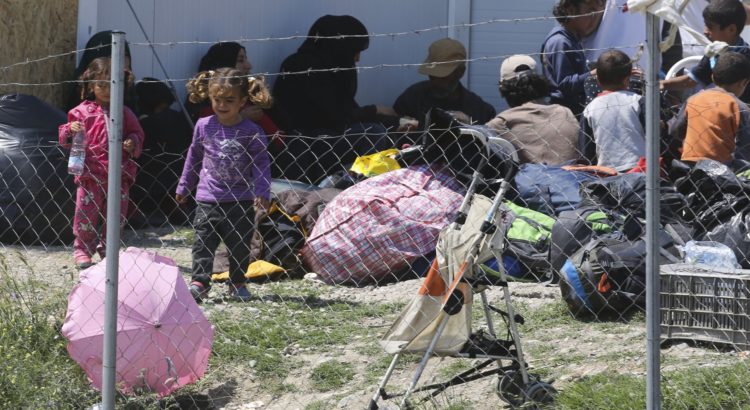
The grief of losing a child made more unbearable by the knowledge that you decided to take them in a boat that capsized; nightmares about torture;depression induced by the awfulness of living in a camp, unable to go forward or back.

As concern mounts about the conditions faced by refugees and migrants in camps across Europe, and more people die trying to reach the continent, the mental health of those who have risked everything in the hope of starting a new life inEurope is gaining more attention.

A report last year by the German Federal Chamber of Psychotherapists said 40%-50% of people arriving in Germany suffered from post-traumatic stress disorder (PTSD), with half also suffering from depression.

“They have nightmares or flashbacks to pictures or scenes. These memories feel very intense, and it is just like they are reliving the traumatising experience,” the report said. Other symptoms include jumpiness, sleep disorders, problems with concentration, and emotional numbness.

“It is shameful that people suffering with such psychological injuries do not get the help they need,” the report said.

Post-traumatic stress is just the tip of the iceberg. “PTSD is very important, but it is also the disorder that everyone jumps to, including the media. We see much more depression and anxiety disorders, and also, surprisingly, a lot of epilepsy and psychotic disorders, including schizophrenia,” said Dr Inka Weissbecker, global mental health and psychosocial adviser at the International Medical Corpsin Washington.

“There are huge amounts of anxiety – we see children bursting into tears when helicopters or airplanes fly over the camps, and we can’t understand why, until we realise what they’re associating it with,” said Harriet Zych, a nurse who worked in Idomeni – site of Europe’s largest informal refugee camp, on Greece’s northern border with Macedonia – before Greek police moved people to other locations in May.

“We came across many people in a state of collapse, whose problems turn out to be psychological rather than physical,” she said. “One man hit himself with a rock on his head until he became unconscious when he found out he couldn’t cross the border.”

Nikos Gionakis, a psychologist with the Athens-based mental health unit Babel, tells the story of Hassan, 34, who fled Syria with his four children. “Passing from Turkey to Greece, he was forced to get into a boat by smugglers. Two of his kids drowned as the boat sank. He was referred to Babel because of depression. He blames himself for not having been able to protect his kids,” Gionakis said.

The UN refugee agency, the UNHCR, says mental health disorders can hinder integration into host populations, creating long-term problems for European countries that are accepting refugees fleeing from conflicts in Syria and elsewhere.

In a paper to the European commission last year, the European Psychiatric Association said: “Acute and long-term psychiatric care needs to be provided to all asylum seekers in order to avoid reaching chronic conditions of mental disorders.”

Aid workers in Greece say diagnosis, never mind treatment, is almost impossible in the chaos of the camps and detention centres in southern Europe.

“You cannot say how many people are suffering from PTSD because diagnosis takes too long, and with such a stream of people, it is impossible. I am a trained psychologist with 40 years’ experience; it would take me two and a half hours to diagnose someone with PTSD,” said Renos Papadopoulos, director of the Centre for Trauma, Asylum, and Refugees at Essex University, who recently returned from Greece. “There is no evidence [on the prevalence of PTSD] because there cannot be evidence. The situation is complete chaos.”

“We don’t do diagnosis,” said Zoi Marmouri, a psychologist working for Médecins Sans Frontières in Idomeni. Even if diagnosis were possible, World HealthOrganisation (WHO) guidelines stipulate that clinical treatment is not appropriate for refugees on the move.

“Therapies should not be started without assurances that there can be follow-up. You have the potential to retraumatise people,” said Claire Whitney, Middle Eastmental health and psychosocial support adviser at the International Medical Corps.

The most effective treatments for PTSD include cognitive behaviour therapy with a trauma focus, eye movement desensitisation and reprocessing therapy, as well as narrative exposure therapy. But these take time as they involve slowly exposing people to their trauma, while building up their capacity to deal with it. “It cannot be rushed,” said Whitney. “When people actually have PTSD, it is one of the most complex problems to treat.”

The WHO says refugees and migrants needing diagnosis should be referred to existing non-governmental or state services. But even for those who make it into host communities, cost, stigma and language problems can lock them out of treatment.

“We have serious lacks in the services we can provide. If they need hospitalisation, there aren’t any specialised units for this,” said Gionakis.

International funds have been pledged for psychosocial support, although neither Britain’s Department for International Development nor the EU were able to provide a full breakdown.

Some experts warn there is a risk of overdiagnosing PTSD. “They are distressed, yes, but is this PTSD? Often it will not be. These are instead normal reactions to an abnormal situation,” said Papadopoulos.

The UNHCR and other agencies say much of the emotional suffering experienced by refugees and migrants is directly related to present-day stresses and concern about the future.

“People live in very difficult and inhumane conditions here in camps that are too crowded. Basic needs are not met,” says Gionakis.

The UNHCR advocates “psychological first aid”, which encourages those interacting with refugees to respond in a culturally sensitive and humane way that avoids distressing people further.

“The humanitarian principle of ‘do no harm’ is a huge part of it,” said Whitney. “What everyone was advising, for the most part, was really to focus on the most basic kinds of support, which do contribute to mental health. Often, basic needs must be provided before people are ready – and willing – to engage with therapy.”


Enlace original: http://www.theguardian.com/global-development/2016/jun/08/experts-sound-alarm-mental-health-toll-migrants-refugees-depression-anxiety-psychosis?CMP=twt_a-global-development_b-gdndevelopment
Comparte este contenido:

Cash Transfer Programs Succeed for Zambia’s Poor, Offer Lessons for Battling African Poverty, AIR Finds

Fuente AIR / 8 de junio de 2016

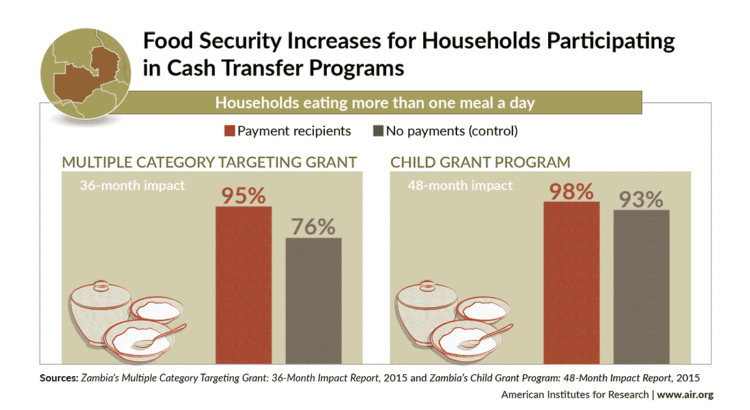
Programs designed to alleviate hunger and increase food supply through cash transfers to some of Zambia’s poorest families achieved those goals and more, final evaluations conducted by the American Institutes for Research (AIR) revealed.

Overall, researchers found that a cash-transfer program geared toward families with at least one young child had effects that amounted to a net benefit of 1.5 kwacha—Zambia’s currency—for each kwacha transferred. A second program for households with fewer able-bodied people to farm had effects that amounted to a net benefit of 1.68 kwacha for each kwacha transferred.

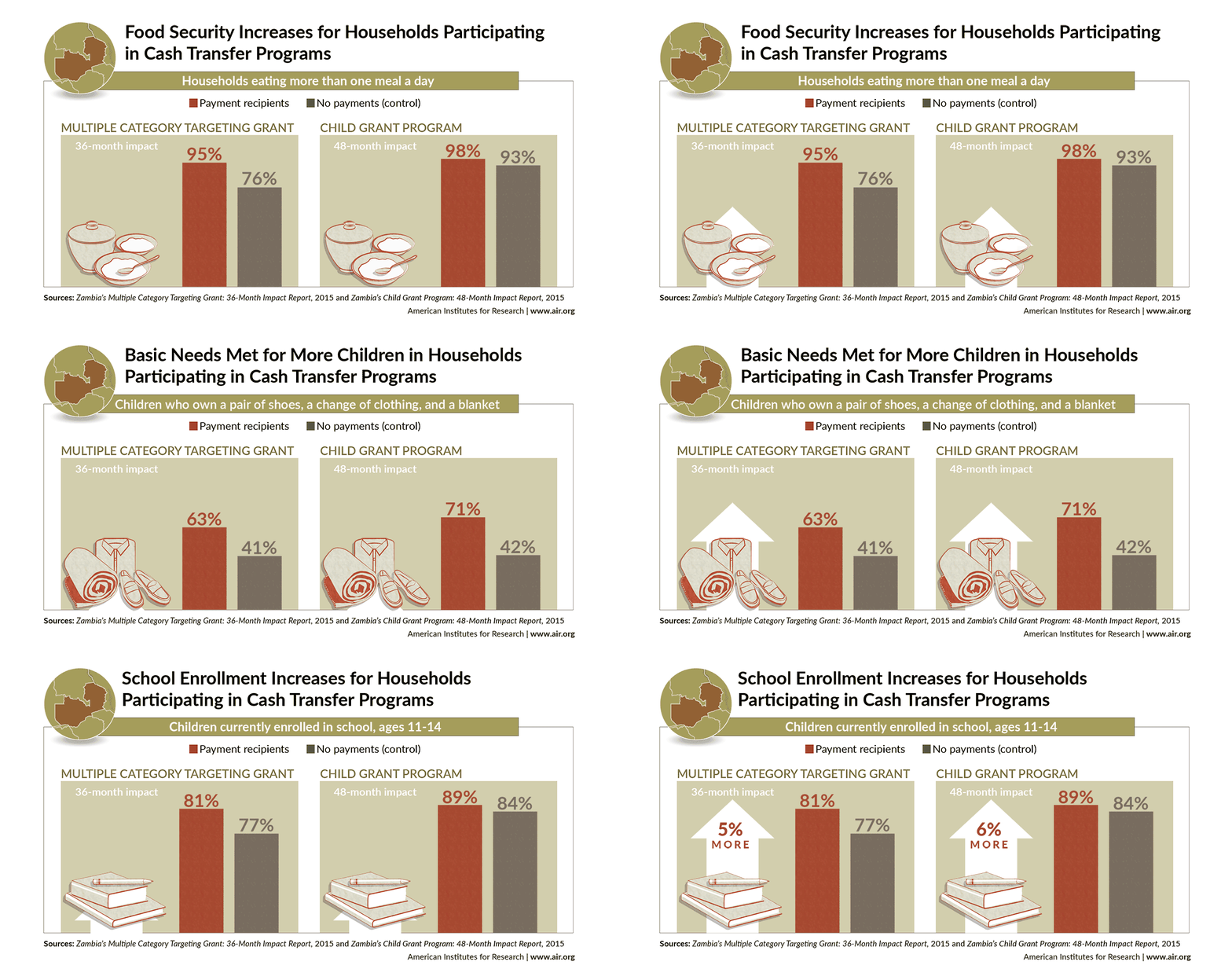
Besides eating more meals and building more reliable food reserves, families used the money to improve their housing, buy additional necessities for their children, acquire more livestock and reduce debt.

The studies, commissioned by UNICEF, are likely to be closely watched as African nations increasingly embrace cash transfers to combat the continent’s cycle of poverty. South Africa’s program is the largest, with roughly 16.1 million people—about a third of its population—receiving some kind of social grant.

Notably, the two Zambian programs were unconditional—providing small, consistent sums of money with no strings attached on how they were spent. The programs bucked general criticisms that cash transfers spark dependency. Rather, the discretionary approach empowered families, who used the grants to improve their living standards in ways that made sense given their individual circumstances. At no point during the multiyear grants did alcohol consumption increase. Nor was there any impact on fertility, according to the evaluations.

“The unconditional approach worked,” said Stanfield Michelo, director of social welfare at Zambia’s Ministry of Community Development and Social Welfare. “And because it did, the region is making positive strides. Without a doubt, the changes would not have been possible without AIR’s rigorous evaluations.”

Animated infographic: Zambia cash transfer results

The evaluation of the Child Grant cash-transfer program (CGP) lasted four years, and the evaluation of the Multiple Category Targeting Grant (MCTG) lasted three years. Begun in 2010 in three of Zambia’s poorest districts, the CGP was open to all households with at least one child under age 4. Half were randomly assigned to receive cash transfers of 60 kwacha ($12) a month, and half to a control group that did not receive funds. The MCTG was aimed at poor households with fewer able-bodied people to farm, due largely to a “missing generation” of parents in their 30s and 40s and disproportionally high numbers of adolescents and orphans cared for by widows and grandparents. As with the CGP, half the MCTG participants received the equivalent of $12 a month and half were in a control group that didn’t.

The studies were notable not only for their duration, but also for their use of randomization and control groups to tease out the program’s true effects.

“Few evaluations of cash transfer programs can make such strong causal claims with as much certainty as these two evaluations,” said David Seidenfeld, AIR’s senior director of international research and evaluation and lead study author. “The design of the study, which extended over several years, allowed us to see that the beneficiaries do not grow complacent over time, but instead find ways to grow the value of the transfer beyond benefits related to food security and consumption.”

Although the studies revealed persistent successes, they also offered future researchers and policymakers an idea of cash transfers’ limitations. The studies did not show consistent successes in education or child nutrition, possibly due to large-scale infrastructure issues—namely, the supply of social services, access to clean water, and a lack of health care and education facilities.

Among the studies’ principal lessons, researchers found that the degree of positive impact depended largely on the participants’ characteristics. For example, the multiple-category grants had large impacts on schooling because participating households had more school-age children. Overall, school enrollment jumps of 8 percent for children ages 11–14 and 11 percent for children 15–17 were attributed to the program, and these age groups are at the greatest risk of dropping out in Zambia, according to the report. By contrast, four years into the program, the child grants had no enrollment or attendance impacts for children in three groups: ages 4–7, 8–10 and 15–17.

“Another lesson is that the unconditional nature of the grants gave participants the flexibility to use the money to combat principal life challenges,” said UNICEF Zambia Representative Hamid El-Bashir Ibrahim. “For example, the CGP significantly affected many indicators commonly associated with resiliency—the ability to manage and withstand shocks. Households with transfers significantly improved housing quality and tools, livestock procurement, and opportunities to diversify income-generating activities so they could better withstand emergencies.”

“The overall results demonstrate unequivocally that common perceptions about cash transfers—that they are handouts and cause dependency, or lead to alcohol and tobacco consumption, or increases in pregnancy—are not true in Zambia,” Seidenfeld said. “Quite the contrary. Due to the unconditional nature of the grants, households had the flexibility needed to meet their most pressing challenges head on.”

The final reports on the Child Grant cash transfer program and the Multiple Category Transfer Grant program can be found on AIR’s website. The site also features a video of David Seidenfeld discussing lessons learned from the multiyear studies.

About AIR
Established in 1946, with headquarters in Washington, D.C., the American Institutes for Research (AIR) is a nonpartisan, not-for-profit organization that conducts behavioral and social science research and delivers technical assistance both domestically and internationally in the areas of health, education and workforce productivity. For more information, visit www.air.org.

###

Comparte este contenido:

Inglaterrra: Teaching assistants could take industrial action

Fuente: tes.com / 8 de junio de 2016

GMB union to consult on a campaign against the ‘dismantling’ of terms and conditions

Teaching assistants in England are to be consulted by the GMB union over a campaign of action in a row about terms and conditions – a move that raises the prospect of coordinated industrial action by teachers and other staff.

The annual conference of the GMB in Bournemouth agreed to support efforts to retain «hard-fought» terms and conditions of school staff, including a campaign of industrial action if necessary.

The NUT teaching union is balloting its members over strike action against threats from academisation, deregulation of pay and funding cuts.

‘We will not stand by’

The GMB union said schools continued to be privatised, leading to the threat of cuts to the terms and conditions of staff. It is campaigning against schools being turned into academies.

An agreed motion read: «We will not stand by and let this Tory agenda dismantle our members’ terms and conditions brick by brick, class by class, where schools will be left with no alternative but to compete against one another.»

Enlace original: https://www.tes.com/news/school-news/breaking-news/teaching-assistants-could-take-industrial-action


Comparte este contenido:

Universities should ask whether their academics work too much

Fuente: Times Higher Education / 8 de junio de 2016

Scholars say they feel overwhelmed by demands, but there is scandalously little evidence on whether long hours make any sense for knowledge workers, finds David Matthews

Since I started reporting on research last summer, I’ve been surprised by how evidence-lite major bits of science policy seem to be.

For example, last November, I analysed the new Francis Crick Institute in London, a £700 million biomedical “superlab”. Its radically flat organisational structure and high levels of scientific freedom are based not on reams of experimental data on researcher productivity, but (at least in part) on the personal experiences of the chief executive, Sir Paul Nurse, in leading other institutions.

Read more: The Francis Crick Institute: science and serendipity 

Of course this isn’t to say the Crick won’t be a huge success, or that Sir Paul’s experiences aren’t useful guides. But, as I was told by Julia Lane, a professor of practice at New York University’s Center for Urban Science and Progress, “one of the things that gives one pause is that scientists don’t apply the scientific method to their own activities”.

This quote came to mind as I was writing an analysis that asks: how many hours a week should an academic work? It’s clear that faculty, particularly in the US, are putting in hours well above average (one recent study suggested 61 a week, including 10 on the weekend). Some are working even longer, as suggested by a recent blog that argued “you do not need to work 80 hours a week to succeed in academia”.

The research on optimum working hours is pretty patchy, particularly for knowledge workers (and if readers know of any relevant papers, please let me know). But there was nothing I could find that suggests someone toiling 80 hours a week can be as productive as a colleague doing half that, and plenty of research showing long hours leads to accidents and illness (see the conclusion of this paper).

Most gobsmacking of all was an ethnographic study of 100-hour-a-week Wall Street bankers by Alexandra Michel, a former Goldman Sachs employee herself, and now a professor at theUniversity of Pennsylvania.

Some of the quotes from bankers struggling to overcome the physical limits of their bodies in a never-ending work culture could have come straight from Patrick Bateman. Others are much more tragic.

‘‘I totally believe in mind over matter. There are no such things as physical needs. Tell me one physical need and I can tell you a culture in which they have controlled it,” one banker told Michel.

‘‘I fell on my way to a meeting. The leg changed color and I had pain but I chose not to think about it until after the meeting,” explained another. Her leg was broken in two places.

By year six, the latter banker had developed multiple new allergies, suffered from joint and back pain, heart problems and ovarian cancer, and had numerous unshakable colds and flu. Work forced her to miss the funeral of a beloved grandfather. ‘‘I feel like the creative juices are just gone,” she said. But she was still socialised by the bank’s culture: ‘‘I work hard because this work is who I am.’’

Academics can’t be blamed for overwork any more than can these bankers. Many surely feel trapped in a culture that lionises hyper-long hours, with anything else seen as a lack of commitment (Michel told me working at the weekend is seen as a “badge of honour” for faculty.)

Instead, it should be up to universities as employers to measure how long their faculty are working, and test whether there is any basis for them to work 50, let alone 80, hours a week.

You wouldn’t expect a Wall Street bank to do this. But the academy is supposed to adhere to higher standards of evidence. Understanding whether the nine-to-five (which is, after all, a hangover from the Fordist era of manufacturing) makes any economic or social sense in a knowledge economy strikes me as one of the most pressing research questions of our time.

Comparte este contenido:

España: CCOO exige una reforma de la normativa de formación dual en España

Fuente CCOO / 8 de junio de 2016

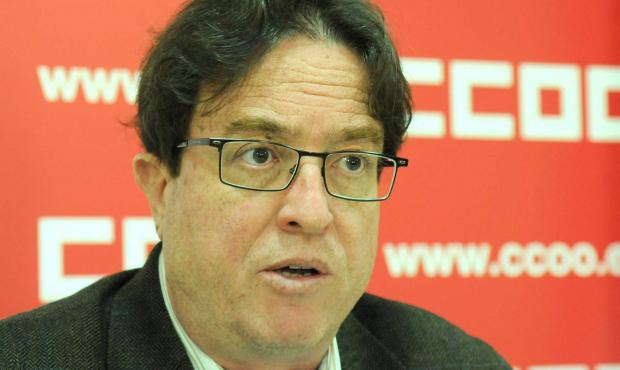
«Es urgente reformar la normativa que regula la formación dual, más aún en el contexto de precariedad en el empleo y concentración de la oferta en pocos sectores. Si las prácticas deben servir a la mejora de la cualificación de los jóvenes hay que garantizar su calidad, así como una retribución justa para los aprendices», asegura Javier López, secretario confederal de Formación de CCOO.

Las Organizaciones empresariales y sindicales de los 27 países de la Unión Europea, representadas por BUSINESSEUROPE (Confederación Europea de Gran Empresa), CEEP (Confederación Europea de Empresas de Servicios), UEAPME (Confederación Europea de Pequeñas y Medianas Empresas) y CES (Confederación Europea de Sindicatos), han pactado solicitar a Comisión Europea el establecimiento de un diálogo tripartito destinado a alcanzar un acuerdo sobre un marco de calidad para la Formación Profesional que se desarrolla en la empresa.

En la reunión celebrada los días 26 y 27 de mayo en Bruselas, la Confederación Europea de Sindicatos presentó las conclusiones de su análisis de la situación de los aprendices en la Unión Europea y fijó veinte criterios de calidad para las prácticas en la Formación Profesional. Los representantes empresariales, por su parte, presentaron los resultados de un estudio sobre los costes y beneficios para las empresas de cooperar en la formación de aprendices.

A pesar de la diversidad de enfoques y realidades nacionales de la Unión, los agentes sociales han acordado unas bases mínimas para garantizar que el aprendizaje en la empresa resulte beneficioso para ambas partes, jóvenes en formación y empresas. En el acuerdo se señala la necesidad de que los sistemas de formación dual se desarrollen contando con la participación de los agentes sociales, porque aquellos países que tienen sistemas de formación dual consolidados, como Alemania, Dinamarca o Austria, cuentan también con un marco institucional participativo.

En el acuerdo se afirma la necesidad de contar con una regulación clara a nivel nacional, que establezca derechos y obligaciones de los jóvenes en formación y de las empresas, desde el punto de vista de las condiciones laborales y de la formación, incluyendo un pago o salario y protección social para los aprendices.

El acuerdo considera también que las prácticas en las empresas son un instrumento de aprendizaje, por tanto no pueden sustituir puestos de trabajo estructurales, y deben permitir a los jóvenes adquirir una cualificación reconocida. Lo anterior exige que profesores y tutores, tanto del centro de formación como de la empresa, cuenten con conocimientos actualizados.

Y se dice que jóvenes y empresas deben tener claros sus derechos y obligaciones, ya sea a través de un acuerdo formal o un contrato que, además de establecer garantías respecto a la calidad de la formación y la protección social durante el periodo de aprendizaje, debe incluir un pago o compensación, de acuerdo con lo establecido en los convenios colectivos o en el marco normativo nacional.

Según Gema Torres, representante de CCOO en el Comité de Educación de la Confederación Europea de Sindicatos, “para que todo esto sea posible se requiere un marco regulador claro a nivel nacional, que es precisamente lo que no tenemos en nuestro país, donde la formación profesional dual, ‘desregulada’ en un real decreto de 2012, permite que los jóvenes se encuentren con condiciones de formación y laborales muy distintas, en función del programa de formación o la administración responsable del mismo”.

Para CCOO, en España es urgente reformar la normativa que regula la formación dual, más aún en el contexto de precariedad en el empleo y concentración de la oferta en pocos sectores. Si las prácticas deben servir a la mejora de la cualificación de los jóvenes hay que garantizar su calidad, así como una retribución justa para los aprendices.

Javier López, Secretario de Formación de CCOO, concluye que “es imprescindible un marco regulador como el que pretende la Declaración europea, que garantice la calidad del aprendizaje en la empresa, pero junto a esto hay que generar empleo y trabajo de calidad para que los y las jóvenes tengan oportunidades reales de encontrar después un buen trabajo. Sin un empuje decidido por un modelo productivo sostenible, la formación dual y las prácticas en empresa serán otra vía añadida a la precarización laboral y a la devaluación del trabajo”.

Comparte este contenido:

Global Partnership: Good teachers are essential to achieve quality education

Fuente: globalpartnership.org / 8 de junio de 2016

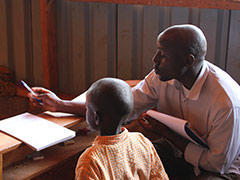
Teachers are the essential link to delivering a quality education to all children. To achieve the goal of universal education, the world needs more, better trained and better supported teachers.

Teachers have the single biggest impact on children learning (John Hattie, Visible Learning).

The availability of well-trained, motivated and supported teachers, nurturing and stable learning environments and adequate learning materials are among the factors that lead to effective teaching and positive learning outcomes.

While student-teacher ratios have improved – mostly in richer countries – in recent years, many countries continue to have an average of 40 or more students per teacher, inadequate teacher training, and limited teaching resources.

Comparte este contenido:

El Banco Mundial reduce al 2,4 % el pronóstico del crecimiento mundial en 2016

Fuente: Banco Mundial / 8 de Junio de 2016

Las perspectivas para los países exportadores y para los países importadores de productos básicos son marcadamente diferentes y aumentan los riesgos de que los resultados sean menos favorables que los previstos

El Banco Mundial está reduciendo al 2,4 % su pronóstico del crecimiento mundial en 2016, respecto de las proyecciones del 2,9 % de enero. Esta medida es consecuencia del lento crecimiento de las economías avanzadas, los precios persistentemente bajos de los productos básicos, el flojo comercio mundial y la disminución de los flujos de capital.

Según la actualización más reciente del informe Perspectivas económicas mundialesdel Banco Mundial, los mercados emergentes y las economías en desarrollo exportadores de productos básicos han tenido dificultades para adaptarse a la disminución de los precios del petróleo y otros productos básicos clave, y esto representa la mitad de la revisión a la baja. Las proyecciones indican que estas economías crecerán escasamente, a un ritmo del 0,4 % este año, lo que representa una revisión a la baja de 1,2 puntos porcentuales respecto de las perspectivas de enero.

“Este crecimiento lento subraya las razones por las cuales es crucialmente importante que los países apliquen políticas orientadas a impulsar el crecimiento económico y mejorar el nivel de vida de las personas que subsisten en la pobreza extrema”, señaló Jim Yong Kim, presidente del Grupo Banco Mundial.El crecimiento económico sigue siendo el motor más importante de reducción de la pobreza, y por eso nos preocupa profundamente la marcada desaceleración del crecimiento en los países en desarrollo exportadores de productos básicos ocasionada por la caída de los precios de esos productos”.

Los mercados emergentes y las economías en desarrollo importadores de productos básicos se han adaptado mejor que los países exportadores, aunque los beneficios derivados de los precios más bajos de la energía y otros productos básicos no se han concretado rápidamente. Según las previsiones, estas economías se expandirán un 5,8 % en 2016, lo que representa una pequeña baja respecto del 5,9 % estimado para 2015, a medida que los bajos precios de la energía y la moderada recuperación de las economías avanzadas respalden la actividad económica.

Entre las economías de mercado emergentes, en China se pronostica un crecimiento del 6,7 % en 2016, tras el 6,9 % que se registró el año pasado. Se prevé que la robusta expansión económica de India se mantendrá estable en el 7,6 %, mientras que Brasil y Rusia seguirán en una recesión más profunda que la pronosticada en enero. Según los pronósticos, Sudáfrica crecerá un 0,6 % en 2016, es decir un 0,8 de punto porcentual más lento que el ritmo pronosticado en enero.

De acuerdo con el informe, el aumento significativo del crédito al sector privado —intensificado por un período de bajas tasas de interés y, más recientemente, el aumento de las necesidades de financiamiento— genera riesgos potenciales para varios mercados emergentes y economías en desarrollo.

“Mientras que las economías avanzadas tienen dificultades para cobrar impulso, en la mayoría de las economías de Asia meridional y oriental se está registrando un sólido crecimiento, al igual que en las economías emergentes importadoras de productos básicos de todo el planeta”, afirmó Kaushik Basu, primer vicepresidente y primer economista del Banco Mundial. “No obstante, el rápido aumento de la deuda privada en varias economías emergentes y en desarrollo indica que es necesario actuar con cautela. Tras un período de rápido aumento del endeudamiento, no es inusual observar que los préstamos bancarios improductivos, como porcentaje de los préstamos brutos, se cuadruplican”.

En un contexto de atonía del crecimiento, la economía mundial enfrenta graves riesgos, entre ellos una desaceleración más profunda en los principales mercados emergentes, cambios pronunciados en la actitud de los mercados financieros, estancamiento en las economías avanzadas, un período de precios bajos de los productos básicos más prolongado que lo previsto, riesgos geopolíticos en diversas partes del planeta, y preocupación respecto de la eficacia de la política monetaria para impulsar un crecimiento más sólido. En el informe se utiliza por primera vez un instrumento para cuantificar los riesgos relacionados con las perspectivas mundiales y se observa que actualmente se inclinan más hacia la que baja que en enero.

“Las flojas perspectivas de crecimiento en los mercados emergentes y las economías en desarrollo podría ralentizar o incluso invertir los avances que han realizado para llegar a los niveles de ingresos de las economías avanzadas”, señaló  Ayhan Kose, director del Grupo de Perspectivas de Desarrollo Económico. “No obstante, algunas economías emergentes y en desarrollo importadoras de productos básicos han logrado registrar un crecimiento constante o más acelerado en el curso de los últimos tres años”.

Perspectiva regionales

Asia oriental y el Pacífico: Las proyecciones indican que el crecimiento de la región se desacelerará, a un ritmo no revisado del 6,3 %, en 2016, previéndose que la expansión de China disminuirá al 6,7 %, como se pronosticó en enero.  Según las proyecciones, el crecimiento de la región excluida China será del 4,8 % en 2016, sin cambios respecto de 2015. Estas perspectivas presuponen una desaceleración ordenada del crecimiento en China acompañada por avances constantes en las reformas estructurales y las políticas de estímulo adecuadas que resulten necesarias. En el resto de la región, se prevé que el aumento de las inversiones en varias economías grandes (Indonesia, Malasia, Tailandia) y el fuerte consumo respaldado por los bajos precios de los productos básicos (Tailandia, Filipinas, Viet Nam) promoverán el crecimiento.

Europa y Asia central: A raíz de la persistente contracción en Rusia, el pronóstico del crecimiento de la región se mantiene en el 1,2 % en 2016, lo que representa una revisión a la baja de 0,4 de punto porcentual respecto de las perspectivas de enero. Los problemas geopolíticos en la región, incluidos los estallidos de violencia en la parte oriental de Ucrania y el Cáucaso y los ataques terroristas en Turquía, influyen en las perspectivas. Según las previsiones,  la región excluida Rusia crecerá un 2,9 %. Las proyecciones del crecimiento para la zona oriental de la región se han revisado a la baja respecto de las perspectivas de enero debido a que los países se están adaptando a la disminución de los precios del petróleo, los metales y los productos básicos agrícolas. La actividad en la parte occidental de la región se beneficiará del crecimiento moderado en la zona del euro y el fortalecimiento de la demanda interna, gracias a los bajos costos del combustible.

América Latina y el Caribe: Según los pronósticos, en la región se registrará una contracción del 1,3 % en 2016 tras una disminución del 0,7 % en 2015, la primera vez en más de 30 años que se registra una recesión en dos años consecutivos. Se prevé que comenzará a crecer nuevamente en 2017, pues cobrará impulso en forma gradual hasta llegar a alrededor del 2 % en 2018. Las perspectivas son diferentes en las diversas partes de la región: en Sudamérica se pronostica una contracción del 2,8 % este año, seguida de una leve recuperación en 2017. Por el contrario, el producto de la subregión de México y América Central, y del Caribe, respaldado por los vínculos con los Estados Unidos y las sólidas exportaciones, aumentaría un 2,7 % y un 2,6 %, respectivamente, en 2016, y más aún en 2017 y 2018. El pronóstico para Brasil indica una contracción del 4 % en 2016 y se prevé que la recesión continuará en 2017, en un contexto en el que se intenta aplicar una política más restrictiva, aumenta el desempleo, disminuyen los ingresos reales y reina la incertidumbre política.

Oriente Medio y Norte de África: Según los pronósticos, el crecimiento en la región repuntará levemente al 2,9 % en 2016, es decir 1,1 puntos porcentuales menos que lo previsto en las perspectivas de enero. La revisión a la baja obedece a que se prevé que los precios del petróleo seguirán cayendo durante el año, y descenderán, en promedio, a USD 41 el barril. La principal razón de la leve mejora del crecimiento regional en 2016 es la fuerte recuperación prevista en la República Islámica del Irán tras el levantamiento de las sanciones en enero. Las proyecciones indican que el repunte previsto en los precios del petróleo en 2017 respaldará una recuperación del crecimiento regional al 3,5 % en 2017.

Asia meridional: Los pronósticos indican que el crecimiento en la región se acelerará al 7,1 % en 2016, a pesar del crecimiento inferior al previsto de las economías avanzadas, que ha frenado el aumento de las exportaciones en la región. La actividad se mantuvo firme debido a que la demanda interna, el principal motor de crecimiento, siguió siendo sólida. En India, la mayor economía de la región, se registró un fortalecimiento de la actividad, al igual que en Pakistán, Bangladesh y Bhután. La mayoría de las economías de Asia meridional se ha beneficiado de la caída en los precios del petróleo, un bajo nivel de inflación y flujos constantes de remesas.

África al sur del Sahara: Se pronostica que el crecimiento de África al sur del Sahara disminuirá nuevamente, al 2,5 %, en 2016, en comparación con el 3,0 % estimado para 2015, dado que las previsiones indican que los precios de los productos básicos se mantendrán en un nivel bajo, se prevé que la actividad mundial será floja y se está registrando un endurecimiento de las condiciones de financiación. Es probable que el consumo no repunte de manera significativa en los países exportadores de petróleo, mientras que el descenso de la inflación en los países importadores de petróleo debería respaldar el gasto de consumo. No obstante, la inflación del precio de los alimentos ocasionada por la sequía, el alto nivel de desempleo y el efecto de la depreciación de la moneda podrían contrarrestar parcialmente esta ventaja. Se prevé una desaceleración del aumento de las inversiones en muchos países a medida que los Gobiernos y los inversionistas recorten o retrasen los gastos de capital en un contexto de consolidación fiscal.

Comparte este contenido:
Page 436 of 472
1 434 435 436 437 438 472