Page 286 of 389
1 284 285 286 287 288 389

Venezuela: Educación formará progresivamente a 3 mil defensores educativos

América del Sur/Venezuela/28 Enero 2017/Fuente: Correo del Orinoco

El objetivo es construir una cultura de paz y convivencia en los liceos y escuelas y tener cerca de los docentes, familias y estudiantes una figura que contribuya con el proceso de defensa de los derechos de los jóvenes

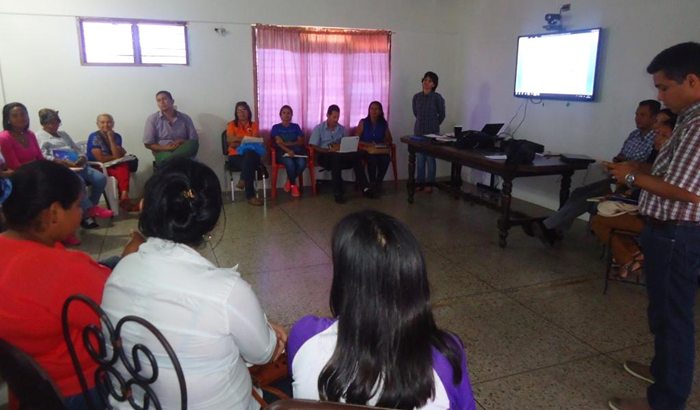
Con la finalidad de redimensionar las defensorías del sistema educativo para fortalecer la defensa de los derechos de los estudiantes, el Ministerio del Poder Popular para la Educación inició este miércoles una jornada de Formación para Asesores Acompañantes del Plan de Formación de Defensoras y Defensores Educativos que cubrirá 3 mil circuitos educativos a escala nacional.

El viceministro de Comunidades, Educación y Unión con el Pueblo del Ministerio del Poder Popular para la Educación, Jheyson Guzmán, precisó que la jornada que comenzó ayer (miércoles) y culminará mañana (viernes) formará a 100 docentes en distintas especializaciones de todo el territorio nacional. Esta estrategia, explicó, busca garantizar que en cada circuito educativo existan defensores de los estudiantes.

Apuntó que se aspira a que en un promedio de entre 5 y 10 escuelas haya defensores estudiantiles que contribuyan a construir la cultura de paz y de convivencia dentro de las instituciones educativas, lo que permitirá tener mucho más cerca de los docentes, de las familias y de los estudiantes una figura que contribuya con el proceso de defensa de los derechos de los estudiantes.

Guzmán ofreció su declaración en el Salón Simón Bolívar del Centro para el Mejoramiento de la Enseñanza de la Ciencia (Cenamec), ubicado en la sede del Ministerio del Poder Popular para la Educación, donde se efectuó dicha jornada.

La figura del defensor educativo, añadió, también articulará acciones con otras instituciones del Estado, organismos de seguridad y de orientación, como la Oficina Nacional Antidroga (ONA), el Fondo de las Naciones Unidas para la Infancia (Unicef).

“Para nosotros es importante que la figura del defensor estudiantil no sea solamente una especie de juez, sino la de un orientador, capacitador. Es una mujer o un hombre que construye un diálogo y a partir de ese diálogo construye una sociedad de convivencia y de paz, que para nosotros es fundamental”, argumentó.

EL NIÑO COMO SUJETO DE DERECHO

La docente responsable del programa de las defensorías educativas en el estado Vargas, Isabel Narváez Escobar, explicó que la formación aborda la función de las defensorías en el proceso de transformación del sistema educativo para implementar un nuevo modelo “creador de conciencia, llegar al nivel de construir nuevos criterios”.

En ese sentido, manifestó, en la formación se enseñará a los docentes que las defensorías estudiantiles no deben trabajar como un proceso paralelo sino como un sistema en consonancia con el sistema educativo.

“Es decir, conviven las políticas de las defensorías en apoyo al sistema educativo, más bien como un orientador en el sentido de los problemas del sector de educación”, comentó.

En su opinión, el proceso es muy positivo ya que trabajarán de forma simultánea, consustanciada con lo que es el niño como sujeto de derecho. “No puede ir la defensoría por un lado y por otro lado el sistema educativo”, indicó.

La docente del estado Mérida Monjaira Bautista, quien participó en la jornada de formación, expresó que el objetivo central es difundir y promover en cada estado del país la capacitación recibida, a fin de que todos los docentes, estudiantes y sus familiares compartan la misma sensibilidad en torno a los derechos estudiantiles.

Fuente: http://www.correodelorinoco.gob.ve/nacionales/educacion-formara-progresivamente-a-3-mil-defensores-educativos/
Comparte este contenido:

Polonia: Polish schools told to pare back science in push for new Pole

Polonia/Enero de 2017/Fuente: Financial Times

RESUMEN: Desde que Ewa Korulska lanzó la escuela intermedia Startowa como directora en 2007, ella ha querido que fuera un modelo para la educación polaca. Ahora la escuela en un suburbio de Varsovia podría ser barrida como las reformas educativas planeadas que traen batallas culturales entre el gobierno conservador de Polonia y sus críticos a las escuelas de la nación. Las escuelas intermedias, como Startowa, que enseñan a niños entre 13 y 16 años, serían abolidas, pero la Sra. Korulska y muchos profesionales de la educación tienen preocupaciones más profundas. Ellos dicen que los cambios planeados, incluyendo menos tiempo dedicado a la ciencia y la escolaridad menos obligatoria, dejarán a los niños mal preparados para el empleo y la vida moderna. «Lo que está sucediendo es desastroso», dice Korulska, cuya brillante y moderna escuela tiene paredes cubiertas con fotografías de sus alumnos. «El currículo actual no era perfecto. Pero esto es como alguien con un agujero en su techo que, en lugar de reparar el agujero, arruina la casa y no tiene donde vivir después «.

Since Ewa Korulska launched Startowa middle school as director in 2007 she has wanted it to be a model for Polish education.

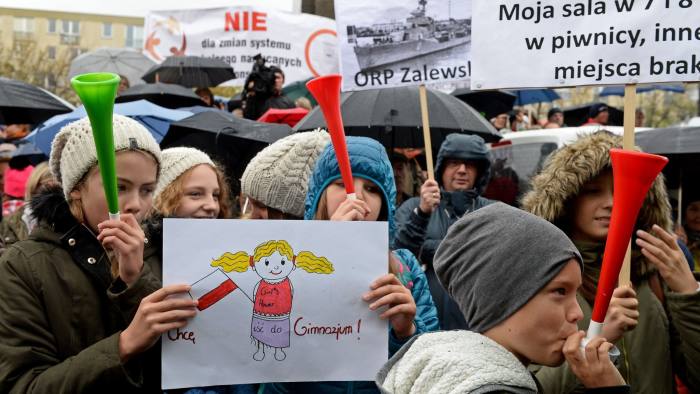
Now the school in a Warsaw suburb could be swept away as planned educational reforms bring cultural battles between Poland’s conservative government and its critics to the nation’s schools. Middle schools such as Startowa, which teach 13- to 16-year-olds, would be abolished, but Ms Korulska and many education professionals have deeper concerns. They say the planned changes, including less time devoted to science and less compulsory schooling, will leave children ill-prepared for jobs and modern life. “What’s happening is disastrous,” says Ms Korulska, whose bright, modern school has walls covered with photographs of its pupils. “The current curriculum wasn’t perfect. But this is like someone with a hole in his roof who, instead of repairing the hole, wrecks the house and has nowhere to live afterwards.” Many in the education establishment fear the reform is part of a “cultural counter-revolution” promised by Jaroslaw Kaczynski, chairman of the ruling Law and Justice party. This aims to roll back the advance of social liberalism since communism collapsed and Poland joined the EU, returning the country to more conservative, Catholic roots. Like many teachers and academics, Ms Korulska worries that the government’s plans for schools to spend much more time on history lessons and rewrite the history curriculum are aimed at creating a “new Pole”. “I’m afraid [the reforms] will turn children into young nationalists, not patriots,” she says. “It’s about raising a human being who is obedient, xenophobic, traditionalist, extremely Catholic, without any European values.” The school plans have become the biggest flashpoint between the government and its opponents since mass demonstrations by women in October forced a U-turn on a proposed near total abortion ban.

The powerful teachers’ union is planning a national strike in March and calling — with support from opposition political parties — for a referendum on the proposals. Students are holding protest marches in several cities on Wednesday, in part over the education plans. Mateusz Kijowski, chairman of the Committee for Defence of Democracy, which has organised several large anti-government protests, says Law and Justice “want to create ‘their’ man, who is devoted to them, who doesn’t listen to science and facts, but is just a believer.” The government is reversing a 1999 reform that abolished a two-stage system dating from the communist era, with eight years of compulsory primary education starting at age seven followed by four or five years at a vocational or academic secondary school. The 1999 changes brought in a three-stage system extending basic schooling by a year, with six years of primary school plus three at a middle school, before three or four years of higher school.

Poland’s education ministry told the Financial Times that the 1999 reforms and middle schools had “met a negative reaction from most of society, and simply didn’t work” in terms of improving education. Education experts say Poland in fact advanced impressively in international Pisa tests for 15-year-olds between 2000 and 2012, rising from below average in all three subjects tested to become a top-10 country in science and reading, and 13th in maths. Its scores declined slightly from 2012-15, though it was still in the upper part of the rankings. Abolishing middle schools will cost jobs among the country’s 684,000 teachers. But Slawomir Broniarz, president of the Polish Teachers’ Union, says the biggest issue is the “embarrassing” new curriculum. “This is not the Poland of the 21st century,” he says. Teachers warn that reducing the length of compulsory schooling will lower attainment and bring forward by a year decisions on whether children should continue into more advanced education. Ms Korulska also frets over an emphasis on rote learning in draft new base curriculums, instead of on learning how to search for reliable data in a world of “information overflow”. © AFP The new curriculum reduces time for physics, chemistry, biology and IT in favour of history, where Mr Broniarz says the government is trying to create new heroes and “patriotic patterns”. “I’m a history teacher but I’m worried about these shifts in proportions,” he says. “You can get a Nobel Prize for physics but not for Polish history.” Teachers complain, too, that the sex education curriculum omits any reference to abortion and is being written by an ardent Catholic who opposes contraception. The draft biology curriculum for primary schools plays down the theory of evolution. The education ministry denies the changes are politically motivated or aimed at turning pupils into nationalists. “We want children finishing school to value their mother tongue and culture, with all its heritage,” it said. “We want to step away from common education methods that are all about taking tests.” The ministry says the plans were based on broad consultation although teachers say their views were not heeded. In Startowa Ms Korulska says her school will support the strike, and teachers, opposition parties and parents’ associations are coming together to oppose the plans. Karolina, 14, a pupil, worries that a less rigorous curriculum will reduce Poles’ chances of working or studying abroad. “We’ll be perceived less well by other countries,” she says. “We’ll go back to the 19th century.”

Fuente: https://www.ft.com/content/d2927cfe-e222-11e6-8405-9e5580d6e5fb

Comparte este contenido:

New Zealand children could start school at age four under cohort entry proposal

Nueva Zelanda/Enero de 2017/Fuente: Stuff

RESUMEN: Los padres pronto podrían enviar a sus hijos a la escuela a los cuatro años bajo un cambio de ley propuesto para los arreglos de entrada a la escuela. La propuesta de que las escuelas tengan la opción de «entrada de cohortes» significaría que los niños comiencen la escuela primaria al comienzo del período más cercano a su quinto cumpleaños, antes que de su sexto. Los padres decidirían si sus hijos entran a la educación formal a la edad de cuatro o cinco años y el Ministerio de Educación creía que el esquema ofrecería mayor flexibilidad a las escuelas, limitaría los costos de educación de la primera infancia para las familias y daría a los nuevos participantes la oportunidad de comenzar la escuela juntos. En su informe sobre la entrada de cohortes, el ministerio observó una tendencia lenta y no reglamentada hacia las escuelas que experimentan con la práctica presentando un «riesgo emergente» para las finanzas de la Corona al incrementar los costos de la educación primaria y de la primera infancia.

Parents could soon be sending their children to school at age four under a proposed law change to school entry arrangements.

The proposal that schools have the option of «cohort entry» would mean children start primary school at the start of the term closest to their fifth birthday, rather than before their sixth.

Parents would decide whether their children enter formal education at age four or five, and the Ministry of Education believed the scheme would offer greater flexibility to schools, limit early childhood education costs for families and give new entrants the opportunity to start school together.

In its report on cohort entry, the ministry noted a slow, unregulated trend towards schools experimenting with the practice presented an «emerging risk» to Crown finances by increasing primary and early childhood education costs.

Several national education groups have opposed the change, which would cost the early childhood sector $11 million if it was adopted by all schools.

The proposal is one of a raft of changes proposed in the Education (Update) Amendment Bill, which is at the select committee stage in Parliament. Submissions on the bill close at the end of the month.

Early Childhood Council chief executive Peter Reynolds called the cohort proposal a «funding cut by stealth».

Childcare centres had lost an average of $900,000 in subsidies since 2010 and the law change, while not necessarily bad for schools, would further hurt smaller early childhood centres if large numbers of their charges left at the same time, he said.

He said suggestions children starting school in groups would be less isolated were a «red herring» as most – 90 per cent according to Government figures – started within two weeks of their fifth birthday and were not long separated from their preschool friends.

Of 1117 public submissions on the cohort proposal, nearly three-quarters were supportive, including 76 per cent of parents and 80 per cent of teachers.

Teachers’ union NZEI, the New Zealand Principals’ Federation, school trustees association, council for educational research and New Zealand Kindergartens are among those who oppose cohort entry.

NZEI president Lynda Stuart said there was no research to suggest group entry provided educational benefits over the current individual system.

«Age five is really early when you look at other countries and the potential is kids could start at age four.

«We have got a really nice way of children entering into schools, it’s almost a rite of passage. It’s an exciting time and also a time where a child can still be evaluated as an individual.»

New Zealand Kindergartens chief executive Clare Wells said if schools were already using cohort entry systems, the education sector could benefit from hearing their experiences.

Portobelo​ Preschools principal leader Dr Sandy Radford was concerned starting school before age five would hinder children’s cognitive and social development and change the culture of new entrant classrooms.

«Instead of having a culture already established where children already know the ropes, there is whole group who don’t have experienced children to show them how it’s done.»

She hoped children’s individual maturity and abilities would be prioritised over administrative preferences.

Isleworth School principal and Canterbury Primary Principals’ Association president Jeanette Shearer said cohort entry could simplify schools’ enrolment processes.

«In some ways it would be easier to know you are starting with a cohort of children on a particular day rather than constantly transitioning children into your school.»

While it was possible parents whose children were enrolled at age five might feel disadvantaged, it was hard to gauge the community’s feelings because very few families were aware of the proposed change, she said.

Dr Peter Ferrar at Cornerstone Christian School in Palmerston North said he thought most schools would be happy with the change.

He said the school might «have a crack» at cohort entry twice a term but held reservations about starting school before age five, saying it was already too early for many pupils.

Fuente: http://www.stuff.co.nz/national/education/88750698/new-zealand-children-could-start-school-at-age-four-under-cohort-entry-proposal

Comparte este contenido:

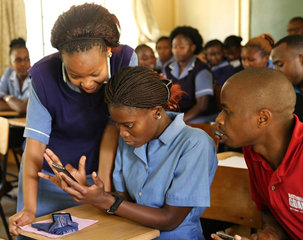
Sudáfrica: Education a Weapon for Economic Transformation

Sudáfrica/Enero de 2017/Fuente: All Africa

RESUMEN: El presidente Jacob Zuma dice que el gobierno sudafricano siempre dará prioridad a la educación porque es sólo a través de una educación de calidad que el país puede ganar la lucha contra el desempleo, la pobreza y la desigualdad. El presidente dijo esto el martes cuando se dirigió a los tres días del Sector de Educación Básica Lekgotla celebrado en Pretoria. El Lekgotla, que concluirá el miércoles, tiene como objetivo alinear los planes del sector con el Plan Nacional de Desarrollo (PND). Representantes del Ministerio de Educación Básica, MECs de todo el país, Jefes de Departamentos de los Departamentos Provinciales de Educación, Directores de Distrito y otras partes interesadas se han reunido bajo un mismo techo para compartir ideas sobre la mejora del sector. El presidente Zuma dijo que la educación es el arma principal en la lucha por la transformación económica y en la búsqueda de una vida mejor para todos, especialmente para los pobres.

President Jacob Zuma says the South African government will always prioritise education because it is only through quality education that the country can win the struggle against unemployment, poverty and inequality.

The President said this on Tuesday when he addressed the three-day Basic Education Sector Lekgotla held in Pretoria.

The Lekgotla, which will conclude on Wednesday, is aimed at aligning the sector’s plans with the National Development Plan (NDP).

Representatives from the Basic Education Ministry, MECs from across the country, Head of Departments from Provincial Education Departments, District Directors and other stakeholders have come together under one roof to share ideas on improving the sector.

President Zuma said education is the primary weapon in the struggle for economic transformation, and in the quest for a better life for all, especially the poor.

«It is for this reason that education gets the biggest slice of the national budget. Education is the ladder out of poverty and economic stagnation.»

President Zuma alluded to progress that has been made in education in the past 22 years.

Fuente: http://allafrica.com/stories/201701250100.html

Comparte este contenido:

Irak: Unos 16.000 niños han vuelto a la escuela en el este de Mosul

Irak/26 enero 2017/Fuente: La Vanguardia

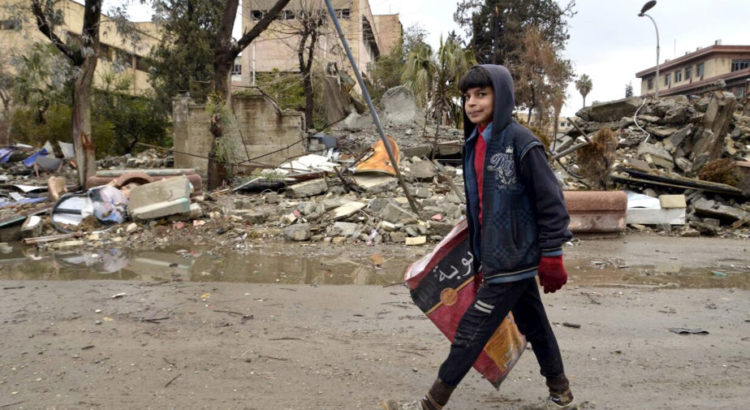
Unos 16.000 niños han vuelto a clase con la apertura de 30 escuelas en el este de la ciudad iraquí de Mosul tras la expulsión del grupo terrorista Estado Islámico (EI) de esa zona, informó hoy el Fondo de Naciones Unidas para la Infancia (Unicef).

Algunas de las escuelas abiertas el pasado domingo estuvieron cerradas durante dos años, desde que el grupo yihadista conquistó esta ciudad del norte de Irak a finales de 2014, indicó Unicef en un comunicado.

Las más afectadas fueron las niñas, puesto que los radicales islámicos prohibieron a la mayoría de ellas el acceso a la educación.

Peter Hawkins, representante de Unicef en Irak, afirmó que la apertura de las escuelas supone «un momento crucial para los niños de Mosul» después de la «pesadilla» de los últimos dos años, se indica en la nota.

Se espera que en las próximas semanas otras 40 escuelas abran sus puertas para dar acceso a la educación a otros 40.000 alumnos, según Unicef, que apoya a las autoridades iraquíes en la rehabilitación de las escuelas en las zonas recuperadas a los radicales.

La ofensiva contra el EI en la provincia de Nínive y en su capital, Mosul, comenzó hace tres meses, periodo en el que las fuerzas conjuntas iraquíes han conseguido expulsar al grupo terrorista de casi toda la mitad este de la urbe.

Al este del río Tigris, los yihadistas sólo resisten en un barrio y en zonas aisladas del noreste de la ciudad, aunque mantienen el control total de la mitad occidental de Mosul.

Fuente  noticia: http://www.lavanguardia.com/internacional/20170124/413652851728/unos-16000-ninos-han-vuelto-a-la-escuela-en-el-este-de-mosul.html

Fuente imagen: http://cde.laprensa.e3.pe/ima/0/0/1/5/9/159300.jpg

Comparte este contenido:

Investigación de vanguardia enmarca la respuesta mundial a la privatización

Europa/Bélgica/24 de enero de 2017/Fuente: www.ei-ie.or

Destacados académicos, analistas y líderes sindicales se reunieron en Bruselas con vistas a establecer los mecanismos, las estrategias y las tendencias en la privatización de la educación – con el objetivo de convertir los estudios en acciones fructíferas.

La reunión de la Red de Respuesta Mundial, acogida por la Internacional de la Educación (IE), tuvo lugar en la International Trade Union House en Bruselas, los días 19 y 20 de enero. Más de 50 participantes del mundo entero analizaron las actuales tendencias en la privatización de la educación, un fenómeno global que impregna y absorbe nuestros sistemas educativos, planteando “la mayor amenaza al derecho a la educación”, según el director del proyecto, Angelo Gavrielatos, que presidió las sesiones.

Una campaña exitosa

La decisión de lanzar una Respuesta Mundial a la privatización de la educación fue adoptada por el séptimo Congreso Mundial de la IE como una de sus principales prioridades. Un año y medio después de iniciarse esta campaña, los esfuerzos conjuntos desplegados por las afiliadas de la IE y sus asociados han tenido cierto éxito, indicó Gavrielatos. Buen ejemplo de ello sería la decisión del Gobierno ugandés de cerrar las escuelas pertenecientes a la cadena de educación privada con fines de lucro Bridge International Academies (BIA) en Uganda, tras la publicación de un informe encargado por la IE donde se ponían de relieve las desastrosas condiciones de enseñanza en el seno de BIA.

De la investigación a la acción

Durante la reunión, tres oradores –acreditados académicos e investigadores– destacaron el estado actual de la privatización de la educación. Examinaron, respectivamente, los casos de Uganda y Filipinas, la dinámica regional en América Latina, y los efectos de los acuerdos comerciales sobre la educación.

Curtis Riep, un investigador de la Universidad de Alberta, Canadá, al que la IE le había encomendado efectuar dos estudios, en Uganda(que provocó el cierre de las escuelas de BIA) y Filipinas(analizando el caso de las escuelas en APEC), presentó las operaciones de dos grandes cadenas de escuelas privadas con fines de lucro y su impacto sobre las comunidades en las que se establecieron.

Susan Robertson, profesora de la Universidad de Cambridge, Reino Unido, se refirió a los tratados comercialesy sus efectos respecto a la aportación y el acceso a una educación pública de calidad. Los tratados comerciales reflejan el compromiso de muchos Gobiernos con valores neoliberales, indicó Robertson, y forman parte de un paradigma que descuida la cohesión social, produce mayores desigualdades y reduce la productividad en las economías donde se aplica.

El estudiollevado a cabo por Antoni Verger y sus colegas de la Universidad de Barcelona, España, explora la dinámica de la privatización en la región de América Latina. Verger hizo referencia a los distintos tipos de privatización que se están desarrollando en una región, que ha sido testigo del “mayor empuje hacia la privatización de la educación, durante un mayor período de tiempo”.

Fuente: https://www.ei-ie.org/spa/news/news_details/4252

Imagen:https://www.ei-ie.org/kroppr/eikropped/Robertson_148492160514849216059813.jpg

Comparte este contenido:

Taiwan: Foundation makes education dreams come true

Taiwan/Enero de 2017/Fuente: The China Post

RESUMEN: La Fundación de Cultura y Educación del Sr. Hsieh Ching-yun  celebró su 58 ª Ceremonia de Becas el viernes. El evento se celebró junto a la celebración del 40 aniversario de la Segunda Cooperativa de Crédito de Keelung  Hsieh Hsiu-ping, CEO George Hsieh Guo-liang  y el presidente de la Fundación de Cultura y Educación, Li Bor-yuan, invitaron a las celebridades locales a asistir al evento evento. George Hsieh es también el presidente y editor de The China Post. Hsieh Ching-yun, padre del segundo presidente de la cooperativa de crédito Hsieh Hsiu-ping y abuelo del CEO George Hsieh, se dedicó a ayudar a los estudiantes pobres a lo largo de su vida. En 1976, la fundación fue establecida por Hsieh Hsiu-ping para continuar los deseos de su padre para la responsabilidad social. Según el presidente de la fundación, la fundación ha otorgado más de US $ 20 millones en becas a más de 2.000 estudiantes necesitados.

The Mr. Hsieh Ching-yun Culture and Education Foundation (謝清雲先生文教基金會) held its 58th Scholarship Awards Ceremony on Friday.

The event was held alongside the 40th anniversary celebration of the Second Credit Cooperative of Keelung (基隆二信合作社).

Second Credit Cooperative of Keelung Founding Chairman Hsieh Hsiu-ping (謝修平), CEO George Hsieh Guo-liang (謝國樑) and Mr. Hsieh Ching-yun Culture and Education Foundation President Li Bor-yuan(李伯元) invited local celebrities to attend the event. George Hsieh is also the chairman and publisher of The China Post.

Hsieh Ching-yun, father of Second Credit Cooperative Founding Chairman Hsieh Hsiu-ping and grandfather of CEO George Hsieh, devoted himself to aiding poor students throughout his life. In 1976, the foundation was established by Hsieh Hsiu-ping to continue his father’s wishes for social responsibility.

According to the foundation president, the foundation has given more than NT$20 million in scholarship grants to over 2,000 students in need.

The ceremony on Friday was a time for scholarship recipients, family and friends to come together to recognize the achievements of the students and express their gratitude for the philanthropy.

The foundation invited Keelung Mayor Lin You-chang (林右昌) and City Council Speaker Sung Wei-li (宋瑋莉) to award 10 college students NT$10,000 each and 8 high school students NT$6,000 each in scholarships.

Hsieh Hsiu-ping, the founding chairman of Second Credit Cooperative, said he was pleased to inform the public that the students benefited greatly from the program and some later played an important part in society, becoming professors, engineers and diplomats. The founding chairman was also said that these students all knew to how to give back to the society. For example, former Ministry of the Interior Lee I-yang (李逸洋) was one of the those who gave back to society and became a role model for the younger students.

Fuente: http://www.chinapost.com.tw/taiwan/national/national-news/2017/01/21/489992/Foundation-makes.htm


Comparte este contenido:
Page 286 of 389
1 284 285 286 287 288 389