Page 110 of 144
1 108 109 110 111 112 144

EEUU: Baerren. Religion is the agenda of our education secretary

EEUU/ March 20, 2018/ By: Eric Baerren/Source: http://www.dailytribune.com

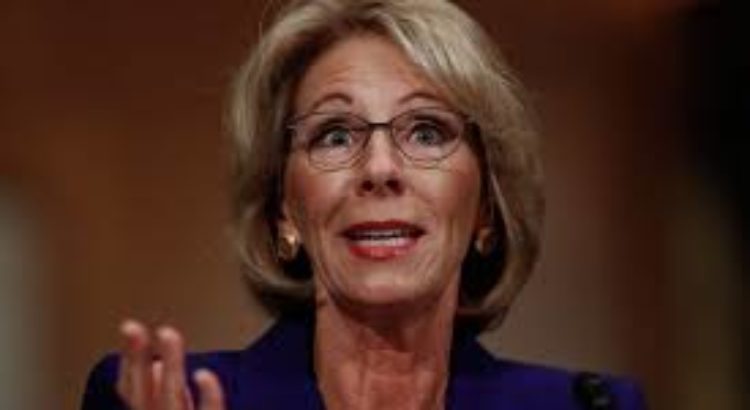
Education Secretary Betsy DeVos speaks during the Conservative Political Action Conference (CPAC), at National Harbor, Md. DeVos has given state education chiefs some «tough love» as she pushed them to innovate and do better by students. Speaking March 5, 2018, at a conference of the Council of Chief State School Officers, DeVos blasted some schools for exposing children to rats, mold and danger. (AP Photo/Jacquelyn Martin, File)

There’s important context missing from this week’s disastrous Betsy DeVos interview by 60 Minutes. As she has done every time she’s been asked non-scripted questions in venues beyond the control of her handlers, DeVos looked unprepared and uninformed. People have taken this as a sign that she is and will continue to be unfit for her office.

She is, and there is no debating it. She was appointed not because she has “qualifications,” “training” or “experience,” but because she and her family back dump trucks of cash up to the Republican Party reliably every year. This makes her no different than any other wealthy person who thinks the quantity of their assets qualifies them as experts in everything.

This is also beside the point. Understanding why Betsy DeVos is such a terrible education secretary requires understanding what motivates her, which is family and her religious beliefs.

We’re not supposed to impugn these motivations because it is beaten rhetorically into us for most of our adult lives that people who cleave to god and family are beyond reproach, that no one motivated thusly can do wrong. History, of course, tells a different story.

That philosophy is predicated on a simple idea. Secular public schools have replaced church as America’s centerpiece institution. The DeVos family as a whole has set itself on a course to correct this, to diminish secular public schools and restore the church to its rightful place.

It’s great coincidence that we are reminded of this the same week that Stephen Hawking, who argued that science and reason have become a much better explainer for the universe than religion. That creates a conflict between the democratizing power of science offered in secular public schools and the top-down authority of organized religion.

Achieving this in Michigan started with a direct frontal assault on the state constitution. The DeVos clan engineered a petition drive to ask voters to approve an amendment allowing for vouchers under the guise of choice. What it really meant was allowing the funneling of public dollars from public schools to private schools, many of which if allowed to operate as freely as they liked would be no better than Muslim madrasas on the Pakistani-Afghan frontier commonly associated with Islamic extremism.

That failed. Voters rejected this worldview a second time in electing Jennifer Granholm to a second term over Dick DeVos in 2006. Their path has since been much more circuitous, financing the Republican majority in the state House and ushering education policy down the path where the idea that unfettered choice leads to better outcomes is treated as religious dogma. The result has been a kind of educational Wild West, with for-profit charter schools operating with little or no oversight competing for tax dollars against public schools with elected school boards and publicly accountable administrators.

In every respect, it has failed badly. Choice’s acolytes, however, remain blinded in part because their children are isolated. Thanks to disinvestment coupled with deindustrialization of Michigan’s cities, that failure has fallen disproportionately on people of color. The majority of people responsible for education policy have been outstate and suburban white lawmakers.

Like most political dogmas, the failure to deliver isn’t a feature but an omelet’s broken eggs. The choice advocates DeVos leads have been at it for years, faithful that if they just try harder that they can supplant quality secular education with quality religious education. And if not totally supplant, at least crush teachers’ unions so they can continue to finance their experiments with public dollars.

This has been the raison d’etre for DeVos’ advocacy in education. It’s been about religious belief, not educating kids, although for kids who are more poorly educated for her efforts it’s probably all the same to them.

Eric Baerren is a Morning Sun columnist. He can be reached at ebaerren@gmail.com or on Twitter at @ebaerren.

Source:

http://www.dailytribune.com/opinion/20180315/baerren-religion-is-the-agenda-of-our-education-secretary
 

Comparte este contenido:

Eastern Ghouta students: It’s suicide if we leave our basements

Ghouta/ March 19, 2018 /aljazeera

Three students explain what life is like in rebel-held besieged enclave, as they try to keep up with their studies.

It has been nearly five years since Syrian government forces imposed a siege on the rebel-held Eastern Ghouta.

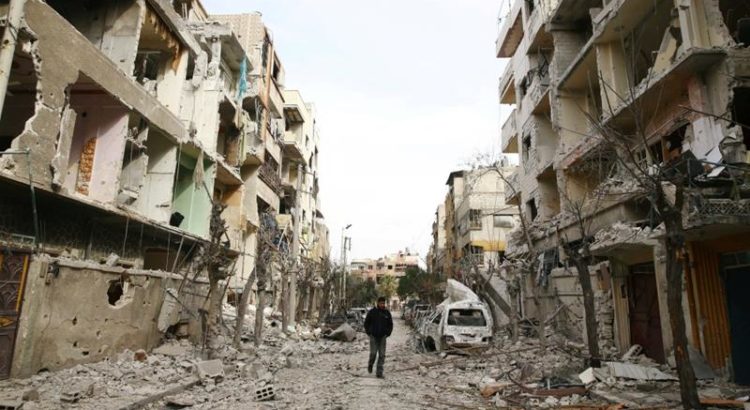
The past month has been one of the deadliest in the enclave, with more 1,200 civilians killed since the aerial and ground bombardment began on February 18.

As the campaign against Eastern Ghouta continues, schools and universities have either been destroyed or shut down, leaving students with few options for continuing their education.

Some have enrolled in online universities, while others have joined new, start-up medical academies to address the extreme shortage of medical staff in the area.

Three students spoke to Al Jazeera about the obstacles they face as they try to continue their education in Eastern Ghouta.

Majed Daas, 22, computer science student

Ever since 2013 [start of the siege], I began searching for a way to continue my studies, but it was difficult because of the siege and we frequently have no fuel, internet or electricity.

So I sat down with some of my friends who are older than me, have already graduated or studied computer science and I started to learn how to run computer programs and software with them.

It was tough at the beginning, very complicated, but computer science has always been my obsession. After training with my friends, I completed my high school exam and did quite well.

Before the campaign started [against Eastern Ghouta], I was going to an internet shop to study, which cost a lot – nearly $3 per session every day. The books that I had to print cost me a fortune. I earn only $150 a month and printing a book costs about $30.

Studying on my laptop was challenging too. We never have electricity so I have to pay $5 a week to get electricity for a few hours and sometimes it doesn’t work properly because of the attacks.

Two months ago, I applied at the University of the People [an American online institution] and signed up for two courses only, but I couldn’t continue because of the intense attacks. Sadly, I had to withdraw since I can’t complete the courses under these circumstances.

Our days now are horrifying; I just can’t describe it. As I am talking to [you] right now [by phone] seven air strikes have struck around me. We stay all day in basements; sometimes I go outside to use the internet to talk with friends and family.

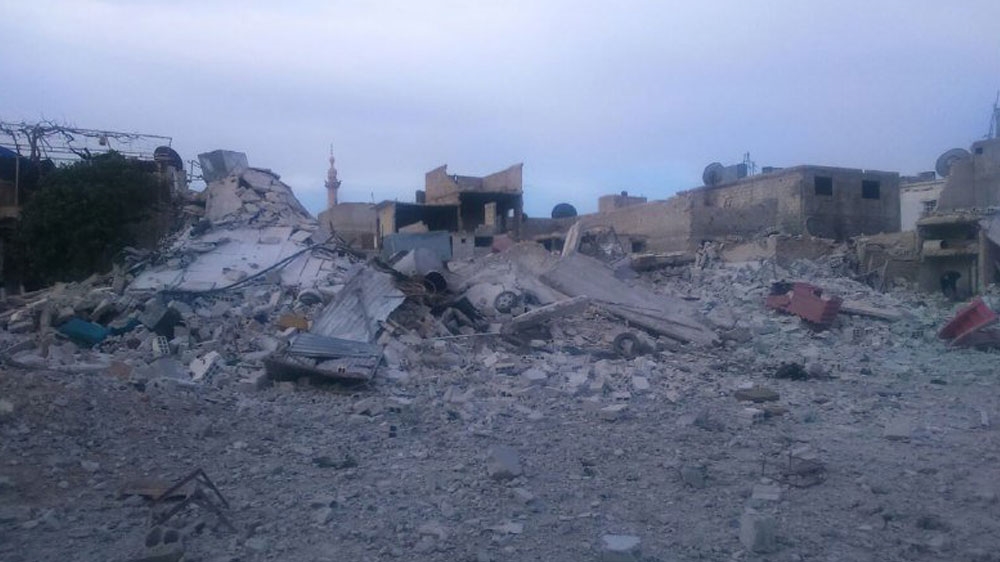
A photo of what is left of Majed Daas’ home that was destroyed last week [Courtesy of Majed Daas]

Warplanes, helicopters, mortar attacks – everything that you can imagine is being dropped on us by Russian forces and the [Bashar al-Assad] regime. We are expecting something like [the atomic bombings of] Hiroshima and Nagasaki to happen so they can kill us all and finish us off.

We have spent the last three weeks underground sleeping, waiting, going up and down, helping to bring some water and whatever we can to women and old, sick people who are struggling to death in these tombs or so-called basements.

Bassam Yousef, 22, physiotherapy student

The crowds of injured people and the shortage of medical staff in Eastern Ghouta is what drove me to continue my studies. With Sham Medical Academy, I found what I needed and it opened many doors for me to continue my studies. The academy opened to support the liberated areas with properly trained medical staff who don’t have medical certificates.

For sure, studying in Ghouta is very different. We had class interrupted countless times because of the relentless shelling campaign these last years, especially in Jobar area, close to me.

In each of these shelling campaigns, medical checkpoints and hospitals have been drowning with patients. Where I work, we were targeted more than three times, and it affected me badly in my studies as I was conducting medical research with Sham Medical Academy.

Since three months ago, we’ve been suffering from a lack of materials and supplies, food and fuel prices have increased gradually, schools have closed after many massacres and directed attacks against them. Education has come to a halt in all of Eastern Ghouta. I want to continue my Masters in psychological sciences at the academy, but can’t because of the intense campaign against Ghouta.

We have been living in the basement for the last few weeks. We hardly have any food supplies and water. There are roughly 200 people in each basement. The continuous attacks have prevented us from leaving it for hours sometimes; it’s quite stinky and humid.

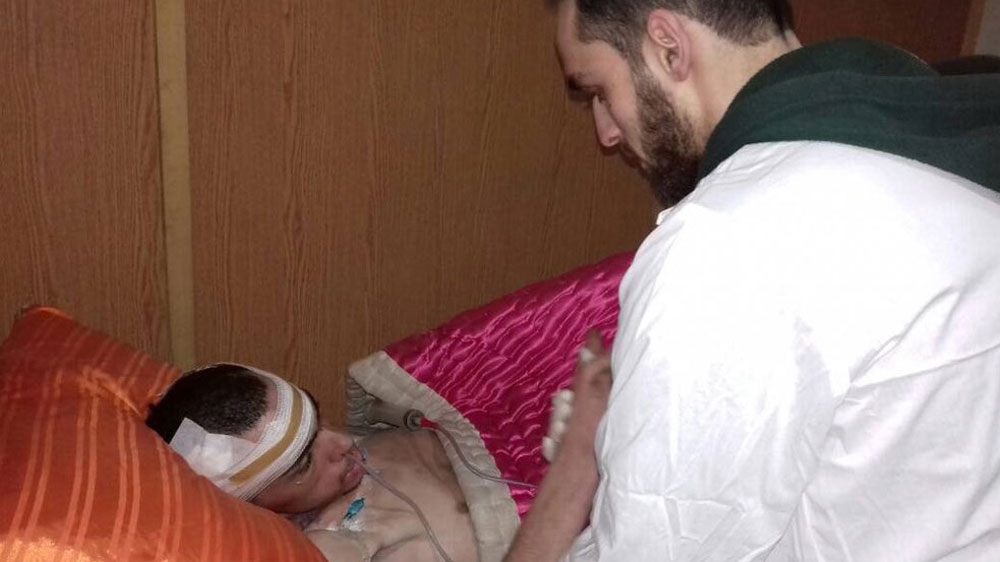
Bassam Yousef helps a patient at a medical checkpoint in Eastern Ghouta [Courtesy of Bassam Yousef]

Can you imagine the amount of people held in a small place, breathing heavily and struggling with lung illnesses and other diseases? We are being hit right now as we speak [over the phone]. We will be hit by regime forces until we die or they force us to leave the city.

Mohammed Nizar Arbash, 22, computer science student

When the siege hit the city, we weren’t able to go out or get any supplies. I couldn’t find any way to study so I started working on some computer programs for video editing and was developing these skills with help from friends. I learned how to do many things like app programming.

I worked during this time with the civil defence team, helping them with video editing in their media office, which helped me to develop my computer knowledge.

By the beginning of 2016, I enrolled at the virtual University of the People in computer science. It was [a] hard decision to make as I couldn’t give up working, which my family and I depend on in order to survive and I had to pay the university’s expenses as well. [The university charges an assessment fee of $100 per course.]

Before studying at the virtual university, I studied computer science for two years in Eastern Ghouta, which was supported by the temporary government of the opposition, but my certificate wasn’t recognised by international universities because the university didn’t belong to the regime.

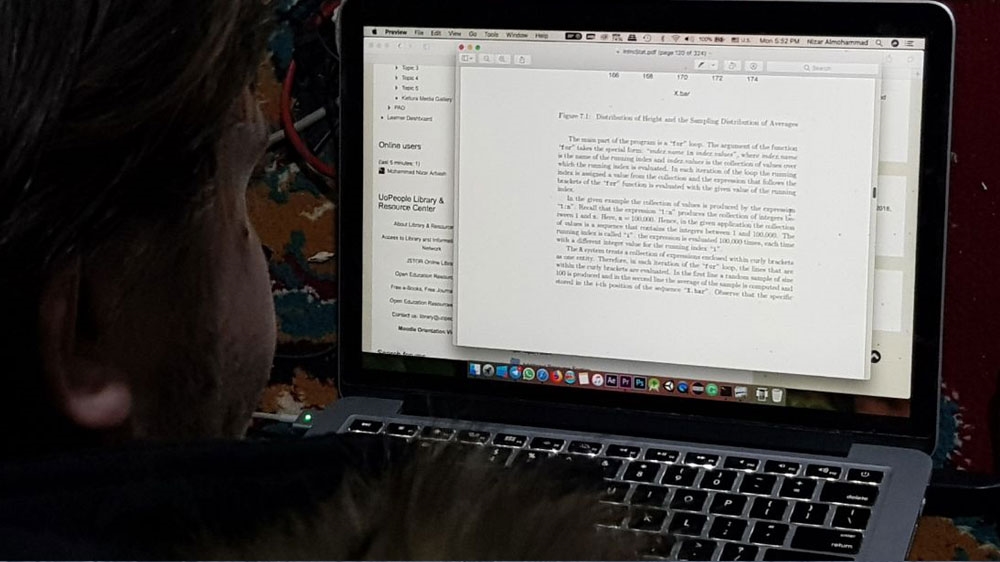
Mohammed Nizar Arbash says ‘the virtual option has been the best solution’ for obtaining an education in Eastern Ghouta [Courtesy of Mohammed Nizar Arbash]

The certificate that I received was practically useless and I had to start from scratch all over again. To complete my studies and get a masters degree, I registered in the virtual university as I knew I would otherwise face difficulties in continuing my higher studies.

But this semester I withdrew from all of my courses because of the ongoing extermination war that we are under now.

These days I go out to bring water for people, bring some batteries to light the shelter or go out to find a medic or anything the elderly urgently need. It’s suicide every time we leave our basements, but if we don’t leave it for some time we’ll suffocate from the bad smell. It’s more like prisons that we’re living in, stuck under the shelling of Assad’s forces and its allies.

Fuente: https://www.aljazeera.com/news/middleeast/2018/03/eastern-ghouta-students-suicide-leave-basements-education-180317160631282.html

Comparte este contenido:

Education in South Sudan

South Sudan/March 19, 2018/International Policy Digest

Resumen: La mayoría de las discusiones sobre el desarrollo en Sudán del Sur giran exclusivamente en torno a la seguridad, la inversión extranjera y la ayuda. Los esfuerzos a gran escala, como la infraestructura, el cuidado de la salud y el comercio, deberán dirigirse a nivel nacional con el respaldo de inversiones de socios internacionales. Sin embargo, hay muchos desafíos de capacidad institucional y humana que se abordan mejor a nivel local. Focalizar la inversión en esfuerzos locales de pequeña escala puede hacer crecer economías que sean más sostenibles y que estén en mejores condiciones para adaptarse a futuros grandes planes de desarrollo.

Most discussions about development in South Sudan revolve exclusively around security, foreign investment and aid. Large-scale endeavors such as infrastructure, health-care, and trade will have to be directed at the national level supported by investments from international partners. However, there are many institutional and human capacity challenges that are better addressed at the local level. Targeting investment into small-scale local efforts can grow economies that are more sustainable and better able to adapt to future large development plans.

The African Development Bank, in “Infrastructure Action Plan in South Sudan: A Program for Sustained Strong Economic Growth,” identifies four broad areas where developing countries need to focus attention to grow into a successful middle-income country: well-functioning public and private institutions; well developed basic infrastructure; a stable macroeconomic framework; and a healthy and literate labor force.

On a macro-level, terms like well-functioning, developed, healthy, and stable are not used to describe any aspect of the Republic of South Sudan’s economy or government. However, at the local, micro-level, there are glimpses of civil society taking responsibility for local needs.

The most debilitating problem facing the new republic is its lack of internal security. The ongoing civil war atrocities undermine the economy & make a stable nation impossible.

Only after peace is secured can large-scale infrastructure programs commence. With the exception of China, other countries do not feel secure in investing their resources in South Sudan. Until the country can germinate its own industries, it will need to foster relationships with outside investors to build its economy and train its labor force. Diversification will be the foundation on which this economy will stabilize, not one dependent on oil. South Sudan will need to refocus its public expenditures on developing a strong education system to assure that the workforce can sustain domestic civil engineering projects, agriculture, healthcare, and technology sectors.

Even if the national government could redistribute its expenditures immediately, developing a new country from scratch is an immense endeavor. Development cannot be only top-down, but also must emerge from regional and local populations. Institutional and human capacity building will be most sustainable if it originates at the local level.

Across South Sudan, local communities are mobilizing themselves to provide universal education, suspend child marriage, enact gun control and develop businesses. In one of South Sudan’s largest cities, Rumbek, local residents, churches, and NGOs are working with the Rumbek and Lakes government to find creative ways to address contentious cultural issues and provide for the basic needs of the people.

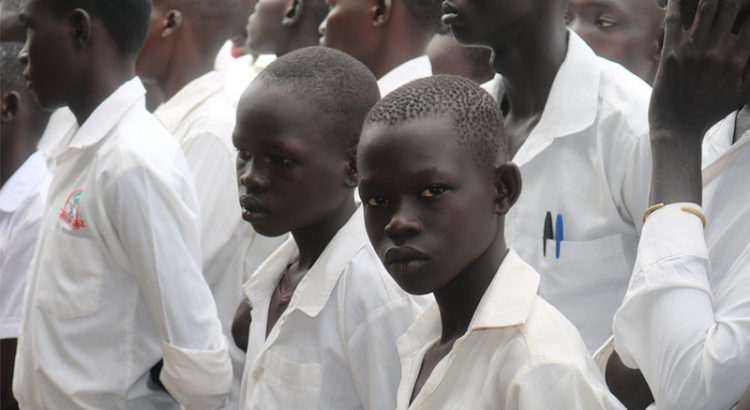
(Abukloi Enterprises)

Motivated by UN Peace Conferences, schools are creating “Peace Clubs” and using classroom time to discuss conflict resolution techniques. Students participate in local and regional debates about political and cultural issues. They use their education to challenge long-standing cultural practices and empower their families to engage in new practices for everyday living.

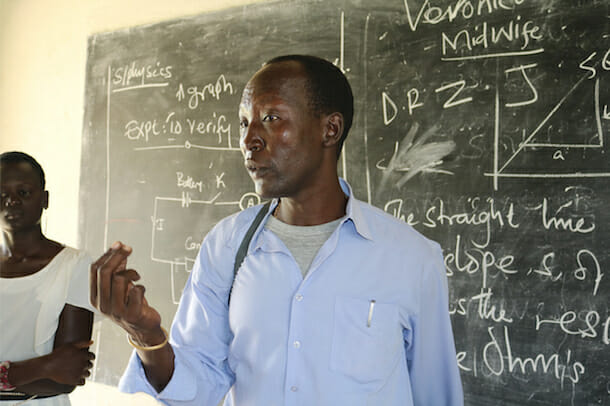
Rumbek’s Abukloi Secondary School has developed innovative ways to build local capacity to solve problems. Abukloi is tackling food insecurity by using its school grounds as an agricultural training center. Students implement their science curriculum knowledge in the school gardens. Produce from the garden is sold at market and used to sustain the school project, thus exposing the students to the entire business cycle.

They then encourage one another to share and implement these ideas at home. With the help of funding from an American NGO, the school sponsors a women’s community garden that not only teaches sustainable agriculture practices, but also teaches the young women how to market their produce and manage their business and personal funds.

Business training goes beyond agriculture. Abukloi has developed a sewing program and internet café. Both projects employ community business people to train students, teaching them tangible skills they can expand upon to create businesses for themselves. Furthermore, their curriculum has students work in teams to develop business plans.

The most promising plans are loaned start-up funds by the NGO so not only will students have a job upon graduation, but they will also be able to employ others in their community.

The beneficial returns on this educational model are exponential. First, young women are encouraged to stay in school and participate in every aspect of the school’s programs. Educating women changes the cultural norm, encourages the older generation to take time to learn new skills and passes the value of education on to the next generation.

They are also addressing food insecurity without the direct aid of government or multinational organizations. This empowers the local population to demand the resources they need from the regional or national government deepening political participation and expanding political consciousness.

By teaching basic business skills, students also expand their creativity and problem-solving skills. By creating businesses, the community is literally creating its own economy: generating demand for goods and services that others will be inspired to provide.

The focus of economic and social development should not rest solely in the hands of NGOs. Investing in local communities throughout South Sudan can empower the people to understand and solve basic needs. It can create a new vision for how to confront difficult issues, provide a fair and stable government, and be the foundation for a lasting peace among all South Sudanese.

Comparte este contenido:

United States: DeVos gets cold shoulder from White House after interviews

United States / March 18, 2018 / Author: MARIA DANILOVA / Source: WFTV

Education Secretary Betsy DeVos got a less than ringing endorsement from the White House on Monday after a pair of uncomfortable television interviews raised questions about her commitment to help underperforming schools and support for President Donald Trump’s proposal to curb school violence.

Less than a day after DeVos was appointed to chair a federal commission on school safety, White House press secretary Sarah Huckabee Sanders downplayed DeVos’ role in the process. Asked whether DeVos would be the face of the commission, Sanders said, «I think that the president is going to be the lead on school safety when it comes to this administration.»

Sanders also said that the focus is «not one or two interviews, but on actual policy.»

In an interview with CBS’ «60 Minutes» that aired Sunday night, DeVos said years of federal investment in public education had produced «zero results» and that American schools were stagnating and failing many students. But asked by CBS’ Lesley Stahl whether she had visited low-performing schools to understand their needs, DeVos, an ardent proponent of school choice, admitted to having visited none.

«I have not intentionally visited schools that are underperforming,» DeVos said.

«Maybe you should,» Stahl said.

«Maybe I should,» DeVos said.

DeVos’ spokeswoman Liz Hill said that the secretary’s focus was on promoting successful innovation, including in traditional public schools.

«The secretary has been very intentional about visiting and highlighting high performing, innovative schools across the country,» Hill told The Associated Press in a statement. «Many of these high performing schools are traditional public schools that have challenged the status quo and dared to do something different on behalf of their students – many where teachers are empowered in the classroom to find what works best for students.

DeVos took to Twitter on Monday to defend her comments.

«I’m fighting every day for every student, in every school – public and private – to have a world-class education. We owe that to our children,» she wrote. She also suggested that some of her remarks were unfairly left out of the show.

This wasn’t the first time DeVos faced criticism following an uneven performance at a public forum. She was ridiculed last year after suggesting at her confirmation hearing in the Senate that some schools needed guns to protect students from grizzly bears.

Elizabeth Mann, an education expert with the Brookings Institution, said that DeVos’ failure to tour struggling schools undermines her credibility as an advocate for the children that they serve.

«It’s difficult for her to establish credibility in speaking about those issues when she hasn’t visited an underperforming school as secretary,» Mann said.

But Mike Petrilli, president of the conservative Thomas B. Fordham Institute, said the criticism was unfair and that the questions and the tone of the interview were tough. He added that he is not sure that DeVos’ predecessors in the Obama administration would have done a better job in a similar interview.

«She is facing the glare of the spotlight much more than they did and the press is much less friendly to her,» Petrilli said.

Source of the News:

http://www.wftv.com/news/devos-gets-cold-shoulder-from-white-house-after-interviews/714942234

Source of the Image:

https://www.americanprogress.org/issues/default/news/2017/01/23/296947/the-devos-dynasty-a-family-of-extremists/

Comparte este contenido:

EEUU: DeVos and the limits of the education reform movement

Por: http://theconversation.com

Betsy DeVos exposed the education reform movement’s pitfalls in her highest-profile media appearance to date.

President Donald Trump’s education secretary got the job based on her years of advocacy for expanding “school choice,” especially in Michigan, her home state. Yet she stumbled when Lesley Stahl asked her in a widely watched CBS “60 Minutes” interview to assess the track record for those efforts.

“I don’t know. Overall, I – I can’t say overall that they have all gotten better,” DeVos stammered.

It’s not just Michigan or Midwestern conservatives. Policymakers and philanthropists across the ideological spectrum and the nation have teamed up to reform public education for decades, only to find that their bold projects have fallen short. Regardless of the evidence, however, top-down reform remains the standard among politicians and big donors.

As an educational policy scholar, I have identified a few reasons why school reform efforts so persistently get lackluster results, as well as why enthusiasm for reform hasn’t waned. Despite its long-term failure, large-scale education reform maintains consistent bipartisan support and is backed by roughly US$4 billion a year in philanthropic funding derived fromsome of the nation’s biggest fortunes.

Shiny objectives

DeVos may be a uniquely polarizing figure, but she is hardly the first federal leader to champion school reform.

Ever since 1983, when the Reagan administration published its “A Nation at Risk” report bemoaning the quality of American public education, politicians have rallied public support for plans to overhaul the nation’s education system. Over the past quarter century, leaders from both parties have backed the creation of curricular standards and high-stakes standardized tests. And they have pushed privately operated charter schools as a replacement for traditional public schools, along with vouchers and other subsidies to defray the cost of private school tuition.

All of these large-scale school reform efforts, whether pushed by the federal government or backed by billionaire philanthropists including the families of Facebook co-founder Mark Zuckerberg, Microsoft co-founder Bill Gates, homebuilder and insurance mogul Eli Broad, late Walmart founder Sam Walton and DeVos herself have encountered setbacks.

Still, the larger ethos of reform hasn’t changed. And none of the leaders of this effort, including DeVos, appear to be wavering in their efforts, even when challenged with evidence, as happened during her cringe-inducing “60 Minutes” interview.

Former PBS NewsHour education correspondent John Merrow sums up his book ‘Addicted to Reform,’ which describes the pitfalls of the K-12 reform movement.

A cycle of failure

From George W. Bush’s No Child Left Behind to Barack Obama’s Race to the Top and the Every Student Succeeds Act that was signed into law in 2015, the federal government has taken a highly interventionist approach to education policy.

But it has routinely failed to produce promised results. Today, educators, scholars and policymakers now almost universally regard No Child Left Behind as a washout. And many critiques of Obama-era reform efforts have been equally blistering.

Nevertheless, the core approach to federal education policy has not markedly changed.

The chief reason that all this activity has produced so little change, in my view, is that the movement’s populist politics encourage reformers to make promises beyond what they can reasonably expect to deliver. The result, then, is a cycle of searing critique, sweeping proposal, disappointment and new proposal. The particulars of each recipe may differ, but the overall approach is always the same.

Cookie cutters

Beyond this dysfunctional cycle, the other big reason the school reform movement has consistently come up short has to do with an approach that is both too narrow and too generic.

Ever since 1966, when Johns Hopkins University sociologist James S. Coleman determined in his government-commissioned report that low-income children of color benefit from learning in integrated settings, most education researchers have agreed that economic inequality and social injustice are among the most powerful drivers of educational achievement gaps. What students achieve in a school, in other words, reflects their living conditions outside its walls.

Yet rather than addressing the daunting issues like persistent poverty that shape children’s lives and interfere with their learning, education reformers have largely embraced a management consultant approach. That is, they seek systems-oriented solutions that can be assessed through bottom-line indicators. This has been particularly true in the case of conservatives like DeVos, who even in her stand against the public education “system,” has proposed a new kind of system – school choice – as a solution.

This approach fails to address the core problems shaping student achievement at a time when researchers like Sean Reardon at Stanford University find that income levels are more correlated with academic achievement than ever and the gap between rich students and less affluent kids is growing.

Sean Reardon, a Stanford University professor, discusses the gap between how low-income and rich students perform academically.

At the same time, reformers of all stripes have tried to enact change at the largest possible scale. To work everywhere, however, education reforms must be suitable for all schools, regardless of their particular circumstances.

This cookie-cutter approach ignores educational research. Scholars consistently find that schools don’t work that way. I believe, as others do, that successful schools are thriving ecosystems adapted to local circumstances. One-size-fits-all reform programs simply can’t have a deep impact in all schools and in every community.

Entrepreneurial outsiders

Perhaps this flawed approach to education reform has survived year after year of disappointing results because policy leaders, donors and politicians tend not to challenge each other on the premise that the ideal of school reform requires a sweeping overhaul – even though they may disagree about the best route. DeVos may be criticized for her dogmatic demeanor, but her approach is fairly mainstream in most regards.

Additionally, many leading reformers generally subscribe to the ethos of educational entrepreneurism. They consider visionary leadership as essential, even when leaders have scant relevant professional experience. That was the case with DeVos before she became education secretary. As outsiders operating within a complex system, however, reformers often fail take the messy real-world experiences of U.S. schools into account.

Finally, the reformers see failure as an acceptable part of the entrepreneurial process. Rather than second-guess their approach when their plans come up short, they may just believe that they placed the wrong bet. As a result, the constant blare of pitches and promises continues. And it’s possible that none of them will ever measure up, no matter the evidence.

Editor’s note: This article incorporates elements of a story published on March 8, 2018, and the Bill and Melinda Gates Foundation is a strategic partner of The Conversation US and provides funding for The Conversation internationally.

*Fuente: http://theconversation.com/devos-and-the-limits-of-the-education-reform-movement-93243

Comparte este contenido:

EEUU: Region’s options bring variety, choice in early childhood education

EEUU/March 13, 2018/By Stacy Ryburn/Source: http://www.nwaonline.com

Pre-K options are steadily increasing as Northwest Arkansas’ population grows and parents want more choices, early childhood education professionals say.

About 300 licensed preschools or day cares in the region are licensed with the state Division of Child Care and Early Education. Facilities run the gamut of public, private, nonprofit, home and faith-based.


Parents often face tough decisions when it comes to balancing work schedules with finding the right day care or preschool, said Doug Walsh, executive director for business and operations at the Jean Tyson Childhood Development Center at the University of Arkansas. The difficulty compounds for lower-income families who can’t afford a traditional preschool and need a place for their children to go during the day, he said.

«The private sector, both nonprofit and for-profit, is certainly popping up to try to fill in the gap,» Walsh said. «You see the variety across the board.»

Greater investment and variety in pre-K education equates to a net positive effect on the community, Walsh said.

Studies show children who attend preschool are better prepared academically by age 5, remain committed to school at 14 and have higher high school graduation rates than those who don’t, according to the Center for Public Education, a national database on public education.

Early education can make a huge difference in a child’s life, especially those who don’t speak English in a primarily English-speaking community, said Darlene Fleeman, director of Springdale’s pre-K program.

Springdale children entering school often haven’t experienced group care where they can hone English language skills, which better prepares them for kindergarten and onward, she said. Of the district’s 21,516 students, 46 percent come from a Spanish-speaking home, 12 percent come from a Marshallese home and 3 percent speak a language other than English, according to Springdale Public Schools spokesman Rick Schaeffer. That doesn’t mean the students aren’t proficient in English; it’s just not the primary language spoken in the home, he said.

State money has played a key role in increasing the quality of early childhood education, Fleeman said. Springdale pre-K is paid for through grants and follows the Arkansas Better Chance program rules and regulations under the state Department of Human Services.

Early child care providers can become accredited through the state’s Better Beginnings program, which is based on a three-star system. One star means the provider is ready to pursue accreditation. Two stars mean written plans have been put in place and three stars mean those plans have been implemented, said Sunny Lane, director of development with the Helen R. Walton Children’s Enrichment Center in Bentonville. The center is a nonprofit organization dedicated to high-quality care and education for children six weeks through pre-K. It also has a training wing called the Early Childhood Initiative Center.

Just more than 60 percent of the licensed early child care providers in the region are accredited, Lane said. Next year, the Children’s Enrichment Center will expand its training and resource wing when it moves into a new building on J Street near the Amazeum and Crystal Bridges Museum of American Art.

With its current capacity the center can work with about 150 early child care providers, effectively training about 1,400 service professionals affecting more than 12,000 children, Lane said.

Accredited centers have a higher demand than those that don’t and almost always have a significant waiting list. The more and better training preschool teachers receive, the more accredited schools will emerge and the waiting lists will get shorter, Lane said.

«We’re helping them lay the groundwork,» Lane said.

Access is the biggest barrier to families seeking pre-K opportunities, said Candice Sisemore, founder of Teeny Tiny Preschool in Fayetteville. The school opened in October at the former community building of the Willow Heights public housing complex.

Teeny Tiny Preschool has scholarship opportunities for lower-income families and uses the Reggio Emilia approach to learning. The style respects a child’s sense of self and encourages expression through painting, sculpting, acting and other self-guided methods.

Finding the right preschool can be difficult enough, but the wait can last even longer for a lower-income family. It becomes a matter of what’s available, as opposed to which early education method is right for a child, Sisemore said.

However, the trend in Northwest Arkansas seems to be headed in the right direction, Sisemore said.

«There are lots of options,» she said. «It’s getting those to be accessible for all families that is the trick.»

Source:

http://www.nwaonline.com/news/2018/mar/11/region-s-options-bring-variety-choice-i/?news-arkansas-nwa

Comparte este contenido:

What kind of school education and health development interventions do Indian adolescent girls require?

Indian/March 13, 2018/By: Dr. Lalit Kishore/Source: http://www.merinews.com/

The education and development of adolescent children in India has been most neglected and most interventions had been beamed at either at the primary or higher education level. Adolescent period has been the most important transitional period from childhood to adulthood but least attended to and more so for the girls in our country.
According to UNFPA-India – an agency of the United Nations that works with the government and partners to advocate for adolescents and youth’s rights and investments, including education, livelihood skills and health, including sexual and reproductive health, India has its largest ever adolescent and youth population and a  demographic window of opportunity, a ‘youth bulge’ that will last till 2025.
India’s youth population faces several development challenges, including access to education, gainful employment, gender inequality, child marriage, youth-friendly health services and adolescent pregnancy. Yet, with investments in their participation and leadership, young people can transform the social and economic fortunes of the country, informs the agency that  works with the government and partners to advocate for adolescents and youth’s rights and investments, including education, livelihood skills and health, including sexual and reproductive health.»The practice of gender-biased sex-selection in India has manifested in highly skewed sex ratios over past few decades. The preference for a son over a daughter is rooted in socio-economic and cultural factors: sons are seen to provide economic security in old age, perform the religious last rites and carry on a family name, whereas a daughter is considered a burden due to the practice of dowry. Further, the practice of gender-biased sex selection has increased with a decline in fertility and preference for at least one son, and the misuse of modern technology,» writes UNFPA-India on its website.

Since, currently, India has its largest ever adolescent and youth population, as mentioned in various reports and on different forums, but young people often face barriers in trying to get the information, education, skills or care they need; the right kind of adolescent education, health issues arising out of biological changes in them, and learning life and employable skills need to be the key focus areas for the adolescent and the youth.

I feel research based curriculum adjustments need to be done so as to have at least one third of language, life sciences and physical education content geared around life skills education with focus on employable communication skills, reproductive health issues and human rights. A mix of rights and life-skilled based education integrated with various upper-primary and high school subject areas can be answer. Some projects and experiments which have successfully done with adolescents need to be mainstreamed and contextualized to vulnerable and marginalized population and carried out.

Source:

http://www.merinews.com/article/what-kind-of-school-education-and-health-development-interventions-do-indian-adolescent-girls-require/15929522.shtml


Comparte este contenido:
Page 110 of 144
1 108 109 110 111 112 144