Page 111 of 144
1 109 110 111 112 113 144

Dubai Investments Reinforces Innovation in Education at Innovation Arabia

Dubai/March 13, 2018/By: Press Release/ Source: https://www.albawaba.com

Reinforcing its commitment to innovative knowledge-based societies and smart communities of the future, Dubai Investments – the leading, diversified investment company listed on the Dubai Financial Market, is participating in the Innovation Arabia Annual Conference and Exhibition in Dubai.

Dubai Investments has taken centre stage at the exhibition through its subsidiaries MODUL University Dubai, University of Balamand in Dubai [UOBD] and the ‘Mirdif Hills’ project, being developed by Dubai Investments Real Estate Company [DIRC], a wholly-owned DI subsidiary. The exhibition, being held at Dubai World Trade Centre, continues till March 13.

The company’s participation in Innovation Arabia exhibition comes within the framework of highlighting its innovation across sectors to create sustainable communities.

MODUL University Dubai is showcasing its higher education degrees for September 2018 intake across sectors – business, tourism, hospitality, sustainability, public governance, new media technologies, entrepreneurship and innovation to leadership and 110+ years’ legacy of Austrian education and research.

The University of Balamand in Dubai is presenting the 30 years’ legacy of Lebanon-based UOB, highlighting its undergraduate courses in science and engineering at the new campus in Dubai Investments Park.

Mirdif Hills, the mixed-use residential, commercial and retail development spread across 4 million square feet and the only freehold project of its kind in Mirdif now, is showcasing its attractions, including 1,500 apartments – a mix of studio, one, two, three-bedroom apartments and duplexes, a four-star hotel, retail units and a 230-bed hospital.

Source:

https://www.albawaba.com/business/pr/dubai-investments-reinforces-innovation-education-innovation-arabia-1100696

Comparte este contenido:

Australia: NSW Education boss Mark Scott in Batemans Bay to meet southern principals

Australia/March 13, 2018/By Ian Campbell/Source: https://the-riotact.com

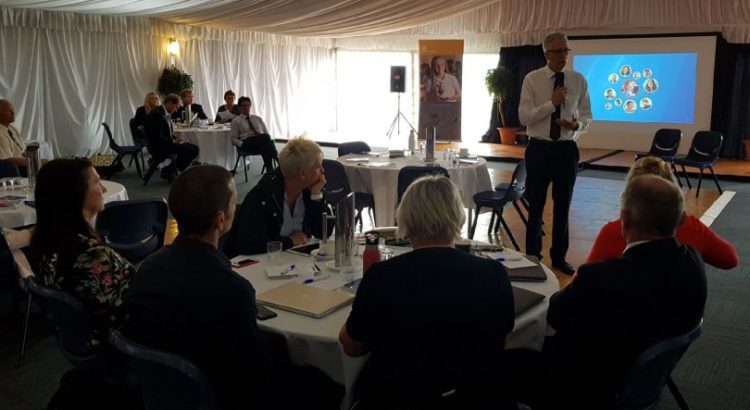
The principals of 50 public schools from across Southern New South Wales have gathered in Batemans Bay to meet with chiefs of the NSW Education Department.

Schools from the Monaro, Far South Coast, Illawarra, Shoalhaven, Southern Tablelands, Southern Highlands and Queanbeyan were all represented, part of a road trip by Department Secretary, Mark Scott, Deputy Secretary School Operations and Performance, Murat Dizdar, and Deputy Secretary Educational Services, Georgina Harrisson.

“We have 2,200 schools and we want them to be great schools and you don’t have great schools without a great principal, and so we are asking them – what kind of support do they need in order to provide great leadership?” Mr Scott says.

The Batemans Bay forum came just two weeks after the release of the 2017 Principal Health and Wellbeing Survey, a nationwide check up on over 5,500 principals in state, religious, and independent schools.

Ninety percent of respondents said they were passionate about their work, however, a few alarm bells were rung:

*44% or close to 1 in 2 principals say they have been threatened with violence;

*The survey pointed to high levels of job demands, 1.5 times greater than the general population, emotional demands 1.7 times higher, and emotional labour 1.7 times higher when compared to the general population;

*Stress and burnout were flagged as issues, with principals saying the sheer quantity of work and a lack of time to focus on teaching and learning are impacting on them.

Mr Scott says he got a sense of that stress and pressure when talking to principals at Batemans Bay on Monday. “If we are a world class system then we are providing outstanding support for principals,” he says.

“We are looking at how the Department and the system can better support principals and also how principals can better support themselves.”

Students from Batemans Bay High School and Broulee Primary combine for the 2017 Southern Stars Concert. Photo: Bay High Facebook.

Students from Batemans Bay High School and Broulee Primary combine for the 2017 Southern Stars Concert. Photo: Bay High Facebook.

The influence of the outside world is a big part of the daily challenge for teachers and principals. “The complexity [of the job] is not all to do with teaching and learning,” Mr Scotts says.

“The complexity in part is because of broader pressures in society – pressures around families and the stability and security of the environments young people come from.

“Schools are often the one secure anchor point in a child’s complex and turbulent world, so schools often need to broker an array of support for students that often extends well beyond what has been traditionally provided in a school,” he says.

That traditional work of schools; preparing kids for their future, was also front and centre in the day-long meeting at Batemans Bay.

The former ABC boss, says his Department has been doing a lot of work trying to imagine the world of the future and the skills our kids will need.

“In the last year, we’ve done a big research project called ‘Education for a Changing World‘ tapping into a global array of leading academics in this area,” Mr Scott says.

“To be successful we know that a young person will need to have very strong literacy and numeracy skills because frankly, they are going to spend their entire career learning.

“Young people are going to need a growth mindset, we know that they are going to need to be able to take on new challenges, learning new things, they are going to have to back themselves,” Mr Scott says.

Cooma cheers one of it;s own, Emily Blyton, top marks on the 2017 HSC. Photo: Monaro High Facebook.

Cooma cheers one of its own, Emily Blyton, top marks on the 2017 HSC. Photo: Monaro High Facebook.

Fostering a love of learning in each child is central to Mr Scott’s vision of the future, and indeed his challenge.

“We once may have thought we take young people to school to teach them knowledge, in a way now we feel they are at school so we can help them learn to learn,” he says.

“We think less in terms of a class and think more about where each individual student is up to.

“Our great teachers are aware that every student is different and at a different point in their learning – it’s a long way from a row of desks that’s for sure,” Mr Scott says.

NSW public education is the largest education system in Australia, with 810,000 students in 2,200 schools, looked after by 85,000 staff.

The Departments tour also takes in meetings at Newcastle, Coffs Harbour, Tamworth, Wagga Wagga, Dubbo, Sydney, Penrith, and Liverpool.

Source:

NSW Education boss Mark Scott in Batemans Bay to meet southern principals

Comparte este contenido:

Canada: Le Québec se dote d’un Ordre d’excellence en éducation

Canada / 11 mars 2018 / Auteur: fjarraud / Source: Le café pédagogique

» L’Ordre de l’excellence en éducation du Québec concrétise la volonté du gouvernement du Québec de souligner officiellement le mérite de celles et ceux qui se distinguent par leur participation au rehaussement de l’enseignement québécois», annonce le minsitère québécois de l’éducation. L’ordre comptera trois niveaux de membre simple à membre émérite. Les établissements scolaire pourront proposer des nominations. Cete création a été mal accueillie par les syndicats. Notamment la FAE estime que «c’est l’ensemble de la profession que le ministre doit reconnaitre». » Les profs ne veulent pas d’un prix. Ils demandent que leur expertise soit reconnue et que les services soient au rendez-vous. Depuis sa nomination, il y a deux ans, le ministre Proulx a systématiquement rejeté les solutions des enseignantes et enseignants pour reconnaître leur expertise et leur autonomie. Le ministre refuse encore et toujours de mettre en place des balises qui élimineraient les ingérences pédagogiques dont les profs sont victimes. Dans la Loi sur l’instruction publique, il ne les reconnaît pas comme les premiers experts de la pédagogie au Québec. Au contraire, ses décisions ajoutent à la lourdeur bureaucratique que doit déjà subir le personnel enseignant», estime le syndicat. Pour lui la création de cet ordre » contribue à la détresse psychologique du personnel enseignant».

Source des nouvelles:

http://www.cafepedagogique.net/LEXPRESSO/Pages/2018/03/06032018Article636559197581844913.aspx

Source de l’image:

http://www.education.gouv.qc.ca/references/concours-prix-et-distinctions/ordre-de-lexcellence-en-education/

Comparte este contenido:

Brazil can improve education by copying its own successes

Por: brookings.edu

Many have been shocked by the World Bank’s estimate that it would take Brazil more than 260 years to reach the OECD average proficiency in reading and 75 years in mathematics. But as demonstrated by the discussion last week following the presentation of the World Development Report on Learning in São Paulo, Brazil’s education community is aware that the country lags far behind. It knows that it needs to do a lot, and soon.Author

Brazil is not alone. According to the report, 40 percent of kids in Latin America and the Caribbean do not acquire basic skills in numeracy and literacy during primary school (in Africa this number is 80 percent). The report concludes that the world is facing a “learning crisis”—even though more kids go to school, they are not learning nearly as much as they should.

But is this really a learning crisis? In commenting on the report, Ricardo Paes de Barros, chief economist of the Ayrton Senna Institute and a specialist in education policies in Brazil, challenged this conclusion. He argued instead that Brazil is facing a “copying crisis”: There is plenty of data about the performance of schools across municipalities in Brazil, with huge variations, but it’s clear that the poor performers don’t improve. Transferring experiences from one country to another can be difficult, but learning from the successes of your peers within the same country should be a lot easier. In Brazil, this is not happening.

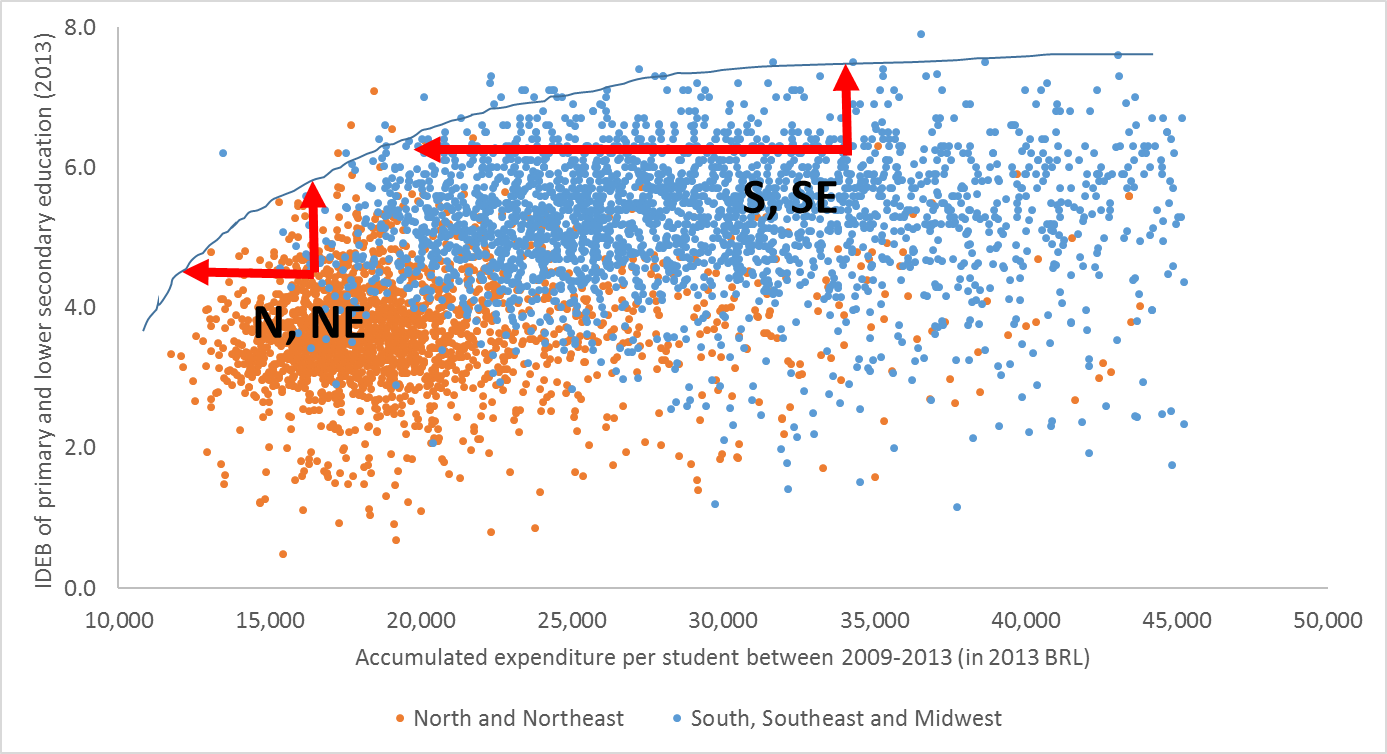
Perhaps this is because the successes aren’t documented well and hence poorly understood, or because the necessary changes face political resistance and hence require leadership that is in rare supply. Overcoming political resistance is never easy but documenting successes, in Brazil’s case at least, should be. A recent World Bank report on the efficiency of public spending provides a useful entry point and perspective. The report compares the educational outcomes attained by 4,648 municipalities in Brazil in 2013 with the cumulative spending per student over between 2009 and 2013 (Figure 1). This comparison leads to an obvious conclusion: Good educational outcomes in Brazil have little to do with how much a municipality spends and a lot with how the resources are utilized. This is good news for those who wish to copy successful experiences.

BIG DIFFERENCES WITHIN BRAZIL

A closer inspection of Figure 1 reveals a second striking fact: a regional pattern in the efficiency of education spending. The poorest parts of the North and Northeast are still missing basic infrastructure, so additional investment could boost outcomes. In the richer South and Southeast, by contrast, inefficiencies are glaring and resources could be saved without jeopardizing—possibly even improving—education outcomes.

Figure 1: Spending and outcomes in education in Brazil—not a close correlationFigure 1 - spending and outcomes in education in Brazil

Source: World Bank estimates based on SIOPE and Prova Brasil. IDEB is a summary index of the state of compulsory education.

Fuente: https://www.brookings.edu/blog/future-development/2018/03/06/brazil-can-improve-education-by-copying-its-own-successes/

Comparte este contenido:

Education: Still searching for Utopia?

By. Courier. UNESCO

“Learning to live together, by developing an understanding of others and their history, traditions and spiritual values and, on this basis, creating a new spirit which  […] would induce people to implement common projects or to manage the inevitable conflicts in an intelligent and peaceful way. Utopia, some might think, but it is a necessary Utopia, indeed a vital one if we are to escape from a dangerous cycle sustained by cynicism or by resignation.” This was the recommendation in the Report to UNESCO of the International Commission on Education for the Twenty-first Century – chaired in 1996 by Jacques Delors, former French Minister of Finance and President of the European Commission from 1985 to 1994.

Two decades later, we are still searching for this Utopia – a creative form of education that forms the basis for a new spirit. But how do we get there?

The central theme of this issue of the Courier, commissioned and edited by Mary de Sousa (United Kingdom), approaches this question from several different angles. Can education really change lives? The response is ‘yes’, if we are to listen to Kailash Satyarthi (India), Nobel Peace Prize 2014 laureate, who has rescued over 85,000 Indian children from slavery, through education and employment. And how do we stop schools from becoming targets in times of war? Drawing on his experience in the field, journalist Brendan O’Malley (United Kingdom) offers some leads. Can peace be taught? The methods of the Nobel Peace Center in Oslo (Norway) provide an edifying example.

Training for global citizenship? The innovative curricula of Harvard University, designed by the Venezuelan expert Fernando M. Reimers, prove that it is possible. Is the brain drain inevitable? According to Cameroonian specialist Luc Ngwé, it is possible to turn the situation around so that everyone benefits. Why is it essential that we restore the image of the social sciences and the humanities? Find answers in the article by Jean Winand, professor at the University of  Liège, Belgium.

Source:

https://en.unesco.org/courier/2018-1

Comparte este contenido:

EEUU: Portland Commissioner Eudaly blasts Portland Public Schools for ousting special education program

EEUU/March 06, 2018/By Bethany Barnes bbarnes@oregonian.com/Source: http://www.oregonlive.com

Portland City Commissioner Chloe Eudaly weighed in over the weekend on a Portland Public Schools plan that’s been generating opposition for months: oust a program for special education students from its building in favor of a larger program for gifted students.

Since the announcement of the change in November, parents and staff from the special education program, Pioneer, have regularly protested at school board meetings and even shown up at board members’ workplaces to protest. The optics have been awkward for the district from the beginning. Officials botched announcement of the change by accidentally telling families in the gifted program before Pioneer families about the move.

Time hasn’t soothed tensions.

School board members have said the decision is a done deal. Access Academy, which serves more than 350 highly gifted students, is being ejected from the former Rose City Park Elementary building because that facility is needed to reopen as a neighborhood school. So, the 120-plus students now served at Pioneer will be moved to two smaller sites over the summer, they say, reinforcing Superintendent Guadalupe Guerrero’s choice.

Board members have indicated that, while the move was spurred by a building shortage, they feel it is also a change needed to improve service for some of the most vulnerable students in the district.

Many Pioneer parents and teachers are skeptical that the change will lead toward anything resembling improvement. Oregon’s largest school district, critics argue, has a poor track record. The fast timeline to split up and relocate the special education students is a setup for failure not success, they say.

Eudaly, whose own child is in special education at a Portland school, wrote a lengthy Facebook post that decried the decision. In response to comments questioning if Pioneer is currently serving these students well she wrote:

«I’m well aware of what Pioneer is and I have issues with it but that’s not relevant to this conversation. It’s not like the school district is offering an improvement.»

Read Eudaly’s entire post below:

«I had a couple brief encounters yesterday that left me feeling very sad about the general lack of understanding and support for students with disabilities. As an accelerated learner who struggled in school and ultimately dropped out, and the parent of a child with multiple disabilities, I understand how our public schools often fail learners who deviate from the ‘norm.’ I empathize with parents desperate to see their children achieve their potential when their educational needs are not being met. (Talented and gifted) and special education students have something in common in this regard (sometimes a student qualifies for both). However, their standing in our district, community, and society are not the same. Their struggle is not the same. Their outcomes are not the same.

Chances are your accelerated learner is white, and/or middle class, and/or does not have a disability. I mention this not to shame or guilt trip but to point out relative advantage. I bet you tell them they can do and be anything they set their mind to and you believe it. There are numerous programs, resources, and opportunities inside and outside of school available to them that many students with disabilities cannot access. In fact, many parents of children with disabilities are too busy fighting to protect their children’s civil rights and get their most basic needs met to even think about extracurriculars (even if they were welcomed and included, which they are often not). And many of us have been denied the basic experience that most families take for granted — getting to choose and remain at a school and be a part of a community.

I am deeply disappointed to see our school district continue to treat students with disabilities and their families like second-class citizens and not full members of the community. Our children belong as much as anyone’s and should not be shuffled around like surplus furniture. We know that changing schools can have detrimental effects for any student. How can we justify repeated moves for our most vulnerable students?

I spent years feeling cheated by my public school experience, where I was literally stuck in a corner and given busy work while other students received instruction. Could I have gone further, faster given a more appropriate education? Absolutely. But you know what? Things worked out for me. I can’t say the same for many of my classmates with disabilities, or the students who followed them over the next 30 years, or most painfully, my own son.

This Pioneer/Access debate reminds me of an encounter I had years ago at Chapman Park (ironically attached to our neighborhood school, which Henry would later be denied access to). I was pushing Henry on the single adapted swing (the only accessible feature) when a mother and her able bodied child expressed their impatience for their turn. I looked at them and said, ‘You’ve got the entire park and playground to explore. This is the only thing my son can enjoy.’ And I turned back around and kept pushing. I’m going to keep pushing for the students who are getting the short end of the stick — students with disabilities, students of color, students from low income households, (English language learner) students — in our shamefully inequitable system. Please stand with me for all students beginning with the ones who are most in need.»

 Source:
http://www.oregonlive.com/education/index.ssf/2018/03/portland_commissioner_eudaly_b.html


Comparte este contenido:

afb Ghana declares $10m support to education sector

Ghana/March 06, 2018/By: Abubakar Ibrahim/Source: https://www.myjoyonline.com

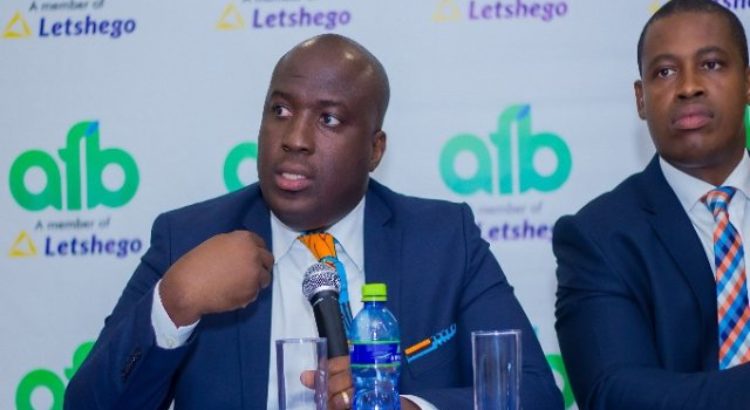
One of the leading financial services companies in the country, afb Ghana, has launched an education solution to support the players in the educational sector of the country.

The new solution was launched in collaboration with the Ghana National Association of Private schools (GNAPS), during its education week celebrations in Accra.

The solution, designed to address the respective needs of schools, teaching and non-teaching staff and even suppliers who conduct various businesses with the educational institutions, will range from asset financing, project financing to personal loans.

Speaking at the launch, the Director of Education-Pre Tertiary Institutions, Catherine Appiah-Penkra said, the education of the citizenry remains a critical agenda of Government.

«One of the deepest concern is the collaboration of the private sector to support this agenda. I will commend afb Ghana for this move and encourage other players within the financial services landscape to join the course to enhance the quality of education in Ghana,» she said.

“It is my hope, that with the provision of this support, owners and management of schools and other players within the value chain will take advantage it, as well as meet their obligations in a timely manner to make this solution sustainable”.

Arnold Parker, Managing Director of afb Ghana said, “this year, we are committed to supporting the education sector with a 10-million-dollar fund to finance school projects, assets acquisition and personal loans for all parties within Ghana’s educational system.”

He also added, “I am confident that this solution will help to improve Ghanaian lives as it ensures access to good quality education which is a key agenda for the government of Ghana”.

James Abuyeh, Head of Financial Inclusion at afb, also added that “the move to launch this solution has come as a result of the insufficient financial support to players within the education ecosystem”.

He again mentioned that “products from financial institutions are often designed to focus on supporting other sectors with little attention to the education ecosystem which also requires equal attention. The introduction of this solution underpins our vision to foster financial inclusion.”

Source:

https://www.myjoyonline.com/business/2018/March-5th/afb-ghana-declares-10m-support-to-education-sector.php


Comparte este contenido:
Page 111 of 144
1 109 110 111 112 113 144