Page 113 of 144
1 111 112 113 114 115 144

EEUU: Education: A Last Chance

EEUU/ Author: Andrew Sunghyun Yoon / Source: Carnegie Council

Andrew Sunghyun Yoon, Third Prize High School Category, Essay Contest 2017

«I am a 15-year-old sophomore attending Seoul International School in South Korea. Born in the United States and raised in Asia, I feel my diverse experiences around the world have shaped and concretized my beliefs. I am extremely passionate about public speaking, international relations, and the humanities as a whole. I hope to use my voice and the power of the pen to advocate social causes particularly pertaining to the disenfranchised.»–Andrew Yoon

ESSAY TOPIC: In your opinion, what is the greatest ethical challenge facing the world today?

There is a girl in the rural areas of Western China, wiping crystal beads of sweat off her forehead as she cooks whatever’s left in the house for her siblings. She is cradled within the silence created by her parent’s absence, counting how many days remain until they return from their minimum-wage jobs in Beijing. Amidst the endless financial troubles and the fragmentation of her family, school simply was not an option. If destiny really did exist, hers didn’t include an education. There are hundreds of thousands more like her. A few hundred miles away in the sun-scorched outskirts of Kabul, a girl is reprimanded for resisting when she is told that she cannot go to school like her brother. There are hundreds of thousands more like her. Halfway across the globe in Baltimore, a city entangled in poverty and violence, there is a boy whose family’s survival hinges on food stamps and is forced to relinquish his dream of being the first in his family to attend college. There are, once again, hundreds of thousands more like him. These are all characters within the same story: a story about individuals who are stripped of the chance at a bigger and better future through education.

Without a doubt, countless other stories deserve to be heard as well: the one about devastated refugees fleeing decimated homes, the one about the unspeakable horrors of religious and ethnic persecution, the one about families subsisting on one meal a day as they cope with the dire truth of poverty, and just about a million more. Yet the issue of education resonates especially clearly as the most pressing ethical challenge of today’s generation because time and time again, governments and citizens alike are failing to address education systems that leave millions in the dark. Although education is perhaps the most substantial step toward addressing and eventually tackling the aforementioned global issues, it is perhaps one of the most overshadowed challenges of the century, burrowed beneath more immediate concerns stemming from political turmoil or economic advancements.

Today, governments have become complacent with flawed education systems, and citizens have subconsciously learned to coexist with a reality in which millions of children and young adults across the globe are forced to give up the chance to go to school. We continue to fail to recognize that education is not a privilege. It is a right. And it is an unforgettable ethical failure on our part for allowing this issue to be perpetuated.

The cause, details, and experiences of individuals barred from equal education may all be vastly different, but there exists a common thread intertwined among all who are a part of this narrative of injustice: education is and has always been the key to escaping a vicious cycle of inequality or poverty. On the racial and socioeconomic front, conspicuous gaps in access to education exist among the urban and rural, rich and poor, and along the spectrum of race or ethnicity. In the United States, despite institutional initiatives such as Affirmative Action, which aims to promote college admission among underprivileged minorities, many of these underprivileged individuals do not end up escaping the chains of racial and wealth inequality. Due to the intertwined nature of race and poverty in the United States, poverty is often concentrated in areas with higher percentages of racial minorities, which inevitably leads directly to a dead end. As part of a public education system dependent on local funding and support, such communities will consistently lack the teachers or resources that can sufficiently piece together a high-quality education for its children. Countries with a vast urban-rural divide, including China and India, experience this issue to an even greater extent because rural regions themselves are not equipped with the necessary human capital, technology, facilities, or apparatus.

On the gender front, the chasm is just as substantial. A single glance at relevant statistics is enough to illustrate the disproportionate number of women whose window to higher education is perpetually closed. According to the United Nations, 16 million girls—significantly higher than the number of boys—will never attend school in their lifetime, and girls comprise two-thirds of the 750 million adults who lack basic literacy skills. The root cause of gender discrimination in an educational context varies from country to country. In some, it has emerged out of deeply-rooted religious or cultural ideology, whereby it may be deemed unorthodox or unfitting for women to pursue high levels of education. In others, it is the inevitable result of issues such as early pregnancy or other social pressures that put girls at a disadvantage. In either scenario, however, the numerous barriers obstructing women’s access to education have created a stigmatized perception of women that feeds into gender inequality as a whole. Women’s rights movements that have emerged in developed nations indicate an increasingly progressive social atmosphere, but many of such movements have been unable to translate into direct and practical results in terms of access to education.

The reality of this pressing issue is ubiquitous; it’s plastered across news headlines, emphasized and re-emphasized by international organizations. Yet, the question at the crux of this issue is: Who should be accountable?

The first response should be the government. In 2006, in response to the alarming number of children without access to schools, the Chinese government revised its education law to especially accommodate the needs of children from rural areas. This reform included abolished tuition and other fees—e.g. textbooks or room and board—that rural students usually cannot afford. This legislation reform was an evident attempt to increase access to educational resources, especially in poor or rural regions, where such resources are often nonexistent to begin with. China’s leadership actively addressed the nation’s vast wealth and gender gaps, and took accountability for the situation of its citizens. But not all governments have made similar efforts, even in the presence of abundant resources. In order to address this ethical challenge, the most influential source of change stems from the government, who should work—through new legislation or reforms to the old—to ensure that children are bolstered by an educational system that is open and fair.

The other answer as to who should be accountable for ensuring education is a little less clear. There is no doubt that in the status quo, there are a number of countries whose first priority cannot be equal education. But if the government is too unstable at the present moment to secure an effective and fair education system due to more immediate concerns, who is accountable? It could be the United Nations, similar international organizations, smaller nongovernmental organizations, citizens, or a combination of all of the above. In any case, those outside of the government are also ethically responsible to respond to the government’s inability to install reforms or work among themselves through grassroots projects on local or national levels in order to initiate a change.

When individuals are barred from attending school due to social and economic pressure, they are closing perhaps the one and only door out of their current situation; they are being forced to let go of a fundamental right. Education is not a privilege. It is a right, and for many more individuals, it is a last chance at change and progress.

Source of the News:

https://www.carnegiecouncil.org/publications/articles_papers_reports/education-a-last-chance
Comparte este contenido:

Can Virtual Reality Open STEM Education And Jobs To More People?

By: Sasha Banks-Louie Oracle

Employers need to fill 1.6 million jobs in the US that require backgrounds in science, technology, engineering, and math by 2021, according to a 2016 study by the US Department of Education. That demand is spurring new approaches to STEM education that are designed to appeal to more, and a greater diversity, of students.

“Science educators know we need to stop teaching facts and figures from textbooks and start showing students how to apply the fundamental concepts of scientific methods to real-world problems,” says Dr. Becky Sage, CEO of Interactive Scientific, a UK-based education technology firm.

Interactive Scientific, part of the Oracle Startup Cloud Accelerator program in Bristol, has developed scientific simulation software, called Nano Simbox, which students are using to observe how atoms and molecules interact. Researchers are also using this technology to explore new theories, product designs, and drugs.

Employing tablets, virtual reality headsets and controllers, students can visualize atoms, observe how they behave in different combinations, and manipulate them for testing.

Dominique Skinner, a chemistry student at Queen Mary University of London studying biochemistry, used Nano Simbox technology and research to combine atoms and create digital models of the molecules for a plant-based line of cosmetics.

“I wanted to put science next to veganism, and veganism next to cosmetics,” Skinner says. “Nano Simbox allowed me to see how skin would react to molecules from animal proteins and synthetic chemicals that were harsh on the skin versus plant-based molecules that benefited the skin.”

New Approach to Learning

Interactive Scientific has begun experimenting with artificial intelligence to understand how students learn, and how applying machine-learning algorithms could guide their progress.

“Whilst our machine learning work is in its infancy we have already designed the software to help students understand complex, scientific concepts in a way that’s unique to their individual learning styles and encourages them to challenge their own thinking by exploring alternative ideas,” says Sage.

Traditional teaching approaches using textbooks and standardized testing tend to be less flexible, both in the pace at which students progress and how their understanding is tracked and measured.

Nano Simbox’s simulation software runs on Oracle Infrastructure as a Service, making it possible “to scale this really complex science,” says Interactive Scientific founder Dr. David Glowacki.

“We needed a system to help us monitor, log, and report on scalability in real-time,” says Glowacki, who’s also a Royal Society research fellow at the University of Bristol and visiting scholar with Stanford University’s chemistry and mechanical engineering departments.

Creating Opportunities

Traditional methods of teaching STEM can be a deterrent to some students. Females, minorities, and students from lower-income families are underrepresented in STEM education and related professions. According to the Department of Education study, that makes it harder to narrow education and poverty gaps, meet the demands of a tech-driven economy, and maintain US leadership in scientific research and innovation.

“Our goal is to open up lifelong science learning to everybody, whether you’re in grades K-12, studying at a university, or in a non-traditional learning environment,” says Sage. “And our hope for the future workforce is that inclusivity will be valued so anyone will be able to thrive in their working environment.”

Source:

https://www.forbes.com/sites/oracle/2018/02/20/can-virtual-reality-open-stem-education-and-jobs-to-more-people/#78f87b508874

Comparte este contenido:

Canada: Post-secondary education made more affordable for part-time students

Canada/ February 27, 2018/By: Rattan Mall/Source: http://www.voiceonline.com

STARTING this academic year, nearly 10,000 more part-time students from low- and middle-income families will benefit from up to $1,800 in non‑repayable grants per year and up to $10,000 in loans.

This was announced by parliamentary secretary Terry Beech on behalf of Patty Hajdu, Minister of Employment, Workforce Development and Labour, on Tuesday.

Additionally, access to grants for part-time students with children will be expanded allowing them to benefit from up to $1,920 per year in grants.

Expanded access to Canada Student Grants for full-time and part-time students and students with dependants helps more Canadians afford post-secondary education. These measures will benefit Canadian women in particular, who often strive to improve their career prospects while balancing family responsibilities.

Women represent nearly two-thirds of the Canada Student Loans Program’s part-time recipients, while approximately four out of five students receiving the Canada Student Grant for students with dependent children are women.

Hajdu said: “Helping more Canadians afford post-secondary education will help grow our economy and strengthen the middle class. Far too many Canadians face challenges when pursuing post-secondary education—not only because of the cost of education itself but also because of the financial pressures and time constraints of supporting our families. Our government has Canadians covered, no matter their circumstance—whether they are going to college or university for the first time, returning to school or upgrading their skills.”
Kathy Kinloch, President, British Columbia Institute of Technology, said: “The British Columbia Institute of Technology has always supported unique paths to post-secondary education. As we empower our students to embrace the challenges of a complex world, we work alongside the government and our industry partners to enhance education access opportunities for all learners.”

The Government of Canada is investing:
– $107.4 million over four years, starting in 2018–19, and $29.3 million per year thereafter, to expand eligibility for Canada Student Grants for students with dependants.
– $59.8 million over four years, starting in 2018–19, and $17 million per year thereafter to expand eligibility for Canada Student Grants for Part-Time Students and to increase the threshold for eligibility for Canada Student Loans for part-time students.
-Expanded access to Canada Student Grants for students with dependants, starting in the 2018–19 academic year, allows more:
– full-time students with children to receive up to $200 per month per child; and
– part-time students with children to receive up to $1,920 per year in grants.

Source:

Post-secondary education made more affordable for part-time students

Comparte este contenido:

Kenya: Climate change to be included in new education curriculum

África /Kenya / 26.02.2018 / By: www.the-star.co.ke.

Commonwealth countries have resolved to include climate change in their curriculum from Early Childhood Education to institutions of higher learning.

In a declaration of the 20th Commonwealth Conference of Education Ministers in Nadi, Fiji, on Friday, the ministers said they will double efforts to educate present and future generations on climate change.

Speaking during the conference, Education CS Amina Mohamed said rising seas and extreme weather changes are the greatest threats facing humanity.

Mohamed, who also chaired the conference, said there was need to promote climate awareness, including through mass education beyond the classroom.

The CS called for stronger engagement with the private sector and other industry players.

The conference also called for increased awareness of green and blue technologies and emerging alternative for clean energy sources.

The ministers said progress has been made in expanding access to education. They stressed the need to improve quality of education to ensure learners master both numeracy and literacy skills.

Member states also agreed to focus on training, recruitment and motivation of teachers.

The ministers said there was need to tackle emerging challenges like employment and ensure learners get the best start in education.

The conference called on governments to invest at least four to six per cent of their GDP or between 15-20 per cent of government spending in education.

The meeting in Fiji also resolved to have Kenya host the next conference in 2021.

The conference brings together education ministers from all the 52 Commonwealth countries to discuss key issues affecting the sector.

Mohammed appreciated the decision to have Kenya host the next conference.

“I wish to confirm, with gratitude and humility, that Kenya accepts the honour of hosting the 21st CCEM. Kenya looks forward to hosting the 21st Conference of Commonwealth Education Ministers in 2021,” Mohamed said.

“We will work with the Commonwealth Secretariat to ensure that the logistical, administrative and other preparations are in place for a successful conference.»

From: https://www.the-star.co.ke/news/2018/02/26/climate-change-to-be-included-in-new-education-curriculum_c1719891.

Comparte este contenido:

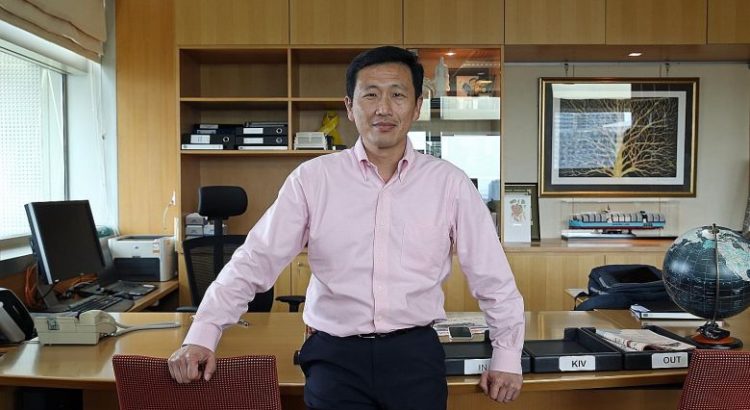
Interview with Ong Ye Kung: Skills are something that activate your knowledge

In the first of a four-part series, Education Minister Ong Ye Kung explains why he places skills above degrees

A man who places such a high premium on skills over the paper chase does not mind sharing that this year, under his watch, more school leavers will be able to land a place in the local universities.

The cohort participation rate (CPR) – or the proportion of those from this age group making their way to universities – will rise to 37.5 per cent from 35 per cent last year.

Despite the shrinking cohort size, this means the number of those heading to the six publicly funded universities is still higher than last year’s figure and translates to just over 16,000 places.

Between them, they will enrol in over 250 degree programmes, including new courses in emerging fields such as smart city management, data science and artificial intelligence.

Education Minister in charge of Higher Education and Skills Ong Ye Kung, who revealed this in an interview with The Straits Times, says with the increase, the Ministry of Education is well on track to meeting the 40 per cent cohort participation rate that the Government aims to achieve by 2020.

What happens after 2020? Will this figure be relooked? After all, there has been much discussion recently on the Singapore economy needing a more highly educated and skilled workforce.

 Minister Ong says the figure of 40 per cent for 2020 refers only to funded places at the autonomous universities for junior college or polytechnic students proceeding to full-time undergraduate studies before they enter the workforce.
Mr Ong Ye Kung, 48, was elected Member of Parliament for Sembawang GRC in September 2015, and subsequently appointed Acting Minister for Education in charge of higher education and skills.

He was also concurrently appointed Senior Minister of State for Defence.

On Nov 2016, he was promoted to Education Minister (Higher Education and Skills), and concurrently Second Minister in the Ministry of Defence.

Prior to his Cabinet appointment, Mr Ong held the position of director of group strategy at Keppel Corporation, overseeing long-term strategic planning of the group’s activities.

Before joining Keppel, he was the deputy secretary-general of the National Trades Union Congress, overseeing the labour movement’s employment and employability programmes.

He held various positions in the Government earlier.

These include being chief executive of Singapore Workforce Development Agency, where he spearheaded many initiatives to build up the continuing education and training infrastructure.

He was principal private secretary to Prime Minister Lee Hsien Loong from 2003 to 2005, and press secretary to Prime Minister Lee from 1997 to 2003.

Mr Ong was also the deputy chief negotiator for the US-Singapore Free Trade Agreement.

Mr Ong graduated from the London School of Economics and Political Science with a first-class honours Bachelor of Science (Economics) degree, and holds a Master of Business Administration degree from the Institute of Management Development in Lausanne, Switzerland.

He is married with two teenage children.

POLYTECHNIC OR UNIVERSITY?

It’s hard to say. When I was young, I was always interested in art. I drew comics, superheroes, gongfu characters – so if I were to follow my interests it will probably take me into art – perhaps digital animation. I will look at what course will train me best in those skills, so I will probably go to a polytechnic. If there is a degree in that field, I might go for it, provided it could teach me the skills I need. But having said that, I am also interested in science and maths, and if I go with the flow of what is expected of me, I may take a degree pathway, especially since degrees are still the dominant currency.

MR ONG YE KUNG, on whether he would choose the skills or degree path if he were 18 again and heading to further studies.

It does not take into account those who study part-time for degrees at both the public and private institutions here as well as those who head overseas. If these figures were included, then the proportion of degree holders among an age group is likely to be 50 to 60 per cent, similar to that for many developed countries.

But pressed further, he says: «In time to come, we hope that 100 per cent of Singaporeans will have skills or qualifications that are on a par with having a degree, or even master’s, in terms of job prospects.»

He stands by his constant refrain that Singaporeans should stop believing that university education is the only way to develop an individual’s potential.

«This could be in the form of a degree, a master’s, a specialist diploma, an accumulation of short courses attained in different phases of your life, or just something that the industry knows you are good at, without any paper qualifications. It is about having a high level of expertise, passion and mastery in a particular area, » he says.

Although university degrees are the «currency» to land good jobs at the moment, he stresses that deep skills are what will count for career progression.

He notes that Singapore’s economy has diverse needs and will require diverse talents from a spectrum of expertise. As such, the Government is looking at providing «diverse and multitudinous» pathways for people to build skills.

«Ultimately, it is not about having a degree for its sake, but about skills for work and for life. Throughout their lifetime, everyone should have that depth of knowledge and agility in applying their skills in different contexts. There are many paths to arrive there.

«One dominant path is to study, get a degree and work for the rest of your life. For that, we have a CPR that we plan for. Even in that traditional path, we are trying to make it more varied, through different universities, different teaching methods, different subjects and different domain expertise.»

But he admits that many employers still hire on the basis of qualifications, and this gets in the way of Singaporeans chasing skills instead of degrees.

«I speak to many employers and the bosses all agree with the idea of looking beyond academic results and degrees. Yet, they have not changed their hiring practices significantly. One employer of a fairly big company recently told me that he hires for skills, but when elaborating, he said he doesn’t just go for second upper honours any more… Now he hires graduates with second lower honours as well.»

Mr Ong urges employers to «go through the trouble» and be open to using various assessments and to hire based on skills, so as to find workers with the right fit to grow their businesses.

He goes on to list the important skills – both hard and soft – that all Singaporeans, including graduates, should acquire .

Because technological changes are «turning industries upside down», graduates need to understand the latest technologies and be able to work with them.

«I am not saying you need to be a coder or an IT expert. But it will be good to have a basic understanding of technology and how it can be used in the field you are in.»

With the advance of artificial intelligence, he advises Singaporeans not to be like robots.

«If you work like a robot, you will be replaced by a robot,» he said. In this era we must be «more human than ever – in anything we do», he says, pointing to the fact that AI is not very good at jobs that require creativity, empathy, critical thinking, leadership or artistic expression.

The other force to be reckoned with is globalisation, which is still gathering pace.

«Singapore’s economy will become more connected than ever to the region and the world,» he says. So Singaporeans must aim to take a cue from the expatriate talents coming to the Republic. They must have the hunger and sense of adventure to go out of Singapore and seize opportunities in a foreign land.

And Singaporeans must be able appreciate and operate within different cultures. Mr Ong reminds graduates that with half of their peers holding degrees, they cannot rely on just their qualifications to stand out from the crowd.

«In this landscape, you can no longer say, ‘I am a degree holder and am therefore different from others.’ You have to go beyond that. You have to develop a niche… and be able to sell and present that niche as your area of mastery and differentiate yourself,» he says.

Asked if he would place skills above degrees, he says it need not be one above the other.

«The traditional view is that a degree is above skills, but that is because when we think of skills in Singapore, we think of vocational skills acquired through polytechnic and Institute of Technical Education courses.

«You accumulate knowledge through a degree course, but to convert the knowledge into something useful to society, you require skills. Skills are something that activate your knowledge. From that perspective, skills are above degrees.

«The truth is, both are needed – it is a mesh of what you know and what you can do.»

He stresses that parents, students and employers all need to embrace this larger definition of skills future.

«That’s really the skills we’re referring to in SkillsFuture,» he says, referring to the national movement to harness the aspirations and talents of the population and encourage Singaporeans to keep on learning and upgrading their knowledge and skills.

He hopes that society as a whole will recognise and celebrate the spectrum of success in different fields. » If society sticks to a narrow notion of success, then we will always be stuck in it. Society must embrace them all. Only then will we have true diversity in meritocracy… not just academic meritocracy but a meritocracy of skills.»

In partnership with

By: Sandra Davir.

From: http://www.straitstimes.com/singapore/education/minister-skills-are-something-that-activate-your-knowledge-about-mr-ong-ye-kung

Comparte este contenido:

The reality of free education for all in Ghana

Asia/Ghana/ 26.02.2018/ By: www.aljazeera.com.

Since gaining independence in 1957, Ghana has focused on improving access to education and achieving universal enrolment.

Primary education became free in 1961 and the 1980s saw major reforms swept through the education system, including restructuring primary and secondary education and introducing vocational classes.

In September 2017, the Ghanaian government made secondary education free, with President Nana Akufo-Addo reportedly saying: «There will be no admission fees, no library fees, no science centre fees, no computer laboratory fees, no examination fees, no utility fees. There will be free textbooks, free boarding and free meals.»

The benefits of the Ghanian government’s focus on education are reflected in the country’s rising literacy rate. According to UNESCO statistics from 2010, the literacy rate among 15-24-year-olds is 85.72 percent, compared with 34.89 percent in those aged 65 or older.

Despite these measures, many children, particularly those living in rural areas, struggle to stay in school.

Economic necessity forces children to drop out of school in search of work, and girls are often charged with looking after younger siblings and helping with domestic work.

NGOs are attempting to address these issues at the community level and ensure every child has access to education.

Johnson Ayonka is the director of the Grassroots Transparency Initiative at WillWay Africa, an NGO that supports low-income communities in health, education and economic empowerment.

Jo Hallett works with Ghana School Aid and Let’s Read Ghana to provide grants to schools in rural communities and support the teaching of English in the far north of the country.

Al Jazeera spoke with Ayonka and Hallett about the realities of getting an education in Ghana today.

Al Jazeera: What effect has the recent removal of secondary school fees had on both children and schools?

Johnson Ayonka: It has had an impact, but because the national government is inefficient, the money from the central government doesn’t always get to the communities. In the very poor communities, there is the wider problem of poverty that’s forcing people to drop out, despite education being free and some schools are still charging fees because the money from the government didn’t get to them.

Even though the intention behind the policy was good, the government was not well prepared to implement it to the fullest. They also tried to implement it from the centre, instead of from the local area and the money was not made available in advance. It was sort of «putting the cart before the horse», instead of the money being there before the policy, the policy comes and then the money.

The policy is OK, the students have enrolled because they know that they’ll get free education, but after that, we find out that nothing effective takes place because what is needed is not there because of bureaucracy and inefficiency.

Al Jazeera: What are the barriers still preventing access to education today?

Jo Hallett: In the last few years, there has also been quite a push on more school buildings and a big push on enrolment and I think that [the Ghanaian government has] done very well on getting the vast majority of children into school, [but] there are huge barriers to accessing education. There’s a serious lack of trained teachers. In many of the schools we go into, the majority of the staff are volunteers or student teachers.

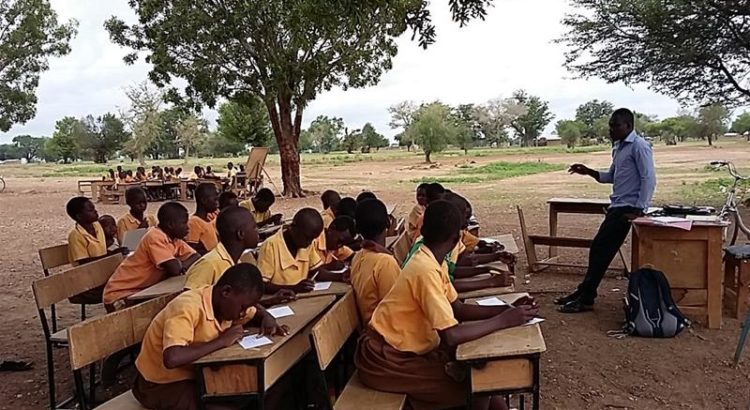
There’s a lack of finance for schools in general, so although the children are there, the buildings are not there, although overall they have improved, lots of schools have either very poor buildings or no buildings at all; they call it «under the tree» so classes are taught under a tree. There’s a lack of equipment and a lack of books and resources, the training of teachers, finance of all sorts and that needs to be addressed.

Often the teachers don’t get paid for several months because the District Education doesn’t have the finance to pay them and, therefore, there’s a lack of commitment on their part to some extent. Class sizes also vary enormously. A good teacher can manage quite a big class but sometimes it’s overwhelming: you go into a classroom and there are 70 pupils in there and one teacher who may not be trained, who’s trying to manage them and it’s impossible really, it’s really difficult.

There’s a lack of finance for schools in general, so although the children are there, the buildings are not there … lots of schools have either very poor buildings or no buildings at all.

Al Jazeera: How are rural communities affected?

Hallett: In many rural areas, the families are involved in subsistence farming or illegal mining and, with farming, the children get pulled out of school for harvest and sewing.

Another really significant thing that we see is the complete lack of spoken English in the rural areas. In school, after the first couple of years, the education is in English. There are 52 languages in Ghana, but the common language, and the language of government, [and] the language they’re expected to learn in is English.

If you live in a town, the chances are that you will see English sometimes and hear it, but out in the rural areas where we go in the far north, they speak a language called Guruni, which is spoken in a very small area, and it’s not written down at all so there aren’t any signposts or posters so [children] don’t have text in the environment, either in their own language or in English.

Al Jazeera: Do girls face additional challenges to entering education?

Ayonka: At the primary level the gender gap is small, it’s very, very small, and that indicates that a lot of progress has been made in the education of girls. But as girls mature into their teenage years, they face a lot of challenges because there’s a lot of gender disparity in terms of who should do house chores, so girls suffer more.

When you get closer to higher levels of education, even though the gap has reduced over the years, it’s still there because cultural factors come into play and there are issues of early marriage and families spending more on boys than on girls.

We need something to address that gap because it will relieve the economic aspects of education and leave the responsibility to the government so that families don’t have to decide: «Are we going to educate the boy and leave the girl out? Or are we going to educate both?»

Al Jazeera: What steps should the government take now?

Ayonka: What we see recently from the government is that a lot of policies and actions are done in isolation. Let’s say you see an area where there’s a high instance of teenage pregnancy and you don’t also make arrangements for the education authorities to work with the healthcare authorities and social workers; even though there’s free education, you are still going to get low enrolment because there is no coordination.

Another problem is the issue of access to the education infrastructure, there’s free education on paper but the schools are few, especially in the rural areas. You can say you want to give free education to people but if you don’t give them physical access to the schools by building more schools, then you still don’t have free education … I think communities need to be empowered to build their own schools, to recruit their own teachers, monitor the teachers and make sure that the standard of education is high.

There’s a big gap between what is happening at the government level and what is happening at the community level.

Hallett: There needs to be a bigger commitment to funding and a raising of the status of teachers. [The government] has done some really good things, some of the curriculum books are excellent, but they also need to have a bit of money and resources to back up that commitment, but I do think Ghana is trying hard.

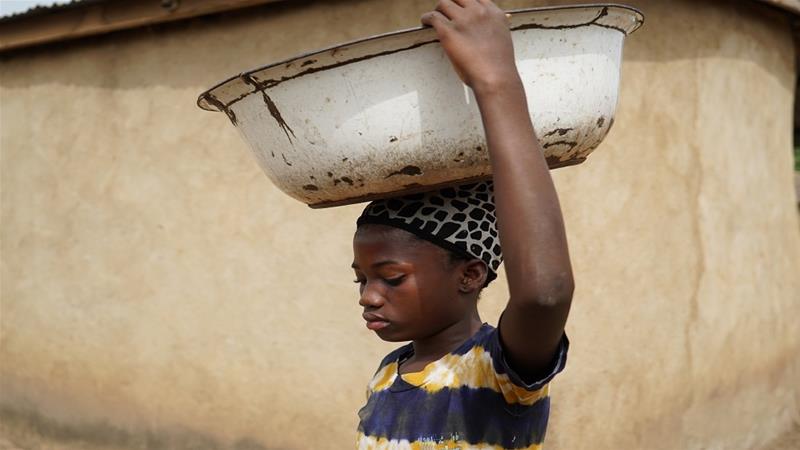
Kayayo: Ghana's Living Shopping Baskets

SOURCE: AL JAZEERA

From: https://www.aljazeera.com/indepth/features/qa-reality-free-education-ghana-180219070207774.html

Comparte este contenido:

Singapore: Degrees or skills? ST Education Forum to debate issue

Asia/ Singapore /26.02.2018 / From: www.straitstimes.com. By: Fabian Koh.

Con la cantidad de plazas universitarias en aumento este año, más estudiantes que abandonan la escuela tendrán una oportunidad de obtener una educación de nivel de grado.

With the number of university places increasing this year, more school leavers will have a shot at degree-level education.

There will be slightly over 16,000 places in the six publicly funded universities, despite a shrinking cohort size. This means the cohort participation rate will reach 37.5 per cent, up from 35 per cent last year.

Minister for Education (Higher Education and Skills) Ong Ye Kung told The Straits Times that his ministry is on track to meeting the 40 per cent cohort participation rate announced six years ago.

Degrees have typically been associated with better job prospects and higher salaries. Degree holders draw higher starting salaries compared with diploma holders, and the earnings gap widens over the years.

Those who cannot get into a local public university tend to look overseas or take the private school route.

However, in an age of technological advancements and disruptions in the workplace, degree holders are increasingly unemployed, or underemployed, in many economies.

The oversupply of degree holders has also had a dampening effect on graduate salaries.

  • EVENT INFORMATION

  • The Straits Times Education Forum on Degrees versus Skills is supported by the Singapore Management UniversityDate: March 17 ( Saturday)Time: 10am to 12pm (Registration begins at 9am, guests to be seated by 9.50am)Location: Singapore Management University School of Law Building, Basement 1 SMU Hall, 55 Armenian Street, Singapore 179943Cost: Free for ST readersOnline registration: http://str.sg/st-education-forum-2018

    Limited seats are available.

In such a climate, does the conventional thinking that a degree equals success still hold true? Or should young people be focused on developing skills in fields relevant to the economy in this new age?

Singapore Management University (SMU) president Arnoud De Meyer said: «A university degree is more than just a piece of paper; it is more than just a way to get a good job. University education equips students with the ability to learn how to learn; it stimulates their curiosity and develops the whole person for lifelong benefits.»

Professor De Meyer will be part of a debate on the degrees versus skills issue at The Straits Times Education Forum, presented by SMU, on March 17.

The debate will be held at the SMU School of Law Building in Armenian Street.

Straits Times editor Warren Fernandez said: «This is a longstanding issue – do you need a degree to get ahead? – but it has added resonance today given the massive disruption across industries.

«It is pertinent to ask how best our people should prepare for work in the future and whether degrees or skills will help them more?»

Along with SMU law dean Goh Yihan, Prof De Meyer will be arguing against the motion: «You don’t need a degree to succeed in life.»

On the other side of the debate will be Organisation for Economic Cooperation and Development education director Andreas Schleicher and SkillsFuture Singapore chief executive Ng Cher Pong.

The debate will be moderated by Mr Patrick Daniel, consultant to Singapore Press Holdings.

A version of this article appeared in the print edition of The Straits Times on February 26, 2018, with the headline ‘Degrees or skills? ST Education Forum to debate issue’.

From: http:///singapore/education/degrees-or-skills-st-education-forum-to-debate-issue

Comparte este contenido:
Page 113 of 144
1 111 112 113 114 115 144