Page 115 of 144
1 113 114 115 116 117 144

Kenya: Implementation of education data system reveals anomalies

Africa /Kenya/ 19.02.2018/ By: www.businessdailyafrica.com.

The rollout and subsequent implementation of the National Education Management Information System (NEMIS) across all schools in the country has revealed gaps in our national data system that needs to be addressed urgently.

While rolling out the programme, the Ministry of Education reiterated the importance of the exercise and indicated that it would go a long way towards production of timely, accurate and reliable data.

For the first time the sector would be able to among other things track students movement along the education chain and account for every learner and resources, the ministry argued.

This is of utmost importance given the massive funding that continues to go into the education sector.

Over the past five years Kenya has continued to steadily spend about six per cent of the GDP in the sector with the figure likely to ramp upwards given the recent heavy budgetary commitments by the government. Indeed, to enable consumption of the data from schools by all relevant stakeholders, emerging challenges of integrated data management should be sorted out.

Already some teachers are reportedly grappling with cases of birth certificates entry numbers and national Identity Card numbers giving different names from the bearers and appearing as not validated by Integrated Populations Regulations System (IPRS).

Launched in 2015 IPRS was intended to store data of all Kenyans at a central location for easy electronic access by institutions, including private corporations that provide crucial and sensitive services. This would be accessed and relayed conveniently at the touch of a button.

When this cannot be accurately done, it points out to our collective ineffective use of technology at entry points of crucial processes and operations as well as inadequate skills development of the work force.

The problem seems to be originating from data entry level where any wrong data that finds itself into the registry chain snowballs into future anomalies throughout the whole system. Our national data management system should be cleaned up and full proofed so as to be able to track births and subsequent issuance of ID cards.

Whatever challenges that exist and have been unearthed are surmountable and should not diffuse the benefit that have been envisioned through the programme.

Allan Onunga, secondary school teacher.

Time to protect children from harmful content in matatus

Some of the public transport vehicles in our major towns have mounted big screens on which they show lurid music videos without caring about the ages of their passengers.

Some of their passengers are children. A series of research shows that children often imitate what they see, read, or hear. Yet children are not the only ones affected.

Exposure to pornography creates a range of devastating effects on the mental, moral and spiritual health of society as a whole in the long term.

Exposure to pornography vitiates the learning habits of children and hinders their mental growth. Images imprinted on the mind of a child at an early age often reflect on their actions later.

Screening of indecent content in PSVs go against the Films and Stage Plays Act Cap 222, the Sexual Offences Act of 2006 and Children’s Act. According to the Films and Stage Plays Act cap 222, screening of the content in the vehicles is considered a public exhibition.

Consumption of pornography is also associated with many negative emotional, psychological, and physical health outcomes.

These include increased rates of depression, anxiety, violent behaviour, younger age of sexual debut, sexual promiscuity and increased risk of teen pregnancy.

From: https://www.businessdailyafrica.com/analysis/letters/Implementation-of-education-data-system-reveals-anomalies/4307714-4309916-13aaxs5z
Comparte este contenido:

Kenia: New education CS to sustain reforms ministry is undertaking

Kenia / Por: Beth Nyaga / Fuente: http://www.kbc.co.ke

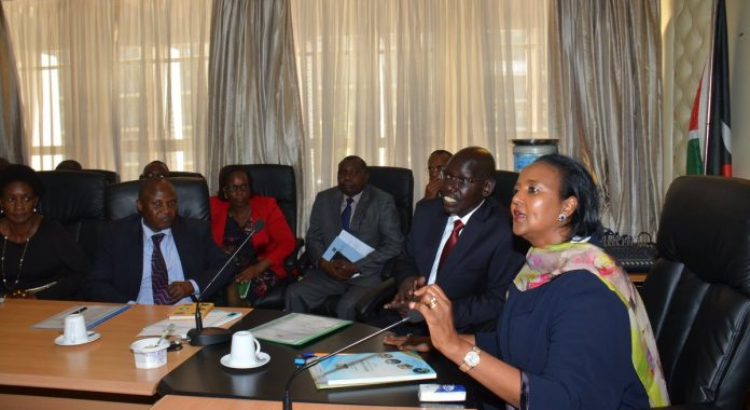
The new Cabinet Secretary for Education, Ambassador Amina Mohamed has said she will sustain the reforms the Ministry is undertaking.

“We will continue to move forward with the reforms,” Ambassador Mohamed affirmed, in reference to the wide-ranging reforms initiated by her predecessor Fred Matiang’i.

“I know how much work it takes to get our reform process moving,” Ambassador Mohamed noted, saying she will provide the leadership needed to ensure full implementation of the reforms.

She made the remarks during an extensive briefing session at the Centre for Mathematics, Science and Technology Education in Africa (CEMASTEA) on Tuesday.

She was flanked by, Chief Administrator, Simon Kachapin, the Principal Secretary for State Department of Early Learning and Basic Education, Dr. Belio Kipsang and his Counterpart in University Education and Research, Prof Micheni J. Ntiba.

Ambassador Mohamed said she looked forward to the support from staff given its technical expertise, saying the Ministry and staff had a greater responsibility to impact the life of millions of children.

“We should deepen our impact and resolve to work together,” the CS noted.

Dr. Kipsang said that the Ministry was responsible to the education and training of 17 million Kenyans in basic education and tertiary institutions.

He described access, equity, quality, relevance in education and retention of learners in schools as cardinal duties for the Ministry which it ought to observe.

Dr. Kipsang, who was retained as Principal Secretary in the Ministry, said that the staff in the Ministry would give the new Cabinet Secretary all the support she needs to make a difference in the lives of our children.

Directors of various departments outlined the policies, programmes, projects and programmes the Ministry was undertaking to improve children’s access, equity, quality, relevance of education.

Ambassador Mohamed called for the series of meetings to enable her and other top leadership newly appointed leaders in the Ministry to understand the challenges and opportunities the Ministry had in providing educational services to the country.

Officers accordingly provided information regarding the policies, programmes, projects and initiatives the Ministry had developed and implementing to meet its mandate.

The Ministry of education has initiated various reforms aimed at making quality and relevant education accessible to all learners regardless of socioeconomic backgrounds of the children, gender, region or physical conditions.

It is also implementing two transformative programmes in literacy and numeracy in all public primary schools in the country, aside from facilitating changes on the education system where competence based curriculum will be implemented in 2019.

The Ministry has also cracked down on examinations cheating, introduced new textbook distribution policy, and curbed school fees which had run out of control by dint of Principals’ disregard of school fees guidelines the ministry issues.

“We are not going backwards. We shall not discuss anything discussed. Our work is going to be implementation,” she said during the handing/taking over ceremony last week.

“I will focus on building on what has been achieved and sustaining the momentum for reform in the education sector,” she noted.

She made similar affirmation on Tuesday.

The CS is set to meet the officials of the State Departments of University Education, Vocational and Technical Training on today, and thereafter, she will meet officials of the Kenya Institute of Curriculum Development, Kenya National Examinations Council before the weekends.

The CS is set to meet the officials of the State Departments of University Education, Vocational and Technical Training on today, and thereafter, she will meet officials of the Kenya Institute of Curriculum Development, Kenya National Examinations Council before the weekends.

Fuente noticia: http://www.kbc.co.ke/local-news/new-education-cs-sustain-reforms-ministry-undertaking/

Comparte este contenido:

Malaysia: The needs of students always a priority for Education Ministry

Malaysia/ February 13, 2018/By Awaina Arbee/Source: https://www.nst.com.my

The Education Ministry has allocated a total of RM2.9 billion to aid more than 5.2 million students for this year.

Education Director-General Datuk Dr Amin Senin said the ministry had always prioritised students’ needs, and that was why the allocation for education aid goes up every year.

«People should understand that the ministry spends about RM8,000 yearly on a student by providing numerous aid to help them during their schooling sessions.

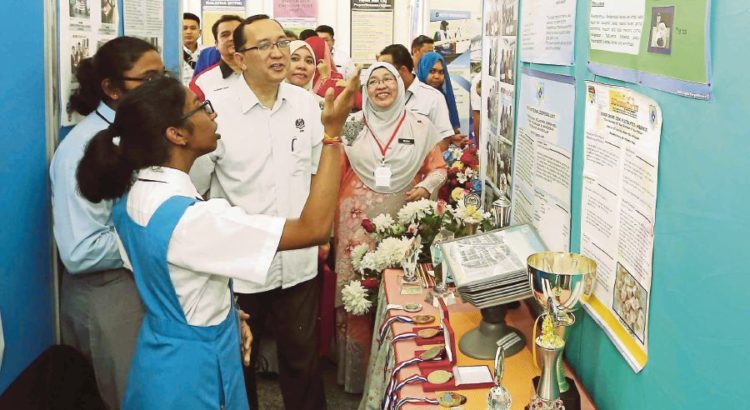
«Sometimes, the public do not know these things. The purpose of the Education Tour (Jelajah Pendidikan) is to explain to the people that there are no compromises when it comes to education,» he said.

Amin said the government, through the ministry has always been consistent in helping students in school.

«In fact, for this year, more than 5.2 million students benefitted from an allocation of RM2.9 billion in Selangor. We have allocated RM221.4 million involving three categories; General Aid RM133.5 million; Special Aid RM45.7 million, and One Off aid RM42.3 million.

«To compare, education expenses in Malaysia is twice the amount of education expenses in other Asean countries,» told reporters after officiating the tour at the Hulu Langat Education District office today.

Amin said the tour was a form of interaction between the ministry and the public.

«With the National Blue Ocean Strategy as its theme, the programme is aimed at providing explanations about the services and opportunities in the education system in the country.

«This programme showcases the ministry’s efforts in developing students to meet global challenges, where we have provided them with holistic assessments, quality teachers and administrators and also an access to various 21-century education routes,» he said.

More than 6,000 visitors attended the Education Tour at the Hulu Langat Education District office from Feb 10-11.

The tour will continue at five other locations which include Langkawi, Kedah from Feb 22-24; Pasir Puteh, Kelantan (March 8-10); Parit Buntar, Perak (March 30 – April 1); Temerloh, Pahang (April 13-15) and Tawau, Sabah (April 20-22).

Among the schools that participated in the Education Tour here from Feb 10-11 were SK Jalan Empat; SK Saujana Impian; SK Sungai Kantan; SK Bandar Teknologi Kajang; SMK Jalan Empat; SMK Tinggi Kajang; SMK Bandar Baru Sungai Long; SMK Jalan Bukit and SK Jalan Semenyih.

Source:

https://www.nst.com.my/news/nation/2018/02/334528/needs-students-always-priority-education-ministry

Comparte este contenido:

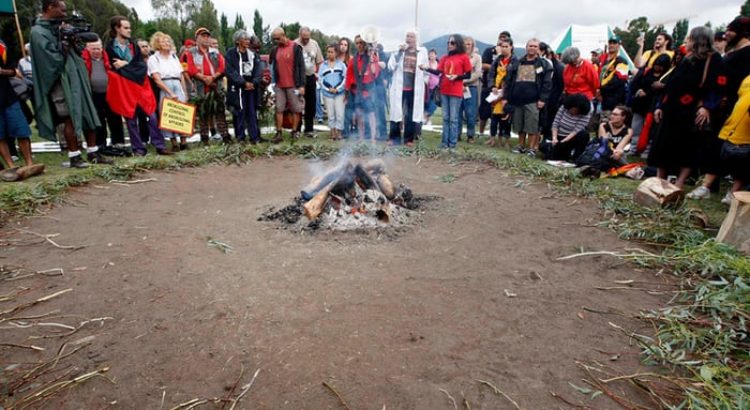
Australia: Closing the Gap targets in childhood mortality and early education back on track

Australia/February 13, 2018/By: Paul Karp/ Source: https://www.theguardian.com 

Three of seven key targets to reduce Indigenous disadvantage are on track to be met – but four still lagging after 10 years.

Three of the seven Closing the Gap targets were met in the past year compared with just one a year earlier, with the national childhood mortality and early childhood education measures back on track.

The updated measures of Indigenous disadvantage, which will be reported to parliament by Malcolm Turnbull on Monday, show the most promising results since 2011, and a marked improvement from figures released a year ago when only the goal of halving the gap in year 12 attainment by 2020 was on track to be met.

The remaining four targets, including a key one to close the 10-year gap in life expectancy between Indigenous and non-Indigenous Australians by 2031, are lagging.

As well, three of the remaining four targets – to halve the gaps in employment, reading and numeracy, and in school attendance for indigenous students – are due to expire in 2018.

The Indigenous affairs minister, Nigel Scullion, said Turnbull would use the occasion to build on the government’s $1bn Indigenous procurement policy and “unveil a range of new measures to turbo-charge the Indigenous business sector”.

In response Bill Shorten will promise a $9m compensation fund over three years for stolen generations survivors in the Northern Territory and Australian Capital Territory, part of a $17m package to address Indigenous disadvantage.

According to figures from the Department of the Prime Minister and Cabinet, child mortality has dropped by 33% between 1998 and 2015, with overall mortality down 15% in the same period.

Chronic diseases were also down with fewer Indigenous people dying from circulatory disease, which was down 45% from 1998 to 2016, respiratory disease was down 24% from 1998 to 2015 and kidney disease down by 47% from 2006 to 2015.

Scullion said “solid progress” had been made in other target areas compared with a decade ago, even where Australia is not on track to meet the benchmarks.

But progress varies across states and territories. All states and territories except the NT achieved the early childhood education benchmark.

South Australia, Western Australia, the NT and Australian Capital Territory met the grade for year 12 attainment. Only New South Wales met the employment benchmark. For reading and numeracy only Tasmania and the ACT did so.

In his speech to parliament Shorten will unveil a commitment to boost support for the families of stolen generations survivors and efforts to tackle the rising number of Indigenous Australians in out-of-home care.

The announcement comes 10 years after Kevin Rudd’s apology to the stolen generations as debate rages about the effectiveness of the Closing the Gap goals, following a report claiming the strategy has been “effectively abandoned”.

The Labor package would include payments of $75,000 to stolen generations survivors who were removed from their families, responding to a recommendation in the 1997 Bringing them Home report.

If Labor is elected, the scheme would be accessible to about 150 surviving members of the stolen generations in the Northern Territory and any survivors in the ACT and Jervis Bay, and includes $7,000 for one-off payments for funeral costs. Victoria is the only state not to have a similar compensation scheme.

Labor also proposed a national healing fund for the stolen generations and their families to pay for programs such as family reunion, return to country and aged-care services.

Since 2008 the number of Indigenous children removed from their families has risen rapidly from 9,070 to an estimated 17,664.

Shorten will promise to tackle those “unacceptably high” rates of out-of-home-care, with a national summit on First Nations children in the first 100 days of a Labor government.

Shorten will say the apology was “much more than a set of well-chosen words”.

“It was not just an expression of sorrow or regret – but a declaration of intent, a promise for action.”

He will say the commonwealth must live up to its rhetoric by not just saying sorry but “making good”.

The Indigenous health minister, Ken Wyatt, who suggested on Sunday that the government could still legislate an Indigenous voice to parliament outside the constitution, said the government is “committed to making a difference”.

“Closing the Gap is not just about government responsibility, it is also the responsibility of the myriad first nations and non-Indigenous organisations that receive funding for programs designed to address targets,” he said.

Kevin Rudd, who introduced the Closing the Gap strategy, said the original targets were always going to be hard to meet because “overcoming 200 years of disadvantage is a bloody hard thing”.

“So when people say they’re too hard and we’re not on track to meet them all, I say, ‘so what?’,” he told Sky News.

“Let’s not bash the targets, let’s enhance the targets but we should not water them down.”

Closing the Gap: progress report

 Close the gap in life expectancy by 2031: On track with overall mortality rate down 15% (from 1998 to 2015)

 Halve the gap in child mortality by 2018: Down 33% (between 1998 and 2015)

 Have 95% of all indigenous four-year-olds enrolled in early childhood education by 2025: On track

 Close the gap in school attendance by the end of 2018: little progress

 Halve the gap in reading and numeracy for Indigenous students by 2018: on track in the ACT and Tasmania

 Halve the gap in Year 12 attainment by 2020: on track

 Halve the gap in employment by 2018: on track in NSW

Source:

https://www.theguardian.com/australia-news/2018/feb/12/closing-the-gap-targets-in-childhood-mortality-and-early-education-back-on-track

Comparte este contenido:

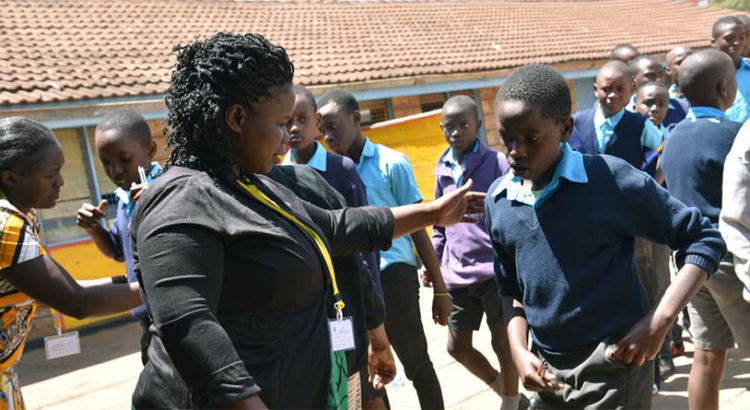
Dangerous proposal’: campaigners in Kenya condemn sex education plan

Kenya/February 06, 2018/Source: https://www.theguardian.com

Government under fire over incorporation of dedicated lessons about sexuality into national curriculum.

Plans by the Kenyan government to expand coverage of sex education in primary schools have been criticised for encouraging promiscuity among young people.

The ministry of education wants guidance on sex, which is currently incorporated into subjects such as civil education, to become a distinct topic in the country’s new curriculum.

But campaign group CitizenGo has petitioned the ministry, urging it not to implement what it describes as a “dangerous proposal”.

Ann Kioko, campaigns manager for CitizenGo, said: “It is teaching children from a very young age that they are sexual and they can experiment with homosexuality, and that abortion is their right.”

Kioko added that the organisation is not opposed to sex education based on the principle of informing children about the changes their bodies undergo as they get older.

David Oginde, presiding bishop of Christ is the Answer Ministries, one of Kenya’s largest and most influential Pentecostal churches, wrote in a comment piece for a Kenyan newspaper: “Many parents and family organisations are in full support of wholesome sex education. Instead, concern is that, unlike traditional sex education, CSE [comprehensive sexuality education] is highly explicit. With an almost obsessive focus on children obtaining sexual pleasure, CSE promotes promiscuity and high-risk sexual behaviours as healthy and normal.”

But Kennedy Buhere, a spokesperson from the ministry of education, said sex education was already firmly embedded in the existing primary school curriculum.

“It is not a standalone subject, and they [teachers] do not pour everything on the children,” said Buhere. “The knowledge is calibrated to fit the age of the children.”

He added that content about sexuality in the new curriculum had taken into consideration the religious and cultural values of the country as well as the age of the children targeted.

According to the 2014 Kenya demographic and health survey, 18% of teenagers in Kenya were already mothers or were pregnant.

More than 370,000 10- to 19-year-olds became pregnant in Kenya between July 2016 and June 2017, according to the UN population fund – almost 29,000 of whom were under 14. Some children in Kenya start having sex as young as eight.

A 2017 survey by the African Population and Health Research Centre showed that while 75% of schools in Kenya cover all sex education topics under the existing curriculum, only 2% of students said they felt they had learned about all of the topics. The centre found that classes focused more on anatomy and HIV prevention.

Data from the country’s National Aids Control Council found that 43% of the 61,000 new HIV infections recorded in 2016 were among young people aged between 10 and 19.

Patrick Oyaro, a doctor and former director of Family Aids Care and Education, a health ministry organisation that offered medical and counselling services to HIV patients in Kenya, said education was critical for schoolgirls.

“If the information is packaged well … it can help protect them, and make choices,” said Oyaro.

Mary Akelo, 17, from Nairobi, had to leave school and give up her dreams of becoming a nurse when she became pregnant.

“I leave my child at the day care to look for casual jobs every day, and sometimes I do not even have the 50 shillings [34p] to pay the caregiver,” she said.

Since you’re here …

… we have a small favour to ask. More people are reading the Guardian than ever but advertising revenues across the media are falling fast. And unlike many news organisations, we haven’t put up a paywall – we want to keep our journalism as open as we can. So you can see why we need to ask for your help. The Guardian’s independent, investigative journalism takes a lot of time, money and hard work to produce. But we do it because we believe our perspective matters – because it might well be your perspective, too.

I appreciate there not being a paywall: it is more democratic for the media to be available for all and not a commodity to be purchased by a few. I’m happy to make a contribution so others with less means still have access to information.Thomasine F-R.

Source:

https://www.theguardian.com/global-development/2018/feb/05/dangerous-proposal-campaigners-kenya-condemn-sex-education-plan
Comparte este contenido:

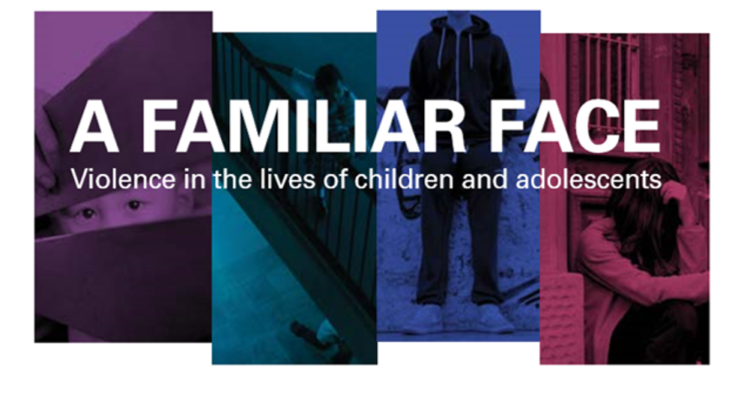
UNICEF: A Familiar Face. Violence in the lives of children and adolescents

ACKNOWLEDGEMENTS

The preparation of this report was initiated and coordinated by Claudia Cappa and Nicole Petrowski, who were also responsible for data analysis, interpretation of the results and report writing. Valuable guidance and insights were received from Laurence Chandy and Mark Hereward.
Christina Misunas provided support for data processing, analysis and fact-checking. Colleen Murray assisted with document review and fact-checking. Yadigar Coskun contributed to data processing. The document was edited and copy-edited by Catherine Rutgers, with inputs from Janet Jensen and Joan Ross Frankson, and was designed by Era Porth and Nona Reuter.
The ‘Programmes in focus’ boxes were developed by Gbemisola Akinboyo, Anjan Bose, Ayda Eke, Sophie Flynn, Theresa Kilbane and Clara Sommarin along with Maria Margarita Ardivilla, Katlin Brasic, Mark Connolly, Vesna Dejanovic, Donneth Edmondson, Rosa Elcarte, Ida Ferdinandi, Ana Catalina Fernandez Rojas, Elisa Frias, Eduardo Gallardo, Bruce Grant, Kendra Gregson, Dina Heikal, Jennifer Hofmann, Maha Homsi, Lone Hvass, Nankali Maksud, Nada Djurovic Martinovic, Maria Teresa Mejia, Aby Mze-Boina, Mohamed Naeem, Irene Sanchez, Sarah Norton-Staal, Chivith Rottanak, Saji Thomas, Martina Tomic-Latinac, Cornelius Williams and Nadra Zaki. Additional country inputs were provided by Ana Cristina Matos, Rogerio Oliveira and Gabriela Perin.

The report benefited from technical feedback provided by Shelly Abdool, Maneli Aghakhan, Patty Alleman, Mariavittoria Ballotta, Jean-François Basse, Camille Baudot, Jose Bergua, Stephen Blight, Sujata Bordoloi, Isabella Castrogiovanni, Mandi Chikombero, Laurent Dutordoir, Raquel Fernandez, Mirella Hernani, Mokhtar Hosseini, Lucia Hug, Jonna Karlsson, Dennis Christian Larsen, Anthony MacDonald, Anju Malhotra, Angelo Miramonti, Cecilie Modvar, Patricia Muriel, Will Parks, Micaela Pasini, Vincent Petit, Deepa Risal Pokharel, Evan Rai, Rafael Ramirez, Line Baago Rasmussen, Sanja Saranovic, Landry Dongmo Tsague, Hrayr Wannis and Danzhen You.
Communication advice was received from Lely Djuhari, Caroline den Dulk, Madeline Eisner, Paloma Escudero, Rose Foley, Timothy Ledwith, Najwa Mekki, Marixie Mercado, Melanie Sharpe and Georgina Thompson.

UNICEF gratefully acknowledges the technical review and inputs provided by the Health Systems and Innovation Cluster of the World Health Organization (Jessica Ho, Daniel Hogan, Wahyu Retno Mahanani and Colin Douglas Mathers), the European Union Agency for Fundamental Rights (Sami Nevala), and the Centers for Disease Control and Prevention (Holly Hedegaard). Additional data were also provided by Laura Agnich (Georgia Southern University) and Noor Ani Ahmad (Ministry of Health Malaysia).

CONTENTS

EXECUTIVE SUMMARY

UNMASKING THE ALL-TOO-FAMILIAR FACES OF CHILDHOOD VIOLENCE

VIOLENT DISCIPLINE AND EXPOSURE TO DOMESTIC VIOLENCE IN EARLY CHILDHOOD

VIOLENCE AT SCHOOL

VIOLENT DEATHS AMONG ADOLESCENTS

SEXUAL VIOLENCE IN CHILDHOOD AND ADOLESCENCE

PROTECTING A GENERATION AT RISK

ANNEX: REGIONAL CLASSIFICATI

To download the document, click here:

Violence_in_the_lives_of_children_and_adolescents

Source:

https://www.unicef.org/spanish/sowc2016/


Comparte este contenido:

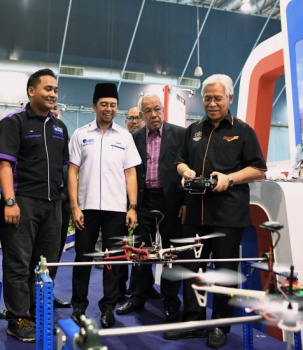
Malaysia: Higher Education Ministry welcomes cooperation for HSR

Malaysia/February 06, 2018/Source: http://www.thesundaily.my

The Higher Education Ministry welcomes the cooperation from various parties in the Kuala Lumpur–Singapore High Speed Rail (HSR) project to enhance expertise and skills of university students.

Minister Datuk Seri Idris Jusoh said such cooperation would expand the skill set of university students and benefit the country in the long run.

«Our education system is open. Thus, we will encourage any form of cooperation that we feel should be done by the university senate that is in line with the needs of country’s industry,» he told reporters at the National Higher Education Carnival 2018 at Melaka International Trade Centre in Ayer Keroh.

«Any cooperation that can provide positive impact to universities in the country will be supported by the ministry.»

Also present at the event were Malacca Chief Minister Datuk Seri Idris Haron and Higher Education deputy minister Datuk Dr Mary Yap Kain Ching.

Idris said other than the HSR, the East Coast Rail Line project would also open up various field of skills that would need more expertise.

Source:

http://www.thesundaily.my/news/2018/02/04/higher-education-ministry-welcomes-cooperation-hsr

Comparte este contenido:
Page 115 of 144
1 113 114 115 116 117 144