Page 116 of 144
1 114 115 116 117 118 144

The Education State? Students lag behind state government goals

By: Henrietta Cook

The performance of Victorian students has gone backwards since the Andrews government set ambitious targets as part of its Education State agenda.

New figures obtained by The Age also reveal that parents’ trust in the state school system has taken a hit, with only 51.7 per cent reporting high levels of confidence in the sector.

high levels of confidence in the sector.

The state government launched the targets as a centrepiece of its Education State policy in September 2015 but has since remained quiet about how schools are tracking.

The measures are calculated using a combination of NAPLAN results, the OECD’s Program for International Student Assessment (PISA), parent and student surveys, retention data and Victorian Curriculum and Assessment Authority assessments.

The Age can now reveal that out of the nine targets that have reported data for 2016 and 2017, only two areas improved.

These were year 5 reading and year 9 maths.

But this coincided with a decline in the proportion of students reaching the highest levels of achievement in year 9 reading, year 5 maths and critical and creative thinking.

Under the new targets, this is meant to increase to 39.9 per cent by 2020.

The achievement gap between the most disadvantaged year 5 and 9 students and their peers also grew wider between 2016 and 2017.

There was also a drop in the proportion of year 9 students who remained engaged in education until year 12. This dipped to 96.3 per cent,  down from 96.6 the previous year.

And the proportion of surveyed families who reported high levels of confidence in the government school system dropped from 55 to 51.7 per cent. This is a far cry from the goal of 65.9 per cent by 2025.

University of Melbourne laureate professor Dr John Hattie said policies aimed at reaching the targets had not had enough traction in schools.

«I am delighted that we have those targets and there are promising areas but we need to be much more vigilant in terms of making sure schools meet those targets,» he said.

«We have committed to these targets so let’s move them up.»

Victorian Education Minister James Merlino said he was confident more children would move into the top achievement bands as the government’s Education State initiatives rolled out.

«Anyone can jump over a low bar – that’s not what we are about. These targets are hard to meet because they’re real targets that will see real improvement in what our students achieve at school.»

He said there were early and exciting improvements, with some of Victoria’s lowest-performing students moving into the middle achievement bands.

«It may not be headline grabbing, but it’s the first step in seeing the long-term improvements we want to achieve.»

He said changes in the second-year-target figures were not statistically significant and «do not paint a full picture of improvements in the sector».

Education is emerging as a key battleground ahead of the November state election.

The state opposition recently pledged to review the curriculum if it won government and called for a greater focus on «Australian values» in schools.

The opposition’s education spokesman, Tim Smith, said the new figures showed that it was time to declutter the curriculum and focus on literacy and numeracy.

«We want to improve student outcomes, instead of weak slogans and a part-time education minister,» he said.

«The education state slogan is not worth the number plate it is written on.»

The five and 10-year targets include boosting the number of students achieving excellence in reading, maths, science and the arts, breaking the link between disadvantage and outcomes and improving confidence in the school system.

The Grattan Institute’s Dr Peter Goss said consistent improvements during the earlier years of school were key to hitting the targets.

«For Victoria, I’m seeing good signs in reading, but less improvement in numeracy. Much more needs to be done to be improve writing, but that is also true across Australia,» he said.

He said change took time and the metrics used to measure progress bounced around from year to year.

«This creates a risk of jumping at shadows if a metric slips marginally,» he said.

«That said, improvement is always better than not, and the government will no doubt be working to understand what is going on where metrics aren’t improving.»

Victorian Curriculum and Assessment Authority chief executive Dr David Howes said that while the best result would be improvements across the board, there were encouraging signs.

«The 2017 NAPLAN results show we’re lifting students out of the bottom three bands in reading and lifting performance in the early years,» he said.

«We will see improvements in the year 5 target data as these year 3 students move through primary school.»

He said the latest NAPLAN results showed that Victorian primary students were the country’s top performers in six out of 10 domains.

«Nevertheless, further significant improvement will be required to reach the ambitious Education State targets in both primary and secondary schools,» Dr Howes said.

Source:

http://www.smh.com.au/national/education/the-education-state-students-lag-behind-state-government-goals-20180201-p4yz7g.html

Comparte este contenido:

EEUU: DPI announces expanded partnership for tech education in state’s schools

EEUU/February 06, 2018/By: 

An expanded partnership with Microsoft Corporation to bring a technology program to the state’s schools has been announced by North Dakota School Superintendent Kirsten Baesler.

Baesler, the head of the Department of Public Instruction, is gauging interest from superintendents and high schools in using a unique program for computer science instruction, she said in a news release.

Microsoft will be expanding its Technology Education and Literacy in Schools (TEALS) program to the state by hiring a full-time, North Dakota-based coordinator, volunteering some of its employees and expert instructors as classroom teachers and exploring further investment to expand this program for high school students, Baesler said.

In the TEALS program, a volunteer computer science professional from Microsoft or another industry partner teams up with a classroom instructor to team-teach computer science courses. The classroom teacher gradually takes over instruction as she or he gains knowledge of the subject.

Hillsboro High School is the only North Dakota high school with a Microsoft TEALS program, but Baesler said she hopes the program will catch with many other schools.

Forty teams of 9- to 14-year-olds from around the area are expected to participate in the North Dakota FIRST LEGO League Robotics State Championship tournament Saturday at the UND Memorial Union. «FIRST» stands for «For Inspiration and Recognition of Science and Technology.»

At the event, students compete using science, engineering and technology skills to solve real-world problems. This year’s focus is hydro-dynamics—how to find, transport, use or dispose of water.

The competition, held annually at UND, is open to the public.

For more information, go to: www.usfirst.org .

Grand Forks Public Schools has received $5,000 from the Russell and Helen Sand Public High School Education Fund, the school district announced.

A competitive grant for $2,500 has been awarded for the purchase of a digital monitor and software to help students design and create digital signage in graphic arts classes at Central High School.

Students will use the equipment to design and create posters promoting events, classes and school information for display on the monitors.

With the second $2,500 grant, the school district has purchased a geriatric simulator that allows students to experience some of the physical changes that can occur with aging and the challenges the elderly face in confronting those changes.

The simulator mimics vision impairment, restricted range of motion and decreased mobility and strength, loss of sensation and changes in balance.

«I tell my students that anytime we can step into our patients’ shoes and get a sense of the challenges they face, it allows us to be more empathetic in the care we give,» Kim Adams, medical careers instructor at Central High School, said in a news release.

Holy Family-St. Mary’s Catholic School hosts its 13th Annual Dinner, Dance and Auction on Friday at the Ramada Inn in Grand Forks.

Dubbed the «Written in the Stars Prom 2018,» the event begins at 5:45 p.m. The buffet is served at 6:30 p.m., and the dance is at 8:30 p.m.

Source:

http://www.grandforksherald.com/news/4398363-dpi-announces-expanded-partnership-tech-education-states-schools

Comparte este contenido:

Estados Unidos: Poll says Southerners willing to spend more on education

Estados Unidos / 31 de enero de 2018 / Por: Ty Tagami / Fuente: http://www.myajc.com


A new poll by a consortium of Southern education think tanks finds vast support for increased spending on public education, even if that means cutting other parts of state budgets.

The Education Poll of the South in a dozen states by seven nonprofit, nonpartisan groups, including Georgia, found that 84 percent of 2,200 respondents said their states should adjust “differences” in school funding to bring more equity between rich and poor communities.

Among the other findings: 57 percent of those polled were willing to see their taxes rise to pay for education, said Alan Richard, a consultant who coordinated the poll for the nonprofits, known collectively as the Columbia Group.

Steve Dolinger, president of the Georgia Partnership for Excellence in Education, one of the participating nonprofits, said the results “show what citizens in the southern region think about actions needed to improve K-12 education for every child.”

Dolinger said his organization isn’t advocating a tax increase but the question was included “to see how far citizens are willing to go to provide adequate and equitable funding for K-12 education.”

Kelly McCutchen, a senior fellow with another local think tank, was dubious about the durability of a finding of public support for more spending on education, let alone a tax increase for it.

“Most people do support spending more until they find out how much we’re already spending,” said McCutchen, who writes for the Georgia Public Policy Foundation, which leans conservative.

Georgia spends on average more than $9,000 per pupil in local, state and federal money, according to the Georgia Department of Education. But Ben Scafidi, who teaches economics at Kennesaw State University, said that doesn’t count big categories like financing for capital expenditures. The total per pupil rises above $11,000 when everything is included, he said.

Per pupil spending in 2015 in Georgia ranked 38th among the states and the District of Columbia, according to the U.S. Census Bureau.

The poll was conducted by Public Opinion Strategies of Alexandria, Virginia. Robert Blizzard, a partner, said most of his clients are Republican candidates. He said he was most surprised by the “significant agreement” across the South that a lack of consistent educational quality is a problem and something must be done. “The South is speaking with a collective voice that there is inequity in the schools,” he said.

Blizzard said Republicans who were polled were lukewarm on a tax increase, with women, Democrats and African Americans forming the bulk of support, but he said 71 percent supported cuts elsewhere to buttress education. All were registered voters.

“While nearly every respondent believes there needs to be more spending, the jury’s out on a tax increase,” he said. He said the Georgia results generally tracked those of the region but were less reliable since only 200 were in this state.

Georgia won’t be updating its state education funding formula anytime soon. Gov. Nathan Deal campaigned on re-writing the 1985 Quality Basic Education Act and empanelled a commission to study it, but didn’t implement their recommendations. Some criticized Deal for not committing to spending more money annually on education. Instead, he wanted a formula that would not strain the state budget.

That, said Dana Rickman, the lead policy researcher with the Georgia Partnership, is the fundamental problem with the current formula. It works fairly well for dividing money between the state’s 180 school districts, she said, but Georgia isn’t putting enough money into it.

“We equitably underfund everybody,” she said.

Fuente noticia: http://www.myajc.com/news/local-education/poll-says-southerners-will-spend-more-education/fLy6JGJksAZBWUkaxzOFHK/

Comparte este contenido:

India: Education is wealth of nation, says economist Surjit Bhalla

India/January 30, 2018/By: Elizabeth Kuruvilla/ Source: http://www.thehindu.com

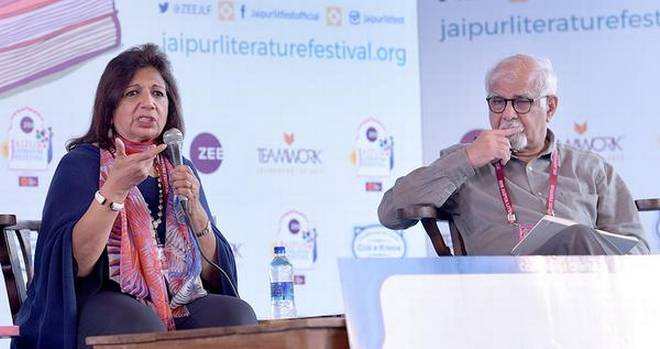
Session on the penultimate day of Jaipur Lit Festival focusses on literacy’s link to growth

The need to recognise the importance of education in triggering a country’s growth was the focus of a session featuring economist Surjit Bhalla, entrepreneur and chairperson of IIM-Bangalore Kiran Mazumdar-Shah and former Planning Commission member Arun Maira on the penultimate day of the Jaipur Literature Festival.

“Education is a dominant influence in the growth, individual incomes and fortunes and misfortunes of a country,” Mr. Bhalla said during the discussion centred around his book, The New Wealth of Nations, a title that references Adam Smith’s well-known work. If land was thought to be the main wealth-creating asset in Smith’s time, education is the new wealth of a nation, he said. Developing countries have transformed in the past 40 years only because of the spread of education. Mr. Bhalla claimed that the recognition, and documentation, of how education helps to increase one’s income came only as late as in the 1960s with economist Gary Becker.

Mr. Bhalla’s book contends that there is a co-relation between the percentage of poor with illiteracy rate in the country, that education has allowed for the rise of a new merit-oriented elite in India, as well as empowered women.

Slams quota in education

Mr. Bhalla, however, criticised the quota-based education system. “Part of our problem in education is reservations,” he said, turning to journalist Rajdeep Sardesai’s comment that cricket had flourished in India only because it didn’t have a quota system to make his point. Agreeing with him, Ms. Shaw said that if the country has the right to education as a policy, everyone should be able to enter no matter what.

Ms. Shaw was also critical of policy decisions on education. The focus, she emphasised, should be on creating new knowledge clusters, and on research and innovation.

Ms. Shaw pointed out that only 0.69% of the GDP is spent on scientific research. “It’s the lowest in BRICS and ASEAN countries. If India wants to move the needle, it will need to double or treble this. Only research-based education model will create wealth,” she said.

These knowledge centres, she believes, need to be created around centres of excellence.

Source:

http://www.thehindu.com/books/education-is-wealth-of-nation-says-economist-surjit-bhalla/article22545027.ece


Comparte este contenido:

Manufactured illiteracy and miseducation: A long process of decline led to President Donald Trump

By Henry Giroux

A deep-rooted crisis in education, and a long cultural and political decline, is what got us here. There’s hope!

Donald Trump’s ascendancy in American politics has made visible a plague of deep-seated civic illiteracy, a corrupt political system and a contempt for reason that has been decades in the making. It also points to the withering of civic attachments, the undoing of civic culture, the decline of public life and the erosion of any sense of shared citizenship. As Trump has galvanized his base of true believers in post-election demonstrations, the world is witnessing how a politics of bigotry and hate is transformed into a spectacle of demonization, division and disinformation. Under President Trump, the scourge of mid-20th century authoritarianism has returned not only in the menacing plague of populist rallies, fear-mongering, threats and humiliation, but also in an emboldened culture of war, militarization and violence that looms over society like a rising storm.

The reality of Trump’s election may be the most momentous development of the age because of its enormity and the shock it has produced. The whole world is watching, pondering how such a dreadful event could have happened. How have we arrived here? What forces have allowed education, if not reason itself, to be undermined as crucial public and political resources, capable of producing the formative culture and critical citizens that could have prevented such a catastrophe from happening in an alleged democracy? We get a glimpse of this failure of education, public values and civic literacy in the willingness and success of the Trump administration to empty language of any meaning, a practice that constitutes a flight from historical memory, ethics, justice and social responsibility.

Under such circumstances and with too little opposition, the Trump administration has taken on the workings of a dis-imagination machine, characterized by an utter disregard for the truth and often accompanied by the president’s tweet-storm of “primitive schoolyard taunts and threats.” In this instance, George Orwell’s famous maxim from “Nineteen Eighty-four,” “Ignorance is Strength,” materializes in the administration’s weaponized attempt not only to rewrite history but also to obliterate it. What we are witnessing is not simply a political project but also a reworking of the very meaning of education as both a crucial institution and a democratizing and empowering cultural force.

Truth is now viewed as a liability and ignorance a virtue. Under the reign of this normalized architecture of alleged common sense, literacy is regarded with disdain, words are reduced to data and science is confused with pseudo-science. All traces of critical thought appear only at the margins of the culture as ignorance becomes the primary organizing principle of American society. For instance, two-thirds of the American public believe that creationism should be taught in schools and a majority of Republicans in Congress do not believe that climate change is caused by human activity, making the U.S. the laughing stock of the world. Politicians endlessly lie, knowing that the public can be easily seduced by exhortations, emotional outbursts and sensationalism, all of which mimic the fatuous spectacle of celebrity culture and reality TV. Image-selling now entails lying on principle, making it easier for politics to dissolve into entertainment, pathology and a unique brand of criminality.

The corruption of both the truth and politics is abetted by the fact that much of the American public has become habituated to overstimulation and lives in an ever-accelerating overflow of information and images. Experience no longer has the time to crystallize into mature and informed thought. Opinion now trumps reason and evidence-based arguments. News has become entertainment and echoes reality rather than interrogating it. Popular culture revels in the spectacles of shock and violence. Defunded and corporatized, many institutions of public and higher education have been all too willing to make the culture of business the business of education, and this transformation has corrupted their mission.

As a result, many colleges and universities have been McDonald-ized as knowledge is increasingly viewed as a commodity, resulting in curricula that resemble a fast-food menu. In addition, faculty are subjected increasingly to a Walmart model of labor relations designed “to reduce labor costs and to increase labor servility. Students are relegated to the status of customers and clients.

In addition, public education is under siege to an almost unprecedented degree. Both political parties have implemented reforms that “teach for the test,” weaken unions, deskill teachers, and wage a frontal assault on the imagination of students through disciplinary measures that amount to pedagogies of repression. Moreover, students marginalized by class and color find themselves in schools increasingly modeled after prisons. As more and more security guards and police personnel occupy schools, a wider range of student behaviors are criminalized, and students increasingly find themselves on a conveyor belt that has appropriately been described as the school-to-prison pipeline.

On a policy level, the Trump administration has turned its back on schools as public goods. How else to explain the president’s appointment of Betsy DeVos as secretary of education? DeVos, who has spent most of her career attempting to privatize public schools while acting as a champion for charter schools. It gets worse: As a religious Christian extremist, DeVos not only supports religious indoctrination in public schools but has gone so far as to argue that the purpose of public education is “to help advance God’s Kingdom.” Not exactly a policy that supports critical thinking, dialogue or analytical reasoning, or that understands schooling as a public good. DeVos is Trump’s gift to the billionaires, evangelicals, hedge fund managers and bankers, who view schools strictly as training and containment centers — and as sources of profit.

On a larger scale, the educational force of the wider culture has been transformed into a spectacle for violence and trivialized entertainment, and a tool for legitimating ignorance. Cultural apparatuses that extend from the mainstream media and the diverse platforms of screen culture now function as neoliberal modes of public pedagogy parading as entertainment or truthful news reporting. As “teaching machines,” these apparatuses — as C. Wright Mills once predicted — have become the engines of manufactured illiteracy while producing identities, desires and values compatible with the crudest market ideologies.

Under these circumstances, illiteracy becomes the norm and education becomes central to a version of zombie politics that functions largely to remove democratic values, social relations,and compassion from the ideology, policies and commanding institutions that now control American society. Welcome to the land of the walking dead.

I am not referring here to only the kind of anti-intellectualism that theorists such as Richard Hofstadter, Ed Herman, Noam Chomsky and Susan Jacoby have documented, however insightful their analyses might be. I am pointing to a more lethal form of manufactured illiteracy that has become a scourge and a political tool designed primarily to make war on language, meaning, thinking and the capacity for critical thought. Chris Hedges captures this demagogic attack on thoughtfulness in stating that “the emptiness of language is a gift to demagogues and the corporations that saturate the landscape with manipulated images and the idioms of mass culture.” Freedom now means removing one’s self from any sense of social responsibility so one can retreat into privatized orbits of self-indulgence, unbridled self-interest and the never-ending whirlwind of consumption.

This updated form of illiteracy does not simply constitute an absence of learning, ideas or knowledge. Nor can it be solely attributed to what has been called the “smartphone society.” On the contrary, it is a willful practice and goal used to actively depoliticize people and make them complicit with the political and economic forces that impose misery and suffering upon their lives. At the same time, illiteracy bonds people: It offers the pretense of a community bound by a willful denial of facts and its celebration of ignorance.

How else to explain the popular support for someone like Donald Trump who boldly proclaims his love for the “poorly educated”? Or, for that matter, the willingness of his followers to put up with his contemptuous and boisterous claim that science and evidence-based truths are “fake news,” his dismissal of journalists who hold power accountable as the opposition party, and his willingness to bombard the American public with an endless proliferation of peddled falsehoods that reveal his contempt for intellect, reason and truth.

What are we to make of the fact that a person who holds the office of the presidency has praised popular “rage addict” Alex Jones publicly, and thanked him for the role he played in his presidential election victory? Jones is a conspiracy trafficker who runs the website InfoWars. He has suggested that the 9/11 attacks were an “inside job” and that the massacre of children at Sandy Hook Elementary School in Connecticut was faked.

Illiteracy is no longer restricted to populations immersed in poverty with little access to quality education; nor does it only suggest the lack of proficient skills enabling people to read and write with a degree of understanding and fluency. More profoundly, illiteracy is also about refusing to act from a position of thoughtfulness, informed judgment, and critical agency.

Illiteracy has become a political weapon and form of political repression that works to render critical agency inoperable, and restages power as a mode of domination. Illiteracy in the service of violence now functions to depoliticize people by making it difficult for individuals to develop informed judgments, analyze complex relationships and draw upon a range of sources to understand how power works and how they might be able to shape the forces that bear down on their lives. As a depoliticizing force, illiteracy works to make people powerless, and reinforces their willingness to accept being governed rather than learn how to govern.

This mode of illiteracy now constitutes the modus operandi of a society that both privatizes and kills the imagination by poisoning it with falsehoods, consumer fantasies, data loops and the need for instant gratification. This is a mode of illiteracy and education that has no language for relating the self to public life, social responsibility or the demands of citizenship. It is important to recognize that the prevalence of such manufactured illiteracy is not simply about the failure of colleges and universities to create critical and active citizens. It is about an authoritarian society that eliminates public spheres that make thinking possible while imposing a culture of fear in which there is the looming threat that anyone who holds power accountable will be punished. At stake here is not only a crisis of education, memory, ethics and agency but a crisis that reaches into the very foundation of a strong democracy.

In the present moment, it becomes particularly important for progressives, educators and concerned citizens to protect and enlarge the formative cultures and public spheres that make democracy possible. The relentless attack on truth, honesty and the ethical imagination makes it all the more imperative for the public to think dangerously, especially in societies that appear increasingly amnesiac — that is, countries where forms of historical, political and moral forgetting are not only willfully practiced but celebrated. All of which becomes all the more threatening at a time when a country such as the United States has tipped over into a mode of authoritarianism that views critical thought as both a liability and a threat.

Not only is manufactured illiteracy obvious in the presence of a social order and government that collapses the distinction between the serious and frivolous, it is also visible in media platforms marked by the proliferation of anti-intellectual discourses among a range of politicians and anti-public intellectuals who are waging a war on science, reason and the legacy of the Enlightenment. How else to explain the present historical moment, with its collapse of civic culture and the future it cancels out? What is to be made of the assault on civic literacy and the institutions and conditions that produce an active citizenry at a time when massive self-enrichment and a gangster morality are operative at the highest reaches of the U.S. government, all of which serves to undermine the public realm as a space of freedom, liberty, dialogue and deliberative consensus?

One of the challenges facing the current generation of leftists, progressives and cultural workers is the need to address the question of what counts as education, and what it should accomplish in a society that is slipping into the dark night of authoritarianism. In a world in which there is an increasing abandonment of egalitarian and democratic impulses, what will it take to educate young people and the broader polity to challenge authority and hold power accountable? Such a vision suggests resurrecting a democratic project that provides the basis for imagining a life beyond a social order immersed in massive inequality and endless assaults on the environment, a social order that elevates war and militarization to the highest and most sanctified national ideals.

At issue here is the need for educators, progressives, artists and other cultural workers to recognize the power of education both in schools and the wider culture in creating the formative spaces being mobilized against the ideas of justice and democracy. At the same time, there is a need for the left and others to fight for those public spheres that offer alternative modes of identity, thinking and social relations that support democratic socialism and radical democracy.

At the very least, this requires that education be regarded as central to politics, and that cultural apparatuses such as the mainstream media, digital culture and Hollywood films be perceived as powerful teaching machines and not only as sources of information or entertainment. Such sites should be viewed as spheres of struggle that need to be removed from the control of the financial elite and corporations who use them as work stations for propagandizing a culture of vulgarity, self-absorption and commodification while eroding any sense of shared citizenship and civic culture.

There is an urgent political need for the left and progressives to understand and combat an authoritarian society that uses education to weaponize and trivialize the discourse, vocabularies, images and aural means of communication in a variety of cultural sites. Or, for that matter, to grasp that a market-driven discourse does not and cannot provide the intellectual, ethical and political tools for civic education and the expansion of the social imagination.

On the contrary, the pedagogical machinery of capitalism uses language and other modes of representation to relegate citizenship to the singular pursuit of unbridled self-interests, to legitimate shopping as the ultimate expression of one’s identity, to portray essential public services as reinforcing and weakening any viable sense of individual responsibility, and to organize society for the production of violence as the primary method of addressing a vast array of social problems.

One of the most serious challenges facing progressives, educators and diverse cultural workers is the task of grasping education as a crucial political tool that can be used to enhance the capacities of people to translate their hidden despair and private grievances into public transcripts. At best, such transcripts can be transformed into forms of public dissent or what might be called a moment of rupture, one that has important implications for public action in a time of impending tyranny and authoritarianism.

In taking up this project, individuals and cultural workers can attempt to create the conditions that give the wider public an opportunity to acquire the knowledge and courage necessary to make desolation and cynicism unconvincing and hope practical. In a world in which there is an increasing abandonment of egalitarian and democratic impulses, what will it take to educate young people and the broader polity to challenge authority and hold power accountable?

In the age of financial and political zombies, the ability of finance capitalism to cloak itself in a warped discourse of freedom and choice has been weakened. Its willingness to separate toxic economic, cultural and political policies from their social costs has ruptured neoliberalism’s ability to normalize its worldview. The contradictions between its promises and its harsh effects have become too visible as its poisonous policies have put millions out of work, turned many black and brown communities into war zones, destroyed public education, undermined the democratic mission of higher education, flagrantly pursued war as the greatest of national ideals, turned the prison system into a default institution for punishing minorities of race and class, pillaged the environment and blatantly imposed a new mode of racism under the fanciful notion of a post-racial society.

The crisis of capitalism and the production of widespread misery has opened up new political opportunities to reclaim education as a central element of politics and resistance. Education as it functions on multiple levels and through diverse registers matters. It is one of the most powerful sources for changing consciousness, desires and agency itself.

Pierre Bourdieu was right to argue that leftists “must recognize that the most important forms of domination are not only economic but also intellectual and pedagogical and lie on the side of belief and persuasion.” Bourdieu’s concerns about leftists underestimating “the pedagogical and symbolic dimensions of struggle” are more relevant today than ever, given the accelerated political merger of power, culture and everyday life.

Too often leftists and other progressives have focused on domination as mostly an economic or structural issue and in doing so have forgotten about the political role of education and consciousness-raising in providing a language and narrative in which people can recognize themselves, make identifications that speak to the conditions that bear down on them in new ways, and rethink the future so as not to mimic the present. Yet matters of subjectivity, identity and desire are not only central to politics, they are the crucial underpinning through which new theoretical and political horizons can be imagined and acted upon.

In an age in which authoritarianism is dismantling the foundations of democracy across the globe, the ideological and subjective conditions that make individual and collective modes of agency possible — and capable of engaging in powerful and broad-based movements of resistance — are no longer an option. They are a necessity.

Source:https://www.salon.com/2017/06/24/manufactured-illiteracy-and-miseducation-a-long-process-of-decline-led-to-president-donald-trump/

Comparte este contenido:

EEUU: Career education spotty around state. Students’ lack of opportunities in rural areas catch attention of legislators

EEUU/January 30, 2018/By Hunter Field/Source: http://www.arkansasonline.com

In Arkansas, a K-12 student’s access to career and technical course work depends on where that student lives.

A high school student in Springdale, for example, has the choice of 24 programs of study split between on-campus offerings and off-campus Secondary Area Career Centers with larger, more-advanced equipment. A similar student at Hillcrest High School in Lawrence County has only three options and no career center.

Nowhere is the disparity clearer than in the cluster of 11 north Arkansas school districts — including Hillcrest — that has no career center. Across the state, students in 37 of Arkansas’ 238 districts don’t have access to such centers, according to Arkansas Department of Career Education data.

Those figures are alarming for educators in the primarily rural areas, said Gerald Cooper, executive director of the Northcentral Arkansas Educational Cooperatives.

«Kids in those areas aren’t just underserved, they’re unserved,» Cooper said.

Furthermore, funding for career centers — which has remained stagnant despite increases in demand — was formulated in a way that benefits districts that already have them, according to a Bureau of Legislative Research report. Districts receive their annual allotments from the state based on the previous year’s enrollment in career center courses.

The issue has caught the attention of some state lawmakers, who question whether Arkansas’ approach to career and technical education is working for all students.

Those legislators — a bipartisan group on the Senate and House education committees — are part of a committee in charge of generating an educational adequacy report every two years that recommends how school districts should spend state funds and whether there should be any increases to ensure that every student in Arkansas receives an equitable and adequate education.

The mandate comes from legislation passed in the early 2000s in response to a series of state Supreme Court decisions in the Lake View school funding lawsuit that challenged the constitutionality of the state’s K-12 education funding model.

While the legislation doesn’t explicitly require career and technical education to be analyzed in the adequacy studies, the legislative committee expanded its definition of adequacy in 2016 to include «opportunities for students to develop career readiness skills.» The Arkansas Department of Education requires public high schools to teach a minimum of nine career and technical education courses.

Sen. Joyce Elliott, D-Little Rock, worries that schools in rural areas too far from career centers are teaching only the most basic courses like home economics. Students in those districts, she said, are missing out on the more advanced courses that career centers offer.

The state, Elliott added, may need to step in to ensure that every district has equitable access to career centers. Elliott, a retired teacher, sits on the Senate Education Committee.

«The final responsibility is with the state,» she said. «We can’t just step back and say, ‘Well, you shouldn’t have been born there.'»

Sen. Jane English, R-North Little Rock, who chairs the Senate Education Committee, agreed with Elliott, saying that in future years the committee may need to consider technical education and career centers as part of its per-student funding formula for school districts.

English pointed to the fact that only about 22 percent of Arkansans attain bachelor’s degrees, making career education at the secondary level even more important. Additionally, many of the most «in-demand» occupations, according to the Arkansas Department of Workforce Services, have training aspects that can be offered at the high school level.

However, those courses, like automotive repair and medical services, require advanced facilities and equipment that most school districts can’t afford on their own.

Career centers draw from students across multiple districts, which receive state funding to pay those centers on a per-student basis. Study programs include computer engineering, aviation technology, banking, culinary arts, criminal justice and biomedical science. High schools have 601 different courses they may offer.

The state provides about $20.1 million annually for career centers, according to the Bureau of Legislative Research. That money is distributed to the school districts at a rate of $3,250 per full-time student. That rate has remained unchanged since it was established in 2003.

The centers were created by a 1985 law that called for 16 to be located strategically around Arkansas to maximize access.

There are currently 27 centers (two are pilots) with 29 satellite locations, according to the Arkansas Department of Career Education.

Despite there being more than the law requires, districts like Melbourne still don’t have a vocational learning facility within an hour’s drive, said Superintendent Dennis Sublett. For these smaller districts, it all comes down to a lack of funding.

«We’d love some help,» he said. «We’d love our kids to have the same opportunities as the rest of the kids in the state.»

Some districts have addressed the shortage by raising millages or partnering with nearby private industry, but those options aren’t available to poor, rural districts, as Rep. Michael John Gray, D-Augusta, noted in a joint education committee meeting Tuesday. In Augusta, which doesn’t have access to a career center, there’s simply not industry there anymore to partner with, Gray said.

Elliott pointed to the Lake View case during Tuesday’s meeting, saying that it’s great for school districts to partner with private businesses when they’re nearby, but that won’t work for the entire state.

«The bottom line, the Supreme Court did not say businesses have to do this,» Elliott said. «They said that we do.»

A few minutes later, Rep. Stephen Meeks, R-Greenbrier, caught several members off guard with a comment about the Lake View case.

«Just want to start off with a quick reminder since it was brought up this morning about having to follow adequacy, that while we definitely value the opinion of the Supreme Court, this body is not bound to do anything the Supreme Court tells us to do,» he said. «We do it because we think it is the right thing for the kids of Arkansas.»

Elliott said the comment «astounded» her.

«I think the thing that needs to be clear about what we say … we are bound by the constitution and we are bound by what we put on paper and what we say we’re going to do,» she said. «Well, that needs to be clear with us … if we think that we don’t have three equal branches of government and one won’t hold us accountable for what we say we’re going to do.»

Source:

http://www.arkansasonline.com/news/2018/jan/28/career-education-spotty-around-state-20/

Comparte este contenido:

Australian Education Union SA branch calls for two years of preschool

Australia / 24 de enero de 2018 / Por: Tim Williams / Fuente: http://www.adelaidenow.com.au/

PROVIDING two years of preschool, initially for the most vulnerable children and eventually for all, must be on the next state government’s agenda, the teachers’ union says.

The Australian Education Union’s SA branch has released a position paper that is both an election wishlist and a longer term blueprint for public education.

It says the first priority for young children must be to boost the proportion who attend 15 hours of preschool a week in the year before starting school. While all SA 4-year-olds are enrolled, only 75 per cent attend the funded hours.

The union says whoever forms government after the March election must also develop a longer-term strategy to provide “two years of high quality preschool education for all children”, previously estimated to cost $60 million.

“Quality early education sets the foundations for cognitive, physical, emotional, social and language development …” the paper states.

“Such a strategy should make the provision of two years of quality preschool a priority for all children for whom 15 hours (a week) for a year is not enough to meet their development needs — significant numbers of children from low SES backgrounds, Aboriginal children, children with health problems, children with disabilities, children from non-English speaking backgrounds and children in rural and remote communities.”

The paper also calls for:

A GUARANTEE embattled TAFE SA will receive at least 70 per cent of vocational training funds, leaving no more than 30 per cent as “contestable” between the public and private sectors.

FUNDING all public schools to 100 per cent of the national benchmark known as the Schooling Resource Standard.

GENDER equity strategies, including research and possible employment quotas, to put more women into school and TAFE SA leadership positions.

The State Government currently funds 12 hours a week of preschool for 4-year-olds and the Federal Government the other three hours.

Last month Premier Jay Weatherill revived the idea of two years of preschool and suggested the Commonwealth fund a trial.

But federal Education Minister Simon Birmingham said Mr Weatherill had “no proposal and no funding to roll out this idea” and was trying to distract from the crisis engulfing TAFE SA.

SA Aboriginal children and those in state care are already entitled to attend preschool from age three. Tasmania plans to offer 10 hours of preschool a week to disadvantaged 3-year-olds from 2020.

Fuente noticia: http://www.adelaidenow.com.au/news/south-australia/australian-education-union-sa-branch-calls-for-two-years-of-preschool/news-story/03507c3f6f0771696f075ff7ba35c1da

Comparte este contenido:
Page 116 of 144
1 114 115 116 117 118 144