Page 117 of 144
1 115 116 117 118 119 144

UK: Education cuts impossible to defend, says council leader

UK/January 23, 2018/ Source: http://www.bbc.com

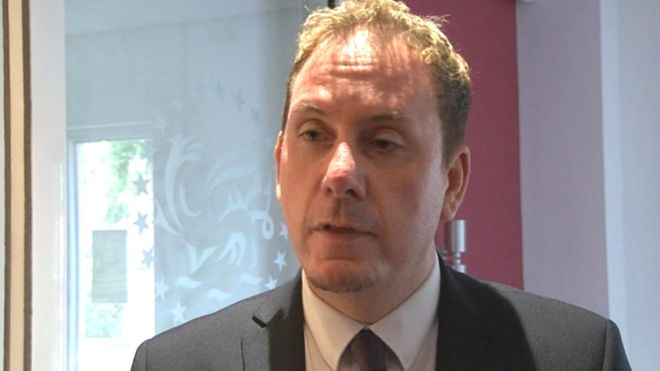
Cuts to local authorities’ education budgets are «impossible to defend», the leader of Swansea council has said.

In a letter to Education Secretary Kirsty Williams, Rob Stewart criticised cuts to a grant that was partly used to fund teaching children who do not speak English as a first language.

The Labour councillor said the money had been taken away but councils were still expected to provide the service.

The Welsh Government said talks to provide extra funding were under way.

In the last budget, the Welsh Government responded to calls from local authorities to cut the number of grants that force them to spend money on specific services and said it would instead transfer the money into the main funding pot.

But Mr Stewart said his education budget would face a shortfall of £2m in the next financial year.

Kirsty Williams is the sole Liberal Democrat in an otherwise all-Labour cabinet

He said an 11% cut to the Education Improvement Grant for Schools had not been fully handed back to main funding pot.

The council would now have to fund teaching support for children from ethnic minorities from existing budgets, he said.

Cardiff council also said it faced a financial shortfall in its education budget.

In a letter to council leaders in November, Liberal Democrat AM Ms Williams said she still expected £10m to be spent across Wales to support ethnic minority learners.

Mr Stewart responded to her, saying the budget for the next financial year had been «disingenuously packaged».

He wrote: «You have placed yourself in a tautologically impossible to defend position. You have proposed a cut to a specific grant which previously, amongst others, funded Gypsy, traveller and minority ethnic groups.

«You have made no cash transfer to revenue support grant, unlike ministerial colleagues.

«You tell us how to prioritise spending – including demanding we spend the same amount on a function for which you have unequivocally removed the grant – with no recompense in cash in the revenue support grant.

«I can’t spend money I simply have had taken away.»

The Welsh Conservatives have lodged a request in the Senedd for an urgent question on the matter .

Tory AM Darren Millar said: «The Welsh Labour-led Government needs to explain why, in wielding cuts to this specific grant, they have made no additional transfer to the main budgetary pot, as was previously promised.»

Horizontal line

Analysis by Nick Servini, BBC Wales political editor

Kirsty Williams, as the solitary Liberal Democrat in the Welsh Government cabinet, has navigated her way through the choppy waters of dealing with Labour council leaders successfully since taking on the job 18 months ago.

The response from Rob Stewart is the exception, rather than the norm.

A source close to Ms Williams says the tone of this strongly-worded letter caught her team by surprise and has not been helpful to the discussions behind the scenes – code for anger at the way the council leader has responded.

The Welsh Government defence is that it is doing what councils want in freeing them up from specific grants, but at a time when there is not much money sloshing around local authority coffers, there are inevitably going to be disagreements about whether the councils are being left out of pocket.

Source:

ww.bbc.com/news/uk-wales-politics-42768473
Comparte este contenido:

Ditch the old hierarchies – further and higher education belong together

19 de enero de 2018 / Fuente: https://www.timeshighereducation.com/

Ongoing ministerial education reviews risk treating technical and academic education as separate pathways, says Quintin McKellar, and this could be to the detriment of both

Following last summer’s series of attacks on universities, the Commons Education Committee is looking at value for money in higher education, and the Treasury Committee has an enquiry on student loans.

Although the current funding system has increased the number of young students entering higher education, including from disadvantaged backgrounds, which is very much to be welcomed, it has also led to a catastrophic fall in the number of mature and part-time students which is a source of grave concern.

At the same time, politicians of all stripes are realising that the harsh cuts the further education sector has suffered – between 2009 and 2015 colleges dealt with a 27 per cent real term cut in funding – have had adverse consequences.

In the context of Brexit, problems with the skills system cannot be ignored. As the recent report from the Social Mobility Commission said, “whole tracts of our country feel left behind, because they are”. Some say that this social crisis led to the outcome of last year’s referendum, arguing that those on the side of Remain were too comfortable with the idea of recruiting skills from the EU rather than providing workable options for local people.

The major review of funding across tertiary education, confirmed in the government’s recent Industrial Strategy white paper, could be an opportunity to think radically about how we could do things better. If it is to come up with anything sensible though, it must move away from an out-dated view of how tertiary education is organised.

In the white paper, the government promised to “establish a technical education system that rivals the best in the world, to stand alongside our world-class higher education system”. This implies that technical and academic education are separate pathways. It does not reflect the real world.

The boundaries between colleges and universities have been blurring for some time: the majority of degrees taught by universities are vocational – just think of nursing, teaching, engineering, architecture, graphic design – while nearly 250 colleges offer higher education.

In terms of mode, colleges are rightly praised for working closely with employers but many universities also excel in employer-engagement and work-based learning. Modern universities in particular have developed “learning by doing” pedagogies where students learn by solving real-world problems in teams and practise their skills in both simulated environments and through work placements.

For students who prefer to learn while being employed, both universities and colleges now offer a wide-range of apprenticeship programmes, including degree apprenticeships.

It is, however, perhaps most important that the review recognises that both academic and technical education can be delivered to the highest levels. For too long, technical education has been seen as somehow inferior to academic education – a fall-back option for those who are struggling academically. In reality, many employers are happy to sponsor doctoral training for postgraduates who want to work in industry rather than academia – or even move seamlessly between the two.

In any event, thinking about education in terms of levels with an assumption that people should move in an entirely linear way – from level 1 to level 2 to level 3 and so on – is not always helpful. It harks back to the days of PSA, targets where the system measured how many people had achieved at each level, and to the early axe of austerity, which fell first on “Equivalent Level Qualifications” – people could no longer access funding to study a course if they had already achieved a qualification at that level.

In a world where it is estimated that people now entering the labour market will have as many as nine careers, this is surely not the right approach. Employers want people with the competencies for their occupation, with soft skills that enable them to work in teams and with the ability to think critically about what they are doing and suggest improvements and innovations.

Many people will study at both colleges and universities at different points in their life – and not always in a linear way. Employers will look to both colleges and universities for their training needs. The reviews must not create barriers between the further and higher education sectors and trade one off against the other, but ensure that both are adequately funded and that opportunities exist to move smoothly from one to the other.

Of course we cannot be naive. Education has to be paid for, most probably by a combination of the taxpayer, student and employer, and there has to be some system of rationing – but let’s ditch old hierarchies and think afresh about how we can make best use of our many excellent universities and colleges.

Fuente noticia: https://www.timeshighereducation.com/blog/ditch-old-hierarchies-further-and-higher-education-belong-together#survey-answer

Comparte este contenido:

India: Tech is triggering mass revolution in education

India/January 16, 2018/Source: http://www.thehindubusinessline.com

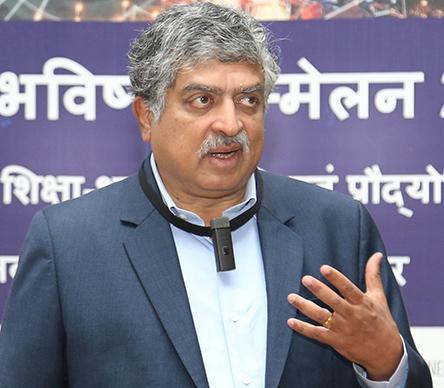
Inaugurating a three-day conference on ‘The Future of Learning’ here on Monday, hosted by IIM-B in collaboration with IIT-Bombay, Nilekani said: “Digital unbundling leads every sector, including education, to go from mega to micro and creates new ways to mix and match.”

The Future of Learning Conference is the first in the series of annual conferences alternating between IIM-Bangalore and IIT-Bombay for the next three years. In his presentation, ‘Micro is the New Mega’, Nilekani focused on how to learn in a volatile, uncertain, complex and ambiguous (VUCA) world.

We are seeing the third mass revolution in education, he said, triggered and powered by new-age platforms. Data is the “new soil”, he added. He spoke of how unbundling to micro and the data avalanche will lead to more automation and millions of micro work packets, and rise of second-generation platforms or the gig economy.

“In terms of the future of learning, this means we must re-imagine what will happen in terms of these mega trends because universities will become platforms that distribute the ability to teach and learn,” Nilekani said, adding that universities will become testing grounds for blended learning models.

The question and answer session following Nilekani’s address revolved around the forces that are driving the change in the education sector, such as increasing globalisation (fiercely competitive domestic and international student markets), greater global mobility (of academics, students and academic brands), an intensifying clamour for democratisation of knowledge and access, and the emergence of disruptive digital technologies that drive innovations and offer leapfrogging opportunities.

Problem-solving

“These developments have important implications for the universities of the future. Successful universities of the future will not be limited by physical spaces or contracts. University learning spaces will be built collaboratively by traditional educational institutions, non-academic subject experts, technopreneurs and investors and the focus will be on the distribution of the ability to solve problems,” Nilekani responded.

In his opening remarks, Prof Deepak B Phatak from IIT-Bombay, who is co-chair of FoL 2018, highlighted disruption in the education sector and spoke of the need to bring the different silos together and focus on creative disruption.

Earlier in the day, Professor PD Jose, co-chair of FoL 2018 and Faculty in the Strategy area at IIM-B, said: “The education sector is set for a major makeover. The 20the century model, characterised by intense faculty-student interactions in brick and mortar classrooms, is fast changing to one of need-based and asynchronous exchanges in a virtual space.”

He added that the conference will examine how to bridge the learning divide in the country and not let it go the way of digital divide.

Source:

http://www.thehindubusinessline.com/info-tech/tech-is-triggering-mass-revolution-in-education/article10033516.ece?utm_source=RSS_Feed&utm_medium=RSS&utm_campaign=RSS_Syndication

Comparte este contenido:

UK: Public transport and education to get funding boost

UK/January 16, 2018/By John Campbell/Source: BBC

Education and public transport are to benefit from the reallocation of money across Stormont departments.

The Department of Education will get an additional £14m.

Of that, £6m will be for special educational needs and £8m will be used to facilitate access to school surpluses accumulated in prior years.

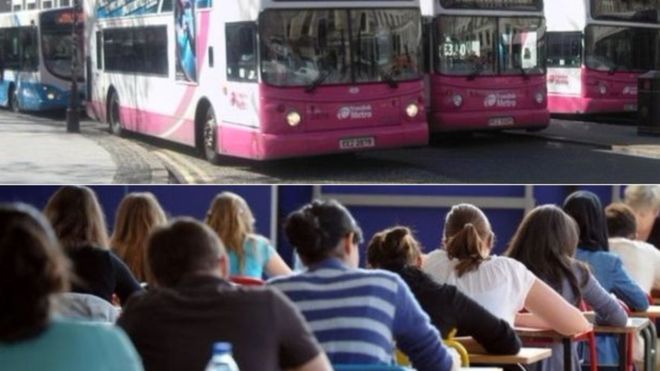
The Department for Infrastructure will receive £9.3m to help tackle a deficit at public transport company Translink.

A further £10.1m of capital spending has been reallocated, most of which will go to the Department for Infrastructure.

It will get £8.1m for roads maintenance and the procurement of new buses by Translink.

  • DUP-Tory deal: Where is the money going to be spent?

The Department for Communities will get £1.6m to support maintenance of the social housing stock, whilst the Executive Office will get £400,000 to support infrastructure works as part of the ongoing redevelopment of the Ebrington project in Londonderry.

The reallocation was announced by the Department of Finance which said it came after some departments had identified a number of reduced financial requirements.

In June, the DUP agreed to support Theresa May’s government in return for £1bn for Northern Ireland over five years.

The department confirmed that only £20m of that ‘DUP deal’ money will be spent in this financial year to tackle immediate financial pressures in health and education.

A further £30m of «immediate pressures» money, which was originally supposed to be spent this year, will now be «reprofiled» into 2018/19.

However, the department said that access to this funding requires the approval of both parliament and the assembly.

It is understood that if there is no assembly then a direct rule minister could take the necessary legislation through Westminster.

Source:

http://www.bbc.com/news/uk-northern-ireland-42691919


Comparte este contenido:

Brisbane is Australia’s most expensive city for faith-based education

Australia/January 16, 2018/By: Felicity Caldwell/Source: http://www.watoday.com.au

Brisbane is Australia’s most expensive city for a faith-based education, according to research released on Tuesday.

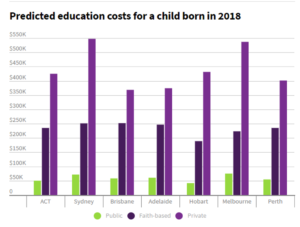
The ASG Planning for Education Index predicts it will cost $251,866 to put a child born in 2018 through a Catholic, Anglican, Uniting Church, Buddhist, Islamic or Hindu school in Brisbane.

The cost jumped $7902 from 2017, unlike Melbourne, Perth and Hobart, where the forecast cost fell.

The Brisbane figure was $11,187 above the national metropolitan average ($240,679) and $63,124 more expensive than Hobart, Australia’s most affordable capital for a faith-based education.

But there was some good news for parents considering the private school system, with Brisbane predicted to be the most affordable capital city in the nation.

The forecast cost of a private education for a 2018 baby in Brisbane fell $3464 compared with last year, to $368,573 over the course of their schooling.

This was $106,769 below the national metropolitan average and $178,841 cheaper than Sydney ($547,414), Australia’s most expensive city for a private school education.

The index also discovered the forecast cost of a government education in Brisbane ($58,352) had dropped $1783 in the past year.

Brisbane was now significantly cheaper than Melbourne ($75,263), Australia’s most expensive government school system.

The forecast cost of a government education in Brisbane was $7968 below the national metropolitan average.

The fall in the forecast cost of education across Brisbane’s private and government schools was heavily influenced by slower price rises within secondary education.

But while school fees were a major education expense, there were other hits to the hip pocket, including extracurricular activities, computers, travel expenses, uniforms, school excursions and camps.

Based on more than 13,500 responses, the index predicted Brisbane parents who educated a child in the private school system for 13 years could fork out $49,365 for other non-fee education costs.

At faith-based schools it would cost $44,971 and $38,661 at government schools.

Brisbane mum Zhiqin (Grace) Cao, whose daughter, Emily, is in Year 2 at a Lutheran school, says she has already underestimated the costs of education.

«I calculated the costs of tuition, uniforms and textbooks but forgot to calculate other activities including ballet lessons, ice-skating and intensive school holiday classes, so I’ve had to budget for an extra $3000 a year,» she said.

«Emily also started gymnastics in the second half of last year because of the influence of her friends, and coding camps cost $150 a day and can last a week during the holidays.»

Ms Cao, an ASG member, said she valued a quality education despite the cost.

«As long as I can see Emily is benefiting, I will continue to support and encourage her,» she said.

Outside the capital cities, regional Queensland was Australia’s most expensive region for a faith-based education, with parents spending $198,012 for a child born in 2018.

Acting ASG COO Bruce Hawkins said the cost of education had risen at more than double the rate of inflation over the past 10 years and outstripped the growth in wages over the same period.

The overall cost of education had skyrocketed 61 per cent in the past decade, dwarfing the 34 per cent rise in wage growth in the same period.

«This means that education costs are demanding a far greater share of the family wallet than in the past, placing more burden on the average family, already challenged by the rising cost of living,» Mr Hawkins said.

«If you have three children, the cost of education at a Brisbane private school could top $1 million.

«That’s significantly more than the purchase price of the average family home.»

Originally published on brisbanetimes.com.au as ‘Brisbane is Australia’s most expensive city for faith-based education‘.

Source:

http://www.watoday.com.au/national/education/brisbane-is-australia-s-most-expensive-city-for-faith-based-education-20180115-p4yyi9.html

Comparte este contenido:

Australia: NSW Education Department: Schools principals not ready for head gig

Australia / 10 de enero de 2018 / Por: Kylar Loussikian / Fuente: https://www.dailytelegraph.com.au

THE overwhelming majority of school principals say they are underprepared for the job because of a lack of proper guidance and support.

Only one-third of principals were confident there was “probably” a clear path for them in preparing for the kind of school they headed.

That applied for just 11 per cent for principals at special needs schools, according to federal Education Department analysis released through freedom of information.

The survey of nearly 1000 principals, marked “commercial-in-confidence” and prepared for the department by Orima Research, also found a majority of principals felt they did not have adequate support to prepare for the job.

“Less than half of principals (44 per cent) considered (structured professional development opportunities) to be adequately addressed, while only about one quarter as many (12 per cent) considered (improving the attractiveness of the principal’s role) to be adequately­ addressed,” the ­research analysis reads.

Education Minister Simon Birmingham said the government late last year asked the Australian Institute for Teaching and School Leadership to come up with a new process to find and train principals.

“We need the best possible principals to get the best outcomes­ for Australian students,” Senator Birmingham said yesterday.

“It is absolutely vital that our principals have the skills and support they need to succeed­, so that our children succeed. Feedback like this is why AITSL is currently developing­ a pre-certification process­ to help ensure those on leadership pathways are equipped with the necessary skills to become­ successful school leaders­.”

The survey was conducted with 985 principals at primary, secondary and special needs schools in late 2016, and later separately analysed by the department­ last year. It also found a broader problem with frustration over workloads and relative salaries in teaching.

Businessman David Gonski is now reviewing how to improve the quality of teaching, after the Turnbull government last year passed major reforms to the schools funding system.

The survey warns that there is “anecdotal evidence to suggest­ teachers are more frustrated­ now than ever ­before that their salaries do not match the workload or expectation of the profession”.

“A number of teachers and principals are leaving because the demands of the profession are becoming unrealistic,” it reads. And there is “little incentive­ to undertake extra work for little reward” in a program to train senior teachers, known as Highly Accomplished and Lead Teachers, which is also “complicated and requires high workload”.

“The level of system support for this is really poor,” was listed as a common response.

Fuente noticia: https://www.dailytelegraph.com.au/news/nsw/nsw-education-department-schools-principals-not-ready-for-head-gig/news-story/91cb8533fe8bcc86cf84a7159a55c1e9

Comparte este contenido:

Kenia: Form 1 students report as free education program kicks off

Nairobi / 10 de enero de 2017 / Por: SIMON NDONGA / Fuente: https://www.capitalfm.co.ke/

A spot check by Capital FM News in various schools showed increased activity as the new students were registered and escorted to their dormitories and shown their classes.

At the Kenya High School, the principal Flora Mulatya expressed optimism that the initiatives put in place by the government will lead to improved performance this year.

“We are receiving our Form Ones from today and they started reporting as early as 6am. We started attending to them and we have already admitted almost 100 girls and we have received text books also for form one. So it is a good beginning because this year unlike other years, the form ones will be issued with books immediately and their fees have also been paid by the government,” she said.

The situation was the same at the Nairobi Milimani Secondary School where the students were full of excitement as they began the next chapter in their education.

“I came to this school because I wanted to perform well and make history. I also want to go to a good university since I like Maths and even English. I want to start a business when I grow up,” stated Brian, one of the new students.

“I have been admitted to this school and I have seen that the teachers are really disciplined and I know that I can perform really well,” said Joshua Greg, another student.

The senior teacher Jenifer Mwiti who is also the English Language Head of Department in the school welcomed the students and urged then to work hard during their years at the institution.

“We are doing well for the admissions and we have had a busy morning. The parents and students are coming and we have received them quite well and the whole program is going on well. We have no problem. We expect the performance to really improve because the books come in handy,” she stated.

The principal of Nyeri High School JK Maina applauded the national government for disbursing the free secondary education funds and text books on time.

Maina stated that they received the text books on Monday and the funds are already in the school bank account in readiness for starting this year in high gear.

“We want to appreciate the government, yesterday we received the text books and they are in the books store. We want also to appreciate the government because the funds are already in the school bank account,” he stated

He said that they are admitting more than 300 Form One students this year unlike last year where they admitted 270 students.

A spot check by Capital FFM News in various schools showed increased activity as the new students were registered and escorted to their dormitories and shown their classes/MOSES MUOKI

On her part, Iriaini Girls Secondary school principal Margaret Muthoni Munene echoed similar sentiments stating that they have already received the text books and funds.

”We have also received the government money for free secondary education and therefore the parents are expected to pay only boarding fee and money to buy school uniform,” she stated.

The government has already sent out Sh29.5 billion for the Free Day Secondary Education Programme (FDSE) programme which is helping to achieve a 100 per cent transition from primary to secondary school level.

Education Principal Secretary Belio Kipsang stated that the government has released a further Sh7.5 billion for printing and supply of six core textbooks.

He stated that the funds disbursed to schools will cover all the tuition and other operations as per guidelines for each student enrolled in secondary schools irrespective of whether they are enrolled in sub-county, county, extra-county or national schools.

For schools with boarding facilities, national schools and extra-county schools in the urban centres of Nairobi, Nakuru, Mombasa, Kisumu and Eldoret will charge Sh53,554 while all other boarding schools will charge Sh40,435.

Fuente noticia: https://www.capitalfm.co.ke/news/2018/01/form-1-students-report-free-education-program-kicks-off/

Comparte este contenido:
Page 117 of 144
1 115 116 117 118 119 144