Page 125 of 144
1 123 124 125 126 127 144

Democracy on life support: Donald Trump’s first year

Dr. Henry Giroux

Donald Trump was elected president of the United States a year ago this week.

His ascendancy in American politics has made visible a culture of cruelty, a contempt for civic literacy, a corrupt mode of governance and a disdain for informed judgment that has been decades in the making.

It also points to the withering of civic attachments, the undoing of civic culture, the decline of public life, the erosion of any sense of shared citizenship and the death of commanding visions.

As he visits Asia this week in a trip that those in the White House, as usual, feared could careen spectacularly off the rails, the world will once again witness how Trump’s history of unabashed racism and politics of hate is transformed into a spectacle of fear, divisions and disinformation.

Under Trump, the plague of mid-20th century authoritarianism and apocalyptic populism have returned in a unique American form. A year later, people in Asia and the rest of the world are watching, pondering how such a dreadful event and retreat from democracy could have taken place.

How could a liberal society give up its ideals so quickly? What forces have undermined education to the extent that a relatively informed electorate allowed such a catastrophe to happen in an alleged democracy?

George Orwell’s “ignorance is strength” motto in 1984 has materialized in the Trump administration’s attempts not only to rewrite history, but also to obliterate it. What we are witnessing is not simply politics but also a reworking of the very meaning of education both as an institution and as a broader cultural force.

Trump, along with Fox News, Breitbart and other right-wing cultural institutions, echoes one of totalitarianism’s most revered notions: That truth is a liability and ignorance a virtue.

As the distinction between fact and fiction is maligned, so are the institutions that work to create informed citizens. In Trump’s post-truth and alternative-facts world view, nothing is true, making it difficult for citizens to criticize and hold power accountable.

Education viewed with disdain

Education and critical thinking are regarded with disdain and science is confused with pseudo-science. All traces of critical thought appear only at the margins of the culture as ignorance becomes the primary organizing principle of American society.

For instance, two thirds of the American public believe that creationism should be taught in schools and more than half of Republicans in Congress do not believe that climate change is caused by human activity. Shockingly, according to the Annenberg Public Policy Center, only 26 per cent of Americans can name all three branches of government.

In addition, a majority of Republicans believe that former President Barack Obama is a Kenyan-born Muslim, a belief blessedly skewered upon Trump’s arrival a few days ago in Hawaii, Obama’s birthplace.

Such ignorance on behalf of many Americans, Republicans and Trump supporters operates with a vengeance when it comes to higher education.

Higher education is being defunded, corporatized and transformed to mimic Wal-Mart-esque labour relations by the Trump administration under the preposterous ill-leadership of a religious fundamentalist, Betsy DeVos. It’s also, according to a recent poll, viewed by most Republicans as being “bad for America.” Higher education is at odds with Trump’s notion of making America great again.

This assault on higher education is accompanied by a systemic culture of lies that has descended upon America. The notion that democracy can only function with an informed public is viewed with disdain. Trump apparently rejoices in his role as a serial liar, knowing that the public is easily seduced by exhortation, emotional outbursts and sensationalism.

Americans over-stimulated

The corruption of the truth, education and politics is abetted by the fact that Americans have become habituated to overstimulation, a culture of immediacy and live in an ever-accelerating overflow of information and images. Experience no longer has the time to crystallize into mature and informed thought.

Popular culture as an educational force delights in spectacles of shock and violence. Defunded and stripped of their role as a public good, many institutions extending from higher education to the mainstream media are now harnessed to the demands and needs of corporations and the financial elite.

In doing so, they are snubbing reason, thoughtfulness and informed arguments.

Governance, meantime, is now replaced by the irrational Twitter bursts of an impetuous four-year-old trapped in the body of an adult.

The high priest of caustic rants, Trump’s insults and bullying behaviour have become a principal force shaping his language, politics and policies. He has used language as a weapon to humiliate just about anyone who opposes him. He has publicly humiliated and insulted a disabled reporter along with members of his own cabinet, including Secretary of State Rex Tillerson, undermining their respective ability to do their jobs.

More recently, he has mocked Sen. Bob Corker’s height, referring to him on Twitter as “Liddle Bob Corker” because the senator criticized him in announcing his resignation.

Ignorance is a terrible wound when it is self-inflicted. Trump’s lies, lack of credibility, lack of knowledge and unbridled narcissism have suggested for some time that he lacks the intelligence, judgment and capacity for critical thought necessary to occupy the presidency of the United States.

But when accompanied by his childish temperament, his volatile impetuousness, his disdain for higher education and a world view that reduces everyone else to friends or enemies, loyalists or traitors, his ignorance puts lives at risk.

Governing via wilful ignorance?

Trump’s presidency is forcing us to deal with a kind of nihilistic politics in which the search for truth and justice, moral responsibility, civic courage and an informed and thoughtful citizenry are rapidly disappearing.

Government in the United States now apparently runs on wilful ignorance as the planet heats up, pollution increases and people die.

South Korean protesters stage a rally against a planned visit by U.S. President Donald Trump near U.S. Embassy in Seoul, South Korea last week. (AP Photo/Ahn Young-joon)

Evidence is detached from argument. Science is a subspecies of fake news, and alternative facts are as important as the truth. As language is emptied of meaning, standards of proof disappear, verification becomes the enemy of power, and evidence is relegated to just another opinion.

Trump has sucked all of the oxygen out of democracy and has put in play a culture and mode of politics that kills empathy, wallows in cruelty and fear and mutilates democratic ideals.

Anyone who communicates intelligently is now part of the fake news world that Trump has invented, a world in which all truth is mobile and every form of communication starts to look like a lie.

Impetuousness and erratic judgment have become central to Trump’s leadership, one that is as ill-informed as it is unstable. As he marks the anniversary of his election while in Asia this week, he’ll no doubt reinforce how governance can collapse into a theatre of self-promotion, absurdity and a dark and frightening view of the world.

Source:

https://theconversation.com/democracy-on-life-support-donald-trumps-first-year-86824
Comparte este contenido:

Injustice In The Classroom: Young Women In Uganda Deserve An Education

Uganda/November 07, 2017/ Source: http://www.huffingtonpost.co.uk

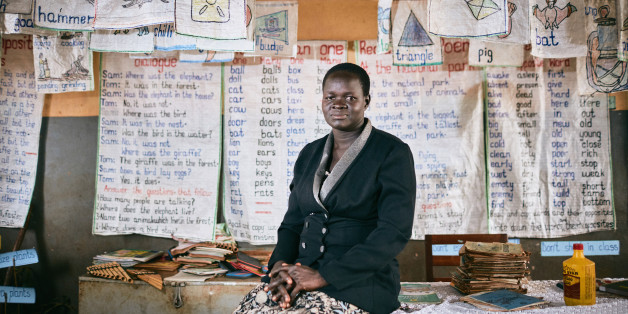
My name is Jenifer Aloyo, a classroom teacher of a government-aided primary school in Western

Uganda. For the last 10 years I have been teaching Years 3 and 7 as well as English. However, in these past so many years, I have also experienced the heartbreaking situation where ambitious young girls have repeatedly missed out on the education they deserve.

Where I live, in the district of Kiryandongo, there is a divergence of cultures including refugees who have been displaced by disastrous circumstances in South Sudan as well as Kasese and Bududa in Uganda. This has left many girls and young women vulnerable, and, within a complexity of issues, means that the education of daughters is less important than their marriage.

I have seen girls enrolled in school at a late age, perhaps eight years old, because they had been kept at home to do household chores or to take care of their siblings. Parents have also been scared to send their daughters to school for fear that they would be kidnapped as they walk tough distances through thickets. They are considered vulnerable and weak.

As they grow into young women, girls are so often bullied by their male counterparts and not supported either at school or at home to understand their bodies, reproductive health and the importance of their own rights. When they begin to have their period, girls are not given the facts and often told misinformation from ill-intentioned people – people who allege that when a girl menstruates it is a sign that she is ready for marriage and child bearing. Girls are so often exposed to illicit practices inappropriate to their age and mislead into early sex. For this reason, I have seen countless girls drop out of school due to teenage pregnancies and early marriage.

I have also countered cases where parents have tasked girls with «business» during school time. So as boys are concentrating in class, girls are anxiously wondering how they will sell the pancakes they given to take to school before hurrying back home to prepare for the evening meal. This greatly affects their learning.

At home, husbands and fathers often leave the responsibility of their children’s education to the women. Unfortunately though, many are not empowered to do this.

Almost half of women in Uganda are unable to read. They lack the money, skills and influence they need to provide for their family. They’re voices are not heard and so the issues facing their daughters are overlooked. Even something as simple as a need for underwear can be forgotten, so adolescent girls can be forced home from school due to shame and discrimination. They will eventually drop out.

All of this results in generation after generation of young women who, deprived of an education, become mothers too soon and will repeat the same challenges in supporting their own children.

Missing out on an education means that a young mother’s understanding of, and access to, healthcare can be so poor. She will not make antenatal or postnatal appointments. She will struggle to visit hospitals or clinics when she need to. Her children will miss out on vaccinations against preventable diseases. And, if she cannot read, she will face the struggle to interpret medical advice and instructions, sometimes resulting in a dangerous under or overdose for her children.

While all this happens, «uneducated» young mothers face such stigma from society. They are looked at as misfits and are rarely allowed to participate in their community or school meetings. They struggle with such low self-esteem and acceptance and cannot speak up for the rights of themselves of their children.

Injustice truly is a cycle. But it can be broken.

Build Africa is helping young mothers in Jenifer’s region to learn literacy skills and access healthcare and nutrition services.

Research shows that an educated mother is more likely to be healthier, more economically stable and to take care of her children better. She will have the power to vaccinate her children, providing more nutritious meals and nurture them from their earliest days.

Most importantly, her children will be more likely to complete their own education, so they will have more opportunities in life and one day send their own children to school.

Please help transform the life of a young mum in Jenifer’s community: support Build Africa’s #MumsReadKidsSucceed appeal. It could be the most powerful thing you do today.

http://www.build-africa.org/youngmums

Source:

http://www.huffingtonpost.co.uk/jenifer-aloyo/injustice-in-the-classroo_b_18479232.html

Comparte este contenido:

India: Education a big hurdle, hunt for right job bigger

India/November 07, 2017/By: Ardhra Nair/Source: https://timesofindia.indiatimes.com

Pune: From making education accessible to opening up the job market, activists say a lot needs to be done to improve the quality of life of persons with disabilities.

Though securing an education in itself is a big hurdle for people with disabilities, finding a job is even tougher. Public sector jobs have a quota for persons with disability, but it’s difficult to find emplyment in the private sector.

Makarand Vaidya, who needs help to walk, used to work as a marketing and strategy professional. «Government policies need to improve. Schools, colleges and workplaces too need to go beyond the regulations and extend help to disabled people,» he said.

«Only a few among the top-notch corporates hire disabled people. Mid-level companies, and even small and medium industries, are not very receptive to the idea of giving jobs to people with disabilities,» Vaidya added.

Akash Pawar, a BCA student who works at a computer centre, said, «It is tough to get an education if you are disabled. There are no toilets designed to accommodate your wheelchair, neither at school and nor at the workplace. I had learnt computers at this centre. Since I am really good with computers, the owner lets me work here. Otherwise, it is extremely hard to get a job even if you can prove that you are good.»

Kalidas Supate, manager of Kamayani Udyog Kendra (KUK), claims to have found jobs for nearly 600 disabled people. He said, «We have been holding job fairs for the disabled for the past five years or so. We advertise in the media and the HR departments of many companies contact us. Over 40 big firms had come for hiring.»

He added, «Companies that had hired our candidates have given us feedback. They said the visually challenged and hearing/speech-impaired candidates who were recruited in the IT and hospitality sectors, work twice as much as the regular employees.»

KUK also runs a training institute, which helps impart skills to the challenged workforce.

Source:

https://timesofindia.indiatimes.com/city/pune/education-a-big-hurdle-hunt-for-right-job-bigger/articleshow/61536774.cms

Comparte este contenido:

Estados Unidos: Maternal education: A matter of life and death for infants?

Estados Unidos / 01 de noviembre de 2017 / Por:  / Fuente: https://journalistsresource.org/

Infants whose mothers lack a high school education are, in some states, more than twice as likely to die as those born to mothers with four years of college or more, a new study finds.

The issue: Education provides tangible benefits, including employment opportunities and knowledge that can improve both the quality and duration of one’s life. But these effects extend beyond just the direct recipients of an education — children also benefit from their parents’ schooling.

Prior research on maternal education has shown that increased education offers mothers more connections with resources for infant health and an awareness of healthy behaviors (including exercise and not smoking). Education might also hone the skills needed to access and effectively use the health care system.

In general, infants born to more educated mothers have lower mortality rates. A new study delves into the specifics, determining on a state-by-state basis the extent to which mothers’ education levels affect their babies’ chances of survival.

An academic study worth reading: “Inequality in Infant Mortality: Cross-State Variation and Medical System Institutions,” published in Social Problems, October 2017.

About the study: Benjamin Sosnaud, a sociologist at Trinity University, looked at almost 23 million infant birth and death records from 1997 to 2002. The records, provided by the National Vital Statistics System, include data on the mother’s schooling. Sosnaud compared two groups of mothers — those who had less than 12 years of education and those who had 4 years of college or more. Controlling for other variables, including race and maternal age, he analyzed the association between maternal education and infant mortality across the 50 states.

Sosnaud also collected state-specific data from the American Hospital Association on the number of neonatal intensive care units (NICUs) per 10,000 residents and from the American Medical Association on the number of primary care providers per 10,000 residents. This data allowed him to analyze whether linkages exist between these components of state medical systems and trends in infant mortality rates.

Key findings:

  • Taking into account other factors, including race and maternal age, maternal educational level is significantly linked to infant mortality risk.
  • Alaska, North Dakota, Tennessee, West Virginia and Kentucky had the largest differences in infant mortality rates across maternal education levels. In these states, infants born to less-educated mothers were more than twice as likely to die as infants born to more-educated mothers.
  • The state with the smallest difference in infant mortality rates across maternal education levels was Hawaii. New Mexico and Nevada also exhibited less inequality.
  • In states with more NICUs, infant mortality risk decreased only for those born to less-educated mothers.
  • In states with more primary care physicians per 10,000 residents, infant mortality risk decreased for both groups of mothers, but more so for the college-educated group. Sosnaud suggests this might be because not all mothers could access primary care providers, regardless of availability.

Other resources:

  • The U.S. Centers for Disease Control and Prevention’s Division of Reproductive Health describes initiatives aimed at reducing infant mortality rates. They also have statistics available on infant mortality by state.
  • The U.S. Health Resources and Services Administration’s Maternal and Child Health Bureau collects relevant data and research.
  • The U.S. Department of Health and Human Services has an advisory committee on infant mortality.

Related research:

Fuente noticia: https://journalistsresource.org/studies/society/education/maternal-education-infant-mortality

Comparte este contenido:

Kenia: Pupils hopeful of posting good results despite political tension

Kenia / 01 de noviembre / Fuente: http://www.nation.co.ke

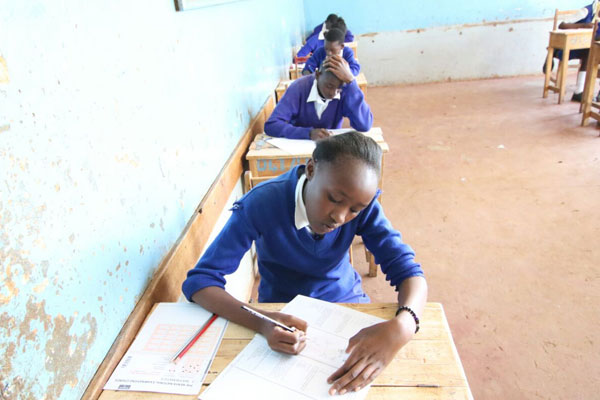
Primary school children from areas hit by violence during last week’s repeat presidential election were yesterday gearing up for the national exams that start this morning.

The Nation found the children rehearsing for the Kenya Certificate of Primary Education (KCPE) examination, hoping for improved performance in the examinations that end on Thursday.

At Pandpieri Primary School in Kisumu County, headteacher Veronica Otieno said the 121 pupils were ready for the exams.

 “Due to our location next to Nyalenda slums, we have had to contend with a lot of challenges since the region has experienced confrontations with police in the run-up to the October 26 presidential polls,” she said.

REVISION

Mr Peter Okello, the headteacher at Hekima Primary School, which has 16 candidates, said: We have taken our students through a thorough revision exercise and we hope to improve on the 341 mean score we attained last year.”

Kenya National Union of Teachers (Knut) Kisumu executive secretary Joshua Ogallo called on the government to increase security patrols around schools to ensure the smooth administration of the exams.

Kakamega County Director of Education Fred Kiiru said a total of 46,594 candidates — 22,150 boys and 24,443 girls— will sit the exams.

“We have finalised all the logistics including transportation of exam materials to respective centres and ensuring adequate security,” he said.

Jackeline Walumbe, the public relations manager at Bridge International, said most of the candidates will sit the examination in public schools.

“We have about 3,628 candidates across the country, with 85 in Busia. We expect to perform well this year, since recording a positive trajectory in the past two years,” she said.

RAINFALL

In Kisii, 30,618 standard eight candidates will sit the test in 918 centres spread across nine sub-counties according to the county education director William Sugut.

In Mount Kenya, examiners asked the government to ferry examination materials by air because most of the roads had been rendered impassable by heavy rainfall. Education director Margaret Mwirigi said they had procured several four-wheel drive vehicles to help in the exercise.

Tharaka Nithi county commissioner Florence Amoit sought to assure the candidates and teachers that security forces would provide adequate security as the Mandera education boss Abdihamid Maalim said the county’s  5,232 candidates were all ready for the test.

In Meru, 32 inmates from Meru GK main prison participated in yesterday’s rehearsal that was conducted countywide.

READY

Nyandarua education chief Abbakar Hassan said: “We have already sent supervisors and security men to all examination centres. We do not anticipate any challenges since we are fully prepared.”

In Nakuru, 44 inmates from Naivasha Maximum Security Prison will be among thousands of candidates and among them is 65-year-old Stephen Muria Mwangi who will be writing the test for the first time sharing the examination hall with the youngest candidate at the institution — 19-year-old Harrison Kipyego Bungei.

At the Nakuru prison, five women and eight men inmates will sit the examination, according to the head of the institution James Sawe.

The Kenya Defence Forces will provide extra security to officers manning the exams in some schools in Wajir South constituency, which lies on the Kenya-Somalia border. Deputy County commissioner Felix Kisalu said the KDF officers will join police in protecting the candidates, teachers and examiners in Wajir Bor area to Gherille in Wajir South.

Fuente noticia: http://www.nation.co.ke/news/education/Pupils-hopeful-of-posting-good-results/2643604-4162904-u1at1vz/index.html

Comparte este contenido:

Nigeria: Government To Stop Free Secondary School Education

Nigeria/October 31, 2017/Source: http://www.informationng.com

Indications emerged on Sunday that the Ondo State government is set to discontinue free education at the Secondary Schools level across the state.
The decision was contained in a communique issued by the over 2,000 stakeholders who converged on the International Culture and Events Center (DOME), Akure, for a two-day education summit in the state.
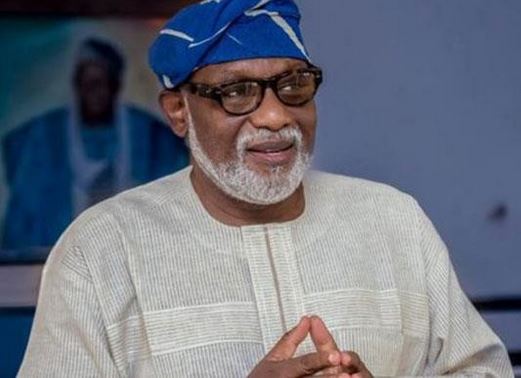
Governor Oluwarotimi Akeredolu, who declared the event opened last Thursday, had assured the participants of the summit that the government will enforce any decision taken at the end of the summit.
He urged participants to deliberate in line with the current economic realities and sustainability. According to the communique which was handed to reporters by the summit’s media and publicity chairman, Kunle Adebayo, stakeholders at the summit resolved that “Government should fund education at the Primary school level while parents should be responsible for the education of their children at the Secondary and Tertiary levels”.
The summit also resolved that automatic promotions should be cancelled in the Secondary Schools, stressing that the joint SSS 2 examination must be reintroduced to present qualified students for the Senior Certificate Examination.
The communique read in part, “That the issue of Education funding is too important to be left in the hands of Government alone if we must achieve functionality in education. It must be the business of all stakeholders.
 
“That there should be a review of chargeable fees in State’s tertiary institutions in line with the needs of each school and current economic realities.
 
“That the issue of return of schools to their original owners requires further engagement amongst stakeholders in order to arrive at amicable and workable solution.
 
“That State Government; International Development Patners; Non Govermental Organisations;and spirited individuals should collaborate in the training and retraining of teachers; school Administators/Education Managers in order to update their knowledge on contemporary issues on education “.
The summit also resolved that renovation and reconstruction of dilapidated school structures must not be left in the hands of government alone.
It recommended that Philanthropists, Old Students Association, PTA and Corporate Organizations should also intervene in such projects.
“That Mega schools in the State should be put into more functional,optimal and better use by government to address the current state of underutilization of some of them
 
“That Examination Ethics and Disciplinary Committee should be strengthened in the Ministry and schools to checkmate incidences of examination malpractice.
 
“That a measurable parameter should be designed for the promotion of teachers while Teachers Biometric Attendance device should be designed to monitor their class attendance and enhance productivity.
 
“That the Ministry should reinvigorate co-curricular activities in schools while craft work and school gardens should be revived in all schools ” the communique read.

Source: Tori

Source:

Government To Stop Free Secondary School Education

Comparte este contenido:

Ghana: World Bank warns of ‘learning crisis’ in global education

Ghana/October 31, 2017/By Iddi Yire/Source: http://www.ghananewsagency.org

Millions of young students in low and middle-income countries face the prospect of lost opportunity and lower wages in later life because their primary and secondary schools are failing to educate them to succeed in life.

Warning of ‘a learning crisis’ in global education, a new Bank report said schooling without learning was not just a wasted development opportunity, but also a great injustice to children and young people worldwide.

The World Development Report 2018: ‘Learning to Realise Education’s Promise’, which was made available to the Ghana News Agency, argues that without learning, education will fail to deliver on its promise to eliminate extreme poverty and create shared opportunity and prosperity for all.

It said even after several years in school, millions of children cannot read, write or do basic math and the learning crisis was widening social gaps instead of narrowing them.

It said young students who were already disadvantaged by poverty, conflict, gender or disability reach young adulthood without even the most basic life skills. “This learning crisis is a moral and economic crisis,” World Bank Group President Jim Yong Kim said.

“When delivered well, education promises young people employment, better earnings, good health, and a life without poverty. For communities, education spurs innovation, strengthens institutions, and fosters social cohesion. But these benefits depend on learning, and schooling without learning is a wasted opportunity. More than that, it’s a great injustice: the children whom societies fail the most are the ones who are most in need of a good education to succeed in life.”

The report recommended concrete policy steps to help developing countries resolve this dire learning crisis in the areas of stronger learning assessments, using evidence of what works and what doesn’t to guide education decision-making; and mobilise a strong social movement to push for education changes that champion ‘learning for all.’

According to the report, when third grade students in Kenya, Tanzania, and Uganda were asked recently to read a sentence such as “The name of the dog is Puppy” in English or Kiswahili, three-quarters did not understand what it said.

It said in rural India, nearly three-quarters of students in grade three could not solve a two-digit subtraction such as “46 – 17”—and by grade five, half still could not do so.

It said although the skills of Brazilian 15-year-olds had improved, at their current rate of improvement they would not reach the rich-country average score in maths for 75 years; adding that in reading, it would take 263 years.

It said these statistics do not account for 260 million children who, for reasons of conflict, discrimination, disability, and other obstacles, were not enrolled in primary or secondary school.

It said while not all developing countries suffer from such extreme learning gaps, many fall far short of levels they aspire to.

It noted that leading international assessments on literacy and numeracy show that the average student in poor countries performs worse than 95 per cent of the students in high-income countries—meaning such a student would be singled out for remedial attention in a class in those countries.

It said many high-performing students in middle-income countries, young men and women who achieve in the top quarter of their group would rank in the bottom quarter in a wealthier country.

The report, written by a team directed by World Bank Lead Economists, Deon Filmer and Halsey Rogers, identifies what drives these learning shortfalls, not only the ways in which teaching and learning breaks down in too many schools, but also the deeper political forces that cause these problems to persist.

The report noted that when countries and their leaders make “learning for all” a national priority, education standards can improve dramatically.

It cited that, from a war-torn country with very low literacy rates in the 1950s, South Korea achieved universal enrollment by 1995 in high-quality education through secondary school, its young people performed at the highest levels on international learning assessments.

It said Vietnam’s 2012 results from an Organisation for Economic Co-operation and Development (OECD) test for high school students in maths, science, and reading called the Programme for International Student Assessment (PISA), showed that its 15-year-olds performed at the same level as those in Germany—even though Vietnam is a much poorer country.

“The only way to make progress is to ‘find truth from facts.’ If we let them, the facts about education reveal a painful truth. For too many children, schooling does not mean learning,” said World Bank Chief Economist, Paul Romer.

Relying on evidence and advice gathered during extensive consultations in 20 countries, with governments, development and research organisations, CSOs, and the private sector.

The report offers three policy recommendations: firstly, it calls for assess learning, so it could become a measurable goal; secondly, it recommends making schools work for all children and thirdly mobilising everyone who had a stake in learning.

“Developing countries are far from where they should be on learning. Many do not invest enough financial resources and most need to invest more efficiently. But it is not only a matter of money; countries need to also invest in the capacity of the people and institutions tasked with educating our children,” said Jaime Saavedra, World Bank’s Senior Director for Education.

Source:

http://www.ghananewsagency.org/education/world-bank-warns-of-learning-crisis-in-global-education-124220

Comparte este contenido:
Page 125 of 144
1 123 124 125 126 127 144