Page 127 of 144
1 125 126 127 128 129 144

Malaysia: 50pct of about 1,000 Islamic education institutions do not comply with fire safety requirements

 Malaysia/October 17, 2017/By Shahrinnahar Latib/ Source: https://www.nst.com.my

Fifty per cent of 956 Islamic education institutions including tahfiz schools nationwide do not comply with fire safety requirements and required further improvements.

Fire and Rescue Department director-general Datuk Wan Mohd Nor Ibrahim said since firemen began inspecting the premises last month, the department has issued 389 written reminders to premises which failed to comply with the safety guidelines.

He said some of the education institutions and tahfiz schools did not have sufficient firefighting equipment including fire extinguishers and the emergency exit in the building was not safe to be used.

«Checks revealed 291 education institutions do not have enough firefighting equipment and some do not have fire exits at their premises. The operators will be given time to improve the firefighting facilities to fully comply with the department’s specifications and building safety aspects.

«The premises owner has to rectify and overcome weaknesses that need immediate attention. Failure to adhere to the rules within the given time will force us to bring them to court,» he told reporters after opening the 2017 Fire, Safety campaign and Innovation exhibition here today.

He said to date, Selangor has recorded the highest number of Islamic education institutions and tahfiz schools which did not comply with fire safety specifications, followed by Johor and Kedah.

«The department is expected to complete inspecting all 1,117 Islamic education institutions and tahfiz schools in the country by Oct 22. Our inspection also covers premises that are not registered with the authorities and a detailed report will be presented during the cabinet meeting.

«The department often stresses for premises to have enough ladders to allow occupants to leave the building in case of a fire and install smoke detectors. Such measures will help avoid a similar tragedy like the Darul Quran Ittifaqiyah tahfiz school fire on Sept 14,» he said.

Source:

https://www.nst.com.my/news/nation/2017/10/291376/50pct-about-1000-islamic-education-institutions-do-not-comply-fire-safety

Comparte este contenido:

EEUU: AU gets grant to study STEM education

EEUU/October 17, 2017/Source: http://www.galioninquirer.com

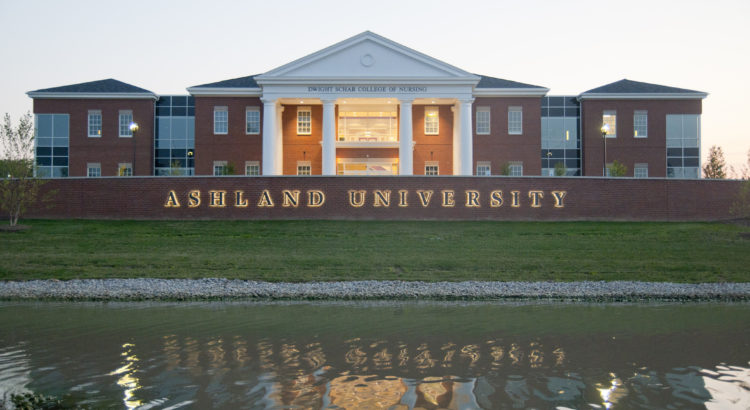
Ashland University has received a $225,032 grant from the National Science Foundation for a project titled “Promoting STEM Education at Two-Year Colleges.” The grant runs through June 30, 2019.

The project, which is under the direction of AU Provost Dr. Eun-Woo Chang and Kathleen A. Alfano, professor emeritus, College of the Canyons, calls for Ashland University to hold a National Science Foundation (NSF) proposal writing workshop to help faculty at two-year colleges successfully obtain NSF funding majorly focused on Advanced Technological Education (ATE) and Scholarships in Science, Technology, Engineering and Mathematics (S-STEM) programs.

“The key outcome of this project will be an increase in the number of competitive ATE and S-STEM proposals submitted by faculty at two-year colleges,” said Chang. “The project design addresses the barriers to participation in ATE and S-STEM competitions faced by faculty at two-year colleges and will address the low number of two-year college applicants and awards made from these programs.”

According to Dr. Chang, the project proposal writing component and two-year mentoring by experienced principal investigators will increase the knowledge and skills of the two-year college STEM faculty at institutions that currently have minimal grant activity, thereby strengthening the personal and institutional ability to pursue other proposal based projects.

“The large number of recruited institutions for the one workshop and two-year mentoring by experienced principal investigators — a total of 50 participating two-year college faculty — will have a positive impact on the quality of STEM education for a great number of students at awarded at two-year colleges,” Chang said.

“The project will lead to an increase in the collaboration between two-year and four-year colleges, benefiting faculty and students at both types of institutions through improved student transfer success, aid in developing articulation agreements, and increased sharing of resources between institutions,” Dr. Chang added.

Source:

http://www.galioninquirer.com/news/23609/au-gets-grant-to-study-stem-education

Comparte este contenido:

China to train specialists on organ donation

China/October 17, 2017/By Yuan Quan and Gao Bei/ Source: http://www.shanghaidaily.com

“ I do.” The words brought Liu Yuan, 38, a father of two boys, on the verge of tears. But it wasn’t a wedding vow. It was from the relative of an organ donor.

In China, every after-death organ donation must get permission from family members. Since 2013, Liu has been a coordinator of organ donation at Beijing You’an Hospital, dealing with family approaches, organ donation and procurement, as well as funeral services.

From November, along with 21 other medical specialists from Shanghai, Beijing, Guangzhou, Kunming, Wuhan and Nanchang, he will train postgraduate students in organ donation and transplants.

Liu and his colleagues think the course is a key step for China to adopt a more professional approach to organ donation in line with international practice.

Liu, a liver transplant surgeon, had never been trained in organ donation before 2013.

He was reluctant to take the job at first and mistakenly thought the work of a coordinator was nothing more than “persuading people to donate.” He bought books and took courses on sociability, in the hope of communicating better with the families of patients.

The first organ donation he completed was over a drink. A 13-year-old girl with a brain tumor was declared brain dead, kept alive only by machine. But her family was reluctant to agree to donations. Liu invited her father for a drink and the two men formed a bond. Liu recalls how they cried all night, not only for the sufferings of the family, but also for a father’s regrets. His companionship and understanding worked. The next day, the father agreed to donate his daughter’s liver, kidneys and corneas, helping at least three people.

In the past four years, Liu has completed more than 30 organ donations. But the failures “would be more than five times that number.”

Liu thought the main impediment to donation was that many conservative folks still firmly believed in the Chinese tradition of burying the dead intact. Liu says even his own parents did not support organ donation. He was even suspected of being involved in organ trafficking.

China banned the use of organs from executed prisoners in 2015 and made voluntary donation the only legitimate source. With the system more fair and transparent, the number of organ donors is growing and public awareness is rising.

Around 10,000 people have donated 28,000 vital organs after death to date. A total of 4,080 people donated their organs in 2016, while in 2010 the number was only 34. Almost 300,000 Chinese have expressed a wish to donate their organs.

The country has also sped up the training of doctors to overcome the skills shortage.

Liu has seen many medical staff fail to maintain the organ functions of potential donors, which led to organ failure and affected the quality of donations. This was due to lack of expertise, he believes.

Seven Chinese universities will offer postgraduate courses in organ donation and transplants, under the KeTLOD project (Knowledge Transfer and Leadership in Organ Donation from Europe to China). Co-founded by the European Commission and Chinese universities, it is expecting to enroll 140 postgraduate students.

Filling a gap

Liver transplant specialist Xue Feng will teach the course at Shanghai Jiaotong University. It will fill a gap in China’s medical education, he says. “We have lagged behind Western countries for nearly three decades. We have to work harder.”

Liu joined a special online course in February with another 21 Chinese doctors. They were questioned by organ donation specialists from Spain, Italy and France, who offered expertise and experience in clinical approaches, management and dissemination strategies in organ donation, in accordance with European guidelines.

The three-month online course was conducted through a discussion group on a social network app that enabled students to read lecture notes on their smartphones. Surgical operations were presented in pictures and videos; and online translation tool helped communication in English.

The doctors then went to the University of Barcelona in May for a weeklong course.

Marti Manyalich, president of Spain’s Donation and Transplantation Institute, said at the launch that training is not just about sharing knowledge, but about transferring the course to China, adapted to local needs.

“Seven universities are not enough. We must train more Chinese professionals in the next decades,” said Marti.

Spain has the highest organ donation rate in the world. In 2016, it had 43.4 donations per million people, while China had 2.98, although that was up from 0.03 in 2010. One reason behind Spain’s success is pioneering professionalization. Back in the 1980s and 1990s, the University of Barcelona began to offer graduate courses in organ donation, which were recognized and followed by other European countries.

Since then, Spain has taken the lead in establishing international training and exchanges, training more than 10,000 professionals around the world.

China joined the project in 2013. Wang Lu, an organ donation coordinator in Beijing You’an Hospital, is one of the “seed doctors.” She was impressed by the extensive open discussions, scenario teaching and the Socratic questioning method, which are rare in Chinese training.

Liu learned that keeping silent during family approaches is better than talking sometimes.

Humility wins trust, says Zhang Lize, a neurologist who took part in the training.

Many internal medicine specialists or grassroots doctors who still question the benefits of organ transplants are unwilling to help find potential donors among their patients. Some probably lack knowledge, but some prefer to avoid potential tensions with patients.

Chen Xiaosong, coordinator of Shanghai Renji Hospital, worries about finding doctors who want to teach and students interested in studying the subject. Textbooks have not yet been translated into Chinese.

Hou Fengzhong, vice director of China Organ Donation Administrative Center, says despite remarkable achievements in the past 10 years, China’s organ donations are still in the primary stage, requiring the whole of society to work together. He advocates closer cooperation in legal, economic, political and medical sectors.

Liver transplant specialist Li Wenlei, head of the course in Capital Medical University, thinks education is “the best prescription” for China’s organ donation.

“If organ donation is a river, then medical staff work downstream, dealing with individual cases,” Li says. “But when organ donation becomes a part of education, they move upstream and can influence a whole generation.”

Source:

http://www.shanghaidaily.com/feature/China-to-train-specialists-on-organ-donation/shdaily.shtml

 

Comparte este contenido:

Las Cruces Public Schools Sends Letter To NMPED Regarding Science Education Standards

Mexico/October 17, 2017/Source: http://krwg.org

Commentary: Las Cruces Public Schools sent the following letter to the New Mexico Public Education Department regarding proposed omissions in the state’s science education standards:

As the state moves forward with the long-anticipated adoption of new science standards, the Las Cruces Public Schools wishes to express concerns about key omissions in the proposed New Mexico STEM-Ready Science Standards. As an early adopter of the Next Generation Science Standards (NGSS), LCPS recognizes the need for a revised vision of science education to prepare students for college, career and citizenship. However, there is great concern that omissions in standards that support conceptual understanding of complex systems will have a lasting detrimental impact on science education. The removal of terminology such as evolution and climate change flies in the face of the evidence accepted by the majority of the scientific community. These omissions dilute the accuracy of key scientific concepts that may forever impact the science literacy of students.

Public schools have the responsibility to provide students with the skills required to become critical thinkers, capable of analyzing evidence and constructing arguments based on the evidence. Taking on topics that are controversial and engaging with content that has multiple interpretations is key to giving students the opportunity to participate in authentic scientific inquiry. Removing these topics would deny New Mexico students access to scientific inquiry, examination, and debate that is fostered among students in states across the nation. Such a policy decision would marginalize New Mexico students and render them less able to compete with their peers across the nation and the globe.

The Las Cruces Public Schools continues to experience success with the implementation of rigorous science standards. In 2015, LCPS began integrating the Next Generation Science Standards, without modification, into science curricula in grades 6-8. Science educators and stakeholders have embraced these changes and there has been a notable increase in student achievement in science in the middle grades.

Adopting modified standards not only imperils the education of students, but potentially the economic future of our state. New Mexico can never hope to improve quality of education, and in turn quality of life, if the state implements policies that drive away industry and leave residents with fewer opportunities for high wage employment.

On behalf of the students of New Mexico, now and future, we implore you to provide them with access to science education that is afforded to students across the nation. Maintain the integrity of science education by ensuring the NGSS standards are adopted as designed, without omission of key scientific concepts.

This letter was unanimously approved by the Las Cruces Board of Education on October 3, 2017.

Respectfully,

Gregory Ewing, Ed.D.

Superintendent

Sra. Maria Flores

President

Las Cruces Board of Education

Source:

http://krwg.org/post/las-cruces-public-schools-sends-letter-nmped-regarding-science-education-standards

Comparte este contenido:

Education Malaysia Global Services ready to work with police on visa abuse, says COO

Malaysia/ October 17, 2017/Source: http://www.themalaymailonline.com

The Education Malaysia Global Services (EMGS) will co-operate with the Royal Malaysia Police on the issue of abusing student visa which pose a serious threat to national security.

Its chief operations officer Prof Datuk Dr Rujhan Mustafa said EMGS viewed the matter seriously and would ensure Malaysia’s integrity as an international education hub was preserved.

“There are several processes and screening involved in the processing of international student pass including continuous co-operation between the agencies involved in the exchange of information to determine the effectiveness of student management.

“Among aspects screened before receiving any recommendation from EMGS for approval of student pass by the Immigrant Department of Malaysia is that every course offered to international students must obtain full accreditation from the Malaysia Qualification Agency (MQA),” he said in a statement today.

Yesterday, Inspector-General of Police Tan Sri Mohamad Fuzi Harun was reported as saying that police had detected the existence of a syndicate bringing in Foreign Terrorist Fighters (FTF) to Malaysia through various methods, including by using student visas, following the detention of 48 suspects.

Rujhan said EMGS would conduct a detailed review on individuals involved in such activities after receiving details from the police and welcomed the effort of institutions of higher learning to always monitor their students and report any unlawful activities. — Bernama

Source:
Read more at http://www.themalaymailonline.com/malaysia/article/education-malaysia-global-services-ready-to-work-with-police-on-visa-abuse#bhj4e2pIL7Xckl2q.99

Comparte este contenido:

Teaching in Freedom, Empowering Teachers

14.10.2017/By: en.unesco.org

Teachers are a critical foundation of every society’s long-term strength — providing children, young people and adults with the knowledge and skills they need to fulfill their potential.<
But around the world, far too many teachers don’t have the freedom and support they need to do their vitally important jobs. That is why the theme of this year’s World Teachers’ Day –“Teaching in Freedom, Empowering Teachers” – reaffirms the value of empowered teachers and recognizes the challenges many encounter in their professional lives across the globe.
Being an empowered teacher means having access to high-quality training, fair wages, and continuous opportunities for professional development. It also means having the freedom to support the development of national curricula — and the professional autonomy to choose the most appropriate methods and approaches that enable more effective, inclusive and equitable education. Furthermore, it means being able to teach in safety and security during times of political change, instability, and conflict.
But in many countries, academic freedom and teacher autonomy are under pressure. For example, at the primary and secondary school levels in some countries, stringent accountability schemes have put enormous pressure on schools to deliver results on standardized tests, ignoring the need to ensure a broad-based curriculum that meets the diverse needs of students.
Academic freedom is critical for teachers at every level of education, but it is especially critical for higher-education teachers, supporting their ability to innovate, explore, and stay up-to-date on the latest pedagogical research. At the tertiary level, teachers are often employed on a fixed-term, contingency basis. This in turn can result in greater job insecurity, diminished career prospects, higher workload and lower wages – all of which can restrict academic freedom and undermine the quality of education that teachers can deliver.
Across all education levels, political pressure and business interests can curb the ability of educators to teach in freedom. Teachers living and working in countries and communities affected by conflicts and instability often face greater challenges, including rising intolerance, discrimination, and related restrictions on research and teaching.
This year marks the 20 year anniversary of the 1997 UNESCO Recommendation concerning the Status of Higher-Education Teaching Personnel, which complements the 1966 UNESCO/ILO Recommendation concerning the Status of Teachers.
Together, these instruments constitute the main reference framework on the rights and responsibilities of teachers and educators. Both stress the importance of teacher autonomy and academic freedom in building a world in which education and learning are truly universal.
As the world works together to realize the vision of the Sustainable Development Goals, we appeal to our partners in governments and across the education and private sectors to commit to building a highly skilled, valued and empowered education workforce. This constitutes a critical path to realizing SDG 4, which envisions a world in which every girl, boy, woman and man has access to quality education and lifelong learning opportunities.
This means securing decent working conditions and fair wages for all teachers including at the tertiary level. It means providing teachers with training and development. It means increasing the number of quality teachers, especially in those countries with high numbers of untrained teaching personnel. It means removing unnecessary restrictions on research and teaching and defending academic freedom at all education levels. Finally, it means raising the status of teachers around the world in a way that honors and reflects the impact they have on the strength of society.

From: http://en.unesco.org/news/teaching-freedom-empowering-teachers

Comparte este contenido:

EEUU: Education fund gap could go as high as $80M

EEUU/ October 10, 2017/By: Valley News/Source: https://vtdigger.org

State officials and school board members say the Education Fund shortfall could go as high as $80 million and could wallop many property owners with a 5 percent increase in the school tax rate.

Vermont Secretary of Education Rebecca Holcombe has said that a 7- to 9-cent increase in the statewide property tax is likely unless school boards make significant budget cuts.

The projections for fiscal year 2019 will ultimately add pressure to local school boards gearing up to begin their budget processes, said Hartford School Board Chairman Kevin Christie, who also is a Democrat in the Vermont House.

“There might be some very, very difficult decisions to make, and until we know what that bottom line is looking like, we don’t know what they are,” Christie said.

Kevin Christie
Hartford School Board chair Kevin Christie. File photo by Geoff Hansen/Valley News

If the budget gap falls on property taxpayers, who pay $1.06 billion into the $1.58 billion Education Fund, it would add about 8 cents to the current homestead property tax rate of $1.51 per $100 of assessed property. It also would add 8 cents to the nonresident rate, currently $1.535, state officials said this week.

The exact impact on individual school districts will vary, depending on their spending, but the base rate increase would amount to a $200 tax hike on a home valued at $250,000 for those Vermont residents not eligible for the state’s income sensitivity program.


“Needless to say, the pressures that we’re trying to address are very similar to the state level, especially with the health care component, and we haven’t completed our negotiations for our teacher contracts,” Christie said.

Emily Byrne, the chief financial officer for the Vermont Agency of Education, said the primary driver of the funding gap is the state’s decision to prop up the current FY2018 budget with about $47 million in “one-time” funds that were taken primarily from an end-of-year surplus and an education reserve fund.

“The problem from a budgetary perspective is, if you use one-time money for ongoing costs, you have a problem right out of the gate the following year,” Byrne said.

Those measures actually slightly decreased the property tax rate for the current year, but for fiscal year 2019, which starts next July, there is pressure not only to make up for the loss of the cushion, but also to put about $9.4 million back into the reserve.

Adam Greshin, commissioner of finance and management said the Education Fund gap could go as high as $80 million if school district voters approve budgets with an average increase of of 3 percent. If school budgets are held level or below 3 percent, the anticipated tax increase could be partially averted, said Greshin, a former independent state representative and school board member from Warren.

“I think the governor is going to continue to focus on the same issues because they’re just as important,” he said. “We’re going to ask school districts to reduce the growth in their spending and level fund their budgets, and we’re going to continue to advocate strongly for a statewide health care contract.”

Greshin pointed to an anticipated spike in fiscal year 2019 health care rates — the Vermont Education Health Initiative says premiums will increase by as much as 17 percent for school district employees across the state.

“Keep in mind, the two initiatives that you saw out of the administration last (spring), both would have zeroed in on unsustainable growth. The first would have asked school boards to level fund their budgets. That didn’t happen,” Greshin said.

“The second initiative, which received a great deal of attention, was to move to a statewide health care contract for all school employees. That too didn’t happen. Both of those initiatives would have made life substantially easier this year.”

Royalton School Board member Geo Honigford, president of the Vermont School Boards Association, said he’ll argue against a budget cap at an upcoming Oct. 19 meeting of VSBA members that will include a discussion on how to address the fiscal crisis.

“Caps are never really great policy, because they’re a one-size-fits-all solution,” he said, citing schools with capital improvement emergencies or growing student populations as examples of districts that would not do well under a cap.

Honigford said the Vermont School Boards Association is developing recommendations for solutions that would include a statewide teacher health care agreement negotiated by school boards and unions.
The VSBA also will seek to address Vermont’s student-to-staff ratio, which Honigford said has fallen from 4.7 students per staff member to a lowest-in-the-nation 4.2 to 1 over the past several years.

“A task force would look at staffing in each district and then be able to make recommendations,” he said.

Honigford said that local budget talks in Royalton would depend on the outcome of an upcoming Oct. 24 vote on a consolidation with the Bethel School District.

Even as school boards prepare to sharpen their pencils on local education budgets, there will be various initiatives to change the picture at the state level.

Honigford said the Legislature is sure to make an effort.

“It’s an election year, so we fully anticipate legislators will have no stomach for an 8-cent increase and then saying ‘vote for me.’ We anticipate some sort of cost containment measures coming down the road and we want them to make sense,” he said.

Christie said he’s seen several proposals, some including diversifying the revenue stream, that would dramatically change the way that education is funded, and that any one of them could be implemented very quickly — if the political will can be mustered.

“Most of the concepts have been placed on the table before or at least have been looked at in a cursory way,” he said. “It kind of takes a collective will to say ‘we’re going to change.’ That’s not easy.”

Source:

Education fund gap could go as high as $80M

Comparte este contenido:
Page 127 of 144
1 125 126 127 128 129 144