Page 129 of 144
1 127 128 129 130 131 144

EEUU: Trump to create $200M grant program for computer education

EEUU/September 26, 2017/By: DARLENE SUPERVILLE/Source: http://www.seattletimes.com

President Donald Trump on Monday directed his education secretary to prioritize science and technology education and spend at least $200 million annually on competitive grants so schools can broaden access to computer science education in particular.

During an Oval Office appearance, where he was surrounded by students from local schools, Trump said more than half of U.S. high schools don’t teach computer programming and that nearly 40 percent don’t offer physics.

He said more widespread access to such instruction will help students develop the skills they need to compete and win in tomorrow’s workforce.

 “Who likes to win?” Trump asked the students. “Who likes to lose?”

Ivanka Trump, the president’s daughter and senior White House adviser on the workforce issues, told reporters during a telephone briefing earlier Monday that it is vital that students, especially girls and racial minorities, learn how to write computer code and study computer science.

 She said exposure in grades K-12 is vital.

“Today represents a giant leap forward as we think about aligning the skills that are taught in the classroom with the skills that are in demand in the modern economy,” Ivanka Trump said in the Oval Office before the president signed a directive instructing Education Secretary Betsy DeVos to act.

 Money for the grants has been appropriated by Congress, officials said. Trump’s order asks DeVos to prioritize high-quality STEM – science, technology, engineering and math – education along with computer science education under an existing grant program that schools and districts have access to.

Ivanka Trump said she would visit Detroit on Tuesday with private sector officials as they announce pledges in support of computer science education.

Source:

http://www.seattletimes.com/nation-world/nation-politics/trump-to-create-200m-grant-program-for-computer-education/?utm_source=RSS&utm_medium=Referral&utm_campaign=RSS_all

Comparte este contenido:

EEUU: Teachers to get a view of hi-tech future at education conference

EEUU, September 23, 2017. By:education.einnews.com.

Teachers and school workers are being invited to get a glimpse of the future of education at a county conference.

Shropshire Council’s EdTech (Education Technology) conference will be held at Theatre Severn on Wednesday and is for anyone working in a school across the UK, but especially those in Shropshire.

Hosted by Shropshire Council, it is hoped to be the first of many similar conferences.

Large technology and software companies will be attending the event including BT, Microsoft, Sophos and Capita.

There will be a range of exclusive talks and hands-on sessions providing delegates with tools to deal with current IT challenges. They will include everything from e-safety to social media, to digital literacy targets. More than 80 schools have already signed up to attend but there are still limited spaces available.

Nick Bardsley, Shropshire Council’sCabinet member for children’s services and education, said: «This is an amazing opportunity for all local schools and education providers to take control of the ever-evolving face of technology and learn to use it to their advantage.

«The aim of this is to benefit the teachers, support staff and of course students by giving you a glimpse of the future, as well as helping children and young people to be as well-equipped as possible to handle the challenges of navigating the internet, and the potential dangers that come with it.

«Shropshire Council is pleased to have significant buying power, meaning that we can deliver a reduced cost service for those receiving services.

Delighted «I am delighted by the large number of schools already signed up, and would like to take this opportunity to welcome and encourage everyone to book their places without delay.»

People can sign up to attend the event at https://www.eventbrite.co.uk/e/edtech-shropshire-wednesday-27th-septem-ber-2017.

From: http://education.einnews.com/article/405641375/Zt_SN5iNZJcIfx2K?lcf=ZdFIsVy5FNL1d6BCqG9muZ1ThG_8NrDelJyazu0BSuo%3D

Comparte este contenido:

Tanzania: Menstrual Hygiene Management (MHM) for Education in Emergencies (EIE): A Study for Plan International Tanzania

Executive Summary

As per the Global Goals (SDG 4- 4.1), Plan International has been strategically supporting girls’ secondary education and working to eliminate the barriers that hinder one of the significant barriers that Plan International Tanzania identified was a lack of support for Burundian refugee girls during their menstruation. This was seen as a contributor to both girls missing several days of school per month or dropping out altogether. Female students don’t have adequate facilities to wash themselves during their menstruation cycle, and that they use old clothes to stop the flow. In addition, they don’t have adequate space in which to change or wash their clothes, and, because of these difficulties, they felt it too challenging to attend school during menstruation.

The objectives were to conduct a thorough assessment of Plan International Tanzania’s MHM program for adolescent girls, to identify gaps and to advise on which additional subjects girls need in school. The study’s four objectives were to: • Identify the meaning of menstruation in the daily lives of adolescent girls in Nduta Camp; • Assess the impact of MHM on adolescent girls’ school attendance in Nduta Camp; • Assess the support resources (parents, teachers, community) align with MHM promotes the adolescent girls’ school attendance in Nduta Camp; • Identify other possible sources of support – from the viewpoints of the girls themselves A mixed-method assessment was used for this study; such as desk reviews, existing project document reviews, key informant interviews, focus group assessments (FGA) and field assessments (FA) were incorporated. In parallel combinations, methods were used separately, and the FGA and FA findings were integrated after the data was analysed.

Key Findings: When adolescent girls don’t feel clean, they are only focusing on this, and not on the lesson at all. The lack of MHM severely affects the daily school life of these girls. By the provided MHM trainings, they are now prepared for menstruation by having dignity kit. The relevancy and effectiveness of dignity kits and MHM trainings directly impacts adolescent girls’ school attendance. MHM training teach adolescent girls how to best take care of themselves during their period. Girls overwhelmingly do not have any reliable support from families, teachers – except a few female teachers- or the community. They are essentially on their own when they have their period, and it jeopardizes their school attendance and social interactions. Adolescent girls are in danger of several risks, the most important one dropping out of school. Additional supports for adolescent girls attending school are required, such as girls’ club activities, remedial classes (including for the NECTA exam), scholastic materials, and also community awareness campaign regarding girls’ education.
Key recommendations: Within the context of these recommendations are outlined in three subject areas: a. Minimise the risks of adolescent girls’ education, such as providing community based mentorship programs, positive environment for supporting girls’ academic success be provided, etc. b. Minimising the negative effects of menstruation on girls’ daily school lives, such as providing MHM training and dignity kit, gender-friendly latrines in the schools be built, etc. c. Maximising the support sources aligned with MHM, such as conducting informational training sessions on MHM for parents and teachers (for both male and female, implementing youth-centred MHM trainings and activities about the importance of girls education. At the same time, it is expected that educational stakeholders be more proactive; they should be more timely and need based in their responses so as to reduce the minimize risks and negative effects, and also to maximise the support sources aligned with MHM. Educational stakeholders should be supported technically and financially for these in terms of their quality and accountable response.
As per the Global Goals as well as the INEE MS Handbook, children who experience conflict, natural disasters or complex emergencies have a right to education and protection, and to have their communities make education a continuing priority.
Providing quality education for all is the primary responsibility of the national authorities, and is carried out by the ministries of education and local education authorities.
The importance of education should be given permanent priority by all related stakeholders, rather than the Government of Tanzania simply responding to the refugee crisis.

From: https://education.einnews.com/article/405650377/JlVpiJLP82NBf1bZ?lcf=ZdFIsVy5FNL1d6BCqG9muZ1ThG_8NrDelJyazu0BSuo%3D

Comparte este contenido:

Dubai: UAE schools take first steps in Moral Education

Dubai, September 23, 2017. By: gulfnews.com

One hour per week set aside for new subject, with student progress to be monitored by authorities

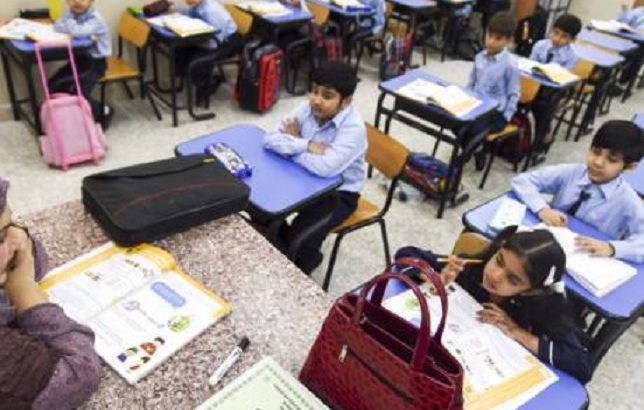
Schools have started teaching the new Moral Education subject this academic year, with student progress to be monitored by schools and authorities.

The subject has become mandatory for all UAE schools, starting with grades one through nine this academic year. In the next academic year, schools will teach Moral Education in all grades.

Moral Education is a national initiative announced in 2016 by His Highness Shaikh Mohammad Bin Zayed Al Nahyan, Crown Prince of Abu Dhabi and Deputy Supreme Commander of the UAE Armed Forces.

The programme breaks new ground in that it is not limited to textbooks, classrooms or exams. Schools are free to implement whatever steps they want to achieve the goals of the new subject, which will be monitored by authorities as part of overall student development evaluations, which are already included in official school inspections.

Although there will be no conventional exams, schools said they will assess student progress in the subject.

Moral Education is based on four pillars: Character and Morality; The Individual and the Community; Civic Studies; and Cultural Studies. For each pillar, there is “a structured sequence of units for grades one through nine”, according to the Dubai School Inspection Bureau.

The UAE’s biggest private school groups, such as GEMS Education and Taaleem, confirmed to Gulf News they have started teaching the units, discussing specific aspects of implementation. In Dubai, the Knowledge and Human Development Authority (KHDA) has also shared broad guidelines.

Roll-out

Schools must allocate an hour (60 minutes) per week for the subject. The KHDA said schools have already received an electronic version of the subject book, which serves as a base to build more content. Schools said they have assigned Moral Education teachers and coordinators.

According to the KHDA’s School Inspection Supplement (2017-18), Moral Education “may be taught in Arabic, English, another language of instruction or an appropriate combination of these”.

Stuart Walker, head of School and CEO of GEMS World Academy — Dubai, said the IB curriculum school will have a school-wide School Moral Education Coordinator as well as an Elementary and Secondary leader. “However, every stakeholder within GEMS World Academy – Dubai is responsible for Moral Education delivery and implementation within our community,” he added.

“A plethora of interactive teaching resources will be used, including multimedia and online resources provided by the Ministry [of Education] and the schools’ counselling and emotional well-being coordinators … This academic year, schools will map out how the four pillars of Moral Education for Grades 1 to 9 are delivered within the curriculum. In the next academic year, all grades will have the 66 units mapped and assessable. Resources will also be provided by the KHDA Moral Education Team.”

At Taaleem, all schools have been trained in Moral Education and are “currently mapping the curriculum against their current programme of learning”, said Clive Pierrepont, director of communications at Taaleem.

A minimum of two staff members from each school have attended the national training and all schools have conducted in-house training for all staff. All principals and heads of schools received internal training at the beginning of August.

“Working teams are busy mapping the curriculum and looking at requirements per grade levels,” Pierrepont said.

All Taaleem students from Grades 1 to 9 (Year two to 10) will complete the subject units as per the set for 2017-18. Grades 10 to 12 will be introduced the next school year, with each implemented unit “working as a building block for future units”.

Meanwhile, the required 60 minutes of Moral Education per week can also “be interwoven into the current curriculum as it fits best”, Pierrepont said.

Discussing the four pillars, he said: “Through these, students will learn about themselves and the family, friends, peers. They will focus on values such as fairness, affection, tolerance, equality, appreciation, compassion and empathy. They will also look at features of the government, conflict, trade and travel, and many other areas based around the four pillars.”

Pierrepont also explained that though there will be no exams relating to Moral Education, “it will be assessed, however”. “Assessment will focus on formative and summative assessments of the students’ personal, social and emotional progress as they learn about values, morals, civics and cultural studies.”

Student and teacher books have been developed and will be distributed by the end of September for all schools, he added.

Fatima Belrehif, CEO of KHDA’s Dubai School Inspection Bureau, also highlighted the flexibility of the new subject, pointing out “each school is given flexibility to integrate the guidelines in ways that best suit its specific curriculum”.

Belrehif added that for “KHDA [governed] schools, implementation will be monitored during inspection visits, when we will evaluate curriculum, teaching, learning and assessment”.

Moral Education at a glance

Moral Education is a national initiative announced in 2016 by His Highness Shaikh Mohammad Bin Zayed Al Nahyan, Crown Prince of Abu Dhabi and Deputy Supreme Commander of the UAE Armed Forces.

Its four pillars are Character and Morality, The Individual and the Community, Civic Studies, and Cultural Studies.

For each pillar, there is a structured sequence of units for Grades 1 to 9 this school year. In the next school year, all grades will teach the units.

Schools must allocate 60 minutes per week for the subject.

An electronic version of the subject book have been sent to schools in Dubai.

Moral Education may be taught in Arabic, English, “another language of instruction or an appropriate combination of these”.

Schools have appointed teachers and coordinators for Moral Education.

There will be no exams, but student progress will be monitored by schools and authorities during school inspections.


Comparte este contenido:

Estados Unidos: State’s New Education Plan Calls for Big Strides

Oklahoma / 20 de septiembre de 2017 / Por: JENNIFER PALMER / Fuente: http://kgou.org/

Reducing schools’ use of emergency certified teachers by 95 percent and boosting high school graduation to 90 percent are some of the goals set by the state Education Department in its plan for education under the Every Student Succeeds Act.

The state also proposes attacking hunger in schools and is considering forcing failing schools that are on a four-day school week to change their calendar.

Under ESSA, which replaces No Child Left Behind, all states are tasked with submitting a plan detailing how federal education dollars will be spent, gauging school performance and turning around low-performing schools.

Oklahoma Watch is a nonprofit journalism organization that produces in-depth and investigative content on a range of public-policy issues facing the state. For more Oklahoma Watch content, go to www.oklahomawatch.org.

Oklahoma submitted its plan, a 218-page document, to the U.S. Department of Education on Monday, and approval is expected. Twenty-nine other states were expected to also file their plans Monday, and three states impacted by hurricanes were given extensions. Sixteen states turned in plans last spring. The U.S. Department of Education is supposed to monitor states’ progress toward achieving their goals.

Here are five key things to know about Oklahoma’s ESSA plan:

  • The state sets concrete goals for academic improvement. Its goals are: scoring among the top 20 states on the “Nation’s Report Card,” or National Assessment of Educational Progress, in all subjects in fourth and eighth grades; reducing by 50 percent the need for college remediation in math and English; ranking among the top 10 states for high school graduation (including four-, five- and six-year rates); ensuring that 100 percent of secondary students develop an Individualized Career Academic Plan; ensuring 75 percent of students enter kindergarten ready to read; and reducing the need for emergency certified teachers by 95 percent. All goals are set with a target year of 2025.
  • The A-F report card system remains, despite feedback from stakeholders asking the state to reconsider. The state plans to use 2017-2018 test scores to create a baseline, with approximately 5 percent of schools receiving an A and 5 percent receiving an F. All schools receiving an F will be identified as comprehensive support schools, as well as any high school with a graduation rate of 67 percent or lower. These schools will receive grants targeting professional development. The state department also may force schools who receive the designation and are on a four-day week to change their calendar.
  • Oklahoma is pioneering a new method of analyzing student subgroups. The new accountability system creates a hierarchy where students’ scores are only counted once, even if they fall into multiple categories. Since economically disadvantaged is the top subgroup, only students who are not economically disadvantaged will fall into the other subgroups, such as students with disabilities, black students and Hispanic students. The method has faced criticism, but remains in the final plan. The state plans to suppress any measure with fewer than 10 students; early drafts had the suppression amount, called an N-size, at 30 but reduced it to improve transparency in small schools.
  • The plan also calls for combating hunger. The state plan addresses increasing schools’ participation in school meal programs, including Breakfast in the Classroom, Community Eligibility Provision, and the Summer Food Service Program. The state’s target is to have 75 percent of eligible schools participating in Community Eligibility Provision; currently 34 percent do. It also wants to boost participation in summer meals by 30 percent by 2025.
  • Chronic absenteeism is the state’s “fifth indicator.” Defined as missing 10% of the school year, or 18 days in 180-academic year. Chronic absenteeism will be reported for all students and separately by subgroups.

Fuente noticia: http://kgou.org/post/state-s-new-education-plan-calls-big-strides

Comparte este contenido:

Australia: Why is a ‘sugar daddy’ funded education being sold as empowering to women?

Australia/ September 19, 2017/By: Kasey Edwards/ Source: http://www.smh.com.au

Concerned about that HECS debt, ladies? Worry no more, because here’s a great new way to afford your education. Get yourself a rich old guy to pay for it!

That’s the message from a recent press release sent to me by a dating site that pairs young women with «sugar daddies». As the website says, all you have to do in return for your free education is «cater to [his] needs» with «no strings attached».

«These men and women are taking a proactive approach to tackle their student debt, while so many other students will be haunted by it for years to come,» squeals the press release.

I know what you’re thinking. There must be a catch? And there is: a never-ending risk of blackmail. Because even though you might not be «haunted» by a HECS debt, there’s the lifelong risk of being outed as a sugar baby.

To be clear, I am not suggesting that there’s anything wrong with young women hooking up with rich old men. If that’s what floats your boat, then more power to you.

But exchanging sexual services for an education isn’t likely to play out well when these sugar babies hit the workforce and start to rise in seniority.

Imagine if a sugar baby were to enter politics, become a CEO or get a job in the media or public life. One phone call from a jilted sugar daddy, his wife, or a disgruntled employee at the dating website, and she would be accused of sleeping her way to the top faster than you can say «Monica Lewinsky 2.0».

Hell, he doesn’t even have to be jilted. The guy might just be mischievous or decide that he doesn’t like his former sugar baby’s success. Because that’s what men often do to women they decide are too powerful: they use a woman’s sexuality to discredit her.

A woman’s level of education, experience, and track record of success counts for nothing if she can be portrayed as relying on sex to achieve her status and power. She becomes the water cooler joke as the Boys Club wonders aloud about who she had to blow to get her job.

By contrast, there’s seemingly no downside for powerful men who have sexual arrangements with less powerful women.

In the corporate world a man can even end up with a pay rise after being forced to settle a high-profile sexual harassment case, a footballer can be involved in infidelity and a group sex scandal and be rewarded with his own radio show, and a president’s affair can improve his approval ratings.

While sugar daddy funded education is being sold as empowering to women, businesses like this dating website are actually appropriating sex-positive language to exploit women.

Businesses like this dating website are actually appropriating sex-positive language to exploit women

Let’s be clear: sugar babies have no status and no power. And the power imbalance for the women lasts well after the arrangement has been terminated.

There is a big difference between supporting women who choose to be sex workers, and a business model that sells women the least-crappiest short-term option to avoid a debt, but may potentially ruin the careers they worked so hard to achieve.

Because as wrong as slut-shaming is, it exists. It ends careers and it can be financially and socially devastating to women.

It would be interesting to know how many young men have to rely on providing «no-strings-attached» romantic services to anyone in order to afford their educations. And how many sugar daddies have exchanged sex for qualifications? Most likely, when they were at uni, education was free.

It’s not surprising that business has latched onto education as a way to entice young women to submit to a sugar daddy.

On average, women will earn significantly less than men in their careers due to the gender pay gap and taking time out of the workforce to have children. And given the ever-increasing cost of a tertiary education and the constant threat from successive Liberal governments to reduce the HECS repayment threshold – which will disproportionately hurt women – a tertiary education is fast becoming a risky financial gamble for many women.

Women retire with half as much superannuation as men, so having someone cough up tens of thousands of dollars for your education at the beginning of your working life could quite literally mean the difference between living above or below the poverty line at the end of your career.

Dangling the carrot of financial security via a free education in front of young women, who may not yet fully appreciate the gendered barriers they will face in the workforce, is a cynical abuse of male power.

The idea that a sugar daddy is an easy and sex-positive solution to lifelong student debt isn’t progress. It’s an expression of the fundamental inequality between men and women.

Source:

http://www.smh.com.au/lifestyle/news-and-views/opinion/why-is-a-sugar-daddy-funded-education-being-sold-as-empowering-to-women-20170917-gyja3d.html

Comparte este contenido:

Arab Emirates: GCC education sector ripe for private investment

Arab Emirates/ September 19, 2017/ Source: http://www.tradearabia.com/

Set to host 65 million youth by 2030, the GCC is set to be very attractive for private investors in the coming years, with the education sector looking especially promising, according to a recent study.

Education trends that will flourish over the next decade and contribute to increased opportunities for investors in the education sector, says the study by management consultancy Strategy& (formerly Booz & Company), part of the PwC network.

The factors aiding the sector include:
• The region has a young and growing population, which is projected to approach 65 million people by 2030, a third of whom will be under the age of 25, which will likely be enrolled in schools or universities;
• GCC governments are actively encouraging private sector participation to help relieve the budgetary strains created by low oil prices;
• Disposable income levels are on the rise, and GCC consumers are willing to spend on high-quality private education.

Ramy Sfeir, partner with Strategy& who leads the family business, investments and real estate practice, said: “Unsurprisingly, the GCC education sector has attracted significant investor interest as it has been developing at a fast pace. The sector ranks second in terms of private equity transactions among all sectors in the Middle East and first in sector rank among education sectors globally. The number of announced private equity and M&A transactions has increased three-fold over the past decade, from nine transactions in the two-year period between 2005 and 2007 to 24 transactions in the period from 2014-2016.”

Commenting on the education investment landscape in the GCC, Marc-Albert Hamalian, partner with Strategy& and a member of family business, investments and real estate practice, said: “The question for investors is how to capitalise on these opportunities the GCC education sector offers. It will not be enough, to simply buy into the strong market for private education in the GCC and ride its growth as it is typically priced into valuations. Investors will need to identify the investment opportunities best suited to their risk versus return profiles and best determine how to create value. Only those who do this will unlock the full potential of their investments.”

Investors seeking exposure to the GCC education sector should consider pursuing different investment opportunities, based on their risk/return appetites:

Growth-focused acquisitions: These plays are the easiest way to participate in organic growth of the sector. Investors should seek established companies in growing market segments (such as mid-end K-12 schools offering international curricula), exhibit sustainable competitive advantages, and already have established reputations, as well as room for capacity growth. The K–12 and higher education segments in the UAE and Saudi Arabia offer the most attractive growth acquisition opportunities in the region. A few recent examples include: GFH Capital acquiring an American curriculum school for $34 million and a British curriculum school for $54 million in Dubai; the investment stake in Dubai-based, K–12 school operator GEMS Education, purchased by Blackstone and a consortium of other investors that same year; In Saudi Arabia, in 2016, Alkhabeer Capital acquired a controlling stake in the privately held Adwa’a Al Riyadh National School.

Greenfield investments: Investors with a greater risk appetite will find the GCC education sector a good start-up incubator. There are opportunities for greenfield ventures in education delivery niches, such as pre–K (due to the growing numbers of women entering the workforce), special education, and vocational training; in education services, such as online tutoring and student assessment services; and in education support services, such as school management systems.

Consolidation: These plays are rare in the GCC, but they will become more common as the sector matures and investors seek to optimize fragmented investments, realize scale advantages, and unlock incremental returns. The high number of well-established local institutions combined with the fragmented competitive landscape in segments such as pre-K and vocational institutions offer clear benefits of scale.

Real estate sale-leasebacks: Real estate investors who seek exposure to the sector, can acquire and lease back the land and property assets of educational institutions. One of the first sale-leaseback deals in GCC education was completed in 2013 when PineBridge Investments acquired a GEMS campus in Dubai, leasing back the property for over 20 years. That same year, GEMS sold a second campus in Dubai to UAE-based real estate investment trust Emirates REIT, raising additional capital for expansion.

Further commenting on the investment opportunities available in the GCC education sector, Bilal Mikati, principal at Strategy& and a member of the family business, investments and real estate practice, said: “As the second most active sector in GCC deals, the education sector continues to beckon private equity and strategic buyers with attractive returns. With a number of investment types on the table, investors will need to identify favorable combinations of curriculum, price point and geography and then use a tailored set of value creation levers to make their deals pay. By capitalising on these opportunities, private investments will further fuel the growth and maturity of the GCC’s education sector over the years to come.” – TradeArabia News Service

Source:

http://www.tradearabia.com/news/REAL_330343.html

Comparte este contenido:
Page 129 of 144
1 127 128 129 130 131 144