Page 128 of 144
1 126 127 128 129 130 144

Haiti – Education : Northeast Department touched by Operation «Books for All»

Haiti/October 10, 2017/ Source: http://www.haitilibre.com

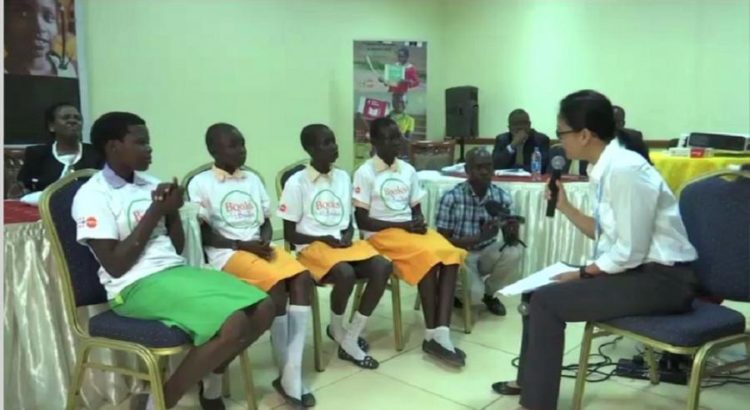
As part of the «Books for All» operation http://www.haitilibre.com/en/news-22139-haiti-education-more-than-200-000-books-for-school-libraries-and-uprs.html a delegation from the Ministry of National Education, chaired by Jackson Pléteau, the Minister’s Chief of Staff, met with 21 directors of the Northeast high school, in the presence of the departmental education authorities.

Fritz Jacques emphasized the importance of the book in the cross-training of young people and invited the high school directors to appreciate this initiative of the Ministry at its true value.

The aim is to set up library embryos in high schools or to reinforce existing ones for the benefit of pupils.

Director Pléteau and Brice Saintil, the Representative of the National Office of Education Partnership (ONAPE), explained to the heads of the lycée that this initiative is part of the improvement of the quality of education but also a healthy way to occupy the minds of young people.

After the Northeast, the North and Center are the last two departments that will be touched before completing this operation.

See also :
http://www.icihaiti.com/en/news-22188-icihaiti-education-month-of-book-for-all.html
http://www.haitilibre.com/en/news-22139-haiti-education-more-than-200-000-books-for-school-libraries-and-uprs.html

Source:

http://www.haitilibre.com/en/news-22352-haiti-education-northeast-department-touched-by-operation-books-for-all.html

Comparte este contenido:

Greece: Education and migration: Challenges of our age

Greece/October 10, 2017/Source. http://www.sify.com

Political and Business leaders discussed the connections between terrorism and education and the challenges posed by migration at the 15th Rhodes Forum organised by the Dialogue of Civilizations Research Institute (DOC). The fundamental importance of education as the key to a sustainable future for humankind was the focus of Leaders’ Club meeting at the 15th Rhodes Forum which was attended by various heads of state and government, and other high-profile speakers, to develop concrete approaches to solving key problems that is being faced by the countries.
Former presidents of Nigeria and Mali, Goodluck Jonathan and Dioncounda Traore, both stated that the «increased dissemination of knowledge» is vital to unlocking the vast potential of their «continent’s young generation».
They also stressed that broadening access to scientific research and factual information must be accompanied by the transfer of an ability to discern value.
Confronted with the threat of Boko Hara— a jihadist group that fundamentally opposes «Western» education—Goodluck Jonathan advocated «religious literacy» as an educational objective in its own right.
This inaugural session of the Leaders’ Club Summit considered the connections between terrorism and education. The level of complexity around the issue became clear during the discussion of migration and its causes.
Ian Goldin, South-African born Professor of Globalisation and Development at Oxford University and former Vice President of the World Bank, stressed that «education, in particular post-secondary school education, should not be seen as a panacea for all of society’s ills.»
Goldin said,»If it is not accompanied by a sense of perspective and an overall scenario of growth and development, education can even backfire. He pointed to the relatively high percentage of university educated individuals among suicide bombers and jihadists.»
Walter Schwimmer, former Secretary General of the Council of Europe, gave the example of an Austrian-financed university in Burkina Faso as proof that a properly educated young generation is less prone to leave their home country and emigrate. Graduates of that particular institution, Schwimmer said, instead seek to pursue their careers in Burkina Faso and can be seen in leadership positions throughout the country.
Others, such as Jan Figel from Slovakia, former EU commissioner and currently Special Envoy for the promotion of freedom of religion and belief outside the European Union, were more skeptical and stressed the fact that with higher education comes the ambition to improve one’s position in life. If their home country does not offer the anticipated opportunities, the lure of greener pastures elsewhere becomes almost impossible to resist.
Dioncounda Traore gave a powerful description of the pulling power that an education and a life in France or the US affect on his young compatriots. He also said he views the concept of transnational citizenship and identity as matter of fact. Migration is, he said, the hallmark of our age, whether we want it or not.
Ruben Vardanyan, Armenian-Russian entrepreneur and philanthropist, who yesterday received an award for his special contribution to the Dialogue of Civilizations, pointed «Due to historical circumstances most Armenians live outside their homeland, and they remain both faithful to their Armenian roots and responsive to their foreign environment, be it Singapore, France, Iran or the USA.»
Ruben Vardanyan in particular noted that «global citizens who have a local identity and education play a key role. This means that teachers bear particular responsibility for preparing coming generations for this globalised world.»

Source:

http://www.sify.com/news/education-and-migration-challenges-of-our-age-news-international-rkjscrgajehhc.html
Comparte este contenido:

UNESCO’s Support to Girls Education in Imotong State

UNESCO/October 10, 2017/ Source: https://reliefweb.int

Community Girls Schools (CGS) is a unique education program designed to accelerate equitable access to quality basic education for girls aged between 8-12 years in villages that have no established formal schools. It’s a modified education program which offers flexible learning opportunities to learners mainly in lower primary education, where girls are expected to constitute 70% of the total learners, and boys constitute the remaining 30%. The CGS program is mainly characterized by condensed syllabus, faster learning process, targeting marginalized female learners, and flexibility in the learning schedule and calendar.

One of the four clusters of CGSs that are getting support from the Out of School Children (OOSC) project being implemented by UNESCO Juba Office is that of Imotong State. The partner that is given the assignment to provide the support and to run the 93 CGSs in the three counties of Torit, Magwi and Nimule is Alternative Basic Education for Pastoralists (ABEP). ABEP has also managed to cater for displaced children who left their areas of Pageri, Moli and Kerepi and are temporarily settled in Nimule.

ABEP has recruited 93 all-female CGS teachers who are conducting classes for 2,731 students (1,927 girls and 804 boys). As the target set was to enroll 2,790 students, ABEP has achieved a 97.9% success rate in terms of enrolment. With regard to sex disaggregated targets, ABEP had planned to enroll 1,953 girls and therefore has achieved 98.7% of its target; the success rate for boys is 92.8% as the plan was 837 boys and actual enrolment is 804. ABEP has reported that it has given capacity development orientation training for all its 93 teachers in the writing of lesson plans, and use of learners’ attendance register.

ABEP has conducted one assessment of learning so far, and the pass rate for girls was 63% and for boys 67%, an indication of the need to work harder to support girls succeed in their education.

ABEP mentions insecurity and famine in the project areas as two of the major challenges it faces in the execution of its activities. It recommends some kind of school feeding programme to be launched in the CGS schools if it is possible to do so.

Source:

https://reliefweb.int/report/south-sudan/unesco-s-support-girls-education-imotong-state

Comparte este contenido:

Singapur: Asian parents among top spenders on education

Singapur / 07 de octubre de 2017 / Por: JUSTINA LEE / Fuente: https://asia.nikkei.com/

Hong Kong families spend triple global average, ahead of Singapore, Taiwan

Asian parents are investing heavily in education to give their children better career opportunities in an increasingly competitive job market, according to an HSBC report.

The report was based on a survey of over 8,400 parents in 15 countries around the world, and covered education spending from primary school to university, including tuition fees and accommodation.

Hong Kong took the top spot. Parents there spend an average of $132,100 per child — nearly three times the global figure of about $44,200. Singapore and Taiwan followed with about $70,900 and $56,400 respectively.

Parents in China were the best prepared financially among those surveyed. Over half fund their children’s education from general savings, insurance, or investments, while over two-fifths have a specific education savings plan.

Asian parents place a strong emphasis on paying for quality education, as they see education as a way to ensure their children’s success in life and give them a competitive advantage over their peers in the job market.

In Hong Kong and Singapore particularly, parents spend heavily on private tuition in subjects they feel their children need help. According to local media reports, Singapore’s private tuition industry is worth more than a billion Singapore dollars ($732 million) annually.

Charlie Nunn, HSBC’s group head of wealth management, said a child’s education is likely at times to cost more than mortgage payments or rent and household bills in nine of the 15 countries surveyed, but did not go into details about the survey’s respondents. «To limit the strain that children’s education can have on family finances, it’s important to plan and save ahead,» he said.


Fuente noticia: https://asia.nikkei.com/Politics-Economy/Economy/Asian-parents-among-top-spenders-on-education

Comparte este contenido:

Is education in Japan really so bad?

Japón / 27 de septiembre de 2017 / Por: IKUKO TSUBOYA-NEWELL / Fuente: https://www.japantimes.co.jp

I founded and have run an international school for expat families and multicultural children for nearly a quarter century. There have been frequent visits from Japanese parents asking to enroll their children in our school because they were not satisfied with what the local Japanese schools offered. Although it is an honor to have such requests, I am always surprised to find so many Japanese think in such a way. In Japan, some families migrate to another country because of educational preferences. Sometimes only the mother moves overseas with the children, while the father stays in Japan to continue with his job. Malaysia is so far their most popular destination. It is indeed a radical trend.

Several years ago, I was among the guests to dine with an education minister of the Netherlands. He told us that during his visit to Japan, he was often told by Japanese people that they envied the education in his country and wished the Japanese education system could be more like it. He said he was surprised since he had come to Japan to learn about Japanese education, which in Europe enjoys the reputation of having a high academic standard and success rate. He wondered why there was so much dissatisfaction.

We all know that there is no such thing as a perfect education. Every system has its strengths and weaknesses. But is education in Japan as bad as many Japanese people seem to think? Education is a complex field, but let’s take a look at some research and OECD data first.

The OECD conducts the Program for International Student Assessment (PISA), a triennial international survey that aims to evaluate education systems worldwide by testing the skills and knowledge of 15-year-old students. In 2015, over half a million students, representing 28 million 15-year-olds in 72 countries and economies, took the internationally agreed two-hour test. Students were assessed in science, mathematics, reading, collaborative problem solving and financial literacy.

Historically, Japan has ranked high and did so as well in the 2015 test. Students here ranked second in science, eighth in reading and fifth in math among the 72 countries and economies. Other consistently high-ranked countries and economies in Asia are Singapore and Hong Kong. However, it should be taken into account that both of them have much smaller numbers of children than Japan. Even Canada, which ranked third in reading, has only 5.6 million children under the age of 14, whereas in Japan that number is nearly 16.2 million, three times as many.

Looking at the results and given the variables in numbers of children in each country, Japan’s ranking seems rather impressive and its positive reputation in Europe well-deserved. Japanese schools should feel proud of themselves.

Of course, evaluating the success of educational outcomes involves more than quantitative or statistical analysis of standardized testing. There are important qualitative outcomes to consider, which are more difficult to measure by statistics. Consider, for instance, the fact that after the Japanese team plays a match in a World Cup soccer tournament, there is no garbage left behind in the Japanese supporters’ area. Supporters make sure to clean up their garbage even when Japan has lost the game. This kind of care for surroundings and responsible civil citizenship is developed over time in Japanese schools. From teachers and coaches, Japanese students learn to clean up not only their classrooms but corridors and other communal areas. This way students learn not only to respect their surroundings, they also develop a shared sense of responsibility regardless of their home backgrounds.

Japanese school culture nurtures students’ values and sense of community in other ways that are too subtle for statistical analysis. A professional dietitian plans balanced menus for lunch, then students serve lunch by themselves and eat together in their classroom with their homeroom teacher. A close sense of community develops and it is another opportunity to show respect — this time for food as everyone says “itadakimasu” before and “gochisō-sama deshita” after the meal.

Students also learn basic life skills such as sewing, knitting, cooking, and various handicrafts in school. Traditional skills such as calligraphy are taught as well. Traditional as well as modern sports and cultural activities are offered in after-school clubs. All of these are taught by regular teachers free of charge.

Japanese teachers are in fact much more than subject teachers. As well as coaching after-school activities, they visit students’ homes to get a better understanding of particular family contexts and to reinforce a sense of a close-knit and caring community. Teachers go beyond the classroom, and greet the students at the gate. Students not only feel welcomed but learn the important habit of greeting.

In fact, teachers at junior high schools in Japan work an average of 63 hours and 18 minutes per week — the longest hours among all OECD countries — and there is little overtime compensation. Not only are the hours long, but there can be as many as 40 students per class. And out of the 40 students, on average six students are from families of relative poverty, 2.5 students have a developmental disorder, six think that classes are too difficult and five think they are too easy. And all these kinds of students are taught by one teacher — a daunting task.

It is surely the dedication of Japanese teachers as well as parental investment in education that has allowed Japan to maintain its high educational achievements.

So why do parents underestimate this success? Why are they dissatisfied? Well, it is not just parents who are showing dissatisfaction. According to research by the National Institution For Youth Education, 72.5 percent of 1,850 Japanese high school students surveyed said they consider themselves useless, compared with 35.2 percent in South Korea, 45.1 percent in the United States and 56.4 percent in China. This result might partly be explained by the fact that Japanese value modesty, but also it might be because of a lack of self-confidence. There is no need for this.

Another OECD survey, the Program for the International Assessment of Adult Competencies — which is the adult version of PISA — ranked Japan as No. 1 out of 24 countries in science, mathematics and literacy in 2013. We owe a lot to the schools for this ranking.

Isn’t it about time that we look at the facts and say proudly that our education is not so bad? In fact it is rather good. Let’s have more confidence and say we are not doing too bad in the educational field, despite the government’s low spending in this area. There are improvements to be made, but let us understand and appreciate what is already of worth and build on that accordingly.

Fuente noticia: https://www.japantimes.co.jp/opinion/2017/09/26/commentary/japan-commentary/education-japan-really-bad/#.WcrCAWj9SUk
Comparte este contenido:

Ukrainian education minister to meet with Hungarian human resources minister in October to discuss education bill

Ukrainian – Hungarian/September 26, 2017/Source: http://en.interfax.com.ua

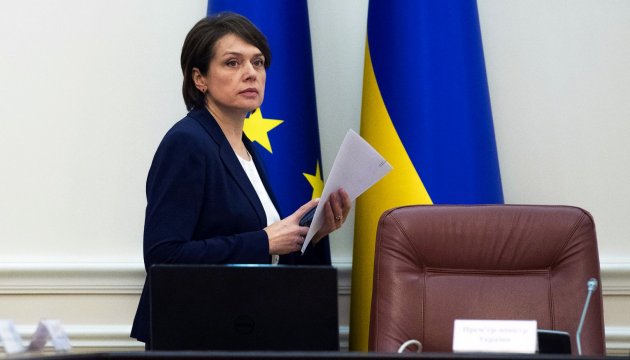
Ukraine’s Education and Science Minister Lilia Hrynevych will hold a meeting with Hungary’s Human Resources Minister Zoltan Balog to discuss the law on education not on Monday, August 25, but in October, the Ukrainian ministry’s press service told Interfax-Ukraine.

«The Ministry of Education and Science of Ukraine has received a copy of a letter proposing a meeting between Education and Science Minister of Ukraine Lilia Hrynevych and Minister of Human Resources of Hungary Zoltan Balog sent to the International Department of the Ministry of Education at 19:30 on Friday, September 22, 2017. The letter was received today, September 25, 2017,» the Education Ministry told the agency.

The press service noted that since the minister did not plan a trip to Zakarpattia and on Monday, September 25, is in Kyiv, she will not be able to meet with Balog.

«The meeting of Lilia Hrynevych with the human resources minister of Hungary has already been scheduled for October under preliminary agreements between the parties,» the Education Ministry reported.

During the meeting, among other things, the parties plan to discuss the law on education passed by the Verkhovna Rada of Ukraine on September 5.

Earlier, Balog asked for a personal meeting with Hrynevych on September 25 during his visit to Zakarpattia to discuss the bill on education.

It was reported that on September 5, the Verkhovna Rada passed an education bill launching education reform in Ukraine. The bill determines, among other things, that teaching at schools should be conducted in the national language.

However, in line with the educational program, one or more subjects can be taught in two or more languages – the state language, the English language, in other official languages of the European Union.

Persons belonging to national minorities are guaranteed the right to study in their native language along with the Ukrainian language in separate classes (groups) in municipal institutions of preschool and primary education.

On September 19, Verkhovna Rada Speaker Andriy Parubiy signed the bill and submitted it to president.

The foreign ministers of Bulgaria, Hungary, Greece, and Romania later signed letters to the Ukrainian foreign minister, in which they expressed concerns about the new bill on education in the context of the possible effect it may have on the rights of minorities and education in students’ native languages.

Source:

http://en.interfax.com.ua/news/general/450797.html

Comparte este contenido:

Jordan Eases Education Enrollment Rules for Syrian Refugees

Jordan/September 26,2017/ Source: https://www.albawaba.com

  • Prime Minister Hani Mulki has approved a request for Syrian refugees to enroll in government schools without possessing required documents.
  • To avoid overcrowding, the new students would attend afternoon sessions in double-shift schools.
  • Special programs have also been introduced to help Syrian children catch up on the years of education they have missed.
  • Approximately 80,000 Syrian children in Jordan were out of school for various reasons including the lack of required documents.


Prime Minister Hani Mulki has approved a recommendation by concerned officials to allow Syrian refugees who do not possess the required documents to enroll in government schools, officials have announced.

To be able to join formal education in the Kingdom, Syrians have to present a special ID card issued by the Interior Ministry indicating their status as refugees.

In exclusive remarks to Al Rai and The Jordan Times, Education Minister Omar Razzaz said that the decision is consistent with the government’s policy not to leave any children without education “because we do not want anyone to lose their right to education”.

In remarks to The Jordan Times, State Minister for Media Affairs and Government Spokesperson Mohammad Momani said: “In line with our value system in Jordan, we do not accept that any child be left out without education.”

“Education is among a string of services provided to Syrian refugees from the moment they are received on border,” the minister said, renewing a call on the international community to ensure proportionate assistance for Jordan to continue carrying out its humanitarian mission.

Asked if the new numbers would add to the problem of crowding at schools, he said that the newcomers would join afternoon periods in double-shift schools, where there is no such a problem.

In an exclusive statement to The Jordan Times, UNICEF Representative Robert Jenkins said: “We would like to congratulate the government of Jordan for this bold and positive step forward towards ensuring that every vulnerable girl and boy in Jordan goes to school.

“UNICEF stands by the Ministry of Education in doing everything we can for every child to access quality education and get a fair chance in preparing for a better future for themselves and their families.”

In addition to expanding schools in Syrian refugee camps, the Ministry of Education has opened a total of 200 schools operating double shifts to offer formal education to young refugees, according to UNICEF. Catch-up education programmes are also being rolled out to reach children who have missed more than three years of schooling, for them to accelerate their learning, and enroll in the formal system, the agency has said in a report.

In Jordan, according to official figures, more than 126,000 Syrian children were receiving education in public schools last year, while 80,000 were out of school, for different reasons, including the fact that they did not have the necessary identification documents. There is no official estimate of how many children would benefit from the new policy.

According to a report by Save the Children, 35 percent of the 4.8 million Syrian refugees in the region are of school age. Whereas before the conflict 94 percent of Syrians attended primary or lower secondary school by June 2017, 43 percent of Syrian refugees were out of school. “This is, in fact, an increase from 34 percent in December 2016,” according to the organization.

Source:

https://www.albawaba.com/news/jordan-eases-education-enrollment-rules-syrian-refugees-1025718

Comparte este contenido:
Page 128 of 144
1 126 127 128 129 130 144