Page 126 of 144
1 124 125 126 127 128 144

Kenia: Parents demand more roles in new 2-6-3-3 education system

Kenia / 25 de octubre de 2017 / Por: SAMWEL OWINO / Fuente: http://www.nation.co.ke

Parents are now demanding more roles in shaping their children’s education under the new curriculum saying their role under the current 8-4-4 system is minimal.

Kenya National Parents Association chairman Nicholas Maiyo on Monday said the new curriculum set to be rolled out in two months should provide a clear role for parents.

ROLES

Speaking during a two-day stakeholders workshop on ‘Parental empowerment and engagement, ‘ at the Kenya Institute of Curriculum Development (KICD), Mr Maiyo said parents’ role should not be reduced to just sending their children to school.

During the workshop, it emerged that parents have abdicated their roles to teachers, with some expressing disappointment whenever children stayed home for long, during holidays.

«Parents can do more than just sending their children to school and leaving the rest to teachers,” Mr Maiyo said.

UPBRINGING

Cyril Oyugi, the KICD Director-Research, Monitoring and Evaluation, said under the new guidelines, the role of bringing up a child will no longer be left only to teachers as has been the case.

«Parents will no longer look upon teachers to single-handedly watch over their children while at school and view them as a bother when they return home,» Mr Oyugi said.

Mr Oyugi said the 2-6-3-3 system of education focuses on bringing up children who are not only bright in class but have the right values to enable them become responsible citizens.

KICD Chief Executive Officer Dr Julius Jwan said the close collaboration among parents, learners and teachers being advanced by the proposed curriculum, guarantees quality education.

PARENTING

Dr Stanley Mukolwe, an expert in Parenting, who delivered the key note address on ‘Parenting in the 21st century,’ said parents and teachers must work together to develop students’ character and competence.

«A parent with one child fails to build his character and expects a teacher with an audience of 40 learners to do a miracle,» said Dr Mukolwe, who is the Director, Family Life Ministry Navigators Africa.

He explained that some children suffer from low esteem because their parents never appreciate what they do.

«Even if a child comes home with a 100 per cent, a parent still asks how many others had a similar mark. This affects the child,» Dr Mukolwe said.

RELEGATE

He faulted some parents for relegating their parenting roles to house helps, including attending crucial school meetings, in the guise that they are busy.

«A child is spending two tired hours with a parent and 12 wakeful hours with the house helps. Ideally, they are the ones influencing the children’s behaviour,» Dr Mukolwe said.

The event that brought together parents, educationists, curriculum developers, religious groups, psychologists and Ministry of Education officials was organised to develop guidelines that will improve participation of parents in their children’s school lives.

Students are set to be at home for more than two months, for December holiday, after Education Cabinet Secretary Fred Matiang’i announced that schools will close on October 24 to pave way for the repeat presidential election scheduled for Thursday. Schools will open on January 2.

Fuente noticia: http://www.nation.co.ke/news/education/parents-role-new-education-system/2643604-4151690-12nge0x/index.html
Comparte este contenido:

Kenia: Form Four candidates start practical exams on Monday

Kenia / 25 de octubre de 2017 / Por: OUMA WANZALA / Fuente: http://www.nation.co.ke/

Form Four practical examinations are set to kick off tomorrow.

The practical examinations will run until November 2 before paving the way for theory papers which start on November 6 and end on November 29.

Some 615,773 candidates registered to sit the Kenya Certificate of Secondary Education (KCSE) examination which will be done in 9,350 centres across the country.

Subjects lined up for this week include German, Arabic, French (oral and braille), Kenya Sign Language (practical skills), music, building and construction.

HOME SCIENCE

The Home Science practical paper, initially set to be sat on Thursday, has been moved to next Monday to pave the way for the repeat presidential election.

This is because hundreds of examination centres double as polling and tallying centres.

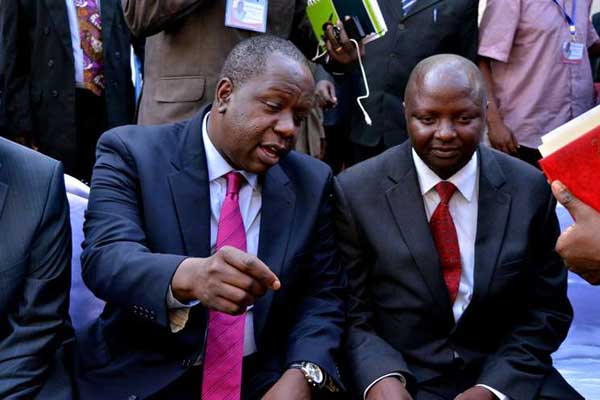
“This is in recognition of the fact that a number of schools are gazetted polling stations and tallying centres for the elections,” said Education Cabinet Secretary Fred Matiang’i during a meeting with deputy county commissioners and sub-county directors of education in Nairobi early this month.

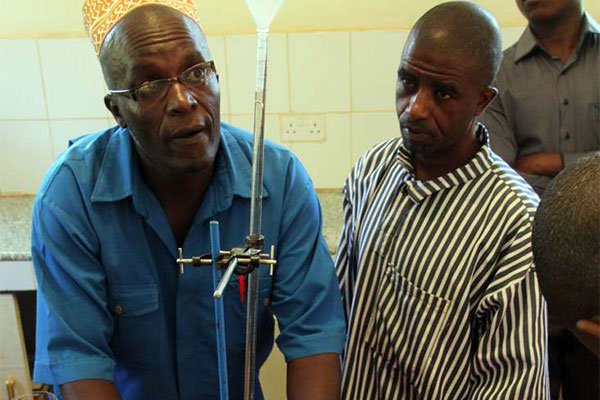
Kenya National Examinations Council (Knec) said the practical examinations will be monitored by its officers because of their technical nature.

KCPE

Kenya Certificate of Primary Education (KCPE) examinations start on October 31 after rehearsals on October 30. The examinations will end on November 2.

Some 1,003,556 candidates registered for the KCPE examination, which will be done at 28,566 examination centres.

This year, private candidates will sit both the theory and practical examinations at public schools identified by the sub-county directors of education to try and eliminate cheating.

Speaking during a briefing session for those who will be involved in management of the exercise, council chairman George Magoha asked the officers to observe high levels of integrity.

SECURITY

National Parents Association Chairman Nicholas Maiyo asked the government to ensure that the candidates are safe in schools.

“Students cannot sit examinations under an environment that is full of tension since they will feel insecure,” said Mr Maiyo.

Kenya Secondary School Heads Association chairman Kahi Indimuli said teachers are ready for the examinations.

“We have prepared them and I believe that they are ready for the task,” said Mr Indimuli, who also asked the government to ensure security for teachers and learners.

ELECTIONS

All primary schools will close for the Christmas holidays on Wednesday. Students in Form One, Two and Three will close on Tuesday.

However, several schools have already closed for fear of a possible outbreak of violence over the elections.

Dr Matiang’i, while addressing the officials, admitted that the examinations will take place at a time of heightened political activity.

“This means that the political atmosphere would still be a bit fluid requiring all officials to be vigilant to ensure the examinations are run professionally. More specifically, the number of teachers involved in the elections must quickly return to the examination administration centres where they will be officiating as fast as possible to avoid interrupting the smooth administration of the examinations,” said the CS.

SCHOOL FACILITIES

Headteachers will also have a duty to ensure that school facilities are not destroyed during the polls since most of the institutions are polling centres.

“Teachers should be non-partisan and are further required to shun any acts that could lead to cases of real or perceived conflict of interest in performance of their work,” said Teachers Service Commission chief executive Nancy Macharia.

Mrs Macharia also directed school heads to ensure safety of learners under their care and school property in the event the institutions are used as polling or tallying centres.

Fuente noticia: http://www.nation.co.ke/news/education/Form-Four-candidates-start-practical-exams/2643604-4150192-utv867/index.html

Comparte este contenido:

Estados Unidos: Washington Supreme Court to hear education funding case

OLYMPIA, Wash / 25 de octubre de 2017 / Por: Nichole Mischke / Fuente: http://www.khq.com/

The Washington state Supreme Court is set to hear arguments on whether the state has met its constitutional requirement to fully fund K-12 education.

Tuesday morning’s hearing is on whether the state should still be held in contempt for lack of progress on satisfying a 2012 ruling that found that school funding was not adequate. Lawmakers needed a funded plan in place this year ahead of a Sept. 1, 2018 deadline the court had set.

The plan approved and signed by Gov. Jay Inslee earlier this year relies largely on an increase to the statewide property tax that starts next year. The tax increases from $1.89 to $2.70 per $1,000 of assessed value, with the increase earmarked for education. The plan – which keeps in place local property tax levies but caps them beginning in 2019 at a lower level- will ultimately raise property taxes for some districts and lower them in others.

Fuente noticia: http://www.khq.com/story/36670195/washington-supreme-court-to-hear-education-funding-case

Comparte este contenido:

The Vital Role of Education in Authoritarian Times

By. Henry A. Giroux

For decades, I have challenged the notion that schools are simply black boxes mired in structures of domination. While the early leftist criticism of schooling was correct in challenging the idea that schools were agencies of meritocracy and equal opportunity removed from larger structures of capitalist domination, it lacked, with few exceptions (such as Paul Willis’s Learning to Labour), any sense of resistance, and as such lacked any notion of hope. Resistance and hope, coupled with a comprehensive understanding of theory, politics and education, have played a crucial role in my later work, particularly in my later analysis of the war on youth, the centrality of pedagogy to cultural studies, neoliberalism’s assault on higher education and other related issues.

In July 2017, I was fortunate to participate in an interview that attempted to look at the totality of my work on education, cultural studies, pedagogy, youth studies and a range of other topics. The interview, captured here in a just-released film debuting on Truthout, begins with an analysis of the historical conditions that produced one of my most important books, Theory and Resistance in Education, and that had a formative influence it had on much of my of my later work.

The interview also deals with the challenges of resistance today, given the power of modes of pedagogy that exist outside of schools, particularly under the toxic regime of neoliberalism. Not only have the sites or modes of pedagogy expanded in a range of cultural apparatuses extending from digital and print culture to screen culture, but the very spaces for sustained and critical thought have been shrinking.

At the same time, new spaces of resistance have opened up in light of the emergence of new technologies, the increasing radicalization of young people and the search for a new understanding of politics, one that makes sense of the relationship between local politics and global power formations. The interview explores these new sites of hope. It also explores how both public schools and higher education have come under assault by a range of ideological, cultural and economic forces tied to a variety of right-wing and conservative ideologies and fundamentalisms — religious, market-based, military-oriented, racist and sexist. Due to all of these forces, there is an urgent need to retheorize matters of education, power and politics itself.

Capitalism no longer simply exploits as its main engine of domination; it now renders increasing numbers of people disposable.

One of the central elements of discussion in the interview is the issue of border crossing and the politics of disposability. This politics points to not only new forms of domination, but also suggests rethinking politics beyond simply questions of exploitation. In other words, capitalism no longer simply exploits as its main engine of domination; it now renders increasing numbers of people disposable — whether we are talking about Muslims, workers, youth of color, poor Black communities such as Flint, Michigan, or an increasing number of other groups. Disposability is the register of a new politics of oppression central to the emergence of financial capital, and it must be addressed as part of a new mode of politics and global resistance. Disposability points to distinct economic, political and cultural contexts in which new forms of exclusion are entangled with emerging modes of authoritarianism that are reshaping matters of ideology, knowledge and power. The logic of disposability has become the driving force of a powerful machinery of social death.

Also vital to address in these oppressive times is a narrow notion of dystopia, which is now attached to almost any form of criticism. Rather than opening a window to the need for real struggles, this notion of dystopia collapses into the discourse of cynicism. In the interview, I reject this view by making clear that criticism is the precondition for not only changing consciousness, but also making visible new forms of domination and power that have to be confronted if people are going to be able to understand the oppressive conditions in which they find themselves. Rather than insert criticism, dialogue and the social imagination within the toxic charge of a distorted and reactionary notion dystopia, the interview addresses criticism and the existing conditions of oppression as a starting point for individual and collective forms of struggle. The engagement with dystopia in this case is a precondition for developing a discourse of both critique and hope, not despair.

It is crucial for us to address this question head on: What is the role of public and higher education, especially in a time of tyranny? What does critical pedagogy look like and how is it put into play so as to make a viable and lasting connection between learning and critical thought, engaged agency and social responsibility, learning and social change? Central to this interview is the point that education is crucial to politics itself, and that any viable sense of theory, politics and resistance will have to address this issue.

Source:

http://www.truth-out.org/news/item/42217-the-vital-role-of-education-in-a-time-of-tyranny

Comparte este contenido:

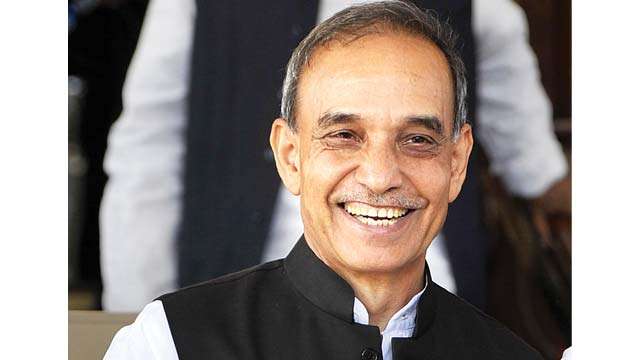
Indian government to announce new education policy in December: Union minister

Indian/October 24, 2017/Source: Times of Oman

A new education policy to «correct» the education system, which follows a «colonial» mindset, will be brought out in December, Union minister Satya Pal Singh said on Monday.

He said threadbare discussions were held on the new education policy, which is in its final stages. «The NDA government’s new education policy is in its final stages and the same will be out in December. The policy envisages correcting the education system that has followed a colonial mindset,» the minister of state for human resources said.

After Independence, most academicians unfortunately followed the footsteps of British and western scholars and «deliberately» denigrated Indian culture, he said.

The minister said the biggest challenge facing the education system and government was how to «decolonise» the Indian mind, and added that the nation has to keep pace with the world in this field. Some issues to be addressed are — improving the quality of education at the primary level, making higher education affordable and ensuring more people have access to education, he said after inaugurating the National Academic meet here.

Skill development was a major area to which the government has given thrust. But more has to be done on this, Singh said. To prevent exodus of students abroad for education,he said higher education institutions matching the standards of centres of international excellence should be developed.

The MoS said accessibility to higher education in India was only 25.6 per cent while it was 86 per cent in USA, 80 per cent in Germany and 60 per cent in China.

«The aim is to improve the higher education system in the country to make it available to more,» he said. Singh said the challenge before the government was to remove social and regional disparities in students having access to higher education and to make it affordable to all.

«In some places access to higher education is as low as nine per cent, but in others it is 60 per cent…higher education is very expensive and has to be made more affordable to all sections of the society,» he said.

Singh pointed out that 50 per cent of the teachers posts were lying vacant in universities. «In Delhi University, there are 4,000 vacancies,» he said. Singh said though India produces 30,000 to 40,000 PhD holders every year, the nation’s contribution to the world economy was only 0.2 per cent and added that a lot of improvement has to be brought about in research and development in the country. He said changes are necessary in the Right to Education Act as the act «lacked teeth».

«The Act provides the right to compulsory primary education. But what is the remedy if parents do not send their children to school? So many things have to be done to improve primary education in the country,» he added.

The meet was organised by Bharatheeya Vichara Kendram as part of the navathi celebration of P. Parameswarn, Sangh Parivar ideologue and director of the BVK.

Source:

http://education.einnews.com/article/411328283/kmri2asCGk8J4fKb?lcf=eG8zt30RHq4WcGF5PkFdHg%3D%3D

Comparte este contenido:

New school offers education ‘salvation’ for Syrian girls in Lebanon

Lebanon/October 24, 2017/By: Dahlia Nehme/Source: http://uk.reuters.com

A new girls’ school for Syrian refugees in Lebanon’s poor Bekaa region is aiming to give girls from conservative backgrounds the chance at a formal education.

Gaining access to education in general is difficult for Syrian refugees in Lebanon, but for girls from socially conservative families who disapprove of mixed schools, it is even harder.

Zahra al-Ayed, 14, and her sister Batoul, 17, were from a village in Syria’s northern Idlib province where women were expected to marry young.

 But the experience of fleeing war and living in harsh poverty woke her parents to the life-changing importance of education, the girls’ mother Mirdiyeh al-Ayed said.

“My eldest daughter tells me that she will not marry until after she finishes her education. She even wants to travel abroad and learn,” she said.

Human Rights Watch organisation said in its latest report in April that more than half a million refugee children are out of school in Jordan, Lebanon and Turkey.

In Lebanon, international donors paid for 200,000 public school spaces for Syrian children in 2015-2016, according to the HRW report, but only 149,000 children actually enrolled.

Lebanese and international non-governmental organisations have been striving to fill the gap, and to eliminate the legal, financial and language barriers preventing refugee children from getting their education.

For the al-Ayed family, used to Syria’s system of gender segregation after the age of 12, one big barrier to enrolling the girls was the lack of single-sex schools in Lebanon that accept refugees.

SYRIAN REFUGEES

The new school that Zahra will attend is in Bar Elias in the Bekaa valley and was opened on Thursday by the Kayany Foundation, a Lebanese charity. It educates 160 Syrian girls aged from 14-18 who have missed school for several years.

Those who manage to pass the Lebanese system’s eighth grade exams – usually taken at the age of 14 or 15 – can join the local Lebanese public school in Bar Elias, which Batoul al-Ayed has done.

The Kayany Foundation school teaches the official Lebanese curriculum, which includes science, mathematics, Arabic and English, in addition to vocational skills.

The school, built from colourful pre-fabricated classrooms, is its seventh in the Bekaa valley, where the majority of the Syrian refugee communities are located in Lebanon.

It was meant to address the Syrian parents’ concerns about sending their teenage daughters to schools for both girls and boys. All its teachers are women and it provides transportation for students between home and school.

 “Education is salvation for the refugee girls,” said Nora Jumblatt, head of the Kayany Foundation, at the opening ceremony.

Funding for the school was secured for this year from international charity Save the Children and the United Nations Women For Peace Association, according to Kayany officials.

“I have a dream to become a pharmacist,” Rama, 19, who is preparing to apply for the eight grade exams at Kayany school said. In normal times, Rama would already have been applying for university at that age.

“I still want to go back to Syria and fulfill my dream there, in Damascus University,” she added.

Source:

http://uk.reuters.com/article/uk-mideast-crisis-lebanon-education/new-school-offers-education-salvation-for-syrian-girls-in-lebanon-idUKKBN1CS2C8

Comparte este contenido:

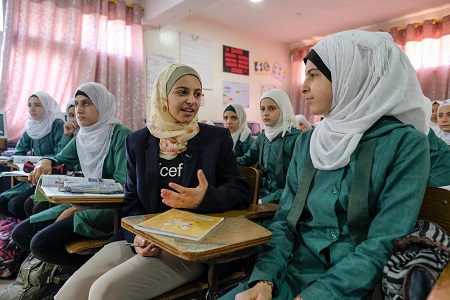
Muzoon Almellehan returns to Jordan to meet Syrian refugees striving to get an education

18 de octubre de 2017 / Fuente: https://www.unicef.org

UNICEF Goodwill Ambassador Muzoon Almellehan travelled to Jordan to meet children who, like her, fled the Syria conflict and are now determined to go to school despite extremely challenging circumstances. It was the first time Muzoon had returned to the country – where she spent three years in refugee camps, before being resettled in the United Kingdom with her family in 2015.

“Returning to Jordan to meet children whose hope has been restored through education has compelled me to raise my voice even louder for the 27 million children who remain out of school because of conflict. I recommit myself to represent all of the children whose voices have been silenced for too long – and whose chance to learn, and of hope for a better future have been destroyed by war,» said Muzoon.

Around 2.4 million Syrian children are missing out on education, including 1.7 million inside Syria and more than 730,000 Syrian refugee children in Egypt, Jordan, Lebanon and Turkey. Some Syrian children have never been inside a classroom, while others have lost five or six years of their education.

During her visit, Muzoon met children attending a UNICEF-supported Makani Centre in Amman including 14-year-old Sedra, who fled the conflict in Syria with her family when she was just 10 years old. She missed two years of school and now is getting the support she needs to catch up on her learning and join a public school soon. She dreams of becoming a legal advisor one day.

Makani Centres provide vulnerable children in Jordan – including Syrian refugees – with informal learning programmes, critical psychosocial support and life skills training. The centres also help children enroll into public schools.

«Hearing about Sedra’s experiences took me back to when my family and I fled the war. I was so sad and scared to leave my home and school behind – the only hope I held on to was to continue my education,” said Muzoon.

When Muzoon was forced to flee violence in Syria more than four years ago, her school books were the only belongings she took with her. She spent nearly three years in Jordan, including 18 months in Za’atari refugee camp, where she made it her personal mission to get more girls into education. She went from tent to tent talking to parents to encourage them to get their children into school and learning. Her commitment as an education activist led to her appointment as UNICEF’s youngest ever Goodwill Ambassador in June 2017.

“Education equips girls and boys with the knowledge and skills to fully realize their potential. Schools also provide stability and a sense of normalcy that help Syrian children overcome the challenges of life as a refugee,” said UNICEF Jordan Representative Robert Jenkins. “Jordan has made an incredible commitment to enable Syrian children to access education, but urgent support is required from the global community to further build on progress achieved to date.”

Since the conflict began, UNICEF has worked with partners to increase access to formal and informal education for children affected by the Syria crisis, including through the creation of double-shifting systems in nearly 500 schools in Jordan and Lebanon, ‘back-to-learning’ campaigns, and rehabilitation of some 1,000 classrooms across refugee host countries. However, a devastating funding gap is preventing the organization from reaching more children. UNICEF has received only half of the funding needed to provide education for children affected by the Syria conflict.

Fuente noticia: https://www.unicef.org/media/media_101054.html

Comparte este contenido:
Page 126 of 144
1 124 125 126 127 128 144