Page 578 of 750
1 576 577 578 579 580 750

Venezuela MinEducación: la transformación curricular es necesaria para fortalecer el sistema educativo

América del Sur/Venezuela/12 de Agosto de 2016/Fuente: Aporrea

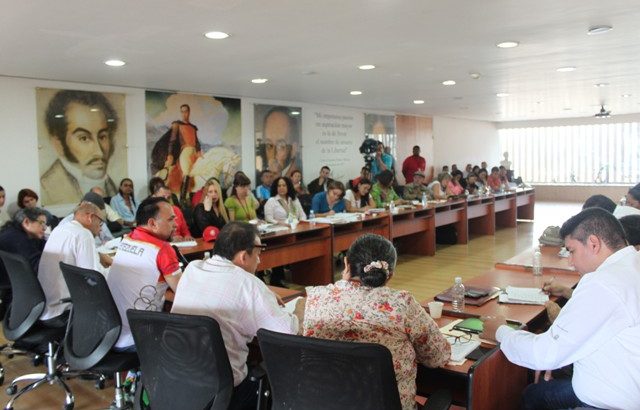
Para dar a conocer los aspectos más relevantes del proceso de transformación curricular para el nivel de educación media del sistema educativo venezolano, se realizó un encuentro entre el ministro del Poder Popular para la Educación Rodulfo Pérez, los viceministros, además de los 28 directores y directoras de las Zonas Educativas de todo el país, en la sede del MPPE, en Caracas.

Yoama Paredes, viceministra de Educación Media del MPPE, quien fue la encargada de elaborar y mostrar el documento que contiene las orientaciones para el cambio curricular, indicó que entre el mes de agosto y septiembre se deben haber comprendido todos los aspectos que se conforman dicha transformación, de forma que cuando comience el año escolar las escuelas y liceos estén discutiendo y formando los fines y procesos éticos de la educación.

«Los liceos y escuelas están entrando en un proceso de cambio con lo que es nuestra contemporaneidad, es por eso que docentes, personal administrativo y directivos deben saber en cómo apoyar y orientar al estudiante en estos nuevos tiempos, ya que el currículo es todo lo que la escuela hace para la formación integral del estudiante» indicó Paredes.

Por su parte, Daymar Rodríguez, directora de la Zona Educativa del Estado Yaracuy, indicó que los trabajadores del sector educativo se deben abocar a internalizar el hecho histórico que se está viviendo para preceder a un nuevo modelo de producción social, donde los estudiantes tengan herramientas para la vida más allá del hecho pedagógico.

«Hay que contextualizar una transformación curricular en el país en el hecho de una propuesta socioeducativa. Parte de esta reunión es ver cómo los trabajadores del sector educativo podemos contribuir escuchando, socializando, divulgando y promoviendo la discusión colectiva de este cambio» señaló Rodríguez.

Fuente: http://www.aporrea.org/actualidad/n295139.html


Comparte este contenido:

Namibia: Africa unite for quality assurance in higher education

Africa/Namibia/12 de Agosto de 2016/Fuente: New Era

RESUMEN: Los legisladores de toda África deben garantizar que todos los ciudadanos tengan acceso a una educación de calidad de la enseñanza primaria, secundaria hasta el nivel terciario.De hecho, se estima que en el África subsahariana, con una población de unos 740 millones de personas, hay unas 200 universidades públicas y un número cada vez mayor de las instituciones privadas de educación superior que en los últimos años han empezado a prestar una mayor atención a las cuestiones de la calidad en el nivel terciario (Banco Mundial 2007).Por su parte, el Ministerio de la Dirección de Programas y aseguramiento de la calidad de educación tiene el mandato de formular las políticas generales para la educación formal en general: políticas, marcos regulatorios y lineamientos que apoyen las buenas prácticas en la escuela y en el nivel de gestión. La Dirección trabaja en estrecha cooperación con las direcciones regionales de educación para apoyar la interpretación y aplicación de esas políticas. Esto se debe a que en Namibia la educación en los últimos años ha sido descentralizada en las 14 regiones.

It is the dream of every parent in Africa to send their children to school to obtain a “good education”.

What is rarely emphasised is the need for quality education and it ought to be what every parent must aspire for their children.
In the same vein, lawmakers all over Africa must ensure that every citizen has access to quality education from primary, secondary to tertiary level.

The World Bank’s Constructing Knowledge Societies: New Challenges for Tertiary Education underscores the importance of establishing robust quality assurance systems as necessary instruments for addressing today’s challenges (World Bank 2002).

In fact, it is estimated that in Sub-Saharan Africa, with its population of about 740 million people, there are some 200 public universities and an increasing number of private higher education institutions that in recent years have begun to pay greater attention to issues of quality at the tertiary level (World Bank 2007).

The publication, ‘Improving Quality and Equity in Education in Namibia: A Trend and Gap Analysis’ (UNICEF 2011) defines quality education as “education that works for every child and enables all children to achieve their full potential.”

On its part, the Ministry of Education’s programmes and quality assurance directorate has the mandate to formulate overall policies for general formal education: policies, regulatory frameworks and guidelines that support good practices at school and at management level.

The directorate works in close cooperation with regional directorates of education to support the interpretation and implementation of such policies. This is because in Namibia education has in recent years been decentralised to the 14 regions.

In the foreword to the government publication, titled ‘Education For All: Plan of Action 2002-2015’, then president Sam Nujoma stated that “education is… an avenue for poverty alleviation, human development and social advancement… to this end education is a fundamental human right and all are entitled to receiving an education of good quality.”

At the level of secondary education, therefore, the quality of education is as per the Plan of Action “characterised by many factors, amongst others, teachers’ qualifications, resource allocation, teaching materials and equipment.”

It follows therefore that Namibia, wants to ensure that quality education for Namibian students starts from secondary to tertiary level in order for tertiary education graduates to compete in an environment shaped by the country’s needs, as well as international expectations and standards.

Tertiary education in Namibia came into being shortly after independence with the University of Namibia, which was founded in 1992. Namibia’s first private university, the International University of Management, was second in 1994, while the then Polytechnic of Namibia (now the Namibia University of Science and Technology) followed in 1996. There is also a second private university that has undergone accreditation process, namely the Welwitchia University.

The education offered in Namibia must be competitive within Namibia but also at the level of SADC, AU and overseas, in line with public demands for transparency and accountability in tertiary education.

Namibian lawmakers, would appear to have had this in mind when it was decided to establish appropriate standards and quality assurance institutions that draw not only on the recent colonial past, but also reflect the unique history, needs, and expectations of stakeholders in education, namely parents, students and government.

In this regard, mechanisms had been put in place to enforce the above-mentioned standards and to monitor performance of their tertiary education systems with a view to taking appropriate and timely measures to adapt to new realities.

The University of Namibia adopted its Quality Assurance and Management Policy on October 29, 2015 and it is expected to be reviewed on October 30, 2020. The policy applies to all UNAM staff and students alike and is “to ensure the delivery and maintenance of excellence in instruction, learning, acquisition, research, academic and administrative/support services, student welfare, governance and community service.”

It must also be complemented or supported by “excellence in service delivery by management, academic and administrative/support services with quality infrastructure and physical facilities to ensure the realisation of the vision, mission and strategic priorities of UNAM.”

Government has also been proactive in establishing quality assurance in higher education. This has been done through dual responsibilities given to the National Qualification Authority (NQA), as per the Namibia Qualifications Authority Act 1996 and to the National Council for Higher Education, as per Higher Education Act of 2003, respectively.

There are indications (recently) that the line ministry responsible for higher education may be working on harmonising this overlapping function into one piece of legislation. Specifically, the NQA promotes quality education and training in Namibia through the development and management of a comprehensive and flexible National Qualifications Framework.

In this context, quality is also promoted by the NQA through the accreditation of education and training providers in Namibia and their courses. On the other hand, the Quality Assurance System of the National Council for Higher Education (NCHE) consists of two sub-systems: programme accreditation and institutional audits.

Africa needs to pull together in order to implement quality assurance in higher education. It is therefore timely that the Ministry of Higher Education recently announced that the NCHE in collaboration with the University of Namibia will host the 8th International Conference on Quality Assurance in Higher Education in Africa.

The upcoming conference includes six high-class plenary sessions bundled with discussions on good practices; six workshops to learn new skills in quality assurance; a meeting of the African Quality Assurance Network and a symposium of vice-chancellors, rectors and presidents of African universities on effective management of higher education institutions to improve quality.

In conclusion, the success of quality assurance, in my view, depends on the support of governments, universities and the general citizenry of all African countries.

Fuente: https://www.newera.com.na/2016/08/11/africa-unite-quality-assurance-higher-education/
Comparte este contenido:

Italia y Grecia, a la cabeza de Ni-Nis de la Unión Europea

Europa/España/12 de Agosto de 2016/Fuente: El Pueblo Digital

El número de personas con edades comprendidas entre los 15 y los 29 años alcanzan en la Unión Europea (UE) a casi 90 millones, que representan el 17% de la población.

Pues bien, según Eurostat, la oficina estadística de la Unión Europea, la proporción de estos jóvenes que ni trabajan ni reciben educación o formación (NEET, en sus siglas en inglés) aumenta considerablemente con la edad. Así, en la UE casi 5 millones de personas jóvenes de 20-24 años (17,3%) ni trabajaban ni estudiaban el año pasado.

La tasa NEET, que se situó en el 6,3% para el grupo de edad 15-19 en 2015, alcanzó casi el triple -hasta el 17,3%- para el grupo de edad de entre 20 y 24 años y afectó a 1 de cada 5 jóvenes de entre 25 y 29 años (19,7%).

Por nacionalidad, más de 1 de cada 4 jóvenes “ni-nis” de entre 20 y 24 años era italiano (31,1%), o griego (26,1%); y más de 1 de cada 5 de estos jóvenes están en esta situación en Croacia (24,2%), Rumanía (24,1%), Bulgaria (24,0%), España y Chipre (ambos 22,2%).

Por el contrario, las tasas más bajas de NEET de 20-24 años se registraron en los Países Bajos (7,2%), Luxemburgo (8,8%), Dinamarca, Alemania y Suecia (todo el 9,3%), Malta y Austria (ambos 9,8%) como así como la República Checa (10,8%).

Fuente: http://www.elpueblodigital.es/espana/italia-y-grecia-a-la-cabeza-de-ni-nis-de-la-union-europea/

Comparte este contenido:

Fiji: The Magic Of Education

Oceanía/Fiji/12 de Agosto de 2016/Autor: Nemani Delaibatiki/Fuente: Fiji Sun

RESUMEN: Cuando se tiene en cuenta que más de 10.000 personas se han graduado con certificados en varias disciplinas, las implicaciones son significativas. Significa que tenemos una fuerza cada vez mayor de personas cualificadas que serán útiles en cualquier desarrollo. FTP (Técnico de Formación Profesional de Educación) para FNU ha aumentado en popularidad debido a que está haciendo una diferencia en la vida de muchas personas. Se elimina el factor de los viajes y el costo que ha sido un obstáculo para acceder a la formación antes sólo estaban disponibles en ciudades y pueblos. Ahora FNU ha tomado el programa a las zonas habitadas. Los beneficios para las personas y el impacto económico son mayores que el costo de FNU y de Gobierno.Cuando las vidas se transforman y las personas están facultadas para obtener puestos de trabajo y participar en las actividades económicas, sabemos que el programa es eficaz. Ahora que tienen los certificados de la responsabilidad está en los graduados para utilizarlos. Eso significa que van a ser proactivo en busca de trabajo o para continuar su educación.

You have to see it to believe it. The facial expressions, the smiles, the hugs, kisses and high fives say it all. The euphoria was electrifying.

In two weeks more than 500 people between 15 years of age and 85 years  went through an extraordinary transformation from no qualification to a certificate holder.

This is the magic of education. It’s empowering impact is life-changing.

A  20-year-old  who dropped out of secondary school has found a new lease of life in a certificate in basic carpentry.

He believes the certificate is a passport to getting a job in the building industry. He is even contemplating further education towards a diploma. Why not, he is still young and he now has a clear pathway and options to go with it.

He was one of the more than 500 students who graduated with certificates in vocational subjects after a two-week training organised by the Fiji National University at Vutia, Rewa. The students came from the Rewa delta and outside of Rewa from as far as Nadroga. The unprecedented interest in this programme is evidence of its success as it snakes its way into rural areas. More graduates are finding jobs, starting their own business, and becoming more productive citizens.

The unmistakable sparkle in the eyes of many graduates on Friday spoke volumes of the sensational feelings going through them.

A father of three young children in his 30s who has hardly had any formal education now has a certificate to repair an outboard engine. He could not contain his joy. He feels proud and empowered knowing that he has a qualification that can provide opportunities for him to earn money for his young family.

And then you have this 85-year-old woman, the oldest graduate, who is an inspiration to everyone. She enrolled because she wanted to learn bread-making skills before she dies. Her message to all: “You are never too old to learn. You keep learning until your time is up on this earth.”

In a rural setting a variety of skills is needed to survive whether it is for home needs or commercial purposes.

After the graduation, Vutia, for example would have no problems finding qualified people to repair outboard engines, carry out fiberglass boat maintenance, bake bread, buns, pies and a wide range of cakes and pastries, fix electricity faults, repair water pipes, build houses, make coffins, do screen printing, sew clothes and a host of other vocational work.

When you consider that more than 10,000 people have graduated with certificates in several disciplines, the implications are significant. It means we have a growing force of skilled people who will be useful in any development.

TVET (Technical Vocational Education Training) for FNU has risen in popularity because it is making a difference in the lives of many people. It eliminates the travel and cost factor which has been a hindrance to accessing training previously available only in cities and towns.

Now FNU has taken the programme to where people live.  The  benefits to the people and the economic impact outweigh the cost to FNU and Government.

When lives are transformed and people are empowered to get jobs and participate in economic activities, we know that the programme is effective.

Now that they have the certificates the onus is on the graduates to use them. That means they will be proactive to look for work or to further their education.

Fuente: http://fijisun.com.fj/2016/08/08/the-magic-of-education/

Fuente de la imagen: http://mapasandmaps.blogspot.com/2014/06/bandera-de-fiyi.html

Comparte este contenido:

Aumenta violación de derechos humanos a niños en Colombia: ONU

América del Sur/Colombia/12 de Agosto de 2016/Fuente: Terra.com

Organismos de Naciones Unidas (ONU) expresaron hoy su preocupación por la persistente discriminación y vulneración de los derechos humanos de los niños, niñas y adolescentes en Colombia.

En comunicado, la oficina de la ONU para los Derechos Humanos y el Fondeo de Población de la ONU manifestaron su inquietud por «la persistente estereotipación de género y situaciones de discriminación y vulneración de derechos humanos profundamente arraigados en parte de la sociedad colombiana que permean los debates sobre la educación para niños, niñas y adolescentes en el país».

«Una de las bases fundamentales en el respeto de los derechos humanos es el compromiso por eliminar todas las formas de discriminación», señaló la ONU.

Explicó que «los derechos humanos son universales y le pertenecen a todas las personas sin importar su orientación sexual, su religión, su edad, su color de piel, su lugar de nacimiento, su discapacidad o su ideología».

Recordó que el Consejo de Derechos Humanos de Naciones Unidas, en una resolución del 28 de junio de este año, reafirmó que «todos los seres humanos nacen libres e iguales en dignidad y derechos».

Hace pocos días surgió el debate sobre la revisión de los manuales de convivencia exigidos por la Ley 1620 de 2013 y la Sentencia T-478 del 2015 de la Corte Constitucional.

«Es importante reiterar que el Ministerio de Educación Nacional tiene la obligación de promover y garantizar que en los colegios se eduque en una cultura respetuosa de los derechos humanos de todas las personas y se erradique cualquier tipo de discriminación y violencia».

Advirtió que la sociedad colombiana está «en un camino fundamental de construcción de la paz, que esta la construimos todas las personas con el respeto universal de los derechos humanos, que incluyen los derechos sexuales y reproductivos reconocidos por la Constitución y la Ley».

«Esta es una gran oportunidad para que la comunidad educativa integrada por profesores, rectores, estudiantes y padres de familia comprendan que ninguna persona debe ser discriminada y que se rompan prejuicios, cambien mentalidades y creen entornos de inclusión e igualdad en los que se respete la dignidad humana».

El pronunciamiento de la ONU se da en el marco de una protesta y rechazo por parte de sectores conservadores colombianos a una iniciativa del Ministerio de Educación de impartir una cartilla para que trabajen los derechos sin discriminación sexual, religiosa o étnica.

Los sectores ultraconservadores consideran que la iniciativa es una directriz del Ministerio de Educación que busca incluir la ideología de género, que vincula temas de tolerancia y orientación sexual.

La Iglesia y asociaciones de padres de familia, por su parte, consideraron que los manuales implican imponer una ideología que destruye el concepto de «la relación complementaria entre hombre y mujer».

El Ministerio de Educación aclaró que cada colegio es autónomo para decidir cómo ajustar sus manuales y que el documento que elaboró para orientar a los rectores en ese proceso se hizo en cumplimiento de una orden de la Corte Constitucional.

Fuente: https://noticias.terra.com/mundo/aumenta-violacion-de-derechos-humanos-a-ninos-en-colombia-onu,a089d3a212d9358eeadd110609f2f5ea7kzkgamy.html

Fuente de la imagen: http://www.omicrono.com/2015/02/consejos-para-padres-y-madres-ninos-felices-disciplina-y-amor/

Comparte este contenido:

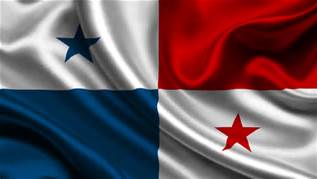
Panamá: Meduca suspende clases en sectores de Panamá y San Miguelito

Centroamérica/Panamá/12 de Agosto de 2016/Fuente: TVN Noticias

Debido al daño en la potabilizadora de Chilibre que ha ocasionado que el 50% de las áreas de la capital  se quedaran sin agua potable, el Ministerio de Educación (Meduca), suspendió las clases en los centros educativos de Panamá y San Miguelito.

Esta medida incluye los planteles públicos y privados en Panamá Centro, Panamá Este y San Miguelito, es decir las áreas abastecidas por la planta potabilizadora de Chilibre.

A través de un comunicado, se solicitó a los padres de familia no enviar a sus hijos a clases y los que llegaron a sus planteles esta mañana deberán ser devueltos a sus casas.

Mario Rodríguez, del Meduca, informó que a consecuencia de los daños la región escolar de Panamá Centro, San Miguelito y Panamá Este, es decir Tocumen deberán mantener las clases suspendidas hasta que se solucione el problema.

Los planteles que tengan tanques de reserva podrían evaluar dictar las clases con normalidad, de lo contrario deberán suspender  labores.

Esta suspensión solo será por el día de hoy hasta tanto se restablezca el regular suministro de agua potable en las áreas afectadas, que según el Instituto de Acueductos y Alcantarillados Nacionales será en horas de la tarde.

El Meduca aclaró que los colegios que están en áreas que no son abastecidas por la potabilizadora de Chilibre deberán funcionar con regularidad.

En tanto, que en el Instituto Nacional de Formación Profesional y Capacitación para el Desarrollo Humano (Inadeh), también suspendió las clases en la sede de Tocumen y Los Pueblos, debido a la falta de agua potable.

Fuente: http://www.tvn-2.com/nacionales/Meduca-suspende-clases-Panama-San-Miguelito_0_4549794977.html

Fuente de la imagen: http://manuel-miranda.blogspot.com/2014/05/elecciones-generales-panama-2014.html

Comparte este contenido:

Canadá: Provincial government increases funding for school buses

América del Norte/Canadá/12 de Agosto de 2016/Autor: Richard Zussman/Fuente: CBC News

RESUMEN: Después de años de frustración de los distritos escolares rurales, el gobierno provincial ha comprometido $ 14.7 millones para hacer el autobús escolar más asequible y accesible para los estudiantes. La financiación está disponible sólo para los distritos escolares que no cobran a los padres o que excluya a los actuales a  cuyos hijos viajan en el autobús a las escuelas públicas.«Los estudiantes, puedan vivir 10, 15, 20 millas de distancia de la escuela, y pueden ahora tener una cuota en algunos distritos,  dijo El ministro de educación Mike Bernier.

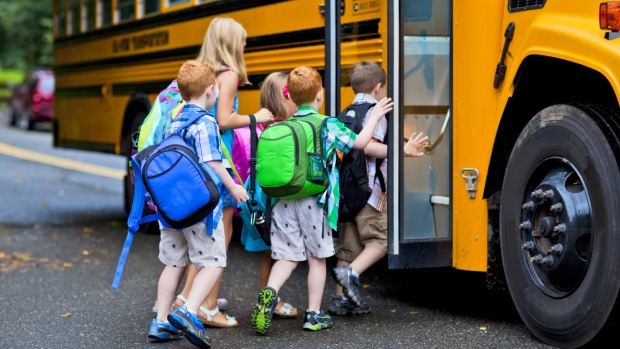
After years of frustration from rural school districts, the provincial government has committed $14.7 million to make riding the school bus more affordable and accessible for students.

The funding is only available to school districts that don’t charge parents or which waive existing charges to parents whose children ride the bus to public schools in B.C.

«Students, they might live 10, 15, 20 miles away from the school, and they may right now have a fee in some districts. Those fees for those students to get to school … we will now be offsetting those,» said Education Minister Mike Bernier.

Refund coming

School districts will still be able to charge for students at independent schools who ride on public school buses. According to Bernier parents that have prepaid for this school year’s bus service will get the money refunded.

Funding is distributed by school districts, with the most funding going to rural communities, including Cariboo-Chilcotin, Prince George and Central Okanagan.

The province will not dictate how the money is spent but has suggested it could be used for reduce ride times, improving service and accessibility, along with waiving the additional fees parents pay in eight districts across the province now.

«For instance in very remote, rural areas, we have students who ride the bus for a long time. They may use these funds to enhance the routes so students don’t have to be on the bus for as long,» said Bernier.

«They could also use these funds to maybe help students with disabilities get to school a little easier.»

Rural communities in need

The province is giving school districts until Sept. 30 to submit a plan to the Ministry of Education in order to be eligible for funding. The deadline will allow districts to understand bus system needs for the 2016-17 school year.

Both the Peace River North and South school districts have been leading the charge for improved service and reduced fees for school buses, especially in more rural areas.

«We’ve been working on this issue for a long time and this is great news for parents. Transportation is vitally important in a rural area like ours, and we are excited to be able to eliminate fees for busing thanks to this money from the provincial government,» said Ida Campbell, the chair of the Peace River North School Board, in a statement.

Fuente: http://www.cbc.ca/news/canada/british-columbia/provincial-government-increases-funding-for-school-buses-1.3715615

Comparte este contenido:
Page 578 of 750
1 576 577 578 579 580 750