Page 233 of 428
1 231 232 233 234 235 428

Cristóbal Cobo: «Internet establece cambios y nuevos pensamientos sobre las prácticas educativas»

Argentina / 12 de noviembre de 2017 / Fuente: Télam Radio

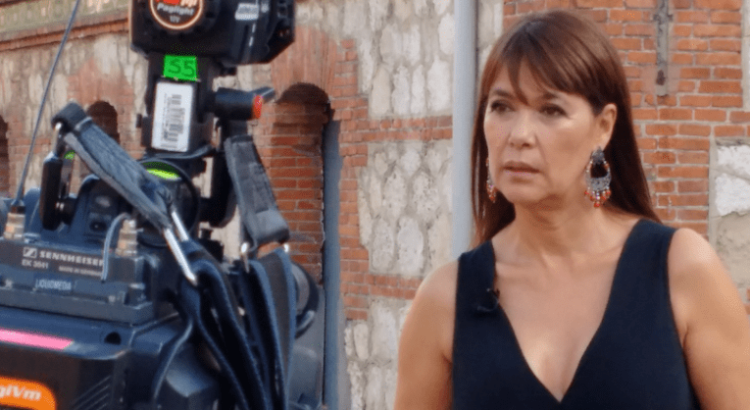
En el marco de  la semana Semana de la Ciudadanía y la Alfabetización Digital, el experto en Ciencias de la Comunicación, Cristóbal Cobo, explicó en Télam Radio que “es fundamental poner en la agenda educativa el funcionamiento del pensamiento computacional”.


Fuente de la Entrevista:

http://www.telam.com.ar/multimedia/audios/28938-internet-establece-cambios-y-nuevos-pensamientos-sobre-las-practicas-educativas/


Comparte este contenido:

El SNTE y la artista Elsa Madrigal crean libro objeto sobre la educación

México / 12 de noviembre de 2017 / Autor: Gerardo González / Fuente: La Crónica de Hoy

La educación nos debe convertir en mejores personas, así como el artista visual transforma el libro en algo mejor para una comprensión y experiencia social más profunda, dice Elsa Madrigal Bulnes, maestra en Bellas Artes por la Escuela Nacional de Artes Plásticas y la Academia de San Carlos.

Ella es la autora que hizo realidad un proyecto apoyado por el sindicato magisterial, el SNTE: crear un libro-objeto capaz de reflejar lo que significa el Artículo 3° Constitucional.

La charla entre Madrigal y Crónica se da en las magníficas instalaciones del Centro Cultural del México Contemporáneo, un gran lugar donde el arte se enseñorea, justo a un paso del bullicio popular que baña la Plaza de Santo Domingo, donde otras artes populares lo mismo ofertan impresiones de tarjetas, invitaciones y hasta facturas.

Apasionada por las artes desde que tiene memoria, “desde niña me atraparon” como ella dice, siguió su pasión por encima del consejo de su padre que le sugería mejor estudiar diseño gráfico porque como artista visual se “moriría de hambre”.

Elsa Madrigal desmenuza su Libro Objeto sobre el 3° Constitucional, obra de 7 bocetos que le llevó tres meses realizar, a invitación en enero de este año, de la maestra Evelia Sandoval, entonces directora del cultural recinto, para formar parte del proyecto conmemorativo del Centenario de Nuestra Carta Magna.

–¿Qué es un Libro Objeto y cuál es su diferencia con uno tradicional?

–Son libros alternativos –explica–, diferentes a los comunes y cotidianos que hay en las librerías; son concebidos por el artista plástico para construir un objeto donde más que textos se recrea una idea general desde la forma y el contenido del tema que se aborde, para transmitir de manera diferente la información.

–¿Para qué pensó el SNTE y tú misma en un libro objeto del Artículo 3° Constitucional, el referido a la educación?

Para dejar algo tangible sobre el Centenario de la Constitución, sobre el Artículo 3°, que para que el Sindicato Nacional de Trabajadores de la Educación es lo más importante. El SNTE resguardará la obra; a través de este libro objeto resguardará este apartado constitucional. Las imágenes que incluye transmiten, plásticamente, la laicidad, obligatoriedad, gratuidad y calidad en la educación.

La artista que realizó siete grabados trabajados en linóleo, así como textos en serigrafía, reflejando estos principios básicos del artículo de la Carta Magna.

En un principio se pensó que se podía hacer una historia, para que se vieran las 10 modificaciones en el tiempo que ha tenido el 3°, pero al final se optó por reflejar la educación del presente y del futuro.

Luego de una investigación para ejecutar la obra (y como artista que es), opina que no se han podido cumplir todos los objetivos del Artículo, la realidad es muy diferente a la gratuidad educativa; sobre la calidad en la educación hay muchas diferencias sociales, mucha pobreza y no es lo mismo una escuela rural que una escuela en la ciudad, las condiciones son diferentes entre las escuelas de la CDMX y las de un pueblo donde los maestros tienen también pocas herramientas y materiales didácticos.

Por ello, al explicar cada uno de los siete grabados que creó, aparecen maestros mejor preparados, y también la aspiración a movimientos pedagógicos modernos que impulsen educación científica, pero sin descuidar a las artes.

De lo contrario, señala Madrigal, el proyecto estaría incompleto, “la educación del futuro es en equilibrio, el corazón con la razón, el pensamiento con lo sensible, y las artes no pueden desaparecer”, agrega.

El futuro plasmado en el libro objeto es, en efecto, tecnología, matemáticas, ciencias y artes, lo que está plasmado en uno de los  bocetos de la obra.

El segundo boceto da especial relevancia a los padres de familia dentro de un esquema de educación de calidad. Dice Madrigal que tomó en cuenta lo importante que es tomar conciencia que la educación del niño y del joven no está solamente en la escuela, sino también está la participación de los padres de familia.

La apuesta plasmada en los bocetos es que padres e hijos se acerquen a los deportes, la cultura mexicana, las artes plásticas, y también a temas de equidad cotidiana, dentro de la casa.

En el libro se pueden ver al papá y al hijo cocinando, en un hogar donde todos son iguales y todos tienen obligaciones; tanto niña como niño pueden cocinar.

Elsa Madrigal señala que su deseo es que todo el público tenga la oportunidad de conocer de cerca este trabajo y disfrute este libro del cual, pese a su engañosa brevedad, es resultado de una larga y detallada reflexión sobre la educación. Finalmente, señala, esta obra la llevó a ratificar su convicción de que la educación ciertamente nos debe convertir en mejores personas.

El Centro Cultural expondrá obras de Madrigal desde el próximo 9 de noviembre, en Leandro Valle 20, Centro Histórico de la Ciudad de México.

¿Para qué educar?

La educación nos debe convertir en mejores personas, señala la artista que, a petición del sindicato magisterial, ha creado un bello libro, único por su naturaleza artesanal, destinado a enaltecer lo que la Carta Magna establece como derechos de todos los mexicanos: aprender y conocer a través de la escuela.

Fuente de la Entrevista:

http://www.cronica.com.mx/notas/2017/1051148.html

Comparte este contenido:

Rafel Bisquerra: “La educación emocional vertebra el desarrollo personal”

08 de noviembre de 2017 / Fuente: http://blog.tiching.com

Rafel Bisquerra

¿La educación emocional está bien integrada en el sistema educativo actual?
No, porque actualmente esto solo depende del voluntarismo del profesor que lo quiera hacer. No está legislado, excepto en Canarias, que a partir de este curso propusieron una asignatura de educación emocional. Es la única comunidad que tiene una asignatura específica sobre el tema. Las demás comunidades autónomas del estado español no prevén impartir en sus aulas de forma reglada la educación emocional. Es una iniciativa personal del profesor que puede estar apoyada o no por el claustro de profesores.

¿Y por qué cree que pasa esto?
Esto sucede por múltiples razones. Pero quiero pensar que la principal es que la educación emocional es una innovación relativamente reciente. Los cambios en educación requieren tiempo, a veces incluso años. Hablamos de educación emocional desde mediados de los años noventa. En los últimos 10 años los profesores se han ido sensibilizando, pero no existe una legislación ni una implicación por parte de la administración pública.

Los profesores que se comprometen con la educación emocional, ¿tienen margen para trabajar con todo el grupo, o por cuestión de tiempo se limitan a trabajar casos concretos de niños con problemas específicos?
Aquí hay que distinguir mucho entre la educación emocional y lo que es la atención a la diversidado la psicoterapia. Estas dos últimas prácticas están muy bien y son muy interesantes, pero lo que entendemos por educación emocional es una innovación educativa dirigida a la totalidad de los estudiantes, no exclusivamente a los que tienen problemas, con la intención de contribuir a la prevención y el desarrollo de competencias emocionales. Cuando hablamos de prevención nos referimos a detección precoz y respuesta a estados de ansiedad, depresión, violencia, suicidio, etc. Pero esto es preventivo. Cuando se trata de atención personalizada hablamos de otras perspectivas, otros conceptos.

Estamos incorporando el concepto resiliencia y en algunos centros se asume ya como nueva competencia. ¿Se ha trabajado con anterioridad en nuestras aulas?
En el mundo educativo hay personas que han investigado sobre la resiliencia, y conozco profesores que desde su aula trabajan con sus alumnos en este sentido.
Muchas competencias de resiliencias coinciden con las competencias de la educación emocional: tener una actitud positiva frente a la vida, capacidad de hacer frente a las adversidades, mantener relaciones positivas con otras personas a pesar de la conflictividad, etc. Es interesante incorporarlo a nuestras aulas para dar respuesta a muchas actitudes de los alumnos.

¿Podemos trabajar estas capacidades en clase con los más pequeños y con los  adolescentes?
Claro, hay una serie de competencias transversales de desarrollo personal que no estan contempladas en ninguna área académica ordinaria. Se pueden desarrollar a través de la práctica, como con la tutoría, que es ideal para ello. También se puede trabajar de forma integrada en el resto de asignaturas o, si se considera oportuno, encontrar espacios específicos.

¿Qué iniciativas propondría a los profesores que quieran trabajar estas competencias en clase?
En primer lugar creo que deben contribuir a una sensibilización de los profesores, las familias y la sociedad en general sobre la importancia de las competencias emocionales para la vida personal, familiar, social, de tiempo libre, etc.  Los profesores sensibilizados con ello enseguida sienten la necesidad de formarse al respecto, por tanto debemos proporcionar a los docentes materiales interesantes y atractivos donde puedan encontrar respuestas y recursos.

Algunos docentes aquejan la falta de formación inicial en los estudios universitarios al respecto.
Y tienen toda la razón. Los actuales profesores o los que estudian para ello no han recibido formación en educación emocional a no ser que por casualidad algún profesor de la universidad haya tenido una mínima sensibilización por hacerlo, pero por ahora esta asignatura no está especificada ni reglada en los estudios superiores de nuestros docentes.

Los profesores que quieren implicarse, ¿tienen suficientes recursos para hacerlo a nivel metodológico y didáctico?
En la Universidad de Barcelona, por ejemplo, para dar respuesta a esta necesidad organizamos un postgrado específico sobre educación emocional. Desde entonces hemos intentado contribuir a la difusión, formación y sensibilización del profesorado y de la sociedad. Para apoyar esta iniciativa también hacemos una jornadas en la universidad que abordan el tema. Para las personas que no pueden asistir a estas formaciones vamos a habilitar a partir de julio de 2015 un postgrado semipresencial. Seran 15 dias en Barcelona y el resto del curso será a distancia con una tutoría personal. En Lleida, en Cantabria, en Málaga o en la UNED, hay otros ejemplos y propuestas para dotar a los profesores de las herramientas necesarias.

¿Qué acogida tienen las iniciativas vinculadas a la formación en educación emocional?
Yo diría que hay de todo. Me consta que hay un porcentaje importante de profesores que está interesado y que se está formando. Hay otro grupo que no lo consideran necesario incorporar a su clase porque no está relacionado con las materias y contenidos que ellos imparten. Y también hay otro porcentaje de profesores que piensan que la educación emocional no forma parte de las competencias de los profesores, ya que ellos deben limitarse a la enseñanza de las materias ordinarias.
Nosotros pensamos que la educación tiene dos caras, por un lado la de las materias, pero por otro el desarrollo personal, ético, moral, etc. Esto no queda recogido el actual currículum.
La educación emocional es el eje vertebrador del desarrollo de la personalidad integral.

¿Por qué cree que el currículum escolar no prevé desarrollar correctamente la educación emocional?
Por un lado, creo que es una cuestión de sensibilidad; por otro lado, un tema de transición y, por último, que en el currículum cabe lo que cabe y cuando toca priorizar prefieren incluir los que para ellos es lo más importante, aunque luego no veamos aplicaciones prácticas reales de lo que han aprendido en la escuela en la vida real.

¿Qué cambiaría del currículum?
Para empezar, incluir la educación emocional como eje vertebrador del desarrollo personal. Cuando hablamos de educación emocional debemos tener en cuenta que las emociones se procesan en el mismo lugar del cerebro donde se procesan los valores éticos y morales. Todo esto constituye un núcleo importantísimo en el desarrollo integral de las personas.
Tenemos la idea de que la educación se centra en la adquisición de conocimientos de asignaturas ordinarias y todo lo que quede fuera de esta área, como no va por nota, queda relegado.
Es triste, tanto para los profesores como para los alumnos, que todo lo que no entre en selectividad, o todo aquello que no cuenta para subir nota, no interese y sea de menos categoría.

¿Es posible trabajar dentro de la familia en el ambito de la educación emocional?
No solo es posible si no que es indispensable. Las emociones empiezan a educarse desde los primeros momentos de la vida de las personas. El niño se manifiesta emocionalmente desde sus primeros minutos de vida. Sus primeros años son explosiones de emociones en estado puro. Las familias, padres y madres, no están formados ni sensibilizados para responder a las necesidades emocionales de sus hijos. Las respuestas que las familias dan a sus hijos van educando o deseducando a los niños en su faceta emocional.
Desde las escuelas, pero también desde otras instancias, deberíamos intentar llegar a las familias para proporcionar los recursos necesarios, la formación conveniente para que las familias puedan trabajar en este sentido.

¿Qué pautas daría a las familias?
Es importante seguir un proceso determinado. En primer lugar, hay que observar, tener consciencia emocional. En segundo lugar, regulación, donde la paciencia es un elemento clave. En tercer lugar, trabajar la autonomía emocional, es decir, que los estímulos que a veces nos provoca el niño no nos hagan perder el equilibrio. A partir de aquí, trabajar la competencia social, la capacidad de escuchar más allá de lo que dice, sino desde las emociones que está exteriorizando. Debemos establecer conexiones empáticas.
Cuando tenemos niños, lo que queremos es gozar de momentos agradables, de emociones caracterizadas por la satisfacción, la plenitud, la felicidad,o la alegría. Todo esto no viene dado, se ha de construir, con esfuerzo y con competencias emocionales.

Fuente artículo: http://blog.tiching.com/rafel-bisquerra-la-educacion-emocional-vertebra-el-desarrollo-personal/

Comparte este contenido:

Pau López Vicente: “Los adolescentes son nuestro espejo”

08 de noviembre de 2017 / Fuente: http://blog.tiching.com/

Pau López Vicente

¿Los adolescentes de hoy en día son iguales que los de hace 20 años? ¿Comparten las mismas problemáticas?
Los cambios propios de la pubertad es evidente que no varían sustancialmente en 20 años. Sin embargo, la manera de experimentar y vivir estos cambios sí que es diferente. La sociedad evoluciona, prioriza, pone esperanza en el futuro o vive la incertidumbre como una tragedia, se impone el concepto de crisis, el desconcierto, la desconfianza… ¡o todo lo contrario! Pues los adolescentes captan estos efluvios sanos o venenosos que revolotean en las conversaciones de los adultos, en las noticias, etc. Aparecen nuevas preocupaciones y retos, nuevas ilusiones, nuevos “sentidos” para hacer o no hacer las cosas que exigen esfuerzo. Si observamos las preocupaciones de la sociedad, de los adultos, sus aciertos, fallos, miedos y esperanzas… descubriremos las preocupaciones de los adolescentes. Son nuestro espejo.

En una sociedad como la actual en la que “ser joven” es un valor que persiguen muchos adultos, ¿qué modelo o referente se les plantea a los adolescentes?
Buena pregunta. Pienso en “referentes” mediáticos, artísticos, deportivos… algunos de gran interés, pero no se me ocurren “héroes sociales” de referencia para los adolescentes. Y, si los hay, son muy pocos. Cuando saltamos a la “juventud” el panorama cambia positivamente. Es un gozo contemplar a los miles de jóvenes que colaboran en el voluntariado, aquí y lejos de aquí, en proyectos de cooperación, educación en el tiempo libre, etc. Pero a los adolescentes se les deja entre dos aguas: entre la infancia protegida y la juventud con proyectos interesantes. Buena pregunta, insisto. El valor “ser joven” es un elemento comercial, de marketing, para los adultos. Además de la falta de aceptación del paso del tiempo, del ciclo vital, y del miedo, posiblemente mucho miedo. En algunos casos, claro.

La comunicación entre adultos (padres, madres, profesores) y adolescentes suele ser compleja. ¿Por qué?
Las dificultades en la comunicación son reales y yo diría que positivas. La dialéctica es necesaria para crecer. El conflicto, el contraste, la gestión de las situaciones problemáticas son fuente de crecimiento: así nos hacemos adultos, así construimos criterios y nos emancipamos. Yo diría que hay que relativizar los tópicos sobre esta problemática de la comunicación. Ellos nos piden que estemos por ellos, a pesar que en ocasiones no sean muy generosos y se muestren demasiado exigentes. Hay que hablar y después hablar, y después volver a hablar, y acordar, y pactar, y volver a hablar. Así se construyen los humanos, desde la infancia hasta el final. Realmente las máquinas son menos complicadas que las persona, pero trabajamos con personas y es más emocionante que trabajar con objetos.

¿Se ha complicado la comunicación con la integración de las nuevas tecnologías en nuestro día a día?
Posiblemente. Pero yo diría que lo que es novedoso para los adultos, es “normal” para los adolescentes. Es aquella idea de Marc Prensky sobre los “nativos digitales” y los “inmigrantes digitales”. Los adolescentes son hábiles y rápidos y los adultos vamos a remolque, pero no es una tragedia. Hay una posibilidad de relación simbiótica adulto-adolescente que jamás se había producido en la historia: el adolescente nos puede enseñar a descargar un programa o acceder a una site determinada,  y  los adultos podemos ayudarle a organizarse, a establecer prioridades. Una relación simbiótica interesante, ¿no? También nos podemos centrar en los peligros del acceso a todo tipo de contenidos, o el ciber bullying, pero ¿vemos el vaso medio lleno o medio vacío? Tendremos que convivir con la incertidumbre y hacer el camino mientras caminamos.

¿Las nuevas tecnologías nos acercan o nos alejan de los alumnos adolescentes?
Como siempre: depende. Hay muchos aspectos a tener en cuenta.

Más concretamente: ¿qué oportunidades ve en la tecnología para gestionar la relación entre alumnos y profesor en el aula? 
Las TIC realmente ofrecen una posibilidad muy real y comprobada de acercamiento y de seguimiento personalizado del alumno en su aprendizaje. Podemos comunicarnos con él, felicitarle y darle apoyo en cualquier momento. Y no hablo de sustituir la comunicación directa cara a cara, ni que haya que hacerlo todo el día, a todas horas y con todos. Sin obsesiones exageradas, la inmediatez puede ser una ventaja. Pensemos, por un momento, en un alumno que nos comunica que ahora, hoy, se siente muy mal, o que le pasa algo muy importante y necesita unas palabras de apoyo. Para algunos alumnos esta posibilidad ha sido su “salvación”. Estoy pensando en problemas de acoso, de relaciones difíciles, de angustias de exámenes…

¿Y las desventajas? 
Tal vez confiar demasiado en que las TIC nos lo resolverán todo, magnificar su uso y su alcance real. Nos hacen dudar que la “alianza pedagógica” entre profesor y alumno es la base de la educación y del aprendizaje. Nos hace pensar que los profesores somos menos necesarios pero, ¡es bueno hablarlo entre adultos! Es una discusión que creo que muchos docentes tenemos pendiente.

¿Cómo cree que debemos gestionar el uso de las TIC en una aula con alumnos de ESO y Bachillerato?
Utilizarlas, contrastar y debatir pros y contras, construir criterios de uso entre todos. Sí, hablar y generar criterio, y poco más. Ellos acabarán decidiendo qué hacer o no hacer. La red es libre y el control muy relativo.

Los conflictos nunca han estado exentos del entorno de los adolescentes. ¿Cómo valora los proyectos de algunos centros en los que los propios adolescentes se forman como mediadores de conflictos?
Realmente es una experiencia genial. Vuelvo con la idea de “construir criterios” desde situaciones reales. Esto sí que es educación experiencial, donde intervienen y se entrelazan aspectos emocionales, cognitivos y sociales. ¡Bien, bien!

Muchos profesores de las etapas educativas adolescentes acceden a la docencia a través de un curso, ahora un master más amplio. ¿Es una formación suficiente para atender las necesidades específicas de estos grupos de edad?
Creo que el máster supone una mejora sustancial. Mi propuesta sería abundar en el conocimiento de las adolescencias, desde la perspectiva bio-psico-social, e incrementar el tiempo del módulo genérico que se dedica a este tema básico y primordial.

¿Aconseja alguna formación complementaria o continuada para este colectivo de profesores?
Pues sí. Yo propondría organizar “espacios de contraste” con profesores y tutores de Secundaria para compartir experiencias y saberes en relación a los cambios de los adolescentes, a las dificultades de trato, a las formas de apoyo, a la manera de hacer frente a sus impertinencias, a sus preguntas, a sus impulsos, a sus emociones, a sus angustias. Se trata de conocer para atender: conocer mejor para poder educar mejor, para acompañarle en su crecimiento de la manera más adecuada. Los “espacios de contraste” con familias, con profesores y con adolescentes son una experiencia magnífica.

Fuente entrevista: http://blog.tiching.com/pau-lopez-vicente-los-adolescentes-espejo/

Comparte este contenido:

Xavier Kirchner: “Las TIC permiten la heterogeneidad en clase”

08 de noviembre de 2017 / Fuente: http://blog.tiching.com/

Xavier Kirchner

Fue el precursor de la introducción de las TIC en el aula a través del programa EduCAT1x1. ¿Cómo nació la idea?
Durante la etapa en la que fui director de segundo nivel en el centro de I+D de Telefónica en Barcelona, muchas de las personas con las que trabajaba, en su mayoría jóvenes, eran precursores de lo que hoy llamamos nativos digitales: tenían la capacidad de hacer muchas cosas en paralelo. Fue cuando tomé conciencia de que se debía potenciar esa habilidad y de que la educación no podía seguir siendo lineal como hasta entonces.

Y, de la idea al hecho, ¿qué pasos siguió?
Me reuní con el Consejero de Educación en aquel momento, Ernest Maragall, y le propuse iniciar un proyecto para avanzar en la implementación de la educación digital. Además, la coyuntura era favorable: en primer lugar, la idea tuvo muy buena acogida entre la comunidad educativa; en segundo lugar, ya existía la posibilidad de acceder a netbooks económicos; en tercer lugar, habían nacido iniciativas para poner al alcance de los profesores libros de texto digitales; y, por último, el Ministerio de Educación había puesto en marcha el programa Escuela 2.0, que permitió invertir en infraestructura y llevar wifi a las escuelas. Todo ello facilitó el nacimiento de EduCAT1x1.

Debió de haber dificultades…
Podría nombrar muchas, pero la más grande vino de la mano de la conectividad de las escuelas, que fallaba mucho y que costaba arreglar porque había varias empresas responsables de garantizarla. No había un ente único que se encargara de extremo a extremo de la conectividad y esto dificultaba encontrar y solucionar los problemas.

¿Estamos preparados para asumir el reto de introducir la tecnología en el aula?
Sí, porque la tecnología digital está en la vida de todos. Todo el mundo está colgado de un smartphone, usa una tablet o un ordenador. No hay una brecha digital que deje a los ciudadanos fuera del sistema. En el caso de Cataluña, hay una oferta editorial importantísima y las escuelas tienen ya la infraestructura adecuada. El único problema que había antes es que no existían los recursos para introducir la tecnología digital de forma fácil para los docentes.

Desde su experiencia, ¿cómo deben convivir los recursos educativos analógicos y los digitales?
Quien mejor lo puede decir son los docentes. Son quienes pueden decidir cómo educar a los alumnos, porque los conocen y conocen la situación en la que viven. Y para ello deben tener la libertad para combinar los recursos analógicos y digitales.

¿Cree que la digitalización es la clave para personalizar el aprendizaje de los estudiantes?
La educación personalizada es un objetivo pedagógico presente desde siempre: no hay dos alumnos iguales. Pero, teniendo en cuenta el contexto en el que se encuentra la escuela occidental hoy, con alrededor de 20 o 30 alumnos por docente, con horarios… es imposible. Los medios digitales facilitan que el profesorado pueda elegir cuáles son los mejores recursos para combinar la estrategia docente con la estrategia de aprendizaje del alumno.

¿Cómo?
El mundo digital permite la heterogeneidad dentro de la clase, porque mientras yo estoy sentado en un pupitre viendo los números primos en un módulo educativo básicamente visual, a mi lado mi compañero los estudia mediante un módulo básicamente explicativo. Y nuestro profesor, en lugar de explicar a todos a la vez qué son los números primos, puede estar pendiente de qué problemas tenemos. Esto es un sueño que con métodos analógicos era sólo posible si tienes un profesor particular, pero no con un profesor por cada 30 alumnos.

Viendo que no hace tanto esta imagen era impensable, se hace difícil predecir el futuro.
Sí. Sin embargo, se intuye por dónde va a ir, porque hay una tendencia que está entrando con mucha fuerza: la educación basada en recomendaciones de filtrado colaborativo. Se trata de un sistema que tiene dos vías: una que viene determinada por la información sobre las necesidades del alumno, que el sistema recaba mediante sus ejercicios y evaluaciones; y otra viene determinada por la actividad y preferencias mostradas en redes sociales. Así, mediante los recursos educativos adaptados y la posibilidad de recomendaciones individualizadas, se puede llegar a fomentar muchísimo la educación personalizada.

Fuente entrevista: http://blog.tiching.com/xavier-kirchner-las-tic-permiten-la-heterogeneidad-en-clase/

Comparte este contenido:

Interview 3: Noam Chomsky and Robert Pollin: Breaking Through the Political Barriers to Free Education

Interview/ By C.J. Polychroniou, Truthout

In an increasingly unequal country, the stakes are high for debates over student debt and the prospect of free higher education. Driven by neoliberal politics, our current educational system is both a product of and a driver of deep social inequities. In this interview, world-renowned public intellectuals Noam Chomsky and Robert Pollin take on the question of who should pay for education — and how a radical reshaping of our educational system could be undertaken in the US.

This is the third part of a wide-ranging interview series with world-renowned public intellectuals Noam Chomsky and Robert Pollin. Read part one here and part two here.

C.J. Polychroniou: Noam, higher education in the US is a terribly expensive affair, and hundreds of billions are owed in student loans. First, do you think that a system of free higher education can coexist alongside tuition-charging universities? Secondly, what could and should be done about student debt?

Noam Chomsky: The educational system was a highly predictable victim of the neoliberal reaction, guided by the maxim of «private affluence and public squalor.» Funding for public education has sharply declined. Tuition has exploded, leading to a plague of unpayable student debt. As higher education is driven to a business model in accord with neoliberal doctrine, administrative bureaucracy has sharply increased at the expense of faculty and students, developments reviewed well by sociologist Benjamin Ginsburg. Cost-cutting dictated by the revered market principles naturally leads to hyper-exploitation of the more vulnerable, creating a new precariat of graduate students and adjuncts surviving on a bare pittance, replacing tenured faculty. All of this happens to be a good disciplinary technique, for obvious reasons.

For those with eyes open, much of what has happened was anticipated by the early ’70s, at the point of transition from regulated capitalism to incipient neoliberalism. At the time, there was mounting elite concern about the dangers posed by the democratizing and civilizing effects of 1960s activism, and particularly the role of young people during «the time of troubles.» The concerns were forcefully expressed at both ends of the political spectrum.

At the right end of the spectrum, the «Powell memorandum» sent by corporate lobbyist (later Supreme Court Justice) Lewis Powell to the Chamber of Commerce called upon the business community to rise up to defend itself against the assault on freedom led by Ralph Nader, Herbert Marcuse and other miscreants who had taken over the universities, the media and the government. The picture was, of course, ludicrous but it did reflect the perceptions of Powell’s audience, desperate about the slight diminution in their overwhelming power. The rhetoric is as interesting as the message, reminiscent of a spoiled three-year-old who has a piece of candy taken away. The memorandum was influential in circles that matter for policy formation.

At the other end of the spectrum, at about the same time, the liberal internationalists of the Trilateral Commission published their lament over «The Crisis of Democracy» that arose in the «terrible» ’60s, when previously apathetic and marginalized parts of the population — the great majority — began to try to enter the political arena to pursue their interests. That posed an intolerable burden on the state. Accordingly, the Trilateral scholars called for more «moderation in democracy,» a return to passivity and obedience. The American rapporteur, Harvard professor Samuel Huntington, reminisced nostalgically about the time when «Truman had been able to govern the country with the cooperation of a relatively small number of Wall Street lawyers and bankers,» so that true democracy flourished.

A particular concern of the Trilateral scholars was the failure of the institutions responsible for «the indoctrination of the young,» including the schools and universities. These had to be brought under control, along with the irresponsible media that were (occasionally) departing from subordination to «proper authority» — a precursor of concerns of the far-right Republican Party today.

There is no economic reason why free education cannot flourish from schools through colleges and university.

The right-liberal spectrum of concerns provided a good indication of what was to come.

The underfunding of public education, from K-12 through colleges and universities, has no plausible economic rationale, and in fact is harmful to the economy because of the losses that ensue. In other countries, rich and poor, education remains substantially free, with educational standards that rank high in global comparisons. Even in the US, higher education was almost free during the economically successful years before the neoliberal reaction — and it was, of course, a much poorer country then. The GI bill provided free education to huge numbers of people — white men overwhelmingly — who would probably never have gone to college, a great benefit to them personally and to the whole society. Tuition at private colleges was far below today’s exorbitant costs.

Student debt is structured to be a burden for life. The indebted cannot declare bankruptcy, unlike Trump. Current student debt is estimated to be over $1.45 trillion, [more than] $600 billion more than total credit card debt. Most is unpayable, and should be rescinded. There are ample resources for that simply from waste, including the bloated military and the enormous concentrated private wealth that has accumulated in the financial and general corporate sector under neoliberal policies.

There is no economic reason why free education cannot flourish from schools through colleges and university. The barriers are not economic but rather political decisions, skewed in the predictable direction under conditions of highly unequal wealth and power. Barriers that can be overcome, as often in the past.

Bob, what’s your own response to the question I posed above?

Robert Pollin: Student debt in the US has exploded in the past decade. In 2007, total student debt was $112 billion, equal to 0.8 percent of GDP. As of 2016, total student debt was [more than] $1 trillion, equal to 5.6 percent of GDP. Thus, as a share of GDP, student debt has risen approximately seven-fold. As of 2012, nearly 70 percent of students left college carrying student loans, and these loans averaged $26,300.

The rise in student debt reflects a combination of factors. The first is that the private costs of attending college have risen sharply, with public higher education funding having been cut sharply. Average public funding per student was 15 percent lower in 2015 than in 2008, and 20 percent lower than in 1990. The burden of the public funding cuts [has] been worsened by the stagnation of average family incomes. Thus, in 1990, average tuition, fees, room and board amounted to about 18 percent of the median household income. By 2014, this figure had nearly doubled, to 35 percent of median household income.

Despite these sharply rising costs, college enrollments have continued to rise. There are many good reasons for young people to go off to college, open their minds, develop their skills and enjoy themselves. But probably the major attraction is the fact that income disparities have increased sharply between those who go to college versus those who do not. This pattern corresponds with the stagnation of average wages since the early 1970s that we discussed [previously]. The reality under neoliberalism has been that, if you want to have a decent shot at a good-paying job with a chance for promotions and raises over time, the most important first step is to get a college education. The pressures to go to college would be much less intense if working-class jobs provided good pay and opportunities to advance, as was the pattern prior to the onset of neoliberalism.

Virtually all student debt in the US is now held by the federal government. It would therefore be a relatively simple matter to forgive some, if not all of it. This would enable young people to transition much more easily into creating their own households and families. At the same time, if the government is going to enact a major program of student debt forgiveness, it should be at least equally committed to relieving the heavy mortgage debt burdens still carried by tens of millions of non-affluent households in the aftermath of the 2007-09 financial crash and Great Recession. Similarly, the government should also be at least equally committed to both lowering the costs of college education in the first place, and [supporting] better wages and work opportunities for people who do not attend college.

The blueprint for a progressive US that the two of you have sketched out requires that a certain course of political action is carried out … which includes educating the masses in getting from here to there. How is this to be done, especially given not only the peculiarities of American political culture, but also the balkanization of progressive and left forces in the country?

Chomsky: The answer is both easy and hard. Easy to formulate (and familiar), and hard to execute (also familiar). The answer is education, organization [and] activism as appropriate to circumstances. Not easy, but often successful, and there’s no reason why it cannot be now. Popular engagement, though scattered, is at quite a high level, as is enthusiasm and concern. There are also important elements of unity, like the Left Forum, novel and promising. And the movements we’ve already mentioned. Significant efforts are underway, such as those alluded to briefly [before], and there’s no reason why they cannot be extended. While the left is famous for constant splits and internal disputes, I don’t think that’s more so now than in the past. And the general mood, particularly among young people, seems to me conducive to quite positive changes.

It is not idle romanticism to recognize the potential that can be awakened, or arise independently, in communities that free themselves from indoctrination and passive subordination.

I don’t feel that there is anything deep in the political culture that prevents «educating the masses.» I’m old enough to recall vividly the high level of culture, general and political, among first-generation working people during the Great Depression. Workers’ education was lively and effective, union-based — mostly the vigorous rising labor movement, reviving from the ashes of the 1920s. I’ve often seen independent and quite impressive initiatives in working-class and poor and deprived communities today. And there’s a long earlier history of lively working-class culture, from the early days of the industrial revolution. The most important radical democratic movement in American history, the populist movement (not today’s «populism»), was initiated and led by farmers in Texas and the Midwest, who may have had little formal education but understood very well the nature of their plight at the hands of the powerful banking and commercial sectors, and devised effective means to counter it….

I’ve been fortunate enough to have seen remarkable examples elsewhere. I recall vividly a visit to an extremely poor, almost inaccessible rural village in southern Colombia, in an area under attack from all sides, where I attended a village meeting that was concerned with protecting their resources, including irreplaceable water supplies, from predatory international mining corporations. And in particular. a young man, with very little formal education, who led a thoughtful and very informed discussion of sophisticated development plans that they intended to implement. I’ve seen the same in poor villages in West Bengal, with a handful of books in the tiny schoolroom, areas liberated from landlord rule by Communist party militancy. The opportunities and, of course, resources are vastly greater in rich societies like ours.

I don’t think it is idle romanticism to recognize the potential that can be awakened, or arise independently, in communities that free themselves from indoctrination and passive subordination. The opportunities I think are there, to be grasped and carried forward.

Pollin: I think it is inevitable that leftist forces in the US would be divided, if not balkanized, to some extent. Among the full range of people who are committed to social and economic equality and ecological [justice] — i.e. to some variant of a leftist vision of a decent society — it will always be the case that some will be more focused on egalitarian economic issues, others around the environment and climate change, others on US imperialism, militarism and foreign policy, others on race and gender equality, and still others on sexual identity.

I certainly do not have the formula for how to most effectively knit all these groups together. But I do think we can learn a lot from the major successes out there. The 2016 Bernie Sanders presidential campaign is a first obvious example. Another is the California Nurses Association/National Nurses United (CNA/NNU) that I mentioned [before]. This is a union, fighting first for the well-being of its members, who are overwhelmingly women, with a high proportion being women of color. At the same time, CNA/NNU has been in the forefront of campaigns for single-payer health care and even the Robin Hood Tax on speculative Wall Street trading.

There are other progressive organizations that have proven track records of success. One is the Los Angeles Alliance for a New Economy (LAANE), which has long been active around both living wage and other worker rights issues, as well as community economic development and environmental justice. A more recently formed coalition is NY Renews, which is comprised of 126 organizations in New York State who have come together to advance a serious program in the state to both dramatically reduce greenhouse gas emissions and expand good job opportunities. The Washington State Labor Council — part of the AFL-CIO — has also been committed and innovative in bringing together coalitions of labor and environmental groups.

The US left needs to learn and build from the achievements and ongoing work of these and similar groups. In fact, as Margaret Thatcher used to say, «there is no alternative» — if we are serious about successfully advancing a left alternative to the disasters caused by 40 years of neoliberal hegemony.

Source:

http://www.truth-out.org/opinion/item/42422-noam-chomsky-and-robert-pollin-breaking-through-the-political-barriers-to-free-education

Comparte este contenido:

Interview 2: Imagining Our Way Beyond Neoliberalism: A Dialogue With Noam Chomsky and Robert Pollin

Interview/ By C.J. Polychroniou, Truthout

This is part two of a wide-ranging interview with world-renowned public intellectuals Noam Chomsky and Robert Pollin. Read part one here. The next installment will appear on October 31.

C.J. Polychroniou: Noam, racism, inequality, mass incarceration and gun violence are pathologies that run deep inside American society. How would a progressive government begin to address these problems if it found itself in a position of power in, say, the next decade or so?

Noam Chomsky: Very serious problems, no doubt. In order to address them effectively, it’s first necessary to understand them; not a simple matter. Let’s take the four pathologies in turn.

Racism certainly runs deep. There is no need to elaborate. It’s right before our eyes in innumerable ways, some with considerable historical resonance. Current anti-immigrant hysteria can hardly fail to recall the racist immigration laws that at first barred [Asians] and were extended in the 1920s to Italians and Jews (under a different guise) — incidentally, helping to send many Jews to gas chambers, and after the war, keeping miserable survivors of the Holocaust from US shores.

Of course, the most extreme case for the past 400 years is the bitter history of African Americans. Current circumstances are shameful enough, commonly held doctrines scarcely less so. The hatred of Obama and anything he touched surely reflects deep-rooted racism. Comparative studies by George Frederickson show that doctrines of white supremacy in the US have been even more rampant than in Apartheid South Africa.

The Nazis, when seeking precedents for the Nuremberg laws, turned to the United States, taking its anti-miscegenation laws as a model, though not entirely: [Certain] US laws were too harsh for the Nazis because of the «one drop of blood» doctrine. It was not until 1967, under the impact of the civil rights movement, that these abominations were struck down by the Supreme Court.

And it goes far back, taking many strange forms, including the weird Anglo-Saxon cult that has been prominent for centuries. Benjamin Franklin, the great American figure of the Enlightenment, pondered whether Germans and Swedes should be barred from the country because they are «too swarthy.» Adopting familiar understanding, he observed that «the Saxons only [are] excepted» from this racial «defect» — and by some mysterious process, those who make it to the United States may become Anglo-Saxons, like those already accepted within the canon.

The national poet Walt Whitman, honored for his democratic spirit, justified the conquest of half of Mexico by asking, «What has miserable, inefficient Mexico … to do with the great mission of peopling the New World with a noble race? Be it ours, to achieve that mission!» — a mission accomplished by the most «wicked war» in history, in the judgment of General-President U.S. Grant, who later regretted his service in it as a junior officer.

Coming to recent years, Henry Stimson, one of the most distinguished members of the FDR-Truman cabinets (and one of the few to oppose atomic bombing) «consistently maintained that Anglo-Saxons were superior to the ‘lesser breeds’,» historian Sean Langdon Malloy observes in his book, Atomic Tragedy: Henry L. Stimson and the Decision to Use the Bomb — and again reflecting not-uncommon views, asked to have one of his aides reassigned «on the slight possibility that he might be a Hebrew,» in his own words.

The other three maladies that you mention are also striking features of US society — in some ways, even distinguishing features. But unlike racism, in all three cases, it is partially a contemporary phenomenon.

Take inequality. Through much of its history, the US did not have high inequality as compared with Europe. Less so, in fact. That began to change in the industrial age, reaching a peak in 1928, after the forceful destruction of the labor movement and crushing of independent thought. Largely as a result of labor mobilization, inequality declined during the Great Depression, a tendency continuing through the great growth period of regulated capitalism in the early postwar decades. The neoliberal era that followed reversed these trends, leading to extreme inequality that may even surpass the 1928 peak.

Mass incarceration is also period-specific; in fact, the same period. It had reached high levels in the South in the post-reconstruction years after an 1877 North-South compact gave the South free rein to institute «slavery by another name,» as Douglas Blackmon calls the crime in his study of how the former slave-owning states devised techniques to incarcerate much of the Black population. By doing so, they created a renewed slave labor force for the industrial revolution of those years, this time with the state, rather than private capital, responsible for maintaining the slave labor force — a considerable benefit to the ownership class. Turning to more recent times, 30 years ago, US incarceration rates were within the range of developed societies, a little towards the high end. By now they are 5 to 10 times as high, far beyond those of any country with credible statistics. Again, a phenomenon of the past three decades.

The gun cult is also not as deeply rooted as often supposed. Guns were, of course, needed to conduct the two greatest crimes of American history: controlling slaves and exterminating [Native Americans]. But the general public had little interest in weapons, a matter of much concern to the arms industry. The popular gun cult was cultivated by gun manufacturers in the 19th century in order to create a market beyond governments. Normal capitalism. Methods included concoction of «Wild West» mythology that later became iconic. Such efforts continue, vigorously, until the present. By now, in large sectors of the society, swaggering into a coffee shop with a gun shows that you are really somebody, maybe a Wyatt Earp clone. The outcomes are sobering. Gun homicides in the US are far beyond comparable countries. In Germany, for example, deaths from gun homicide are at the level of deaths in the US from «contact with a thrown or falling object.» And even these shocking figures are misleading. Half of suicides in the US are with firearms, more than 20,000 a year, amounting to two-thirds of all firearm deaths.

Turning to your question about the four «pathologies» — the four horsemen, one is tempted to say — the questions virtually answer themselves with a careful look at the history, particularly the history since World War II. There have been two phases during the postwar period: regulated capitalism through the ’50s and ’60s, followed by the neoliberal period from the late ’70s, sharply accelerating with Reagan and his successors. It is the latter period when the last three of four pathologies drove the US off the charts.

During the first postwar phase, there were some significant steps to counter endemic racism and its devastating impact on the victims. That was the great achievement of the mass civil rights movement, peaking in the mid-1960s, though with a very mixed record since. The achievements also had a major impact on the political system. The Democratic Party had been an uneasy coalition, including Southern Democrats, dedicated to racist policies and extremely influential because of seniority in one-party states. That’s why New Deal measures [were] largely restricted to whites; for example, household and agricultural workers were barred from Social Security.

The alliance fell apart in the ’60s with the fierce backlash against extending minimal rights of citizenship to African-Americans. The South shifted to Republican ranks, encouraged by Nixon’s overtly racist «Southern strategy.» The period since has hardly been encouraging for African Americans, apart from elite sectors.

Government policies could go some way towards ameliorating these social pathologies, but a great deal more is needed. Such needs can only be fulfilled by dedicated mass popular activism and educational/organizational efforts. These can be facilitated by a more progressive government, but, just as in the case of the civil rights movement, that can be only a help, often a reluctant one.

On inequality, it was low (by comparative standards) during the period of regulated capitalism — the final era of «great compression» of income as it is sometimes called. Inequality began to increase rapidly with the advent of the neoliberal era, not only in the US, though the US is extreme among developed societies. During the tepid recovery from the Great Recession of 2008, virtually all gains went to the top few percent, mostly 1 percent or a fraction thereof. «For the United States overall, the top 1 percent captured 85.1 percent of total income growth between 2009 and 2013,» an Economic Policy Institute Study revealed. «In 2013 the top 1 percent of families nationally made 25.3 times as much as the bottom 99 percent.» And so, it continues. The latest Federal Reserve studies show that «The share of income received by the top 1 percent of families rose to 23.8 percent in 2016, up from 20.3 percent in 2013. The share of the bottom 90 percent of the distribution fell to 49.7 percent, the lowest on record in the survey’s history.» Other figures are grotesque. Thus, «Average wealth holdings for white families in 2016 were about $933,700, compared with $191,200 for Hispanic families and $138,200 for black families,» a product of deep-rooted racism exacerbating the neoliberal assault.

The gun culture, too, has expanded rapidly in recent decades. In 1975, the NRA formed a new lobbying arm — a few years later, a PAC — to channel funds to legislators. It soon became one of the most powerful interest-group lobbies, with often fervent popular participation. In 2008, the Supreme Court, in an intellectual triumph of «originalism,» reversed the traditional interpretation of the Second Amendment, which had previously respected its explicit condition on the right to bear arms: the need for «A well regulated Militia, being necessary to the security of a free State….» That provision was understandable in 1790. There was almost no standing army. The world’s most powerful state was still an enemy. The slave population had to be controlled. And the invasion of the rest of what became the national territory was about to be unleashed. Not exactly today’s circumstances.

Since 2008, our «constitutional right to bear arms,» as declared by the right-wing Roberts Court, has become Holy Writ.

There are many contributing factors to the sharp break between the two postwar periods — neither [of] which began to approach what is surely possible in the richest society in world history, with incomparable advantages.

One leading factor is the financialization of the economy, creating a huge bloc of largely predatory institutions devoted to financial manipulations rather than to the real economy — a process by which «Wall Street destroyed Main Street,» in the words of Financial Times editor Rana Foroohar. One of her many illustrations is the world’s leading corporation, Apple. It has astronomical wealth, but to become even richer, has been shifting from devising more advanced marketable goods to finance. Its R&D as a percentage of sales has been falling since 2001, tendencies that extend widely among major corporations. In parallel, capital from financial institutions that financed business investments during the postwar growth period now largely «stays inside the financial system,» Foroohar reports, «enriching financiers, corporate titans, and the wealthiest fraction of the population, which hold the vast majority of financial assets.»

During the period of rapid growth of financial institutions since the ’70s, there seem to have been few studies of their impact on the economy. Apparently, it was simply taken for granted that since it (sort of) accords with neoliberal market principles, it must be a Good Thing.

The failure of the profession to study these matters was noted by Nobel laureate in economics Robert Solow after the 2008 crash. His tentative judgment was that the general impact is probably negative: «the successes probably add little or nothing to the efficiency of the real economy, while the disasters transfer wealth from taxpayers to financiers.» By now, there is substantially more evidence. A 2015 paper by two prominent economists found that productivity declines in markets with rapidly expanding financial sectors, impacting mostly the sector most critical for long-term growth and better jobs: advanced manufacturing. One reason, Foroohar observes, is that «finance would rather invest in areas like real estate and construction, which are far less productive but offer quicker, more reliable short-term gains» (hence also bigger bonuses for top management); the Trump-style economy, palatial hotels and golf courses (along with massive debt and repeated bankruptcies).

In part for related reasons, though productivity has doubled since the late ’70s when finance was beginning to take over the economy, wages have stalled — for male workers, declined. In 2007, before the crash, at the height of euphoria about the grand triumphs of neoliberalism, neoclassical economics and «the Great Moderation,» real wages of American workers were lower than they had been in 1979, when the neoliberal experiment was just taking off. Another factor contributing to this outcome was explained to Congress in 1997 by Fed Chair Alan Greenspan, when testifying on the healthy economy he was managing. In his own words, «Atypical restraint on compensation increases has been evident for a few years now and appears to be mainly the consequence of greater worker insecurity.» Insecurity that was, as he noted, markedly increasing even as employment prospects improved. In short, with labor repressed and unions dismantled, workers were too intimidated to seek decent wages and benefits, a sure sign of the health of the economy.

The same happened to the minimum wage, which sets a floor for others; if it had continued to track productivity, it would now be close to $20 an hour. Crises have rapidly increased as deregulation took off, in accord with the «religion» that markets know best, deplored by another Nobel laureate, Joseph Stiglitz, in a World Bank publication 20 years ago, to no effect. Each crisis is worse than the last; each following recovery weaker than the last. None of this, incidentally, would have come as a surprise to Marxist economists, who pretty much disappeared from the scene in the United States.

Despite much lofty rhetoric about «free markets,» like other major industries (energy, agribusiness, etc.), financial institutions benefit enormously from government subsidy and other interventions. An IMF study found that the profits of the major banks derive substantially from the implicit government insurance policy («too big to fail»), which confers advantages far beyond the periodic bailouts when corrupt practices lead to a crash — something that did not happen during the earlier period, before bipartisan neoliberal doctrine fostered deregulation. Other benefits are real but immeasurable, like the incentive to undertake risky (hence profitable) transactions, with the understanding that if they crash, the hardy taxpayer will step in to repair the damage, probably leaving the institutions richer than before, as after the 2008 crash for which they were largely responsible.

Other factors include the accelerated attack on unions and the radical reduction in taxes for the wealthy, both natural concomitants of neoliberal ideology. Another is the particular form of neoliberal globalization, particularly since the ’90s, designed in ways that offer very high protection and other advantages to corporations, investors and privileged professionals, while setting working people in competition with one another worldwide, with obvious consequences.

Such measures have a mutually reinforcing effect. As wealth becomes more concentrated, so, automatically, does political power, which leads to government policies that carry the cycle forward.

A primary goal of the neoliberal reaction was to reverse the falling rate of profit that resulted, in part, from growing labor militancy. That goal has been achieved with impressive success. The professed goals, of course, were quite different. And as always, the reaction was buttressed by ideology. One staple has been the famous thesis of Simon Kuznets: that while inequality increases in early economic development, it begins to decrease as the economy reaches a more advanced level. It follows, then, that there is no need for redistributive policies that interfere with the magic of the market. The Kuznets thesis soon became conventional wisdom among economists and planners.

There are a few problems, however. One, as [American University economics professor] Jon Wisman observes, is that it wasn’t a thesis, but rather a conjecture, very cautiously advanced. As Kuznets explained, the conjecture was based on «perhaps 5 percent empirical information and 95 percent speculation, some of it possibly tainted by wishful thinking.» This slight qualification in the article was overlooked in a manner not uncommon when there is doctrinal utility in so doing. Other justifications fare similarly.

One might almost define «neoliberalism» — a bit cruelly, but not entirely unfairly — as an ideology devoted to establishing more firmly a society based on the principle of «private affluence, public squalor» — John Kenneth Galbraith’s condemnation of what he observed in 1958. Much worse was to come with the unleashing of natural tendencies of capitalism in the neoliberal years, now enhanced as its more [brutal] variants are given virtually free rein under Trump-Ryan-McConnell Republicanism.

All of this is under human control, and can be reversed. There are many realistic options, even without looking beyond short-term feasibility. A small financial transaction tax would sharply reduce the rapid trading that is a net loss to the society while benefiting a privileged few, and would also provide a progressive government with revenue for constructive purposes. It’s common knowledge that the deterioration of infrastructure has reached grotesque proportions. Government programs can begin to address these serious problems. They can also be devoted to improving rather than undermining the deteriorating public education system. Living wage and green economy programs of the kind that Bob Pollin has developed could go a long way toward reducing inequality, and beyond that, creating a much more decent society. Another major contribution would be [an equitable] health care system. In fact, just eliminating the exorbitant patent protections that are a core part of the neoliberal «free trade agreements» would be a huge boon to the general economy — and the arguments for these highly protectionist measures are very weak, as economist Dean Baker has shown convincingly. Legislation to put an end to the «right to scrounge laws» (in Orwellian terminology, «right to work laws») that are designed to destroy unions could help revive the labor movement, by now with different constituencies, including service and part-time workers. That could reverse the growth of the new «precariat,» another matter of fundamental importance. And it could restore the labor movement to its historic role as the leading force in the struggle for basic human rights.

There are other paths toward reviving a vital and progressive labor movement. The expansion of worker-owned and managed enterprises, now underway in many places, is a promising development, and need not be limited to a small scale. A few years ago, after the crash, Obama virtually nationalized a large part of the auto industry, then returning it to private ownership. Another possibility would have been to turn the industry over to the workforce, or to stakeholders more broadly (workers and community), who might, furthermore, have chosen to redirect its production to what the country sorely needs: efficient public transportation. That could have happened had there been mass popular support and a receptive government. Recent work by Gar Alperovitz and David Ellerman approaches these matters in highly informative ways. Conversion of military industry along similar lines is also quite conceivable — matters discussed years ago by Seymour Melman. [There are all] options under progressive initiatives.

The «right to work» legislation that is a darling of the far right will probably soon be established solidly by the Roberts Court now that Neil Gorsuch is in place, thanks to some of Mitch McConnell’s more sordid chicanery in barring Obama’s nominee. The legislation has an interesting pedigree. It traces back to the Southern Christian American Association, an extreme racist and anti-Semitic organization that was bitterly opposed to unions, which its leaders condemned as a devilish contrivance in which «white women and white men will be forced into organizations with black African apes.» Another enemy was «Jewish Marxism,» the «Talmudists» who were planning to Sovietize the world and were already doing so in the US through the «Jew Deal,» known elsewhere as the «New Deal.»

An immediate objective of moderately progressive policy should be to sharply cut the huge military budget, well over half of discretionary spending and now expanding under the Republican project of dismantling government, apart from service to their wealthy/corporate constituency. One of many good reasons to trim the military budget is that it is extremely dangerous to our own security. A striking illustration is the Obama-Trump nuclear weapons modernization program, which has sharply increased «killing power,» a very important study in the Bulletin of Atomic Scientists reported last March. Thereby, the program «creates exactly what one would expect to see, if a nuclear-armed state were planning to have the capacity to fight and win a nuclear war by disarming enemies with a surprise first strike.» These developments, surely known to Russian planners, significantly increase the likelihood that they might resort to a preemptive strike — which means the end — in case of false alarms or very tense moments, of which there are all too many. And here, too, the funds released could be devoted to badly needed objectives, like quickly weaning ourselves from the curse of fossil fuels.

This is a bare sample. There’s a long list.

The United States spends more money on health care than any other nation in the world, yet its health care system is highly inefficient and leaves out millions from even basic coverage. What would a socialized health care system look like in the US, and how can the opposition from the private insurance sector, big pharma and the medical industries in general be overcome?

Noam Chomsky: The facts are startling. It’s an international scandal, and not unknown. A recent study by the US-based Commonwealth Fund, a nonpartisan health policy research group, found that once again, as repeatedly in the past, the US health care system is the most expensive in the world, far higher than comparable countries, and that it ranks last in performance among these countries. To have combined these two results is a real triumph of the market. The roots of the achievement are not obscure. The US is alone in relying on largely unregulated private insurance companies. Their commitment is to profit, not health, and they produce huge waste in administrative costs, advertising, profit and executive compensation. The government-run component of the health system (Medicare) is far more efficient, but suffers from the need to work through the private institutions. The US is also alone in legislation barring the government from negotiating drug prices, which, not surprisingly, are far above comparable countries.

These policies do not reflect popular will. Poll results vary, depending on how questions are formulated, but over time, they show considerable, often majority support for a public health system of the kind found elsewhere. Usually, Canada is the model because so little is known about the rest of the world, though it is not ranked as the best. That prize has regularly been won by the British National Health Service, though it, too, is reeling under the neoliberal assault. When Obama’s [Affordable Care Act] was introduced, it included a public option, supported by almost two-thirds of the population. It was unceremoniously deleted. Popular opinion is particularly striking in that [it] receives so little mainstream support, even articulation; and if even brought up, is usually condemned. The main argument against the far more successful systems elsewhere is that adopting their framework would raise taxes. [However, single-payer usually results in] cutting expenses considerably more and benefitting the large majority — so the experience of other countries indicates, [as does] US Medicare.

The tide may be turning finally. Sanders has received considerable support, even within the political system, for his call for universal health care to be achieved step-by-step in his plan, by gradual extension of Medicare and other means. The temporary collapse of the fanatic seven-year Republican campaign to destroy «Obamacare» may provide openings as well — temporary collapse, because the extremist organization in power has means to undermine health care and are likely to use it in their passionate dedication to destroying anything connected to the reviled Black president…. Nevertheless, there are new openings for some degree of [reason], which could greatly enhance people’s welfare, as well as improving the general economy.

To be sure, there will be massive opposition from private power, which has extraordinary influence in our limited class-based democracy. But it can be overcome. The historical record shows that economic-political elites respond to militant popular action — and the threat of more — by endorsing ameliorative measures that leave their basic dominance of the society in place. New Deal measures of social reform are one of many illustrations.

Bob, you produced recently an economic analysis for the backing of a single-payer bill in California (SB-562) and worked on Bernie Sanders’s proposal for universal health care, so what are your own views on the previous question?

Robert Pollin: A socialized health care system for the US — whether we call it «single-payer,» «Medicare-for-All» or something else — should include two basic features. The first is that every resident … should be guaranteed access to decent health care. The second is that the system achieves significant overall savings relative to our existing system through lowering administrative costs, controlling the prices of prescription drugs and fees for physicians and hospitals, reducing unnecessary treatments and expanding preventive care.

In our study analyzing the California single-payer proposal, we estimated that providing decent coverage for all state residents — including, in particular, the roughly 40-45 percent of the state’s population who are presently either uninsured or who have inadequate coverage — would increase total costs by about 10 percent under the existing system. But we also estimated that operating the single-payer system could achieve overall savings in the range of 18 percent relative to the existing system in the areas of administration, drug prices, fees for providers and cutting back on wasteful service delivery. Overall then, we found that total health care spending in California would fall by about 8 percent, even with the single-payer system delivering decent care for everyone. My work on the Sanders’s Medicare for All bill is ongoing as of now, so I will hold off on providing estimates of its overall impact.

Let’s consider how transformative the California-type outcomes would be. Under single-payer in California, decent health care would be established as a basic human right, as it already is in almost all other advanced countries. Nobody would have to forego receiving needed treatments because they didn’t have insurance or they couldn’t afford high insurance premiums and copays. Nobody would have to fear a financial disaster because they faced a health care crisis in their family. Virtually all families would end up financially better off and most businesses would also experience cost savings under single-payer relative to what they pay now to cover their employees.

How can the opposition from the private health insurance sector, big pharma and the medical industries in general be overcome? It obviously will not be easy. Health care in the US is a $3 trillion business. Profits of the private companies are in the hundreds of billions, even while most of the funding for our existing health care system comes from the federal, state and local government budgets. As one example of how to respond to this political reality, we can learn from the work of the California Nurses Association/National Nurses United. The nurses’ union has been fighting for single-payer for over 20 years. They bring enormous credibility to the issue, because their members see firsthand how the health and financial well-being of especially non-wealthy people in the US suffer under our current system.

There is no secret as to how the nurses’ union fights on behalf of single-payer. They believe in their cause and are highly effective in the ways they organize and advance their position. The basics are as simple as that.

C.J. Polychroniou is a political economist/political scientist who has taught and worked in universities and research centers in Europe and the United States. His main research interests are in European economic integration, globalization, the political economy of the United States and the deconstruction of neoliberalism’s politico-economic project. He is a regular contributor to Truthout as well as a member of Truthout’s Public Intellectual Project. He has published several books and his articles have appeared in a variety of journals, magazines, newspapers and popular news websites. Many of his publications have been translated into several foreign languages, including Croatian, French, Greek, Italian, Portuguese, Spanish and Turkish. He is the author of Optimism Over Despair: Noam Chomsky On Capitalism, Empire, and Social Change, an anthology of interviews with Chomsky originally published at Truthout and collected by Haymarket Books.

Source:

http://www.truth-out.org/opinion/item/42353-imagining-our-way-beyond-neoliberalism-a-dialogue-with-noam-chomsky-and-robert-pollin

Comparte este contenido:
Page 233 of 428
1 231 232 233 234 235 428