Page 1053 of 6179
1 1.051 1.052 1.053 1.054 1.055 6.179

Argentina: Se quemaron hasta el 70% de pastizales y selvas de Jaaukanigás, Sitio Ramsar

Se quemaron hasta el 70% de pastizales y selvas de Jaaukanigás, Sitio Ramsar

La situación sigue siendo crítica en el norte de Santa Fe, Argentina en relación a los incendios que desde hace meses arrasan con el sitio Ramsar Jaaukanigás, un humedal de rango internacional único en su tipo que ocupa casi medio millón de hectáreas en el extremo noreste de la provincia.

En lo que va del año ya hubo casi 11 mil focos de calor, con un pico durante agosto de 2.300 incendios.

Desde la municipalidad de Villa Ocampo, informaron que es difícil hacer un cálculo de superficie quemada ya que buena parte de ese territorio son ríos, lagunas y bañados. Pero en la parte de pastizales y selvas la destrucción es altísima con hasta un 80% del territorio afectado por el fuego.

La situación es la misma desde hace meses ya que se viene prendiendo fuego de forma intencional tanto para manejo de pasturas para ganado como pescadores y cazadores que ingresan al humedal” explicó Román Murzyla, secretario de Turismo de esa ciudad. La sequía y la bajante hacen el resto, ya que ante la ausencia de humedad en el suelo y con la mayoría de los cursos de agua secos las llamas se expanden sin cortafuegos naturales.

Incluso se quemaron partes de la reserva municipal El Pindó, lo que obligó a movilizar dotaciones de bomberos para evitar que que se destruyera la infraestructura turística del lugar, que incluye pasarelas y miradores de fauna. “La situación está igual desde hace meses, no se toma conciencia pero se han quemado muchísimos ambientes, en la zona de Puerto Ocampo ví muchas selvas en galería quemadas” relató el funcionario.

Impacto en fauna y flora

Ramsar, incendios, pastizal, selva, Jaaukanigás

El impacto de las llamas también afectó con fuerza a la fauna de esa región: “se ve poca fauna con los incendios, el Sitio está perdiendo los hábitat de aves, carpinchos, zorros y yacarés. Muchos se han ido y otros directamente han muerto quemados, es una situación que da tristeza porque se están perdiendo árboles que tardan décadas en crecer”, puntualizó Murzyla.

Esto también impactará en la economía de la zona, abocada desde hace un tiempo al desarrollo del ecoturismo. “Los lugares no están indos para mostrar, todo está muy quemado, hay que esperar que la naturaleza y el Paraná vuelvan a volcar agua y a bañar el valle”, explicó.

El valle aluvial del Paraná tiene una riquísima avifauna acuática tanto residente como migrante constituida por unas 71 especies pertenecientes a 15 familias. Muchas de estas especies están representadas con altas densidades poblacionales que superan ampliamente el valor de 20.000 individuos.

Por: Jorgelina Hiba

Fuente de la Información: https://www.ecoportal.net/paises/incendios-jaaukanigas-ramsar/


Comparte este contenido:

Ecuador: Estudiantes ecuatorianos marchan contra medidas gubernamentales

Estudiantes ecuatorianos marchan contra medidas gubernamentales

Las protestas serán pacíficas, con concentraciones en universidades y ante las sedes de varias gobernaciones.

Una marcha de estudiantes de diversas universidades ecuatorianas acontece este jueves para protestar contra medidas del Gobierno nacional que afectan la educación y la salud públicas, entre otros sectores.

De acuerdo con la convocatoria lanzada por la Federación Estudiantil Universitaria de Ecuador (FEUE) tendrán lugar acciones en diferentes ciudades del país, cuyo Ejecutivo dictaminó un importante recorte presupuestario en las casas de estudios que afectan carreras y la permanencia de docentes.

De acuerdo con el presidente nacional de la FEUE, Mauricio Chiluisa, a la protesta se sumarán la Asociación Nacional de Educadores, así como estudiantes de secundaria y docentes universitarios. Estos realizarán una jornada nacional en defensa del presupuesto de la educación y en contra de medidas económicas dispuestas por el Gobierno.

MOVILIZACIÓN 8 DE OCTUBRE

A las 10 am nos concentramos nuevamente en la Pileta de la UCE, por el presupuesto para la u, en rechazo a la corrupción y a las medidas fondomonetaristas del gobierno de Moreno.

Chiluisa aseguró a medios locales que la administración de Lenín Moreno ha generado problemas en el proceso de enseñanza-aprendizaje debido al recorte presupuestario no solo a las universidades, sino a todo el sistema de educación en general.

Asimismo, dijo que el Gobierno debe garantizar “el derecho fundamental que tenemos los jóvenes de acceder a la educación en igualdad de condiciones” advirtió Chiluisa para Radio Pichincha Universal.

Fuente de la Información: https://www.telesurtv.net/news/ecuador-estudiantes-protestas-medidas-gobierno-20201008-0012.html?utm_source=planisys&utm_medium=NewsletterEspa%C3%B1ol&utm_campaign=NewsletterEspa%C3%B1ol&utm_content=9


Comparte este contenido:

Catalunya: Quema masiva de fotos de Felipe VI por todo Catalunya

Quema masiva de fotos de Felipe VI por todo Catalunya

Horas antes que el rey Felipe VI pise Catalunya, centenares de fotos suyas ya han quemado por todo el país. Se trata de una acción impulsada por la Assemblea Nacional Catalana (ANC), que ha llamado a quemar retratos del monarca español antemás de 180 ayuntamientos catalanes como los de Barcelona, Tarragona, Lleida, Girona, Tortosa, Igualada, Reus, Valls, Vilafranca del Penedès, Figueres, Vic, Mataró y Berga.

En la capital catalana, centenares de personas se han reunido en la plaza Sant Jaume para dar esta ‘cálida bienvenida’ al Rey, la cual se completará mañana con una cadena humana que unirá la Estación de Francia (donde se celebrará la BCN New Economic Week) hasta el monumento de Colón.

Formando un corro en medio de la plaza Sant Jaume, cerca de un centenar de personas han reunido decenas de retratos de Felipe VI y las han quemado entre gritos de ‘Fuera Borbón, por fascista y cabrón,’ ‘Catalunya no tiene Rey’ e ‘independencia’.

Quema fotos Rey Santo Jaume - Sergi Alcàzar

Una imagen del Rey con cara de cerdo quemando | Sergi Alcàzar

La presidenta de la Assemblea, Elisenda Paluzie, presente en la protesta en la capital catalana, ha puesto en valor «la gran respuesta popular a la monarquía española». Paluzie ha afirmado que «los borbones sólo han gobernado en Catalunya por derecho de conquista» y que la monarquía es una institución basada en la represión y los valores antidemocráticos, «tal y como volvió a demostrar Felipe VI el 3 de octubre de 2017».

Quema fotos Rey Santo Jaume - Sergi Alcàzar

Decenas de personas queman retratos del Rey en Sant Jaume | Sergi Alcàzar

El dispositivo de los Mossos por esta concentración contrasta con el de la protesta convocada por los CDR en el tercer aniversario del 1-O. Si para aquel día la plaza estaba fuertemente blindada por una decena de furgones antidisturbios, este jueves no han desplegado ninguno.

Quema fotos Rey Santo Jaume - Sergi Alcàzar

El Rey visitará mañana Barcelona junto con Pedro Sánchez | Sergi Alcàzar

Y es que durante la acción no se ha iniciado ningún tipo de enfrentamiento contra la policía por parte de los manifestantes, con una media de edad más avanzada que las convocadas por los CDR.

Quema fotos Rey Santo Jaume - Sergi Alcàzar

Sergi Alcàzar

«Con esta crema popular, la Assemblea ha empezado a calentar motores para la movilización de mañana en Barcelona, una gran cadena humana que irá de la Estación de Francia a la estatua de Colón. Con estas movilizaciones, la entidad se reafirma enérgicamente en la conciencia antimonárquica y en el compromiso entusiasta a favor de la construcción de una República catalana al servicio de las personas», ha denunciado la entidad a través de un comunicado.

Concentraciones por todo Catalunya

En otras localidades catalanas también se han quemado retratos de Felipe VI, como ha sido el caso de Tarragona.

Foto crema fotos rey Tarragona / ANC

Decenas de independentistas también han quemado retratos en Manresa

Quema fotos manresa rey / ANC

También en Cerdanyola del Vallès.

https://twitter.com/i/status/1314262237532565507

En Girona han prendido fuego a un muñeco de Felipe VI de tamaño natural boca abajo.

Imagen

https://twitter.com/i/status/1314266667405529089

https://twitter.com/i/status/1314254587591880707

Fuente de la Información: https://kaosenlared.net/quema-masiva-de-fotos-de-felipe-vi-por-todo-catalunya/


Comparte este contenido:

Zimbabwe teachers refuse to return to schools

Zimbabwe teachers refuse to return to schools

Zimbabwe, like other African countries, is trying a phased re-opening of schools after closing in March due to COVID-19. But many teachers like 33-year-old Munyaradzi Masiyiwa are refusing to return to class, pointing to low pay and unsafe conditions.

Masiyiwa said he makes more money selling brooms than teaching at Cranborne Boys Government high school in Harare.

“We have got the zeal, we love the children at school,» Masiyiwa said. «But only if the government manages to capacitate us. We are in an under-capacitation situation. We are in a situation where we cannot raise transport fares to connect our home(s) and work station(s), if we have got food at the table, and also, the most important thing: We need to have a living wage of 520 USD, the salary that we were getting in 2018. It’s just a restoration of our dignity. I will be happy to report for duty.”

Zimbabwe’s teachers said they want at least $500 per month and equipment like masks, face shields, and hand sanitizer to protect themselves against COVID-19.

Zimbabwe’s cash-strapped government said it has procured $6 million worth of PPEs for schools. Public Service minister Paul Mavima said teacher salaries, about $100 a month, including a $75 “COVID-19 allowance” is all the government can afford.

«It is in this context that we are saying to civil servants please be realistic, exercise moderation in the manner in which you demand salary increases, we don’t want salary increases that will upset the stability that we have so far realized and further torpedo the economic recovery that we have started to see,» Mavima said.

Without teachers in class, Zimbabwe’s school children are the ones left paying the price. At Glen View high school, students said they only discuss lessons among themselves. Filda Rusheje is one of their parents. She is worried the children won’t learn enough to pass their exams.

“The situation at schools is a tough one,» Rusheje said. «They are going to school but they are not learning. My daughter said they are just discussions among learners. They are not even sure if it’s making sense because teachers are not coming. I just wish if the government can negotiate with the teachers so that our children can learn. I want them to look after us in future.”

Zimbabwe’s government has threatened to replace defiant teachers like Masiyiwa if they don’t soon return to the classrooms.

Fuente de la Información: https://observer.ug/education/66906-zimbabwe-teachers-refuse-to-return-to-schools


Comparte este contenido:

Camboya: Are Cambodia’s Kids Hooked On Drugs?

Are Cambodia’s Kids Hooked On Drugs?

Cambodia’s premier Hun Sen, launched his own anti-drugs campaign in 2017, inspired by the controversial war on drugs waged by Philippine President Rodrigo Duterte. According to the Cambodian government, the campaign aims to reduce drug use and the related harm it causes. The campaign also includes arresting people who use drugs as part of its strategy.

Using far less deadly tactics than in the Philippines, the crackdown was still rather aggressive in the kingdom. Back in March, Sar Kheng, Cambodia’s Interior Minister called for legal action against all “drug addicts and dealers in small-scale drug use and distribution cases.”

Nevertheless, the campaign has proven to be effective. In 2017, Cambodian police managed to make more than 17,700 drug-related arrests. This number was a whopping 80 percent increase compared to the previous year before Cambodia’s war on drugs.

However, a Cambodian youth group has revealed that the problem still persists after conducting a survey on children’s exposure to drugs in communities.

Volunteers from the group, Good Neighbours Cambodia (GNC) interviewed 283 children aged between 13 and 18 in Phnom Penh and the provinces of Banteay Meanchey, Battambang, Kratie and Mondulkiri just last year and revealed disheartening details.

The results of the survey found that 92 percent of respondents said they are aware of issues surrounding drugs, and 80 percent said they have seen drug use and trafficking in the communities they live in. The results also showed that 72 percent of the children surveyed said they are afraid of being introduced, persuaded or forced to use drugs by offenders.

“Drugs are a major obstacle to the development of communities, children and youths. Intervention from the government, police and teachers is most necessary,” Rin Norngkea, head of the volunteer youth group was quoted as saying.

Four percent of the children in the survey said they were introduced to drug use, while three percent said they have used drugs. However, there remains the possibility that some of the children were not willing to disclose whether or not they were introduced to, or have used drugs. This may especially be the case following Cambodia’s war on drugs.

Cambodia child drug abuse
Source: Good Neighbours Cambodia

Crackdown Spreads Fear

Despite positive results from Cambodia’s anti-drugs campaign, health organisations and community workers have raised some concerns. They claim that drug users have been forced into hiding due to the war on drugs and that it has become more difficult to offer them the treatment they require in order to get rid of their addiction.

Friends International, a non-governmental organisation (NGO) that helps street children and youths, was quoted in a 2018 report as saying that the crackdown had made it more difficult to reach drug users, adding that many had taken to hiding from the police by moving from place to place.

As a result, Friends International said it could only help about five percent of drug users twice a week in 2017, down from 40 percent in 2016.

«This means they lack drug health education and have less access to clean needles and syringes,» spokesperson for the NGO, James Sutherland was quoted as saying.

Friends International provided support to 3,262 drug users in 2017. It offers education and vocational training and refers drug users to methadone maintenance therapy or to hospitals. It also provides clean needles and syringes to prevent diseases such as HIV from spreading.

Thong Sokunthea, deputy secretary-general of the National Authority for Combatting Drugs, however seems to disagree with Friends International, in so far as the lack of drug health education goes. During a forum, she said that the government there has been working hard to suppress drug use and prevent trafficking by disseminating information and educating people living in rural communities.

Cambodia has been putting forth many efforts to take care of its children especially. This can be seen from numerous campaigns on child rights it has joined and collaborated with organisations such as the United Nations (UN) and Save the Children.

While it is important for the government to continue combatting drug trafficking and the spread of drug abuse, it would certainly be worthwhile for Cambodia to also pay attention to some of the suggestions and complaints put forth by groups concerned with how the government has been conducting its war on drugs.

If the war on drugs has led to drug abusers and drug traffickers hiding in the shadows then this may prove to be a greater risk to children who are still exposed to their influence.

Fuente de la Información: https://theaseanpost.com/article/are-cambodias-kids-hooked-drugs


Comparte este contenido:

Estados Unidos: Nevada Halts Use of Rapid Coronavirus Tests in Nursing Homes, Citing Inaccuracies

Nevada Halts Use of Rapid Coronavirus Tests in Nursing Homes, Citing Inaccuracies

Nevada has suspended the use of two companies’ rapid coronavirus testing in nursing homes

Nevada has ordered its nursing facilities to immediately suspend the use of two rapid tests for the coronavirus, manufactured by companies Quidel and Becton, Dickinson and Company, after the tests’ performance was found to be lacking, according to a directive issued on Friday by the state’s department of health.

Both tests are portable, simple and speedy, producing results in as little as 15 minutes and bypassing the need to send samples to a laboratory. The tests, which were distributed to nursing homes around the country in August by the federal government, were initially welcomed as a solution to the months of delays and equipment shortages that had stymied efforts to use laboratory-based tests to curb outbreaks.

In September, an analysis by The New York Times found that the pandemic had so far claimed the lives of roughly 77,000 nursing home workers and residents — some 40 percent of the nation’s known Covid-19 fatalities.

But a spate of false-positive results, in which the tests mistakenly designated healthy people as infected, triggered an urgent statewide order to discontinue use of the products “until the accuracy of the tests can be further evaluated,” the Nevada document said.

In submitting their tests to the Food and Drug Administration for emergency clearance, both BD and Quidel stated in their applications that their tests had no false positives.

BD and Quidel’s advertised accuracies are impressive, but “they’re also the ones who made the test,” and are more likely to use it correctly, said Dr. Valerie Fitzhugh, a pathologist at Rutgers University. When confronted with the messiness of real-world conditions, rapid tests like these might not pass muster, she said.

Shannon Litz, a spokeswoman for Nevada’s department of health and human services, said in an email that the agency would be re-evaluating the test’s performance before resuming their use. The decision had been made “in the interest of protecting public health,” Ms. Litz said.

Shortly after the tests were rolled out across the state this summer, nursing homes began to report that people who had been evaluated by both the rapid tests and a more accurate laboratory test were receiving conflicting results. Whereas laboratory tests often rely on a highly reliable if slower technique called polymerase chain reaction, or P.C.R., that can detect very small amounts of coronavirus RNA, rapid tests like those made by BD and Quidel look for bits of coronavirus protein, or antigens, and more often make mistakes.

Among 39 positive antigen test results from both BD and Quidel, 23 were found by P.C.R. to be negative — an error rate of nearly 60 percent.

The results, which were collected from a dozen facilities where thousands of tests had been performed, prompted the state to pivot away from antigen tests to viral RNA tests such as P.C.R., according to the directive. Some nursing homes will also switch to another rapid test called Abbott ID NOW, which has been frequently used by the White House to screen visitors and staff in close contact with President Trump; this test, too, has produced unreliable results.

The number of tests evaluated in Nevada was small, and does not necessarily represent the performance of the antigen tests in other contexts. In communities where the coronavirus is more widespread, for instance, the number of true positives might exceed the number of false positives.

But Susan Butler-Wu, a clinical microbiologist at the University of Southern California, noted that Nevada’s data could be emblematic of a larger issue: the off-label use of tests that are designed and validated for certain populations, but that are then administered to others.

Both BD’s and Quidel’s tests received F.D.A. clearance for use “within the first five days of the onset of symptoms.” The instructions that come with BD’s test have noted that “the performance of this test has not been evaluated for use in patients without signs and symptoms of respiratory infection and performance may differ in asymptomatic individuals.”

In late August, the Department of Health and Human Services began requiring nursing homes to routinely test their residents and staff, including people without symptoms. Days later, the agency extended coverage under the Public Readiness and Emergency Preparedness Act to include screening for infections in asymptomatic people in nursing homes and other congregate facilities.

The measures were implemented to quash outbreaks among nursing home residents, who tend to be at high risk for infection and serious symptoms if exposed to the virus. But experts have repeatedly warned that in the absence of data demonstrating that the tests can accurately evaluate people with no symptoms, results should not be taken as definitive.

Nevada’s recent testing woes reaffirm “why you can’t take something that’s approved for symptomatic use and apply it to an asymptomatic population,” Dr. Butler-Wu said.

Lisa Sanders, director of media relations at LeadingAge, an association of nonprofit providers of aging services, said several nursing homes in other states had been experiencing issues with BD and Quidel’s tests and reporting them to her organization and the American Health Care Association in recent weeks. Overall, false positives were rare. But more than two dozen facilities reported more than six discordant results — enough to “warrant an investigation,” according to a September report by the A.H.C.A. and LeadingAge.

“There was an immediate effort to find out what’s going on,” Ms. Sanders said. Concern among her colleagues has been high, she added: “If the tests aren’t working, what are you going to do?”

Peter Iwen, director of the Nebraska Public Health Laboratory, said facilities in his state had also collected data suggesting that BD’s test, called the Veritor, yielded a concerning number of false positives. Once further results on these and other rapid tests become available, he added, “we may be shocked at how inaccurate the Covid-19 antigen tests are.”

Quidel’s rapid antigen tests have come under fire before. In August, a testing location in Manchester, Vt., reported a rash of false positives produced by the company’s product, called the Sofia.

In response, Douglas Bryant, president and C.E.O. of Quidel Corporation, told reporters it was “highly likely” the errors had arisen not with the company’s antigen tests but with the P.C.R. tests used to confirm them, which were “at risk of providing inaccurate results.”

When contacted about the Nevada directive, Jeannine Sharp Mason, Quidel’s director of marketing communications, said the company was aware of the situation and remained “confident in the accuracy of our rapid antigen tests.” She added that Quidel was “engaging with the state” to “determine the root cause of the alleged discordance.”

Asked to clarify whether off-label use could have prompted false positives, Ms. Mason declined to comment further, adding only that “nothing at this time tells us there is an issue with the product.”

Kristen Cardillo, BD’s vice president of global communication, said the company was aware of the situation in Nevada and was “conducting thorough investigations.” She added that “based on the information in the directive and the total tests performed, we believe the rate of reported false positives is well within what we would expect for the BD Veritor System.”

Representatives for the Department of Health and Human Services did not respond to requests for comment.

Concerns have also been raised about the ability of antigen tests to accurately pinpoint infections, especially if administered during a period when a person harbors low levels of the coronavirus. BD’s test is advertised as having a false negative rate of 16 percent. Quidel’s is just above 3 percent. The directive from Nevada’s department of health did not report whether the negative antigen test results from nursing homes — there were nearly 3,700 such results — had been confirmed by P.C.R.

In a call with LeadingAge members on Monday, Adm. Brett Giroir, who has been leading the nation’s testing efforts, said antigen tests were “clearly a lifesaving option,” and for many facilities the best test available, given the delays, expenses and shortages that had plagued P.C.R. tests.

“It is perfectly acceptable for congregate care, particularly nursing homes, to use an antigen test, even if they are, quote, off-label,” Dr. Giroir said in the interview. “Just because they don’t have an authorization doesn’t mean they’re not good for it.”

n response to questions about false positives, Dr. Giroir reminded LeadingAge members that in places where the coronavirus is scarce, false positives should be expected to outnumber true positives and do not necessarily invalidate the usefulness of a test. “That’s a function of the way life is,” Dr. Giroir said.

The halt to antigen testing in Nevada’s nursing homes comes just days after health experts criticized the White House, which is now in the midst of a coronavirus outbreak, for a misguided overreliance on rapid testing. For months, officials used two products made by Abbott Laboratories, the ID NOW and the BinaxNOW, to test people without symptoms — another off-label use — while eschewing masks and physical distancing. In September, the White House also began distributing millions of BinaxNOW tests to communities across the country, including nursing homes around the country.

Dr. Geoffrey Baird, a pathologist at the University of Washington who recently received word of Nevada’s pause, said he was worried that the growing number of infections at the White House might actually represent “the best case scenario.” Other communities with fewer resources and less access to high-quality tests, he said, might fare far worse if an infected individual slipped through the diagnostic cracks.

Rapid tests certainly have their place in the pandemic, Dr. Butler-Wu said, but more data was needed before the products were distributed in large numbers. Given the stumbling blocks that have already appeared, she said, “can you imagine doing this on a national scale?”

Fuente de la Información: https://www.nytimes.com/2020/10/07/health/nevada-covid-testing-nursing-homes.html


Comparte este contenido:

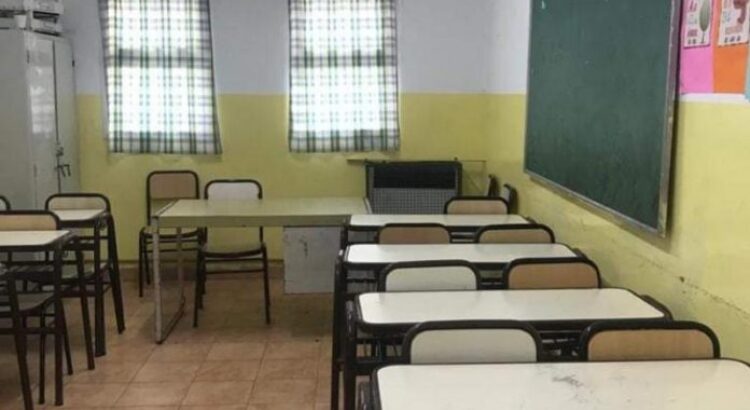
México: Escuela que ganó rifa del avión presidencial denuncia trabas de las autoridades para cobrar el premio

América del Norte/México/11-10-2020/Autor(a) y Fuente: www.publimetro.com.mx

La institución educativa localizada en el municipio de Los Reyes en Veracruz, denuncia que autoridades federales les quitaron el cachito ganador.

La rifa del avión presidencial del pasado 15 de septiembre sigue generando polémica. Y es que nuevamente, una escuela ganadora de uno de los 100 premios de 20 millones de pesos, denunció que no han podido cobrar el premio debido a que autoridades federales les han puesto demasiadas trabas.

Se trata de la telesecundaria Gregorio Torres Quintero, ubicada en una comunidad rural indígena en el municipio de Los Reyes, en Veracruz, de la cual, los directivos de la misma aseguraron que hace algunos días, funcionarios federales les quitaron el boleto ganador, argumentando motivos de seguridad, sin embargo, tras intentar poner una denuncia ante la fiscalía, el cachito les fue devuelto y las propias autoridades de la Secretaría de Bienestar les aseguraron que el dinero les llegaría.

De acuerdo con información de Animal Político, los funcionarios se quedaron temporalmente con el cachito ganador de la rifa del avión presidencial debido a la inseguridad que se vive en Veracruz, y así se los hicieron saber a los miembros del comité de la escuela.

Sin embargo, el comité decidió levantar una denuncia ante la fiscalía de Zongolica, la cual no procedió de forma efectiva y posteriormente les fue devuelto el boleto, el cual nuevamente tienen en su poder pero argumentan que no saben qué procedimiento seguir para cobrar los 20 mdp correspondientes.

La Lotería Nacional enfatizó en que quien tenga el boleto ganador, deberá presentarse a la Oficina de Tesorería de la Lotería Nacional para la Asistencia Pública en la CDMX y presentar una cuenta CLABE de la cuenta bancaria a la cual se hará el depósito.

Así, las autoridades correspondientes le aseguran al comité de la escuela que presentándose a las oficinas en la CDMX y acreditar que son representantes legales de la escuela podrán cobrar los 20 mdp sin ningún problema.

Fuente e Imagen: https://www.publimetro.com.mx/mx/nacional/2020/10/08/escuela-gano-rifa-del-avion-presidencial-denuncia-trabas-las-autoridades-cobrar-premio.html

Comparte este contenido:
Page 1053 of 6179
1 1.051 1.052 1.053 1.054 1.055 6.179