Page 1533 of 6196
1 1.531 1.532 1.533 1.534 1.535 6.196

‘Schools are killing curiosity’: why we need to stop telling children to shut up and learn

‘Schools are killing curiosity’: why we need to stop telling children to shut up and learn

Young children sit cross-legged on the mat as their teacher prepares to teach them about the weather, equipped with pictures of clouds. Outside the classroom, lightning forks across a dark sky and thunder rumbles. Curious children call out and point, but the teacher draws their attention back – that is not how the lesson target says they are going to learn about the weather.

It could be a scene in almost any school. Children, full of questions about things that interest them, are learning not to ask them at school. Against a background of tests and targets, unscripted queries go mainly unanswered and learning opportunities are lost.

Yet the latest American research suggests we should be encouraging questions, because curious children do better. Researchers from the University of Michigan CS Mott Children’s Hospital and the Center for Human Growth and Development investigated curiosity in 6,200 children, part of the US Early Childhood Longitudinal Study. The study is highlighted in a new book by Judith Judd and me, How to Succeed at School. What Every Parent Should Know.

The researchers gauged levels of curiosity when the children were babies, toddlers and preschoolers, using parent visits and questionnaires. Reading, maths and behaviour were then checked in kindergarten (the first year of school), where they found that the most curious children performed best. In a finding critical to tackling the stubborn achievement gap between poorer and richer children, disadvantaged children had the strongest connection between curiosity and performance.

Further, the researchers found that when it came to good school performance, the ability to stay focused and, for example, not be distracted by a thunderstorm, was less important than curiosity – the questions children might have about that storm.
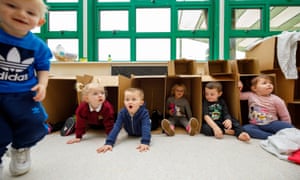
Ilminster Avenue Nursery School in Bristol

Teachers who concentrate on developing focus and good behaviour because of the links to good academic performance, now need to take on board that developing curiosity could be even more important.

The study’s lead researcher, Dr Prachi Shah, a developmental and behavioural paediatrician at Mott and an assistant research scientist at the University of Michigan, says: “Promoting curiosity in children, especially those from environments of economic disadvantage, may be an important, under-recognised way to address the achievement gap. Promoting curiosity is a foundation for early learning that we should be emphasising more when we look at academic achievement.”

Children are born curious. The number of questions a toddler can ask can seem infinite – it is one of the critical methods humans adopt to learn. In 2007, researchers logging questions asked by children aged 14 months to five years found they asked an average of 107 questions an hour. One child was asking three questions a minute at his peak.

But research from Susan Engel, author of The Hungry Mind and a leading international authority on curiosity in children, finds questioning drops like a stone once children start school. When her team logged classroom questions, she found the youngest children in an American suburban elementary school asked between two and five questions in a two-hour period. Even worse, as they got older the children gave up asking altogether. There were two-hour stretches in fifth grade (year 6) where 10 and 11-year-olds failed to ask their teacher a single question.

In one lesson she observed, a ninth grader raised her hand to ask if there were any places in the world where no one made art. The teacher stopped her mid-sentence with, “Zoe, no questions now, please; it’s time for learning.”

Engel, who is professor of developmental psychology at Williams College in Williamstown, Massachusetts, says: “When you visit schools in many parts of the world it can be difficult to remember they are full of active, intellectual children, because no one is talking about their inner mental lives. How well they behave, and how they perform seem much more important to many people in the educational communities. Often educational bureaucracies have shunted curiosity to the side.”

When teachers teach young children not to ask questions, it is not surprising that high-performing students studied by American researchers in 2013 were that high-performing students studied by American researchers in 2013 were found to be less curious, because they saw curiosity as a risk to their results. The questions they asked were aimed at improving their results, whereas the questions asked by more curious students were aimed at understanding a topic more deeply.

Of course, some teachers do encourage and enhance curiosity – Engel says that in every school she visits there tends to be one teacher who is managing it. But it is usually down to an individual – rather than a systematic approach such as that introduced at Ilminster Avenue nursery school, in Bristol.

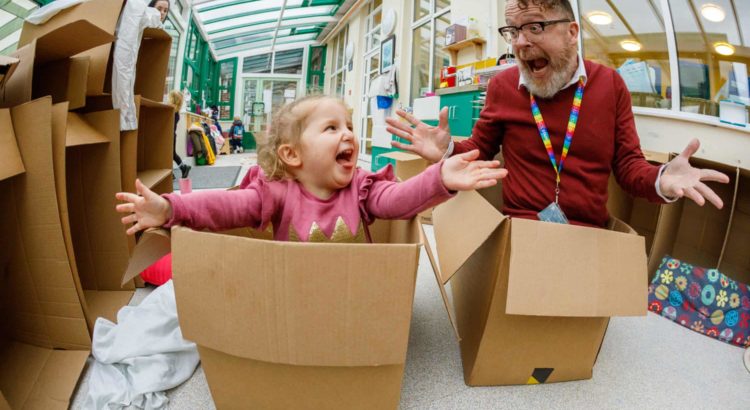
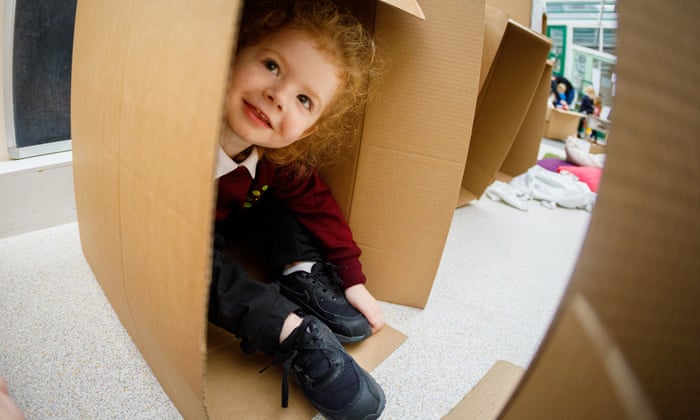
Last September the nursery took the radical step of permanently removing most of its toys for two-year-olds and replacing them with a range of cardboard boxes, tin cans, pots and pans, old phones, kettles, computers and plumbing supplies – anything with creative possibilities.

The children took to the new objects immediately, making slides for building blocks with guttering, dens and spaceships with cardboard boxes and having conversations with imaginary people on old phones. Old keys were used to lock things away or unlock imaginary kingdoms. Most haven’t asked for the toys back.

Matt Caldwell, the headteacher, says sceptical parents and teachers have been convinced by the change because of the rise in creativity and conversation among the children.

He says: “What children love is to copy what adults are doing with objects. What people and objects do makes them curious about their world.

“School kills curiosity. When do children get to ask questions about things that interest them? As soon as they are at primary school they have to shut up and learn. It’s not the fault of teachers. They have so many targets to meet.”

Paul Howard-Jones, professor of neuroscience and education at Bristol University, who has visited to observe the children playing with their new “toys”, says humans learn from novel situations and curiosity is important to that process.

“Children should be prompted and encouraged to ask questions even though that can be challenging for the teacher,” he says. “We do need to find some time for questions during the day. There is not enough time in schools for creativity and following up on curiosity.”

How to Succeed at School: Separating Fact from Fiction. What Every Parent Should Know, by Wendy Berliner and Judith Judd, is published by Routledge 
Fuente de la Información: https://www.theguardian.com/education/2020/jan/28/schools-killing-curiosity-learn

Comparte este contenido:

Purpose and inclusivity central to Microsoft’s education strategy

Purpose and inclusivity central to Microsoft’s education strategy

Microsoft was out in force at BETT 2020 and TechRadar Pro sat down with Anthony Salcito, VP Education, to discuss the company’s education technology (EdTech) strategy.

The software giant unveiled a range of small enhancements to its Office 365 product suite at the show, spanning tools such as PowerPoint, Teams, OneNote, Stream and Flipgrid.

The additions, according to Salcito, “reflect some of the broader trends happening in the world of technology. [Microsoft is preparing for] the next generation of learning that will extend far beyond the classroom.”

Exactly what he means by this becomes clear in the context of PowerPoint’s new feature, which allows teachers to broadcast their presentations to remote participants. The tool also supports real-time translation in more than 60 languages, allowing students of various nationalities to engage with the same lesson simultaneously.

OneNote also now offers Live Captions, which automatically transcribes lessons in real-time as the teacher speaks. The measure is designed to help both the hard of hearing and those who struggle to keep up with the pace of a lesson and need to refer back at a later date.

Microsoft’s upgrades have clearly been developed with inclusivity in mind – a product of continued consultation with schools. Salcito was particularly enthusiastic about the role teachers played in steering this latest raft of upgrades.

“We’ve been really listening to and learning from educators as we evolve the products and technologies we’re delivering. As opposed to saying ‘here’s this new thing’, we’re building based on what we see schools using and the needs that have been identified,” he said.

OneNote also now offers Live Captions, which automatically transcribes lessons in real-time as the teacher speaks. The measure is designed to help both the hard of hearing and those who struggle to keep up with the pace of a lesson and need to refer back at a later date.

Microsoft’s upgrades have clearly been developed with inclusivity in mind – a product of continued consultation with schools. Salcito was particularly enthusiastic about the role teachers played in steering this latest raft of upgrades.

“We’ve been really listening to and learning from educators as we evolve the products and technologies we’re delivering. As opposed to saying ‘here’s this new thing’, we’re building based on what we see schools using and the needs that have been identified,” he said.

Purpose

Microsoft also published new research at the show, examining the future of teaching in the context of technological advances. Among other insights, the report found that some education professionals harbour concerns about the introduction of technology to the classroom.

36 percent fear the loss of traditional skills and knowledge, 34 percent think students spend too much time on devices already, and 28 percent said they thought classroom tech could prove a distraction.

Asked about these concerns, Salcito (pictured above) noted: “I care a lot about the value of using technology as a tool. Just as learning should be purposeful, technology [in the classroom] should have a distinct purpose too.”

“I would argue that the narrative around technology should shift away from [optimising] the classroom, and towards using technology as a canvas for the expression of student creativity.”

To date, schools have perhaps focused too closely on using technology to optimise individual lessons and digitise materials, giving rise to concerns about issues such as screen time. However, Microsoft believes we’re on the way to realising the full potential of technology in education – it’s less about technology for technology’s sake, and more about purpose and inclusivity.

For now, there is room for improvement, but overall Salcito appeared positive about the perception of EdTech and the role it will play in securing a successful future for students.

“Every government now recognises education fuels the future and economic prosperity. There are no doubts about the value of education technology spend. The only question governments are asking is precisely what to spend on,” he said.

Microsoft believes it has the answers to that very question.

Fuente de la Información: https://www.techradar.com/news/purpose-and-inclusivity-central-to-microsofts-education-strategy


Comparte este contenido:

Education in Danger Monthly News Brief, December 2019

Education in Danger Monthly News Brief, December 2019

Attacks on education
The section aligns with the definition of attacks on education used by the Global Coalition to Protect Education under Attack (GCPEA) in Education under Attack 2018.

This monthly digest compiles reported incidents of threatened or actual violence affecting education.

It is prepared by Insecurity Insight from information available in open sources.

The listed reports have not been independently verified and do not represent the totality of events that affected the provision of education over the reporting period.

Download:

https://reliefweb.int/sites/reliefweb.int/files/resources/December-2019-Education-in-Danger-Monthly-News-Brief.pdf


Fuente de la Información: https://reliefweb.int/report/world/education-danger-monthly-news-brief-december-2019


Comparte este contenido:

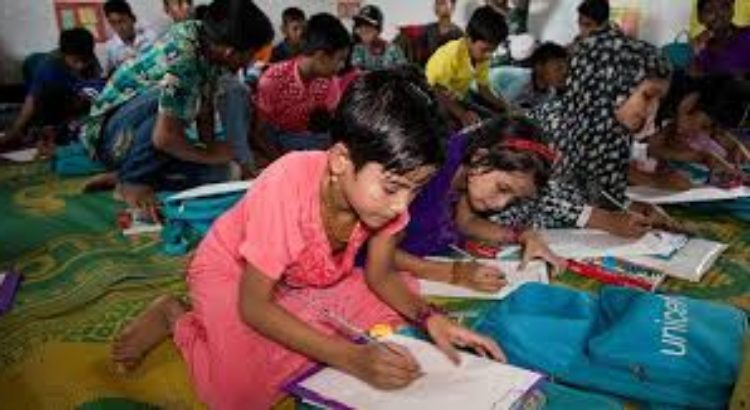
Bangladesh: Rohingya children get access to education

Bangladesh: Rohingya children get access to education

Amnesty International and other human rights organizations have been campaigning for the nearly half a million Rohingya children in Bangladesh’s refugee camps to be allowed to enjoy their right to quality education, warning of the costs of a ‘lost generation’.

“This is an important and very positive commitment by the Bangladeshi government, allowing children to access schooling and chase their dreams for the future. They have lost two academic years already and cannot afford to lose any more time outside a classroom,” said Saad Hammadi, South Asia Campaigner at Amnesty International.

“It is important that access to appropriate, accredited and quality education be extended to all children in the Cox’s Bazar area, including Rohingya refugees and the host community. The international community has a key role to play here in ensuring the Bangladesh government has the resources it needs to realize this goal.”

Up to now, the Bangladesh government had resisted calls to grant Rohingya refugee children access to education, limiting learning opportunities to a few provisional learning centres that offer playtime and early primary school lessons scattered across the refugee camps in the Cox’s Bazar district. A few children who managed to gain access to local secondary schools were expelled on the government’s instructions.

Amid fears of either being forcibly returned to Myanmar or relocated offshore to the uninhabited silt isle of Bashan Char, these children have faced an uncertain future. Many were on the verge of completing their schooling when the Myanmar military attacked their villages, forcing them to flee to Bangladesh and throwing their lives into limbo.

Bangladesh’s Foreign Secretary, Masud bin Momen, told journalists today: “The government has felt the need to keep Rohingya childrens’ hope for the future alive with extending education and skills training to them.”

Under the government’s plans, Rohingya refugee children will get school education up to the age of 14, through the provision of the Myanmar curriculum, and children older than 14 will get skills training. The schools will need adequately trained teachers who can use the Myanmar curriculum and teach in Burmese.

A pilot project led by UNICEF and the Bangladesh government will start off with the involvement of 10,000 children. The scheme will then be extended to other children, including those from the host community, who will be taught separately according to Bangladesh’s national curriculum.

The Convention on the Rights of the Child, a binding treaty which Bangladesh has ratified, makes clear that education can and should ensure the development of the child’s personality, talents, mental and physical abilities to their fullest potential while enhancing respect for human rights and preparing them for a responsible life in a free society.

“The benefits of educating children cannot be underestimated, with the positive effects rippling through their communities and broader society. They can speak up for themselves, claim their rights, and lift themselves and others out of a difficult situation. But the costs of denying children education can be severe, including leaving them vulnerable to poverty and exploitation. We welcome this significant breakthrough and look forward to the government delivering on its commitments,” said Saad Hammadi.

Amnesty International’s campaign for the right to education

  • On World Refugee Day last year, Amnesty International held an ‘art camp’ for children in the refugee camps of Cox’s Bazar. Working with a group of Bangladeshi artists, they spent two days drawing sketches depicting their aspirations for the future – some of whom wanted to become teachers, doctors, pilots and nurses. In collaboration with UNICEF, the works of art were exhibited in Dhaka and later made their way to Washington DC, London and other major world cities.
  • In August 2019, Amnesty International published a briefing, “I don’t know what my future will be”: Rohingya refugees in Bangladesh, detailing conditions in the camps, particularly for children who had not seen the inside of a class room since arriving in the camps in 2017.

We’re stronger when we stand together

Our members make change possible. They’re the people we call on whenever and wherever human rights are under attack. Join 7 million activists around the world and help us protect human rights.

Fuente de la Información: https://www.amnesty.org/en/latest/news/2020/01/bangladesh-rohingya-children-get-access-to-education/

Comparte este contenido:

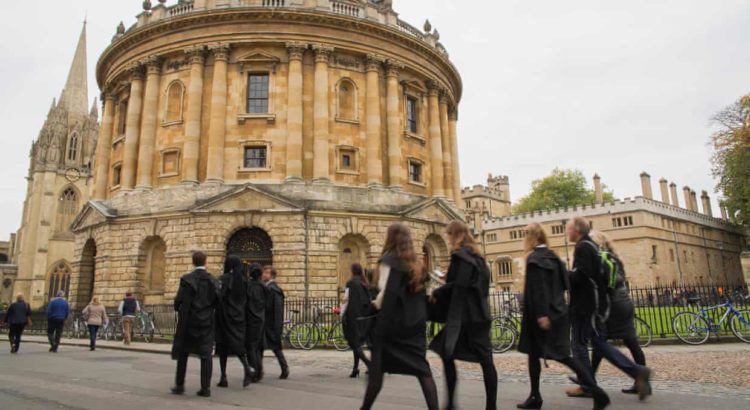
Reino Unido: Private schools criticise plans to get more poor students into university

Private schools criticise plans to get more poor students into university

Leading private schools have challenged plans to widen access to the most selective universities in England, warning they could lead to discrimination against young people “on the basis of the class they were born into”.

The intervention by the Headmasters’ & Headmistresses’ Conference (HMC), which represents many of the country’s most expensive independent schools, reflects members’ concerns that new measures to improve access for the most disadvantaged students could lead to discrimination against students from elite private schools.

The HMC was responding to plans, published on Wednesday by the higher education regulator for England, the Office for Students, that promise to halve the access gap at England’s most selective institutions in the next five years, increasing the number of disadvantaged students by 6,500 each year from 2024-25.

HMC’s executive director, Mike Buchanan, said universities should expand to accommodate as many “truly suitable students” as necessary, rather than “rob some students of a future to award it to others”. He also called on universities to review the increasing number of international students, rather than “deny places to UK students based on their class”

.Since the lifting of the student admissions cap in 2015, the number of places at many universities has grown exponentially, but undergraduate numbers have remained relatively stable at Oxford and Cambridge, though both claim to have made significant progress in diversifying their student body.

The OfS report, Transforming Opportunity in Higher Education, details ambitious commitments by universities to improve equality of opportunity for students. Currently, young people from advantaged areas of England are more than six times as likely to attend selective universities, including Oxford, Cambridge and other members of the Russell Group, as those from disadvantaged areas.

Despite the huge expansion in university places, the gap has barely changed. Under new plans drawn up by universities and approved by the OfS, the ratio will be cut to less than 4:1 by 2025, and could be eliminated in 20 years. The OfS is also hoping to reduce the gap between the proportion of white and black students awarded a top degree – a first or a 2:1 – from 22% to 11%.

Buchanan said the HMC was confident their students would continue to secure places at prestigious universities at home and overseas, thanks to excellent results and soft skills. “However, care is needed in starting actively to discriminate against individual young people on the basis of the class they were born into. The country needs all its young people to reach their potential if we are to create a bright new future for Britain post-Brexit.”

Buchanan said contextual admissions – which allow universities to take into account an applicant’s educational and socio-economic background – were reasonable “if used on a sophisticated, individual basis”, but it should not be about school type.

“Independent schools play an important role in getting disadvantaged students into university through offering free and discounted places. Not all state-educated students are disadvantaged and the majority of students from affluent backgrounds are not educated in HMC schools. This is why a sophisticated approach is needed for the country genuinely to level up.”

Kalwant Bhopal, a professor of education and justice at Birmingham University, said: “It is clear that those students who attend independent fee-paying schools are more likely to be white and middle-class and are more likely to go on to hold top high-earning jobs. These schools continue to perpetuate privilege. Contextual admissions are one small step to addressing inequalities of opportunity facing children from many working-class, and black and ethnic minority families.”

Chris Millward, the OfS director of fair access and participation, said if universities did not increase student numbers, then groups that were currently highly represented would end up being less represented as a result of the new targets.

“We expect providers to work towards these targets because they tackle two urgent priorities: the need to open up all of our universities to people from those communities where progress into higher education is lowest, and to ensure that every student has the same chance to succeed once they get there.”

The universities minister, Chris Skidmore, said it was damning that such large gaps still remained between disadvantaged students and their peers. “I am pleased to see universities being ambitious in their plans to reach out to those from disadvantaged backgrounds and to support them through their studies. But for universities which do not meet their registration conditions, I fully support the OfS to take appropriate action.”

Fuente de la Información: https://www.theguardian.com/education/2020/jan/29/private-schools-criticise-plans-to-get-more-poor-students-into-university


Comparte este contenido:

El Salvador: “Tuve que dejar la escuela por las amenazas de las maras”

Centro América/ El Salvador/ 28.01.2020/Por: Alba Llanos/ Fuente: www.magisnet.com.

El 24 de enero se celebró el Día Internacional de la Educación, un derecho que no está al alcance de todos.

La violencia de “las maras” producen que miles de niños no tengan la posibilidad de ir a la escuela.

La Asamblea General de las Naciones Unidas proclamó el 24 de enero, Día Internacional de la Educación, en celebración del papel que esta desempeña en la paz y el desarrollo. Pese a ser un derecho humano, un bien público y una responsabilidad colectiva, la realidad dista de esta idea: miles de menores no pueden aprovecharse de este derecho.

Fernanda, una adolescente de 15 años que vive en El Salvador, dejó su escuela porque, tras presenciar el asesinato de un miembro de su familia, su madre lo consideraba peligroso. “A mi madre le dio miedo que siguiera yendo a la escuela por las amenazas de las maras, sobre todo después de lo que había pasado”.

Las ‘maras’ son pandillas que se dedican a la extorsión, el narcotráfico o el tráfico de personas en América Central. Todo esto genera una situación de violencia que impide que los menores lleven una vida adecuada. “Yo quería seguir estudiando y me sentí mal al ver que no podía hacerlo. Ahora ya hace seis meses que no voy a la escuela”, declaraba Fernanda.

Gracias a la labor que hacen las ONG como Educo con programas de atención a las víctimas desplazadas por la violencia, Fernanda podrá retomar sus estudios este año.

Incertidumbre de futuro

El sur de Asia es otro punto clave del planeta que sufre la falta de acceso a la Educación.

En Bangladesh vive Mosharrofa, una niña de 12 años que tiene clara su vocación y sin embargo, ninguna seguridad de que pueda cumplir su objetivo: “Quiero ser doctora, pero no sé si podré cumplir mi sueño”. Mosharrofa vive en el campo de refugiados de Cox’s Bazar, al sur de Bangladesh, y pertenece a los ‘Rohingyas’, un grupo étnico al que el gobierno da la espalda. Pese a vivir en la región desde hace generaciones, el gobierno insiste en que son inmigrantes ilegales. No les reconoce como ciudadanos, no pueden circular libremente y tienen un acceso limitado a la asistencia médica, la escuela y el empleo.

El oeste de África es la región más pobre del planeta y una de las más afectadas por la crisis humanitaria del Sahel (región compuesta por cinco países: Mauritania, Malí, Níger, Burkina Faso y Chad). En esta región se convive con el ataque de conflictos armados, criminalidad y riesgos climáticos. Todo ha contribuido a provocar una crisis alimentaria que ha puesto a la región al borde de la hambruna y una inseguridad que ha causado la huida de miles de menores a lugares más seguros.

Ticoro es un niño de 14 años que vive en Malí. Huyó con sus padres de su aldea porque se convirtió en un lugar muy inseguro para vivir. En su aldea asistía a la escuela y Educo le ha dado la oportunidad de retomar sus estudios en su nuevo hogar. Ticoro lo ha agradecido: “Me gusta volver a estudiar, pero echo de menos estar en mi aldea y espero que podamos volver pronto a vivir allí”.

MIKEL EGIBAR Responsable de Educación de la ONG Educo «La falta de oportunidades educativas hace más difícil que los niños salgan de la pobreza

»

Educación para todos

Educo es una ONG de cooperación global para el desarrollo, centrada en la Educación y la protección de la infancia. Actúa en 13 países de África, América Central y Asia, y en sus proyectos participan más de 400.000 niños y de 200.000 adultos. El objetivo es reintegrar en el sistema educativo a los menores desplazados a causa de la violencia que se vive en estas regiones. Según la ONG, el hecho de que los niños no asistan a la escuela aumenta el riesgo de que puedan sufrir más violencia.

El responsable de Educación de Educo, Mikel Egibar expone: “Es habitual que, ante situaciones de crisis humanitarias, el derecho a la Educación se considere secundario. Volver a estudiar les permite estar en un entorno seguro, recuperar una parte de su vida y sobrellevar el trauma vivido, así como disponer de nuevas expectativas y opciones de futuro. La falta de oportunidades educativas hace más difícil que puedan salir del círculo de pobreza e inestabilidad en el que viven”.

Hay que concienciar sobre la importancia de esta situación y luchar para que los siguientes 24 de enero no queden niños sin una Educación digna.

Comparte este contenido:

Egypt’s Higher Education Exams to Start Following ‘Open Book’ System

Africa/ Egypt/ 28.01.2020/ Source: egyptianstreets.com.

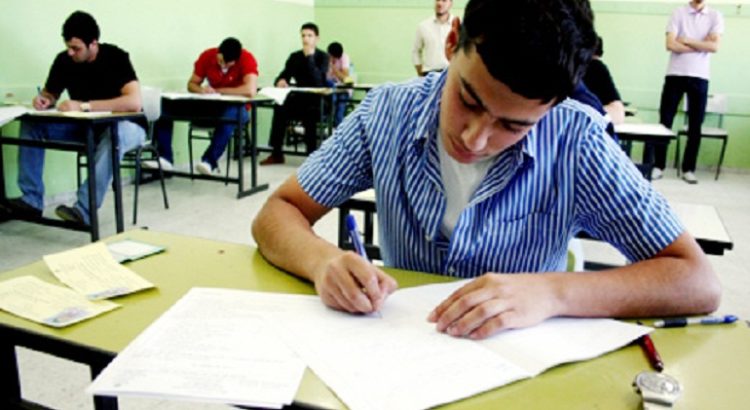
The Ministry of Education and Technical Education announced that students from grades 1 and 2 in the secondary level of the Thanaweya system would be following the new system in which they would have open access to textbooks during their exams.

The implementation in the system, announced through the Ministry of Education itself, was long anticipated since Egypt’s Minister of Education Tarek Shawki announced a new reform in Egypt’s education system.

Such updates are expected to be implemented as of the next the round of exams set for January for most Egyptian students or students in the public ‘thanawiya ammah’.

Over one million students are expected to be venturing into this change, with the exams designed to be a combination of both paper and electronic forms, as per local news outlets.

For years, Egypt’s ailing educational system has relied on heavy set memorization and ‘ideal answer’ practices. Switching to an ‘open book’ form of examination is intended to spark critical-learning skills as learners become less reliant on memorizing facts.

To score highly in the competitive system, Egyptian students largely depend on expensive private tutoring in which they are encouraged to submit ‘expected’ and ‘model’ answers rather answers than based on understanding which hinders long-term retention of information and the quality of education overall.

Indeed, Egypt in its Global Competitiveness Report 2018–2019, the World Economic Forum ranked the quality of Egypt’s ‘critical thinking in teaching’ as 2.7 out of 7. In 2018, the country’s education quality ranked 129 in Spectator Index

Egypt introduced a new education system in August 2018, with the beginning of the new school year. Part of the reviving the curriculum is introducing a digital system to replace the old paper-based examinations. This move comes in an attempt to prevent manipulation of grades.

The upgrade of the educational programme comes after Egypt received a US $500 million loan from the International Bank of Reconstruction and Development (IBRD) last April to help revamp the system. This also feeds Egypt’s ‘2030 Vision’ development plan that emphasized the importance of educational reform to achieve social development in the country.

Source of the notice: https://egyptianstreets.com/2020/01/10/egypts-higher-education-exams-to-start-following-open-book-system/

Comparte este contenido:
Page 1533 of 6196
1 1.531 1.532 1.533 1.534 1.535 6.196