Page 2784 of 6196
1 2.782 2.783 2.784 2.785 2.786 6.196

Reino Unido: May admits education is failing children but offers no extra cash

Por: theguardian.co/21-02-2018

Theresa May has admitted that the education system is failing to serve the “needs of every child” but immediately faced criticism as it emerged that plans to overhaul post-18 funding would be unlikely to result in more money from the Treasury.

Critics highlighted the government’s terms of reference for the review, which will be led by the former City financier Philip Augur and could result in lower fees for some courses and the return of maintenance grants.

It said the study would not be able to make recommendations linked to taxation and “must be consistent with the government’s fiscal policies to reduce the deficit and have debt falling as a percentage of GDP”

The shadow education secretary, Angela Rayner, said the wording suggested that students, colleges and universities would end up footing the bill.

“Funding for further education has been slashed and cuts in higher education have seen UK universities fall down global league tables, yet buried in the small print of the terms of reference it is made clear there will be no new money to support any recommendations, leaving it down to already cash-strapped colleges and universities to cover any extra costs,” she said.

The NUS president, Shakira Martin, said she was glad to hear the prime minister accept that the “current system is not fit for purpose” but added that she wanted ministers to commit to investing in the skills of the future.

“The prime minister is choosing to move the deckchairs around a ship she already acknowledges is sinking,” she said.

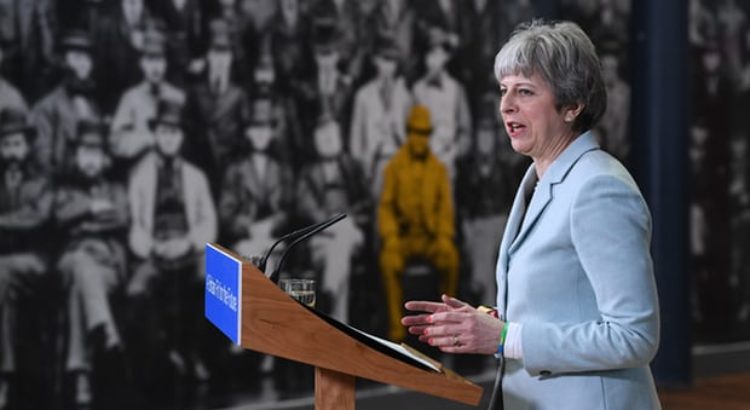
May used a speech at Derby college to launch the review. She insisted that tackling the divide between academic and technical education had been a driving force since she entered parliament in 1997, raising the issue with her maiden speech.

She criticised the fact that almost a quarter of students at Britain’s “research-intensive universities” come from the 7% of the population who attend private schools.

“And the professions which draw their recruits primarily from these institutions remain unrepresentative of the country as a whole, skewed in favour of a particular social class,” she said, arguing that the odds were stacked against a working-class boy from Derby who wanted to become a lawyer.

But May also said a privately educated middle-class girl who wanted to become a software developer by going straight into the industry faced the expectation of taking A-levels and entering a Russell Group university.

“Most politicians, most journalists, most political commentators took the academic route themselves, and will expect their children to do the same.”

She said poorer students were “bearing the highest levels of debt” in the current system, which she said was not good enough.

“We must have an education system at all levels which serves the needs of every child. And if we consider the experience which many young people have of our system as it is, it is clear that we do not have such a system today,” she said.

But she also insisted that the cost of universities must be shared between graduates and the taxpayer, claiming that Labour’s policy to scrap fees would mean tax rises for the majority who did not go to university. It would also mean universities would be competing with hospitals and schools for funding, and would entail reintroducing a cap on student numbers, she claimed.

Bill Rammell, the vice-chancellor of the University of Bedfordshire and a former higher education minister when variable fees were introduced in 2005, argued that raising fees to £9,000 and beyond went “too far in shifting the balance of responsibility for funding higher education between the state and the individual”.

He said the review was welcome but that it must ensure that universities will be compensated for any reduction in fee income. “Otherwise it will result in widespread job losses and a reduction in standards as universities scramble to balance their already stretched finances.”

The review could result in universities having to charge less for some courses based on their costs and potential graduate earnings, with hints that institutions could be expected to take a lower amount for humanities and social science courses.

However, the former education secretary Justine Greening warned that this could hit social mobility as higher fees could put poorer students off more lucrative courses.

May also spoke out against the number of university vice-chancellors who take part in the decision-making process on their own salaries, amid widespread concern about excessive pay levels.

The prime minister was asked about the issue after figures revealed that 95% of university leaders were either members of their remuneration committee or entitled to attend meetings.

The information, obtained under freedom of information laws by the University and College Union, showed just seven of 158 institutions surveyed said their vice-chancellors were in effect barred from attending.

Asked if she feared that this was fuelling soaring pay levels, May said: “One of the points I would make – that I know the universities minister, Sam Gyimah, also made – is we should be concerned when we see vice-chancellors sitting on remuneration committees which determine their pay.”

The comments came after universities were told they would have to justify any decisions to pay vice-chancellors more than 8.5 times the average salary.

Since you’re here …

… we have a small favour to ask. More people are reading the Guardian than ever but advertising revenues across the media are falling fast. And unlike many news organisations, we haven’t put up a paywall – we want to keep our journalism as open as we can. So you can see why we need to ask for your help. The Guardian’s independent, investigative journalism takes a lot of time, money and hard work to produce. But we do it because we believe our perspective matters – because it might well be your perspective, too.

I appreciate there not being a paywall: it is more democratic for the media to be available for all and not a commodity to be purchased by a few. I’m happy to make a contribution so others with less means still have access to information.

Fuente: https://www.theguardian.com/education/2018/feb/19/may-speaks-out-about-vice-chancellors-setting-their-own-pay

Comparte este contenido:

Rural community session held to discuss education concerns in Nova Scotia

Por: globalnews.ca/21-02-2018

A packed house filled a rural Nova Scotia community centre as many parents came out to hear why teachers are concerned over the future of education in the province.

“Transformation takes a lot of thoughtful collaboration and we’re not seeing that at the moment and that’s what needs to happen if we have any hope of this being successful,” Cynthia Bruce said, a mother of children who have gone through the provincial public school system.

Last fall, the province hired Dr. Avis Glaze, an “international recognized expert” to review the public school system in Nova Scotia for the first time in more than 20 years.

The Glaze report made 22 recommendations, including moving principals and vice-principals out of the Nova Scotia Teachers Union and into a new professional association.

The report recommended the establishment of an education ombudsperson to investigate and resolve concerns or complaints in the education system.

Glaze also called for a provincial college of educators to license, govern, discipline and regulate the teaching profession.

The province plans to implement all of the recommendations and that’s where concern from the Nova Scotia Teachers Union has come into play.

Grant Frost has over two decades of teaching experience and is also the president of the Halifax County local.

“I think that I’d be very happy with a pause button right now, so that everyone can catch their breath. Let’s put a pause on the Glaze report, let’s not rush this. If you rush this through, we’re going to leave kids behind and I think that’s a very real concern,” Frost said.

He says he’s not against making changes to the education system but feels the province is rushing the process. Frost hopes the move to ask NSTU members for a strike mandate demonstrates the need to slow down.

“Really, what I think we’re trying to accomplish here is to have an opportunity to sit down with this government and all the stakeholders, to try to figure out exactly what some of our concerns are and have a legitimate conversation around them.”

*Fuente: https://globalnews.ca/news/4034770/education-concerns-nova-scotia/

Comparte este contenido:

Estados Unidos: Sobrevivientes del tiroteo escolar en Parkland demandan acciones para el control de armas de fuego

Mientras continúan los funerales de las 17 personas asesinadas el miércoles pasado en la escuela secundaria Marjory Stoneman Douglas, en el condado de Broward, Florida, los sobrevivientes del tiroteo escolar organizaron un movimiento sin precedentes, dirigido por jóvenes, para exigir el control de las armas de fuego. El viernes, estudiantes de la secundaria South Broward, en Florida, hicieron huelga para protestar por la masacre perpetrada por un exestudiante blanco de 19 años de edad llamado Nikolas Cruz, que tenía antecedentes de comportamiento violento y abusivo contra las mujeres.

El viernes, el FBI admitió que no había investigado a Cruz, incluso después de que alguien cercano a él llamara a la agencia en enero para advertirles “sobre la propiedad de armas de Cruz, su deseo de matar gente, su comportamiento errático y las inquietantes publicaciones que hacía en las redes sociales, así como la posibilidad de que realizara un tiroteo en la escuela”. En una manifestación que tuvo lugar el sábado pasado, los sobrevivientes del tiroteo escolar exigieron que los políticos dejaran de aceptar dinero de la Asociación Nacional del Rifle (NRA, por su sigla en inglés). Según informes, Nikolas Cruz se entrenó en un club de tiro juvenil financiado por la Asociación Nacional del Rifle. Estas son palabras de Emma González, estudiante del último año de la secundaria Marjory Stoneman Douglas, emitidas en la manifestación del sábado.

Emma González expresó: “Si el presidente quiere venir a decirme en persona que fue una tragedia terrible, que nunca debería haber sucedido, al mismo tiempo que nos sigue diciendo que no se hará nada al respecto, con gusto le voy a preguntar cuánto dinero recibió de la Asociación Nacional del Rifle. No importa, porque ya sé la respuesta: 30 millones de dólares. Y dividido entre las víctimas por armas de fuego que hubo en Estados Unidos en solo un mes y medio, en lo que va de 2018, son unos 5.800 dólares. ¿Eso es lo que valen estas personas para usted, Trump? A todos los políticos que reciben donaciones de la Asociación Nacional del Rifle: ¡debería darles vergüenza!”.

*Fuente: https://www.democracynow.org/es/2018/2/19/titulares/after_parkland_students_launch_historic_youth_led_movement_to_end_mass_shootings

Comparte este contenido:

België: School in Blankenberge pakt onderwijs helemaal anders aan

België / 25 februari 2018 / Auteur: Karel Cambien / Bron: Madeinwest-vlaanderen

Er zijn in Vlaanderen al heel wat scholen die het anders doen: vakoverschrijdende lessen, teamteaching, modulaire leerruimtes, coachend begeleiden. De Sint-Jozef Sint-Pieter School in Blankenberge is één van die handvol scholen. Tijdens het EduNext Leerfestival dat deze week (21 februari) plaats vindt in in Brussel, vertellen en tonen directeurs, leraren en leerlingen van achttien innovatieve onderwijspraktijken waarom, hoe en wat ze anders doen. Een en ander kan op termijn ook het bedrijfsleven beïnvloeden.   

Al voor de zesde keer organiseert de vzw EduNext het Leerfestival, waar in een festivalsetting met denk- en doepodia enkele honderden leraren, directeuren, studenten en mensen uit het bedrijfsleven worden geïnspireerd met innovatieve praktijkvoorbeelden uit het Vlaamse en Nederlandse onderwijs. Doel is de festivalgangers te motiveren en stimuleren om ook onderwijsvernieuwing van binnenuit te realiseren. “Dat is veel makkelijker als je een voorbeeld kunt zien”, meent Dirk De Boe, auteur en bezieler van ‘EduNext, transformeer je school van binnenuit’ . “Wij zijn ervan overtuigd dat als je het met je eigen ogen ziet, je dan een klik maakt. En als een school beslist het anders te gaan doen, dan kunnen ze dat ook. Er is voldoende ruimte binnen de leerplannen om onderwijs anders te organiseren en te geven via werk-, leer- en evaluatievormen, kortom, om anders om te gaan met leerlingen en studenten.”

Begin van een onderwijsrevolutie

De Nederlandse professor transitiekunde Jan Rotmans, keynotespreker op het festival, is het daar hartstochtelijk mee eens: “We staan aan het begin van een onderwijsrevolutie”, zegt Rotmans. “Je voelt de weerstand, en veel leraren zitten er helemaal niet op te wachten. Dat begrijp ik, omdat ze al vijftig jaar top-down onderwijsvernieuwing over zich heen hebben gekregen. Ik pleit daarom voor een onderwijs van onderop. Laat elke school dat zelf uitzoeken en bepalen. Ga dat niet collectief opleggen van bovenaf. Dat hebben we decennia gedaan en dat werkt niet. Het geeft alleen maar meer werkdruk, meer stress, meer bureaucratie. Geef elke school de ruimte en de vrijheid om dat zelf uit te vinden.”

De initiatiefnemers hebben het over ‘de school van de toekomst’. De andere aanpak kan op termijn ook impact hebben op het bedrijfsleven, waarbij medewerkers veel autonomer, zeg maar meer intrapreneur gericht, functioneren.

Bron van het nieuws:

http://www.madeinwest-vlaanderen.be/nieuws/school-in-blankenberge-pakt-onderwijs-helemaal-anders-aan/

Comparte este contenido:

6 key insights into the data and information education leaders want most

Por: brookings.edu/21-02-2018

When data advocates promote evidence-based decision-making in education systems, they rarely specify who the intended users are, for what purpose, and what kinds of data are needed. The implicit assumption is: by everyone, for everything, and any data.

But since collecting, processing, and communicating data require substantial resources, it is prudent to assess whether data produced are indeed accessible and valuable to key decision-makers. Surprisingly little systematic research exists on the types of information education decision-makers in developing countries value most—and why.

In a new report, Toward data-driven education systems: Insights into using information to measure results and manage change, the Center for Universal Education at the Brookings and AidData offer insights to those very questions. We analyze the results of two unique surveys that asked education policymakers in low- and middle-income countries about their use of data in decision-making. Survey participants included senior- and mid-level government officials, in-country staff of development partner organizations, and domestic civil society leaders, among others. (For more details on the surveys, see page 18 in the report.)

The report aims to help the global education community take stock of what information decision-makers actually use and offer practical recommendations to help those who fund and produce education data to be more responsive to what decision-makers want and need. We summarize the findings below:

Finding 1: Having enough information is seldom the decisive factor in making most education decisions; instead, decision-makers desire to have sufficient government capacity.

cue_data-driven-education_figure1

Enacting education policies, changing programs, and allocating resources are complex decisions that demand weighing multiple factors, such as having sufficient capacity and financial resources, having enough information, and having the support of the public. So where do data and information fall within a decision-maker’s cost-benefit analysis?

We found that information is not as important as technical capacity, financing, and political support. Some decisions, however, depend more on having sufficient data and information, such as creating or abolishing schools or grades, and testing students. One possible explanation could be that leaders feel they need strong justification (via an evidence base) for these decisions which could become easily politicized.

Finding 2: Education decision-makers use evidence to support the policymaking process, for both retrospective assessment and forward-looking activities

cue_data-driven-education_figure2

But while information may not be the most decisive factor in education decisions, its role is significant. We found that decision-makers in the education sector are more likely to use data and analysis as compared to other sectors (such as health and governance), including for forward-looking purposes, such as design and implementation of policies or programs, as well as retrospective assessments of past performance. As shown in Figure 2, most education sector decision-makers (over 70 percent) report using data or analysis fairly consistently throughout the policymaking process.

Finding 3: Education decision-makers most often use national statistics from domestic sources and program evaluation data from international sources.

cue_data-driven-education_figure3

Decision-makers overwhelmingly rely on national statistics from domestic sources and program evaluation data from international organizations. The high use of national statistics points to the salience of such data for each country, including, for example, dropout rates for primary school students by district or municipality, the number of schools providing secondary education in each village, or pupil-teacher ratios in urban vs. rural areas.

Finding 4: Education decision-makers consider administrative data and program evaluations most essential, and want more of the latter, signaling a gap between need and supply.

cue_data-driven-education_table1

We asked leaders about their wish list—what types of information would they want more of? We found that those who allocate and manage resources place a premium on administrative data (e.g., number of schools, teachers, students) and government budget and expenditure data (e.g., school-level budgets, expenditure per student). Meanwhile, those working on personnel management need teacher performance data, whereas leaders tasked with overseeing instructional matters need program evaluation data and student-level assessment data. Given respondents’ wish lists, we identified four opportunities for data producers to respond to unmet demand: (1) program performance and evaluation data; (2) budget and expenditure data; (3) student-level assessment data; and (4) teacher performance data.

Finding 5: Education decision-makers value domestic data that reflect local context and point to policy actions, and improving the timeliness and accessibility of information will make it more helpful.

cue_data-driven-education_figure4

Having identified some of the gaps that exist in meeting the needs of education decision-makers, we asked what producers and funders of data should do better or differently to meet the data demands. Leaders said that data from both domestic and international sources were most helpful when they provide information that reflects the local context. They also viewed information from international sources as most helpful because it provides policy recommendations (43 percent) and is often accompanied by critical financial, material, or technical support (36 percent). Leaders viewed domestic data as helpful when it was available at the right level of aggregation, as well as timely, trustworthy, and insightful.

cue_data-driven-education_figure5

When asked what improvements producers could undertake to make data more valuable, respondents suggest improving the timeliness and accessibility, as well as improving data disaggregation, accuracy, and trustworthiness. The respondents requested data from the national government, in particular, to be more accessible and disaggregated.

Finding 6: Decision-makers strongly support strengthening their countries’ education management information system (EMIS) to bolster their education data ecosystem.

cue_data-driven-education_figure6

Beyond finding general areas of improvement for education data, we also asked respondents to rank a list of specific solutions. Respondents largely agreed on the seven solutions proposed, rating all of them as “extremely important”, on average. But of the seven solutions, the recommendation to strengthen the EMIS within the education ministry resonated with the highest number of respondents.

Moving from data generation to impact

The path from data generation to impact is not simple, automatic, or quick. The seemingly straightforward story of information supply, demand, and use is complicated by users’ norms (how they prefer to make decisions), relationships (whom they know and trust), and capacities (their confidence and ability to turn data into actionable insights). The process of moving from data generation to use and, ultimately, to impact on education outcomes must also take into account the different institutional environments (i.e., political context) that may incentivize or dampen efforts to make decisions based upon evidence.

Most essentially, though, investments in data creation must be matched by an equal (or greater) emphasis on increasing the use of evidence by decision-makers, built from a strong understanding of what data and information they use, value, and want. Understanding why education decision-makers and influencers do not notice, value, or use data that are produced by their own statistical agencies or by international organizations deserves more attention than it has received thus far.

*Fuente: https://www.brookings.edu/blog/education-plus-development/2018/02/20/6-key-insights-into-the-data-and-information-education-leaders-want-most/

Comparte este contenido:

España: El TC tumba la «vía Wert» para escolarizar en castellano con fondos públicos

Por: abc.es/21-02-2018

Estaba condenada al fracaso, llevaba casi un año en punto muerto y ahora el Tribunal Constitucional (TC) le ha dado la estocada definitiva. El alto tribunal ha anulado por «insconstitucional» la conocida como «vía Wert», que ofrecía a los padres la posibilidad de escolarizar a sus hijos en castellano en Cataluña con fondos públicos y sin tener que litigar durante años en los tribunales. La sentencia, aprobada por unanimidad, llega en un momento de máxima sensibilidad en Cataluña después de que hace unos días el Gobierno, que en virtud del 155 tiene competencias en la Consejería de Enseñanza, anunciara que estudia mover hilos para que el castellano recupere el papel de lengua vehicular en esta comumidad.

Una vía muerta

La «vía Wert» o «vía Lomce», habilitada en 2013 por el entonces ministro de Educación José Ignacio Wert , ofrecía 6.000 euros de ayuda –luego la cantidad se rebajó– a las familias para sufragar la enseñanza bilingüe de sus hijos, dinero que después el Gobierno descontaba a la Generalitat. En la práctica, la propuesta embarrancó, ya que no habían centros públicos que ofrecieran escolarización en castellano, lo que obligó a los padres a matricular a sus hijos en centros de élite privados con matrículas inaccesibles. Desde un principio, los padres –medio centenar han accedido a las ayudas– entendieron que era una vía muerta.

La sentencia del TC, hecha pública ayer y que responde a un recurso de inconstitucionalidad interpuesto por la Generalitat en 2014, considera que esta vía para garantizar el castellano es «inconstitucional» y no respeta el reparto de competencias entre el Estado y la Comunidad Autónoma.

El fallo del alto tribunal, aprobado por unanimidad, se refiere, en concreto, «a la capacidad del Ministerio de Educación, Cultura y Deporte, a través de la Alta Inspección de Educación, para decidir sobre la escolarización de esos alumnos en centros privados y a su financiación».

Según el TC, «la alta inspección constituye una competencia estatal de vigilancia, pero no un control genérico e indeterminado que implique dependencia jerárquica de las Comunidades Autónomasrespecto a la Administración del Estado». De igual modo, la sentencia rechaza que, «a través de la alta inspección, el Estado asuma competencias que corresponden a las comunidades autónomas».

«Corresponde al Estado velar por el respeto de los derechos lingüísticos en el sistema educativo, pero también que tal función ha de desplegarse sin desbordar las competencias que constitucionalmente le están reservadas», señala el fallo.

La sentencia también dirime otras cuestiones sobre la Lomce y, así, declara inconstitucional que el Gobierno pueda establecer, vía reglamento, las bases de la educación plurilingüe (impartición de asignaturas no lingüísticas en lenguas extranjeras) desde el segundo ciclo de Educación Infantil hasta Bachillerato, previa consulta a las Comunidades Autónomas.

El Tribunal sostiene que la ley no especifica el criterio legal que da cobertura a esta competencia del Gobierno para el desarrollo reglamentario básico. Tampoco puede justificarse en que la educación plurilingüe tenga un carácter excepcional, pues, todo lo contrario, abarca prácticamente a todas las enseñanzas no universitarias.

Por otro lado, el Tribunal sí considera conformes a la Constitución los preceptos que atribuyen al Ministerio de Educación la competencia para regular las pruebas de evaluación finales de ESO y Bachillerato, cuya superación es necesaria para la obtención de los títulos académicos, incluyendo la de establecer los criterios de evaluación y las características de las pruebas para cada convocatoria.

Se trata del ejercicio de la competencia estatal para regular las «condiciones de obtención, expedición y homologación de títulos académicos y profesionales». Asimismo, recuerda que compete al Gobierno el fijar «las llamdas enseñanzas mínimas».

*Fuente: http://www.abc.es/sociedad/abci-constitucional-anula-sistema-lomce-para-garantizar-escolarizacion-castellano-cataluna-201802201344_noticia.html

Comparte este contenido:

Los peores resultados educativos de toda España

España/24 de Febrero de 2018/Autor: Editorial/Mallorca Diario

No es la primera vez que los estudiantes de nuestra comunidad ofrecen unos pésimos índices en los rankings de calificaciones y resultados escolares. En esta ocasión, el dato conocido este jueves indica que los estudiantes de Balears obtuvieron la peor media de toda España en el examen de Lengua Castellana y Literatura de la última convocatoria de selectividad.

En concreto, un 5,64, frente a una media nacional de 6,45, y tan sólo un 71 por ciento de aprobados. Las otras comunidades bilingües cosecharon mejores calificaciones que Balears; en el caso de Cataluña, por ejemplo, sus estudiantes obtuvieron un 6,41 de nota media en castellano y un 83 por ciento de aprobados, lo que la sitúa en la zona alta de la tabla. Parece, por tanto, que el mal resultado no es atribuible a la existencia de varias lenguas oficiales sino a errores estructurales en la planificación de los estudios.

Por otro lado, hace unas pocas semanas conocíamos la tasa de abandono escolar en nuestra comunidad: un 26,5 por ciento de los estudiantes baleares no acaban sus estudios, lo que representa 8 puntos por encima de la media española y 15 puntos más que la media europea.

La conselleria debería tomarse muy en serio estas cifras, que no son puntuales ni aisladas, sino que se vienen produciendo de forma reiterada desde hace demasiado tiempo. El departamento que dirige Martí March tiene margen para actuar en aquellos puntos donde ostenta la competencia directa. No basta con repetir que aquí es muy fácil acceder al mercado de trabajo de forma temprana, o confiar todo cambio a los acuerdos surgidos de iniciativas como las de «Illes per un Pacte». Se trata de poner medios y marcar objetivos sin perder un día más. Y hacerlo, obviamente, de forma consensuada con todas las fuerzas políticas para asegurar la perdurabilidad del sistema.

Cuando se habla de educación en Balears se escuchan muchas opiniones acerca de la lengua, los barracones y, últimamente, hasta de sexo. Sin dejar de ser importante todo ello, a muchos ciudadanos les queda la sensación de que los responsables políticos no atienden lo nuclear del asunto, que es formar personas para que se desenvuelvan con los mejores y más competitivos recursos en el mundo que les tocará vivir. Mientras tanto, mientras consellers como Martí March siguen suspendiendo su principal asignatura, pasan los años y el grueso de nuestros jóvenes siguen presentando serias deficiencias que los hacen menos competentes y peor formados que los de otras regiones de nuestro entorno.

Fuente: http://www.mallorcadiario.com/noticia/515009/editorial/los-peores-resultados-educativos-de-toda-espana.html

Comparte este contenido:
Page 2784 of 6196
1 2.782 2.783 2.784 2.785 2.786 6.196