La Comisión de Acoso Escolar vinculada a la Consejería de Educación, Cultura y Deportes ha iniciado un informe para esclarecer un presunto caso de acoso escolar a cuatro chicas de 1º de Bachillerato en la Escuela de Arte de Toledo por parte de otro menor de la misma clase.
En declaraciones a Europa Press, el director provincial de Educación en Toledo, José Manuel Almeida, ha confirmado el inicio de este estudio a raíz de este supuesto caso, que adelantaba el diario la Tribuna de Toledo, y del que no consta denuncia ante la Policía. Almeida ha relatado como, presuntamente, estas cuatro chicas estaban recibiendo mensajes «fuera de tono» a través de WhatsApp y en redes sociales por parte de este chico, una información que llega al profesorado, pues percibe en una de las chicas que «algo le pasa».
Esta menor, la más afectada, les traslada los profesores que además de esos mensajes el presunto agresor ha tenido un «comportamiento no adecuado» con ella. Seguidamente, desde la Dirección Provincial de Educación se pone en marcha el protocolo ante este tipo de casos, una vez constatan la información por parte de las presuntas víctimas y del presunto agresor, que en palabras de Almeida «no era consciente de que este tipo de actuaciones podían constituir acoso».
Asimismo, el director provincial de Educación ha destacado la «absoluta y total colaboración» de la familia del menor, que ante los hechos reconocen que es «no es un comportamiento adecuado y por ello hay que poner medidas». MEDIDAS INMEDIATAS Este protocolo, según Almeida, marca que una vez se pone en marcha, se deben tomar medidas inmediatas, por lo que el presunto agresor ha sido trasladado a otro grupo de clase como medida cautelar.
De este modo, la Dirección Provincial de Educación trabaja en ultimar este informe, que dependiendo de la gravedad de los hechos tarda «más o menos» en arrojar conclusiones. Tanto el equipo directivo de la Escuela de Arte de Toledo, los tutores y los orientadores colaboran, desde el momento que se pone en marcha el protocolo de acoso, en seguir observando la situación y los comportamientos del presunto acosador y de las presuntas víctimas.
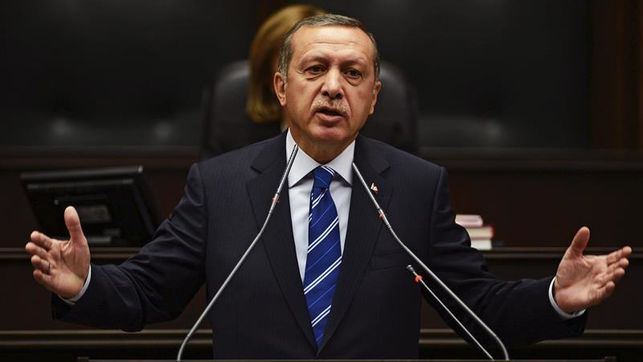
El presidente turco, Recep Tayyip Erdogan, ha instado de manera regular a las mujeres turcas a tener hasta tres hijos
Las cifras muestran un crecimiento de la población en las zonas rurales que sobrepasan a las ciudades principalmente laicas
Didem Sen vivía en Nişantaşı, un barrio rico de Estambul habitado principalmente por miembros de la élite laica, cuando a los 40 años intentó concebir a su primer hijo.
Hasta entonces sintió la necesidad de esperar a estar casada y a haber desarrollado su carrera profesional antes de intentar tener un hijo, pero los tratamientos de fertilidad no funcionaban y pronto abandonó.
Seis años más tarde, dice estar agradecida de haber perdido su oportunidad para tener hijos.
«Me desperté esta mañana agradecida de no tener un hijo», dice Sen. «Es una gran responsabilidad y mucho trabajo, y me preocupaba mucho que mi hijo pudiese tener una buena educación en este sistema y qué tipo de futuro habría para ellos».
Natalidad en descenso y población envejecida
El presidente turco, Recep Tayyip Erdogan, ha instado de manera regular a las mujeres turcas a tener hasta tres hijos (recientemente, después del nacimiento de su sexto nieto, dijo que el país necesita «cifras mayores para nuestra población como nación») pero debajo de lo que muchos ven como declaraciones patriarcales pasadas de fecha hay una verdad incómoda: la población de Turquía se ha estancado, y su índice de fertilidad ha bajado hasta su nivel más bajo desde la Primera Guerra Mundial. También está envejeciendo.
Aunque Turquía sigue siendo el segundo país de Europa más poblado después de Alemania, con una población de 79,5 millones, y una de las edades medias más bajas de Europa, 31,5 –pero más alta que en 2009, 28,8 –, los datos de este año del Instituto de Estadística Turco muestran por primera vez que las tasas de fertilidad de 2016 habían caído hasta la tasa de reposición del 2,1.
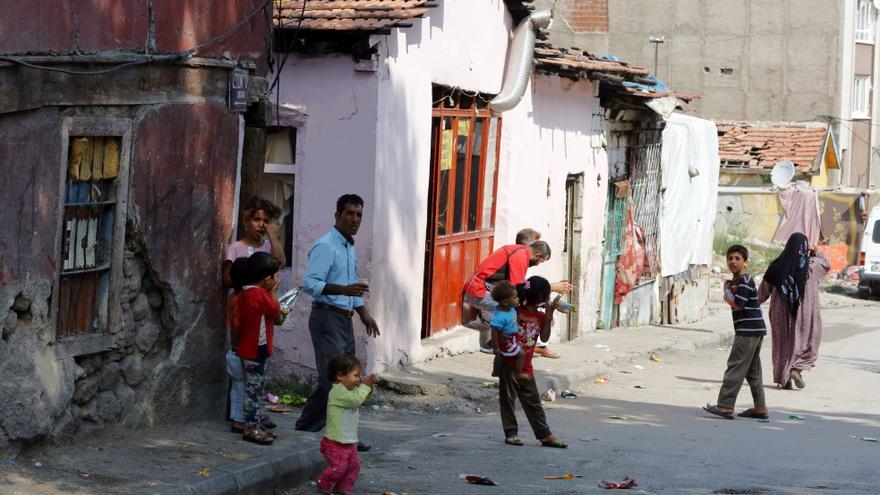
Este descenso enmascara caídas más pronunciadas en las ciudades, pero está acompañado por un índice de natalidad creciente en refugiados y comunidades rurales que anuncia grandes cambios en la demografía del país en la próxima década.
Imagen de archivo de varios refugiados sirios en el vecindario Haci Bayram, Ankara. AP PHOTO/BURHAN OZBILICI
«La gente de las clases sociales altas en Turquía tienen uno o dos hijos, no tienen que tener tres o cuatro», dice un médico que solicita el anonimato. «La gente con familias más grandes está en grupos socioeconómicos más bajos».
Turquía es un dilema familiar tanto para sus vecinos europeos como árabes. Por un lado, un auge de la población sin una economía en expansión capaz de crear puestos de trabajo para los jóvenes que puede llevar a una población joven estancada y al aumento del desempleo y la exclusión –un problema al que se enfrentan muchas sociedades de Oriente Medio–. Pero un descenso descontrolado en la tasa de fertilidad dejaría a Turquía con una población envejecida, un problema al que se enfrentan muchos países europeos.
«Turquía nunca va a tener una población de 100 millones de personas», dice el profesor Ahmet Içduygu, sociólogo de la Universidad de Koç. «La política de que una población más grande se traduce en un país fuerte pertenece al siglo XX, y es probable que en 50 años nos enfrentemos a los mismos problemas que los países occidentales hoy».
«Es más, si la juventud no obtiene una educación adecuada y el sistema económico no los absorbe, tendrán lugar consecuencias como problemas de integración con la población de refugiados, desempleo y otras complicaciones», añade el profesor.
Crecimiento en zonas rurales
Las cifras muestran un crecimiento de la población en las zonas rurales que sobrepasan mucho el de las ciudades principalmente laicas. Mientras que provincias occidentales más cercanas a Europa, como Edirne, tenían tasas de natalidad tan reducidas como de 1,5 hijos por mujer, la provincia sureste de Şanlıurfa, que tiene una alta población kurda y medio millón de refugiados sirios, tenía una tasa casi tres veces mayor, de 4,33.
El doctor Ali Enver Kurt, ginecólogo y experto en fertilidad mandado por las autoridades del municipio de Beyoğlu en Estambul a dar clases y seminarios al público sobre fertilidad y fertilización in vitro, dice que factores medioambientales como la polución, una alta tasa de fumadores, un alto índice de enfermedades de transmisión sexual y el estrés diario en las grandes ciudades son las causas principales del problema de infertilidad.
El ginecólogo estima que entre un 15% y un 20% de la población turca sufre de problemas para concebir, una cifra que es relativamente normal en sociedades desarrolladas.
El descenso es también un síntoma de la modernidad de Turquía, con niveles de educación en aumento y mejoras en las oportunidades profesionales para mujeres, además del miedo sobre la creciente división en el país. Muchos de los que retrasan tener hijos, o directamente no los tienen, lo hacen por una serie de razones, como el coste, priorizar sus carreras profesionales o porque no quieren criar niños en un país con todo un abanico de conflictos sociales.
Muchos de los factores que limitan el crecimiento de la población en Turquía son comunes en los países del mundo desarrollado, pero Turquía destaca en particular por su extensa población de refugiados. Alberga ya a tres millones de personas que huyeron del conflicto en la vecina Siria, muchos de los cuales podrán optar a la ciudadanía, y esa cifra seguirá en aumento rápidamente. Alrededor de 177.000 bebés nacieron de madres sirias en Turquía entre 2011 y 2016. Investigadores de la Universidad de Hacettepe calculan que 80.000 nacieron en 2016 y se esperan otros 90.000 nacimientos en 2017.
«Esto significa que a partir de ahora nacerán 100.000 bebés más cada año y esto generará un millón más de refugiados en 10 años», dice el doctor Murat Erdoğan, director del Centro de Investigación de Migración y Política de la Universidad de Hacettepe. Señala que si las familias de refugiados sirios se asientan de manera permanente en Turquía, podrían compensar la falta de mano de obra del país pero que también reforzarían la influencia del islam, después de 100 años de república laica. «Esto presenta aspectos que Turquía tiene que considerar, aparte del aspecto humanitario», dijo el doctor.
El viceministro Técnico de Educación, Héctor Canto, aceptó este jueves haber «escuchado la incertidumbre» que generó el cambio al currículo escolar que agrupó la enseñanza de música, danza, teatro y artes plásticas en una única área: «Educación y Expresión Artística», lo que generó críticas.
Canto indicó que el acuerdo ministerial publicado el martes «reforma la malla curricular (de manera gradual) y deja la Expresión Artística, donde se aborda la educación musical y no se elimina» de la educación básica, como le fue reprochado al Ministerio de Educación (Mineduc).
Las autoridades de la cartera educativa «acordamos visibilizar los cuatro lenguajes artísticos», pues la «malla vigente de 2009 contaba con tres subáreas sin un tiempo ni período asignado», lo cual se modificó para «otorgarle el tiempo necesario».
«Hoy más que nunca impulsamos al arte», dijo Canto, contrario a lo que manifestaba el Foro Latinoamericano de Educación Musical (Fladem) sección Guatemala, que aseguraba que con la medida se suprimía el curso musical.
Canto afirmó que «de existir la posibilidad de contar con maestros especializados en las cuatro áreas de la Expresión Artística, lo haremos», pero que, por ahora, el Mineduc se dedicará a «capacitar a los docentes ya contratados», puesto que en el sector público «no es fácil contratar nuevos maestros».
«Debemos abrir nuevos espacios» para los docentes especializados en teatro, danza y artes plásticas, para que no sea un solo profesor quien dé todos los cursos, aseveró.
Canto pronunció que el Mineduc se encontraba haciendo un esfuerzo por mejorar la educación, por lo que reordenar el Currículo Nacional Base (CNB) es un primer paso.
El compromiso del ministerio es «impulsar la danza, el teatro y todas las artes». En el caso de las universidades, les solicitó una coordinación conjunta para abrir espacios diversificando su oferta académica en sus distintas carreras que integren el arte.
El decreto ministerial en cuestión también aglutinó distintas especialidades como educación para el hogar y carpintería o metalmecánica en emprendimiento para la productividad, la cual se impartirá de manera mixta y ya no por grupos separados de hombres y mujeres.
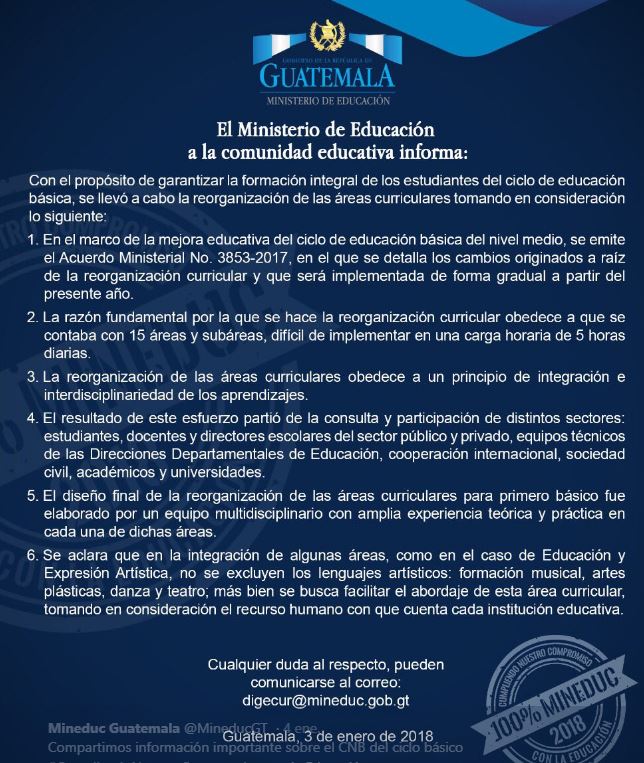
La razón fundamental por la que se reorganizó el CNB obedece a que se contaba con 15 áreas y subáreas lo cual era difícil de implementar en una carga horaria de cinco horas al día, aseguró el Mineduc en un comunicado.
Morales responde en las redes
Después del revuelo que armó la noticia, el presidente Jimmy Morales se refirió al tema de la renovación de la malla curricular en las redes sociales.
«No es suprimir la materia de música que reciben nuestros niños, es que además de la educación musical, reciban educación sobre el teatro, la danza, la pintura y las artes plásticas», dijo el mandatario en su Facebook.
«Lo que buscamos es que ellos tengan un acceso más amplio al arte en general, para explorar mejor sus aptitudes. Por la niñez y la juventud de Guatemala», agregó.
En tanto, el Mineduc detalló en el comunicado que «la reorganización de las áreas curriculares obedece a un principio de integración e interdisciplinariedad de los aprendizajes».
En redes sociales el Fladem convocó a una manifestación este viernes en Cobán, en protesta por el cambio curricular.
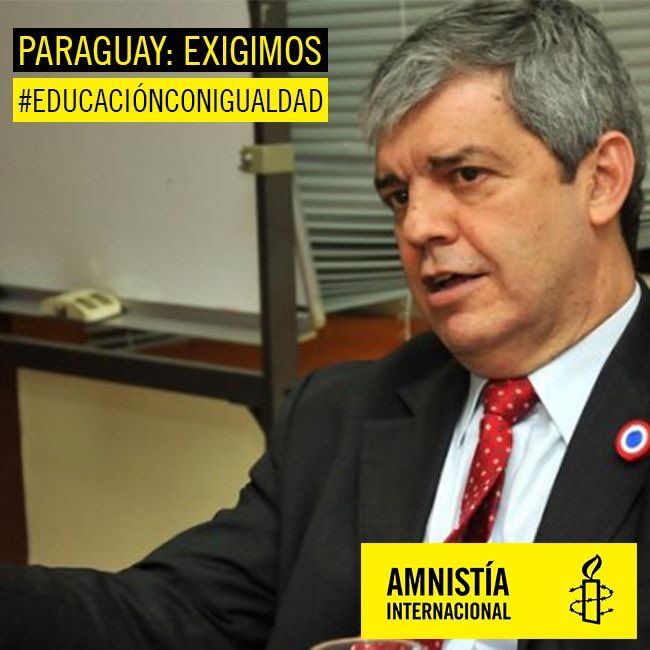
Representantes de iglesias católicas y evangélicas exigieron al ministro de Educación de Paraguay, Enrique Riera, eliminar una guía para docentes sobre cómo promover la igualdad de género en las escuelas.
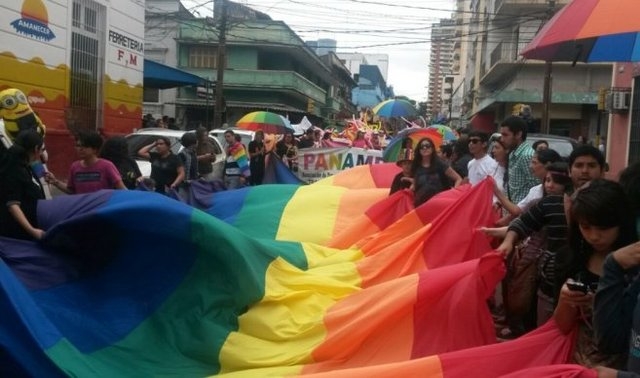
Una ola ultraconservadora invade Paraguay de acuerdo a las últimas medidas que se han ido tomando en áreas más que sensibles y que alcanzan a toda la sociedad.
Mientras el diputado Santiago Peña se declaró abiertamente en contra de las organizaciones LGBTIQ y prometió “luchar a favor de las familias en su constitución original”, utilizando el fascista lema de campaña “Dios, Patria y Familia”, ahora en las escuelas tampoco se apunta a promover la igualdad de género y sexual.
Fueron representantes de iglesias católicas y evangélicas las que exigieron al ministro de Educación, Enrique Riera, eliminar una guía para docentes sobre cómo promover la igualdad de género en las escuelas.
En octubre Paraguay, desde el Ministerio de Ecuación, prohibió la difusión de materiales «referentes a la ideología de género».
El ministro que se enfrenta al supuesto desafío de mejorar la educación paraguaya, aceptó el pedido de los religiosos y les prometió que, si era necesario, iba a “quemar los libros” sobre “ideología de género” en la plaza para que confiaran en él.
Aunque luego matizó sus fuertes dichos y aseguró que solo exageraba. Sin embargo, 24 horas después prohibió la “difusión y utilización de materiales impresos o digitales referentes a la teoría y/o ideología de género” en todo el sistema educativo público del país.
“Es una clara persecución a la enseñanza de la perspectiva de género. Le tienen pánico a esa palabra por pura ignorancia. Se han inventado la ‘ideología de género’ como instrumento contra el que pelear para que no avancen los derechos LGTBI y de la mujer”, dice la investigadora de políticas sociales Lilian Soto que también es presidenta de Kuña Pyrenda, el primer partido político socialista, feminista y ecologista de Paraguay, que llevó en 2013 a dos mujeres como candidatas a la presidencia y vicepresidencia del país.
La Comisión Interamericana de Derechos Humanos (CIDH) rechazó que la perspectiva de género sea peyorativamente referida como “ideología de género” y el Comité de América Latina y el Caribe por la Defensa de los Derechos de las Mujeres (Cladem), Amnistía Internacional o Católicas por el Derecho a Decidir mostraron su preocupación.
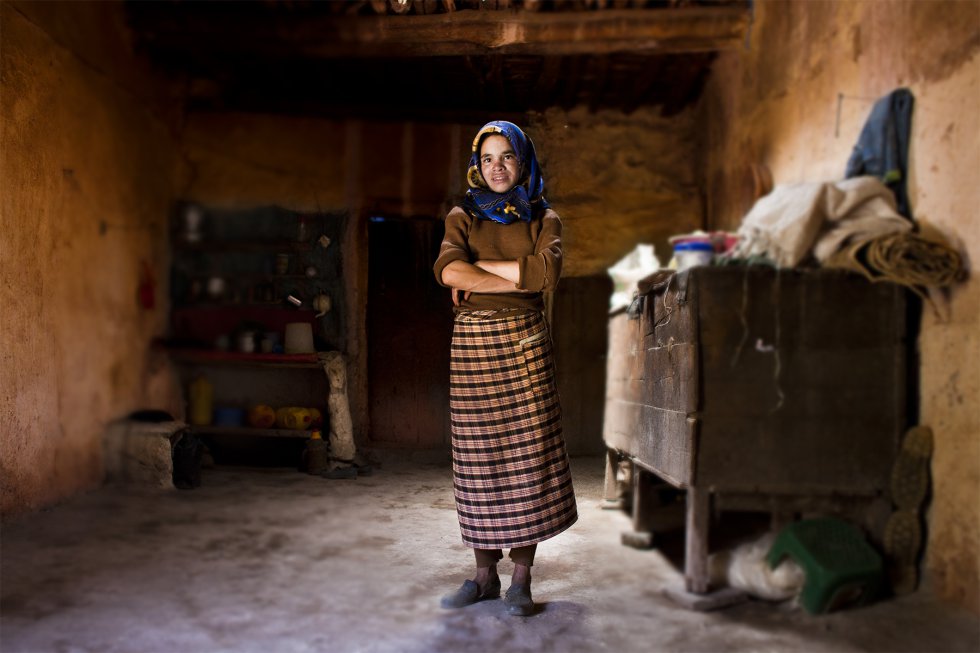
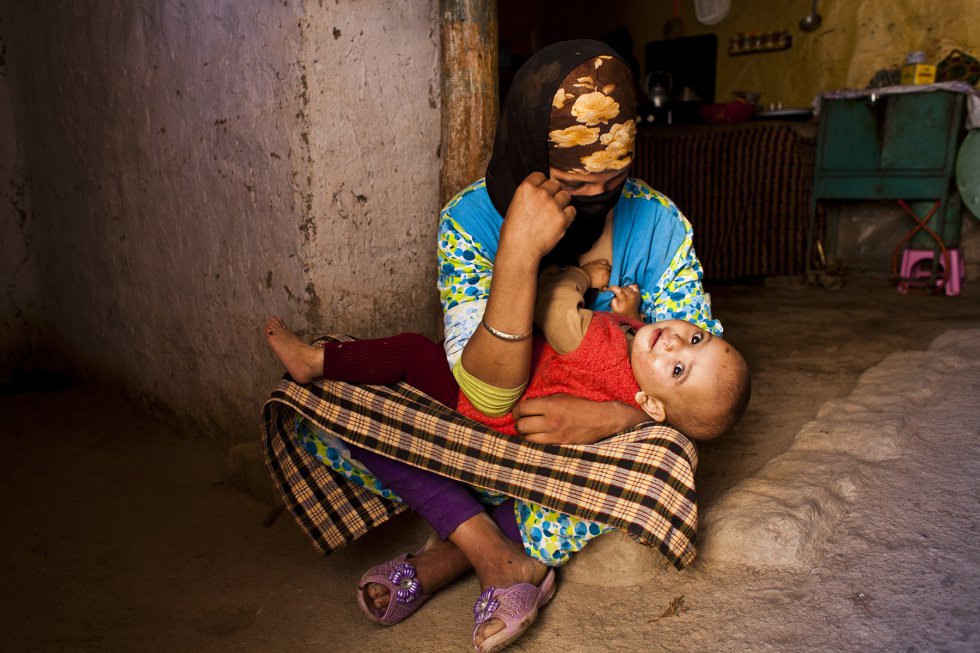
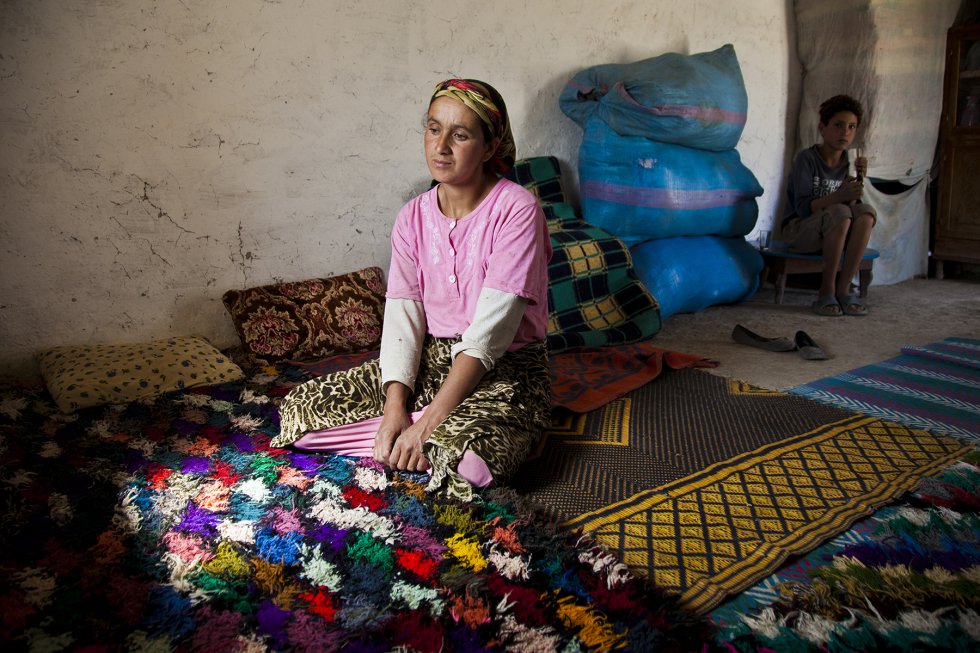
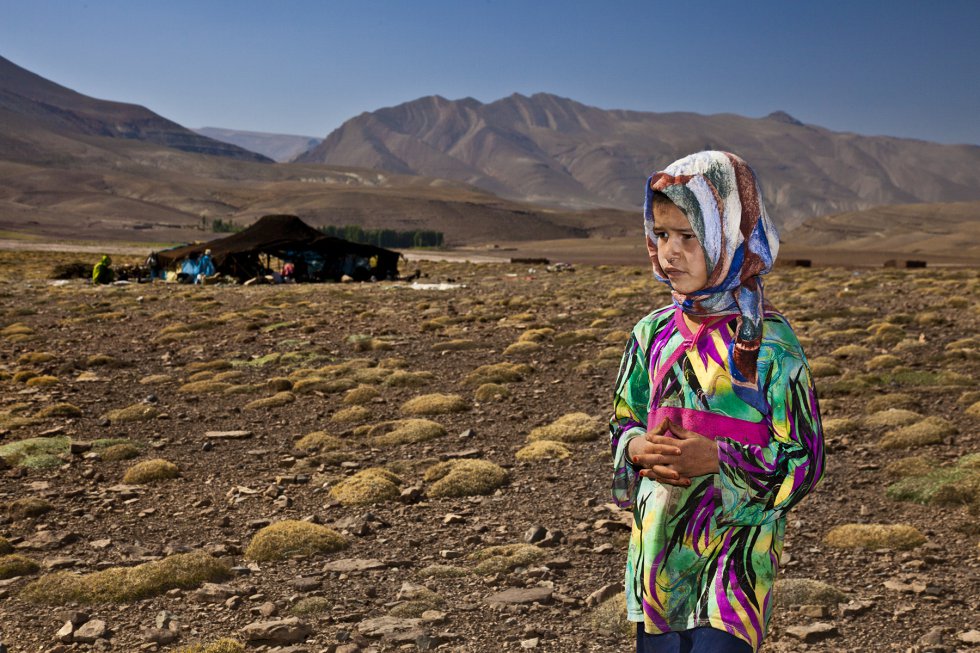
Con poco acceso a la escuela y un altísimo índice de pobreza, el futuro para las mujeres y niñas de zonas rurales aisladas, como el alto Atlas marroquí, pasa por un casamiento prematuro.
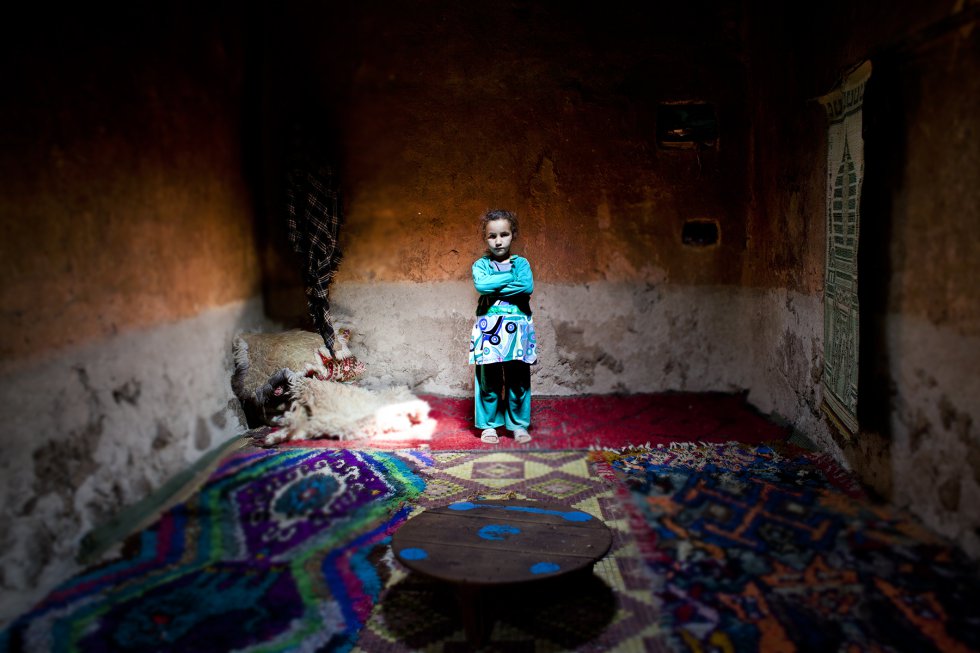
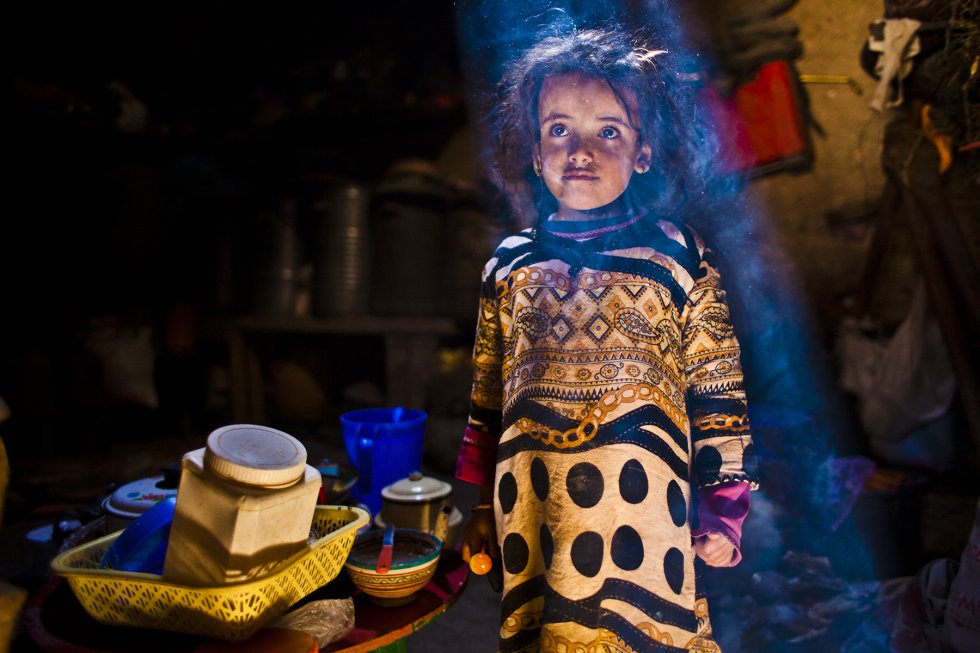
1) Las mujeres y niñas de zonas rurales aisladas, como el alto Atlas marroquí, son uno de los colectivos de la sociedad más vulnerables. Suponen el 41,6% de la población del país, según un informe de UN Women, es decir, unos 16,4 millones. Aisha, de cuatro años, aún no está escolarizada a pesar de que en su aldea acaban de abrir un centro de educación primaria. Sus padres no quieren que vaya porque lo consideran una pérdida de tiempo. Su madre la quiere en casa para que la ayude en las tareas domésticas.2) Sin prácticamente acceso a la educación y un altísimo índice de pobreza, su futuro con gran seguridad será un matrimonio prematuro que perpetuará su difícil situación en estos enclaves remotos. Un informe del departamento de estudios semíticos de la Universidad de Granada, de hecho, afirma que el 84,2% de las mujeres del entorno rural son analfabetas, es decir, casi nueve de cada 10.Fátima nunca ha ido al colegio y no sabe cuántos años tiene. Vive desde que tenía 40 días con sus abuelos paternos. Su madre murió al poco de nacer ella, su padre se volvió a casar y su nueva esposa no quiso hacerse cargo de ella. La niña vive en la aldea de Akka Nouarin, que tiene un acceso realmente complicado. Su comunicación con el pueblo más importante, Imilchil, es difícil.
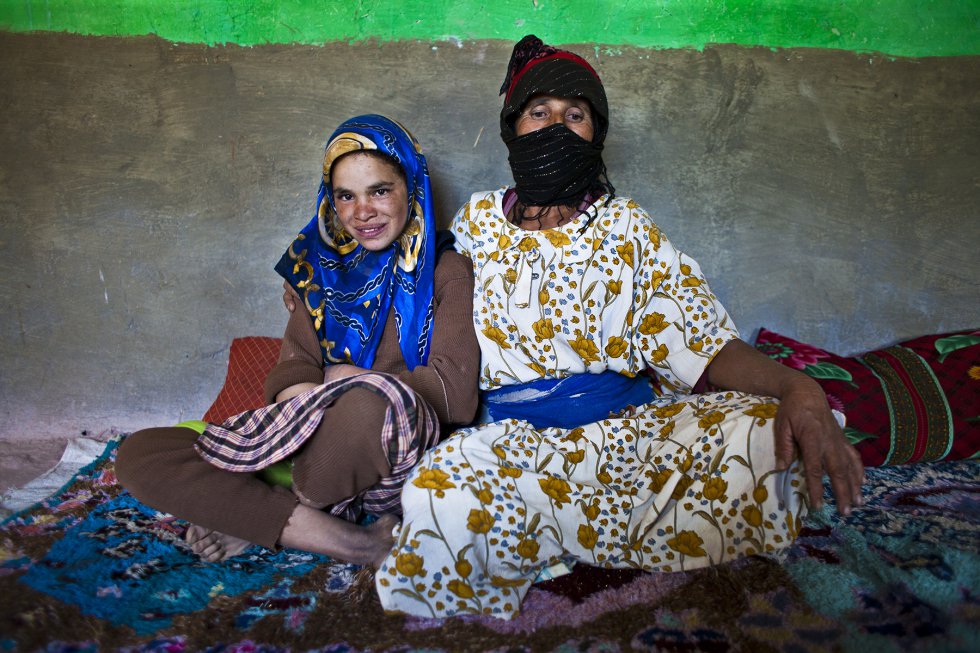
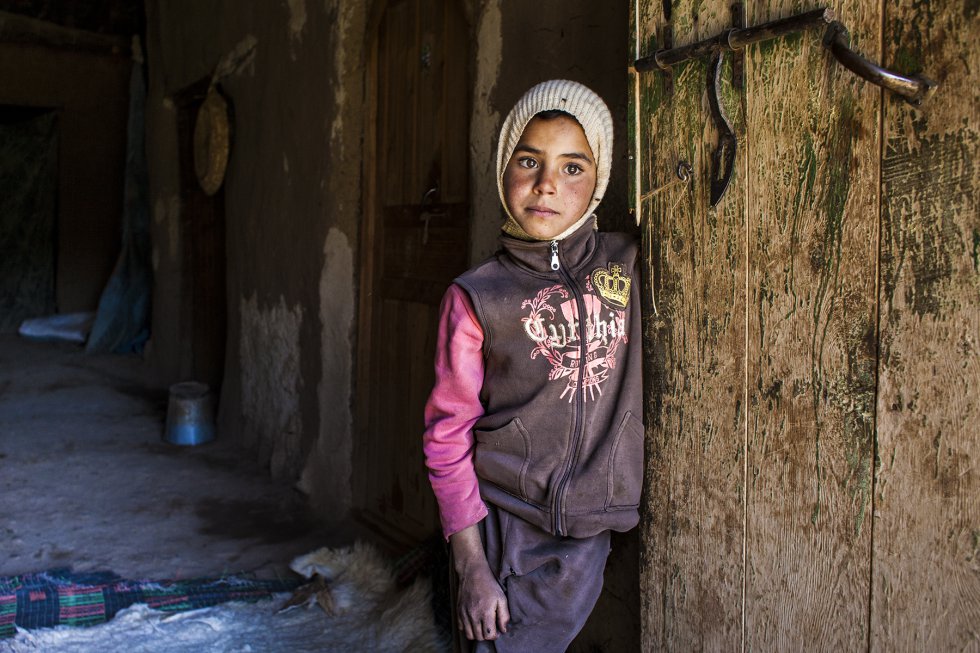
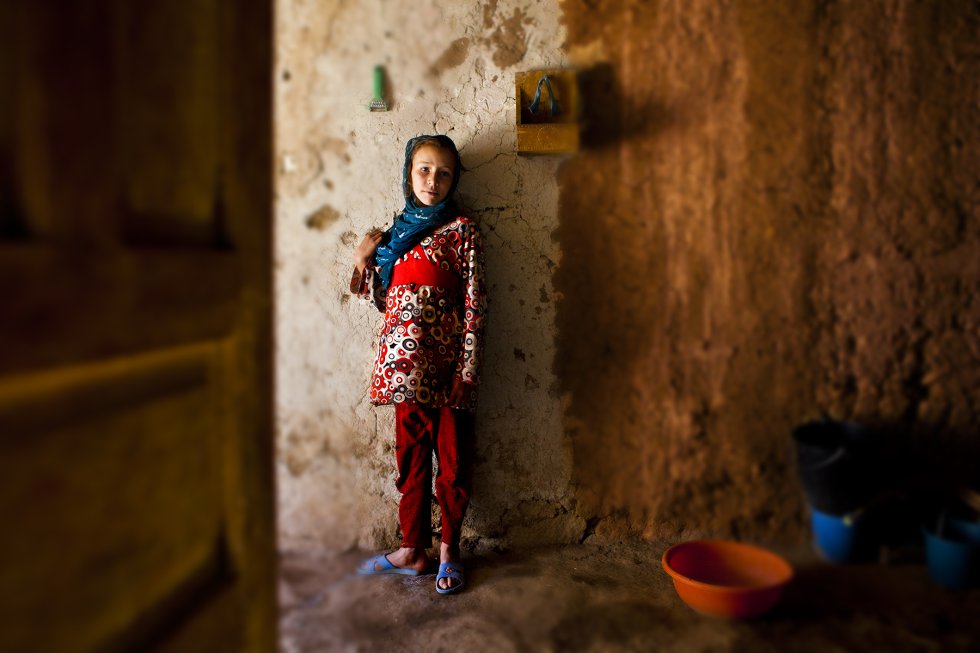
3) Fátima posa con su abuela paterna en el salón de su casa, en la aldea de AkkaNouarin. Ella nunca ha salido de su pueblo y, seguramente, la tendrán que casar pronto porque sus abuelos se ven muy mayores y creen que no podrán seguir cuidándola. Fátima no quiere oír ni hablar del matrimonio.4) En 2004, el Código de Familia marroquí prohibió el matrimonio de menores de 18 años, sin embargo las cifras de los últimos años arrojan un aumento. Según el Ministerio de Justicia de Marruecos antes de la prohibición, en 2004 fueron casadas 18.341 menores y, sin embargo, en 2013 el número llegó a 35.000.Hanane, una niña de ocho años en el umbral de su casa, en la aldea de Akka Nouanin. Hace unos meses empezó a asistir a la escuela primaria que acaban de abrir en la aldea. Es muy posible que no pueda ir durante mucho tiempo: su madre dice que la familia es muy pobre y necesita a la menor para ayudarla en las tareas domésticas y con los animales. Su aldea se queda aislada por la nieve durante algunos meses en invierno.
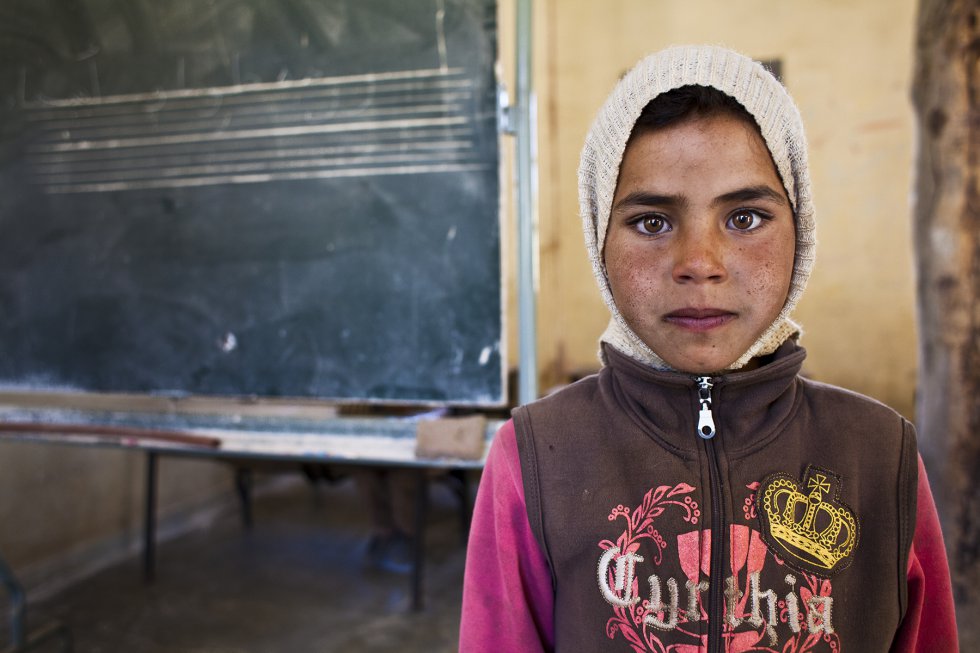
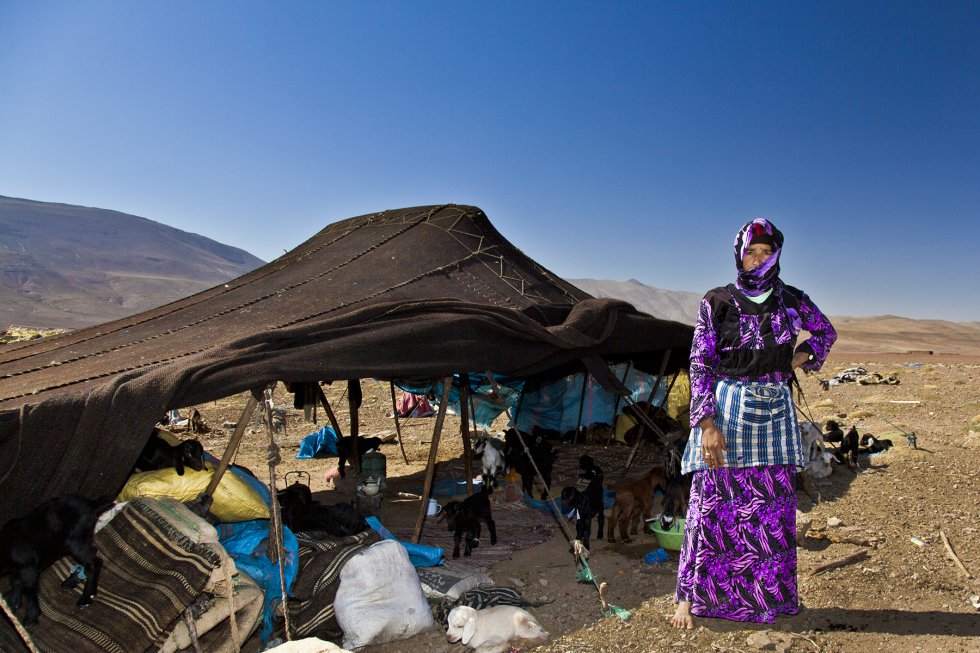
5) Hanane, de ocho años, en la escuela de educación primaria recién abierta en Akka Nouanin. Hace pocas semanas que ha empezado a ir a clase y para ella es todavía una novedad, casi un juego.6) Jemâa tiene cuatro años y vive en la aldea de N’Ihoudigne. No irá a la escuela porque su madre prefiere que la ayude en las tareas del hogar, con los animales y en el campo.7) El nuevo Código de Familia permite a los jueces derogar la prohibición bajo un gran número de excepciones, según afirma Aatisa Timjerdine, presidenta de la Asociación Democrática de Mujeres de Marruecos, con lo que la efectividad de la prohibición es bastante limitada.A Jamna la casarón cuando tenía diez años. Nunca ha ido a la escuela, ni ha visitado un hospital. Tiene ocho hijos y ninguna de las chicas ha ido al colegio. Es una nómada bereber que vive de sus cabras.
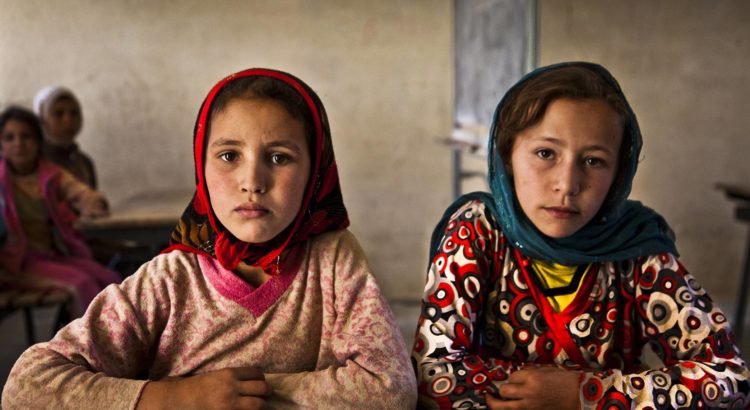
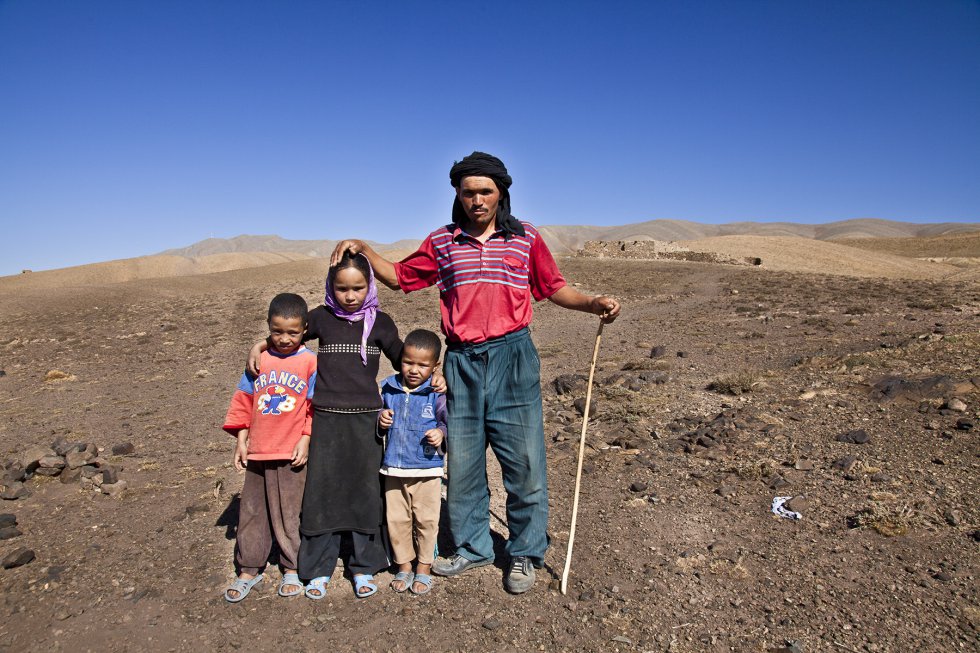
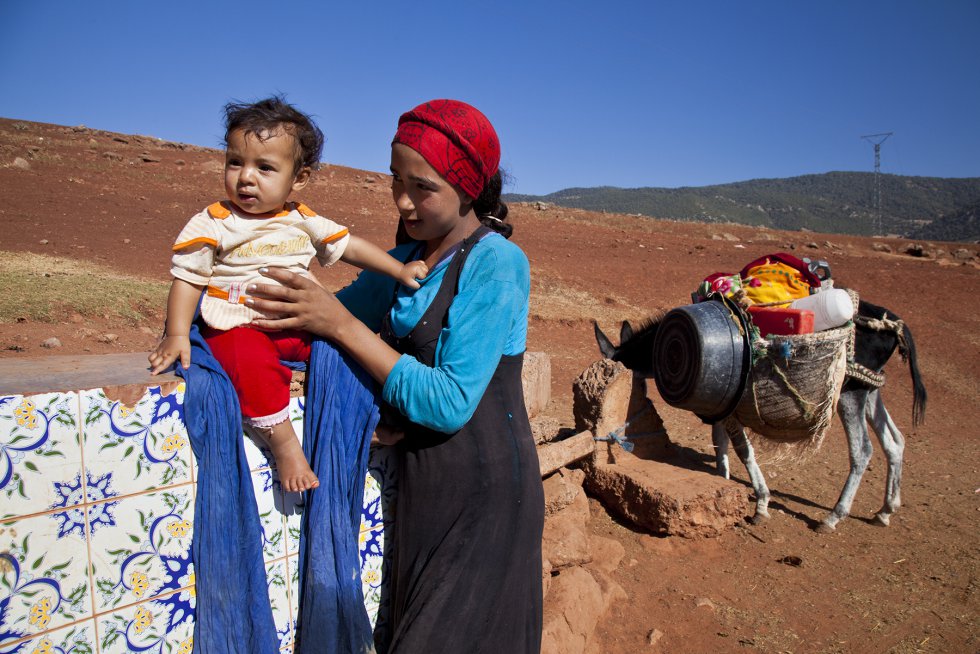
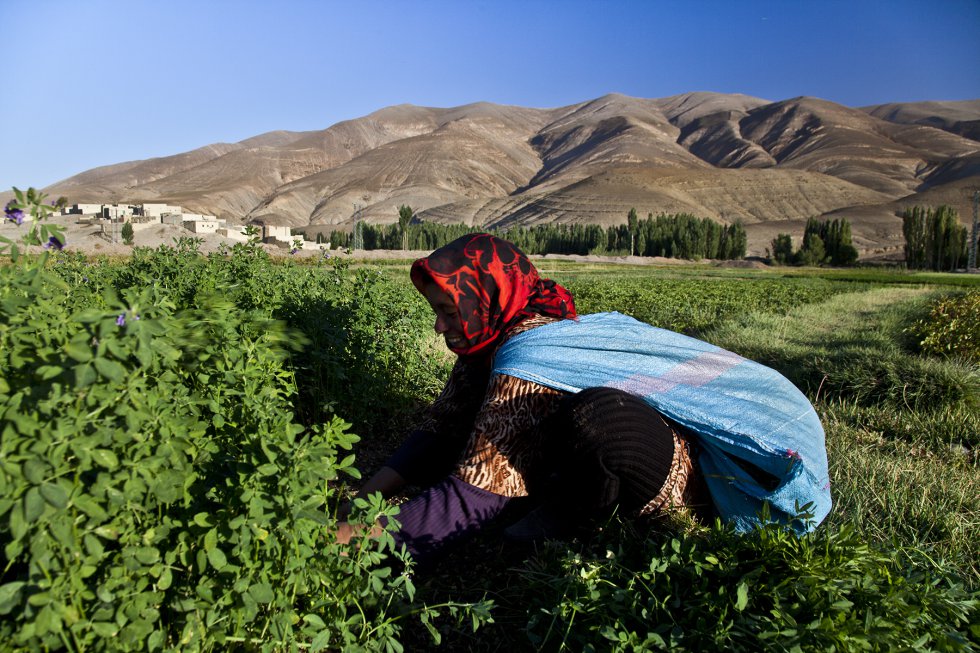
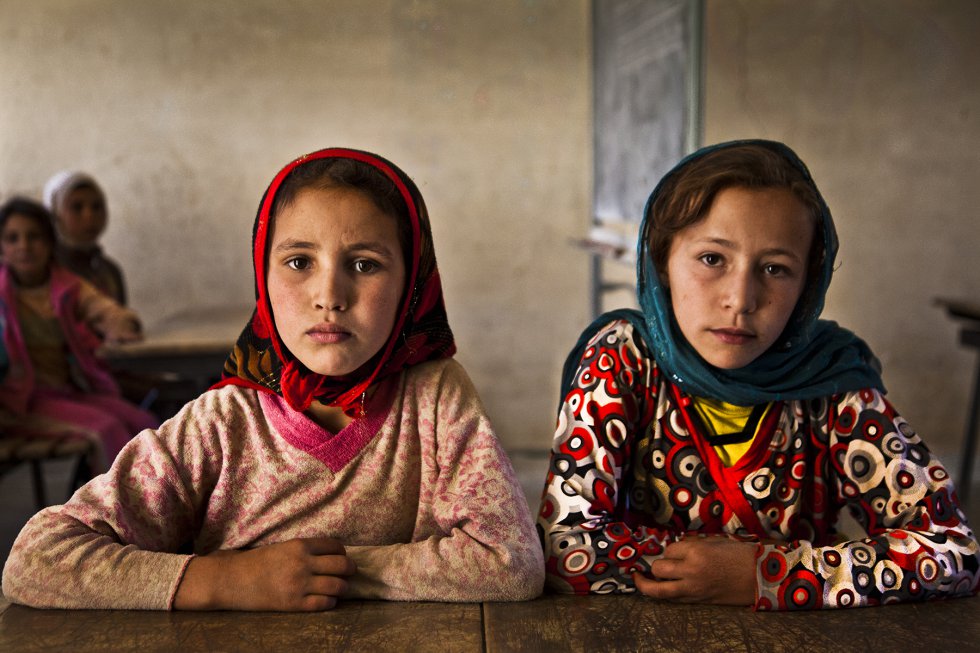
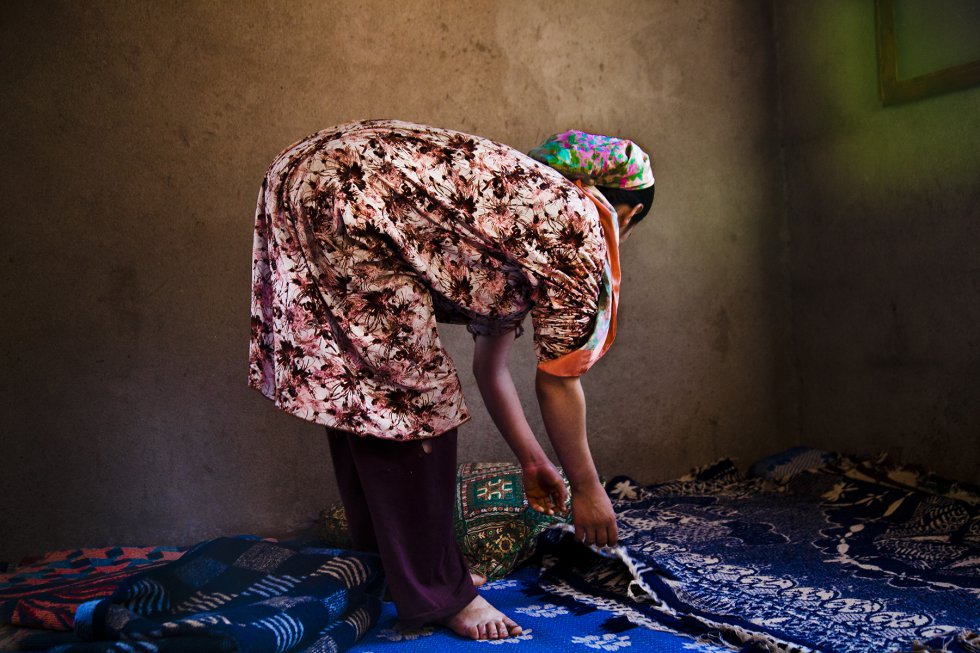
8) Un pastor del Alto Atlas, con tres de sus hijos. Solo los vástagos varones van a la escuela, las chicas ayudan a la madre en las tareas domésticas y cuidan del ganado.9) Mina, de 13 años, con su bebé en uno de las pocas fuentes que hay en la zona. Las mujeres son las encargadas de ir a buscar el agua, y muchas veces tienen que recorrer muchos kilómetros para llegar al manantial.10) Una anciana recoge hierba para el ganado en el valle de Asif Melloul. Las mujeres son las encargadas de parte de las tareas agrícolas y del cuidado de los animales.11) Dos niñas en la escuela de la aldea Akka Nouanim. Solo aprenderán lo básico porque el colegio más próximo está en el pueblo de Imilchil, a 20 kilómetros de la aldea. Esta se queda incomunicada en los meses de invierno y sus familias no tienen dinero para dejarlas internas. Además, dicen que las necesitan en casa porque ellas ayudan a sus familias en las tareas domesticas y el campo.12) Hajiba, de 15 años, acomoda la zona donde duermen sus hermanos, su madre y ella. Es la mayor de sus seis y la única chica. Hajiba nunca ha ido a la escuela y desde que su madre quedara viuda hace nueve años ella se encarga de todas las tareas diarias.13) Aisha tiene siete años. Ahora va al centro de educación primaria de de Akka Nouanim, pero después de los primeros años de escolarización no tendrá posibilidad de seguir estudiando porque el colegio más próximo está en el pueblo de Imilchil a 20 kilómetros. Su aldea se suele quedar incomunicada en los meses de invierno.14) Nora, de 23 años, posa con su hijo pequeño en brazos en la aldea de N’Ihoudigne. Ella nunca estudió. Ha tenido a sus cuatro hijos en casa, asistida por su madre. Existe un alto nivel de mortalidad en las mujeres rurales de esta zona y en los niños menores de tres años.15) Fadma, en el salón de su casa. Aparenta unos 30 años, pero no sabe cuántos tiene. Nunca fue al colegio y la casaron siendo casi una niña. Trabaja muy duro en la casa y en el campo, pero apenas gana para alimentar a sus cinco hijos.16) Nejma tiene seis años y tampoco va a la escuela. Es hija de una familia de pastores, por lo que vive unos meses en la zona más alta del Atlas marroquí y, otros, en los valles más bajos. Sus padres no tienen dinero para pagarle un internado en el pueblo más próximo, Imilchil.Contrasta comprobar con qué rapidez han llegado hasta los enclaves remotos del alto Atlas ya las nuevas tecnologías. Sin embargo, la educación y el desarrollo para las niñas y mujeres va a paso de tortuga.
Los candidatos que se presentaron a los exámenes nacionales de educación primaria y secundaria (nivel inferior) se desempeñaron mejor que sus colegas el año anterior, como lo indican los resultados publicados el martes por el Ministerio de Educación.
La tasa de aprobación general en el examen de egreso primario es del 86.3 por ciento en comparación con el 85.4 por ciento en 2016, mientras que la tasa general de aprobación en el año 2017 para O’level es del 89.9 por ciento en comparación con el 89 por ciento en 2016.
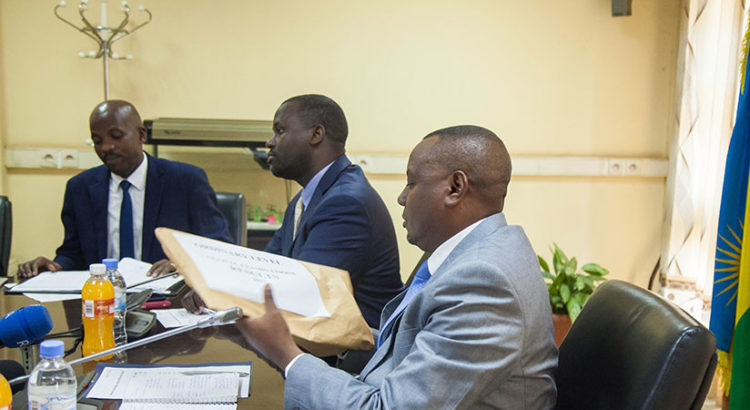
Ese desempeño, junto con el aumento del número de estudiantes que se presentaron para los exámenes, fue aplaudido por el Ministro de Estado a cargo de la Educación Primaria y Secundaria en el Ministerio de Educación, Isaac Munyakazi, al dar a conocer los resultados en las oficinas del ministerio en Kigali.
Un total de 228,048 estudiantes se presentaron a los exámenes de primaria el año pasado, un aumento significativo de los 187,139 que se sentaron el año anterior.
Para el nivel ordinario, 96.595 candidatos se sentaron el año pasado, en comparación con 89.421 que se habían sentado el año anterior.
«Fue claro que el número de estudiantes aumentó este año y estamos contentos con eso», dijo Munyakazi a los periodistas.
Él atribuyó el aumento en el número de candidatos que se presentaron a los exámenes al aumento del acceso de los niños de Rwanda al sistema educativo del país, que ha dado ventaja a la educación para todos.
«Ir a la escuela ya no es un favor; es un derecho constitucional. Es el derecho de los niños ruandeses a acceder a la educación y esto se refleja en su nivel de finalización «, dijo el Ministro de Estado.
También agregó que las campañas de concientización han ayudado a los padres a mantener a sus hijos en las escuelas en lugar de sacarlos para que hagan el trabajo infantil ilegal.
«Hasta ahora se les dice a todos los padres que mantengan a sus hijos en la escuela y cuando los niños no van a la escuela se identifican los motivos y se envía a los niños a la escuela», dijo.
Los candidatos que se presentaron para los exámenes determinarán hoy si tienen la posibilidad de avanzar al siguiente nivel de sus estudios.
Las escuelas secundarias abrirán las puertas para el próximo año académico el 22 de enero y el ministro de estado instó a los padres a enviar a sus hijos a la escuela a tiempo.
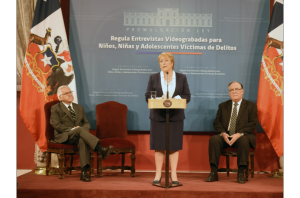
Como un avance en la protección de los derechos de la infancia calificó UNICEF la promulgación de la Ley que establece un sistema de entrevistas videograbadas para niños, niñas y adolescentes víctimas o testigos de delitos. “Desde UNICEF felicitamos la promulgación de esta Ley, porque fortalece la protección a la infancia al evitar la revictimización de los niños y niñas que han sido víctimas o testigos de delitos sexuales”, señaló la Representante de UNICEF, Hai Kyung Jun.
La Representante de UNICEF explicó que los niños que han sido víctimas de un delito sexual, han vivido una experiencia muy dolorosa y traumática. “No hay que olvidar que la mayor parte de estos delitos ocurren en los espacios familiares y que son perpetrados por un familiar o un conocido de la víctima. Esta ley se hace cargo de esta situación y busca aliviar la difícil situación que viven los niños”.
La Representante del organismo internacional, explicó que con esta Ley se está dando un paso muy importante hacia la consolidación de mecanismos de “justicia amigable para los niños, los cuales deben prevenir la victimización reiterada y evitar los efectos negativos que la relación del sistema de justicia les provoca”.
UNICEF destacó el trabajo realizado por la Fundación Amparo y Justicia y la ONG No más Abusos, cuyos miembros trabajaron incasablemente durante muchos años para visibilizar la realidad que estaban viviendo los niños y niñas que habían sido víctimas de delitos sexuales en su contacto con el sistema judicial. “Desde UNICEF apoyamos muy activamente la campaña “No me pregunten más”, impulsada por ambas organizaciones”, destacó la Representante de UNICEF.
La nueva legislación recoge las recomendaciones formuladas por el Comité de los Derechos del Niño al Estado de Chile sobre la protección que deben recibir los niños y niñas que han sido víctimas violencia y/o abusos sexuales, y establecer mecanismos para escuchar y tomar en cuenta la opinión de los niños en instancias judiciales.
Con esta legislación, Chile avanza en la misma tendencia de países como Australia, Estados Unidos, Francia y Reino Unido, entre otros, al evitar contactos innecesarios de los niños con el sistema de justicia.
Acerca de UNICEF:
En UNICEF promovemos los derechos y el bienestar de todos los niños, niñas y adolescentes en todo lo que hacemos. Junto a nuestros aliados, trabajamos en 190 países y territorios para transformar este compromiso en acciones prácticas que beneficien a todos los niños, centrando especialmente nuestros esfuerzos en llegar a los más vulnerables y excluidos, en todo el mundo.
Para obtener más información sobre UNICEF Chile y su labor visite: http://www.unicef.cl
OtrasVocesenEducacion.org existe gracias al esfuerzo voluntario e independiente de un pequeño grupo de docentes que decidimos soñar con un espacio abierto de intercambio y debate.
¡Ayúdanos a mantener abiertas las puertas de esta aula!







 Users Today : 88
 Total Users : 35491975
 Views Today : 430
 Total views : 3607649