Page 2982 of 6199
1 2.980 2.981 2.982 2.983 2.984 6.199

France to impose total ban on mobile phones in schools

Francia/Diciembre de 2017/Autor: Henry Samuel/Fuente: The Telegraph

Resumen:  Francia debe imponer una prohibición total a los alumnos que usan teléfonos móviles en escuelas primarias y secundarias a partir de septiembre de 2018, confirmó su ministro de educación. Los teléfonos ya están prohibidos en las aulas de francés, pero a partir del próximo año escolar, los alumnos no podrán sacarlos durante los descansos, el almuerzo y entre las clases. Sin embargo, los maestros y los padres están divididos por una prohibición total, y algunos dicen que los niños deben poder «vivir en su tiempo». En Francia, alrededor del 93 por ciento de los jóvenes de 12 a 17 años poseen teléfonos móviles.

France is to impose a total ban on pupils using mobile phones in primary and secondary schools starting in September 2018, its education minister has confirmed.

Phones are already forbidden in French classrooms but starting next school year, pupils will be barred from taking them out at breaks, lunch times and between lessons.

Teachers and parents are divided over a total ban, however, with some saying children must be able to «live in their time». In France, some 93 per cent of 12 to 17-year-olds own mobile phones.

 «These days the children don’t play at break time anymore, they are just all in front of their smartphones and from an educational point of view that’s a problem,» said Jean-Michel Blanquer, the French education minister.

«This is about ensuring the rules and the law are respected. The use of telephones is banned in class. With headmasters, teachers and parents, we must come up with a way of protecting pupils from loss of concentration via screens and phones,» he said.

«Are we going to ban mobile phones from schools? The answer is yes.»

Studies suggest that a significant number of pupils continue to use their mobiles in class and receive or send calls or text messages.

Up to 40 per cent of punishments are mobile-related, according to Philippe Tournier, a Paris headmaster with the Snpden-Unsa teaching union. But he said it was tricky to know how to clamp down on the practice without being able to, say, search pupils’ bags.

«We are currently working on this [ban] and it could work in various ways,» said Mr Blanquer. «Phones may be needed for teaching purposes or in cases of emergency so mobile phones will have to be locked away.»

Earlier this year, he suggested that if French politicians were able to put their phones away during council of ministers meetings, then surely it was «possible for any human group, including a class» to do the same.

The practice is already in use in many French «colleges», or primary schools.

«A box placed on the table at the entrance to my class awaits mobile phones. I have never had any problems. It takes two minutes at the start of each hour. This was already the case in primary schools I worked in in Paris,,» one teacher based in Rueil-Malmaison told Le Figaro.

In another establishment in Essonne area, pupils place their phones in named bags in an office at the school entrance and take them back at the end of the day.

But one headmaster in Marseille, southern France, said he remained unconvinced but this «so-called miracle solution», saying that phones could get mixed up, lost or stolen. «If they are switched off at the bottom of the bag, then it works,» he said.

Peep, one of France’s biggest parents’ associations, has already expressed scepticism.  «We don’t think it’s possible at the moment,» said its head, Gerard Pommier.

«Imagine a secondary school with 600 pupils. Are they going to put all their phones in a box? How do you store them? And give them back at the end?,» he asked.

«One must live with the times. It would be more intelligent to pose rules and discuss their meaning with pupils,» said Peep, pointing out that «adults themselves are not always exemplary with mobiles».

But for the education minister the issue of mobile phones and tablets is a matter of «public health».   «It’s important that children under the age of seven are not in front of these screens,» he added.

The minister also sees the move as a way of cutting down on cyber-bullying.   The ban would apply to children up to 15 but phones would be allowed in lycees (secondary school).

Fuente: http://www.telegraph.co.uk/news/2017/12/11/france-impose-total-ban-mobile-phones-schools/
 

Comparte este contenido:

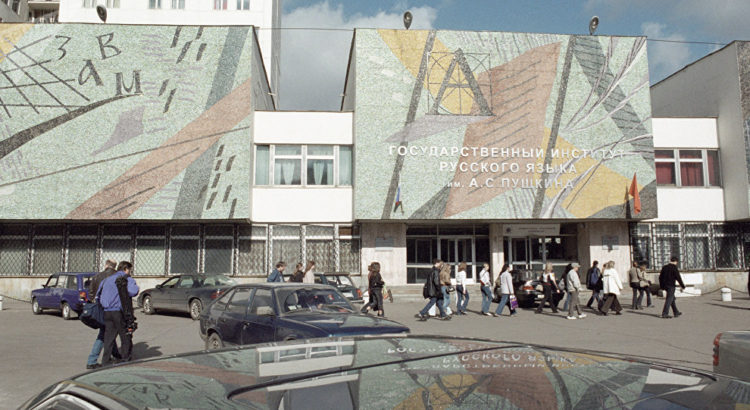
Rusia: Pushkin Institute Opens Online Express Russian Language Course

Rusia/Diciembre de 2017/Fuente: Sputnik

Resumen:  El Instituto Estatal de Lengua Rusa Pushkin ha lanzado un curso rápido de Ruso como Lengua Extranjera (RFL) en su sitio web de Educación en Rusia, dijo a RIA Novosti un portavoz del servicio de prensa del Instituto. El idioma ruso se está volviendo cada vez más popular en todo el mundo a medida que Rusia expande sus lazos económicos con otros países y atrae a más turistas, dice Olga Kultepina, de la Escuela Superior de Economía de la Universidad Nacional de Investigación, quien ayudó a desarrollar el curso.

The Russian language is gaining popularity as Russia expands its economic ties and attracts more tourists each year.

The Pushkin State Russian Language Institute has launched an express Russian as a Foreign Language (RFL) course on its Education in Russian website, a spokesperson for the Institute’s press service told RIA Novosti.

The Russian language is growing increasingly popular around the world as Russia expands its economic ties with other countries and attracts more tourists, says Olga Kultepina, of the Higher School of Economics at the National Research University, who helped develop the course.

«I notice that the number of RFL groups grows with every passing year. Many students come to Russia with a good level of knowledge and want to improve. New online resources have appeared as well, which reflect an interest in Russian. For example, 5.81 million students have subscribed to the Duolingo Russian course, which is fourth in the ratings,» she told RIA Novosti.

The express course is in the MOOC (Massive Open Online Courses) format for maximum access and includes video lectures, references and an interactive capacity for communication between teachers and students.

The course program is designed for students with a basic grasp of Russian. According to Ms. Kultepina, it only takes the will to start learning and self-discipline. The course is available on all multimedia devices with online access, including smartphones. Thus learning is within reach at any time, including on the move.

Each course is 45 hours long and consists of 15 lessons with individual assignments and tests. Upon completion, students are issued a certificate.

The RFL-1 and RFL-2 courses were developed under the Russian Language Federal Targeted Program of the Russian Ministry of Education and Science.

Fuente: https://sputniknews.com/society/201712111059892399-institute-online-express-course/

Comparte este contenido:

Estados Unidos: Third indication U.S. educational system is deteriorating

Estados Unidos/Diciembre de 2017/Autora: Jill Barshay/Fuente: The Hechinger Report

Resumen: ¿El sistema educativo de EE. UU. Comienza a decaer? No me gusta ser alarmista ni dar demasiado peso al resultado de ninguna prueba, pero la publicación de los resultados de las pruebas de lectura de 2016 en todo el mundo es ahora el tercer punto importante de prueba de que algo anda mal. El último Progreso en Lectoescritura Lectora Internacional (PIRLS) – una prueba de comprensión de lectura dada a estudiantes de cuarto grado en 58 países y regiones de todo el mundo – mostró que el desempeño de los EE. UU. Está disminuyendo tanto en términos absolutos como relativos. Los estudiantes estadounidenses de cuarto grado, en promedio, tenían peores habilidades de lectura que cinco años antes, en 2011, y los puntajes cayeron siete puntos en una escala de 1,000 puntos. Al mismo tiempo, otros países saltaron por encima de nosotros.

Is the U.S. educational system beginning to decay?

I don’t like to be alarmist, or give too much weight to any one test result, but last week’s release of 2016 reading test scores around the world is now the third major proof point that something is awry. The latest Progress in International Reading Literacy Study (PIRLS) — a reading comprehension test given to fourth graders in 58 countries and regions around the world — showed that U.S. performance is sliding in both absolute and relative terms. American fourth-graders, on average, had worse reading skills than they did five years earlier, in 2011, with scores slipping seven points on a 1,000-point scale. At the same time, other countries leapfrogged ahead of us. The combination meant that the United States slipped from 6th to 15th place in this international ranking. (The U.S. Education Department considers the 2016 score to be a statistical tie for 13th place because it was so close to those of the three countries ranked immediately ahead of it. See adjacent table.)

The top-performing nations in fourth-grade reading, ranked by scores on the 2016 Progress in International Reading Literacy Study (PIRLS). Source: Reading Achievement of Fourth-Grade Students in an International Context, Table 1, p. 8

This follows two other disappointing test results that had largely pointed to problems in math skills. Both fourth- and eighth-grade students posted declines on the math section of the 2015 National Assessment of Educational Progress (NAEP). (Eighth-graders had done worse in reading, too.) And another international exam, the 2015 Program for International Student Assessment (PISA) showed back-to-back deterioration in math performance among American 15-year-olds in 2012 and 2015. Reading scores had stayed steady.

Reading ability among younger children hadn’t been a source of concern. Until now.

“It looks dire on the surface because we see that we are losing ground,” said Jocelyn A. Chadwick, president of the National Council of Teachers of English. “We need to drill down and learn exactly where this is happening: which states, which districts and which schools. The picture is not as dire everywhere in the country as the test scores would suggest. Some of our students can blow the top off of that test. And we need to look at places where good [teaching] practices are occurring.”

Chadwick said the increase in poverty and the erosion of the middle class, particularly since the 2008 recession, are making it harder to teach reading. “Middle-class parents who pay attention to homework or who ask how their child’s day was, those parents are now working maybe two jobs, or there’s an issue with healthcare,” said Chadwick. In addition, she pointed to the growing numbers of extremely poor students who must learn to read while coping with hunger, homelessness and other upheavals at home.

So many things could have affected student achievement during the five-year period between 2011 and 2016 that it’s impossible to know what the main causes of deterioration are. In addition to an increase in the number of poor students, the funding for schools declined, Common Core standards were introduced, the use of educational software increased, and, in many schools, time spent on test preparation expanded (which often detracts from learning).

NAEP, the national exam given every two years, shows a different picture for fourth-grade reading. During roughly the same 2011 to 2015 time period, fourth-grade reading scores rose slightly, seeming to contradict the international test released last week. But high-performing students drove those gains, and low-achieving students didn’t improve at all. For example, students at the top (90th percentile) gained 2 points. Students at the 10th percentile didn’t budge, remaining well below “basic,” unable to make simple inferences or interpret the meanings of words. Regardless of which test you put more stock in, there’s a growing gap between high-achieving and low-achieving fourth-graders. Regardless of the test, low performers are falling farther behind.

One way to reconcile the contradiction between PIRLS and NAEP is to take a longer historical perspective. “Over the shorter term, there are fluctuations,” said Jack Buckley, a former commissioner of the National Center for Education Statistics. “But if you look back to 2001, both trends are the same; we’re flat. We’re not moving much in fourth-grade reading.”

Of course, when you look over this longer 15-year time horizon, there isn’t any deterioration to worry about either. Just a distinct lack of progress. “I’m not celebrating stagnation. Don’t get me wrong,” said Buckley, now a senior vice president at the American Institutes for Research, a nonprofit research firm. “You could argue, given all the challenges that schools are facing, it’s remarkable that we’ve been able to stay flat.”

Fuente: http://hechingerreport.org/third-indication-u-s-educational-system-deteriorating/

Comparte este contenido:

China Education Fair attracts Nepali students to study at Chinese universities

China/Diciembre de 2017/Fuente: Xinhuanet

Resumen: La segunda edición de China Education Fair 2017 concluyó aquí el domingo, con la participación activa de estudiantes nepaleses que aspiran a realizar estudios superiores en universidades chinas. Alrededor de 2.000 estudiantes nepaleses asistieron a la feria de dos días que tuvo como objetivo proporcionar información y orientación a los estudiantes nepalíes para sus estudios posteriores en instituciones académicas de China. La feria, organizada por una organización educativa privada Fresh Start, proporcionó información sobre el sistema educativo chino, las estructuras de tarifas, las oportunidades de becas y las políticas de visas para los estudiantes nepaleses. «Proporcionamos información detallada a los estudiantes de Nepal sobre cursos básicos, licenciaturas, maestrías y doctorados en facultades como ingeniería, ciencia y tecnología, y economía, entre otros», dijo a Xinhua Dipesh Regmi, directora de Fresh Start Nepal.

The second edition of China Education Fair 2017 concluded here on Sunday, with active participation of Nepali students aspiring to pursue higher studies at Chinese universities.

Around 2,000 Nepali students attended the two-day fair that aimed to provide information and guidance to the Nepali students for their further studies in academic institutions of China.

The fair, organized by a private educational organization Fresh Start, provided information about the Chinese education system, tuition fee structures, scholarship opportunities and visa policies for Nepali students.

«We provided detailed information to Nepali students about foundation courses, bachelors, masters, and doctorate degrees in the faculties like engineering, science and technology, and economics among others,» Dipesh Regmi, head of the Fresh Start Nepal, told Xinhua.

The exhibition was being held at a time when the Chinese government has set a target of having half million foreign students by 2020.

Altogether 16 renowned Chinese universities participated in the fair, along with the presence of representatives from various educational institutions and counselors. Jiangsu University, Nanjing University of Aeronautics and Astronautics, China University of Mining and Technology were some of the participating universities.

Zhang Yawei, representative from Shandong University of Science and Technology, told Xinhua that «from 2006, we started English-taught courses in our university in electronics, tele-communication and chemical engineering. We have produced hundreds of international students, including those from Nepal, who have shown excellent performance. We are offering various scholarship programs to Nepali students.»

According to the Nepal China Cultural and Educational Council, nearly 5,000 Nepali students have studied in China, starting from 1957.

«I want to study in China because of the gaining reputation of Chinese universities. Their programs are diverse and I am glad that they provide scholarships too,» Sajan Thakuri, an under-graduate student at Joseph College, told Xinhua.

Fuente: http://news.xinhuanet.com/english/2017-12/10/c_136815493.htm

Comparte este contenido:

Australia: TAFE crisis spreads to international students

Australia/Diciembre de 2017/Fuente: The Advertiser

Resumen: El Departamento de Educación Federal se ha puesto en contacto con TAFE para buscar la seguridad de que los estudiantes podrán completar su estudio o recuperar su dinero. Pero los expertos de la industria están preocupados por el impacto de la crisis actual en el principal fabricante de dinero del estado, que inyectó más de $ 1.4 mil millones en la economía de SA en el último año. La educación internacional fue la segunda exportación más grande de Australia del Sur después del vino el año pasado. El presidente de Educación Adelaide, Bill Spurr, advirtió que el asunto podría poner en peligro la industria. Dijo que el organismo, que comercializaba Adelaide como un centro de excelencia educativa en nombre de los gobiernos y las instituciones, había recibido llamadas de agentes extranjeros preocupados por los acontecimientos.

The Federal Education Department has contacted TAFE to seek assurance the students are going to be able to complete their study or get their money back.

But industry experts are concerned about the impact of the ongoing crisis on the state’s major money maker, which pumped more than $1.4 billion into SA’s economy in the past year. International education was South Australia’s second largest export after wine last year.

Education Adelaide chair Bill Spurr warned the matter could jeopardise the industry.

He said the body, which marketed Adelaide as a centre of education excellence on behalf of governments and institutions, had been taking calls from overseas agents concerned about the unfolding events.

“News spreads fairly fast through social media in the international education industry,” Mr Spurr said.

“It’s essential it’s fixed quickly and students cannot be left out of pocket. It’s disappointing but I’m sure it will be fixed up by TAFE because international education is too important as a sector.”

Skills Minister Susan Close promised the TAFE SA international team would contact affected students. International students were understood to have been emailed last week.

“I have been advised by TAFE SA that there are four affected qualifications that are offered to international students,” Dr Close said.

“My main priority is to ensure all students receive the support and advice they need and there is minimal disruption to their studies.

“International students have special concerns and requirements in terms of travel, visas and accommodation and I am committed to working with them to minimise any inconvenience.”

Federal Education Minister Simon Birmingham wanted to assure international students there was a “safety net” in place to ensure none were left “high and dry”. He said the State Government should work hard to minimise the impact the “debacle” could have on the state’s reputation.

Fuente: http://www.adelaidenow.com.au/news/south-australia/tafe-crisis-spreads-to-international-students/news-story/3ae24bdb6d20bfc61b48b9307375c109

Comparte este contenido:

South Africa’s education crisis at a glance

Sudáfrica/Diciembre de 2017/Fuente: Newcastle

Resumen: Las escuelas en Sudáfrica después del Apartheid están en crisis. El martes 5 de diciembre, el Estudio sobre Progreso en Lectoescritura Internacional (PIRLS) publicó un informe condenatorio. El estudio evalúa la comprensión lectora y monitorea las tendencias en lectoescritura a intervalos de cinco años. PIRLS evaluó la comprensión lectora de cuarto año en más de 60 países desde 2001 y estableció puntos de referencia internacionales para la comprensión de lectura. Un total de 12810 alumnos de 4º grado en Sudáfrica se evaluaron en 293 escuelas de nueve provincias. Se les dieron nuevos pasajes traducidos a 10 idiomas oficiales.

Schools in post-Apartheid South Africa are in crisis. On Tuesday, 5 December, the Progress in International Reading Literacy Study (PIRLS) released a damning report. The study assesses reading comprehension and monitors trends in reading literacy at five-year intervals. PIRLS has assessed fourth year reading comprehension in over 60 countries since 2001 and set international benchmarks for reading comprehension.

A total of 12810 grade 4 pupils in South Africa were tested from 293 schools in nine provinces. They were given new passages translated into 10 official languages.

Provincial samples:


Here are some of the results of the study:

Eight out of ten learners cannot read

On average eight out of 10 learners did not reach the low benchmark in the languages they tested in. This means that 78% of the learners in grade 4 could sound words but did not understand the meaning of what they read.

The highest performing languages are English and Afrikaans

The lowest performing languages were isiXhosa (283) and Sepedi (276). The learners writing in English and Afrikaans achieved significantly higher scores than the African languages which do not differ statistically from one another.


Western Cape is the highest achieving province

The highest achieving province was Western Cape (377) and the lowest performing province was Limpopo (285).


Schools located in rural areas scored less than urban/suburban schools

Remote rural schools achieved significantly below 291 points while the learners attending schools in densely populated urban and suburban areas achieved between 384 – 393 points.


Girls achieved higher than boys in grade 4

At 347 score points, girls achieved 52 score points more than boys (295), which was statistically significant. Across all languages, girls consistently performed better than the boys from 2011 and 2016.


South Africa was placed last out of 50 countries across the world

South Africa was placed last out of all 50 countries who participated in PIRLS 2016.


Not much difference between 2011 and 2016

The study also showed that the scores between 2011 and 2016 do not differ significantly.


Fuente: https://newcastleadvertiser.co.za/139533/south-africas-education-crisis-glance/

Comparte este contenido:

Indians lead Asia in Overseas Education, study

India/Diciembre de 2017/Fuente: Business Insider

Resumen: Cada vez más padres envían a sus hijos al extranjero para obtener educación superior, con un 62 por ciento de los padres en una encuesta que dice que enviaron a sus hijos a universidades extranjeras en 2017 frente a un 47 por ciento en 2016, afirma un estudio. Los hallazgos se basan en el estudio de más de 8,000 padres en 15 países y territorios que encontraron que el 42 por ciento de los padres consideraría enviar a sus hijos a universidades en el extranjero, en comparación con el 35 por ciento en 2016. Los padres ambiciosos en Asia están impulsando la tendencia en la que India encabeza la lista con el 62% de los padres, seguido de Indonesia (61), China (59), Hong Kong (52), Malasia (51) y Singapur (47). según un informe de HSBC. «Con el aumento de la economía de la información y un mercado laboral desafiante, la educación nunca ha sido más importante de lo que es hoy. Los padres saben esto y están dispuestos a hacer todo lo posible para garantizar la educación adecuada para sus hijos», gestión del patrimonio Charlie Nunn dijo en el informe.

More and more parents are sending their children overseas for higher education with around 62 percent of the parents in a poll saying they sent their kids to foreign universities in 2017 as against 47 percent in 2016, claims a study. The findings are based on the study of over 8,000 parents across 15 countries and territories which found that 42 percent parents would consider sending their children to universities abroad, compared to 35 percent in 2016.

Ambitious parents in Asia are boosting the trend where India leads the tray with 62 percent of the parents doing so, followed by Indonesia (61), China (59), Hong Kong (52), Malaysia (51) and Singapore (47), as per an HSBC report. «With the rise of the information economy and a challenging job market, education has never been more important than it’s today. Parents know this and they are willing to go to great lengths to secure the right education for their children,» HSBC group head for wealth management Charlie Nunn said in the report.Related News | Preparing for JEE Advanced 2018? 5 study abroad options for engineering that are as good as IITs

Asian parents appear to be much more focused on the competitive advantage an overseas university can offer their child, it said. Parents see the main benefits of a university education abroad as being to help their child gain international work experience (49 percent), develop foreign language skills (49 percent) and to be exposed to new experiences, ideas and cultures (48 percent).

Overall, the US is the most considered international education destination (47 percent), ahead of Australia, Britain, Canada, Germany and France. Nearly 73 percent parents consider a foreign university education for their kids and are ready to make a significant financial contribution for the same. The overall average cost for an undergraduate and postgraduate degree abroad is around USD 1,57,782 (USD71,580 for an undergraduate and USD 86,202 for a postgraduate course), it said. Around 45 per cent of parents would go further and consider buying a property in the country where their child is studying, claim survey.

Fuente: http://www.timesnownews.com/education/article/study-abroad-india-asia-overseas-education-report-2017/144205

Comparte este contenido:
Page 2982 of 6199
1 2.980 2.981 2.982 2.983 2.984 6.199