Page 3065 of 6193
1 3.063 3.064 3.065 3.066 3.067 6.193

Canadá: If ‘indigenizing’ education feels this good, we aren’t doing it right

Canadá/Noviembre de 2017/Fuente: The Conversation

Resumen:  «¡Siempre indigeniza!» Fue el grito de guerra de un artículo escrito por el académico canadiense Len Findlay hace casi 20 años. Fue visto por muchos en ese momento como un paso adelante radical pero indescriptiblemente positivo, una forma de hacer que las universidades sean más justas y diversas.

Este esfuerzo por autorigenizar a las universidades continúa siendo respaldado por muchos administradores y académicos bien intencionados. Tras el lanzamiento del informe final de la Comisión de la Verdad y la Reconciliación, este impulso de indigenizar ha adquirido un sentido de urgencia.

Always indigenize!” was the rallying cry of an article written by Canadian academic Len Findlay nearly 20 years ago. It was seen by many at the time as a radical but unassailably positive step forward — a way to make universities more just and more diverse.

This effort to indigenize universities continues to be supported by many well-meaning administrators and scholars. Following the release of the Truth and Reconciliation Commission’s final report, this push to indigenize has gained a sense of urgency.

Just this month, the University of Calgary was the latest higher education institution to unveil its new Indigenous Strategy, ii’ taa’ poh’ to’ p. In September, the University of Saskatchewan hit the headlines when some professors questioned a radical plan to indigenize the curriculum for 21,000 students.

Part of the reason for this quick adoption is, I believe, because it feels good. Many Canadians want to do something about our shameful history and “fix” our colonial past to make Canada more just, more equitable.

We’re doing it, we’re ‘indigenizing’

At the end of October, I attended the Society for Ethnomusicology’s annual conference in Denver. The conference included a day-long symposium on Indigenous musics, and many roundtables and papers on indigeneity and decolonization.

My own research focuses on Métis cultural festivals as sites of resurgence. I have also written about settler appropriation of Métis music, and the ways in which acts of inclusion function to control and contain Métis music. As such, I was interested in how calls to indigenize were being met or otherwise addressed by scholars in my discipline.

As one of a small group of Canadian music scholars in attendance, I found the differences between Canada and the United States to be palpable: Canadians, unlike Americans, have made territorial acknowledgements common and even expected at public gatherings. Americans, I found, seemed more hesitant to embrace this practice.

Canadian educators are starting to discuss and include Indigenous histories, methodologies and worldviews in their teaching practice. And Canadian universities are trying to address the lack of Indigenous faculty members through open calls for applications from Indigenous scholars.

Seeing these differences, it was hard not to get caught up in the excitement and feel a sense of pride in our achievements as Canadians. We’re doing it. We’re “indigenizing.”

Wait, isn’t this just good teaching?

And we should feel proud — at least a little. These small initiatives are positive. We should be constantly reminding ourselves and others of whose lands we are occupying. We should be making sure Indigenous scholars are a valued part of universities, and that students see themselves in their instructors. We should be teaching Indigenous histories. We should be valuing Indigenous worldviews.

We should make sure that Indigenous students receive the supports — financial and other — needed to finish their programs of study. We should be adopting methods of teaching that are more hands on and experiential. We should be doing research with Indigenous communities. We should be restructuring the tenure system so that community work is better supported and acknowledged. We need to unearth the systemic racism that exists on campus. And I could go on.

Kati George-Jim, an Indigenous student member of Dalhousie University´s board of governors has accused the university of systemic racism. (THE CANADIAN PRESS/Andrew Vaughan)

Also, the initiatives brought forward under the rhetoric of indigenizing the academy are not new — educators and researchers have been raising these issues for decades as evident in the work of Marie Battiste. The “initiatives” are actually just best practices for teaching and research.

Many educators have long-called for more equity and diversity in professorship, teaching practices, curriculum content, and learning and assessment . These calls aim to make educational systems better serve a diverse group of students, whether Indigenous students, racialized ones or students with disabilities.

Furthermore, ethics boards at universities work diligently to guide researchers so that possible harms to communities are reduced and research benefits optimized, something that, whenever applicable, includes community consultations and partnerships. None of this is new.

Dangerous opportunities

Why are we calling this “indigenizing” when really we’re just trying to do what’s right? In other words, isn’t teaching about Indigenous histories simply teaching a more complete history? Isn’t making sure that we use examples that Indigenous students can relate to just good teaching?

I’m also struck by the general lack of discussion about what it means to indigenize the academy. The effort to indigenize universities is, as such, being done with little critical engagement with what “indigenization” might involve, especially if it is to benefit Indigenous nations.

FNX

@FNXTV

Some University of Saskatchewan members are raising questions about the school’s efforts to «indigenize,»… http://fb.me/5JzaQ7lwr 

‘It’s not just add Indigenous and stir’: U of S’s indigenization approach raising questions

In two years from now, the University of Saskatchewan is planning to make Indigenous education mandatory for all 21,000 students.

 Drawing on the Oxford definition of indigenize, one scholar, Elina Hill, has suggested that to indigenize might mean bringing something (in this case the university) “under the control, dominance, or influence of Indigenous or local people.” Alternately, it might mean to “make indigenous.” These possibilities, she notes, are “miraculous at best or dangerous at worst.”

The miraculous possibility is unlikely to say the least. The dangerous possibility — to make indigenous — is eerily similar to a growing trend of “settler self-indigenization” whereby settlers with no prior connection to an Indigenous community become Indigenous. If universities claim to be indigenizing, how might this affect our understanding of Indigenous nations as separate from the Canadian state?

Universities as colonizers

Hill most poignantly asks, “Could there be instances in the end where…Indigenous people are not even necessary for indigenizing?”

This question might seem, at first glance, to be pushing the argument to the absurd. However, given that advocates for indigenization constantly reiterate that doing so is good for universities, it might be exactly on point.

Ultimately, much of what has happened around indigenizing the academy has been aimed at making the university — a settler institution — a better system. As Hill says, this creates “a better kind of university, with knowledge toward a better kind of still colonial Canada.” That the term indigenous — and indeed the verb to indigenize — does not need to refer to Indigenous peoples (that is, distinct nations) should not be forgotten.

Indigenizing as it is now practiced is largely good — for settlers, and perhaps for individual Indigenous students.

But it comes with a profound risk: Will Indigenous nations lose control over their intellectual property? Over how their traditions are taught and written? Will universities continue to facilitate colonization, reinforcing the belief that all that is worth knowing, all intellectual traditions, are, or should be, centred within the university?

Instead of working in their communities, will elders be asked to put their time and energy into supporting settler faculty as they attempt to “indigenize”?

True reparation will be painful

It should be clear by now that I don’t think “indigenizing” is the right approach to addressing Canada’s colonialism within universities. But if not indigenizing, what should we be doing as academics, as university administrators, as Canadians?

The question we need to consider is: In what ways have the university system and academic traditions harmed Indigenous nations, and how can we begin the process of reparation?

The first step is to start listening, listening to Indigenous scholars and to Indigenous nations on whose lands our universities stand. As such, I don’t have answers. I can’t tell you, or tell academic institutions across Canada, what needs to happen because knowing will require long-term, on-going engagement with Indigenous communities.

But I do know that reparation can’t be centred on universities, or on the needs of settler-colonizers. In fact, reparation will likely be painful for settlers because it will be profoundly unsettling.

If it feels good, if it feels easy, if it feels comfortable, we’re not doing it right.

Fuente: http://theconversation.com/if-indigenizing-education-feels-this-good-we-arent-doing-it-right-87166

Comparte este contenido:

Education à la sexualité : la France coincée dans «une approche encore trop sanitaire»

Francia/Noviembre de 2017/Fuente: LCI

Resumen:  Esta es una pregunta que muchos padres se preguntan: ¿cómo desarrollar en sus hijos una relación saludable con la sexualidad en la era de la proliferación de contenido pornográfico en Internet? El defensor de los derechos, Jacques Toubon, publica el lunes su informe anual sobre los derechos del niño. Y parte de su informe está dedicado a la educación sexual de los niños.

Primera observación, Francia tiene «un enfoque demasiado higiénico» sobre este tema. Como tal, el papel de la escuela es primordial. Ciertamente, es esencial capacitar a los más pequeños en los temas relacionados con la anticoncepción y prevenirlos de los riesgos (SIDA, infecciones de transmisión sexual). Especialmente porque las ITS aumentaron en un 10% entre los jóvenes de 15-24 años entre 2012 y 2014.

Aborder le sujet de la sexualité avec les plus jeunes pour mieux lutter contre les stéréotypes et les préjugés sexistes et homophobes n’est pas une sinécure. Le défenseur des Droits publie ce lundi un rapport sur les droits de l’enfant et consacre un volet à cette épineuse question. Décryptage.

C’est une question que de nombreux parents se posent : comment développer chez leurs enfants un rapport sain à la sexualité à l’heure de la prolifération de contenus pornographiques sur Internet ? Le Défenseur des droits, Jacques Toubon, publie ce lundi son rapport annuel sur les droits de l’enfant. Et une partie de son rapport est consacrée à l’éducation à la sexualité des enfants.

Premier constat, la France a «une approche encore trop sanitaire» sur ce sujet. A ce titre, le rôle de l’école est primordial. Certes, il est essentiel de former les plus jeunes aux enjeux liés à la contraception et les prévenir des risques encourus (Sida, infections sexuellement transmissibles). D’autant que les IST ont augmenté de 10% chez les 15-24 ans entre 2012 et 2014.

Mais «l’apprentissage de l’égalité des sexualités, du respect des orientations sexuelles et des identités de genre et la lutte contre les préjugés sexistes ou homophobes» devraient également être des sujets de préoccupation selon le Défenseur des droits. Or, cette tendance à aborder la sexualité par la prévention crée «un décalage avec les attentes des bénéficiaires» et cela participe à «la consolidation d’une sorte de tabou» autour du sujet, pointe le rapport.

Questionner les normes sociales

Pourtant, l’éducation à la sexualité doit justement permettre de questionner les normes sociales, ajoute-t-il. Comme l’avait déjà indiqué le Haut Conseil à l’Égalité entre les femmes et les hommes (HCE), les jeunes filles se trouvent souvent confrontées à une «double injonction de se montrer désirables mais respectables» et les garçons sont soumis à une «norme de virilité».

Le Défenseur des droits souhaite que le sujet des violences faites aux femmes soit davantage aborder dans les séances dédiées à l’éducation à la sexualité, au nombre de trois par an du CP à la terminale.

Enfin, l’impact de l’accès précoce à la pornographie doit faire l’objet d’un débat, suggère le Défenseur des droits, car celle-ci véhicule «des représentations inégalitaires de la sexualité». A cet égard, l’éducation à la sexualité peut s’avérer particulièrement utile car elle peut permettre de «développer une perspective critique sur l’écart entre représentations pornographiques et expériences vécues du sexe et du genre», selon les mots de la sociologue, Claire Balleys, auteur de Socialisation adolescente et usages du numérique, citée dans ce rapport.

Mieux former les enseignants

Pour aider le personnel de l’Education nationale (les enseignants mais aussi les chefs d’établissements, les CPE, les surveillants, les infirmières scolaires), le Défenseur des droits recommande notamment de renforcer leur formation «aux techniques d’animation permettant de favoriser les échanges entre et avec les jeunes».

Des outils pédagogiques adaptés ne seraient pas non plus un luxe. Dans un rapport réalisé l’an dernier, le HCE avait dénoncé la vision «hétéronormée» et «biologisante» du guide du formateurqui définit la sexualité d’abord un mode de reproduction ainsi qu’une absence de réflexion sur l’égalité des sexes et des sexualités. Selon la direction générale de l’enseignement scolaire, ce guide, édité il y a presque 20 ans, est en cours de réécriture.

Le tabou de la prostitution des enfants

Naturellement, les parents ont également leur rôle à jouer même si ce sujet reste sensible dans de nombreuses familles. Selon une enquête réalisée en 2015 auprès d’élèves de 4e et de 3e, 59% des élèves n’ont jamais parlé de sexualité avec leur mère et 80 % avec leur père. Pour faciliter le dialogue, le Défenseur des droits préconise «d’associer les parents au projet d’éducation à la sexualité au sein des établissements afin de s’assurer de leur compréhension des enjeux et, dans la mesure du possible, de favoriser leur bonne appropriation de la démarche». Bien conscient du caractère intime du sujet, le rapport rappelle toutefois le droit des enfants à se taire s’ils ne souhaitent pas échanger avec leurs parents sur la question.

Alertée par des associations sur ce phénomène jusqu’ici inconnu, le Défenseur des droits veut enfin porter «une attention particulière sur la prostitution occasionnelle qui semblent augmenter chez les jeunes». D’après l’association Agir contre la prostitution des enfants, des collégiennes et des lycéennes «consentent à exécuter des prestations sexuelles tarifées à leurs camarades d’établissement scolaire». Sans plus de précision, le rapport préconise de «mettre en place les actions adaptées» et d’améliorer «la protection et l’accompagnement des jeunes concernés».

Fuente: https://www.lci.fr/societe/education-a-la-sexualite-sexe-mst-contraception-le-defenseur-des-droits-veut-mettre-fin-a-une-approche-encore-trop-sanitaire-2070701.html

Comparte este contenido:

It isn’t the lack of benches and buildings that’s killing Indian education. It’s the mindset

India/Noviembre de 2017/Autora: Natasha Joshi/Fuente: Quartz

Resumen: Todos coinciden en que la educación pública de la India está en un estado lamentable. La culpa de esto suele ser una mala infraestructura, ausentismo docente, asistencia estudiantil deficiente, monitoreo basado en insumos y programas inadecuados de preparación docente. Si bien estos problemas son válidos, todos juntos no explican por completo la crisis de aprendizaje que se observa en nuestras aulas.

Everyone agrees India’s public education is in a dire state. The blame for this is typically heaped upon bad infrastructure, teacher absenteeism, poor student attendance, inputs-based monitoring, and inadequate teacher preparation programmes. While these issues are valid, all of them taken together do not fully explain the learning crisis apparent in our classrooms.

Let’s start with infrastructure. In the wake of the Right to Education Act 2010, school infrastructure has improved tremendously. While usability is still being addressed, much progress has been made in terms of school access and availability of drinking water and toilets. Most children are enrolled in some school and 70% attend school regularly.

Yes, teacher absenteeism continues to plague the system, but it is precisely that—a systemic issue instead of something specific to government-school teachers as a people. A recent six-state study by the Azim Premji Foundation reported that, while 20% of teachers were not found in school on average, most teachers were not “absent”; they were away on training or official work, sitting in the state headquarters, or on casual leave.

Actual truancy rates were 2.5% which is close to absenteeism rates at any large organisation. Even this small amount of absenteeism needs correction, but clearly absenteeism is not the obstacle to student growth.

So, if broadly teachers are showing up, and students are turning up, and classrooms and textbooks are available, what is preventing lakhs of children from acquiring basic literacy and numeracy?

Current policy discourse suggests that one of the issues is a lack of student and curriculum assessment. The Ministry for Human Resource and Development (MHRD) is pushing for greater student assessmentand states have been conducting “State Learning Achievement Surveys” (SLAS).

Standardised assessments are a lot of work and will require a good amount of resources. One must ask, therefore, what are the chances of this “solution” working?

To start with, let’s briefly understand large-scale standardised assessments. In the 20th century, standardised tests were institutionalised in almost all domains, especially in fields related to education and employment. A standardised test is an assessment that is rigid, has a pre-determined marking scheme, and is administered to a large base of students. Such tests emerged in the post-industrial era when factories and large business units required many labourers but few thinkers.

As a result, a test that told you a little about everyone was preferred to an alternative that told you a lot about one person. This was especially so because the former was more cost-effective. In other words, standardised assessments were designed to suit a system instead of an individual.

Today, the economy is markedly shifting in favour of the individual. The gig and contract economy in the West has grown tremendously in the past decade and nine-to-five jobs are shrinking. In India too, as automation increases, individual adaptability will become the most salient skill. Therefore, policy measures today must not return to old world assessment approaches—one test to rule them all, one test to find them.

Earlier, customising a test to suit 200 million children was infeasible but that is no longer true. Today, adaptive tests allow students to solve problems at their own pace, and item-wise analysis provides data on gaps in understanding, which in-turn enables teachers to provide remediation real-time.

Programmes like Mindspark are doing this in their centres. Instead of getting all schools to administer paper pencil tests, pushing digital infrastructure at the school level for better testing is a more worthwhile pursuit. The current government has a strong appetite for implementation and getting schools connected to good software can be done.

However, the main obstacle is not technology or implementation. Instead, the issue is one of mindset. Educational reform remains top down, and the state/national level conversation is always around aggregate data that hides more than it shows.

Teachers also mark off test papers with the purpose of sending data upwards rather than using it inside the classroom. If you ask most teachers why this data is being collected, they will tell you it is for the higher ups, or that tests make students take school seriously. Seldom will a teacher articulate how test results can be used to improve teaching. And that is the Achilles heel of test-based reform.

Unless teachers change their teaching practices, nothing will change. The real drivers of change at the school level are the teachers and school principals, and the culture of learning they bring into schools. But culture is difficult to engineer so it is relegated to the “oh and also, culture” statement at the end of meetings. This is worrying since heaps of evidence suggest culture impacts student outcomes.

The Programme for International Student Assessment (PISA) finds that students who report higher confidence in their abilities perform better and students whose parents or teachers have higher expectations of them perform better. Academia is flowing with research on social-emotional learning and now, perhaps, even music, and their links to academic performance.

If one takes a system approach, these findings seem irrelevant since there is no practical way to apply this to a system. But if one is on the side of children, suddenly these findings become important. One feels compelled to address school culture and for that teachers and principals are the main levers.

Therefore, if student learning needs to be improved, the policy prescription is as follows:

  1. Scrap old style tests and put in place technology for personalised assessment.
  2. Focus on data analysis and use at the classroom level.
  3. Decentralise the reform process such that it empowers school principals and teachers to bring about these changes.

All three measures target the individual student and the classroom. If classrooms change, schools will change. If schools change, the system will.

Fuente: https://qz.com/1131053/it-isnt-the-lack-of-benches-buildings-and-teachers-thats-killing-indias-education-system-its-the-mindset/


Comparte este contenido:

Worsening security holds back Africa’s progress

África/Noviembre de 2017/Autor: Steve Johnson/Fuente: Financial Times

Resumen:  África se ha convertido en un continente menos seguro y respetuoso de la ley en la última década, según una encuesta influyente.

El Índice anual de Gobernabilidad Africana de la Fundación Mo Ibrahim también advierte sobre la desaceleración del progreso en educación en un continente donde el 41 por ciento de la población tiene menos de 15 años, y el deterioro de las perspectivas para aquellos que viven en áreas rurales.

Mo Ibrahim, un multimillonario de telecomunicaciones sudanés-británico, temía que los sistemas educativos que no están capacitando a los alumnos para el trabajo corrían el riesgo de alimentar la violencia.

«Jóvenes, desempleados, sin esperanza, ¿qué van a hacer? Ellos intentarán este viaje a través del Sahara, al otro lado del Mediterráneo, enfrentando la muerte en el desierto o en el mar, o entrarán en estos grupos terroristas que pueden proporcionar algún tipo de ingreso, alguna forma de redención y respeto propio «, dijo. «Es una situación peligrosa con consecuencias peligrosas».

Africa has become a less safe and law-abiding continent in the past decade, according to an influential survey. The Mo Ibrahim Foundation’s annual Index of African Governance also warns of slowing progress in education in a continent where 41 per cent of the population is under 15, and deteriorating prospects for those living in rural areas. Mo Ibrahim, a Sudanese-British telecoms billionaire, feared that education systems that are failing to equip pupils for work risked fuelling violence. “Young people, unemployed, no hope, what will they do? They will try this trek across the Sahara, across the Mediterranean, facing death either in the desert or in the sea, or get into these terrorist groups that can provide some form of income, some form of redemption and self respect,” he said. “It’s a dangerous situation with dangerous consequences.” The overall measure of governance in Africa’s 54 states, based on 100 indicators, ticked up to 50.8 in 2016, on a scale of 0 to 100, after flatlining since 2010. However Mr Ibrahim warned that the pace of progress has slowed in the past five years compared to the previous five. “The slowing, and in some cases, even reversing progress in a large number of countries, or in some key dimensions of governance, is worrying for the future of the continent,” he said. Three of the four pillars that feed into the overall index: human development; sustainable economic opportunity; and participation and human rights, have improved over both five and 10 years, albeit at a slowing pace. However the fourth pillar, safety and the rule of law, has deteriorated over both time periods, as the first chart shows. In particular, the index flags up worsening social unrest, armed conflict, human trafficking, personal safety, crime and corruption. Share this graphic Troubled states such as South Sudan, Burundi and Libya have experienced the sharpest deterioration in the past decade, followed by the likes of Egypt, Mozambique and Cameroon. Charles Robertson, chief economist at Renaissance Capital, an emerging market-focused investment bank, cited “constant terrorism concerns in Egypt and Kenya, mutinies in Ivory Coast and unrest in Addis Ababa,” while South Sudan was “degenerating” and “crime remains a problem in South Africa”. The failure to establish the rule of law in Libya, meanwhile, has created a lucrative opportunity for human traffickers across the region, Mr Robertson said. There have been some positives though, such as Nigeria’s success in curbing Boko Haram, an Islamist group. Share this graphic Mr Robertson attributed many problems to weaker commodity prices, which have damaged government finances. This saps many countries’ ability to keep a lid on economic and social problems given that “in low per capita GDP countries conflict and disruption is more common”. The index’s human development measure, which includes health and welfare, has risen solidly, despite sharp slides in Libya and Ghana. However the education component of this has stalled. Share this graphic Mr Robertson, who has written extensively on the link between education and economic growth, said that while primary school enrolment and literacy rates were improving, he shared Mr Ibrahim’s concerns about the quality of education in some countries. “Malawi has gone from 75 children per class in 2000 to 126. How can they teach and learn much?” he said. Share this graphic Mr Ibrahim’s other major concern centred on opportunities in rural areas, which his index suggests have worsened since 2009-13. “Agriculture is the mainstream of the African economy. We have half our population living on the land and off the land,” he said. “We need to work this land and improve productivity. How can we make agriculture more sexy so young people want to do it? How can we increase the income of smallholders?” At the country level, Ethiopia is one of a quartet where overall economic opportunities are deteriorating at an accelerating pace, despite its high-profile, largely Chinese-funded attempt to copy Beijing’s development model. Share this graphic And, while most countries with “increasing deterioration” at headline level have the excuse of ongoing crises, Mr Ibrahim raised red flags over the direction of travel in Botswana and Ghana, even if they still remain among the best governed countries. One apparent success story, however, is Zimbabwe. Despite only being ranked 40th out of 54 countries, it has made among the biggest advances over the past five years. Significant improvements have been realised in economic development, human rights, security and the rule of law — at least before last week’s attempt to topple President Robert Mugabe. Mr Ibrahim was equivocal about the military intervention: “I’m not excited at all. This is a quarrel between factions in the ruling party, some wearing uniforms and some not, so what difference does it make? It’s the same generation. It’s not like we have a Mandela coming out of prison to take over.”

Fuente: https://www.ft.com/content/23c5d21a-cacb-11e7-aa33-c63fdc9b8c6c

Comparte este contenido:

Autoridades y especialistas en políticas urbanas con enfoque de género y cuidado participarán en seminario internacional en la CEPAL

Noviembre de 2017/Fuente: CEPAL

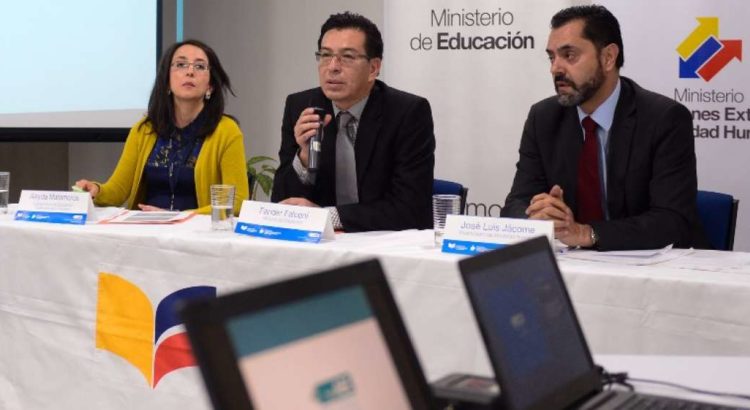
¿Quién cuida en la ciudad? es la pregunta que guiará los debates de las autoridades nacionales y locales, especialistas de América Latina y Europa y funcionarios internacionales que participarán los días 21 y 22 de noviembre de 2017 en un seminario organizado por la Comisión Económica para América Latina y el Caribe (CEPAL) en Santiago, Chile, con el objetivo de contribuir a la formulación de políticas urbanas con igualdad de género.

El Seminario internacional ¿Quién cuida en la ciudad? Políticas urbanas y autonomía económica de las mujeres será inaugurado el martes 21 de noviembre a las 9:15 horas por Claudia Pascual, Ministra de la Mujer y la Equidad de Género de Chile; Alicia Bárcena, Secretaria Ejecutiva de la CEPAL; Elkin Velázquez, Director Regional de ONU-Habitat para América Latina y el Caribe, y María Nieves Rico, Directora de la División de Asuntos de Género (DAG) de la CEPAL.

Entre los temas que se discutirán en el encuentro figuran la no neutralidad del espacio y la gestión urbana frente a las desigualdades de género, los servicios de cuidado en las ciudades latinoamericanas, el uso del tiempo y la calidad de la inserción de las mujeres en las economías locales, además de la propuesta de la CEPAL de avanzar hacia ciudades cuidadoras.

El primer día se presentará el libro ¿Quién cuida en la ciudad? Aportes para políticas urbanas de igualdad, preparado por la CEPAL. programa también incluye conferencias magistrales de María Ángeles Durán, del Consejo Superior de Investigaciones Científicas de España, y Caroline Moser, de la Universidad de Manchester, Reino Unido.

En las distintas sesiones del evento intervendrán Paola Tapia; Ministra de Transporte y Telecomunicaciones de Chile; Hugo Cabrera, Alcalde de Cuenca, Ecuador; Amalia García, Secretaria del Trabajo y Fomento al Empleo del Gobierno de la Ciudad de México; Cristina Vélez, Secretaria de la Mujer en la Alcaldía de Bogotá, Colombia; Teresa Boccia, Directora de URBANIMA-LUPT en la Universidad de Nápoles, Italia, y Zaida Muxi, de la Universidad Politécnica de Cataluña, España, entre otros expertos y expertas.

El encuentro se realiza en el marco del proyecto “Desarrollo urbano, autonomía económica de las mujeres y políticas de cuidado”, implementado por la DAG en diversas ciudades de América Latina, con el apoyo de la Cuenta para el Desarrollo de las Naciones Unidas.

El evento es abierto a los medios de comunicación. Los periodistas que deseen asistir a los paneles deben portar la credencial de su medio o su credencial de identidad para tener acceso al recinto.

Qué: Seminario internacional ¿Quién cuida en la ciudad? Políticas urbanas y autonomía económica de las mujeres.

Quiénes: Autoridades de América Latina, especialistas y funcionarios internacionales.

Cuándo: Martes 21 y miércoles 22 de noviembre de 2017.

Dónde: Sede de la CEPAL. Av. Dag Hammarskjöld 3477, Vitacura, Santiago, Chile (Sala Raúl Prebisch)

Fuente: https://www.cepal.org/es/noticias/autoridades-especialistas-politicas-urbanas-enfoque-genero-cuidado-participaran-seminario

Comparte este contenido:

FMI: Carreteras o escuelas: Una decisión fundamental

Noviembre de 2017/Autores: Manoj Atolia, Bin Grace Li, Ricardo Marto y Giovanni Melina/ Fuente: FMI

¿Carreteras o escuelas? Es una pregunta similar a la elección entre “armas o manteca” a que los gobiernos del mundo se enfrentaron en el siglo XX: cómo emplear los recursos finitos de una nación para producir el máximo beneficio para su pueblo.

En nuestro reciente documento de trabajo del FMI, concluimos que los líderes de las economías en desarrollo tienden a gastar menos en escuelas que en carreteras como proporción del PIB (aunque la inversión en educación puede ser una necesidad más acuciante en sus sociedades).

Dividimos el gasto de capital en infraestructura en dos categorías: la infraestructura económica describe inversiones (como carreteras, vías férreas, puertos, agua, energía eléctrica y telecomunicaciones) que ayudan a un mejor funcionamiento de la economía; la infraestructura social comprende el gasto de capital (incluidos hospitales, escuelas y universidades) que brinda primordialmente servicios sociales. Denominamos a estas categorías carreteras y escuelas.

Se da menos de lo debido a las escuelas

¿Por qué eligen esto los países? La inversión en carreteras da buenos resultados más rápidamente en cuanto a mayor productividad, si bien a la larga el gasto de capital en escuelas genera un incremento mucho mayor del producto.

La diferencia entre las opciones es categórica y manifiesta. Para una economía en desarrollo típica, a la larga, aumentar de forma permanente la inversión pública en escuelas en 1% del PIB incrementa el producto en alrededor del 24%, en tanto que una inversión equivalente en carreteras impulsa la producción solo en 5%.

Para los líderes políticos, el factor crucial puede ser la velocidad con que se obtienen los resultados, lo que inclina la balanza a favor de las carreteras. Invertir en carreteras, en vez de escuelas, produce un crecimiento económico más veloz durante los primeros 13 años. Por el contrario, invertir en escuelas desacelera el crecimiento durante nueve años, principalmente debido al cambio en la oferta de mano de obra y los costos fiscales implícitos.

Miopía política

Con el tiempo, los beneficios para el crecimiento de invertir en escuelas superan las ganancias de un gasto similar en carreteras. Pero eso requiere 24 años y pocos líderes tienen un horizonte de planificación tan largo. Denominamos esta circunstancia “miopía política”.

Entretanto, invertir en escuelas triplica la deuda pública, comparado con el gasto en carreteras. Y esta mayor deuda persiste más tiempo como porcentaje del PIB, generando riesgos más prolongados para la sostenibilidad de la deuda.

Esto sencillamente incrementa la renuencia de los líderes a comprometer recursos en escuelas.

Concentrar el gasto al comienzo de la inversión, estrategia que denominamos la teoría del “gran impulso”, acelera los resultados. Con ese esfuerzo intensivo los beneficios de las escuelas para el crecimiento superan los obtenidos por las carreteras en aproximadamente 20 años, es decir alrededor de cuatro años antes.

Costos a corto plazo

Por cierto, los costos a corto plazo del “gran impulso” son más elevados. Un rápido incremento del gasto en escuelas afecta negativamente el consumo privado, la oferta de mano de obra y el producto a corto y mediano plazo. Y el “gran impulso” requiere una mayor carga tributaria y de la deuda a corto plazo. Pero en un plazo de 20 años, la deuda pública como proporción del PIB vuelve a su nivel original, o más bajo, debido al incremento más veloz del producto. La desventaja de las escuelas con respecto a las carreteras desde una perspectiva fiscal prácticamente desaparece con un “gran impulso”.

Aun así, puede que esto no alcance para superar la miopía política. Para abordar las inquietudes a corto plazo puede ser necesario contar con la ayuda de organismos multilaterales. Específicamente, nuestro documento recomienda ofrecer financiamiento de carácter concesionario y donaciones para motivar a las autoridades a dar prelación a la inversión en escuelas.

Vincular la ayuda a la inversión en escuelas abordaría el problema de la miopía, en tanto que las condiciones concesionarias mitigarían las inquietudes relativas a la intolerancia a la deuda.

Fuente: https://blog-dialogoafondo.imf.org/?p=8482

Comparte este contenido:

Panamá: Buscan respuesta a la educación

Panamá/Noviembre de 2017/Fuente: Día a Día

El Tercer Estudio Regional Comparativo y Explicativo Terce ha arrojado en 2013 y 2015 resultados no favorables en temas de educación, debido a eso, ahora expertos en temas de educación han resuelto el porqué de estos resultados y cómo mejorarlos cuando en 2018 se mida nuevamente la capacidad de los estudiantes.

Este proyecto de análisis trató de «Comprender Terce Panamá», mediante la Convocatoria Pública para el Programa de Fomento a la Innovación en el Aprendizaje de las Ciencias 2016, y reveló que factores asociados de la vida o entorno de los alumnos de Panamá mostraron mayor relación con los puntajes que obtuvieron en la evaluación Terce.

La Dra. María Heller, asesora de la Dirección de Aprendizaje y Popularización de las Ciencias de la Secretaría Nacional de Ciencia, Tecnología e Innovación Senacyt, dijo que se trata de un proyecto que tiene como objetivo interpretar con mayor profundidad los resultados, pero los del Terce 2013, y estar más preparados para próximas pruebas.

Si logran los objetivos de las evaluaciones futuras, se pueden derivar conclusiones estadísticamente significativas en preguntas de interés no contempladas en la muestra usada en el Terce, como comparaciones regionales o el efecto de programas educativos de aplicación masiva», manifestó la Dra. Heller.

Para Diógenes Sánchez, la tecnología se ha convertido en un problema en las escuelas, los estudiantes se distraen mucho y no prestan la debida atención.

También se instó a fomentar herramientas para que estas cifras en futuro mejoren, más inversión en educación y preparar a los jóvenes.

Se recordó que los mayores puntajes en materia de desempeño se los llevó el sistema educativo, a pesar de que de los 187 colegios, un 75% era oficial y 25% particular, o sea que había diferencia en cantidad.

Ahora esto, según expertos, podría ser un obstáculo, más en los resultados con la amenaza de cierres de colegios particulares.

Fuente: http://www.diaadia.com.pa/el-pais/buscan-respuesta-la-educacion-328721

Comparte este contenido:
Page 3065 of 6193
1 3.063 3.064 3.065 3.066 3.067 6.193