Page 3530 of 6179
1 3.528 3.529 3.530 3.531 3.532 6.179

Estados Unidos: Profesora enseña a niños a tener confianza mediante la música

América del Norte/Estados Unidos/06 Agosto 2017/Fuente: elcomercio/Autor:Redacción EC

La profesora de humanidades de sexto grado Lovely Hoffman enseña a niños negros a sentirse hermosos con su color de piel. Escribió la canción «My Black Is Beautiful»

Su negro es hermoso. Lovely Hoffman es educadora y músico que mezcla sus pasiones para enseñar a sus alumnos de sexto grado a sentirse empoderados y confiados en sí mismos a partir de que se sientan hermosos con su color de piel, cuenta la serie de YouTubeGreat Big Story. Todo gracias a la canción «My Black Is Beautiful», la misma que le valió el reconocimiento de su comunidad.

«Voy a ver a los niños con sensación de inseguridad sobre quiénes son debido a su color de piel y su complexión, pero también voy a ser testigo de que estos niños están burlando ‘de la otra sede’ fuera de su color de piel», dice Lovely.

«Los niños negros, ‘blackie’ como se llaman unos a otros, dicen que su cabello es como un pañal. Fui testigo de esto desde hace mucho tiempo, así que creé esta canción para los niños que enseño porque quería cambiar su percepción de la belleza y cómo se sentían sobre sí mismos y quiero animarles a amarse a sí mismos».

Lovely creció sintiéndose insegura por su apariencia. No le gustaba la forma de su nariz por ser plana y nada recta. Sentía que su piel era ‘muy oscura’. Su percepción se nubló más cuando miraba en la televisión a personas que no reflejaban cómo era ella, una niña negra. Al culminar sus estudios universitarios viajó a África. Fue allí que recién empezó a aceptar y amar cómo era.

Ella es profesora en Helen Y. Davis Leadership Academy, en Dorchester (Massachusetts), una escuela en la que lidera un conversatorio de niñas, donde hablan de temas como la autoestima, porque vio que muchas de sus alumnas no se sentían cómodas con cómo eran por ser de color de piel negra.

«Creo que es importante la utilización de la música como una forma de inspirar y transformar la vida de las personas», dice la profesora de humanidades. «Prometí hacer esta canción para todas las niñas negras para definir realmente la belleza por sí misma».

Con el tiempo, la profesora encontró una evolución en sus pupilas. Se sienten más seguros, más abiertos a contar sus historias e inquietudes. De esta forma, están modificando para bien otros aspectos de sus vidas. Esto es importante, pues para Lovely, «sentirse bien consigo mismo, y que los niños negros se sientan bien consigo mismos, creo que es el fundamento de toda la educación».

Fuente de la noticia: http://elcomercio.pe/redes-sociales/youtube/youtube-profesora-ensena-ninos-confianza-mediante-musica-noticia-noticia-447776

Fuente de la imagen:https://img.elcomercio.pe/files/article_content_ec_fotos/uploads/2017/08/05/59862a376d5f3.jpg

Comparte este contenido:

España: 70 asignaturas ‘English Friendly’ en la UPNA para estudiantes internacionales

Europa/España, 05 de agosto de 2017.  Fuente: diariodenavarra.es

La Universidad Pública de Navarra (UPNA) implantará el próximo curso 2017/2018 un programa de 70 asignaturas denominadas ‘English Friendly’, dirigidas principalmente a alumnado extranjero que todavía no se maneja bien en castellano con el fin de que puedan seguir mejor las clases y que el idioma no sea una barrera en el aprendizaje y superación de la asignatura. El objetivo último es atraer más alumnado internacional proponiendo una oferta educativa más adecuada a las necesidades de este perfil.

El programa “English Friendly”, diseñado por la Comisión de Internacionalización y coordinado desde del vicerrectorado de Internacionalización de la UPNA, es una acción incluida en el eje de internacionalización del Plan Estratégico de la Universidad y tiene, además, como destinatario al profesorado que conoce la lengua inglesa, pero puede necesitar un proceso de transición antes de impartir completamente una asignatura en inglés.

La particularidad de las asignaturas incluidas en este programa es que las clases se desarrollan en castellano, pero cuentan con materiales y servicios en inglés. En concreto, los materiales de docencia que se facilitan al estudiante (apuntes, material bibliográfico, presentaciones, etc.), así como las tutorías y las pruebas de evaluación finales y parciales son también en este idioma.

El conjunto de asignaturas se concentra mayoritariamente en los últimos cursos, que es cuando se realizan las movilidades por parte de los estudiantes internacionales, y pretende ser una oferta equilibrada dentro de todas las titulaciones de la Universidad. En concreto, el programa comprende un total de 70 asignaturas en 15 grados y másteres y la oferta completa puede consultarse en la página web de la Universidad, consultando cada uno de los grados que se detallan más adelante.

GRADOS Y MÁSTERES QUE OFERTAN ASIGNATURAS ‘ENGLISH FRIENDLY’

Los grados y másteres que ofertan asignaturas “English Friendly” para el curso 2017/18 agrupados por facultades de la UPNA son los siguientes: Facultad de Ciencias Jurídicas (grado en Derecho), Facultad de Ciencias Humanas y Sociales (grado en Maestro en Educación Infantil, grado en Maestro en Educación Primaria, grado en Sociología Aplicada, grado en Trabajo Social y máster en Profesorado en Educación Secundaria) y Facultad de Ciencias de la Salud (grado en Enfermería y grado en Fisioterapia).

Por otro lado, la Escuela Técnica Superior de Ingenieros Agrónomos tiene oferta‘English Friendly’ en el grado en Ingeniería Agroalimentaria y del Medio Rural y en el grado en Innovación en Procesos y Productos Alimentarios y, por su parte, la Escuela Técnica Superior de Ingenieros Industriales y de Telecomunicación, en el grado en Ingeniería en Tecnologías Industriales, grado en Ingeniería Mecánica y grado en Ingeniería Eléctrica y Electrónica, en el máster en Ingeniería Industrial y en el máster en Ingeniería de Telecomunicación.

Fuente noticia: http://www.diariodenavarra.es/noticias/navarra/2017/08/04/asignaturas-english-friendly-upna-para-estudiantes-internacionales-544775-300.html

Comparte este contenido:

India: Quality of elementary education to be ensured through appropriate learning levels under RTE Act

Asia/ India, 05 August 2017. By: education.einnews.com
According to the information given by the Minister of State (HRD), Upendra Kushwaha in a written reply to a Rajya Sabha question, the Right of Children to Free and Compulsory Education (RTE) Act, 2009 lays down the duties of the appropriate government and the local authority to ensure that good quality elementary education conforming to norms and standards is provided, curriculum and courses of study are prescribed in a timely manner, and teachers are trained.

In order to focus on quality education, the Central RTE Rules have been amended on 20th February, 2017 to include reference on class-wise, subject-wise Learning Outcomes.

«The Learning Outcomes for each class in Languages (Hindi, English and Urdu), Mathematics, Environmental Studies, Science and Social Science up to the elementary stage have, accordingly, been finalised and shared with all States and UTs. These would serve as a guideline for States and UTs to ensure that all children acquire appropriate learning level,» sated an official release.

The release further stated that that under the Centrally Sponsored Scheme of Sarva Shiskha Abhiyan (SSA), the State Governments and UT Administrations were being supported on several interventions to improve teaching standards.

The quality will be ensured through measures such as regular in-service teachers’ training, induction training for newly recruited teachers, training of all untrained teachers to acquire professional qualifications through Open Distance Learning (ODL) mode, recruitment of additional teachers for improving pupil-teacher ratios, academic support for teachers through block and cluster resource centres, continuous and comprehensive evaluation system to equip the teacher to measure pupil performance and provide remedial action wherever required, and teacher and school grants for development of appropriate teaching-learning materials, etc., the Parliament was informed.

Reacting to the information, Jaipur-based educator Prabha Kishore said the it would be better that the quality of teachers preparation should be ensured and monitored along with legal course of action on them if children’s right to quality is violated by the teachers, schools and officers who are presiding over the system.

I feel that there is contradiction in some recent announcements, namely, restoring common examination for Classes V and VII to strike the fear of failure to improve learning outcomes; and viewing quality in terms of quality inputs and quality processes. This contradiction is likely to promote tuitions and coaching classes at elementary school level by teachers.

From: http://education.einnews.com/article/396316390/7k4p5Ramto7ozrog?lcf=ZdFIsVy5FNL1d6BCqG9muZ1ThG_8NrDelJyazu0BSuo%3D

Comparte este contenido:

Philippines: Free education law

Philippines, Aug. 05, 2017.  By: education.einnews.com/ Zea Io Min C. Capistrano.

President Rodrigo Duterte ​said it was his sentiment for the poor families to get out of poverty through their children that persuaded him to sign the free education law.

He ​spoke for the first time about ​it w​he​n​ ​he visited anew government troops ​​fighting in in Marawi City on Friday afternoon.

The President on Thursday signed Republic Act (RA) No. 10931, also known as the “Universal Access to Quality Tertiary Education Act” which exempts qualified students from paying tuition and other school fees in any state or local universities and colleges.

“I signed the law last night. I’m giving everybody, lahat ng ating mga anak a tertiary education, college. Oo, libre na ngayon,” Duterte told the troopers during his visit to the Joint Special Operations Task Force Trident in Barangay Kilala, Marawi City on Aug. 4.

Duterte said he understands sentiments of the poor families who worry of their children’s education.

“Mahirap lang din ako na tao. I mean, I… I have… I come from a poor father. Itong ano kasi ang disparity kasi ng mga mayaman pati mahirap, ‘yung… Kasi ‘yung iba they can pursue studies. They can go to UP kaya sigurado naman talaga na mas mataas ang standards. They can go to sa Ateneo, La Salle, UST. ‘Yung kasi ‘yung atin lang mga technical, technical, ang bata naman kung may utak, bigyan natin ng panahon (I am a poor man, too. I mean, I have come from a poor father. The disparity of the reach and poor… because others can pursue their studies. They can go to UP and they are ensured of their education because it has high standards. They can go to Ateneo, La Salle, UST. But ours can only get technical education. If a child is intelligent, let’s give them their time),” Duterte said.

Duterte said with the new bill, students may finish their college education and even pursue further studies. The President also promised to establish a trust fund worth P50 billion for the education of the children of soldiers.

“Pero gusto natin ang pamilya, ang bata. ‘Yung anak mong na bright, libre naman ‘yung four years. You get another four years doon sa trust fund ninyo to finance his maybe medicine or law (We want to ensure our children’s future. If your child is intelligent, the four years in college is free so you can spend for his education for another four years from your trust fund to finance his education, maybe medicine or law),” Duterte said.

Students’ battlecry

Senator Sherwin Gatchalian, vice-chairman of the Senate Committee on Education, said Friday that the fight for free education was taken up by generations of student activists.

“We have come a long, long way from where we started with this advocacy. That battle cry of generations of student activists has now become firm government policy, and we are better for it,” Gatchalian said in a statement Friday.

He said the signing of the law “is the collective victory of everyone who has fought to uphold and defend the inalienable right of every Filipino to quality tertiary education,”

In her Facebook post Friday, National Youth Commission chair Aiza Seguerra said the President’s signing is victory to all Filipinos regardless of their ideology. He also warned the public to be vigilant on the crafting of the Implementing Rules and Regulations of the law to ensure this will benefit the Filipino youth.

“Pinirmahan ni Presidente, ipinasa ng ​C​ongress at ipinaglaban din ng mga aktibista ng napakaraming taon. Wag natin maliitin yon just because of our differences. Sila ang patuloy na nag ingay at nakibaka while we are all too busy living our normal lives. This victory is for all Filipinos, no matter what color or ideology. Ngayon, mas kailangan natin bantayan ang IRR ng batas na ito para masiguradong mapapakinabangan talaga ito ng kabataang Pilipino (The law was signed by the President, passed by Congress and was fought for by activists for so many years. Let us not belittle that fact just because of our differences. They were the ones who continued to struggle while we are too busy living our normal lives. Now, we need to guard the IRR of this law to ensure that this will really benefit the Filipino youth),” Seguerra said.

Landmark

The law is a landmark legislation which also exempts from paying students currently enrolled or shall enroll in non-degree technical-vocational education and training offered by any technical-vocational institution (TVI) under the Technical Education and Skills Development Authority (TESDA).

However, students who have already attained a bachelor’s degree are not qualified to the free tertiary education.

The law also established a tertiary education subsidy (TES) and student loan program for all Filipino students who will enroll in undergraduate post-secondary programs of SUCs, LUCs, TVIs, and private higher education institutions. The TES may cover tuition and other school fees, book allowance, supplies, transportation, and personal expenses, allowance for room and board costs, and expenses related to disability.

“The TES shall be administered by the UniFAST (Unified Student Financial Assistance System for Tertiary Education) Board and the amount necessary to fund the TES shall be included in the budgets of the CHED (Commission on Higher Education) and the TESDA,” the RA stated.

The student loan program will also be administered by the UniFAST Board. Payment of the loan amount will begin once the beneficiary secures gainful employment with income that reaches the Compulsory Repayment Threshold (CRT).

In a press briefing on Friday, Deputy Executive Secretary Menardo Guevarra said with the passage of the law, they are expecting Congress to make the necessary appropriations to fund the long-term government program on free SUC education.

Guevarra said the other sources of funding for the free education in SUCs include the official development assistance (ODA) and donations, both from local and international donors.(davaotoday.com).

From: http://education.einnews.com/article/396446361/X3Z5TEo822-wNKYl?lcf=ZdFIsVy5FNL1d6BCqG9muZ1ThG_8NrDelJyazu0BSuo%3D

Comparte este contenido:

United Arab Emirates: Every Child should get Right to Education

United Arab Emirates, Aug 5 2017. By: DH News Service

Minister of Culture, Youth and Community Development of the United Arab Emirates Sheikh Nahyan Bin Mubarak has said that education plays key role in personal and social development of any human being.

Sheikh Nahyan was addressing the inaugural session of the first of its kind Festival of Education in the country, on Saturday, at Jaipur Exhibition and Convention Centre, Jaipur, as a chief guest. He said that education had potential of enabling the world end all economic inequalities and discriminations.

The Minister said that adopting to the scientific and technological changes was need of the hour and to ensure this our children should be offered the best quality education. He called upon the parents and entire society to join the governments in order to ensure quality education and overall development of the young next generation.

Sheikh Nahyan thanked the CM vasundhara Raje for her visionary idea of arranging for this festival and said with the teachers and pupils of Rajasthan getting acquainted with novel ideas of providing education this would revolutionize the scenario of education.

Addressing the gathering of educationists and researchers, teachers and parents on this occasion, Chief Minister Raje said that given the geographical and demographical circumstances of the state, providing quality education to the children here it was a big challenge.

The CM said that with the efforts thus made the talented students to get opportunities of higher studies in medical, engineering, law, management and other such disciplines.

Addressing the festival, Union HRD Minister Shri Prakash Javdekar said that the countries focusing on research and innovation excel in the world.

Prosperity based on natural resourced had its own constraints of time and only innovations and adaptations could make it everlasting, he said.

From: http://education.einnews.com/article/396494476/A-8x6cNfiFcMW5ZD?lcf=ZdFIsVy5FNL1d6BCqG9muZ1ThG_8NrDelJyazu0BSuo%3D

Comparte este contenido:

Uruguay: Miles marcharon por 6% del PBI para educación y 1% para investigación y desarrollo

América del Sur/Uruguay, 5 de agosto de 2017. Fuente: universidad.edu.uy.

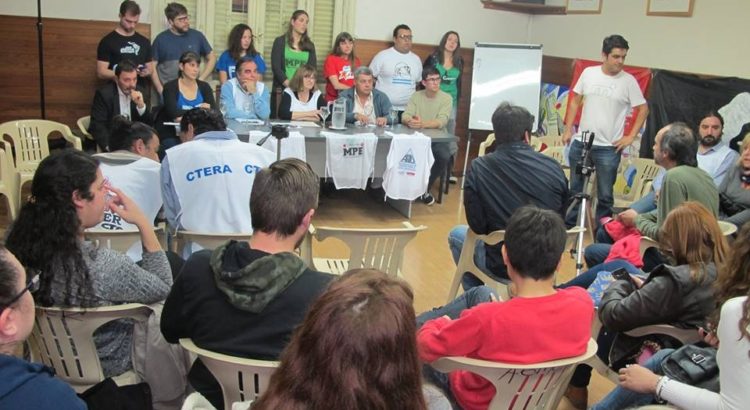
Al impulso de la Federación de Estudiantes Universitarios del Uruguay (FEUU), miles de jóvenes marcharon este viernes desde la explanada de la Universidad de la República hasta el Palacio Legislativo para reclamar que se cumpla la promesa electoral de 2014 de destinar 6% del PBI para la educación y 1% a investigación y desarrollo.

Participaron también otros integrantes de la intergremial universitaria -funcionarios (AFFUR), docentes (ADUR), trabajadores del Hospital de Clínicas (UTHC)-, y de los gremios de Magisterio (CEM) y del Instituto de Profesores Artigas (IPA).

El 24 de julio la intergremial universitaria recordó en un comunicado que la asignación presupuestal para 2018 «representa solo el 6,8% del monto solicitado por la Universidad», y alertó que «de votarse este proyecto, se la condena a un proceso de estancamiento en los próximos años, al no poder cubrir las exigencias docentes y edilicias que implica el aumento sostenido de la matrícula estudiantil».

La intergremial indicó que el Parlamento «tiene la palabra: instamos a los legisladores a realizar todos los esfuerzos en la búsqueda de mayores recursos y acompañar el proyecto de rendición de cuentas de la Universidad. Los colectivos universitarios continuaremos movilizándonos por un presupuesto justo, que permita el desarrollo de una educación de calidad y una mejora en nuestras condiciones de estudio y trabajo», concluyó.

Fuente noticia: http://www.universidad.edu.uy/prensa/renderItem/itemId/40866

Comparte este contenido:

Nuevo sistema de Educación Pública en Chile: servicios locales se implementarán de forma progresiva

América del Sur/Chile, 5 de agosto de 2017. Fuente: senado.cl.

En condiciones de ser analizado por la Comisión de Hacienda, en las materias de su especialización quedó el proyecto, en segundo trámite que crea el Sistema de Educación Pública. (Boletín N° 10.368-04).

Ello, luego que la Comisión de Educación concluyera el estudio en particular de la iniciativa con diversas modificaciones y perfeccionamientos.

Así lo dieron a conocer los senadores Ignacio Walker y Ena Von Baer, presidente e integrante de la Comisión de Educación. Entre las modificaciones introducidas al texto legal se cuentan la decisión de aplicar una fórmula progresiva para la entrega en vigencia del nuevo sistema de educación pública.

El senador Walker explicó que esta iniciativa forma parte de la reforma educacional impulsada por el gobierno y si bien antes se denominaba proyecto de desmunicipalización hemos confirmado que “no se trata de quitarle la educación a los municipios, por eso se habla de la creación de servicios locales de educación que tengan giro único y exclusivo”.

Precisó que “este ente público y descentralizado se dedicará solo a la educación pública, pues las municipalidades deben atender muchos temas. Eso es lo que hace este proyecto cambia de un sostenedor a otro”.

A su turno, la senadora Von Baer afirmó que “seguimos pensando que es un mal proyecto porque no creemos que esta nueva institucionalidad que se pretende establecer en cada región vaya a mejorar la situación actual”.

Precisó que “se está proponiendo una institucionalidad compleja pero que no asegura que se vaya a mejorar la educación”. Sin embargo, aclaró que “llegamos a acuerdo con el Ejecutivo porque antes se establecía  la vigencia de este sistema en todo el país y logramos hacer una transición más larga, más pausada con un consejo que asesore respecto a la marcha de la implementación de esta nueva institucionalidad”.

La propuesta concordada con el Ejecutivo consiste en la implementación progresiva de los servicios locales de educación. El primer periodo irá entre 2018 y 2020 con la implementación de los 11 primeros servicios locales en similar número de regiones.

Posteriormente, se dispone la creación del Consejo especial, integrado por 6 personas de alto nivel, para realizar la evaluación de este sistema, el cual deberá asesorar y proponer al Presidente de la República las diversas modificaciones reglamentarias o legales que fueren necesarias para la implementación de la segunda etapa de los servicios locales de educación a partir de 2022.

Fuente noticia: http://www.senado.cl/nuevo-sistema-de-educacion-publica-servicios-locales-se-implementaran/prontus_senado/2017-08-04/113623.html

Comparte este contenido:
Page 3530 of 6179
1 3.528 3.529 3.530 3.531 3.532 6.179