Page 3658 of 6178
1 3.656 3.657 3.658 3.659 3.660 6.178

Reino Unido: Five things schools can do to help pupils’ mental health

Europa/Francia/Julio del 2017/ Noticias/https://theconversation.com/


There is a growing crisis within children’s mental health, and this is not a term used lightly – between 2010 and 2015 there was a 50% increase in hospital admissions because of children self-harming. And in 2016 Childline reported the highest ever number of callers expressing suicidal thoughts. This is a figure that has doubled over the last five years.

A report by the Children’s Commissioner for England warned that more than 800,000 children were living with mental health issues in the UK, with a large proportion from vulnerable families. Issues they face include parents with alcohol addiction, involvement in the care system, as well as dangers posed by street gangs and modern slavery.

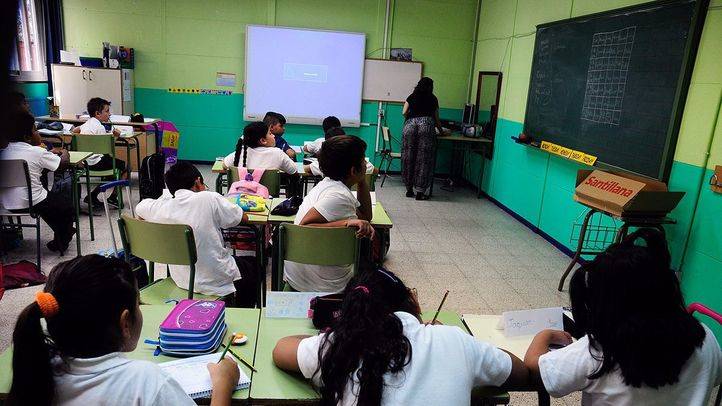
As children’s mental health becomes one of society’s most pressing issues, many teachers find themselves on the frontline – with the effect being felt in schools across the country. In 2017, 79% of teachers in both primary and secondary schools reported seeing an increase in stress, anxiety and panic attacks in their pupils as well as a rise in depression, self-harm and eating disorders. But without specialist training – which isn’t currently a requirement – a lot of those working in schools feel unprepared for the challenges they are facing.

With this in mind, below are a few ways schools can try and help.

1. Start talking about it

Mental health needs to be integrated into the school curriculum, which will help increase understanding and reduce stigma around issues. Without this, pupils may not be aware their mental health is deteriorating and feel silenced or shamed when seeking help.

If both pupils and teachers have more open discussions about mental health, issues will also be easier to identify early on, and this will help to build students’ knowledge and understanding of the subject.

Ideally, mental health needs to be talked about the same way physical education or healthy eating is, because research has found that when schools adopt a comprehensive approach to discussing mental health it supports all pupils – including those who are experiencing mental health difficulties already.

Sharing’s caring. Shutterstock

2. Create a safe space

Students do better in schools when they feel safe – this means ensuring that bullying incidents are low and addressed, including the rising incidents of cyberbullying.

The evidence also shows that when students feel a sense of belonging, have good peer and teacher relationships, and feel listened to when they raise concerns, also helps to support positive mental health in schools.

It’s good to talk. Shutterstock

3. Support for all

Everyone in schools from the teachers to the teaching assistants, the school lunch staff to the school nurse, all have a role to play in improving the school environment – and making it more open to discussions around mental health.

But they can do only do this if they are supported and healthy themselves. Looking out for the well-being of staff will itself have a positive impact on the students. And research shows that when staff are trained in mental health they are more confident in supporting their students. The same research also showed that this additional mental health training even helped to boost staff’s own resilience and job satisfaction.

It’s a team effort. Shutterstock

4. Make sure teachers know how to help

Headteachers should demand mental health training for all new teachers. And before a school takes on a new or trainee teacher, they should ask to see what mental health training they have. This could include an understanding of the risk and resilience factors for their students, how to spot the signs of mental ill health, along with how to support and get help for students at risk.

This will ensure that all new teachers have a basic understanding of the mental health challenges they will face, and will make it easier for them to help pupils in need.

Knowing how to help is half the battle. Shutterstock

5. Recognise that it takes a village

Looking after children’s mental health isn’t just something that can be done on a small scale, it involves a shift in the way everyone not only works together, but also communicates on issues.

The good news is there are lots of additional things schools are already doing in this area, including working with parents and having staff as mentors for vulnerable students. Many schools have also introduced peer mentoring, where children are partnered up with older children who can look out for them.

Running extracurricular social activities for pupils has also been shown to help have a positive impact on students, by providing a space for them to work through their emotions and develop strategies to address their challenges.

Fuente:

https://theconversation.com/five-things-schools-can-do-to-help-pupils-mental-health-79376

Fuente imagen:

https://lh3.googleusercontent.com/UIVDvJSs7y6HxuvjDwHf66WBasJ3MuIhd9byjbAAi4kwuahx3CuUuPv8WYJAfBw7_W8PJN8=s85

Comparte este contenido:

EEUU: From public good to personal pursuit: Historical roots of the student debt crisis

América del Norte/Estados Unidos/Julio 2017/Noticias/https://theconversation.com


The promise of free college education helped propel Bernie Sanders’ 2016 bid for the Democratic nomination to national prominence. It reverberated during the confirmation hearings for Betsy DeVos as Secretary of Education and Sanders continues to push the issue.

In conversations among politicians, college administrators, educators, parents and students, college affordability seems to be seen as a purely financial issue – it’s all about money.

My research into the historical cost of college shows that the roots of the current student debt crisis are neither economic nor financial in origin, but predominantly social. Tuition fees and student loans became an essential part of the equation only as Americans came to believe in an entirely different purpose for higher education.

Students took to the streets to protest their debt burdens as part of Occupy Boston in 2011. CampusGrotto/flickrCC BY-NC

Cost of a college degree today

For many students, graduation means debt. In 2012, more than 44 million Americans (14 percent of the total population) were still paying off student loans. And the average graduate in 2016 left college with more than $37,000 in student loan debt.

Student loan debt has become the second-largest type of personal debt among Americans. Besides leading to depression and anxiety, student loan debt slows down economic growth: It prevents young Americans from buying houses and cars and starting a family. Economist Alvaro Mezza, among others, has shown that there is a negative correlation between increasing student loan debt and homeownership.

The increase in student loan debt should come as no surprise given the increasing cost of college and the share that students are asked to shoulder. Decreasing state support for colleges over the last two decades caused colleges to raise tuition fees significantly. From 1995 to 2015, tuition and fees at 310 national universities ranked by U.S. News rose considerably, increasing by nearly 180 percent at private schools and over 225 percent at public schools.

Whatever the reason, tuition has gone up. And students are paying that higher tuition with student loans. These loans can influence students’ decisions about which majors to pick and whether to pursue graduate studies.

Early higher education: a public good

The Stanford University crew team, between 1910-1915. Stanford was founded on the principle of providing a free education. The university did not start charging students tuition until 1920. Library of Congress

During the 19th century, college education in the United States was offered largely for free. Colleges trained students from middle-class backgrounds as high school teachers, ministers and community leaders who, after graduation, were to serve public needs.

This free tuition model had to do with perceptions about the role of higher education: College education was considered a public good. Students who received such an education would put it to use in the betterment of society. Everyone benefited when people chose to go to college. And because it was considered a public good, society was willing to pay for it – either by offering college education free of charge or by providing tuition scholarships to individual students.

Stanford University, which was founded on the premise of offering college education free of charge to California residents, was an example of the former. Stanford did not charge tuition for almost three decades from its opening in 1891 until 1920.

Other colleges, such as the College of William and Mary, offered comprehensive tuition scholarship programs, which covered tuition in exchange for a pledge of the student to engage in some kind of service after graduation. Beginning in 1888, William and Mary provided full tuition scholarships to about one third of its students. In exchange, students receiving this scholarship pledged to teach for two years at a Virginia public school.

And even though the cost for educating students rose significantly in the second half of the 19th century, college administrators such as Harvard President Charles W. Eliot insisted that these costs should not be passed on to students. In a letter to Charles Francis Adams dated June 9, 1904, Eliot wrote, “I want to have the College open equally to men with much money, little money, or no money, provided they all have brains.”

College education becomes a private pursuit

The perception of higher education changed dramatically around 1910. Private colleges began to attract more students from upper-class families – students who went to college for the social experience and not necessarily for learning.

This social and cultural change led to a fundamental shift in the defined purpose of a college education. What was once a public good designed to advance the welfare of society was becoming a private pursuit for self-aggrandizement. Young people entering college were no longer seen as doing so for the betterment of society, but rather as pursuing personal goals: in particular, enjoying the social setting of private colleges and obtaining a respected professional position upon graduation.

John D. Rockefeller was instrumental in bringing about the modern day reality of college tuition and student loans. The Rockefeller Archive Center

In 1927, John D. Rockefeller began campaigning for charging students the full cost it took to educate them. Further, he suggested that students could shoulder such costs through student loans. Rockefeller and like-minded donors (in particular, William E. Harmon, the wealthy real estate magnate) were quite successful in their campaign. They convinced donors, educators and college administrators that students should pay for their own education because going to college was considered a deeply personal affair. Tuition – and student loans – thus became commonly accepted aspects of the economics of higher education.

The shift in attitude regarding college has also become commonly accepted. Altruistic notions about the advancement of society have generally been pushed aside in favor of the image of college as a vehicle for individual enrichment.

Dartmouth College students carving canes on campus in the early 1920s. In the early 20th century, as more students from upper-class families began attending college for the social – rather than educational – experience, many colleges began the practice of charging tuition. Council of the Alumni of Dartmouth College

A new social contract

If the United States is looking for alternatives to what some would call a failing funding model for college affordability, the solution may lie in looking further back than the current system, which has been in place since the 1930s.

In the 19th century, communities and the state would foot the bill for college tuition because students were contributing to society. They served the common good by teaching high school for a certain number of years or by taking leadership positions within local communities. A few marginal programs with similar missions (ROTC and Teach for America) still exist today, but students participating in these programs are very much in the minority.

Instead, higher education today seems to be about what college can do for you. It’s not about what college students can do for society.

I believe that tuition-free education can only be realized if college education is again reframed as a public good. For this, students, communities, donors and politicians would have to enter into a new social contract that exchanges tuition-free education for public services.

Fuente:

https://theconversation.com/from-public-good-to-personal-pursuit-historical-roots-of-the-student-debt-crisis-79475

Fuente imagen:

https://lh3.googleusercontent.com/rwTCWZGYZNrG-MeAdq7_0UzMkgAS_5UBcZ-GROxCnqUjfi3ZoRRQmKokeav0KfX5KlMPOg=s


Comparte este contenido:

Australia:Electronic games: how much is too much for kids?

Oceanía/Austarlia/Julio del 2017/Noticias/https://theconversation.com/


Most parents view their children’s playing of electronic games as potentially problematic – or even dangerous. Yet many children are engaging with electronic games more frequently than ever.

Concerns about electronic gaming do not stack up against the research. So, how much gaming is too much for young children?

Electronic games (also called computer or digital games) are found in 90% of households in Australia. 65% of households have three or more game devices. Given this prevalence, it’s timely to look more closely at electronic game playing and what it really means for children’s development and learning.

study of more than 3,000 children participating in the Growing Up in Australia: Longitudinal Study of Australian Children explored children’s electronic gaming. This national sample was broadly representative of the Australian population.

The study had two phases:

  • parents reported on their children’s use of electronic games when their children were eight or nine years of age; and
  • teachers reported two years later on these children’s social and emotional development and academic achievement, when the children were 10 or 11.

How much time do kids spend gaming?

As the table below shows, there was wide variation in the number of hours per week the children spent playing electronic games.

Most children (52%) played electronic games for four or fewer hours per week. But nearly one-year of the children (24%) were reported as playing electronic games for more than seven hours per week.

How much time should kids spend gaming?

Taking into account family background and parental education, the good news is that low-to-moderate use of electronic games (between two and four hours per week) had a positive effect on children’s later academic achievement.

However, over-use of electronic games (more than seven hours per week) had a negative effect on children’s social and emotional development.

Children whose parents reported they played electronic games for two-to-four hours per week were identified by their teachers as showing better literacy and mathematical skills.

Surprisingly, children who were reported as playing electronic games infrequently or not at all (less than two hours per week) did not appear to benefit in terms of literacy or mathematics achievement.

However, children whose parents reported that they played electronic games for more than one hour per day were identified two years later by their teachers as having poor attention span, less ability to stay on task, and displaying more emotional difficulties.

As the graphs below show, moderate game playing was associated with the most benefits both academically and emotionally.

Are some games better than others?

It is likely that the relationship between the use of electronic games and children’s academic and developmental outcomes is far from straightforward. The quality of electronic games and the family context play important roles.

Electronic games known as sandbox games are recognised as offering opportunities for collaboration with others while engaging in creative and problem solving activities. One of the well-known examples of a sandbox game is Minecraft.

Social interactions are important in supporting children’s engagement in electronic games. A closer examination of children’s experiences at home may be beneficial in understanding the context of gaming in everyday life.

Often viewed as a leisure activity, studies show that when parents and siblings participate in the game playing, they offer opportunities to negotiate with each other, and engage in conversations and literacy practices. All of these potentially contribute to the child’s language, literacy and social development.

It is important to note that while we know the amount of time children spent playing electronic games, we do not know the detail of the kinds of games that were being played, with whom they were being played, or even the device on which they were played.

This contextual information is clearly relevant for consideration in any further research that explores the relationship across children’s electronic game playing, learning, and wellbeing.

Fuente:


https://theconversation.com/electronic-games-how-much-is-too-much-for-kids-80396


Fuente imagen

https://lh3.googleusercontent.com/43nOCiVfFR267WoUsJgvC0Jsk2xXDbNsjfhkqBVVJiOp6mXspoRoVQ0JJXfY2txZGE7lVg=s85

Comparte este contenido:

Francia: Comment l’apprentissage de la lecture transforme notre cerveau

Europa/Francia/Julio del 2017/Noticias/https://theconversation.com/

En ce moment même, vous êtes en train de lire ces mots sans avoir à y réfléchir, ni même à en être conscients. Dans un enchaînement extrêmement rapide, vos yeux se lancent de gauche à droite sur votre écran, décelant un sens dans ce qui apparaîtrait autrement comme une succession de gribouillis noirs.

Pour vous, la lecture n’est pas seulement facile, elle est automatique. Regarder un mot sans le lire vous est quasiment impossible, étant donné que les rouages du langage écrit se mettent en marche dès qu’un lecteur qualifié aperçoit des caractères.

Et pourtant, bien qu’il soit tentant de penser que la lecture nous soit inné, ne vous y trompez pasApprendre à lire n’est ni facile, ni naturel.

Les premières traces du langage écrit dont nous disposons datent d’il y a environ 5 000 ans, ce qui représente une part infime des 60 000 années (ou plus) que les humains ont passées à utiliser le langage oral.

Cela signifie que notre espèce n’a pas eu suffisamment de temps pour développer des réseaux cérébraux à même de nous prédisposer à apprendre la lecture. Ainsi, ce n’est que grâce à des années de pratique et d’apprentissage que nous façonnons nous-mêmes ces réseaux.

Comment le cerveau apprend à lire

Le cerveau se réorganise constamment. À chaque fois que nous apprenons une nouvelle compétence, les connections neuronales qui nous permettent de la réaliser se renforcent. Cette plasticité est maximale lors de l’enfance, ce qui explique pourquoi nous avons tendance à surcharger les enfants d’apprentissage, avant qu’ils ne deviennent adolescents.

Lorsqu’un enfant apprend à lire, aucun « centre de lecture » n’apparaît magiquement dans son cerveau. À la place, c’est en fait un réseau de connexions qui se développe, liant des zones qui n’étaient pas reliées auparavant.

La lecture devient alors un moyen d’accéder au langage par la vue, ce qui signifie qu’elle utilise une architecture qui est déjà utilisée pour la reconnaissance de structures visuelles ainsi que pour la compréhension du langage oral.

Les mots et les lettres sont initialement stockés dans le cerveau comme des symboles. Shutterstock

Lorsque les mots voyagent dans le cerveau

Lorsqu’un lecteur expérimenté lit un mot imprimé, cette information voyage de ses yeux jusqu’à son lobe occipital (situé à l’arrière du cerveau), où elle est traitée comme n’importe quel stimulus visuel.

De là, l’information se déplace vers le gyrus fusiforme gauche, aussi appelé la « boîte aux lettres » du cerveau. C’est à cet endroit que les gribouillis noirs sont reconnus comme étant des lettres qui forment un mot. Cette boîte aux lettres représente une étape spéciale dans le parcours d’un mot, puisqu’elle ne peut se développer qu’à partir de l’apprentissage de la lecture.

Ainsi, elle n’existe pas chez les très jeunes enfants ou chez les adultes analphabètes ; elle est également moins sollicitée chez les personnes atteintes de dyslexie, qui disposent d’une différence biologique dans la façon dont leur cerveau traite le texte écrit.

Les mots et les lettres sont stockés dans cette boîte aux lettres et y sont mémorisés individuellement, non pas comme des formes ou des modèles, mais comme des symboles. C’est pour cette raison qu’un lecteur confirmé est en mesure de reconnaître rapidement un mot, quelque soit sa fonte, sa cAssE, ou sa police.

Afin de déterminer la signification et la prononciation d’un mot, l’information se déplace ensuite de la boîte aux lettres vers les lobes frontal et temporal du cerveau. Ce sont ces mêmes zones sont activées lorsque nous entendons un mot ; elles sont donc spécialisées dans le langage et non pas seulement dans la lecture ou l’écriture.

L’information pouvant se déplacer très rapidement sur les autoroutes synaptiques d’un lecteur expérimenté, l’ensemble de ce trajet prend moins d’une demi-seconde, .

Mais que se passe-t-il dans le cerveau d’un enfant de cinq ans, dont les autoroutes synaptiques sont encore en construction ?

Apprendre à lire demande beaucoup d’effort. Shutterstock

De l’apprentissage de la lecture chez les enfants

Pour les jeunes enfants, le processus qui consiste à comprendre la signification de caractères imprimés est lent et demande des efforts. Notamment parce que les lecteurs débutants n’ont pas encore développé un répertoire assez grand de mots familiers qu’ils peuvent reconnaître par la vue. Ainsi, ils doivent épeler phonétiquement chaque lettre ou chaque séquence de lettres.

À chaque fois que les enfants déchiffrent des mots, ils forment de nouvelles connexions entre les zones de langage visuel et oral du cerveau, ajoutant peu à peu de nouvelles lettres et des mots à la boîte aux lettres du cerveau.

Souvenez-vous, lorsqu’un lecteur confirmé reconnaît un mot par la vue, ils traite les lettres du mot plutôt que sa forme.

L’enseignement de la lecture peut donc être facilité pour les enfants si l’on souligne la nature symbolique des lettres ; en attirant leur attention sur les relations entre les lettres et les sons émis par la parole.

Des preuves tirées de la recherche en imagerie cérébrale et de la recherche éducative convergent et démontrent qu’un apprentissage phonétique précoce peut aider à construire un réseau neuronal de lecture efficace dans le cerveau.

Comment l’alphabétisation va-t-elle évoluer dans le futur ?

Notre définition de ce que veut dire « être alphabétisé » doit suivre l’évolution technologique. En effet, désormais les jeunes cerveaux doivent non seulement s’adapter au langage écrit, mais aussi à l’environnement médiatique numérique contemporain, dans lequel le langage écrit est aussi présent.

Le futur nous indiquera comment l’évolution technologique affecte le développement de notre cerveau, cette mystérieuse éponge située entre nos oreilles.

Fuente:

https://theconversation.com/comment-lapprentissage-de-la-lecture-transforme-notre-cerveau-80494

Fuente imagen:

https://lh3.googleusercontent.com/XKo0seetjoccQnVBTjXwM2Evg5AMFXCWA5m79f4Szct5c2UacwH-pDd3-DRVYHqxW6WXMBs=s85

Comparte este contenido:

Subsecretaria explica gestiones del Mineduc con colegios que pasarán a particular pagado

Por:www.biobiochile.cl/07-07-2017

La subsecretaria de Educación, Valentina Quiroga, explicó las gestiones que realizará el ministerio con algunos de los establecimientos que informaron que pasarán a régimen particular pagado.

En entrevista con Expreso Bío Bío, Quiroga indicó del total de establecimientos, tan sólo un 2% tomó esta decisión, que se traduce en 77 recintos educacionales.

Si bien la subsecretaria indicó que ven con mucho optimismo las cifras, reiteró su preocupación por la comunidad educativa de los establecimientos que informaron el cambio de régimen, por lo que conversarán con los dueños por si hay alguno que quiera revaluar el proceso.

Esto, porque según indicó, “tenemos la impresión que el proyecto puede no ser sostenible en el tiempo”, considerando que hay establecimientos (2) que pasarán de ser gratuitos a pagados.

De no haber cambio de parecer de los sostenedores se inicia un segundo proceso de diálogo con las comunidades educativas para apoyar en la búsqueda de recintos de condiciones similares en casos que las familias no puedan pagar las nuevas cifras establecidas por cada establecimiento.

Finalmente, consultada sobre los cierres de algunos colegios, Quiroga fue clara en precisar que “todos los años cerca de 130 establecimientos cierran en promedio”, por lo que los 31 colegios que han informado su decisión de continuar el próximo año es bastante inferior a este número e históricamente los motivos suelen relacionarse a desequilibrios financieros.

*Fuente: noticias/opinion/entrevistas/2017/07/05/subsecretaria-explica-gestiones-del-mineduc-con-colegios-que-pasaran-a-particular-pagado.shtml

Comparte este contenido:

Aprendizaje a lo largo de la vida e inclusión, protagonistas del Octavo Encuentro Internacional de Educación Alternativa y Especial en Bolivia

América del Sur/Bolivia/Julio del 2017/Noticias/http://www.unesco.org/


La cita tiene como objetivo elaborar propuestas para la implementación del Modelo Educativo Socio-comunitario Productivo en la Educación Alternativa y Especial. Se busca la participación activa de actores sociales, productivos y educativos.

Re-pensar la educación: Agenda 2030 y hoja de ruta en América Latina y el Caribe es el título de una de las conferencias inaugurales, a cargo de Cecilia Barbieri, directora (a.i.) de la Oficina Regional de Educación para América Latina y el Caribe (OREALC/UNESCO Santiago).

“La Educación Alternativa y Especial en la Agenda de 2030 para el Desarrollo Sostenible será uno de los temas importantes en esta reflexión comunitaria entre autoridades, actores y sociedad civil”. Así el viceministro de Educación Alternativa y Especial de Bolivia, Noel Aguirre Ledezma, presentó el Octavo Encuentro Internacional de Educación Alternativa y Especial en un comunicado de esa cartera del Estado boliviano.

La ciudad de La Paz es sede de esta reunión internacional que tiene lugar entre 4 y el 7 de julio de 2017 y en la que se aborda la implementación de un sistema educativo socio-comunitario. El evento cuenta con la participación de al menos 600 participantes, entre maestras y maestros, actores sociales, padres de familia y siete expertos internacionales que trabajan en comisiones en torno a 10 temáticas (vea el programa) y que concentran sus análisis y propuestas en temas relativos a diseño y desarrollo curricular.

Las conferencias inaugurales estuvieron a cargo de Cecilia Barbieri, directora de la Oficina Regional de Educación para América Latina y el Caribe (OREALC/UNESCO Santiago) con su presentación Re-pensar la educación: Agenda 2030 y hoja de ruta en América Latina y el Caribe. Las otras dos intervenciones al inicio del encuentro estuvieron a cargo de Camila Croso, presidenta de la Campaña Mundial por la Educación y de Roberto Aguilar, ministro de Educación de Bolivia. Ambas alocuciones giraron en torno a la nueva Agenda E2030.

Durante el evento se realizará también un balance de la planificación y aplicación de las propuestas curriculares y de las condiciones que coadyuvan a su implementación, como son la gestión, la formación y desempeño de los educadores, entre otras. Además, se analizarán experiencias educativas y propuestas que contribuyen al proceso de transformación de la Educación Alternativa y Especial en el marco del modelo educativo socio-comunitario productivo, como también se elaborarán propuestas y recomendaciones sobre cómo consolidar este modelo, principalmente con relación a los currículos diversos y a las condiciones que ayudan a su implementación. Asimismo, se elaborarán propuestas para dar cumplimiento a los Objetivos de Desarrollo Sostenible desde la perspectiva y la realidad boliviana de la Educación Alternativa y Especial.

Entre las mesas de trabajo de este encuentro están la educación alternativa y especial en la Agenda 2030 para el Desarrollo Sostenible; la educación productiva en regiones y con sectores estratégicos; la educación primaria para personas mayores de 15 años; y la educación para fortalecer la movilización social y política de organizaciones y comunidades, entre otras de igual importancia.

El encuentro contará adicionalmente con una feria de experiencias transformadoras, conferencias, talleres, exposiciones, eventos culturales, entre otras actividades que podrán verse a través de la transmisión del encuentro en www.minedu.gob.bo

El evento se desarrolla gracias al apoyo de la Oficina Regional de Educación para América Latina y el Caribe (OREALC/UNESCO Santiago), la Red Iberoamericana de Necesidades Educativas Especiales y otros aliados en el país.

Fuente:

http://www.unesco.org/new/es/media-services/single-view/news/aprendizaje_a_lo_largo_de_la_vida_e_inclusion_protagonista/

Fuente Imagen:


Comparte este contenido:

“Bootcamps”: aumentan las expectativas de las niñas en los campos de matemáticas, ciencia y tecnología

Argentina/México/Chile/Perú/Julio del 2017/Noticias/http://blogs.worldbank.org/

 Los cursos intensivos o “bootcamps” para aprender programación y otros conocimientos computacionales y conectar directamente a los estudiantes con las oportunidades de empleo son cada vez más populares. En Estados Unidos, ya existen más de 90 “bootcamps”, (i) y estos también se afianzan en América Latina, ayudando a cerrar las brechas de género y de habilidades que se observan en la región.

Hace poco, visité un “bootcamp” para niñas en Lima, Perú. Al entrar a la sala de clases, me impresionó ver a las estudiantes que afanosamente estaban programando. Ellas compartieron sus sueños conmigo: llegar a ser una programadora con amplios conocimientos para trabajar en un variado rango de tecnologías informáticas; convertirse en una diseñadora UX; aprender inglés, y trabajar en Facebook o Google.

Ellas estudian en Laboratoria, una organización sin fines de lucro que ofrece cursos de seis meses, con clases diarias de ocho horas de duración. Laboratoria se concentra en niñas de familias de bajos ingresos que enfrentan grandes obstáculos para acceder a la educación superior.

Oír sus historias de cómo superan estas barreras fue alentador e inspirador. Muchas de ellas crecieron pensando que para trabajar en el sector tecnológico necesitaban conocimientos de matemáticas que no estaban a su alcance. Algunas viven en las afueras de Lima y se demoran entre dos y tres horas en llegar a clases.

Gracias a los cursos, han aprendido a crear sus primeros sitios web, aplicaciones y juegos. Pueden entonces ingresar al mercado laboral con las habilidades técnicas que los empleadores piden. Del mismo modo, adquieren confianza para desempeñar trabajos que requieren conocimientos de matemáticas.

Laboratoria se financia con recursos de donantes externos y contribuciones de las estudiantes graduadas que ya trabajan. Al mismo tiempo, las empresas que contratan a las alumnas han empezado a pagar por el servicio de colocación laboral. Más del 75 % de las estudiantes consigue empleo como programadoras, lo que habitualmente les permite triplicar sus ingresos.

En un periodo de dos años, 400 niñas se han graduado de Laboratoria, y la organización se ha expandido a Chile y México. La fundadora, Mariana Costa Checa, dio a conocer la historia del emprendimiento en la Cumbre Mundial de Emprendedores realizada en la Universidad de Stanford en junio pasado. Participó en un panel (i) con el creador de Facebook, Mark Zuckerberg, que fue moderado por el entonces presidente de Estados Unidos, Barack Obama.

Iniciativas de este tipo son muy bien acogidas en América Latina. De acuerdo a un reciente informe del Banco Mundial, 1 de cada 5 jóvenes en la región no trabaja ni va a la escuela. Se les conoce como “ninis” (ni estudian ni trabajan). “El perfil típico del nini en América Latina es una mujer que no ha terminado la educación secundaria y vive en un hogar urbano pobre localizado en el 40 % inferior de la distribución del ingreso”, según la publicación.

En las últimas evaluaciones (i) PISA de la OCDE en las áreas de ciencia, matemáticas y lectura, América Latina fue una de las regiones que obtuvo los peores resultados. Aproximadamente la mitad de los estudiantes secundarios latinoamericanos aún no logra el nivel mínimo de suficiencia en matemáticas y ciencia. En un estudio (PDF, en inglés) de la OCDE sobre estos resultados se concluyó que si bien las diferencias de género en ciencia tienden a ser pequeñas, las niñas todavía tienen poca representación en la proporción de aquellos con mejor rendimiento en dicho campo.

Después de mi viaje a Laboratoria, me dirigí a Argentina para visitar un “bootcamp” en Buenos Aires llamado Digital House (DH). Según un artículo publicado en el diario argentino La Nación, el sector de TI local solo puede cubrir alrededor de la mitad de los 7000 puestos de trabajo que se necesitan cada año. DH fue fundado por empleadores que se sentían frustrados con la escasez de calificaciones observada entre los graduados universitarios. Aumentar las expectativas de las niñas para que participen en campos relacionados con la tecnología es también una prioridad para DH, donde aproximadamente la mitad de los estudiantes son mujeres.

DH ha forjado valiosas alianzas entre los sectores público y privado. Tuve la suerte de ver su hackatón, un evento de dos días auspiciado por el Ministerio de Ciencia, Tecnología e Innovación Productiva de Argentina. En el encuentro, los estudiantes participaron en una competencia para desarrollar aplicaciones relacionadas con innovaciones financieras.

Estos dos emprendimientos, con modelos de negocios distintos y dirigidos a grupos demográficos diferentes, son igualmente prometedores. Ambos empoderan a los estudiantes para que transformen sus vidas y participen en la revolución digital, la que aún es muy remota para muchos.

Creo que los “bootcamps”, al incentivar los emprendimientos, ayudar a reducir la falta de personal calificado y aumentar las expectativas entre las niñas de lo que pueden hacer en los campos de las matemáticas, la ciencia y la tecnología, son una iniciativa positiva que debería ser promovida en todos los mercados.

Fuente:

http://blogs.worldbank.org/education/es/los-beneficios-acad-micos-de-los-bootcamps

Fuente imagen:

https://lh3.googleusercontent.com/bTBR4dSHLy6vxTpDPcppr4iiVxCTm9sxljJk0P5Yx56yBZzAT7Z08OG9-4fqqtY9XdCYDA=s85

Comparte este contenido:
Page 3658 of 6178
1 3.656 3.657 3.658 3.659 3.660 6.178