Perú / 01 de febrero de 2017 / Fuente: http://www.elperuano.com.pe/
Marilú Martens afirma que se busca la igualdad de oportunidades entre niños y niñas.
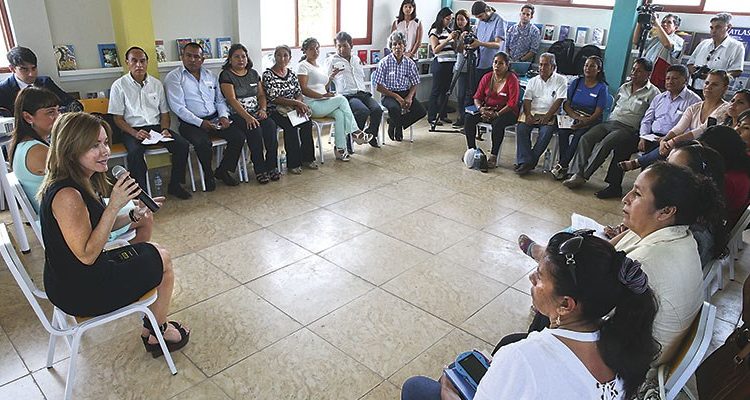
“Lograr que los niños y las niñas tengan las mismas oportunidades, deberes y derechos es lo único que impulsa el enfoque de igualdad de género del Currículo Nacional de la Educación Básica del Ministerio de Educación”, reafirmó ayer la ministra de Educación, Marilú Martens Cortés, durante un encuentro sostenido con padres de familias de varios colegios de Lima Norte.
La cita fue en la institución educativa Ramón Castilla, de Comas. Martens les explicó los alcances del Currículo Nacional de Educación Básica 2017 y aclaró algunas dudas expresadas por ellos.
En la primera parte de esta reunión, hablaron respecto al aprendizaje del perfil del estudiante peruano y los siete enfoques del Currículo Nacional de Educación Básica, entre los cuales figura el de igualdad de género.
Romper barreras
“Como padres hemos visto que histórica, cultural y socialmente las mujeres hemos vivido en desventaja frente a los hombres, y ahora a través de la educación buscamos romper esas barreras”, acotó.
Sostuvo que hay padres de familia que han entendido el propósito del currículo respecto a la igualdad de oportunidades, derechos y deberes que tienen tanto hombres como mujeres en el Perú.
“Sexo es la diferencia biológica con la que nacemos, seamos hombre o mujer, y género es la construcción social que se hace sobre lo femenino y lo masculino”, dijo. En tal sentido, sostuvo que este currículo busca que en el mundo académico y en el trabajo los hombres y mujeres tengan igualdad de oportunidades.
Señaló que el Minedu se ha reunido en reiteradas oportunidades con padres de familia y organizaciones sociales y religiosas para aclarar algunos puntos del currículo que han sido mal interpretados.
Los padres y las madres de familia se mostraron satisfechos con las explicaciones.
Inicio de clases
El Ministerio de Educación no contempla, por ahora, posponer el inicio de las clases escolares en aquellos colegios ubicados en las zonas afectadas por las intensas lluvias y huaicos, informó Martens.
“Por ahora no hemos visto la necesidad. Sin embargo, si tiene que hacerse [la postergación], se hará”, recalcó. Dijo que se está trabajando con las autoridades educativas de las cuatro regiones declaradas en emergencia, y viendo los colegios que han sido afectados para adoptar las medidas necesarias.
Datos
El Minedu establece siete enfoques transversales en el Currículo Nacional.
Estos son: 1) De derechos 2) Ambiental, 3) Intercultural, 4) De inclusión y diversidad, 5) Igualdad de género, 6) Orientación al bien común y 7) Búsqueda de la excelencia.
Las reuniones con padres de familia se realizarán gradualmente, empezando en las escuelas primarias.
Tuxtla Gutiérrez / 01 de febrero de 2017 / Por: ISAÍN MANDUJANO / Fuente: http://www.proceso.com.mx/
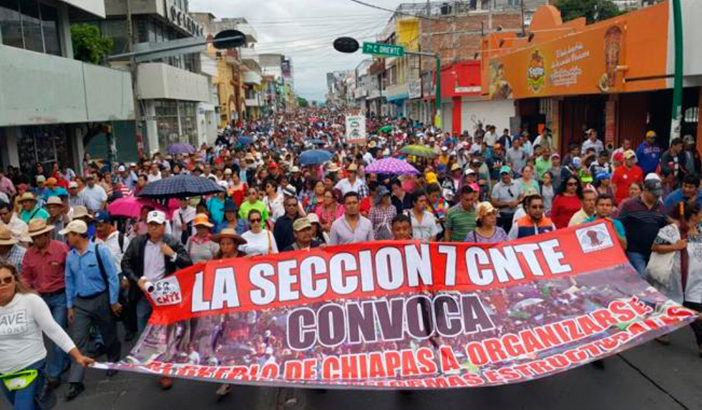
Maestros de la Coordinadora Nacional de Trabajadores de la Educación (CNTE), trabajadores sindicalizados del sector salud y organizaciones campesinas marcharon este lunes para protestar contra las reformas estructurales el presidente Enrique Peña Nieto.
Tras mantener un plantón de 125 días en la capital del estado, los maestros de la CNTE movilizaron por primera vez a todas sus bases magisteriales en la entidad y tomaron las calles de la capital para terminar con un mitin en la plaza central.
Desde el parque Chiapasionate, en el lado oriente de la capital, los profesores arrancaron la magna movilización con pancartas y consignas. El contingente se extendió varios kilómetros y fue encabezado por las secciones 7 y 40 del CNTE. Atrás de ellos iban organizaciones sociales y campesinas.
Durante la marcha se registró un incidente, cuando unos 500 trabajadores del sector salud quisieron encabezar la movilización, pero fueron apabullados por miles de maestros que los rebasaron por un carril lateral del Boulevard Ángel Albuno Corzo para ponerse a la vanguardia. Entonces, el contingente se dividió.
Los médicos, enfermeras y demás trabajadores del sector salud protestaron contra el desabasto de medicamentos y la falta de pagos por sus prestaciones laborales.
Carlos Reyes, José Luis Sánchez Huerta y Víctor Hugo Zavaleta Ruiz, representantes de los inconformes, destacaron que esta marcha de médicos ha sido hasta ahora la más importante, debido a la crítica situación que viven en el sector, misma que urge la solidaridad social y magisterial.
Los maestros de las secciones 7 y 40 repudiaron la reforma educativa impuesta por el gobierno federal, pero también rechazaron la energética, pues aseguraron que traerá gasolinazos mensuales que dañarán cada vez más los bolsillos de los mexicanos.
El sindicalizado José Luis Escobar dijo que quienes creyeron muerto al movimiento magisterial después del paro de labores de 125 días en el 2016, “se equivocaron” pues hoy demostraron que, tras 37 años de lucha, volverán a salir de sus aulas y tomar no sólo la capital chiapaneca, sino todas las ciudades en los 122 municipios del estado.
Esta manifestación, dijo, forma parte de las jornadas de lucha social y magisterial que tienen previstas para el 2017. Por ello, pidió a los padres de familia ser solidarios y apoyar las movilizaciones, mismas que podrían dejar sin clases de nuevo a los alumnos.
Los manifestantes concluyeron la megamarcha con un llamado a los chiapanecos a “dejar el confort y la tranquilidad del hogar porque la crisis económica del 2017 apenas empieza y se resentirá todavía más fuerte en todos los hogares mexicanos y de Chiapas”.
Hace un año un grupo de profesores, maestros e investigadores en educación, decidieron lanzar un portal mundial para los educadores. A la iniciativa impulsada por Luis Bonilla-Molina, Jurjo Torres Santomé, Boaventura de Sousa Santos, Iliana Lo Priore, Luz Palomino, Marianicer Figueroa, Maria Magdalena Saurraute, Salete Valesam, Alberto Croce, Oswualdo González, Mariangela Petrizo, entre otros, se le uniría un grupo de editores voluntarios conformado por Rose Mary Hernández, Damaris Scott, Javier Chavéz, Dulmar Pérez, Juan Echenique, Jesús Rivas, Hayle Avilan, Madelis Huizi, Keyla Cañizales, Nelly Blanco, Jesús Campos quienes hacen posible que día día, hora a hora, Otras Voces en Educación sea el sitio web no gubernamental especializado en educación más visitado a nivel mundial.
Ha sido un año de aprendizajes colectivos en la escuela-taller comunicacional que es el portal Otras Voces en Educación. Trabajar el área comunicacional por parte de pedagogos implicó un aprendizaje y práctica transdisciplinaria, esfuerzo que hoy permite contar con una experiencia única en su género. Sin financiamiento y con trabajo voluntario. se divulgaron no solo las novedades educativas sino que el sitio web se convirtió en el punto de encuentro para quienes a nivel mundial defienden la educación pública y enfrentan al neoliberalismo educativo.
Hasta la fecha Otras Voces en Educación cuenta con seis millones quinientas mil visitas (6.500.000), con un promedio de veinticinco mil lecturas diarias. En OVE se han publicado 10087 noticias (más de una por hora), 4260 documentos (un promedio de 12 diarios), 3986 artículos de opinión educativa (un promedio de 11 diarios), 808 entrevistas a destacados educadores y decisores de todo el mundo (casi un promedio de tres por día), 157 reseñas de películas (una cada dos días). En total casi 20.000 contenidos en un año. OVE es visitada desde los cinco continentes. Además, el portal Otras Voces en Educación es el más importante repositorio mundial de informaciones sobre las reformas educativas desarrolladas en el año 2016. Invitamos a seguir visitando el portal educativo mundial en su sitio web; http://otrasvoceseneducacion.org
Los interesados en colaborar con esta iniciativa de comunicación educativa mundial pueden comunicarse con el equipo de OVE a través del correo contacto@otrasvoceseneducacion.org, seguirlos en su twiter @ovemundo o en su facebook: Otras Voces en educación
Brasil / 01 de febrero de 2017 / Fuente: http://www.elciudadano.cl/
El alcalde del municipio de Ariquemes, el tercer municipio más grande de Brasil, presentó una propuesta para borrar toda referencia a la diversidad sexual en libros de textos gratuitos para la educación básica, en un gesto que francamente podríamos calificar de medieval o híper conservador.
El edil, Thiago Flores, ante la polémica desatada entre los activistas LGBT y defensores de los derechos humanos, se defendió declarando que ese tipo de contenidos deben ser abordados por los padres de familia y no por los profesores en una institución educativa. Declaró además que la eliminación de este material era una medida para frenar la “ideología de género” y prevenir “mayores daños en el aprendizaje de los estudiantes”.
No contento con esto, agregó: “No me arrepiento de esta actitud. Fui guiado por la voluntad de los ariquemenses. La cuestión fue discutida ampliamente por las personas que pidieron la retirada de contenidos acerca de la diversidad de la familia, tales como el matrimonio y la adopción de niños por homosexuales en libros de texto de educación primaria”.
La resolución del alcalde causó división en la población, entre quienes la encuentran una medida necesaria, y quienes afirman que es un acto retrogrado que además viola los derechos de las personas LGBT.
Por su parte, el Ministerio Público de Rondania, unidad federativa en la que se encuentra el Ariquemes, advirtió que Flores puede ser inhabilitado de su mandato debido a que ese tipo de decisiones “diseminan el odio contra los homosexuales” y desvían el fundamento constitucional de promoción de la igualdad y de lucha contra los prejuicios:
“Tales actos causan prejuicios para los alumnos, sus padres y profesores, quienes se ven en medio de un verdadero proceso inquisitorial medieval, que va a contracorriente de toda la literatura pedagógica que busca esclarecer y preparar a los jóvenes para la sociedad actual, sin cualquier prejuicio”, señaló el ministerio.
La medida ejecutiva será sometida a análisis por el Congreso local y hasta el próximo 2 de febrero se emitirá una resolución.
España / 01 de febrero de 2017 / Por: LOLA HIERRO / Fuente: http://elpais.com/
En el mundo hay 263 millones de niños sin escolarizar, pero la ayuda española se ha reducido de 354 millones de euros a 34 millones
España ha desaparecido de la comunidad de donantes en ayuda al desarrollo y, más en concreto, en lo que se refiere a la educación, pues su aportación se ha reducido desde el 2008 en un 90%, pasando de 354 millones de euros a 34 millones en 2015. Si hace nueve años suponía el 5,6% de la ayuda de los países del Comité de Ayuda al Desarrollo (CAD) de la OCDE, en 2014 es tan solo del 0,6%. Esta es la principal conclusión que se desprende del informe La ayuda en educación, a examen, un documento fruto de la investigación llevada cabo por la Fundación Etea para el Desarrollo y la Cooperación y por Entreculturas y Alboan, dos ONG de la Compañía de Jesús. Su finalidad: analizar la cantidad y la calidad de las aportaciones españolas a la educación de los niños y adultos de países más pobres durante los últimos 15 años.
España ha suspendido en este análisis. «Los ciudadanos españoles hemos visto con escándalo y sorpresa cómo hemos llegado al nivel de ayuda al desarrollo de hace 30 años. El objetivo soñado por muchos, el de algunos que os fuisteis a acampar a La Castellana hace 20 años no ha valido. Hemos suspendido en ayuda al desarrollo y en educación, lo digo con pena», ha lamentado este martes Ramón Almansa, director ejecutivo de Entreculturas, durante la presentación de los resultados en el Círculo de Bellas Artes de Madrid.
En el año 2000 se firmó con mucho optimismo el Pacto de Dakar por la educación, en el que los países del norte se comprometieron a aportar los recursos financieros necesarios para que ningún niño quedara sin escolarizar. Ese mismo año vino la firma de los ocho Objetivos de Desarrollo del Milenio(ODM), cuya meta número 4 contemplaba la universalización de la educación. La ayuda internacional destinada a este sector se multiplicó por 2,3 entre 2002 y 2014, pero no llegó a cubrir ni de lejos la brecha financiera que la Unesco consideraba que se debía cubrir para lograr estas metas. Llegó 2016 y estos ODM fueron renovados por 17 Objetivos de Desarrollo Sostenible sin que sus predecesores se hubieran alcanzado por completo: el número de niños sin escolarizar se ha reducido en un 30%, pero más de 260 millones no van aún al colegio, una bajada estancada desde 2011 sobre todo por los nuevos conflictos armados. Además, en la mayoría de los países menos adelantados la tasa de finalización de la primaria apenas alcanza el 50%.
No son datos nuevos, pero sí preocupantes, y ante este panorama España no responde bien. El sector educativo es el que más fondos ha recibido por parte de la cooperación española en los últimos 15 años, y aun así, su reducción va a la par al duro recorte que ha sufrido la Ayuda Oficial al Desarrollo en general: un 70% entre 2008 y 2014. Hace 15 años, el país aportaba 4.762 millones de euros. Hoy ha disminuido a 1.627 millones, un 0,13% de la Renta Nacional Básica. La media de la Unión Europea es del 0,4%.
La caída de la ayuda bilateral bruta (aquella en la que los gobiernos donantes canalizan sus fondos de cooperación al desarrollo directamente hacia los receptores) a la educación fue aún mayor: pasó del sexto puesto como país donante del Comité de Ayuda al Desarrollo (CAD) al vigésimo segundo. «En este 90% de recorte ¿cuánta gente se ha quedado sin escolarizar, cuántas escuelas hemos dejado sin hacer, cuántos maestros no han tenido la formación suficiente?», se ha preguntado Almansa. Esta ayuda bilateral durante el periodo 2000-2014 ascendió a 2.500 millones de euros. Fue a partir de 2005 cuando fue aumentando hasta alcanzar su valor máximo en 2008: más de 354 millones de euros. Pero a partir del año siguiente se desploma en más de 90 millones de euros y ya no deja de bajar: en 2014 tan solo se destinan 40 millones.
¿Para qué clase de educación aportamos dinero?
El informe permite saber de manera concreta a qué tipo de educación se ha destinado más y menos dinero. Con 908 millones de euros, un 35% del total, se come la mayor parte el llamado sector no especificado, es decir, actuaciones en las que no se conoce a qué nivel educativo van dirigidas y construcción de escuelas, actividades de apoyo presupuestario sectorial, formación de profesores, etcétera. En segundo lugar, la educación básica con 670 millones de euros (26%), que incluye solo infantil, primaria y capacitación básica de personas jóvenes y adultas. En 2014 la educación básica no llegó a los seis millones de euros, casi 120 millones menos de lo que llegaron a donarse en 2008. El tercer nivel es la secundaria general, que incluye educación secundaria, Formación Profesional y universitaria. A este se han destinado 596 millones de euros (el 23%), casi todo a la universidad. La educación secundaria y la formación profesional recibieron cerca de 420 millones de euros (16%).
La gran olvidada es la educación infantil, a la que solo se destinaron un 1% de los fondos, pero las alertas de los autores del informe se han dirigido más hacia la etapa de educación básica, pues los fondos destinados se redujeron entre 2008 y 2011 en un 81% y siguió bajando durante los años siguientes hasta tocar los cinco millones en 2015.
Tres cuartas partes de la ayuda a la educación provienen de la cooperación centralizada, y una cuarta parte de la descentralizada. Esta prioriza la educación básica y secundaria, y una gran parte de las actividades de educación para el desarrollo. En este apartado hay que ver el compromiso de las Comunidades Autónomas, que aportaron 450 millones de euros y van desde el 9% de Andalucía hasta el 19% de Valencia y Madrid, aunque esta última ha reducido su ayuda a cero en los últimos años, igual que Castilla-La Mancha.
En cuanto a regiones, más de la mitad de los fondos se dirigen a América Latina (53%), seguida de África subsahariana (20%) y en los últimos tiempos el norte de África (9%). Los países que más han recibido son Marruecos, Bolivia, Perú, Nicaragua, Honduras y Ecuador.
Tras el análisis, las recomendaciones, que en el informe son 20 pero no se han destacado todas. Para las tres organizaciones es fundamental que España cumpla con los compromisos económicos adquiridos en el Marco de Acción del Foro Mundial de Educación y en el marco de los ODS y, para ello, recupere la inversión en cooperación en la senda del 0,7% priorizando al sector educativo. También se ha reclamado que se incrementen los fondos destinados a la educación básica hasta alcanzar el 8% de la Ayuda Oficial al Desarrollo española, tal y como señaló la propia Comisión de Cooperación del Congreso en 1999 a través de dos Proposiciones No de Ley. El jefe del departamento de cooperación sectorial de la AECID, Javier Gavilanes, ha atribuido el descenso en la cooperación al «contexto muy condicionado de reducción de fondos» y ha avisado de que el año 2017 también estará marcado por la «restricción presupuestaria».
Sin olvidar los logros alcanzados en los últimos 15 años, Almansa ha pedido pensar en los 263 millones de niños que siguen sin escolarizar y ha pedido que se haga autocrítica más allá de la falta de voluntad política. «No hemos querido, la ciudadanía no ha sido capaz de movilizarse y sin duda no ha habido financiación». En su opinión, la educación debe situarse en un lugar prioritario central de las agendas nacionales e internacionales, y no solo por los datos, sino porque la educación es el mejor catalizador para lograr cambios sociales. «Si queremos cambiar este mundo, sin educación será imposible». Para ello, aboga por una educación que afecte a todos los ciclos de la vida de una persona, que ponga énfasis en la calidad del aprendizaje, la equidad y la inclusión, que sea transversal. «Si queremos construir un mundo más justo, equitativo y solidario tenemos que volver a confiar en el poder de la educación. Sin la educación es imposible, no podremos cambiar el mundo».
SIN EDUCACIÓN NO PODREMOS CAMBIAR EL MUNDO
RAMÓN ALMANSA, DIRECTOR EJECUTIVO DE ENTRECULTURAS
Ha llegado la hora de que la cooperación española cambie de rumbo, destacando el papel de la educación como herramienta de transformación social, contribuyendo a cumplir con los Objetivos de Desarrollo Sostenible (ODS).
El informe La Ayuda a Educación a Examen de Entreculturas destaca que la Ayuda Oficial al Desarrollo en España ha retrocedido a valores de hace casi 30 años. Si no fuese por los fondos comprometidos a la Unión Europea, podríamos decir que la cooperación española ha quedado reducida a cantidades puramente testimoniales. Entre 2008 y 2015 la ayuda neta experimentó un descenso de más del 65%, pasando de 4.762 millones de euros a 1.627 millones de euros. Esta cifra apenas supone el 0,13% de la Renta Nacional Bruta (RNB), lo que sitúa a la cooperación española muy lejos de los principales países donantes y del objetivo del 0,7% suscrito por España en diversos consensos y compromisos internacionales.
Estos recortes han afectado severamente al presupuesto para educación, que se ha reducido en más de un 90% en ese mismo periodo. En 2008 la ayuda española al sector suponía el 5,6% del total de los países del Comité de Ayuda al Desarrollo (CAD) y en 2014 equivalía tan solo al 0,6%. La ayuda bilateral también ha caído drásticamente en cuanto al compromiso con la educación básica. Estos fondos se redujeron entre 2008 y 2011 en un 81% y siguieron bajando en los años siguientes. En 2015, no llegaban a los 5 millones de euros, apenas el 0,7% de la ayuda bilateral, frente al 8% comprometido.
Urge asumir estrategias orientadas a una mayor eficiencia y coherencia con los retos globales. Es indispensable recuperar la inversión de la cooperación española, priorizando la ayuda en educación e incrementar los fondos destinados a la educación básica. Asimismo, hay que promover un concepto amplio de calidad educativa ligado a la equidad, la inclusión y la participación de los distintos agentes y un sistema de indicadores adecuado. La cooperación española debe apoyar a las poblaciones más vulnerables y atender a la heterogeneidad de países y realidades, prestando atención tanto a las necesidades educativas de los niños, niñas y jóvenes en situaciones de emergencia y conflicto, como las de poblaciones marginadas de los países de América Latina, en los que la educación puede tener un papel primordial para reducir la desigualdad.
Todo esto hay que hacerlo y hay que hacerlo ya, aprovechando la experiencia acumulada, implicando a todos los agentes, construyendo herramientas de cooperación ágiles y duraderas, asignando recursos y colocando a las personas más vulnerables en el centro de todas nuestras acciones.
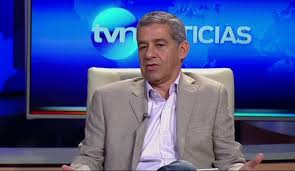
Panamá / 01 de febrero de 2017 / Por: JORGE E. QUIRÓS / Fuente: http://www.tvn-2.com/
Las condiciones en las que se encuentran las infraestructuras de los centros educativos de Panamá, sigue siendo una de las principales preocupaciones de los padres de familia, ya que el mal estado de los colegios representa un atraso en el proceso de aprendizaje de los estudiantes.
El diagnóstico de los planteles no era para nada alentador, al contrario, era “ muy malo”, asegura el ingeniero Mario Caparroso, quien forma parte del programa Mi Escuela Primero y fue designado hace dos años para trabajar en el mejoramiento de las condiciones de las escuelas.
Cuando se inició el programa “ Mi Escuela Primero”, se activaron 400 escuelas en todo el país, que acogen el 60% del estudiantado en la ciudad de Panamá.
El ingeniero Caparroso explica que de esa cantidad ya se tienen listas, aproximadamente 186 escuelas, gracias al apoyo del programa de Responsabilidad Social Empresarial (RSE) de distintas empresas del sector privado.
Detalló que 92 escuelas ya están terminadas, mientras que las reparaciones de otros 20 colegios, se mantienen en ejecución, con una inversión de 25 millones de dólares aproximadamente.
Por otra parte, hay un total de mil 86 escuelas que están siendo intervenidas por el Ministerio de Educación (Meduca), durante el verano, para que estén en óptimas condiciones para cuando se inicie el año escolar en el mes de marzo.
Para tratar de hacer que los trabajos de mantenimiento en los colegios sean efectivos, el Meduca ha divido la dirección de ingeniería en cuatro partes, para activar a un gran equipo y se han realizado contrataciones de nuevo personal.
De los cuatro equipos, uno está dedicado a atender el tema de las escuelas rancho, otro equipo se encarga del avance de la construcción de 50 nuevas escuelas, el tercer grupo trabaja con las escuelas de menos de 500 alumnos y el último se encarga de aquellos colegios que tienen más de 500 alumnos.
El ingeniero resalta que sí se están logrando avance en escuelas de distintos lugares del país.
Sin embargo, Eleazar Gómez, de la Confederación de Padres de Familia, ha dicho que a menos de un mes de iniciar el año lectivo 2017, más del 70% de los colegios públicos no estarían listos para recibir a los estudiantes por diferentes razones.
“ Producto de esta situación que viene de arrastre de gobiernos anteriores, con este gobierno, precisamente con la ministra [Marcela Paredes] hemos decidido como organización presentar la situación en una mesa de diálogo educativo que se mantiene desde el 15 de mayo de 2015”, destacó en Noticias AM, el lunes 30 de enero.
Agregó Gómez que le han planteado a Paredes las diferentes situaciones como conflictos en el mal manejo del Fondo de Equidad y Calidad de la Educación (FECE), reparaciones menores, nombramiento de personal administrativo y otras situaciones que hasta el momento no se ha dado el 100% de la respuesta que esperaban.
Guatemala / 01 de febrero de 2017 / Por: Rolando Miranda / Fuente: http://www.prensalibre.com/
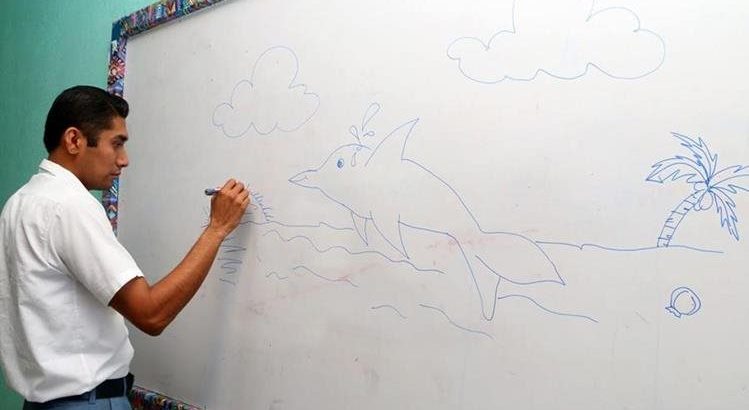
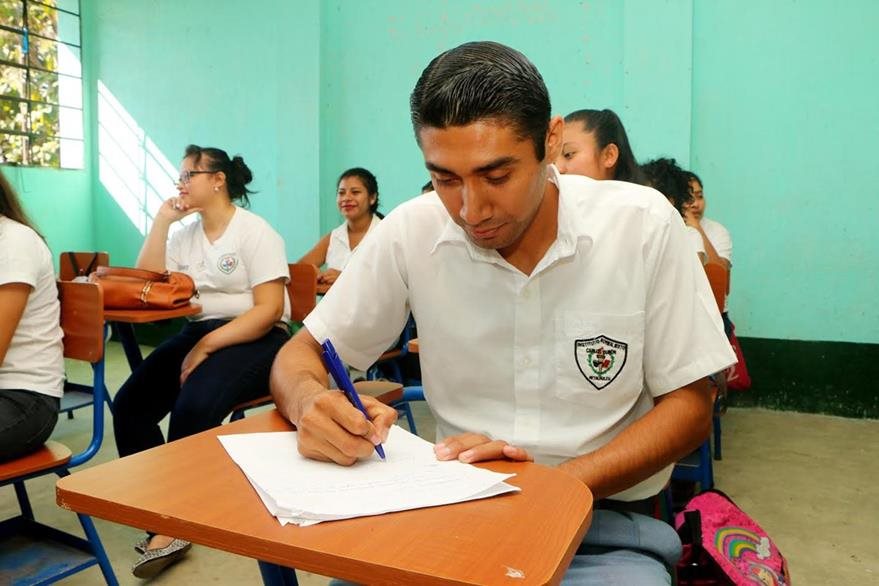
Como un ejemplo de lucha y superación para jóvenes de Retalhuleu, es visto Esvin Morales Gómez, quien padece sordera y este año se graduará de maestro.
Morales, de 24 años, estudia Magisterio de Educación Infantil Bilingüe Intercultural, en el Instituto Normal Mixto Carlos Dubón de la cabecera del referido departamento, donde ha sobresalido por sus logros académicos.
Además, Esvin es admirado por su capacidad de comunicarse, pues a pesar de su discapacidad auditiva, ha desarrollado habilidades para estar en comunicación con sus maestros, familia y compañeros.
Algunos maestros de Morales indicaron que su esfuerzo para sobresalir es notable, lo cual ha permitido que sus resultados sean mejores que los de algunos compañeros.
Francisco Pérez, docente, comentó que para él ha sido una experiencia de aprendizaje el haber compartido sus conocimientos con el futuro maestro, a quien le habla despacio pues ha desarrollado la habilidad de interpretar lo que le dicen, al observar el movimiento de los labios.
Ana Martínez, otra de las maestras de Esvin, dijo que al conocerlo se sorprendió, pues es un joven participativo, en quien ve potencial para ejercer la profesión.
Este año, Esvin Morales espera graduarse como maestro, en la cabecera de Retalhuleu. (Foto Prensa Libre: Rolando Miranda)
Sueños
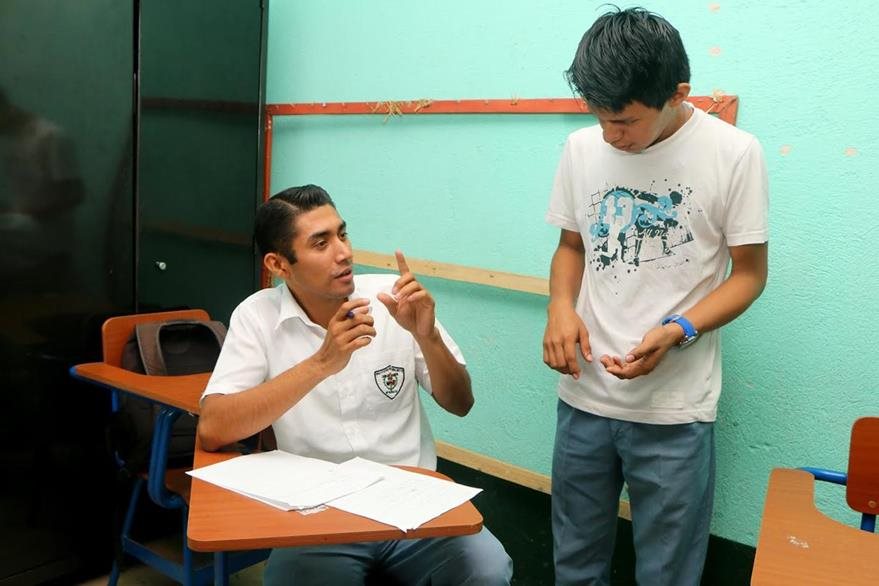
Con lenguaje de señas, y traducido por su amigo Natanael López, el joven Esvin relató que quiere ser maestro para poder impartir clases a niños con capacidades diferentes, pues se ha dado cuenta que se puede aprender y sobresalir en busca de un futuro mejor.
“Me gusta ir al instituto a aprender cada día y compartir con mis compañeros. Quiero ser maestro y enseñar. Además, quiero ayudar a mi familia”, expresó Morales.
López, el amigo de Esvin, dijo que cuando lo conoció se sorprendió, pues no se explicaba cómo hacía para entender lo que los docentes decían.
“Es un joven extraordinario, yo he aprendido mucho de él. Me enseñó a usar el lenguaje corporal y ahora puedo comunicarme con él. En ocasiones, le apoyo a traducir lo que quiere decir en las exposiciones”, afirmó López.
Un compañero de clase de Esvin Morales, en Retalhuleu, se comunica por medio de señas.(Foto Prensa Libre: Rolando Miranda)
Superación
Saúl Morales, padre de Esvin, indicó que, de recién nacido, su hijo padeció de una enfermedad renal, por lo que cuando fue llevado a un hospital, médicos se percataron de que no escuchaba.
“Esvin tiene cinco hermanos, y él es el mayor. A pesar de que no escucha, ha cuidado de ellos sin descuidar sus estudios. Agradecemos a los docentes que le han enseñado desde que estaba en primaria, porque le han tenido paciencia”, aseguró Morales.
OtrasVocesenEducacion.org existe gracias al esfuerzo voluntario e independiente de un pequeño grupo de docentes que decidimos soñar con un espacio abierto de intercambio y debate.
¡Ayúdanos a mantener abiertas las puertas de esta aula!



 Users Today : 161
 Total Users : 35491573
 Views Today : 256
 Total views : 3605374