Page 4408 of 6127
1 4.406 4.407 4.408 4.409 4.410 6.127

Reino Unido: Top London universities under threat from Government reforms

Reino Unido/Enero de 2017/Fuente: Evening Standard

RESUMEN: Más de 180 destacados académicos de las principales instituciones de educación superior de Londres se unieron hoy para advertir que las reformas gubernamentales pueden socavar las grandes universidades de la capital. Los cambios en la forma en que se organizan y evalúan las universidades podrían dañar la estatura de Londres y disuadir a los estudiantes, especialmente a los extranjeros, de elegir estudiar aquí, afirman. El ataque se produce el día en que el proyecto de ley de educación superior e investigación, dirigido por el ministro Jo Johnson, entra en la etapa de comité en la Cámara de los Lores, donde se enfrenta a un duro paseo de sus compañeros. Unos 185 académicos de Londres de instituciones como Imperial College London, LSE, UCL y la Universidad de Kingston expusieron sus preocupaciones en una carta al Evening Standard, en la cual advirtieron: «El Bill corre el riesgo de socavar todo lo que hemos construido recientemente en Londres».

More than 180 top academics from London’s leading higher education institutions today united to warn that government reforms risk undermining the capital’s great universities.

Changes to the way universities are organised and assessed would damage London’s stature and deter students, particularly those from overseas, from choosing to study here, they claim.

The attack comes on the day the Higher Education and Research Bill, piloted by minister Jo Johnson, goes into committee stage in the House of Lords, where it faces a rough ride from peers.

Some 185 London academics from institutions including Imperial College London, the LSE, UCL and Kingston University set out their concerns in a letter to the Evening Standard, in which they warned: “The Bill risks undermining everything we have recently built up in London.”

London, they said, is a “global education powerhouse” with four of the world’s top 40 universities, earning £6 billion annually and supporting 150,000 jobs.

Among criticisms of the Bill are that it will threaten the ancient freedoms of existing universities and allow new institutions without long track records to award degrees.

Baroness Wolf, the Sir Roy Griffiths Professor of public sector management at King’s College London, said plans for a gold, silver and bronze award would be skewed against London because it would draw heavily on whether students were satisfied with their experience.

She said: “Any survey of the ‘student experience’ will find that large universities in big cities do less well than campus universities or small cosy colleges.

“Students have a mass of reasons to come to top London universities; but they won’t have the same student lifestyle, the tight year groups, the student societies on their doorsteps.

“London is expensive, students — and academics — are scattered. Other countries, like Holland, report the same thing — big city universities get lower ratings.”

Sean Wallis, an academic at UCL who helped to organise the letter, said: “If the UK higher education sector was in crisis, Jo Johnson’s Bill would have merit.

«On the contrary, it’s one of Britain’s few world-leading industries, mostly because governments of every stripe have recognised that universities flourish when they are free from political interference.

“The Government’s proposals would damage the entire sector and London in particular.”

A Department for Education spokesman said: “We want more young people to have the opportunity to access a high-quality university education, and the measures proposed in the Higher Education and Research Bill are critical to making this possible.

“The Bill will protect and enshrine the autonomy and academic freedom of Higher Education institutions in law. And it puts students at the heart of the system, with the Office for Students making universities rightly more accountable to their students so they get the best value for money.

“The new Teaching Excellence Framework will drive up the standards of teaching by assessing universities on key metrics including drop-out rates, progression to highly skilled employment and student feedback as well as an explicit criterion that rewards rigour and stretch in teaching. There is no quota on the number of universities that can be awarded the highest rating of Gold and almost all English universities, including those in the Russell Group, have confirmed that they intend to take part in the second year.

«Since the introduction of the Bill last May, we have been listening carefully to the views of students, universities, academics and parliamentarians and have tabled amendments to the Bill based on their feedback.‎»

Fuente: http://www.standard.co.uk/news/politics/top-london-universities-under-threat-from-government-reforms-a3436076.html
Comparte este contenido:

Changing minds to help child brides in Cameroon

Camerún/Enero de 2017/Fuente: FPNU

RESUMEN: El matrimonio infantil es una grave violación de los derechos de las niñas. Las niñas novias tienen menos probabilidades de completar sus estudios, menos probabilidades de salir de la pobreza, más vulnerables al abuso y más propensas a tener un embarazo menor de edad que las expone a complicaciones potencialmente mortales de salud. La Asociación de Lucha contra la Violencia contra la Mujer, un centro apoyado por el FNUAP en Maroua, enseña a sobrevivientes de la violencia las habilidades generadoras de ingresos, la información sobre la salud y los mensajes sobre la igualdad de género. En conjunto, estas lecciones ayudan a las mujeres a asegurar su independencia y prosperar por sí mismas.

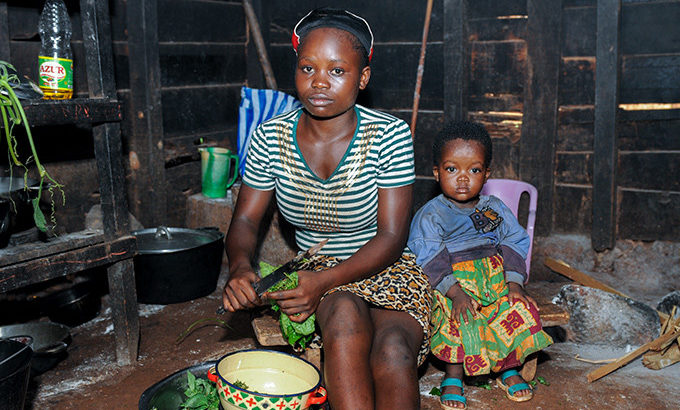
“My father forced me into marriage at the age of 14 – to a man I barely even knew,” Aminatou Bello, now 16, told UNFPA in Maroua, in the extreme north of Cameroon. The marriage quickly turned violent. “I was being beaten all the time,” she said.

Her situation is tragically common. According to a 2014 survey, over 22 per cent of girls aged 1 to 19 are already married or in a union.

Child marriage is a gross violation of girls’ rights. Child brides are less likely to complete their educations, less likely to emerge from poverty, more vulnerable to abuse, and more likely to have an underage pregnancy that exposes them to potentially deadly health complications.

Aminatou Bello was married at age 14. She was beaten relentlessly until she managed to finally escape. © UNFPA

Aminatou was determined to escape her child marriage. She repeatedly ran away to her parents’ home. Each time, her husband showed up and dragged her back.

“A few months later, I left the house again. But this time around, I ran to my uncle’s place,” she said. “I explained the situation. He spoke to my father, who finally believed my story.”

Her father agreed to help Aminatou end her marriage.

He brought her to the Association Fighting Violence against Women, a UNFPA-supported centre in Maroua. The organization teaches survivors of violence income-generating skills, health information and messages of about gender equality. Together, these lessons help women secure their independence and thrive on their own.

“Today, I have found serenity,» Aminatou said, who is learning to tailor clothes. “Now that I am learning a skill, I can manage life all by myself.”

Husband’s clubs

In addition to working with civil society groups, UNFPA is also working with the government to support policies that promote girls’ welfare and prohibit child marriage. And UNFPA is supporting “husband’s clubs” that discourage this harmful practice.

In the eastern town of Batouri, Natasha Biendi was married off at age 13. Now 15, she says that life as an underage wife and mother has been hard.

Marius married when he was 24 and his wife was 13. Today, he wants a better future for his daughters. » I cannot allow my daughters to go into marriage at the age of 13,» he said. © UNFPA

“Being as young as I am, we don’t get to understand how a home functions,” she explained. “There is too much work to do – difficult work for that matter.”

But her husband received information from a UNFPA-organized husband’s club, a group of men who meet monthly to discuss family matters. At the meetings, UNFPA-trained facilitators raise issues, such as the damaging consequences of child marriage and early pregnancy, the need for pregnant women to obtain antenatal care, and the benefits of sending daughters to school.

Natasha’s husband has communicated many of these lessons to Natasha herself, who has resolved to help her daughter avoid the same fate.

«I will do everything for my child to get a quality education so she gets more opportunities tomorrow,» she said.

Changing minds

Marius, 29, also received information from his local husband’s club. It has made him re-evaluate his own choices.

«When we got married, my girlfriend was 13 and I was 24 years old,” he told UNFPA. “We already have two daughters. But honestly, I cannot allow my daughters to go into marriage at the age of 13 because that is not good.”

Today, Marius dreams of much more for his daughters.

“I want my first daughter to become a doctor,” he said, “and the second, a teacher.»

Fuente: http://www.unfpa.org/news/changing-minds-help-child-brides-cameroon

Comparte este contenido:

Nicaragua: Los principales avances del sector educativo

Nicaragua/Enero de 2017/Autor: Pedro Ortega Ramírez/Fuente: El 19

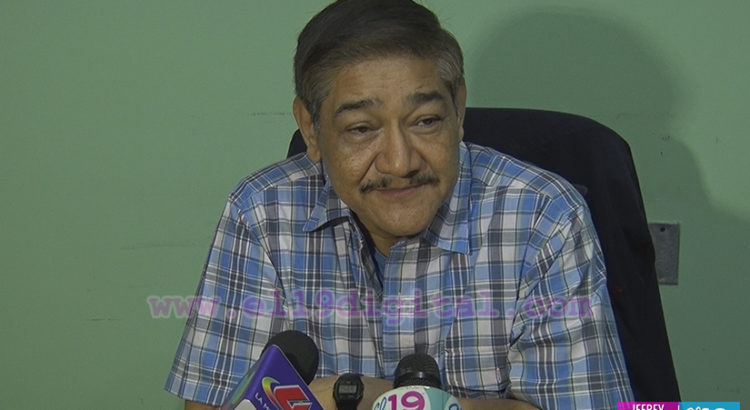
A diez años que el Presidente Daniel Ortega restituyó la educación gratuita en Nicaragua, el principal reto es seguir fortaleciendo la calidad de la enseñanza en todos los niveles, aspecto en que trabaja el Gobierno Sandinista en alianza con los docentes, padres de familias y estudiantes.

El profesor José Antonio Zepeda, Secretario General de la Asociación Nacional de Educadores de Nicaragua (ANDEN), subrayó seis puntos fundamentales en que se resume los principales logros del sector educación en los últimos diez años.

Recordó que fue un 11 de enero del 2007 que se restituyó el derecho a todos los nicaragüenses de acceder a una educación pública gratuita, pero además de eso se conformó un Comisión Nacional de Educación que traza las rutas que permiten fortalecer el desarrollo de la educación.

Un segundo aspecto de importancia son los diversos programas sociales que acompañan a la educación, como la merienda y mochila escolar. Un tercer elemento, es la política de formación y capacitación de los docentes que permite estar en mejores condiciones para enfrentar la enseñanza, en esto se incluye becas salarios, formación inicial, entre otros.

Un cuarto logro del sector educativo con el Gobierno Sandinista, es el programa de mejoramiento de la infraestructura escolar, que incluye rehabilitación y/o construcción de escuelas en las ciudades y en el campo.

El aspecto tecnológico es el quinto elemento que ha promovido el Gobierno Sandinista, en escuelas instalando aulas o laboratorios de computación, lo que permite a los estudiantes y docentes actualizar conocimiento. El sexto logro del sector educativo, es una política salarial que permite mejorar los ingresos a los docentes y personal educativo.

«El reto que tenemos es la calidad, la calidad en función de lo que nosotros aspiramos y desarrollamos como país. Más allá de la gratuidad, hoy estamos hablando de la restauración de todo un proceso articulado, tanto técnico, como universitario, como primaria y secundaria”, dijo Zepeda.

Añadió que el reto también es continuar actualizando y formando nuevos maestros, a fin de que puedan tener herramientas que le permitan hacer una clase más dinámica.

Zepeda señaló que los diversos programas educativos siguen fortaleciéndose, como la alfabetización, la batalla por el sexto grado, la escuela en el campo, la educación técnica y actualización de las carreras universitarias.

Fuente: https://www.el19digital.com/articulos/ver/titulo:51070-los-principales-avances-del-sector-educativo

Comparte este contenido:

Argentina: Fuerte cruzada de UDA en defensa de las paritarias nacionales

Argentina/Enero de 2017/Fuente: Nova Argentina

“La Organización Internacional del Trabajo dio curso a nuestro reclamo en contra de la violación de la libertad sindical respecto de la negativa por parte de la cartera educativa nacional de reapertura de la discusión salarial en el marco de las paritarias docentes”, indicó el titular de la Unión Docentes Argentinos y Secretario de Políticas Educativas de la CGT, Sergio Romero.

A su vez, el dirigente indicó que “es imprescindible que los funcionarios respeten las leyes, por lo tanto, presentaremos en los ministerios de Educación y de Trabajo de la Nación un escrito en el que se exige la convocatoria inmediata a paritarias para llevar a cabo la discusión del salario inicial docente tal como lo indica la Ley 26.075 de Financiamiento Educativo en su artículo 10 y el artículo 5 reglamentario del decreto 457/2007”.

“Esta gestión estaría incumpliendo las normas vigentes de forma descarada pretendiendo delegar exclusivamente en las provincias la discusión salarial, desvalorizando así a la paritaria nacional como ámbito de negociación en el que, además de un salario inicial para el sector,  se generan recursos para que las provincias puedan hacer frente al pago del mismo; algo que deberíamos recordarle a los gobernadores”, sentenció.

“Estamos viviendo un retroceso a la década de los noventa porque desmantelar la paritaria federal es acentuar lo que hizo el menemismo con la transferencia de los servicios educativos: desentenderse del sostenimiento de la educación. Esto nos entristece profundamente a quienes hemos luchado por reivindicar a la educación pública y rescatar a las escuelas técnicas del abandono político”, declaró Romero.

Y agregó que “no vamos a claudicar en nuestra lucha. Nos declaramos en estado de alerta y movilización, y advertimos que, de no haber una respuesta a nuestro reclamo acudiremos a la instancia judicial”.

“De continuar esta situación caótica es imposible que las clases comiencen en tiempo y forma y el único responsable de esto será el propio ministro de Educación y Deportes, Esteban Bullrich”, acusó el titular de la UDA.

Fuente: http://www.novargentina.com/nota.asp?n=2017_1_13&id=46048&id_tiponota=85

Comparte este contenido:

Canada’s dumbed-down education system—A social and economic disaster

Canada/Enero de 2017/Autor: Alexander Collin/Fuente: Canada Free Press

RESUMEN: Un profesor de ojos estrellados escribió recientemente en el Ottawa Citizen: «No debemos preocuparnos por los logros académicos de los dotados. … en vista de las maravillosas oportunidades que ahora se encuentran fuera de la escuela, en Internet y en la comunidad para que todos aprendamos la ciencia, la geografía, la política, la danza, la música, los deportes y todos los temas más allá del aula «. Primero, para mantener su lugar en un mundo competitivo, Canadá necesita todos los logros que puede obtener y, obviamente, una masa crítica de talento se refuerza a sí misma, en la educación como en la mayoría de los esfuerzos. En segundo lugar, todos los estudiantes quieren desafíos sustanciales en su propio nivel. Hay buenas razones por las que Inglaterra tiene escuelas de gramática y Alemania, el Gymnasium. En cualquier caso, la Convención de las Naciones Unidas sobre los Derechos del Niño ordena «el desarrollo de la personalidad, los talentos y las capacidades mentales y físicas del niño a su máximo potencial».

Why’s it necessary to consider whether students learning calculus should be schooled with ones who can’t tell the product of 11 x 12?

A starry-eyed teacher wrote recently in the Ottawa Citizen: “We should not worry about academic achievements of the gifted. … in view of the wonderful opportunities that now lie outside of school, on the internet and in the community for all of us to learn science, geography, politics, dance, music, sports and every subject far beyond the classroom.”

First, in order to keep its place in a competitive world, Canada needs all the achievers it can get and, obviously, a critical mass of talent is self-reinforcing, in education as in most endeavors. Secondly, all students want substantial challenges at their own level. There are good reasons why England has grammar schools and Germany, the Gymnasium. In any case, UN Convention on the Rights of the Child mandates “the development of the child’s personality, talents and mental and physical abilities to their fullest potential.”

Actually, the worst is the education that Canada’s burgeoning underclass gets. They’re all people who are now or were once schoolchildren, and most had equal potential at birth as the lucky ones. But they’re the millions—yes, millions—of Canadians that Statistics Canada says lack literacy skills necessary for society and the economy. Too many are uneducated and unskilled, unemployed and all but unemployable given the lack of effective support systems. Many are addicted, without hope, sick, homeless or in prison. Think fentanyl! Their human deprivation is unconscionable and the state’s financial cost is unsustainable.

Education for immigrants is also a mixed bag. I know of an Ottawa schoolteacher who advised a parent to transfer her daughter to another school. “Because of the high Somali enrolment,” she said, “we have to teach to a much lower standard.” How much lower than what standard anyway? How about remedial coaching? Immigrant children aren’t stupid.

For too many, systemic educational deprivation begins when schooling starts, with the condescension of low expectations. First, there’s the absurdity of reading readiness. It continues later into university by requiring attendance at stultifying lectures—like how to teach maths in primary school, for four credits toward a B.Ed at McGill.

With phonics (sounding out), reading at age five should be universal. Otherwise, reading ability gained late, or not at all, may cause learning disability and behavioral problems. In the slums of Naples, Maria Montessori had all her children reading and writing before they were five—as I was at that age, with home-schooling for two hours daily.

Most children thrive on mentoring, as opposed to being talked down to. For example, Shakespeare, Dickens, Conrad and Jack London left school by the age of fourteen. R.J. Mitchell, designer of the Spitfire aircraft of World War II, left school at sixteen. Apprenticed as an engineer, he was chief aircraft designer at the age of twenty-four. The driving force for founding the Ottawa children’s hospital, Dominic Conway, finished school at sixteen. After studying medicine at Cambridge, he got his MD’s shingle at twenty-two. But in Canada, he would have needed a prior degree, churning for four more years before admission to med school.

I have the Grade 6 report, with mostly B ratings, for a student attending school near Ottawa. Evidently smart enough but under-challenged, N told me school bored him to tears. His English report says, “N can read a variety of fiction and non-fiction materials (e.g. short stories, novels, myths, etc.).” The French report says, “With frequent teacher assistance, he can write negative sentences using “ne … pas” and the contracted form when required.” For maths, it says, “N is developing proficiency in multiplying two and three digit numbers. He can round whole numbers to the nearest 10, 100, 1,000 and 10,000 … He can divide by one and two digit divisors.” This is Grade six!

Fuente: http://canadafreepress.com/article/canadas-dumbed-down-education-systema-social-and-economic-disaster#


Comparte este contenido:

Bolivia: Fijan en 4% alza de pensiones en particulares

Bolivia/Enero de 2017/Fuente:Entorno Inteligente

Esa determinación fue comunicada ayer al Ministerio de Educación, según una nota de prensa.

El Ministerio de Economía aclaró que, de acuerdo con la Ley 070 y el Decreto Supremo 29894, es el Ministerio de Educación la entidad responsable de definir el porcentaje de incremento en las pensiones escolares, coordinar y comunicar la decisión a la Asociación Nacional de Colegios Particulares.

Recordó que el Ministerio de Educación debe adoptar las medidas necesarias de control para que las unidades educativas cumplan con el porcentaje de incremento dispuesto.

En tanto, el viceministro de Educación Regular, Juan José Quiroz, recordó a los padres de familia que, según el artículo 18 de la Resolución Ministerial 01, están prohibidos los cobros por concepto de matrícula, reserva de plazas y entre otros, en el momento de la inscripción.

Fuente:http://www.entornointeligente.com/articulo/9500507/BOLIVIA-Fijan-en-4-alza-de-pensiones-en-particulares-%7C-Los-Tiempos-13012017

Imagen: http://www.telesurtv.net/news/Bolivia-segundo-pais-de-mayor-inversion-educativa-en-A.-Latina–20150911-0022.html

Comparte este contenido:

Refugiados y olvidados de Haití llegan a los pupitres en Cáceres

Haití/Enero de 2017/Autor: Miguel Ángel Muñóz Rubio/Fuente: El Periódico Extremadura

Más de 60.000 refugiados en campamentos en Grecia no estarían sufriendo la ola de frío que azota a Europa en condiciones precarias si los Estados miembro de la Unión Europea hubiesen cumplido sus compromisos de reubicación. En el país, los menores no acompañados se han convertido en las nuevas almas vagabundas de Atenas, chavales que viven, trabajan, incluso se prostituyen en las calles para poder continuar su viaje a Europa.

Al otro lado, en Haití, las consecuencias de los terremotos continúan siendo devastadoras. A las autoridades locales e internacionales les preocupa mucho la precaria situación en la que han quedado centenares de miles de supervivientes en el país más pobre de América y que ya tenía decenas de miles de desplazados desde el terremoto de 2010.

Sobrecogido por un mundo estremecido, José María Tovar, presidente de la Asociación Nace y exdirigente de la Asociación de Vecinos Nuevo Cáceres, ha vuelto a embarcarse en el proyecto Campaña Hambre de Solidaridad, que en febrero prevé celebrar su segunda edición tras el éxito de la desarrollada en 2012.

En esa ocasión participaron centros educativos y asociaciones de personas con discapacidad de Cáceres, que llenaron durante dos días consecutivos el Palacio de Congresos con sus actuaciones. Se recaudaron 4.660,90 euros donados a la Asociación Mensajeros de la Paz y 2.400 kilos de alimentos cedidos a los Hermanos de la Cruz Blanca y comedores sociales. Tovar ha contactado con los colegios y este año los fondos se destinarán a Mensajeros de la Paz y Cruz Roja. La intención es celebrar el festival en días lectivos por la mañana, entendiéndolo como una actividad escolar puesto que los alumnos podrán exhibir sus piezas sobre el escenario. Los interesados pueden contactar en el 669 43 90 20.

Fuente: http://www.elperiodicoextremadura.com/noticias/caceres/refugiados-olvidados-haiti-llegan-pupitres-caceres_990461.html

Comparte este contenido:
Page 4408 of 6127
1 4.406 4.407 4.408 4.409 4.410 6.127