Page 4548 of 6197
1 4.546 4.547 4.548 4.549 4.550 6.197

El aborto como tema en las escuelas levanta indignación en Portugal

Portugal/19 de Diciembre de 2016/ABC

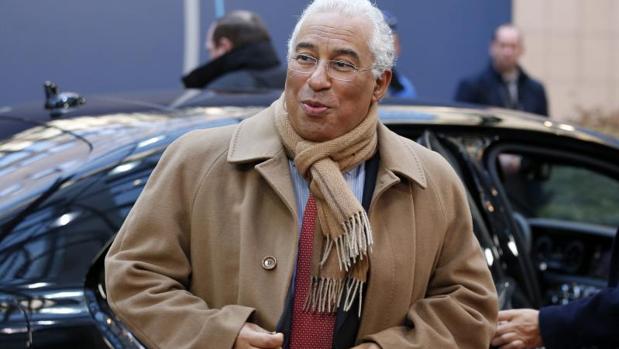
El Gobierno socialista de Antonio Costa plantea que los alumnos de 5º y 6º año debatan sobre la interrupción voluntaria de embarazo.

¿Es adecuado que niños de 5º y 6º curso estudien y debatan en clase acerca del aborto? La respuesta se antoja afirmativa para el Ministerio de Educación del Gobierno socialista de António Costa, que promueve una controvertida iniciativa para que las escuelas tomen cartas en el asunto.

Por el contrario, la respuesta negativa se extiende entre las asociaciones de padres y los colectivos ciudadanos de Portugal, que se muestran en flagrante desacuerdo y, además, no lo consideran un asunto prioritario en el organigrama educativo.

Casi 100.000 firmas en contra

La corriente social en contra de esta propuesta para convertir la interrupción voluntaria del embarazo en un tema obligatorio durante parte del curso ha provocado ya la puesta en marcha de un manifiesto que recopile firmas para pedir su retirada. Casi 10.000 se han recogido en pocos días.

El aborto no es la única novedad de los planes gubernamentales, pero sí la más criticada. Otras se refieren a la nutrición, la salud mental, el ejercicio físico, etcétera.

Después del éxito del sistema educativo auspiciado por el gabinete que lideraba el socialdemócrata Pedro Passos Coelho hasta diciembre de 2015, certificado recientemente por el Informe PISA, ahora los socialistas cambian de rumbo y hasta plantean inculcar los métodos anticonceptivos y los riesgos de los embarazos no deseados en el segundo ciclo.

División entre los propios socialistas

La polémica no ha hecho más que comenzar en las redes sociales y en las tertulias radiofónicas, con las asociaciones de padres indignadas ante semejante perspectiva. Incluso en el propio seno del socialismo luso, donde las facciones católicas también elevan su protesta.

La fuerte contestación encontrada hace que el plazo hasta el próximo 19 de diciembre, día en que se cierra el periodo consultivo para la posterior aplicación de la medida, se haya transformado en un camino con más espinas que rosas.

Fuente: http://www.abc.es/sociedad/abci-aborto-como-tema-escuelas-levanta-indignacion-portugal-201612162106_noticia.html

Comparte este contenido:

Bolivia: La ‘profe’ aymara que revolucionó la educación, en las #CharlasDigitales

Bolivia/Diciembre de 2016/Fuente: Radio Habana Cuba

Lucinda Mamani Choque es la profesora aymara que ha sido distinguida como una de las 50 mejores docentes del mundo gracias a su método revolucionario de enseñanza. El diario EL DEBER la ha elegido como su Personaje del Año 2016. Pocas horas antes de recibir el galardón, este jueves en la noche, la maestra responderá a las consultas de los usuarios del Diario Mayor en #CharlasDigitales.

Lucinda en 2014 recibió el premio a la excelencia educativa por su esfuerzo y trabajo para empoderar a los estudiantes de su escuela. En 2015 fue distinguida como una de las 50 mejores profesoras del mundo y nominada, por la Varkey Foundation, con apoyo de las Naciones Unidas; al Global Teacher Prize 2015.

Esta maestra, de lunes a viernes, antes de que salga el sol deja su casa en la ciudad de El Alto para transportarse, debido a la falta de transporte público, en volquetas de una empresa cementera hasta una escuela de Pucarani.

Si quieres conocer más de la vida y obra de esta educadora aymara, te invitamos a que sigas la entrevista en vivo por nuestro Facebook Live y el canal oficial en YouTube.

Fuente: http://www.eldeber.com.bo/bolivia/profe-aymara-revoluciono-educacion-charlasdigitales.html

Comparte este contenido:

Japan’s health ministry mulls dietary education at kodomo shokudo cafeterias

Japón/Diciembre de 2016/Fuente: The Japan Times

RESUMEN: El Ministerio de Agricultura, Silvicultura y Pesca está considerando promover la educación dietética en kodomo shokudo, o cafeterías infantiles, que son dirigidas por organizaciones sin fines de lucro o residentes del vecindario para dar a los niños oportunidades de cenar con la compañía. Para implementar la iniciativa, el ministerio trabajará con el comité gobernante del Partido Demócrata Liberal sobre educación dietética, que comenzará a entrevistar a operadores de tales cafeterías a principios del próximo año, dijeron fuentes. Kodomo shokudo, que se han extendido a muchas partes de Japón, por lo general ofrecen 20 a 30 comidas por noche con la comida proporcionada por los residentes locales y los fabricantes de alimentos.

The Agriculture, Forestry and Fisheries Ministry is considering promoting dietary education at kodomo shokudo, or children’s cafeterias, which are run by nonprofit organizations or neighborhood residents to give children opportunities to dine with company.

To implement the initiative, the ministry will work with the ruling Liberal Democratic Party’s committee on dietary education, which is set to start interviewing operators of such cafeterias early next year, sources said.

Kodomo shokudo, which have spread to many parts of Japan, typically offer 20 to 30 meals per evening using food provided by local residents and food manufacturers.

Some of them open once or twice a week and others once or twice a month. The meal is offered for several hundred yen at the highest and for free in many cases.

In addition to helping children of double-income households and single-parent families avoid having dinner alone, the cafeterias are also supporting children in poverty by providing them with balanced meals.

Under its basic program for promoting dietary education for five years from fiscal 2016, the government set a goal of pushing forward dietary education that corresponds to diversified lifestyles.

As a specific measure for achieving this goal, the agriculture ministry hopes to utilize kodomo shokudo as a setting for children to learn about food in general, such as ways to get proper nutrition, cooking methods and local cuisine, the sources said.

The ministry also believes such cafeterias can help children improve their communication skills as they have conversations with local people over dinner, they said.

The LDP committee plans to interview kodomo shokudo operators about how they procure food and encourage children in need to come to their cafeterias. Through the interviews, the ministry aims to figure out what roles the central and local governments should play in supporting children.

“We’re hoping to help kodomo shokudo become places of learning for children,” a ministry official said.

Fuente: http://www.japantimes.co.jp/news/2016/12/13/national/social-issues/japans-health-ministry-mulls-dietary-education-kodomo-shokudo-cafeterias/#.WFaRbblGT_s

Comparte este contenido:

México: Crean estudiantes plataforma que busca transformar la educación

México/Diciembre de 2016/Fuente: El Heraldo

COMPARTIR, es una plataforma tecnológica basada en el principio de que la educación de calidad puede impartirse de manera accesible en un formato en el que compartir conocimientos es una nueva forma de aprender, todo esto a través de un modelo de negocio que aspira a ofrecer servicios gratuitos.

El proyecto COMPARTIR, fue creado por Elías Omar Pérez Martínez, quien es estudiante de Ciencias Computacionales en la Facultad de Ciencias de la Universidad Nacional Autónoma de México (UNAM), y por su compañero Adrián González, quiénes resultaron ganadores del “Reto Educación” del concurso Vive conCiencia 2016, organizado por 23 instituciones y coordinado por el Foro Consultivo Científico y Tecnológico, cuyo objetivo es estimular la creatividad y las capacidades de innovación en los jóvenes para resolver problemas de sus comunidades.

“Actualmente, COMPARTIR se encuentra en la fase de prototipo, ha funcionado por 1 año 8 meses, en los cuales se han impartido alrededor de 3 mil horas de asesoría en diferentes temas como física, química, matemáticas y programación, que se han dado a más de 300 alumnos de nivel secundaria, preparatoria y universidad, con lo cual se ha apoyado la economía de 60 asesores”, comentó Pérez Martínez.

Los problemas educativos que se buscan atacar con este proyecto son los siguientes: el sobrecupo de los salones de clases, la desigualdad de la educación en México, la centralización y la falta de acceso a la educación.

En México hay en promedio más de 30 alumnos por cada maestro, es el país de la Organización para la Cooperación y el Desarrollo Económicos, donde existen más alumnos por docente, en promedio hay el doble de alumnos en comparación con los países que conforman esta organización, lo que naturalmente lleva a un decremento en la calidad de la educación que puedan recibir los alumnos. Además en el sector de la educación privada el número de alumnos contra el de maestros disminuye considerablemente al compararse con la educación pública, lo cual nos habla de que hay una gran desigualdad.

“COMPARTIR presentaría los siguientes beneficios para los estudiantes: Crecimiento social e  intelectual, pues permite a jóvenes expertos en algún tema enseñar lo que saben a otros jóvenes no expertos; generar una sociedad más productiva al ser más colaborativa y aprovechar más eficientemente sus recursos humanos; y la utilización de dispositivos móviles como un método de estudio a través de la gamificación”, asegura el estudiante de la Facultad de Ciencias de la UNAM.

“La segunda fase para COMPARTIR, es tener presencia en Monterrey y en Guadalajara y la tercera fase consiste en que implementaremos la modalidad en la que las asesorías sean gratuitas, todo el dinero que hemos ganado en el concurso Vive conCiencia 2016, lo invertiremos en desarrollo”.

La modalidad gratuita será de la siguiente manera: Con monedas virtuales, donde al registrase los usuarios se les asignará automáticamente 100 monedas virtuales que podrán intercambiar con los asesores por conocimiento. Y la gamificación, donde los usuarios podrán incrementar la cantidad de sus monedas virtuales al convertirse en asesores e intercambiar sus conocimientos avanzados en ciertas áreas del conocimiento.

“Con la gamificación y las monedas virtuales se busca crear una comunidad donde el conocimiento sea la moneda de intercambio, una comunidad en la cual no se necesite poseer dinero para acceder a nuevos conocimientos”, dijo Elías Omar Pérez Martínez.

Fuente: http://elheraldodesaltillo.mx/2016/12/17/crean-estudiantes-plataforma-que-busca-transformar-la-educacion-en-mexico/

Comparte este contenido:

Reino Unido: Grammars will not boost poorest pupils science grades

Reino Unido/Diciembre de 2016/Fuente: BBC News

RESUMEN: Los mejores científicos temen que los planes para más escuelas de gramática en Inglaterra no aumenten las calificaciones de los alumnos desfavorecidos. En general, los alumnos más pobres hacen peores en ciencias y matemáticas en áreas con escuelas selectivas, sugiere la investigación de la Royal Society, la academia científica independiente del Reino Unido. Es probable que las nuevas gramáticas ayuden a «sólo una pequeña proporción» de los alumnos más pobres, dice. Los Ministros sostienen que sus propuestas mejorarán la movilidad social. Una consulta gubernamental sobre planes para una educación más selectiva cerró a principios de este mes. «La movilidad social es un tema complejo», dijo el profesor Tom McLeish, presidente del Comité de Educación de la Royal Society. «Apoyamos el compromiso del gobierno de asegurar que todos los estudiantes cumplan con su potencial, independientemente de sus antecedentes.

Top scientists fear plans for more grammar schools in England will not boost disadvantaged pupils’ grades.

Overall, the poorest pupils do worse in science and maths subjects in areas with selective schools, suggests research for the Royal Society, the UK’s independent scientific academy.

New grammars are likely to help «only a small proportion» of the poorest pupils, it says.

Ministers maintain that their proposals will improve social mobility.

A government consultation on plans for more selective education closed earlier this month.

«Social mobility is a complex issue,» said Prof Tom McLeish, chairman of the Royal Society’s Education Committee.

«We support the government’s commitment to ensuring all students fulfil their potential, regardless of their background.

«However, we are concerned that the approach to selective education outlined in the green paper may only support the small number of high ability disadvantaged pupils who do attend selective schools, at the cost of disadvantaged pupils who do not.»

Researchers from the Education Policy Institute, commissioned by the Royal Society, looked at the impact of selective education on the attainment of the most disadvantaged young people – those on free school meals – in STEM (science, technology, engineering and maths) subjects.

The researchers found free school meals pupils performed less well in GCSE maths in areas where there were selective schools.

In non-selective areas in 2015, 48.1% of free school meals pupils got a C or more, compared with 72.3% of pupils not eligible for the meals.

But in selective areas the attainment gap was wider, with only 43.9% of free school meals pupils getting at least a C, compared with 74.8% of pupils not receiving the meals.

The researchers found that free school meals pupils in selective schools performed very well, with 98% getting at least a C, compared with 99.2% of non-free school meals pupils.

However, free school meals pupils make up only 3% of selective schools so their achievements are not enough to make any difference to «an overall negative impact on the attainment of all free school meals pupils in GCSE mathematics in selective areas», say the researchers.

Specialist teachers

They also found that fewer free school meals pupils in selective areas took double or triple sciences at GCSE.

«We have found no evidence to suggest that overall educational standards for free school meals pupils in STEM subjects in England would be improved by an increase in the number of places in selective schools,» the Royal Society concludes.

Dr McLeish added that the best way to help every pupil achieve their potential is to make sure that they are taught by «well-trained, motivated and supported, specialist science teachers».

Support is essential, he said, to help teachers «draw out the natural curiosity and creativity that grows from a framework of knowledge in science».

In particular, the Royal Society proposes partnerships between universities, schools and businesses which could involve university staff teaching part-time and even carrying out some of their research in schools.

The Department for Education said its proposals were «about creating more choice, with more good school places in more parts of the country».

It said grammar schools have a «track record of closing the attainment gap» and the department was also raising standards for maths and science for all pupils.

A spokesman added: «We have introduced rigorous new qualifications and in science we are investing £12.1 million over the next three years to improve the quality of teaching in schools.»

Fuente: http://www.bbc.com/news/education-38343307
Comparte este contenido:

Nueva Zelanda: Secular Education Network appeals bible battle to UN committee

Nueva Zelanda/Diciembre de 2016/Fuente: Stuff

RESUMEN: Bajo la Ley de Educación, las escuelas primarias pueden cerrar por hasta una hora cada semana para clases de instrucción religiosa. Un grupo que lucha contra las clases bíblicas en las escuelas primarias está presionando para que las Naciones Unidas examinen la discriminación religiosa en Nueva Zelanda. La Secular Education Network cree que las clases tienen un impacto negativo en los estudiantes no cristianos, y no tienen lugar en un marco de educación secular. Eso es discutido por la Comisión de Educación de Iglesias – el mayor proveedor de instrucción religiosa en el país – que dice que la prohibición de las clases bíblicas sería una violación de los derechos humanos.

A group fighting against bible classes in primary schools is pushing for the United Nations to examine religious discrimination in New Zealand.

The Secular Education Network believes the classes have a negative impact on non-Christian students, and have no place in a secular education framework.

That is disputed by the Churches Education Commission – the largest provider of religious instruction in the country – which says that banning bible classes would be a breach of human rights.

Now, the network wants the issue taken up by the UN Committee on Economic, Social and Cultural Rights.

The committee will be reviewing New Zealand’s human rights record next year, along with the UN Committee on the Elimination of Racial Discrimination, and the Human Rights Commission is currently collecting submissions.

Under the Education Act, teaching in primary schools must be entirely secular. However they’re permitted to close for up to one hour a week, for the purpose of religious instruction.

Around 40 per cent of New Zealand primary schools engage in some form of religious instruction, while the rest are entirely secular.

Karl Le Quesne, head of early learning and student achievement at the Ministry of Education, says any religious programme must be approved by a school’s board of trustees.

«Schools may not discriminate against their students on the grounds of their religious belief or lack of it,» he said.

The network’s David Hines is concerned that while that may be the law, the reality is that students still experience discrimination in the classroom.

«When kids don’t attend the religious instruction class they, in many cases, get bullied by other kids,» he said.

«That scares a lot of kids and their parents, so they don’t complain about it.»

The commission’s Tracy Kirkley is disappointed by reports of students feeling ostracised, and insists that is not the intention of religious instruction.

«It’s a concern if kids are feeling that way,» she said.

«We’re obviously concerned about that, and that’s certainly something that we would not in any way encourage.»

Kirkley believes banning religious instruction would be a step in the wrong direction, and said the commission will make its own submission to the UN committee.

«To us it’s about maintaining and protecting the freedoms we enjoy in this country,» she said.

«There are mechanisms for people to choose whether their kids are in programmes, that’s the whole point of a democracy.»

But scrapping religious instruction entirely is exactly what Hines would like to see, especially given the changing demographics of New Zealand.

«If the present slide goes on, the non-religious people could well outnumber the number of Christians by the next census,» he said.

Kirkley concedes his point, and acknowledges that requests for religious instruction classes have dropped over the past few years.

«The face of New Zealand society has become a lot more diverse and multicultural, we totally understand that,» she said.

However Kirkley said the commission will continue offering religious instruction as long as there is demand from schools.

Submissions to the UN committee close in August 2017.

Fuente: http://www.stuff.co.nz/national/education/87627929/secular-education-network-appeals-bible-battle-to-un-committee

Comparte este contenido:

Ghana: Parents urged to invest in bilingual education of wards

Ghana/Diciembre de 2016/Fuente: Citi 97.3 Fm

RESUMEN: La señora Ama Atta Sagoe, propietaria de Ecole Francaise, una institución educativa bilingüe privada en Cape Coast, ha exhortado a los padres ghaneses a invertir en educación bilingüe para sus hijos. Dijo que ser bilingüe da a los niños una ventaja competitiva y ofrece beneficios prácticos e intelectuales en la sociedad global de hoy. La Sra. Sagoe, quien habló en una conferencia de prensa antes del quinto aniversario de la escuela y el discurso y el premio que da la celebración del día en Cape Coast, dijo que el fluir en una segunda lengua abrió el mundo de nuevas oportunidades especialmente en el mercado de trabajo.

Mrs Ama Atta Sagoe, Proprietress of Ecole Francaise, a private Bilingual Educational Institution in Cape Coast, has admonished Ghanaian parents to invest in bilingual education for their children.

She said being bilingual gives children a competitive edge and offers practical and intellectual benefits in today’s global society.

Mrs Sagoe, who was speaking at a media briefing ahead of the school’s fifth anniversary and Speech and Prize giving day celebration in Cape Coast, said being fluent in a second language opened up the world of new opportunities especially in the job market.

The anniversary celebration, which is on the theme “Significance of Bilingual Education in the 21st Century”, is scheduled for Friday, December 16.

She said it was imperative for every Ghanaian to show interest in learning French as a second foreign language.

She emphasized that learning a second foreign language promotes technology, science, culture and a technical know-how, adding that “these are tools for development”.

Mrs Sagoe called for a review of the educational policies in Ghana to enhance teaching and learning in schools.

She said the School which was established in 2012 with just four pupils, could now boast of more than three hundred pupils.

“Ecole Francaise is the only Bilingual Basic Education Institution in Cape Coast and the whole of the Central Region. We offer all the subjects under the Ghana Education Service (GES) curricula,” She said.

She mentioned some of the activities lined up to include a cleanup exercise, a donation to the children’s ward at the Cape Coast Teaching Hospital, a walk through the principal streets of Cape Coast, among others.

Fuente: https://citifmonline.com/2016/12/15/parents-urged-to-invest-in-bilingual-education-of-wards/

Comparte este contenido:
Page 4548 of 6197
1 4.546 4.547 4.548 4.549 4.550 6.197